Author: Brian Garrido

  • Brews, Bread and Bumps in Life

    Last night, I published a blog item. In it, I was profusely apologizing about my lack of posting for the past two weeks (to my two fans). Life became life and with dinners out, work (which sometimes is about going out), seeing friends, looking for new apartments with Holly (the pitbull), JJ (the Frenchie) and Nick (the Man from Wisconsin) so I wasn’t able to write until this weekend. Once I hit publish, it vanished. Right then and there. Poof. Twilight Zone-like.  I talked to WordPress, “chatting” with “Pam” about where it could have possibly gone. (We both agreed that it went the way a pair of socks in the washer…). So, I have to recreate it which might be a good thing; right? Let’s take the lemons and make lemonade? Still, I hate re-dos.

    medium_198494799

    And through all of this up-and-down, in-and-out,  I find that I get a little anxious when I can’t eat or cook the way I want. Fresh, sustainable, local. For me, eating and being out is overwhelming at times.  Admittedly, it’s a personal control issue. Hands down. Who doesn’t want to go out? Isn’t that what commercials ask of us? Let’s eat at Applebee’s, Chili’s, MickeyD’s? But I do it frequently and have eaten out often, eating with clients and enjoying their meals…all in the name of work. However, I really like being in my home and cooking. There is such safety and calmness in it. Some people turn to the bottle of wine, videogame or television, I look at recipes and try to cook. It’s inspirational and very meditative. I sometimes think that if I could, I would grow my vegetables, butcher my livestock and sow my own wheatfields just so I can get as close as I can to eating well.  After all, eating well is the only thing I can control. Once, I step out my door, I feel that my life becomes an issue of circumstance.

    With all that said, I have eaten some glorious sandwiches at my client Carvery Kitchen. Handmade and house-baked bread, succulent meats piled in innovative ways with dipping sauces. My favorite: Eating the freshly roasted pastrami in a French dip. Clean and lustily juicy.

    Banh Mi Porchetta


    Over this past weekend, I attended The Shelton Bros “The Festival” which was hosted at clients Brouwerij West. I’m not a beer geek  but I’m learning a lot about the process of making beer. Sometimes, it a lot about engineering. There is a process to it. Winemakers let the liquid sit and ferment, creating delicious drinks. With beer, it’s a process of taking the grain and extracting the “wort” (sugar water) and turning it into lusty libation.

    Many amazing things were said about the event from LA Weekly and The Los Angeles Times famed beer writer, John Verive.  It was from these articles that I truly realized the importance of the craft beer movement. It’s not unlike the Slow Food Movement or artisan winemakers. Truly, craft beer making is an art form.

    Besides Brouwerij West, there was a really interesting beer from Treehouse Brewing in Ohio. It’s called “Double Shot”; like the name implies, it’s made with coffee from Oregon’s Stumpton. It’s aroma was powerful with coffee and malt. Not a combination I would ever have thought I would smell together. Coffee and beer. It used to be “Black Coffee“.

    Treehouse Brew

  • Meatless Monday Quickie: Herbed Ricotta, Leek and Swiss Chard Frittata

    First, I really try and honor the commitments that I make to myself and friends. So on weekends when I should be writing and thinking about my food posts, I was out and about eating glorious (and not so glorious) food instead of cooking

    Plus, Nick and I are in the midst of looking for a new apartment because Holly, my beautiful 9 year old pitbull, was called a liability by the current building, even though they knew I had her. We also have renters’ insurance which should take care of any issue with that.  Regardless, cooking was not on my mind. I really dislike not being able to pay attention to my food. With eating out, it’s difficult to eat really well when you can’t make it yourself. By that, I mean knowing every single ingredient that goes into it, where it came from and how it might make you feel.

    I ate at a major chain, another division of another chain and one of my fave LA restaurants, Il Fico on Robertson. The last one Il Fico is an amazing independent restaurant. The chef, who originally is from Puglia, creates everything on the menu and you can even purchase a few of his sauces. Delicious and worth every penny.

    For tonight, my Meatless Monday night, I didn’t even plan anything. Normally, I try and think of dinner at least two or three days in advance of cooking…but it doesn’t always work that way which is why a frittata is always a good thing to know and make.

    You will need an ovenproof skillet but that’s it. It is that simple to cook. Great thing is that you can even use leftovers to mix in with the eggs. Sauteed vegetables. Roasted meats. It’s a handy dish for the holidays….so you can use all the food that you didn’t eat on Thanksgiving, Hannukah, Christmas, and New Year’s Day.

    You will need:

    12 ounces of ricotta

    8 eggs

    2 Leeks

    Fresh thyme

    1 bunch Swiss Chard (Washed, Trimmed, and stems cut-up)

    Salt and Pepper

    Butter and olive oil

    Let’s Make This Puppy!

    1. Using the ovenproof skillet (I prefer my cast-iron), oil and butter the pan. Cut up all the veggies and saute them. First, the leeks until soft and then trim the leafs off the chard removing the stems; then cut up the stems.

    2. Pre-heat the oven to 350 degrees.

    3. Put all the eggs into a bowl and add the ricotta. Stir it all together. Add the thyme, salt and pepper. Stir again until its done mixed together.

    4. Once the veggies are sauteed up, turn off the flame and remove from the burner. Add the egg mixture.

    5. Pour over the veggies and stir again. Place into the oven.

    6. Cook for about 20 minutes. It will be puffy from the air but then will deflate. Still it will be lovely.

    7. Eat with a salad. Any salad. I prefer lettuce. HA!

  • And The Beet Goes On…

    Sadly, I didn’t have a good food childhood. Once my parents divorced, it was mostly canned stuff my mother (or I) prepared, since the only one who cooked was my father. My mother would make the occasional meatloaf, with packaged breadcrumbs and Heinz ketchup. That was pretty much it except for the holidays when all the vegetables we ate would be canned. String beans. Corn. Beets. I wasn’t a fan of any of them, especially the beets. Oye. I thought canned beets were disgusting. I know she tried. She just wasn’t a cook. (Apparently, I wasn’t the only one who didn’t like them.)

    Cut to living in New York City, and a very awkward young man walking through the Union Square Farmers Market. I would only buy potatoes, not sure what else to purchase or do with any of it. I was fairly ignorant of food, until I started working in restaurants. First as a waiter; then, as a bartender. Not only was I learning how to do pattern-making (it went the way of geometry)  while attending Fashion Institute of Technology, but I began to acquire knowledge of food and drink. A lot about the drinking. One of my favorite sayings was and still is, “Pour me into a cab.” I learned about wine while working at Soho Kitchen & Bar as well as scotch, cognacs, gins, and beer. We sold over 110 wines by the glass, 60 types of bottled beers with 24 on tap and all could which would be paired with simple bar food, like Spicy Buffalo Wings, pizzas, easy salads. But the star was the grape: chardonnay, cabernet, merlot. The restaurant had on the menu a Grilled Chicken Salad with Roasted Beets. It was a fairly simple meal of grilled chicken breast sliced against the grain, on a bed of mixed greens with roasted beets in a mustard vinaigrette.

    But it was the beets that I ate. And ate. And ate. I realized that when cooked properly, they have a sweet, buttery quality with a chewy, yielding texture. I loved them. Their colors are brilliant hues such as a bright orangey, yellow which is tantamount to the color of a fall sunset or the purple, reddish color that reminds me of exotic, richly colored Indian batiks.

    Now, I cook them all the time and love every minute of it…and the beet goes on….

    Let’s make some beets.

    1. Preheat the oven to 400°F.  While the oven gets up to speed, cut off the beet leaves and save them for a salad the next day. Wash the beets thoroughly and cut up the large ones in quarters, then wrap them loosely in foil. No need to dry the beets before wrapping.

    2. Place the wrapped beets on a baking sheet and roast for 50-60 minutes.

    3. Let the beets cool before handling them. Using a paper towel, rub the skin off. It should come off easily.

    4. Now, cut them up to eat. My favorite thing is to dress them with a little olive oil and mix them into a salad of butter lettuce, bleu cheese and filberts with garlic chives. Awesome!!!

  • To Brine or not Brine, That is The Question


    If brining was all I had to think about I would be one very happy man. Unfortunately, it’s not, but brining (i.e cooking) makes me think of meats and seafood that are succulent and tasty. It does take a little forethought. The home-cook just has to think  in advance  about what they want to cook. Brining can take 20 minutes for seafood and up to 3 weeks for making corned beef.

    As we all know, brining creates a moister protein. I really don’t want to bore anyone with why but for the cost-conscious, like myself, brining can turn a round roast into something extraordinary or a skinless, boneless chicken breast into an juicy bite every time.

    Brining is just two in things: salt and water. By using these two ingredients which basically breaks down the muscles and tendons in the meat, cooks will find that their food is perfect every time. As you get used to brining, become creative and throw in Chinese Five Spice, cinnamon, garlic and rosemary. Or add some lemon, garlic and jalapeno. Go wild!!!

    To make a simple brine for pork and chicken:

    • 3 cups water
    • ¼ cup salt (I use Diamond Crystal kosher salt)
    • ¼ cup firmly packed light brown sugar
    • 2 cups ice cubes

    Put all the ingredients into a plastic ziplock bag and place into your fridge for at least 2 to six hours. I will brine meats overnight such as chicken breasts, ribs, and roasts. Totally a personal decision.

    Here’s a really simple recipe. It was a two step process process so I would make this on the weekends when you feel a leisurely and not so tired. Or even grill this.

    Country Pork Ribs with a Blackberry Jam Glaze

    2 1/2 lbs Pork Ribs

    1 jar of blackberry jam or any jam will do.

    2 tablespoons apple cider vinegar

    2 tablespoons butter

    Let’s make this puppy!!!

    1. Brine the ribs by following the above instructions. This can be done one day ahead or in the morning before you head to work.

    2. Turn on the broiler. Take the ribs out of the brine and pat dry.

    3. Place the ribs close to the broiler and turn them about every three minutes. Essentially, we want them to get brown on all four sides.

    4. While the ribs brown, melt the butter in a saucepan. Once that’s melted add the vinegar and the jam about half a cup. We are going to the baste the ribs.

    5. Once all the ribs have been browned, turn the oven down to 425 degrees. Baste the meat with the liquid glaze. Turn the ribs every 5 – 7 minutes and continue the process.

    6. Ribs will be done when browned and cooked through. (It will also smell really delicious.)

    7. Eat-up!!!

    Blackberry Glazed Pork Ribs (2)

  • Pantry Preferences: Plainly Preferred

    As a home cook, I choose my recipes very carefully. I want them to be simple. I don’t need to have toasted fennel seeds, combined with homemade harissa, needing to stir the pot every 30 minutes to make sure the reduction is only reduced by a quarter. I’m sure most of us look at recipes that are easy to make without being unhealthy.

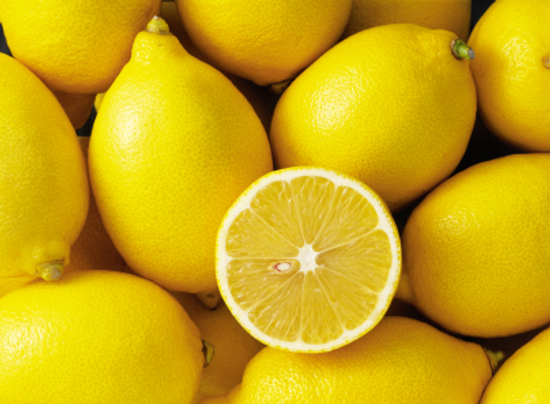
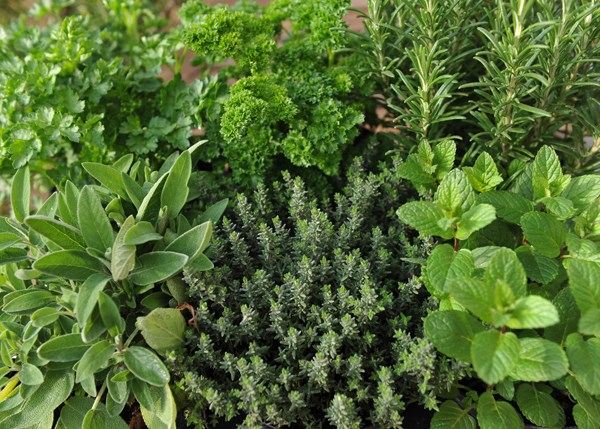
    Therefore, on a weekday night, after my Sunday farmers market grocery sprees when I get my herbs (rosemary, thyme, oregano, basil), garlic and lemons, lettuces, I start thinking about my menus. Planning the proteins, the vegetables, and preparations. I hate wasting food so I try…. it doesn’t always work…. but I try to plan around my work and social calendar. Often, I eat out at least 3 times a week. For me, that’s a lot. If I eat out more than that, I start to not feel so well. Too much rich food and not enough control over my diet. However, food is like medicine for me. I eat more vegetables, simply prepared, feeling great the next day. If I overindulge in sugar, alcohol or fats throughout the week, I start to feel less than stellar. But that’s I me. I’m approaching the mid-century mark….and like a 1950’s well oiled car, my body needs love and care. (Trust me, I danced in-and-on NYC dive bars after imbibing on my share of alcohol for decades…I need love and care! LOL.) I’m getting off topic but I do feel that it’s important to cook at home.  We have complete control over what we eat when we make it ourselves.No one can get it wrong if you do it yourself.

    For me, I need to have this following pantry items at all times to make anything taste yummy and for ease throughout my week.

    1. Salt and pepper (Gizmodo.com writes a brilliant essay on the pairing and noted use.) Kosher salt is the best for cooking and flavoring.

    2. Extra virgin olive oil.

    3. Lemons (and sometimes limes, oranges or grapefruit are good to have)….lemons though are at the always in my house.

    4. Garlic

    5. Fresh herbs

    Optional

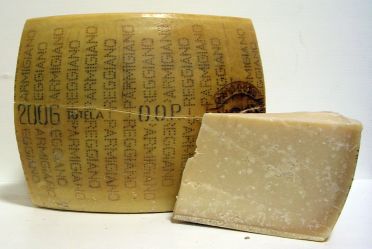
    1. Hard italian cheeses (Parmesan, Reggiano or Asiago)

    2. Flour

    3. Onions

    Clearly, this is based on a Mediterranean diet and I just find it simple. As long as I have the first 5 ingredients, I can make beef, poultry, seafood and vegetables taste amazing. And for me, I’m trying to keep it simple.

    Let’s Make Something:

    Salad Dressing: Two parts olive oil, 1 part lemon. Twist of Salt, twist of pepper. Boom!

    Roasted Fish: Take one lemon and slice into several rounds. Take the fish  (salmon,cod, halibut) and place on bed of the citrus rounds.Take your chosen herbs, rough chop. Stir with some olive oil and garlic, making a think paste. Coat the fish and roast at 350 degrees for about 20 to 25 minutes Boom! Pretty too!

    Chicken: Preheat oven to 400 degrees. Put slivers of garlic under chicken skin (breasts, thighs, legs), Heat up a pan that can go directly into oven. With the garlic stuffed chicken, place skin down and sautee until brown. Turn over and do the same. While chicken is browning, create herb paste, like above. Once chicken is browned, place face up squeeze juice of one lemon, and herb mixture onto onto poultry. Season with salt and pepper, and take lemon rind and place in skillet. Depending on the amount of chicken, cook for 30 to 45 minutes. Boom!

  • Lettuce Eat Lettuce, Then Lettuce Talk About Sex (Kidding about the second part!)

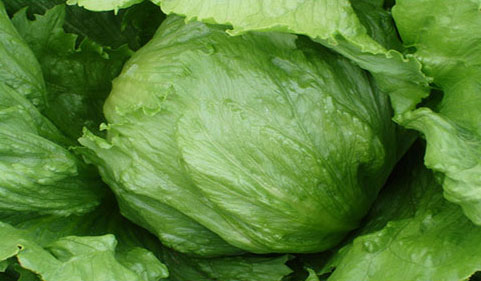
    Lettuce is one of those funny foods that I don’t think anyone really thinks about. There was a time when it was just diet food, especially the much maligned iceberg. Iceberg is not the most nutritious,but it’s so edible and fun. You can use it in place of taco shells, make cole slaw, use it in place of chips for dips. It’s sturdy just like it’s sister lettuces, romaine and red and green leaf. Funny to think that this vegetable, formerly thought of as a weed by Egyptians, is sturdy and durable….the Tonka truck of the food world.

    Personally, I love lettuce and yes, even iceberg. It’s all about the texture. Crunchy. Watery. Green. It’s then about the toppings, the dressings, the vinaigrettes, the lovely sauces that cover and cling.

    Let’s think about some of the lettuces: Bibb (probably the Queen…expensive); the red and green (Fraternal Twins); Romaine (the Glamourous one….in the Caesar, dressed up in bleu cheese too) and then the Iceberg (the Stalwart). We also have raw spinach, lamb’s leaf (my favorite….tossed with a little olive oil and really good salt! Dreams are made from this…), arugula. There are also Endive (the European…it’s curly, fancy…has an accent). However, lettuce stick to the well-known lettuces on this little episode.

    Fun Facts about Lettuce:

    1. It’s the number two vegetable behind potatoes of most consumed in the United States.

    2. 75 %  of all lettuce is grown in California. (Since, the state is currently in the middle of one of the worst droughts in history, it will be very costly soon.)

    3. You can’t preserve it. It is impervious to canning, pickling, bottling or freezing.

    4. Lettuce was introduced to the New World in the mid-15th Century.

    Just a little fun trivia…to lighten your day.


    Grilled Romaine

    You Will Need:


    Grilled Romaine Caesar Salad

    1 head of Romaine lettuce (Outer leaves peeled off)

    Worcestershire sauce

    Salt & pepper

    Olive oil

    Lemon

    Dijon Mustard

    Garlic

    Parmesan cheese

    Let’s Make This Puppy:

    1. Heat a gas grill. (If using a charcoal, cook all the meat and let them embers cool. We want grill marks and a slight wilt….not blackened vegetables.)

    2.  Cut the lettuce into fourths. If it’s a small head, maybe only in half…you be the judge. (You have the knife in your hand….I’m not going to tell you what to do.)

    3. Brush the cut side with olive oil. Not a lot just enough to glisten and place cut side down on hot grill. DO NOT COVER. This is really just to give a slight taste of char, that BBQ outdoor flavor. It’s like parboiling a potato, we don’t want to cook it, we want to add a little character to it’s existing personality. Remember the first time your parents scolded you in public….and left a scar in your psyche, it’s like that; a little character development.

    Leave the lettuce on the grill, creating the lovely grill marks. The rest of it might have a little bit of brown around the edges….again, a little character development or taste enhancement.

    Remove and place on a plate.

    4. Now onto the dressing: Take a wooden bowl that’s been thoroughly chilled in a freezer. (You don’t have to do this step. It’s only if you want to be fancy.) Rub the garlic clove on the inside of the bowl. Pour in about 1/2 cup of olive oil….couple of dashes of Worcestershire, a dollop of Dijon mustard, squeeze a little lemon…about 1 tablespoon….and add freshly grated Parmesan. Whisk it together in the bowl. (If you want it a creamier consistency…like in a chain restaurant….add some mayo.). Add the salt and pepper to taste.

    5. Arrange the lettuce with the cut side up, Drizzle the dressing over the lettuce. If it’s a little thick, you can whisk in a little more olive oil. Grate some more cheese over it….and voila, Grilled Caesar Salad.

    Note: I don’t like to add croutons to this. There is already a lot of crunch and we are dealing with half a head or a quartered lettuce. You won’t miss the croutons. Trust me.


  • Omelettes or Omelets

    I watched the new Lasse Hallstrom film “100 Hundred Foot Journey” with Helen Mirren…and it made me want to make an omelette. The movie is about a young Indian man who has a way with food. He’s creating sumptuous meals from his traditional Indian background but wants to expand into European haute food. And one of his tests, to truncate some of the film, is to make an omelet. According to the movie and to restaurant folklore, if you make a perfect omelet, you are a chef. (Is that from “Ratatouille”?). I don’t know if it’s true or not.

    I do know that it’s not easy to make an omelette. I have tried for many years to do so and I think, by sheer chance, after using Nick’s saute/fry/ omelet pan, I’ve done it.


    Before I go into that, let’s discuss the omelet. It’s really not a complicated meal but when made, it’s so satisfying. From a corner New York diner, to a luxury hotel, to an upscale restaurant, an omelet is one of those breakfast items that can also become dinner. In NYC’s, now legendary Noho Star, only by longevity, I would dine on an omelette called “Gold-n-Green”. Made with Wisconsin “golden” cheddar cheese and spinach (green), the eggy fold-over was a diners’ delight in low meets high brow experiences. (If memory serves me correctly, it’s cost was $12 over 20 years ago.)

    Of course now, in LA, Petis Trois, the new Ludo Lefebvre French bistro, serves a $19 dollar experience and Napa’s The Grill at Meadowood, which also has the best hash, in my humble opinion, on the Pacific Coast clocks in at the same. Clearly, an omelet is an expensive experience as King Cole’s Bar & Salon in New York City’s St. Regis Hotel is $25 but the same dish is only $10 at the well-known Empire Diner on Eighth Avenue. For $9.95 in Los Angeles at Jan’s, which is kind of a holdover from a bygone era, you can get consume a four egg omelette with ham and cheese!!!!

    20140908_103606

    Anyhow, the point of all this is, I finally made an omelette and all it took was Nick….who had the right pan. It’s made by Spring Switzerland, a company that I didn’t know. It was one of those strange yet pleasant discoveries that after I had whipped up two eggs and put into the well-oiled pan, I went looking for the S & P; ready to stir what I thought would be scrambled eggs, I noticed they had started to set and essentially finished an omelette….and I made them with the bi-fold, meaning that I folded the eggs over about a third, then gently slipped the eggs out of the pan. As the open side hit the plate, I folded that over and then, it became, folded twice. Instead of the one big flip in the middle. The bi-fold is just a little fancier and more pretentious, which if you know me well-enough, I can be.

    20140906_100729

    I’m not really going to give you a recipe because we all know how to make one. The omelettes that I have pictured were made in this Spring Switzerland pan…and I can’t find a website for cookware. 🙁  Regardless, my suggestion is if you want to make an omelette/omelet invest in a good pan. That’s how you make an omelette; use a good pan. They aren’t cheap. If you want to make a true French omelette without the browning, use clarified butter and not oil or straight butter. The fat in both will brown the eggs.

    20140907_10041420140906_100617

    And just in case you were wondering about the spelling of omelettes/omelets….

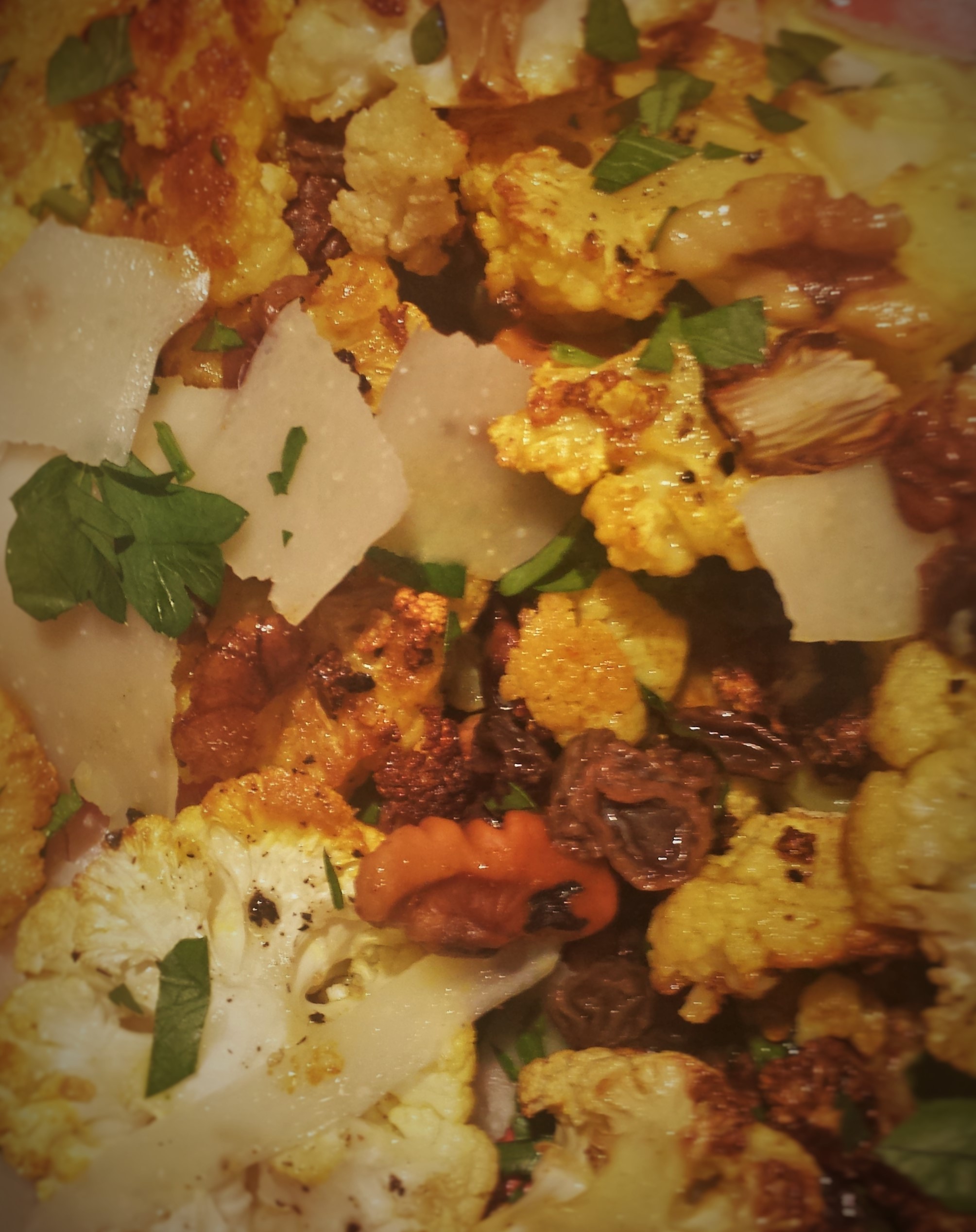
  • Cooking Cauliflower: A Culinary Chef d’Ouevre

    In my mind, cauliflower never ranked on the culinary wheel. There were more interesting vegetables to eat and cook. It wasn’t until I was on one of my frequent Napa Valley trips and dined at Ubuntu that I discovered how delicious cauliflower could be. At that time, Chef Jeremy Fox created a dish that put the white veggie back on the map called “Cauliflower in a Cast Iron Pot“.  It was an amazing, comfort food concoction that was fairly complicated. Fox actually won “Food & Wine Magazine’s Best New Chef” for some of his outstanding and unusual vegetable recipes but the cauliflower was his signature dish. 

    Then a couple of years ago, I started roasting the vegetable along with zucchini, broccoli, and onions but I always picked out the cauliflower first and put it on a separate plate. Sprinkling pink salt and cracked pepper on top of it,  I devoured the entire head of cauliflower by myself. There is a sweet, nuttiness that roasted cauliflower imparts and combine that with maybe some dried fruit or turmeric. It’s a yummy invention. 

    I wish there was something more profound to be said about roasting cauliflower other than it’s simple, delicious eating. Supposedly, it will be a trend in New York City restaurants as reported by New York Times food columnist Ligaya Mishan with far more complicated cooking techniques. 

    On one of my recipe reading binges, I journeyed across an amazing recipe developed by the late Marcella Hazan in a cookbook called “Great Food Without Fuss“, edited by Frances McCullough and Barbara Witt. By blanching the cauliflower and pairing it up with pine nuts, raisins and an Italian hard cheese, it because a meal unto itself and is incredibly simple.  I reworked the recipe with roasting the cauliflower. 

    I said to Nick, “Who knew cauliflower was this delicious?”

    Nick replied, “I didn’t but I do now.” 

    For me, as always, simple is best. 

    What you will need: 

    1 cauliflower head, trimmed of leaves and sliced like steaks. Don’t throw away the ends, just break them apart. You could also cut them into florets, whichever you prefer. I like the steak….it’s prettier. 😉

    1/ 4 olive oil.


    Handful of raisins…depending on your taste. (Soak these for about 20 minutes).


    Handful of walnuts or pine nuts.

    About 2 tbsp of chopped parsley. (It’s a garnish…completely optional.)

    Hard Italian Cheese. Reggiano, Parmesan. Asiago. Your preference.

    Salt and pepper. 


    Let’s make this puppy:   

    1. In a large bowl, place cauliflower, nuts and olive oil. Mix until coated well. 

    2. Throw onto a baking sheet and spread it out. Place into a preheated oven at 375 degrees. 

    3. Roast for about 20 minutes and taste a tiny bit. It should be tender. If not, give it another 5 to 10 minutes. 

    4. Once vegetable is lightly brown with nuts toasted, put onto a bowl or on a plate. Shave cheese to your liking and toss with parsley. Trust me as you may only eat this for the rest of your life. 

    20140906_152227


  • How to NOT Make a Cabbage Patch Dull

    cabbage_0

    My friend Mark is a homecook like me but he loves to make complicated Moroccan food. The dishes that are thirteen thousand ingredients and counting. I do not. I want my food and cooking. It’s not that I don’t think that dishes with a lot of ingredients aren’t tasty; on the contrary, I find them delicious. I just like making things that are unfettered. Personally, I just want to taste 4 or 5 ingredients.  Good quality ingredients with a simple preparation; very much like Alice Waters.

    Mark recently asked me to help him cook a Moroccan dinner which was a thoughtful gift that he gave to a recently married couple. I was honored that he would ask for my help and since it had grown into a party of 10, he needed it. As part of the menu, he already planned two tagines: one lamb and one chicken, a fish b’stilla (the savory pie), cous-cous and roasted vegetables along with several appetizers. The one thing that the host specifically wanted was a series of Moroccan salads.

    Cabbage 1

    Mark, Mary (another homecook friend also asked by Mark to assist him) and I sat down to look at recipes that would be easy and complementary to his tagines featuring figs, dried apricots, preserved lemons and exotic Middle Eastern spices such as zatar and sumac. We started to look through several including a couple from Paula Wolfert.

    Cabbage     cabbage_0


    Since, Mark was already making several tagines from Paula and another cookbook, I scanned “Morocco” by Jeff Koehler. One of the first that popped out was a Moroccan Cabbage Salad with Olive Oil, Lemon and Garlic. With a quick look at the recipe, I knew this was a keeper. It’s delicious with freshly ground Himalayan pink salt for finishing. (This is my adaptation of it.). I also knew that I wanted to make it. 

    What you need:

    One head of Cabbage

    2 Lemons

    5 Garlic cloves

    1/2 cup of oil

    Let’s make this puppy:

    1. Wash and slice the cabbage about a 1/4 inch thick into a large bowl for tossing. Don’t slice it too thin. (For color, you can add a little red cabbage.). 

    2. In a smaller bowl, press the garlic cloves and extract all the liquid. Throw the pulp into the bowl too. 

    3. Squeeze the juice out of lemons (removing all the seeds) into the same bowl. Add the olive oil and whisk. 

    4. Depending on when you serve this salad and how “cooked” you want the it to be, is when you should mix dress the salad. If you let the cabbage sit in the liquid too long, it will get less crunchy. So, I like to dress it about 20 minutes ahead of time, set aside and then serve with a finishing salt and parsley. 

    Awesome. Really. 

    Cabbage Bowl

  • Making Bread: Unfortunately, not the Green Kind…but Tasty.

    I love simplicity.”Keep it simple”, I say to myself constantly. (I try remembering that phrase in everything I do.) I’ve realized that when something becomes too complicated akin to putting together a piece of furniture from Ikea, I believe it’s either not meant to be or you need to stop, look at the process and leave it alone for a period of time. 

    I truly wish I knew what “keeping it simple” meant in my early twenties. My relationships were complicated and living in New York City felt just as complex. However, looking back I had no one to blame but myself and life always feels complicated in your youth.  

     Dan Lepard main pic pastry

    I was invited to a pot luck dinner party at a friend’s house in the West Village. I offered to bring something and my darling friend Penny said, “Bring an appetizer like a dip and chips!”. Of course, I interpreted this as why don’t you make something complicated like Parmesan Puff Pastry Straws. 

    Opening up the “Mastering the Art of French Cooking” more than 20 years ago, I started the process thinking it really couldn’t be that hard. On the third day of rolling out that iced dough, I was through. I wanted to throw it against the wall or in the trash. I saw the pieces of butter throughout the rolling…and no, I did not find the act of rolling it out for three days engaging. It was a difficult process, plus I had to shave in a “good quality” parmesan which added another process of folding. This was in the late 80’s, long before the internet and the magic of industrialized cooking. Now,you can buy Pepperidge Farm Puff Pastry, then, it was the Stone Age and DIY. 

    At the end of four days, it was tasty just not worth the hassle and I never tried making bread again. Pie crusts and Apple Brown Bettys were all I was going to muster. 


    Rolling out Puff Pastry

    Then, 25 years later, and now in Los Angeles, I’m perusing the world wide web and came across an article on Mark Bittman’s site, fleshing out the simplicity of “No Knead Bread”. I thought I would try my hand at it making dough again. It’s not puff pastry but hey, it’s a beginning. The recipe is essentially five ingredients and the stunning bread lasts about a week. What is more beautiful than that? Five items purchased at any grocery store! Once it gets a little stale, you can turn it into croutons or into homemade breadcrumbs with a food processor. 

    How to make it….(or you can look up “No Knead” Bread”). 🙂 

    3 cups of all purpose or bread flour

    1/4 teaspoon of yeast

    1/4 teaspoon of salt

    2 cups water. 

    1. Place the flour, yeast and salt in large bowl and stir together. 

    2. Pour in 1 3/4 cups of water and mix. The dough should be a sticky mess. Cover with plastic wrap and but in an area that will stay about 70 degrees. Let this rise for about 12 hours. It will be very bubbly on top. 

    3. Next Day: Flour surface and turn out the dough. Place the floured and sticky mess into a clean, cotton dishtowel and let rise another 2 hours. 

    4. Here’s the real trick. It needs to go into a very hot oven at about 450 degrees. Place the dough into a dutch oven that’s been heated (do this while pre-heating the oven) and bake covered for about 20 minutes. Remove the lid and bake for another 20 to get the crust brown and crackling. You should get a beautiful artisan loaf. 

    IMG_20140823_150336 (2)


    Couple of tips: Once you remove the bread from the oven. Let it rest for about 15 minutes. Once you cut into, store in a paper bag, cut side down. It helps to keep it from get to hard. And…never cut more than you are going to use. 

    I have made about 6 of these loaves now. I will never go back to buying bread again. 🙂