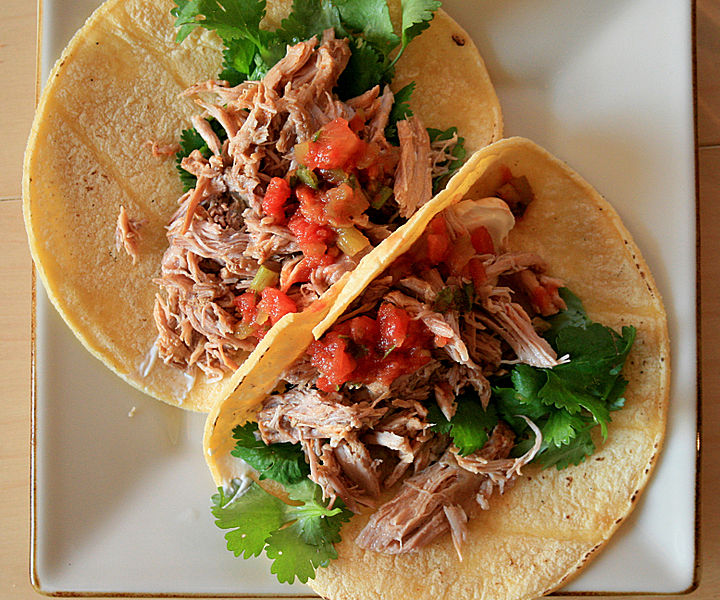


I’ve made carnitas in every city I’ve called home, always riffing on a San Francisco Chronicle recipe: pork, aromatics — cloves, cinnamon — some citrus, a little heat, and slow-cooked until it falls apart. Most people crisp the meat in oil or bake it after shredding, but I usually just leave it in the braising liquid and pull it apart. Moving to Southern Arizona changed that for me. I started to see how many versions of carnitas belong to the Borderlands, each one telling a different story of history and its place in it.
Along this 378-mile stretch of border, from California to New Mexico, ingredients document memories of their location, from climate to use to migration. Even a dish as familiar as carnitas raises more questions once you pay attention to its components.
I came across a version of carnitas braised in milk. It’s a technique I’d always thought of as French. So how did milk-braising find its way into Mexican cooking? And who gets to say whether it’s authentic or not?
Even as I seek out meaningful conversations about food, that question remained with me. One of those talks turned out to be a lesson I wasn’t planning to learn. Or, maybe I knew I would. I’ve seen it before.
Authenticity, Permission, and a Closed Door
After the holidays, I decided to reframe a cookbook I was working on around immigrants. And since I moved to the Sonoran Desert, I wanted to focus on this historic region. I was recommended to speak with someone — a Midwest academic — known for their knowledge of Indigenous cooking and farming. More scholastic and less homey. More explanation than trying to expand the actual use of ingredients and how to use them in a pie or noodle dish. In less than a full five-minute conversation, this educated man of many letters, who claims the region as his adopted home, slammed the door. His words: “I don’t want to dumb it down.”
It wasn’t so much a conversation as a “see what I’ve done” and “I should be recognized for bringing this to the world.” He mentioned his cookbooks and how long he has been bringing this knowledge to others. He stated that he grows some of the ingredients and sells them as part of his business. I realized it wasn’t about food at all, but that he had an arrogance in wanting to give me permission: In other words, I was supposed to listen to his answers to the questions I wanted to ask, and I was to stay in a lane that he controlled.

It wasn’t so much a conversation as a “see what I’ve done” and “I should be recognized for bringing this to the world.” He mentioned his cookbooks and how long he has been bringing this knowledge to others. He stated that he grows some of the ingredients and sells them as part of his business. I realized it wasn’t about food at all, but that he had an arrogance in wanting to give me permission: In other words, I was supposed to listen to his answers to the questions I wanted to ask, and I was to stay in a lane that he controlled.
It was as if these foodways and history, built on centuries of survival — long before he wrote a book and became the self-appointed guardian — were meant only for the privileged few who used ingredients such as mesquite or chiltepin according to his God-like instructions. It made me think about how power works. Even with the best intentions, these keepers protect the culture and believe they own the traditions.
I don’t think you need credentials to cook. You can certainly have them, and even get degrees in culinary programs, such as a PhD in gastronomy or food & beverage management. But I don’t think caring and storytelling need permission. Tradition only survives because people keep cooking at home with family and loved ones. Adaptation comes over time. Recipes continue to stay alive because they’re savored and eaten, not because they’re locked away or put on display for approval. And chefs, cooks and writers can be creative with whatever they want.
For me, making pork braised in milk was not about proving authenticity. It’s a recipe born in a region where these ingredients resided, and someone said, “Let’s use this before it goes bad,”-a type of humility food earned by being well-made with quality ingredients accessible to all, not by being defended.
Why Milk-Braised Carnitas Belong Here, and How I Make Them

Milk-braised pork isn’t pulled from nowhere. Dairy appears differently in northern Mexican cooking than farther south, shaped by ranching, the climate and, of course, history. Milk isn’t foreign to the Sonoran region, but it’s not native either. It’s existed for centuries, and now, it’s become part of the cuisine. When pork simmers gently in milk, the meat softens deeply, the liquid reduces and caramelizes, and the dish moves naturally from braise to fry.
For this version, I keep things simple on purpose
Sonoran Milk-Braised Carnitas Recipe
INGREDIENTS
- 3 pounds pork shoulder or butt, cut into large chunks
- 1 tablespoon kosher salt
- 2 tablespoons lard or neutral oil
- 1 orange, peeled and pith removed
- 1 teaspoon freshly ground black pepper
- 1 teaspoon crushed Mexican oregano
- 2 bay leaves
- 3-4 garlic cloves, smashed
- 1 medium onion quartered
- 1/4 teaspoon crushed chiletepin pepper or red pepper flakes
- 2 cups whole milk or more.
Cook this up:
Season the pork generously with salt, pepper, and oregano.
Heat up the lard or oil in a wide, heavy-bottomed pot or Dutch oven. Gently place seasoned meat and lightly brown, no more than a minute or two. We aren’t browning, we are preparing it for the braising. Once done, add the bay leaves, garlic, and onion. Stir for a minute or so.
Pour in the milk. It should reach halfway up the meat. Add in the orange peel. Bring the pot to a gentle simmer over medium heat.
Turn the heat to low and cook uncovered, stirring occasionally, for about 2 to 2½ hours. As the liquid reduces, the milk will begin to caramelize and separate, as expected. Watch carefully. (I like to set a timer on repeat in 15-minute intervals. It sounds far more labor-intensive than it actually is. You are making sure the liquid doesn’t evaporate too quickly.) The meat will brown and continue cooking until the liquid has fully reduced — you might need to add a little more milk depending on how the heat — and the pork begins to fry gently in its own rendered fat.
Stir and turn the pieces carefully, allowing them to brown evenly. Cook until the pork is deeply tender with crisped edges, about 20–30 minutes more. Taste and adjust seasoning. Serve as desired — I like it as tacos with crema, pickled red onions, cilantro, thinly sliced radish and crumbled queso fresco.
Eat well.