Tag: cooking

  • Black Tepary Bean Hummus: A Sonoran Desert Recipe

    Black Tepary Bean Hummus: A Sonoran Desert Recipe

    Nick and I will have been in Tucson for a little over two months by the time I publish this post. While I often mention what I’ve done and where I’ve been, and, of course, what I eat, I try to keep things that are really important to me private. Sometimes, I leave Nick out. Not because I don’t want to share about him, but I believe I honor our life together by not sharing it with everyone. I also feel that way about my friendships. Sometimes, I post about them, but in this day and age of oversharing, I don’t want to share everything.

    Citrus growing at Mission Gardens

    But, oddly, kismet–happenstance–luck happened before Nick, and I arrived in the Sonoran Desert. Thus, I believe this warrants a blog post. 

    Unbeknownst to me, Kim, the former food editor for the now-defunct Cottage Living, which published from 2004 to 2008, and I worked together on a series of stories in Napa Valley. We became friendly as journalists and media relations people do. You spend hours – sometimes, days working beside journalists, helping keep clients on message, ensuring control over what your client may or may not say and in general, guiding both with helpful information. On one such venture, Kim stayed with me in San Francisco once, and another time, when I first got sober, she stayed with me in West Hollywood while she was on her memoir tour for Trail of Crumbs. Admittedly, I was a bit of a mess – my world imploded. I realized that those whom I thought cared about me – indeed, said they loved me – had thrown me to the wolves, in front of an oncoming train, under a bus and facing an avalanche.  

    Kim moved to Alaska with her then-new husband. When Kim said to me about moving to Anchorage, I replied, “They don’t even grow basil there!” (They do, but that’s not the point I was making. Luckily, she laughed.)  I floundered about until I met Nick and continued to be a fish out of water until – truthfully, until we decided to move to Southern Arizona.

    We didn’t stay in touch except maybe with our social media posts. In September, she posts something about moving to Tucson – and I reply, “No way! We are moving there too!” As a couple, they have been together for 15 years, almost as long as I’ve been sober. Nick and I bought a home in a developing neighborhood about 7 miles south of the entrance to Saguaro National Park. Our commutes to the grocery store and shopping pass through undulating mountain ranges and saguaros – desert sentinels, really – standing as tall as a four-story building. 

    We’ve spent time together now – the four of us eating magnificent meals cooked by Kim overlooking the Tucson Valley basin from her new home with Neil. If the desert can bring a longtime friend into the fold, perhaps it’s the Sonoran Desert telling us that this is home. 


    Tepary beans are native to the Sonoran Desert, which extends into Mexico from Arizona. It’s been cultivated by the indigenous peoples for more than 4,000 years and is drought-resistant, owing to its prevalence in the region’s foodways. When cooked, it’s sweet, if not a little sugary, a bit nutty too and stays firm.  I bought these at Mission Gardens, a four-acre agricultural museum that showcases the heirloom crops grown in the Sonoran Desert for thousands of years. 

    Black Tepary Bean Hummus 

    This version keeps the ingredients minimal, so you will find a sugariness. It has a deeper, more complex flavor than chickpea hummus and a gorgeous dark color that photographs beautifully.

    Ingredients

    • 1 ½ cups dried tepary beans
    • 2 tablespoons tahini
    • 2 tablespoons olive oil
    • 2 tablespoons fresh lemon juice
    • 1–2 cloves garlic, minced
    • ½ teaspoon ground cumin
    • ½ teaspoon salt, more to taste
    • ¼ cup of  cold water (to thin)
    • A pinch of chiltepin or red pepper flakes
    • A drizzle of chile oil
    • A squeeze of lime instead of lemon

    Instructions

    1. To begin, soak the tepary beans for at least 24 hours. They take a very long time to cook. I have found that they need at least 10 hours on the stove at a gentle simmer. I also add salt, pepper, a garlic clove and a bay to the water. Keep testing a bean or two until soft. 
    2. In a food processor, combine the tepary beans, tahini, olive oil, lemon juice, garlic, cumin and salt.
    3. Add ¼ cup of cold water at a time until the smooth texture to your liking. Tepary beans make hummus thicker, so continue adding a little water until the desired consistency is reached. Adjust seasoning as needed. 
    4. Add more salt, lemon or garlic as needed. If you’re using chiltepin or chile oil, add it now.
    5. Spoon into a serving bowl, drizzle with more olive oil and finish with your optional Tucson flourish.

    LEFTOVERS

    LOCAL

    Café Maggie, according to Tucson Foodie, a popular Fourth Avenue spot known for coffee, sandwiches, and a collegial atmosphere, has closed after an equipment failure and ongoing financial strain.

    REGIONAL

    KTAR News reported that Michelin Guides will now cover the Southwest. It will include Arizona, New Mexico, Nevada and Utah. 

    NATIONAL

    The James Beard Foundation announced new criteria for its 2026 Awards, placing greater emphasis on community impact, wage transparency, and equitable workplace culture. While culinary excellence remains central, nominees will now be required to show documented commitments to fair labor practices. 
    Bon Appétit did a beautiful story on Tucson. I wish I had the chance to write it. Bummed.

  • This Is American Food

    This Is American Food

    If a corn cake and crab dip chatted in the kitchen, they would say, “Gurl, this is real food for the Fourth of July.

    We know our founding fathers did not eat hot dogs, hamburgers, and apple pie after signing one of the world’s most important political documents. Most likely, their plates were heaped with pancakes made of cornmeal served with roasted meats and seafood gathered from nearby waterways. 

    It makes sense that corn, cultivated by Indigenous peoples for thousands of years, was the staple of early cuisine. Indeed, cakes made from ground maize, such as hoecakes or johnnycakes, were easy to make and eat, piping hot out of a wood-burning fireplace. Coupled with the abundance of seafood along the Eastern Seaboard, tables featured paired combinations like crab, oysters, and fish, to accompany the cornmeal staples.

    Indigenous Ingredients Were Already Here

    However, these flavors didn’t originate from European settlers; they were already grown and eaten by the existing populations of Indigenous people. New foods were introduced to the settlers including corn, squash, beans, and natural salts harvested from brine springs and coastal waters. These weren’t just ingredients, they were intertwined to the land, ceremony, and survival of the tribal nations.

    Enslaved Africans brought frying, stewing, and seasoning traditions that became the foundation of Southern and coastal cooking. Caribbean immigrants layered in citrus, chili, and preservation techniques that show up in seafood, spice blends, and pickled vegetables.

    Who Gets Credit for “American” Food?

    For too long, the narrative of “American food” has centered on Germanic and Eastern European traditions, sausages, stews, pies, because these communities, though once immigrants, came to hold power in cultural storytelling. Meanwhile, Indigenous, African, and Caribbean contributions were often erased, commercialized, or absorbed without credit.

    Thus, I decided to create a bit-sized corn cake appetizer dolloped with hot crab dip ontop. It’s inspired by the foods served during those first July celebrations in 1776. American cuisine has always been a blend of indigenous crops, African techniques, Caribbean flavors, and immigrant ingenuity.

    This 4th of July, Celebrate Interdependence.

    This Fourth of July, I’m celebrating not just independence, but interdependence. The shared hands, cultures, and histories that shaped what we eat today.

    Mini Corn Cakes with Crab Salad (Gluten Free)

    I created this recipe from many sources as a showcase of early American roots: Indigenous, African and early settlers.

    Makes about 12–16 mini corn cakes

    For the Corn Cakes:

    • 1 cup stone-ground cornmeal (medium grind works best)
    • ½ tsp baking powder
    • ½ tsp kosher salt
    • 1 cup buttermilk (or ¾ cup milk + 1 Tbsp vinegar, rested 5 minutes)
    • 1 large egg
    • 2 Tbsp melted butter or neutral oil
      ½ cup corn kernels (fresh, frozen, or canned—optional)
    • oil for frying

    If the batter seems too thin, let it sit for 5–10 minutes so the cornmeal can absorb more of the liquid. For a thicker batter, add 1 Tbsp finely ground cornmeal or masa harina.

    For the Hot Crab Dip:

    • 8 oz lump crab meat, drained and checked for shells
    • 2 Tbsp mayonnaise
    • 1 Tbsp sour cream or plain Greek yogurt
    • 1 tsp Dijon mustard
    • 1 tsp lemon juice (plus more to taste)
    • 1 tsp chopped chives or green onion
    • Pinch of Old Bay or cayenne (optional)
    • Salt and pepper to taste

    Instructions:

    Corn Cakes:

    1. in a medium sized bowl, mix cornmeal, baking powder, and salt.
    2. In another bowl, whisk buttermilk, egg, and melted butter. Add the wet ingredients to the dry and stir just until combined. Fold in corn kernels, if using. Let it sit for a few minutes to thicken.
    3. Heat a skillet or griddle over medium with a light layer of oil.
    4. Drop batter by heaping tablespoonfuls to form small cakes (~2 inches). Cook 2–3 minutes per side until golden and crisp on the edges. Transfer to a wire rack or paper towel.

    Crab Salad:

    1. Preheat the oven to 350 degrees. While that reaches temperature, Gently mix mayo, sour cream, mustard, lemon, chives, and spices in a bowl and place into a baking dish
    2. Fold in crab meat, being careful not to break it up too much. Taste and adjust seasoning.
    3. Bake for 15 – 20 minutes until heated through.

    Serving: 

    Top each corn cake with a spoonful of crab dip. Garnish with a sprinkling of fresh, chopped herbs (such as dill or chives) or a sprinkle of smoked paprika or lemon zest, if you’re feeling fancy. 

    Sources & Further Reading

    • Randolph, Mary. The Virginia Housewife (1824) – One of the earliest American cookbooks, documenting cornmeal-based dishes such as hoecakes.
    • Freedman, Paul. American Cuisine and How It Got This Way – A comprehensive look at the evolution of American food culture, including colonial influences and Indigenous ingredients.
    • Miller, Adrian. Soul Food: The Surprising Story of an American Cuisine, One Plate at a Time – Explores the role of African American culinary traditions in shaping Southern and early American cuisine.
    • Library of Congress – Food at Mount Vernon and American Memory collections: Primary source material on colonial food habits, including George Washington’s preference for hoecakes.
    • Southern Foodways Alliance – Oral histories and essays on cornmeal, seafood traditions, and foodways rooted in African, Indigenous, and Southern cultures.

    P.S. Photo was AI-generated. I made the crab dip for a party and planned to create the corn cakes. But, life got in the way.

    The end. Go eat.

  • I8tonite: Bold Living in International Indianapolis, The Middle of Everything.

    I8tonite: Bold Living in International Indianapolis, The Middle of Everything.

    Indiana and South Korea’s Newest Relationship Grows Midwest Dining and Manfacturing.

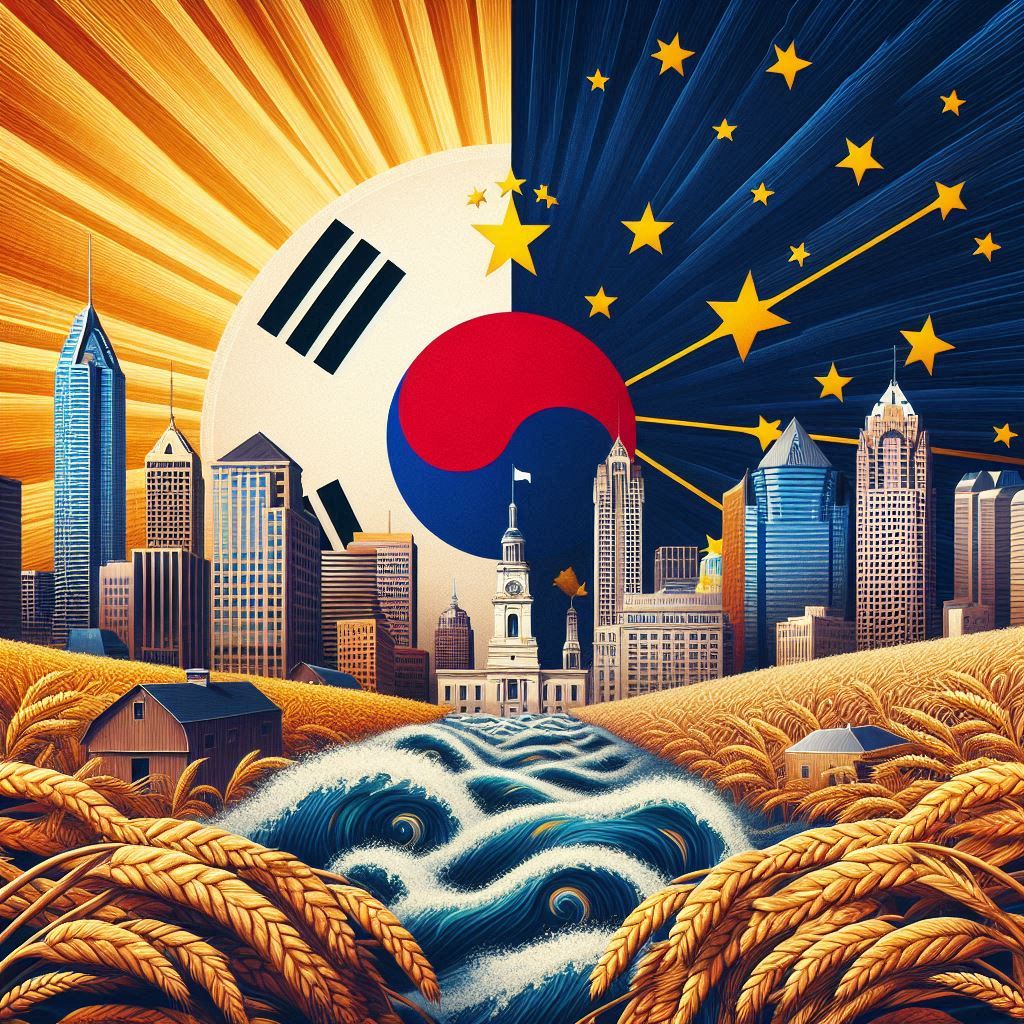
    An AI-generated image of the Indiana and South Korean flag, flying over amber waves of grain and the city of Indianapolis.
    South Korean and Indiana become an international force of dining and EV battery

    Nick and I celebrated five years of living in Indianapolis. It was a big cross-country drive, but we were old hats at it, having relocated from West Hollywood to Phoenix, then Orange County and finally Palm Springs before motoring eastward. Each relocation was for Nick’s work. Since living here, we packed again from our first house in the historic Kennedy King neighborhood into our current “forever” home within walking distance of Broad Ripple if we had sidewalks to get there. (We have the same zip code.) 

    Initially, the city reminded me of my elementary and high school years in Baltimore. Charm City offers mature skyscraping trees and massive, historic turn-of-the-century homes built by transportation moguls. Both areas were hubs of the Second Industrialization Revolution due to the proximity of waterways and the burgeoning railroad system.  And it was walkable. I ran away from home once in my stocking, hiking seven miles from Roland Park to Fells Point.

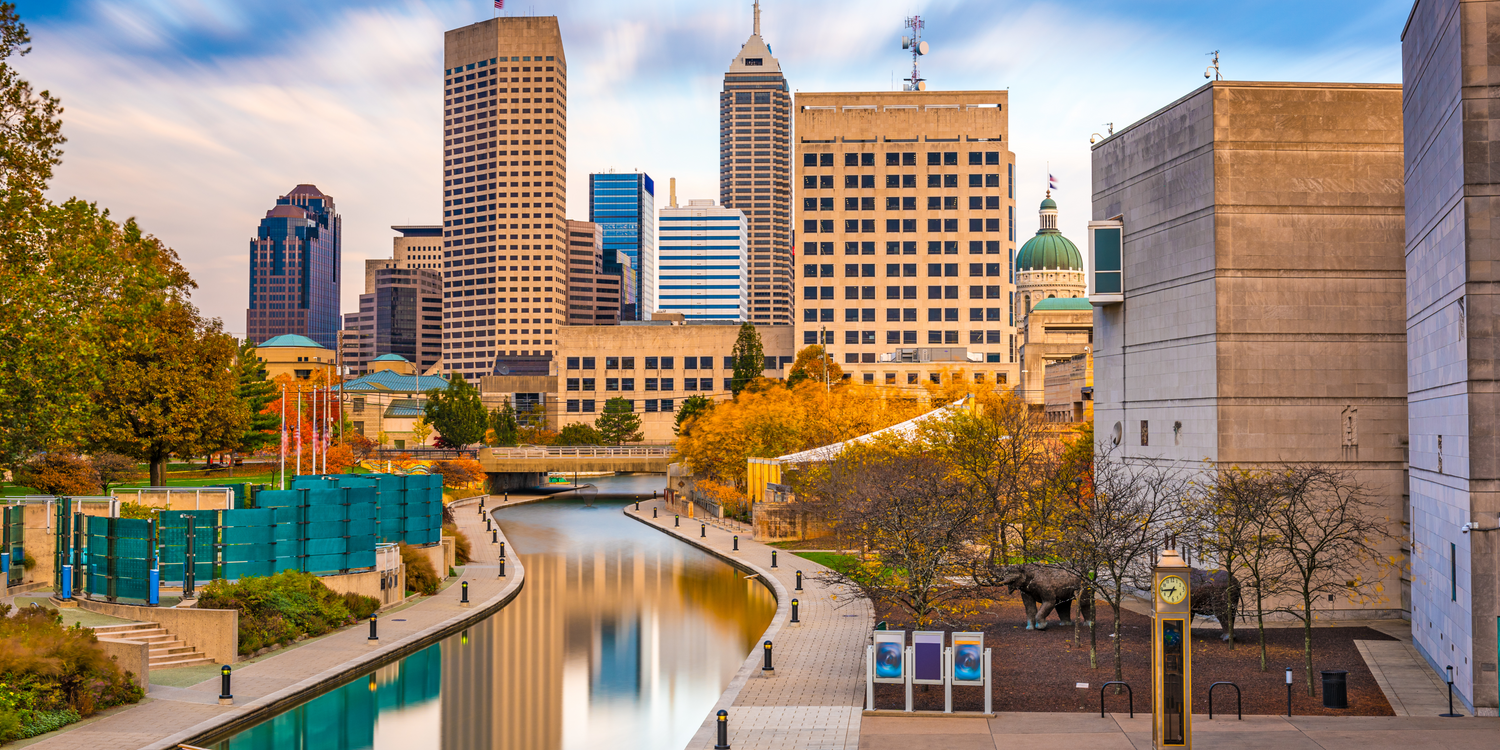
    Indy's Canal during the early morning.

    The difference between the two, today, is that Indianapolis is larger by more than 300,000. It’s the 16th largest city in the country, wedged between Charlotte (15th) and San Francisco (17th). It’s also the third largest in the region behind Chicago (‘natch) and Columbus, OH. Baltimore’s population ranks thirtieth, sandwiched by Memphis (29) and Milwaukee (31).  

    Like my former town of Los Angeles, cars assisted in building Indy. According to the Indiana’s Greenfield Daily Reporter, there were 172 manufacturers of cars or car parts in Indiana, including Stutz and Studebaker in the 1900s. Today, all of them are gone and the state is home to three Asian motor companies, including Honda, Toyota, Subaru and arguably, U.K.-based Rolls Royce, which works on U.S. defense-related production. 

    According to Autos Drive America, Asian automotive production has outproduced U.S. automakers, driving much of the Midwest economy. These manufacturers employ 17,544 Hoosiers, produce 75 percent of total U.S. auto production, and contribute $19 billion to the state’s GSP. Indeed, manufacturing dances away with the show. Kokomo, an hour north of Indy — think driving the 101 from Hollywood to the 210 and getting off in Pasadena without traffic (I know it would never happen, but it does here) — announced in September 2023 a joint venture between The Netherlands-based Stellantis and South Korean Samsung SDI will build a new EV battery plant, creating 1400 new jobs. The city’s population in 2022 was 59,604 and will continue to grow.

    After that information was released, another announcement was that six Korean restaurants will open in the area. Sokuri, serving Japanese and Korean food, opened in January and Sute, a fine-dining Korean barbecue eatery, plans to open in the coming weeks. Indy has 13 Southeast Asian places serving everything from hot pots to Asian-Latin fusion tacos. With the number of South Korean nationalists moving to Kokomo, the companies felt it would be wise to create a welcoming international atmosphere. 

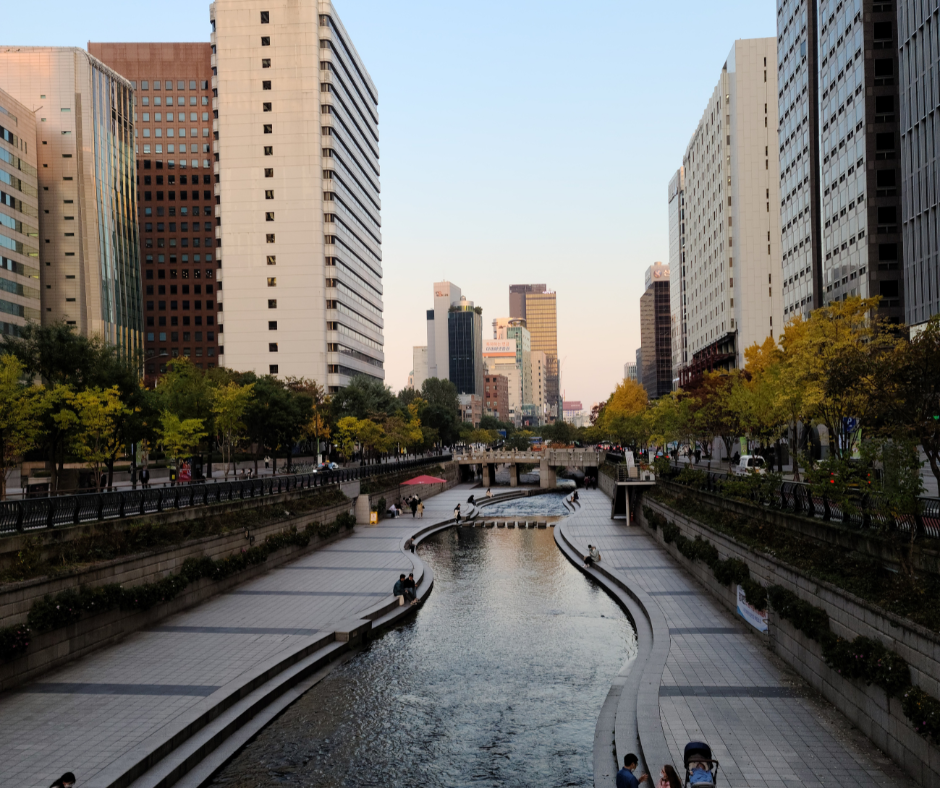
    The  11 kilometer Cheonggyecheon Stream in the heart of Seoul

    This Asian wave brings to mind the Christian Burmese who fled Myanmar, relocating for religious persecution from the Buddhist junta.  Many fled seeking religious asylum, found it in Indiana: Greenwood, a community south of Indy, and Fort Wayne, the state’s second-largest city. The Hoosier State could be called Little Burma because it has the largest population of Burmese in the United States.  If you ever dined on lahpet thoke (green tea leaf salad), a textural, umami delight, you will wonder how you ever ate an iceberg wedge with bottled Russian dressing.

    One can argue that America’s heartland belongs to other countries. I see that differently; I know fewer people fly over our amber waves of grain as we become more about growing an economy that allows everyone to live where they please. We aren’t relegated to one coast or bi-coastal anymore. That’s so 20th century. Now, we are, as the tourism bureau for Illinois says, “The middle of everything.”

    What do I think about it? I always ask, will the traditional foods of the Amish, Dutch and Germans who populated the state be mingled with kimchee and bulgogi? Think of a deep-fried Korean pork tenderloin slathered in a sauce of gochujang, a fermented red chili paste and maple syrup, served on gyeran-ppang, a bread crossed with a pancake and dinner roll or using Indiana pork to make jeyuk bokkeum, pork marinated in gochujang, with Hoosier grown potatoes such as Purple Chiefs or Yukon Golds. 

    I’ve always wanted to live in this country where the comingling of cultures is celebrated and brought together for growth and opportunity. Half a decade later, I’m seeing it come to fruition.

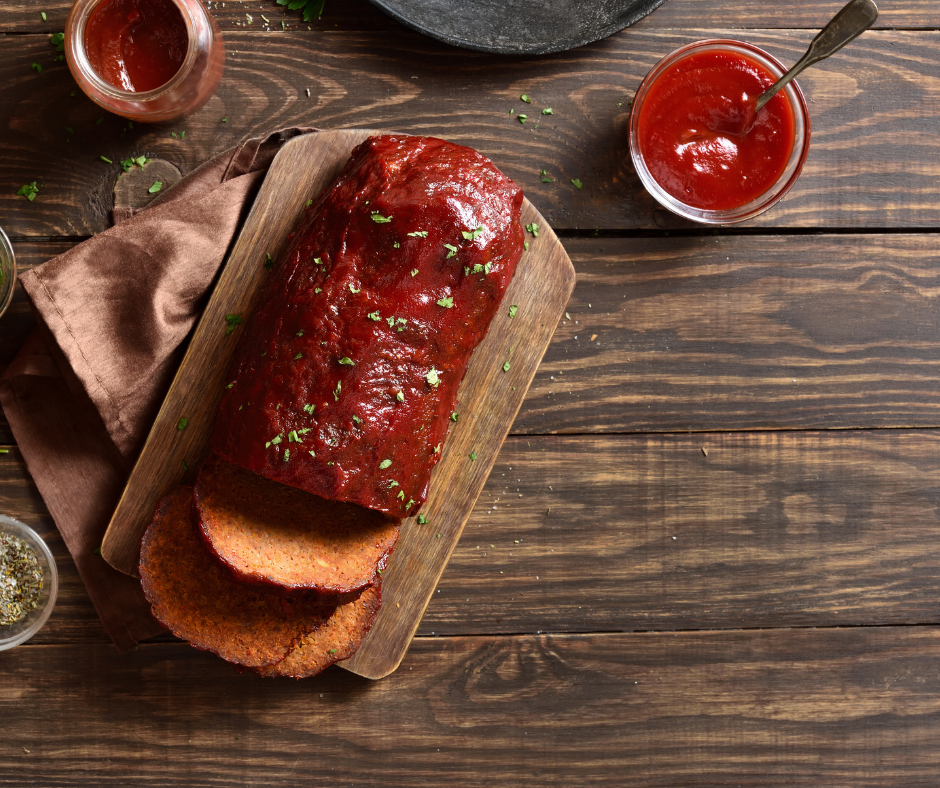
    Korean-Inspired BBQ Meatloaf

    Ingredients:

    For the Meatloaf:

    • 1 lb ground beef
    • 1/2 lb ground pork
    • 1/2 cup panko breadcrumbs
    • 1/4 cup milk
    • One egg, beaten
    • Two cloves garlic, minced
    • One tablespoon ginger, grated
    • Two tablespoons gochujang (Korean red chili paste)
    • Two tablespoons soy sauce (or tamari for gluten-free)
    • One tablespoon of sesame oil
    • 1/4 cup green onions, chopped
    • 1/4 cup carrot, finely grated
    • 1/4 cup onion, finely chopped
    • One teaspoon of sesame seeds
    • One tablespoon gochugaru (Korean red pepper flakes) – optional, for extra heat

    For the Glaze:

    • 1/4 cup ketchup
    • Two tablespoons gochujang
    • One tablespoon brown sugar
    • One teaspoon rice vinegar

    Instructions:

    Preheat your oven to 350°F (175°C). Grease a loaf pan with butter of spay oil or line it with parchment paper. The latter assists in removing the loaf from the pan.

    In a large bowl, mix the panko breadcrumbs and milk, allowing the breadcrumbs to absorb the milk. Add the ground beef, pork, egg, garlic, ginger, gochujang, soy sauce, sesame oil, green onions, grated carrot, chopped onion, sesame seeds, and gochugaru (if used). Mix until all ingredients are well integrated.

    Transfer the mixture to loaf pan, pressing it down to form an even loaf. Or, do what I do, and fashion a free form loaf so much easier.

    Mix the ketchup, gochujang, brown sugar, and rice vinegar in a small bowl. Spread half of the glaze over the meatloaf.

    Bake the meatloaf in the oven for 45-50 minutes. Fifteen minutes before it’s done, remove the meatloaf and spread the remaining glaze on top. Return it to the oven to finish cooking.

    When your remove the meatloaf from the oven, let it rest for about 10 minutes and then slice.. If you feel inspired by Korea, serve bap (rice) or the Pennsylvania Dutch, opt for buttered gluten-free egg noodles or mashed potatoes.

    Go Eat.

  • My Indy Neighbor Makes the Best Jerk Chicken

    My Indy Neighbor Makes the Best Jerk Chicken

    Or, How I Learned About Chinese Jamaican Food

    It’s easy to meet your neighbors when you have dogs. Owners seem to be on the same schedule. It’s either before work or after, sometimes it’s in the afternoon when you work from home. Such as it is with Scott, whom I met as he rolled by on his skateboard with Indigo in tow. However, with her sylph-like form harnessed to her owner, it seemed that Indy pulled Scott like a husky. Indy is sweet to watch; she lopes with determination and zest, eager to exercise.

    In comparison, I trundled by with George. Our chocolate lab loves every dog, and every dog loves him. Indy, a pit and whippet mix, can be rough and needs galloping runs with her skater Dad. The two canines have become friends—a quick sniff and off to their worlds. George is finding good goose poop to eat – a never-ending process – and Indy is potentially racing the Iditarod.  

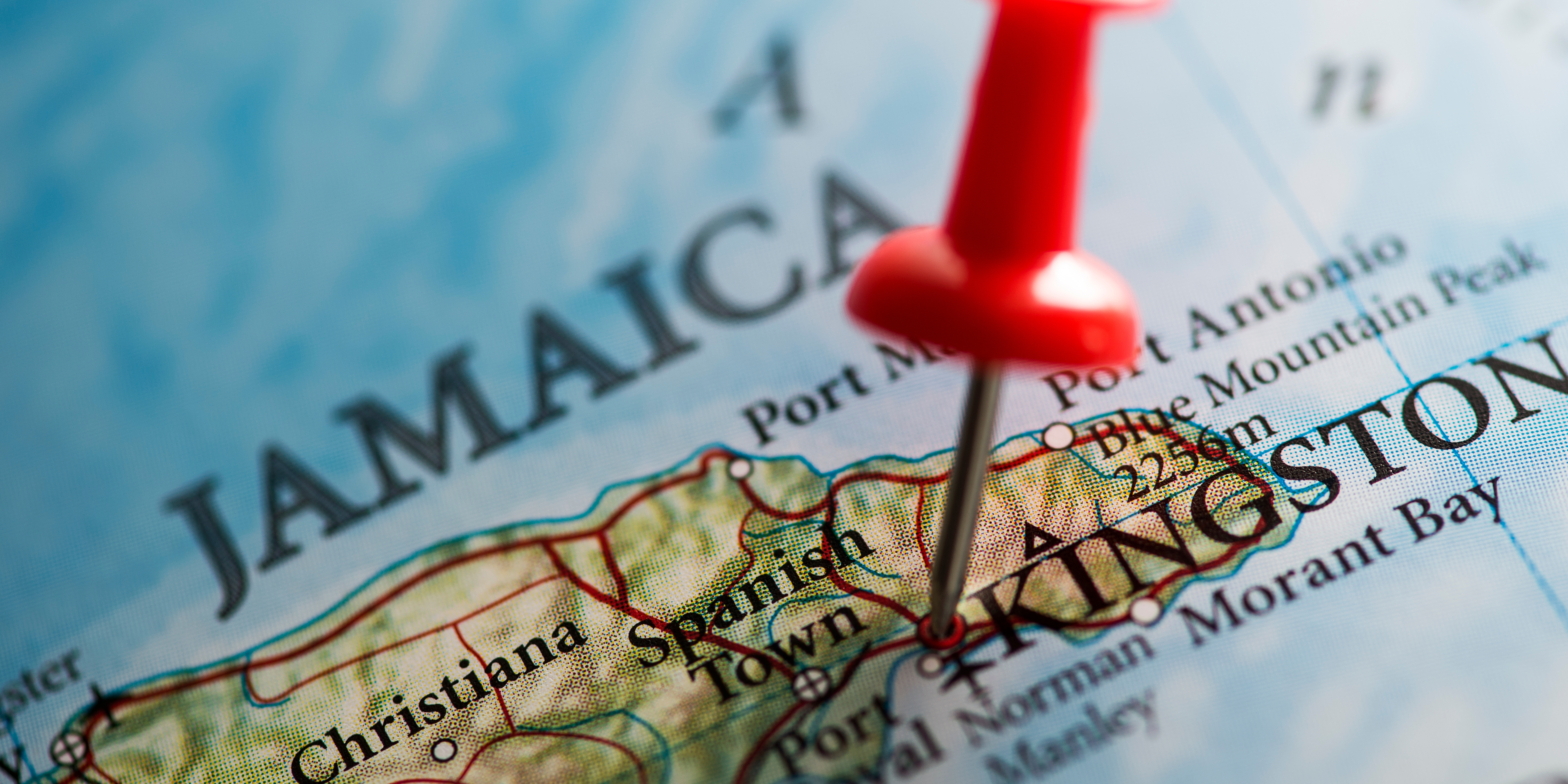
    Growing up as a half-Filipino and half-Caucasian-American boy, I feel acutely drawn to people like me. We are unique. I thought Scott might be bi-racial, too. As it turns out it, he identifies as Chinese Jamaican, a small group of the country’s immigrants that settled in the Caribbean. The son of an American Irish-Scottish father and a Chinese mother, he was born in the Caribbean nation of Jamaica. Raised in Indiana, he, a digital artist, and his wife, Berlin, a teacher are now empty nesters.  

    Scott and Berlin Hughes Photo, Scott Hughes

    Being the food lover I am, I immediately searched the internet for recipes from his Caribbean background. His cooking heritage includes many dishes such as stir-fried goat, jerk chicken chow mein, and char sui dahlpouri. The last dish, literally is a melting pot of cultures, with tastes from Southeast Asia, China, and the continent of Africa.  

    According to the National Library of Jamaica website, the Chinese, mostly Hakka, arrived as indentured servants to work the sugar plantations from 1854 until 1886. Three well-documented ships sailed with almost thousand immigrants during this period. Then, a second and third migration occurred from the early 20th century until the 1970s, mostly of individuals and entrepreneuers looking for better lives. The online publication Gal-Dem, dedicated to telling marginalized people’s stories, says that 50,000 Chinese Jamaicans live on the island today. During an ethnic revolt during the 1970s, several thousand Chinese Jamaicans moved to Canada and parts of the U.S. for safety. 

    When I learned that Scott was Chinese Jamaican, I took it upon myself to learn more. It’s a fascinating immigration story about how Asians and Pacific Islanders came to create a diverse culture in Caribbean history.  Through this, I discovered that the first Filipino settlement occurred in a Louisana in 1763 with a group of enslaved people and other people of color. Even earlier, Filipinos sailors aboard a Spanish ship landed in Morro Bay, California in 1587, reports PBS So Cal Focus, 33 years before the pilgrims land at Plymouth Rock. With this said, discovery of North America most likely were not European but from the Asian diaspora

    In his words: Scott Hughes

    I was born in Kingston, Jamaica in 1972. My father was American Scotch/Irish, and my mother was Chinese, whose parents came to China in the early 20th century. My mother’s people are called Hakka Chinese. They have a dialect but no longer speak it. They are native to Southern China but originally migrated to the region from the central part of China in ancient times. They are considered Han Chinese (a particular group which than moved to Southern China, before immigrating to Jamaica) and live in the traditional Hakka round houses.

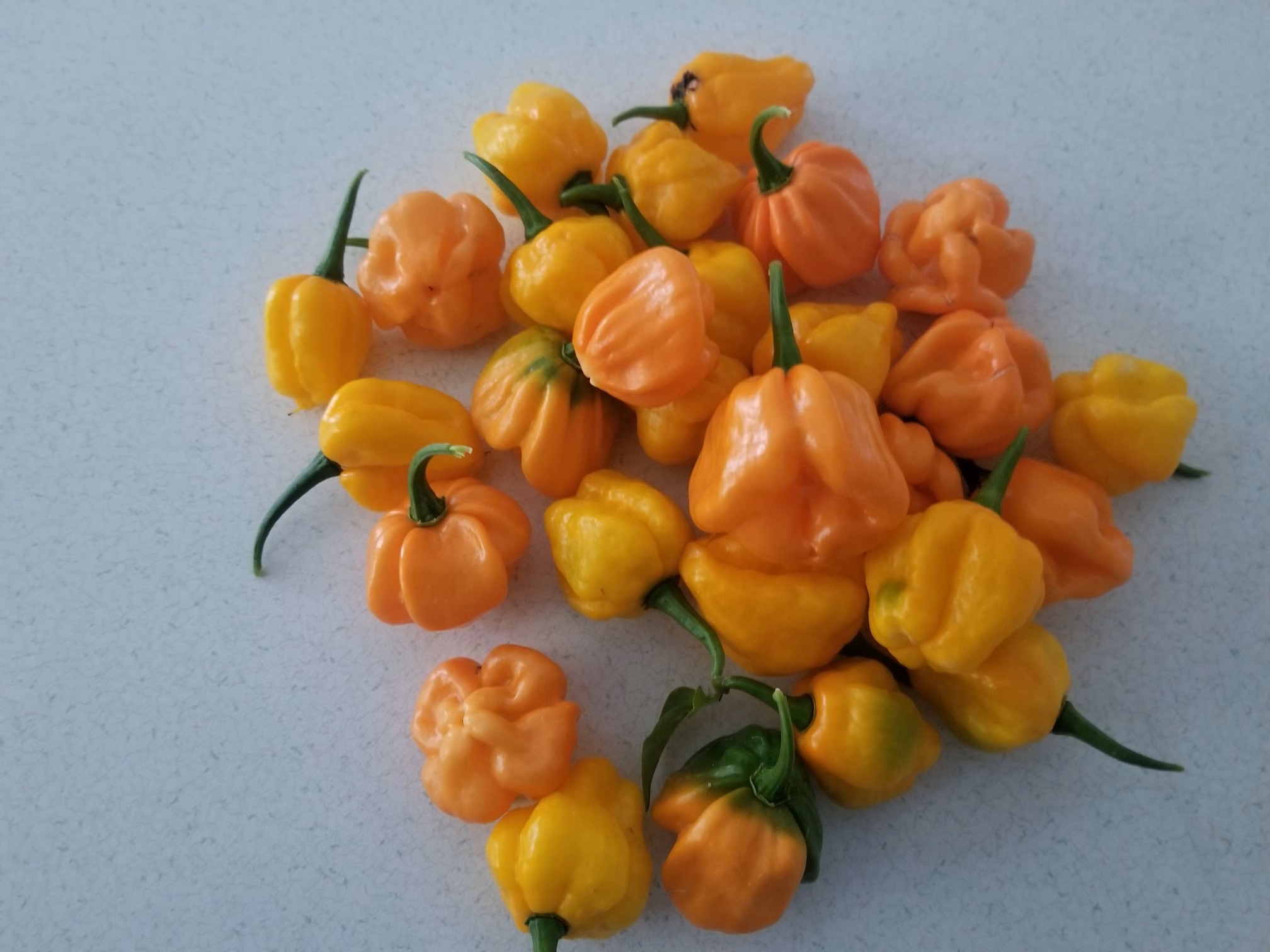
    Home grown scotch bonnets: Photo by Scott Hughes

    My mother came to America through Catholic school connections and attended Marian College in the sixties when she met my father. They moved to Jamaica and lived with my mother’s family before migrating back to the U.S. in the seventies. 

    My uncle owned a small Jamaican eatery called Patties of Jamaica at the 52nd and Allisonville Road intersection. It has been there for over 40 years, now run by my cousin.

    What is your favorite food to cook at home? 

    Jamaican food.

    What do you always have in your fridge at home?

    Scotch bonnet peppers that I grow.

    What marked characteristic do you love in a person you share a meal with?

    Trying new food.

    What marked characteristic do you find unappealing in a person with whom you share a meal?

    Hogging the best shrimp. 

    Beer, wine, or cocktail?

    No

    Who is your favorite cookbook author?

    Julia Child.

    What is your favorite kitchen or bar tool?

    Meat tenderizer mallet. 

    Favorite types of cuisine to cook?

    Chinese, Thai, and Caribbean.

    Beef, chicken, pork, seafood or tofu?

    I love chicken, beef and goat.

    Favorite vegetable?

    Green beans

    What chef or culinary person do you most admire?

    Bourdain

    What food do you like the most?

    Blueberries

    What is your favorite non-eating thing to do?

    skateboarding, water-coloring, digital design

    Whom do you most admire in food?

    Chef Ricardo 

    Where is your favorite place to eat/drink in the Midwest? Delicia

    Where is your favorite place to eat and drink outside the Midwest?

    New Orleans & Jamaica

    What is your favorite restaurant?

    Benyue Dim Sum House in Castleton.

    Who is/are the person/s with whom you would share your last meal?

    My wife. 

    Scott Hughes Recipe for Jerk Chicken

    • One medium onion, coarsely chopped
    • Three medium scallions chopped
    • 3 Scotch bonnet chiles, chopped
    • Two garlic cloves, chopped
    • One tablespoon five-spice powder
    • 1tsp ground cinnamon
    • 1 tsp ground fennel seeds
    • One tablespoon Jamaican allspice berries, coarsely ground
    • One tablespoon of coarsely ground black pepper
    • One teaspoon of fresh thyme
    • One teaspoon of freshly grated nutmeg
    • One teaspoon salt
    • 1/2 cup soy sauce
    • One tablespoon of olive oil
    • ¼ cup dark brown sugar
    • 2 (3 1/2 to 4-pound) chickens, quartered
    • 1tsp Chinese MSG (that’s right)
    • 1 Lime to wash the chicken pieces with (Jamaican practice but not needed)

    Prep chicken pieces by poking them with a fork to allow marinade to seep into the flesh. Rub chicken pieces with fresh lime (optional).

    Use a blender to make spices into a marinade, and place chicken into a 1-2 1-gallon size freezer bag(s) and marinate for a day. If you need to use two freezer bags, split the marinade into both.

    Bake or grill at around 415 degrees for approximately 40 -50 minutes, depending on the size of the pieces.

    If baking, use a slotted pan to release the chicken drippings below. However, roasting the meat in a glass baking dish allows the spices and juices to bathe. It all comes out delicious. 

    You can adjust to a lower heat but add extra time to accommodate.

    Best served with Jamaican rice and peas and a mango coleslaw

    [mc4wp_form id=3900]

  • 2023 Gratitude, A Love Letter from Indy

    2023 Gratitude, A Love Letter from Indy

    Someone asked me if I liked living in Indianapolis. I won’t lie, I do. It’s an easy place to live. The cost of living is low. And, I genuinely love the Midwestern sky even when it’s a wintry gray; though, as I type this, instead of being a cold industrial hue, it’s the color of a vast, majestic ocean, even if the temperature hovers at fifty degrees. Plus, I’m a sucker for quick trip destinations and veering towards the offramp for quick drive-throughs. The small towns of Indiana offer studies of architectural nostalgia and dining, such as covered bridges, Underground Railroad sites, great barbecue ribs, and, strangely enough, pizza. 

    That same person said, “…but you don’t love it.” And I won’t lie again, I don’t. I didn’t love living in California, with complications of wealth, fame, traffic and general mass population malaise. It’s a nice place, but for me, been there, done that. The only place I’ve ever loved living in is New York City. That’s a story for a different time. 

    However, the Midwest, four years and a pandemic later, gives me a chance to take a leap of faith, but I’m doing it in gratitude as I write this by concentrating on writing, mostly around food and design. That alone makes me grateful for living here. In the marketing world, I’ve walked red carpets with clients and sailed the seven seas – actually, six – and met bold-faced names that now, when I mention their names some folks would go,” Who?” It isn’t essential in the scheme of things. Finding food, how we eat, what we eat, and don’t and just eating or even the act of not is important. 

    As an aging gay man of color, – it’s challenging to find that bit of thankfulness sometimes in Indiana or anywhere. Being half-Filipino and Caucasian, I’m mistaken for being Latino, even by Hispanics. Then there is the terrible feeling of coming out every single day. Explaining, “No, my partner is a man.” Followed by the looks. However, the other day, I had a Caucasian woman of a certain age get testy with me, saying, “You’re a man. You can’t multitask.” That cracked me up and horrified me at the same time. All of a sudden, in her comment, I was straight and, apparently, a stand-in for anything male. A little sad, but I guess, to her, I was part of the patriarch at that moment. 

    Of course, being over fifty – the horrors – it isn’t easy to make younger generations realize why it is vital that generations of us and I still stand, work, and have dreams. 

    But I’m aware there are many like me, middle-aged, still finding our way. I only have to look at actors Ke Huy Quan, Michelle Yeoh, Samuel L. Jackson, KFC’s founder Harland Sanders, and Tim and Nina Zagat for inspiration who harbored hopes in directives, as in cities and towns across the globe. That’s the good thing. We have second – and third-endless chances of living into our middle age and remaking ourselves. Isn’t that glorious? 

    That makes me appreciate the Hoosier State more. I’ve been given something new to accomplish instead of holding on. 

    Favorite Things This Year: 

    Book: Minda Honey’s debut memoir, The Heartbreak Years. Charming, funny and at times, disturbing story of a young woman finding her way in Southern California. 

    Song: MMM by Romanian musician, Minelli. Simple ditty about a relationship gone awry and moving past it but it’s the intonation and musicality of Minelli that makes it fun: You know you did me wrong, Mmmm. It hit YouTube in 2022 but it’s an earworm that keeps giving me bops. 

    Streaming: Netflix’s Glamorous with the influencer Miss Benny and Kim Cattrall. While the writing isn’t stellar, the cast is and sometimes that’s worth the price of admission. Besides, it takes place in New York City, provides fluff, good-looking folks and an amusing storyline with the lead a non-binary, non-Caucasian person.  
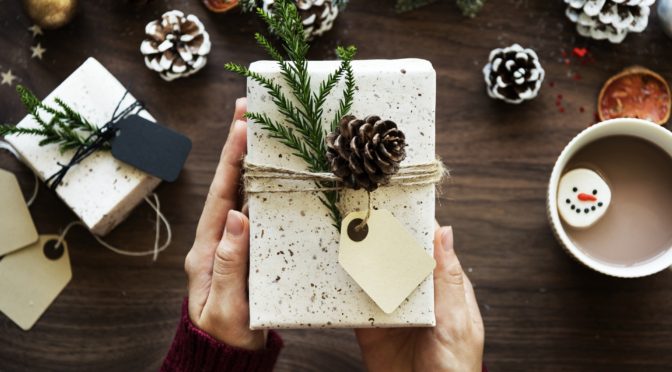
    Life: Nick, my partner of a decade and our two dogs, Rufus, our French bulldog puppy and Jorge/ George.

    Lastly, Indianapolis has become an unrecognized melting pot. On any given day, the streets and malls feature a large swath of various ethnicities and non-gender conforming identities. In turn, all this mixing of ingredients creates a new fusion of delectable deliciousness. 

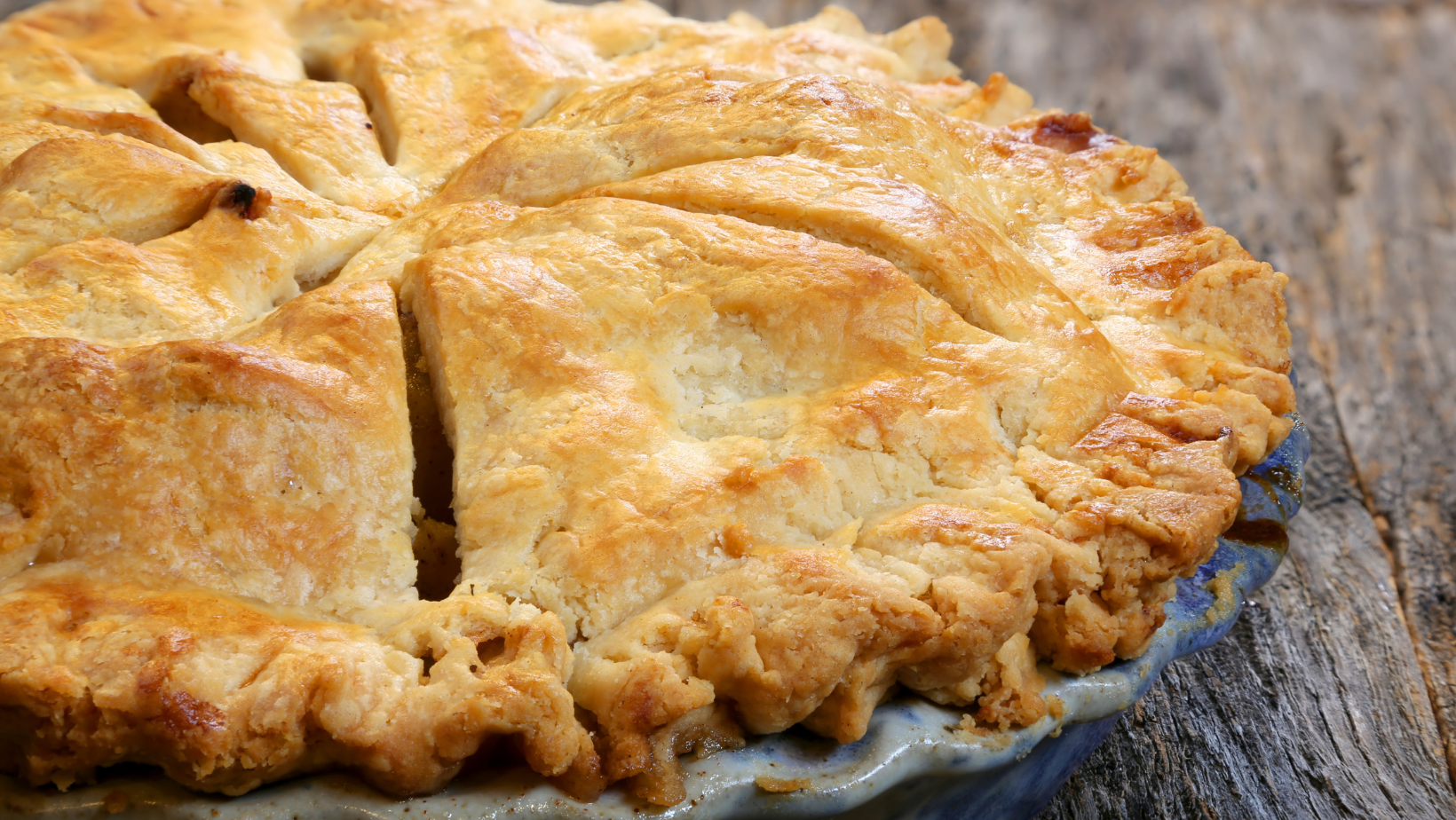
     Recipe for Gluten-Free Asian Pear and Apple Pie

    How to make the crust: 

    1 cup of GF flour blend like King Arthur’s Measure for Measure or Cup4Cup

    1/2 teaspoon, salt

    1/2 teaspoon, sugar

    Two tablespoon butter

    Two tablespoon oil

    1/2 teaspoon, vinegar

    Use four to six tablespoons of cold water so that the mix creates a ball of dough. Roll into a globe and place the dough in the center of two pieces of waxed or parchment paper or plastic wrap. Roll out so that it forms a circle.

    Peel off the top layer of waxed or parchment paper. Spray a pie pan with non-stick spray. Invert the pan upside down on top of the dough, centering it as much as possible. Place your hand under the waxed paper, flipping the whole thing over, and press gently into the pie pan.

    Filling:

    Two to three cups of ripe Asian pears, cored and sliced

    Two to three cups of apples, your choice

    3/4 cup sugar

    One tablespoon, cornstarch 

    One teaspoon, ground cinnamon

    1/8 teaspoon, ground nutmeg

    1/8 teaspoon of five-spice powder

    1/4 teaspoon, salt

    One tablespoon of lemon juice

    Directions:

    Preheat your oven to 425 degrees.  Place one pie crust on a greased 9-inch glass pie plate. Press firmly against the side and bottom.

    In a large bowl, gently mix all the filling ingredients and spoon into your crust-lined pie plate. Top with a second pie crust. Pinch the top and bottom pie crust at the edges to seal and cut 4 – 5 slits in the top crust for venting.

    Bake for 40 to 45 minutes or until the crust is golden brown. Cover your edges after about 15 minutes of baking to prevent excessive browning.

    Cool on a cooling rack for at least an hour before serving.

  • Why Indiana? The weather. (And BBQ Pork Ribs)

    Why Indiana? The weather. (And BBQ Pork Ribs)

    Nick previously lived in Indiana for 10 months before we moved to Indianapolis together. He grew up outside of Milwaukee, so he knows the Midwest intimately and the frosty months. That’s something everyone from the area talks about, the weather, and ice and snow. 

    The opposite of winter is summer, which I heard less about. Having grown up on the coasts and never been in the center of the United States, my impression became that the middle of the country needed more warmth. Maybe because I never asked since Al Roker always gave me the lowdown. From January until March, he would say,”… blustery February snowstorms in Chicago with temperatures in the teens moving over to the northeast, dropping temperatures to the single digits.” Or something like that. 

    Post-holiday seasons and into any new year, the Southern California population from Santa Barbara to San Diego would lounge in shorts, maybe putting on a jacket, venturing out with the dogs or in the evening for a red-carpet event. Indeed, there were dramatic Hollywood seasons when a Mr. Freeze-like El Nino or La Nina laid into the Malibu Ken and Barbie’s lifestyle. Still, it was temperate for 60 percent of the two decades I resided in the Golden State. (Now, the Bay Area in the summer was cold. Talk about a mindf**k.) 

    For all the wind and chill in Indiana, getting to summer makes skidding on black ice almost worth it. Arguably, it’s the best season anywhere on Earth. I don’t mean that lightly, either. I’ve spent time in parts of Europe during spring and summer. Winter and fall in Asia, South America and Australia. A cool season in Morocco. 

    When the dandelion seed-like clouds gently brush against a glass cleaner blue tinted sky, I believe in Mother Nature. I feel that there needs to be a balance with natural seasons. I know this will change. The last pandemic winter saw a drop to minus double-digits during the holidays but still managed to be the 17th warmest on record, according to the National Oceanic & Atmospheric Administration. Nary, a snowflake, caught an eyelash. 

    Now, when I’m asked what my favorite thing about living in the middle of the country is, I always say the summer. Best thing ever. 

    Indiana BBQ Sauce

    I know that the fourth of July is over but you always need a good homemade sauce. It can be smeared on to any grilled protein, including fish like salmon, taking it from good to stupendous. In the Hoosier State, everything has a tendency to be a little sweeter. Most likely, that’s been handed down over generations using maple syrup which can be found in abundance with the trees that grow throughout the region. Importantly, King Rib, the first drive through for slabs, serves a mighty tasty version. 

    According to food historian Robert Moss, in a story he wrote for Serious Eats, pork ribs began in early 20th century in Indianapolis and Ohio with ‌industrial meatpacking. 

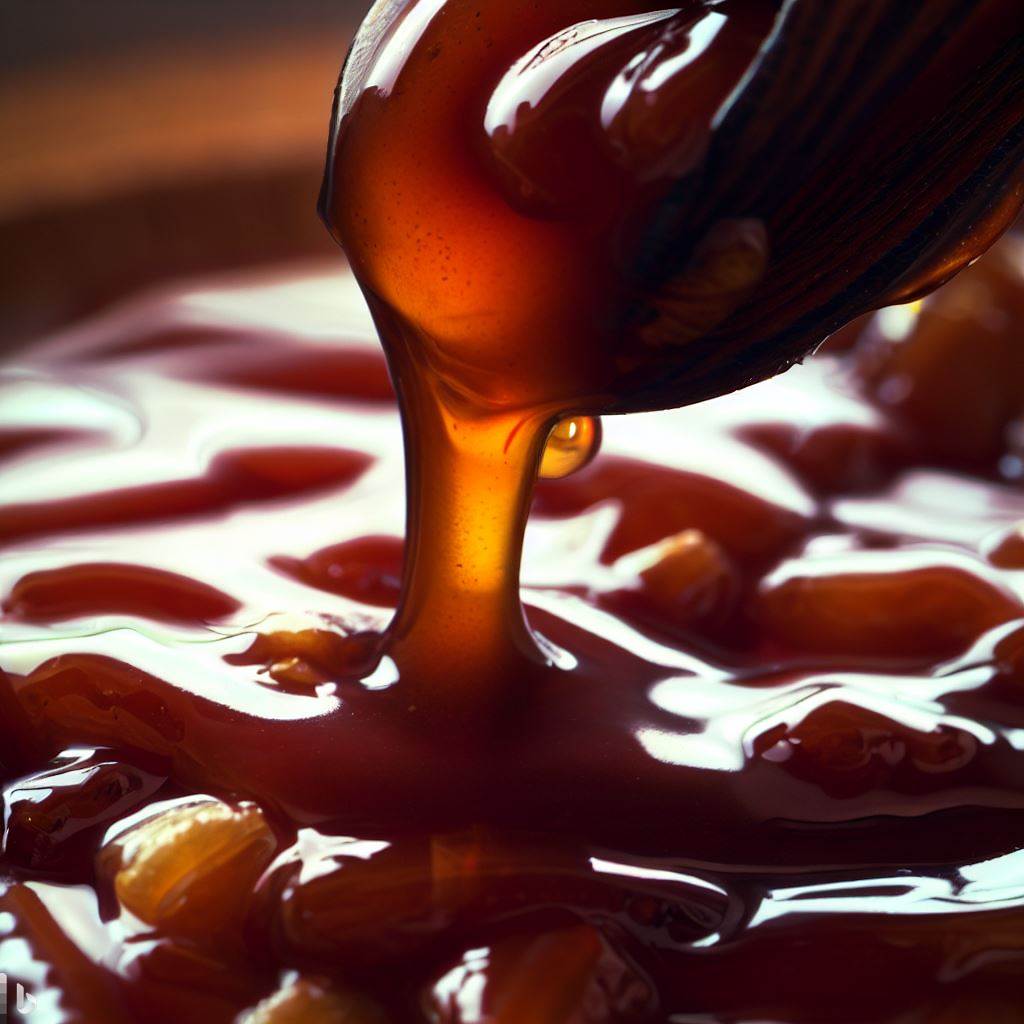
    Honey poured into BBQ Sauce

    Ingredients:

    • 1 can of tomato sauce
    • 1/2 cup apple cider vinegar
    • 1/4 cup of brown sugar
    • 1/4 cup of maple syrup
    • 3 tablespoons Worcestershire sauce
    • 1 tablespoon of onion powder
    •  2 tablespoons of garlic powder
    • 1 or teaspoons black pepper
    • Hot sauce (adjust to your desired level of spiciness)
    • 1/2 teaspoon salt
    •  water (optional, for thinning the sauce)

    How to Make: 

    • Combine all the ingredients in a in a saucepan. Stir well incorporating all the dry ingredients into the wet. Simmer over low heat stirring frequently to prevent burning or sticking. . Allow the sauce to simmer over low heat for about 10-15 minutes, allowing the flavors to meld and the sauce to thicken slightly. Adjust all seasonings according to your preference. You can add more sweetness with additional brown sugar or more tanginess with extra vinegar. If you want it spicier, increase the amount of hot sauce.
  • i8tonite with LA Cheese Tea Entrepreneur Jenny Zheng & Recipe for Cheese Tea

    i8tonite with LA Cheese Tea Entrepreneur Jenny Zheng & Recipe for Cheese Tea

    Get ready, readers! Cheese Tea is a new and interesting drink…boba with a twist! Have you tried it yet? What do you think?

    i8tonite with LA Cheese Tea Entrepreneur Jenny Zheng & Recipe for Cheese TeaJenny Zheng, 25, is the Founder of Little Fluffy Head Cafe, one of the first cheese tea boba shops in Los Angeles of its kind. She graduated from the University of California Los Angeles with a Master’s degree in Bioengineering in 2016. While on a trip to Asia before graduation, she stumbled upon the latest millennials craze: cheese tea. Being a big fan of cheese, she obsessed on bringing the concept to the U.S.. So upon graduation, instead of going a traditional route with her degree, Zheng decided to spend the time to develop her own version of creamy cheese tea and opened her very first cafe in the heart of Downtown Los Angeles in the summer of 2017. Right now, she is fully dedicated to running the cafe to provide her customers the highest-quality and authentic cheese tea.

    Find her online at https://www.instagram.com/littlefluffyhead/

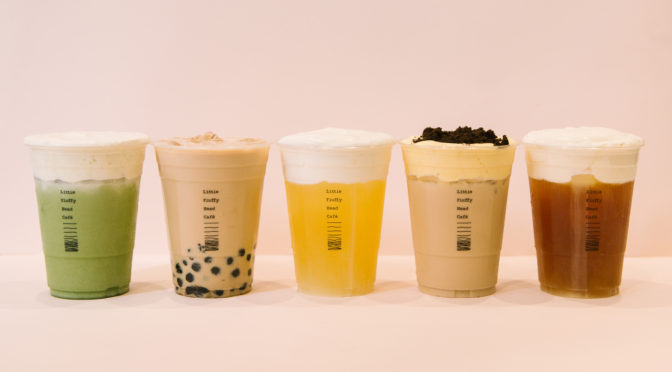
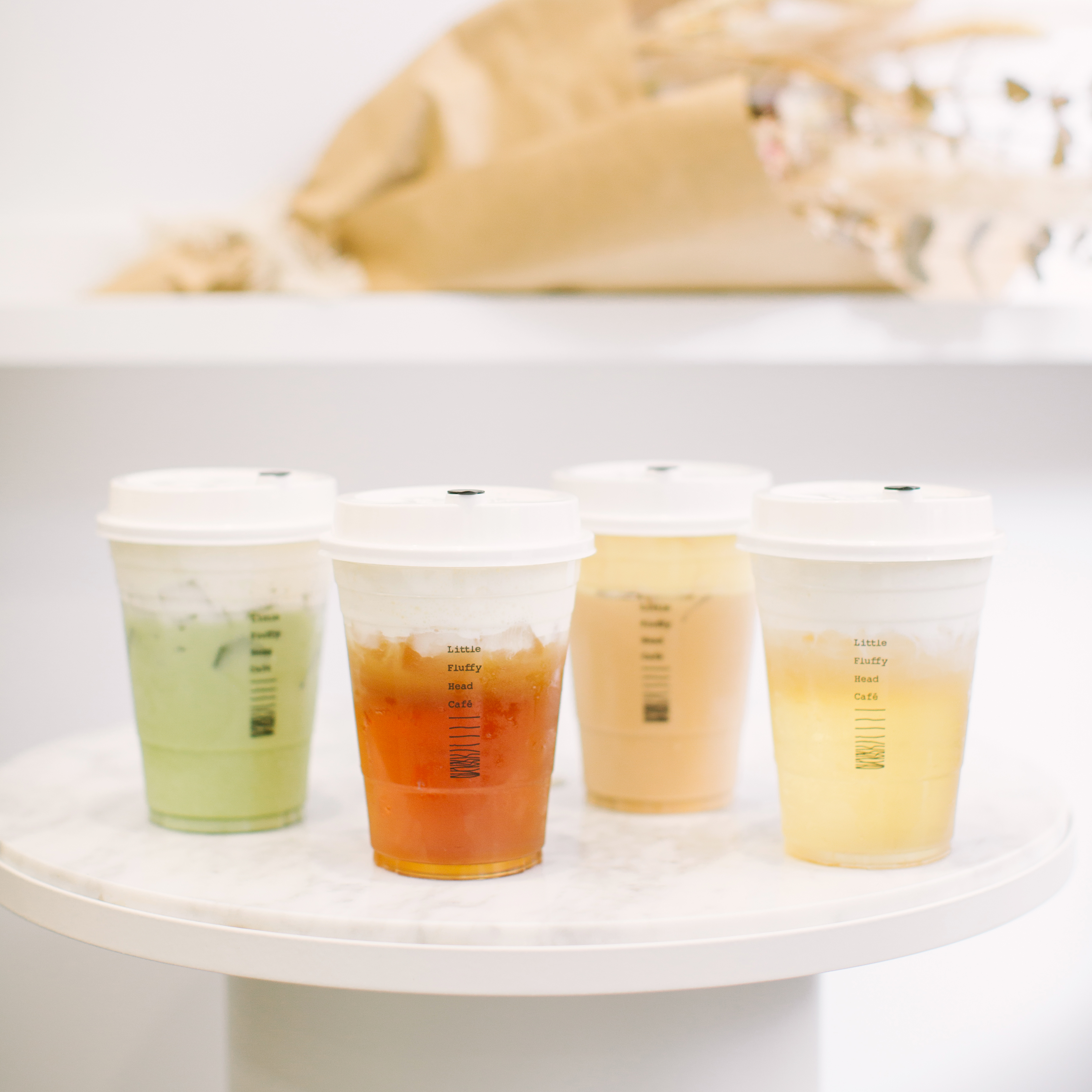
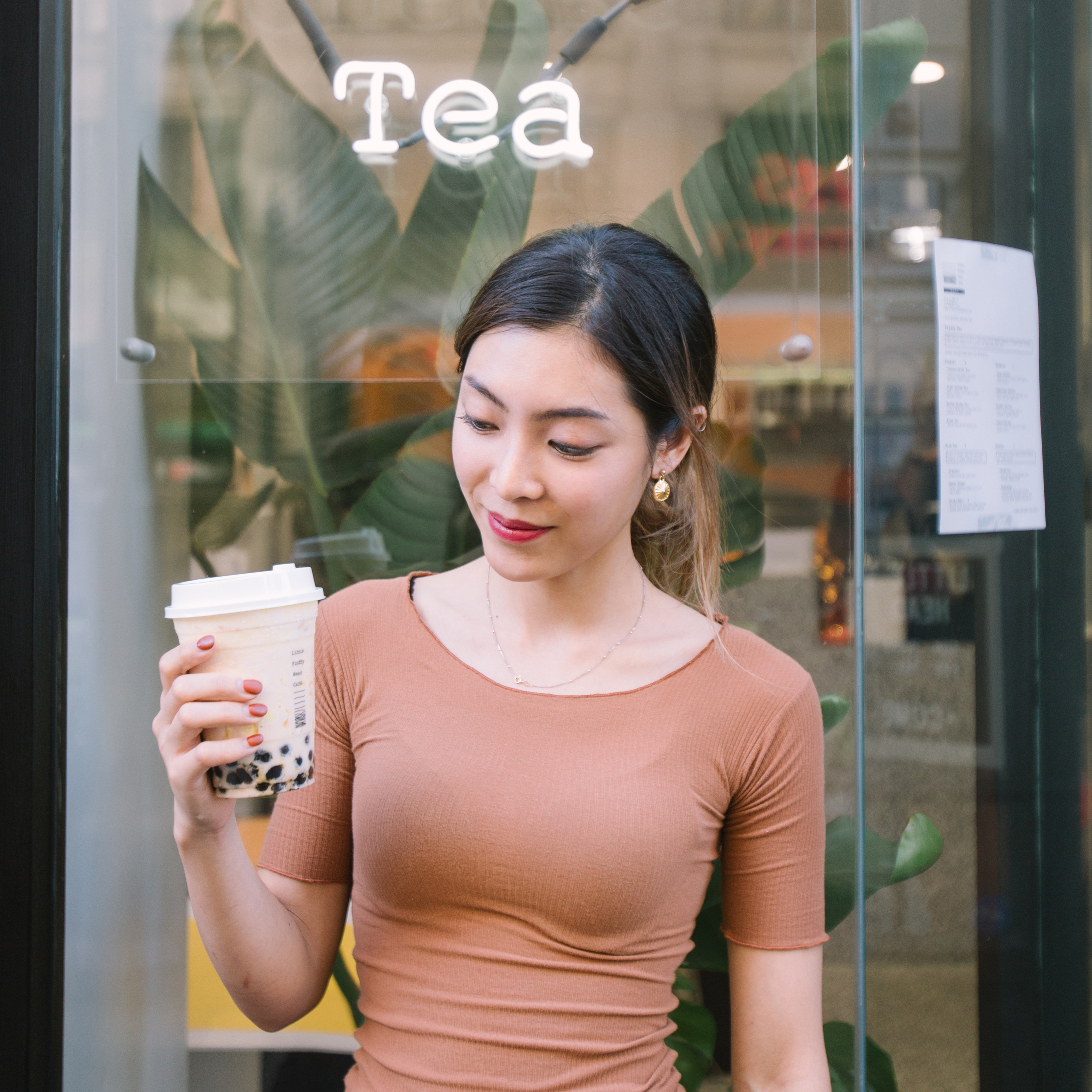
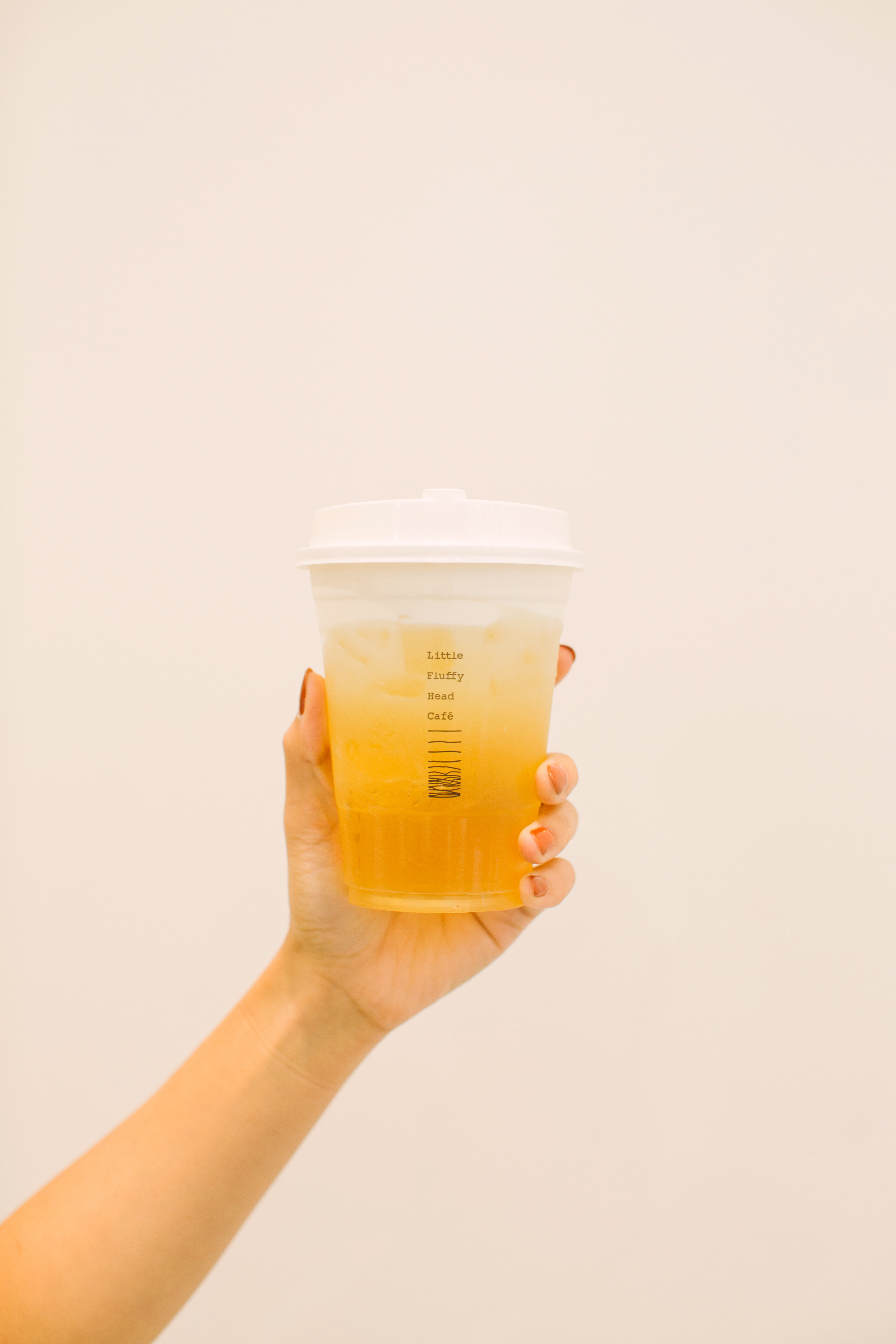
    Cheese Tea from Little Fluffy Head Cafe, LA. From i8tonite with LA Cheese Tea Entrepreneur Jenny Zheng & Recipe for Cheese Tea

    Food People Questionnaire (with a nod to Proust):

    What is your favorite food to cook at home?
    My mom used to make me a tomato noodle soup every morning when I was younger, utimately it has become my favorite Asian comfort food I like to cook at home. It reminds me of my family.

    What do you always have in your fridge at home?
    Different kinds of cheese to pair with wine

    What marked characteristic do you love in a person with whom you are sharing a meal?
    One characteristic I look for in a person is the ability to criticize or the ability to question. Especially if I am going to eat with this person, I want the dinner table conversation to be as meaningful as possible, talking about things that we could be better at.

    What marked characteristic do you find unappealing in a person with whom you are sharing a meal?
    Unreliable

    Beer, wine, or cocktail?
    Definitely wine!

    i8tonite with LA Cheese Tea Entrepreneur Jenny Zheng & Recipe for Cheese TeaYour favorite cookbook author?
    I don’t have one yet. At this moment, I spend most of my foodie time searching for great restaurants to eat at, rather than a good cookbook to teach myself how to cook.

    Your favorite kitchen tool?
    Hand mixer

    Favorite types of cuisine to cook?
    East Asian cuisine

    Beef, chicken, pork, or tofu?
    Chicken

    Favorite vegetable or fruit?
    Tomato

    Chef you most admire?
    A sushi chef by the name of Kazunori Nozawa

    Food you like the most to eat?
    Squid ink pasta with lobster sauce. So yummy!

    Food you dislike the most?
    Anything with mushroom. My mom made me eat a lot of mushrooms when I was little, and I am mentally afraid of mushrooms now.

    What is your favorite non-food thing to do?
    Reading

    Who do you most admire in food?
    My mom. She could make you a platter of seafood like the ones you see at high end restaurants.

    Where is your favorite place to eat? What is your favorite restaurant?
    Blue Ribbon Sushi Bar inside the Grove in Los Angeles. Great atmosphere and fresh sushi.

    Do you have any tattoos? And if so, how many are of food?
    I have two tattoos. I got them before I turned into a foodie, so sadly none of them were related to food.

    Recipe: Jenny’s version of cheese tea

    i8tonite with LA Cheese Tea Entrepreneur Jenny Zheng & Recipe for Cheese Tea

    1. Prepare:
    9 teaspoon of whipping cream
    3 teaspoon of milk
    0.5 oz of cream cheese
    a pinch of salt and sugar

    i8tonite with LA Cheese Tea Entrepreneur Jenny Zheng & Recipe for Cheese Tea

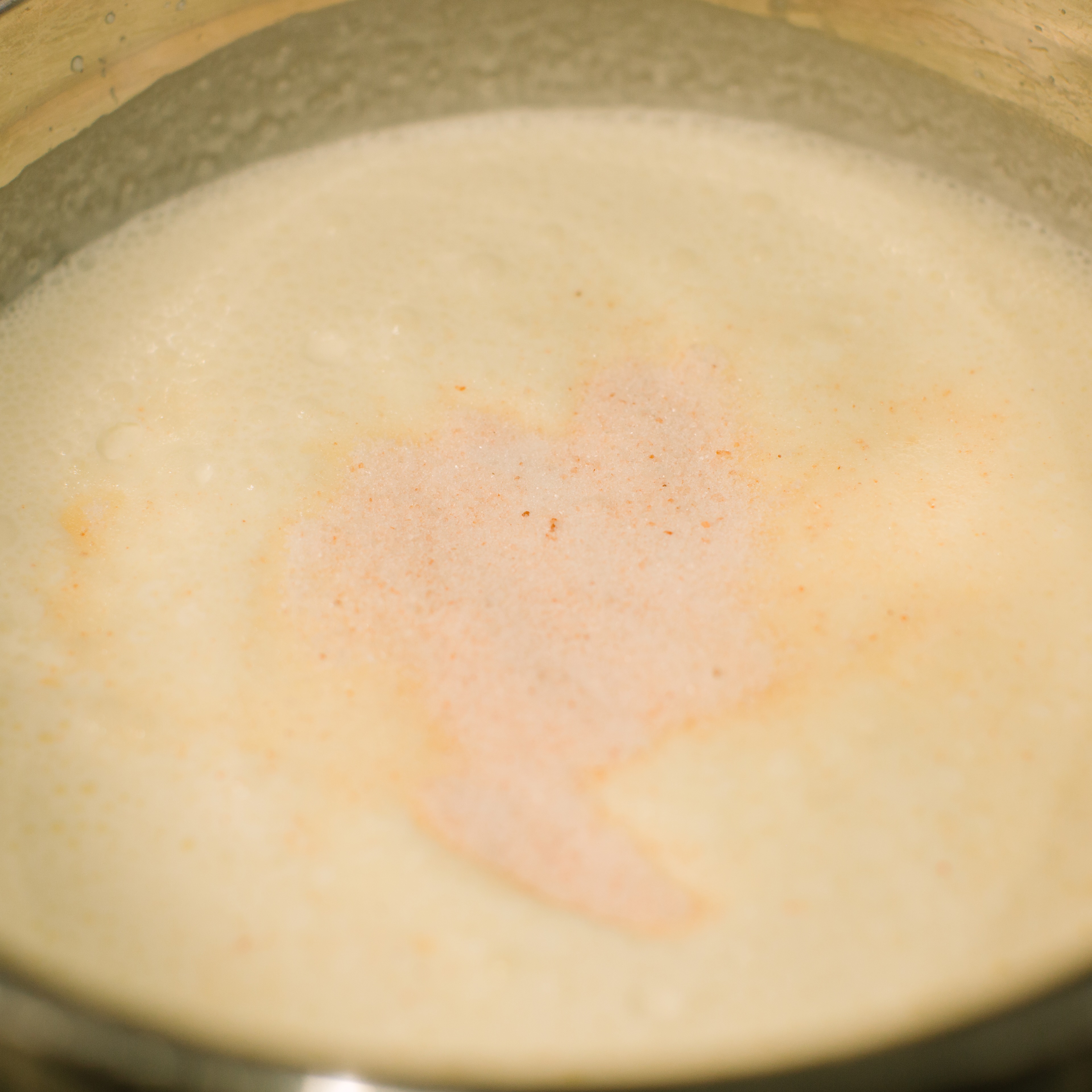
    2. Combine all ingredients in a mixing bowl and whip together using a hand mixer until the texture is thick.

    i8tonite with LA Cheese Tea Entrepreneur Jenny Zheng & Recipe for Cheese Tea


    3. Brew a cup of tea

    4. Sugar to taste

    5. Add ice to cool down the tea

    6. Layer the cream on top of the tea


    – The End. Go Eat. –


  • i8tonite: One New York Woman’s Food Allergies Became an Award-Winning Bakery

    i8tonite: One New York Woman’s Food Allergies Became an Award-Winning Bakery

    Gluten-Free to Industry: Allie Luckman Overcame Food Allergies for Her Family and Found a Calling

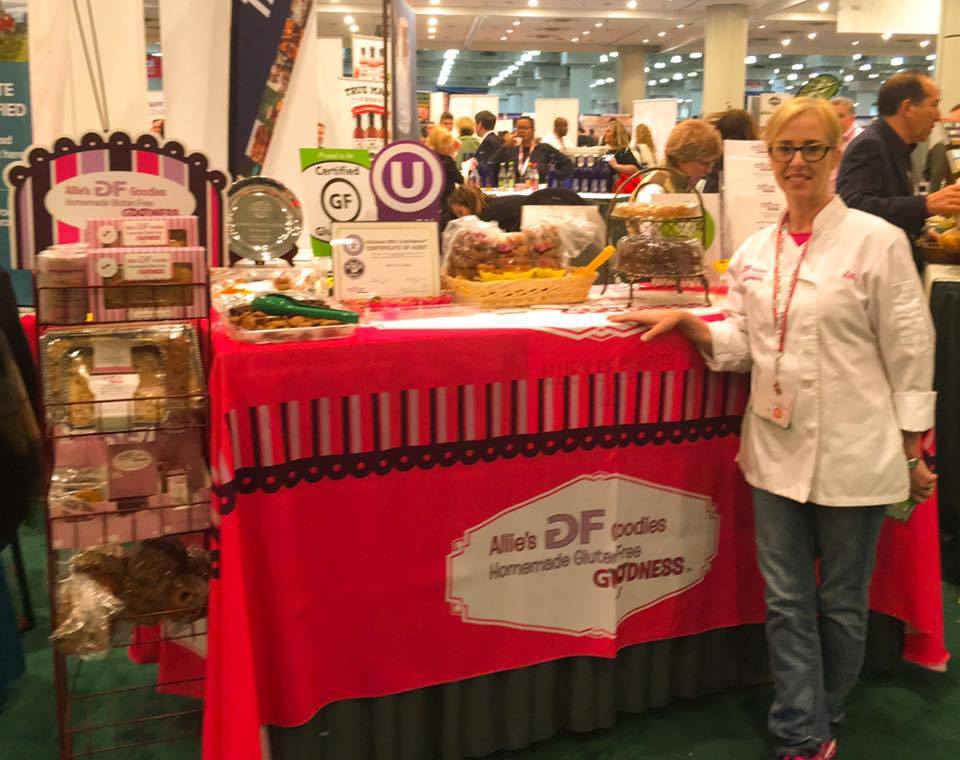
    Allison Wolin Luckman. From i8tonite: One New York Woman's Food Allergies Became an Award-Winning Bakery“Do you mind if we chat while I’m driving?” starts CEO and owner of Allie’s GF Goodies, Allison Luckman. “I couldn’t find allergen-free gumdrops, so I’m on my way to the store to buy the ingredients to make them.” With that as an intriguing conversation starter, how could one not want to talk to her via Bluetooth? The Long Island, New York-based Luckman, like many of today’s mothers, found that she had genetically passed her many food allergies onto her kids. Therefore, she started baking for them to make sure her kids could eat baked treats just like their friends – without feeling left out of any celebration.

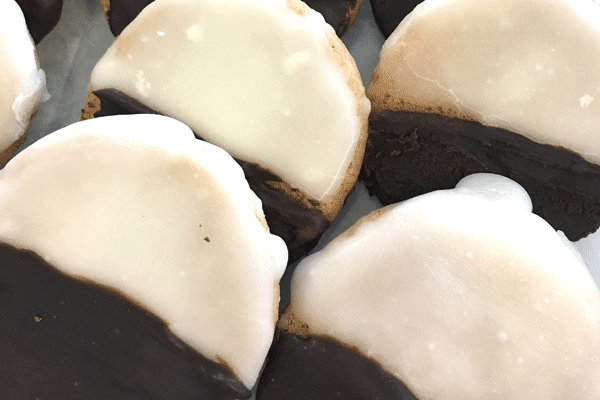
    Black and White cookie. From i8tonite: One New York Woman's Food Allergies Became an Award-Winning Bakery

    Starting with a hobby crafting cakes and muffins for tiny tots birthdays and celebrations in 2012, Luckman found the flowering enterprise grew into a bakery. The certified gluten-free and qualified kosher shop concentrates on baked goods free of potential allergens such as dairy, egg, soy, gluten, coconut, peanuts, tree nuts, or sesame. Hence, most of the products are also suitable for vegans. As her business grew, Luckman developed a following among those in the entertainment business. Her clients have included rapper Snoop Dog and hip-hop impresario Steve Lobel, as well as having been featured on A & E’s Married at First Sight and on an episode of Millionaire Matchmaker.

    Allison Wolin Luckman. From i8tonite: One New York Woman's Food Allergies Became an Award-Winning BakeryAlmost two years ago, Luckman found a growing need to serve the gentile and Jewish communities by turning her baking business into a complete kosher pareve (dairy-free) enterprise. “I was getting more calls to omit eggs and milk products, so we decided to make a go. Our business gets supported by the many rabbis recommending our goods,” Luckman comments.

    When asked what she finds the hardest to do, she doesn’t pause. “Finding good bakers. If they have been working for as a baker for a while, they don’t understand how to work with my recipes that I have personally developed, sometimes working on them for weeks, if not months. When someone fresh comes in, I can train them to work with the types of flours we use. It’s a specific process particular to our products.”

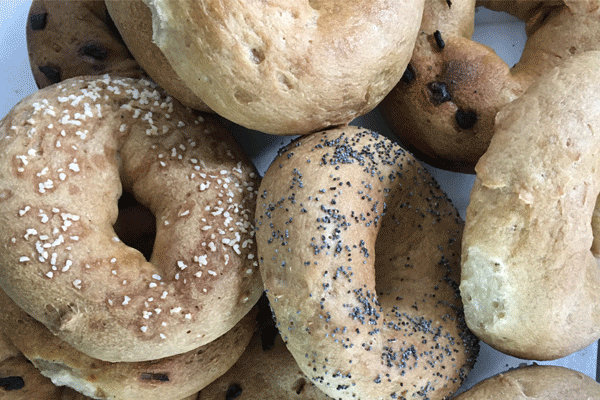
    Luckily, those with allergies can now have some of the best in award-winning baked goods (TasteTV’s “Healthy Gourmet Snacks of the Year Awards” and ““People’s Choice Award for Most Innovative New Product” at the International Food Service & Restaurant Show) in the world including bagels, black and white cookies, and challah. Seriously, what child or adult could go through life without devouring a bagel and a smear? They won’t have to go without, due to Allie Luckman and her GF Goodies. #nochildleftout.

    Bagels. From i8tonite: One New York Woman's Food Allergies Became an Award-Winning Bakery

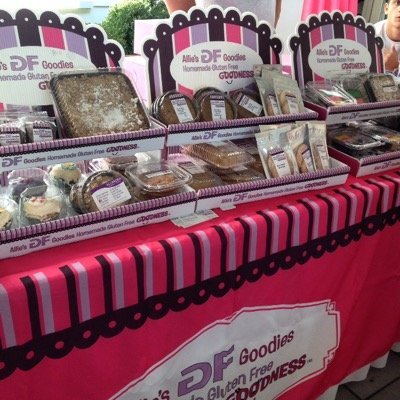
    Allie GF Goodies are available online and can be shipped throughout the U.S. Follow on Facebook, website: www.alliegfg.com, or by calling (516) 216 – 1719.

    Allie's GF Goodies. From i8tonite: One New York Woman's Food Allergies Became an Award-Winning Bakery

    Food People Questionnaire (with a nod to Proust):

    What is your favorite food to cook at home?
    I love to make either a full roasted turkey or chicken. My family loves it, giving them the feeling of comfort. Along the same lines I love to make them traditional chicken soup, and they have always loved mine the best.

    What do you always have in your fridge at home?
    In my fridge at home, we have freshly sliced turkey breast, a variety of cheeses, and kosher pickles, both half sour and garlic dill.
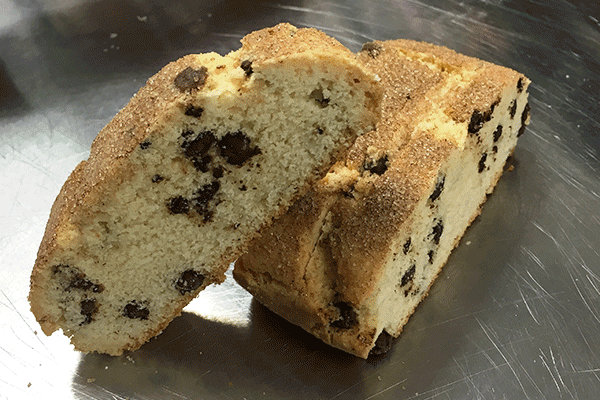
    Mandelbread (Jewish Biscotti). From i8tonite: One New York Woman's Food Allergies Became an Award-Winning Bakery

    What marked characteristic do you love in a person with whom you are sharing a meal?
    I enjoy eating with people who enjoy and appreciate good food.

    What marked characteristic do you find unappealing in a person with whom you are sharing a meal?
    I hate eating with people with bad table manners.

    Beer, wine, or cocktail?
    I am definitely a wine person.

    Your favorite cookbook author?
    My favorite cookbook author has always been Mark Bittman.

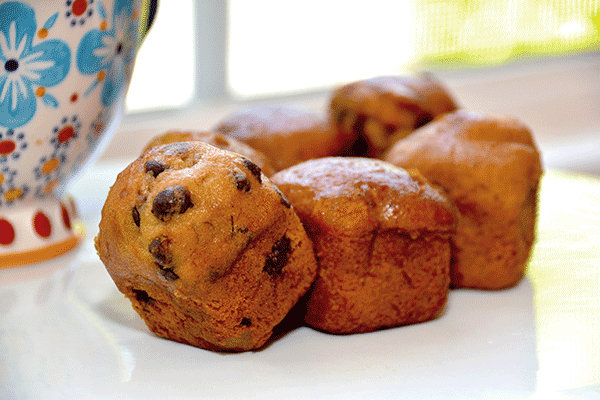
    Buddies. From i8tonite: One New York Woman's Food Allergies Became an Award-Winning Bakery

    Your favorite kitchen or bar tool?
    I have three favorites in the kitchen. Every baker/ chef needs a whisk, a KitchenAid stand mixer, and a food processor.

    Favorite types of cuisine to cook?
    I like to cook all types of cuisine as long as there is flavor, room for personal flair, and not too spicy (although my husband will eat as spicy as I give him)!

    Beef, chicken, pork, seafood, or tofu?
    I’m either a chicken or beef person. Never tofu.

    Favorite vegetable?
    I love asparagus and broccoli, although I’m not personally allowed many vegetables.

    Chef or culinary person you most admire?
    I admire Florian Bellinger, the pastry chef.

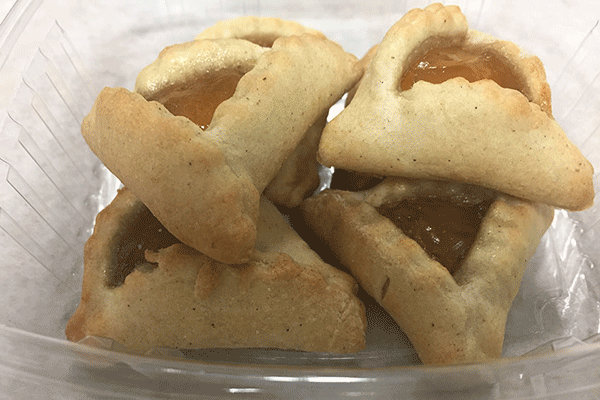
    Hamantaschen. From i8tonite: One New York Woman's Food Allergies Became an Award-Winning Bakery

    Food you dislike the most?
    I truly dislike mushrooms. I loathe the texture. However, I don’t mind the flavor in a sauce or soup.

    What is your favorite non-food thing to do?
    My favorite nonfood thing to do, aside from catching up on sleep, is spending time with my husband and grown children, either watching television or traveling.

    Whom do you most admire in food?
    I admire Ron Ben Israel for his cake business that he’s created.

    Where is your favorite place to eat/ drink?
    I live on Long Island. My local faves are 388 Restaurant, where they make excellent family style Italian food. They carry and use my products, and are hyper vigilant about my celiac disease so that I can eat safely. I have always been a Peter Luger’s fan—like every New Yorker. And my go-to in Manhattan these days is Felidia, where they take celiac disease very seriously.

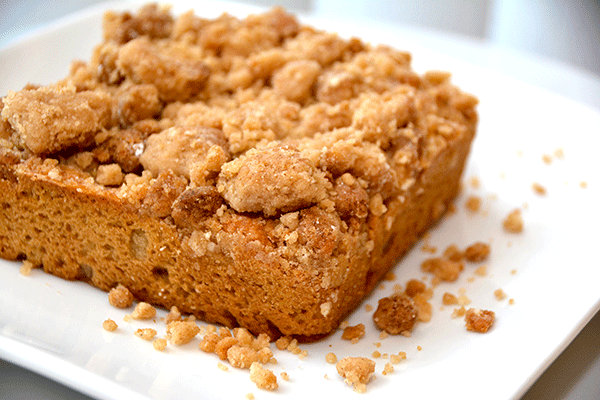
    Crumb cake. From i8tonite: One New York Woman's Food Allergies Became an Award-Winning Bakery

    Do you have any tattoos? And if so, how many are of food?
    I do not have a tattoo, nor will I ever. I’ve had so many surgeries that I’m marked up enough.

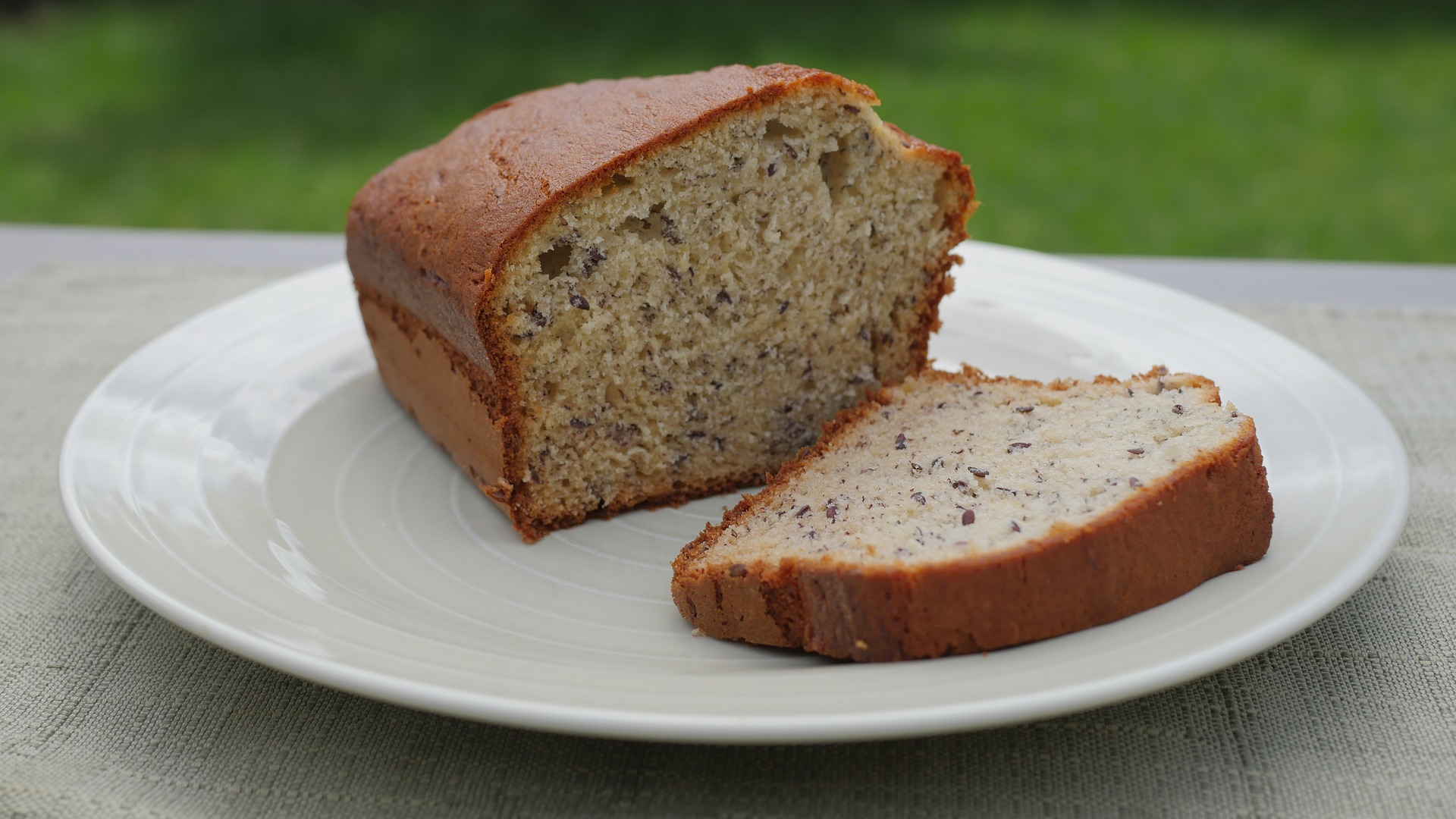
    Recipe: Allie’s Banana Bread

    Recipe: Allie's Banana Bread. From i8tonite: One New York Woman's Food Allergies Became an Award-Winning Bakery

    Ingredients:
    2 c Allie’s flour
    3/4 c sugar
    2 ripe bananas, mashed
    1/2 t salt
    1/2 c unsalted butter or Earth Balance, softened
    1 t baking soda
    1 t vanilla
    1/2 t cinnamon
    2 eggs
    1/3 T lowfat or hemp milk
    1/4 c chocolate chips or blueberries (optional)

    Directions:
    • Preheat oven to 350.
    • In a mixing bowl, cream together butter and sugar
    • Beat eggs in separate bowl and add butter/sugar to the mixture. Then add bananas, milk, and vanilla until well blended.
    • In a separate bowl, mix flour, baking soda, and salt. Then add to the banana mixture until fully blended.
    • Add chocolate chips or blueberries, if desired.
    • Pour into greased pan and bake 50-60 minutes for loaf.


    – The End. Go Eat. –

  • The i8tonite 2017 Gift Guide

    The i8tonite 2017 Gift Guide

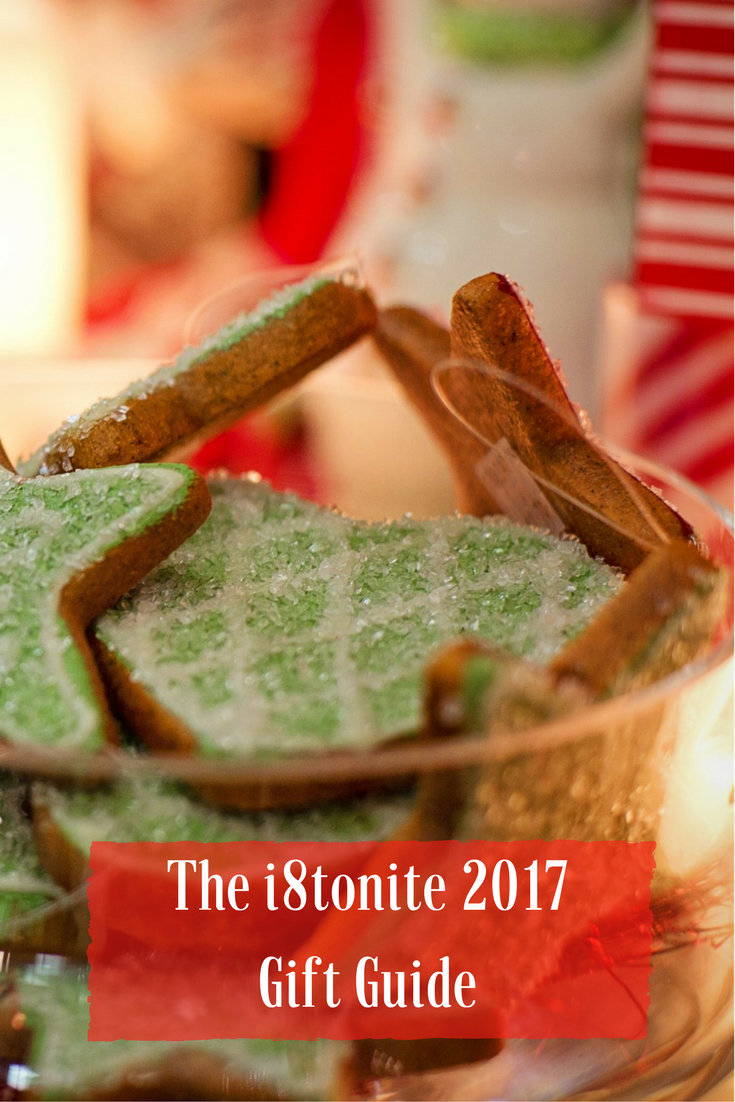
    It’s that time of the year to start thinking about gift-giving. At i8tonite, we are all about the kitchen. Instead of giving a general blanket list of ideas, we thought about fun cookery suggestions for different types of folks on that holiday list. Here’s our gift guide:

    The Culinaire

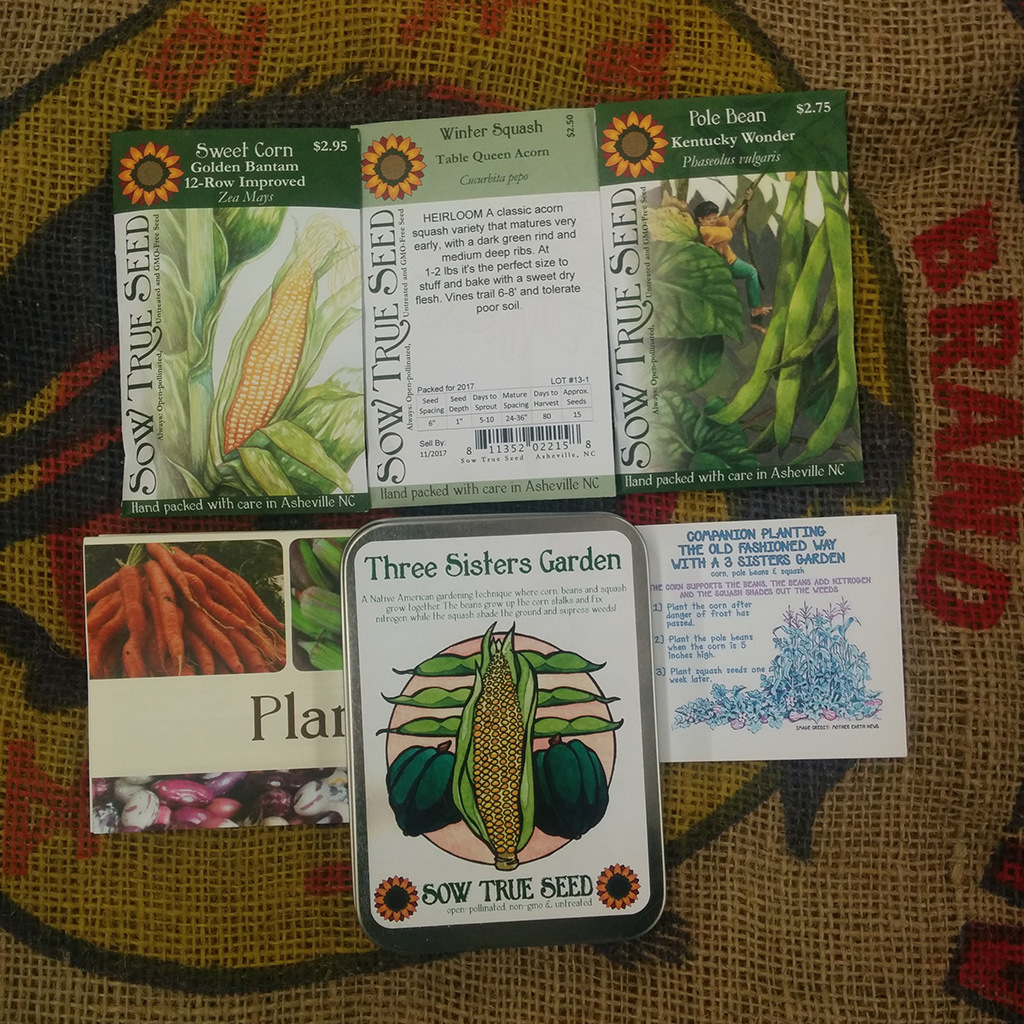
    This person has pretty much everything as it relates to cooking. Give the gift around “decolonization,” its cooking knowledge using indigenous plants and meats associated with the Native Americans or the First Nation, as known in Canada, and their diet. Our suggestion is simple and inexpensive: the three sisters, a combination of corn, bean and squash which is the bedrock of many tribes, specifically those in the Southwest. Sow True Seed has a gift collection of the trio. $6.95 plus shipping and handling.

    The Non-Cook

    In every group of friends, there is one that can’t boil water. We make them a designated bartender. West Elm has a very chic set of bar tools. $63.00.

    The i8tonite 2017 Gift Guide

    The Person that Wants to Cook, but Complains They Can’t Because They Don’t Have Time

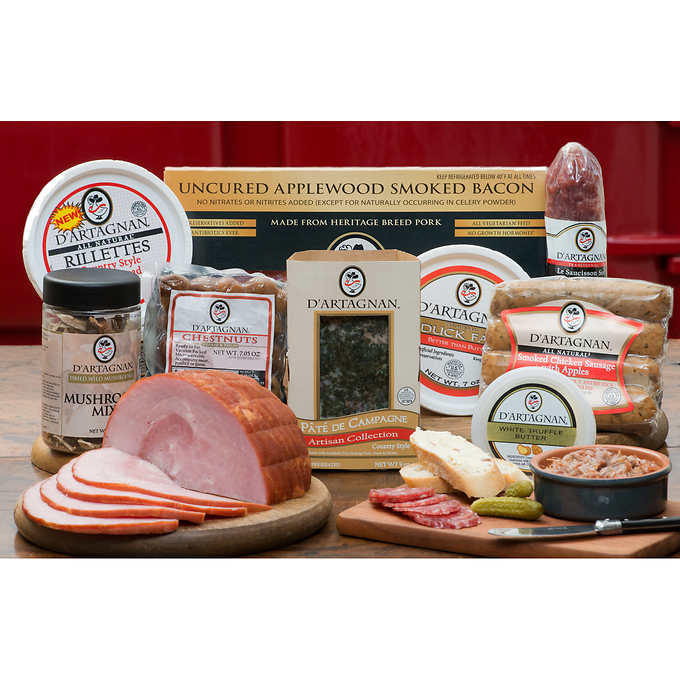
    This busy bee has one of those all-important jobs like being an entertainment publicist, a life-coach, or an event planner. You know the type, they are always working on someone else’s life and they don’t have time for themselves. We recommend D’Artagnan Food Lover’s Gourmet Gift Basket. It can work two-fold: as dinner with leftovers, or dinner plus a guest. Costco, $99.99

    The i8tonite 2017 Gift Guide

    The Vegan or Vegetarian

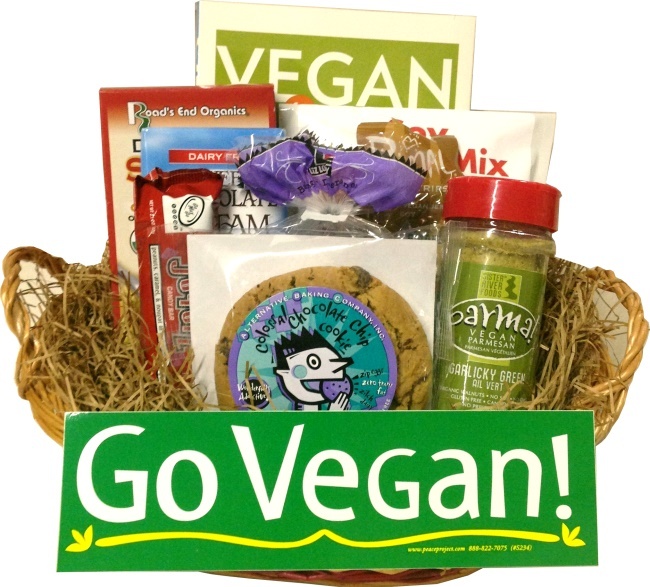
    Most likely, this individual is a vegetarian that will order the salmon special at a newly opened restaurant. It’s also easier just to go vegan with a gift basket. Pangea, the online, non-meat food store has the perfect one which comes with a bumper sticker, which says “Go Vegan!”. It will look perfect on their BMW or Mercedes.

    The i8tonite 2017 Gift Guide

    The Fitness Fanatic

    Those who are really into fitness – bless their hearts – love to go on and on about burning calories. Eating with them consists of a salad and maybe a protein like fish – hold the butter or oil. However, occasionally after a HIIT class or a de-stress yoga session where they have perfected their sun salutations, expect some form of a juice cleanse splurge. Skip eating with them unless they are cooking.

    And…Merry Christmas, Joyous Hanukkah, Jolly Kwanzaa, and Happy Holidays!

    Pin for later:

  • i8tonite with Pantry and Palate Author Simon Thibault & Molasses Cake Recipe

    i8tonite with Pantry and Palate Author Simon Thibault & Molasses Cake Recipe

    i8tonite with Pantry and Palate Author Simon Thibault & Molasses Cake RecipeSimon Thibault is a Halifax-based journalist and radio producer whose work focuses on food. His written work has been featured in The Globe and Mail and East Coast Living. He has contributed to CBC Radio, and The Southern Foodways Alliance’s Gravy podcast. He was also a judge for the 2015 James Beard Foundation’s Cookbook Awards.

    Thibault’s new book, Pantry and Palate: Remembering and Rediscovering Acadian Food, is a fantastic read – and resource. This expertly written and beautifully produced new title is part cookbook and part history guide exploring the culinary legacy of Canada’s Acadian Diaspora located within the eastern Maritime region. We don’t know enough about Acadian history and food – and I am glad to have the opportunity to learn more, in this book.


    i8tonite with Pantry and Palate Author Simon Thibault & Molasses Cake RecipeAcadian food is humble, homey, and comforting, which is what inspired Thibault to highlight the cuisine. It is made with love and devotion from a larder that is small but mighty, and holds history within itself. Each recipe is adapted from Thibault’s own family collection or from various women’s auxiliaries within the region – the result is a cookbook of extraordinary value and uniqueness.

    I LOVE IT.

    Tip: Make the apple pie (it was the first thing I made from the book!). It’s incredible.

    i8tonite with Pantry and Palate Author Simon Thibault & Molasses Cake Recipe

    Food People Questionnaire (with a nod to Proust):

    What is your favorite food to cook at home?
    I think readers of cookbooks falsely imagine that the authors cook nothing but the food they extoll in their books. I did do so when I was recipe testing. I think I ate more lard and molasses than one perhaps should on a regular basis while living a semi-sedentary lifestyle. But I tend to cook, for lack of a better term, Pan-Asian food at home. I’m lucky that I know farmers here in Nova Scotia who grow a lot of northern Chinese/Korean/Japanese vegetables. So I often will cook extra rice in a rice cooker while I am doing other things, and then will cook the vegetables à la minute. I usually top things off with an egg or two.

    What do you always have in your fridge at home?
    Eggs. Always. At least a carton and a half. That way the older eggs can be used for boiling, the fresh ones for poaching and frying. Salted onions, which is a condiment from my book. It lends a nice salty/umami kick to soups.

    What marked characteristic do you love in a person with whom you are sharing a meal?
    For them to chide me when I say, “I screwed this up, this could be better,” when realistically, they are right. it’s usually quite good. I just always have this platonic ideal of a dish in my head, and it doesn’t always happen. But the other person is happy that someone has cooked for them. And cooking for another is something I love to do.

    What marked characteristic do you find unappealing in a person with whom you are sharing a meal?
    If I am in a restaurant, if they are dismissive of staff. As someone who has worked the front of house in various places and times in my life, I find that to be especially heinous.

    Beer, wine, or cocktail?
    If I am at home, amaro. I am learning to embrace the bitter. And all I need is an ice cube. If I am in a bar where I can see what’s behind the bar in terms of booze, I tend to go for a cocktail.

    Your favorite cookbook author?
    I have to say Naomi Duguid. She wrote the foreword to my book, Pantry and Palate: Remembering and Rediscovering Acadian Food, but the books that she wrote with her former partner, Jefferey Alford, taught me how to cook. I am still very grateful that I have gotten to know her. I even cooked an apple cake from her book, Home Baking, today.

    Your favorite kitchen tool?
    A food mill. Apple sauce is magical, and the best whipped/mashed potatoes you’ve ever eaten. And they’re very inexpensive.

    i8tonite with Pantry and Palate Author Simon Thibault & Molasses Cake Recipe

    Favorite types of cuisine to cook?
    Chinese. Grace Young’s “The Breath Of A Wok” was the beginning of my understanding of how chinese food works from the act of cooking.

    Beef, chicken, pork, or tofu?
    Grass-fed beef, that has been well-reared. Preferably something like a flank, or a hanger steak.

    Favorite vegetable?
    Chinese long beans. The season is short, and you can cook them in a minute or two, or make a variation on the Vietnamese Som Tam, or green papaya salad. Just substitute the long beans cut into pieces and flattened with the side of a knife.

    Chef you most admire?
    The people who work at America’s Test Kitchen, behind the scenes. They teach so many people to feel comfortable in kitchens, and answer all the questions you may have when creating a recipe. I admire any chef who thinks it’s important to give people agency in a kitchen.

    Food you like the most to eat?
    Anything made with flour. I live for carbohydrates, whether sweet or savoury.

    Food you dislike the most?
    Although I love Japanese food in so many forms, and I like fermented foods, I can’t wrap my brain around natto. It’s fermented soybeans that have long white mucilaginous tendrils when you pull it apart. I can’t.

    What is your favorite non-food thing to do?
    I can’t stop reading about food. I have a (bad? good?) cookbook habit. I went to Kitchen Arts and Letters in New York City, and walked out $700 poorer. And I practiced restraint in doing so.

    Who do you most admire in food?
    Women.

    Where is your favorite place to eat?
    An apple, in my parent’s orchard.

    What is your favorite restaurant?
    In Halifax, Nova Scotia, where I live, there is a wonderful spot called The Highwayman. Small plates, Basque-inspired cuisine. In New York, I have a love for Gabrielle Hamilton’s Prune. Every. Little. Thing. Is. Thought. Out. From the amount of servers on staff, to the wine list, to the price point, to the friendliness of staff. I went there with my friend Sofia, who is a native New Yorker, and she and I ate like kings and queens.

    Do you have any tattoos? And if so, how many are of food?
    I don’t actually, though I can see why people would assume. If I did, it would probably be of fruit that grows in my parent’s orchard. Peaches for my sister, who passed away and loved them. Apples for my parents, who taught me the value of work. Blueberries for my nieces, who love picking them. And I would be a quince.

    Molasses Cake Recipe

    i8tonite with Pantry and Palate Author Simon Thibault & Molasses Cake Recipe

    Excerpted from Pantry and Palate by Simon Thibault © 2017, Text by Simon Thibault. ©2017, Photographs by Noah Fecks. All rights reserved. Published by Nimbus Publishing

    Ingredients
    2 cups molasses
    1 cup lard or shortening
    4 cups flour
    2 teaspoons cinnamon
    1 teaspoon all spice
    2 teaspoons baking soda
    1 teaspoon salt
    1 cup milk
    1 tablespoon fresh ginger (optional)

    Directions
    • Preheat your oven to 375˚F.
    • Grease a 10×10-inch cake pan, and then dust generously with flour. Alternatively, add greased and floured parchment paper and place into cake pan.
    • Using the paddle attachment on your mixer, fold the flour and lard
    together on low speed until completely combined, about 4–5 minutes.
    • Add the molasses, cinnamon, fresh ginger (if using), and allspice, and mix on low. Make sure to occasionally stop and scrape down the sides of the bowl to ensure all the molasses, lard, and seasonings are blended.
    • Add the baking soda and salt, then the milk to the batter, and stir until well incorporated.
    • Pour the batter into the pan, and place into the oven.
    • Bake for 50 minutes, or until the cake has receded from the edges of the pan and a toothpick placed in the centre comes out clean. Depending on the size of your pan, it may take a bit more or less time. Just keep checking until it comes out nice and clean.
    • Leave cake in pan for about 20 minutes, and then invert onto a rack.

    Serve on its own, or as a dessert with Maple Whipped Cream (page
    176), Easy Caramel Sauce (page 177), or Brown Sugar Sauce (page 202).


    – The End. Go Eat. –