Tag: Mexican

  • Discovering Flavor and Community in Tucson

    Discovering Flavor and Community in Tucson

    What We Eat When We Move

    A view from my backyard.

    When you pack up your life and start over somewhere new, you think about the job, the weather, the cost of living, and finding a community. When Nick and I moved to Tucson, a city framed by the Sonoran Desert and celebrated for its food culture, I didn’t expect to miss my grocery store so much.

    After six years in Indianapolis, I knew where to buy the best gluten-free baked goods (Gluten Free Creations), which great butcher (Moody’s) to buy meat, and which farmers market stand (Warfield Cottage) sold the best greens. Moving to Tucson meant trading the Midwest’s cornfields for the desert’s cactus, and where much of the food is born of Mexican and Indigenous ingredients, even an easy meal of rice and beans felt like an introduction to another language.

    There is no doubt that moving from one state to another changes the way you eat. In Indiana, I cooked broths and experimented with braising, especially during the fall, winter and early spring, eating warm, stewy dishes. Here, I think more about citrus, chilies, and beans. Dinners are full of flavors that make up the region: mesquite, nopales, prickly pear, and the “three sisters” comprised of corn, beans, and squash. Now our pantry will be stocked with dried chiles and freshly made corn tortillas, replacing the hoarded Red Gold pasta sauce of my Hoosier days.

    The four sauces: I think they are meant so customers can try them.

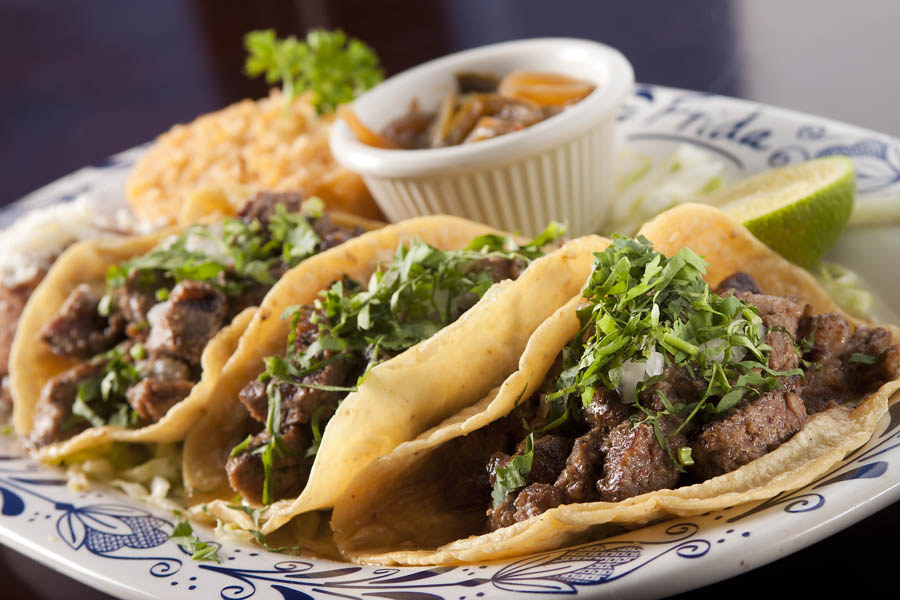
    The relocation isn’t only about ingredients; it’s about discovering a community. For Nick and me, it’s how we find and make friends. In our first week in our new home, we joined our next-door neighbors, Greg and Colleen, at La Frida’s Mexican Grill, a charming, well-designed spot located on East 22nd Street with a painterly mural honoring the late artist. The meal started with a basket of chips and — surprise — jalapeño crema (instead of salsa) for dipping, touched with habanero. Zesty, rich, and impossible to stop eating. Alongside it came an additional four sauces to try: salsa verde, black refried beans, a smoky coloradito, and a deep, chocolatey mole. The chef, originally from Hermosillo, cooks with an appreciation for her birthplace and presents dishes in a hearty, picturesque manner: deep browns, rich greens, and sauces with royal crimson overtone. We had a variety of dishes, but the quesabirra, historically from Tijuana and developed by the region’s taqueros, had that buttery crunch with tender meat, salty creaminess from the cheese and that rich flavor from the consommé for dipping. The corn ribs, quartered and eaten off the cob, smeared with cotija, were a reminder of how delicious street food can be. We arrived at 4:00 p.m. and by the time we left two hours later, it felt like the whole of Tucson was waiting for a table.

    Quesabirria at La Frida's.

    In every move I’ve made — Los Angeles, San Francisco, Irvine, Palm Springs, New York City, Indianapolis, now Tucson — I’ve learned that the fastest way to feel at home is through its restaurants and markets. Each city teaches you its flavors, and Tucson shows the earthiness of Sonoran wheat tortillas, the char on a roasted green pepper, and the comfort of beans simmering away on the stove. These are image postcards tattooed into my memory banks that will last longer than any logo t-shirt ever will. Indeed, Tucson’s UNESCO City of Gastronomy status only reinforces the idea that what we eat tells the story of who and where we are.

    In the freezer, there’s still a loaf of gluten-free bread from Native Bread Company in Indianapolis. I slice and toast it on mornings when I miss the Midwest. It’s that heady scent of bread, with a smear of local prickly pear jam bridging my recent past to today in a way no moving truck can.

    What we eat when we move isn’t just about adapting to a new market or menu. It’s about creating continuity. The table’s location may change, but the act of sitting down, of being fed and feeding others, remains constant.

    But in a short time, here in the Old Pueblo, I’ve found that the desert’s vastness, beauty and indigenous ingredients are finding a way into my kitchen. As I’ve said before, moving isn’t about leaving something behind. It’s about eating and discovering what’s next.

    Chips and jalapeno crema

    Recipe: Prickly Pear and Lime Agua Fresca

    Makes 2 quarts

    • 2 cups prickly pear puree (fresh or bottled)

    • Juice from 3 limes

    • 4 cups cold water

    • 2 tablespoons agave syrup (more to taste)

    • Dash of sea salt

    Whisk or blend all ingredients until smooth. Taste and adjust the sweetness. Chill for at least 30 minutes. Serve over ice with a sprig of mint or a lime slice. While this is a simple beverage, it tastes like the Sonoran Desert, which I think of as being bright, sweet, and restorative. If you’re feeling festive, add a touch of rum, tequila, or vodka.

    The End. Go eat.

    A mural of the restaurant's namesake. on the back wall.

  • i8tonite with Vicente del Rio of Frida’s: A LA Mexican Institution & Roasted Pork with Mole Recipe

    i8tonite with Vicente del Rio of Frida’s: A LA Mexican Institution & Roasted Pork with Mole Recipe

    i8tonite with Vicente del Rio of Frida’s: A LA Mexican Institution & Roasted Pork with Mole RecipeWhen Frida’s first opened in 2002 along the forgotten strip of Beverly Drive in Beverly Hills, there was a lack of well-crafted Mexican food in Beverly Hills. The world-renowned town at the time celebrated tomahawk steaks with martinis rather than reposado tequilas and molés. Upon opening, the small but mighty restaurant fostered a growing interest in the cuisine outside of the standard Tex-Mex that populated the City of Angels. More than 17 years later while other area restaurants have come and gone, Frida’s still stands, crafting south of the border dishes one might have in the very cosmopolitan Mexico City.

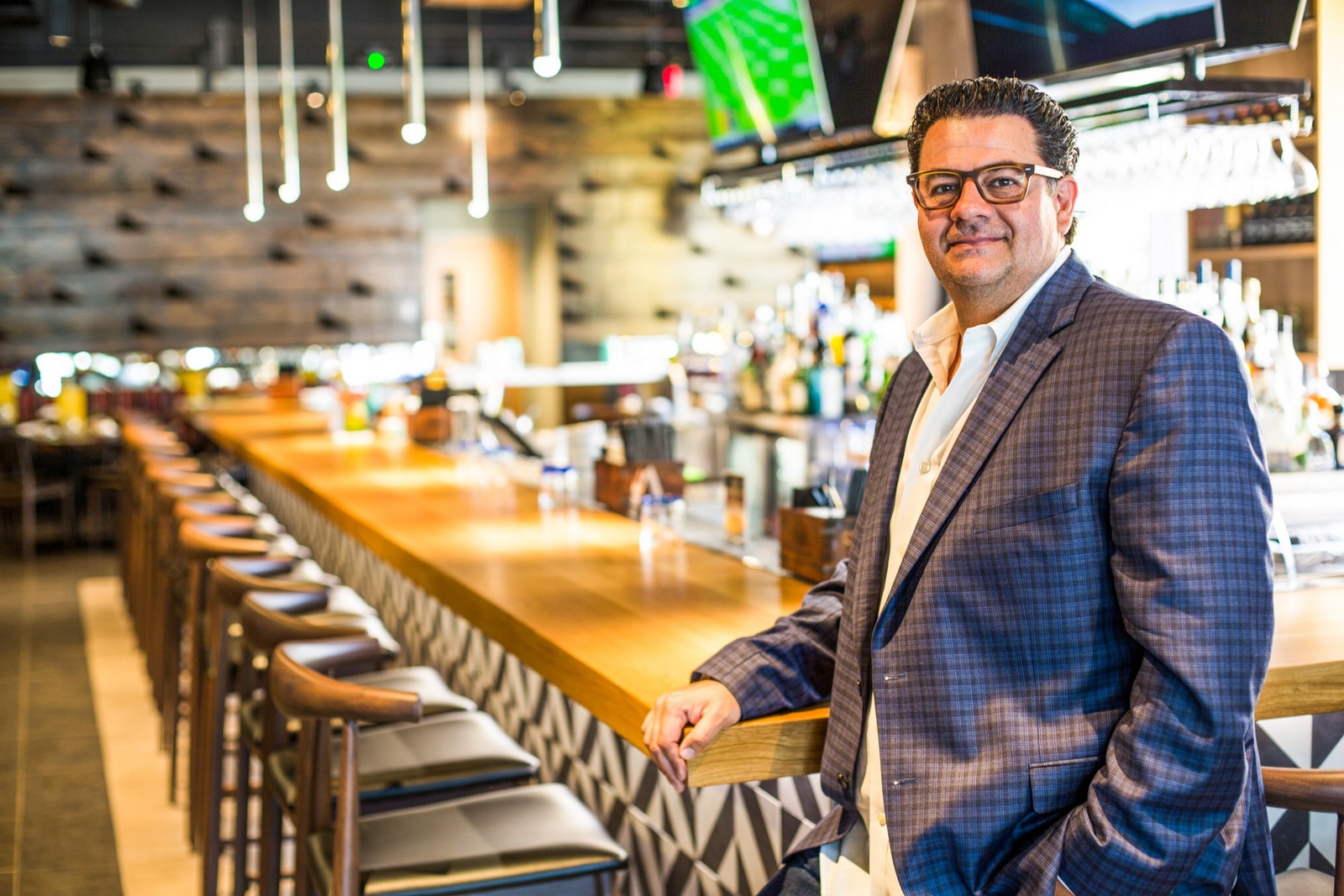
    Owner Vicente del Rio, who was born in the metropolis’s historical and well-to-do borough of Coyocan, said during a phone interview, “I learned how to cook from my mother and grandmother, and I wanted to bring that authentic experience here. I feel that’s why we are successful.”

    After a fruitful debut year, del Rio started to spread out to other parts of Los Angeles. As CEO of  FriMex Hospitality, he has launched eating experiences throughout Los Angeles County with Frida’s Tacos in five locations (Brentwood, Old Town and East Pasadena, Melrose, and Campus Village) and a Taco Libre in Santa Monica. His team has also expanded the original experience of Frida’s to Westwood, Sherman Oaks, Torrance, Cerritos, and opening soon in Sherman Oaks.

    i8tonite with Vicente del Rio of Frida’s: A LA Mexican Institution & Roasted Pork with Mole Recipe

    Asked about why he thinks Frida is so successful, he says, “We don’t reduce the quality of our food to increase profits. We also have a great team of people working to make sure that we embody the Mexican culture. We want everyone to enjoy our delicious history.”

    Food People Questionnaire (with a nod to Proust):

    What is your favorite food to cook at home? 
    Barbeque and paella

    What do you always have in your fridge at home?
    All types of fresh fruits, vegetables, and proteins

    What marked characteristic do you love in a person with whom you are sharing a meal?
    That they enjoy the food that they ate and are interested in trying diverse foods

    What marked characteristic do you find unappealing in a person with whom you are sharing a meal?
    They complain about the food and service

    i8tonite with Vicente del Rio of Frida’s: A LA Mexican Institution & Roasted Pork with Mole Recipe

    Beer, wine, or cocktail?
    Martini

    Your favorite cookbook author?
    Laura Caraza

    Your favorite kitchen or bar tool?
    Knives

    Favorite types of cuisine to cook?
    Mexican and Spanish

    Beef, chicken, pork, seafood, or tofu?
    Beef

    Favorite vegetable? 
    Mushrooms

    Chef or culinary person you most admire?
    My mother and grandmother, who taught me everything

    Food you like the most to eat?
    Besides Mexican and sushi?

    Food you dislike the most?
    Cheese

    What is your favorite non-food thing to do?
    Golf

    Whom do you most admire in food?
    Jose Andres

    Where is your favorite place to eat/drink?
    Mexico City

    What is your favorite restaurant?
    Frida Beverly Hills

    i8tonite with Vicente del Rio of Frida’s: A LA Mexican Institution & Roasted Pork with Mole Recipe

    Do you have any tattoos?
    And if so, how many are of food?
    None

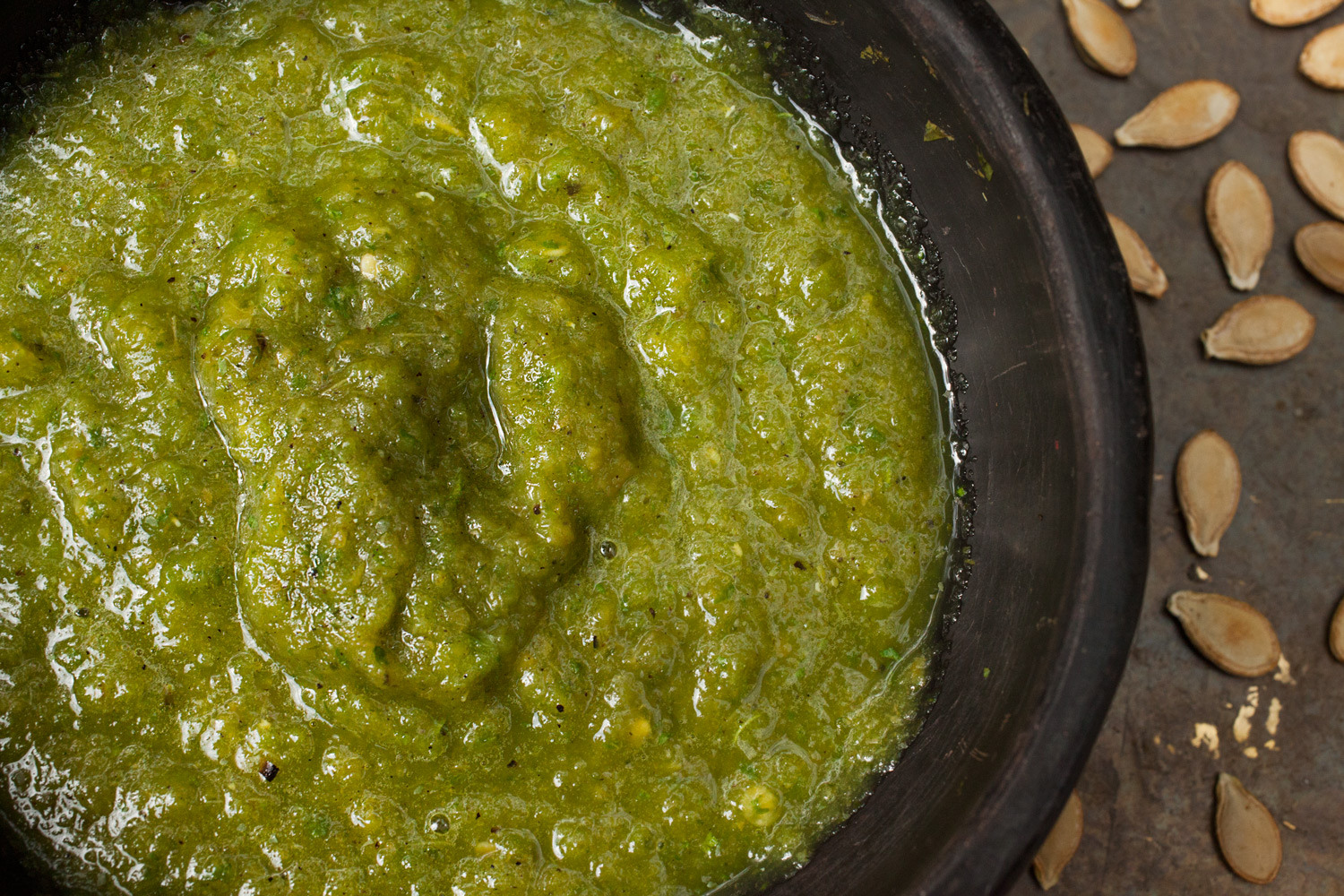
    Recipe: Roasted Pork with Green Mole

    i8tonite with Vicente del Rio of Frida’s: A LA Mexican Institution & Roasted Pork with Mole Recipe

    Total time: 3 hours, 15 minutes, largely unattended.  Serves 8

    Ingredients:
    3 1/2- to 4-pound pork shoulder roast, fat trimmed
    Salt
    Pepper
    6 tablespoons oil, divided
    6 cups chicken broth, divided, plus 1/4 to 1/2 cup if needed
    1 cup chopped onion
    2 cloves garlic, chopped
    5 tomatillos, husked and chopped (about 1 cup)
    1/2 cup shelled raw peanuts
    1/2 cup raw pepitas (pumpkin seeds), hulled
    1 bunch cilantro (tough lower stems removed)
    1/2 bunch epazote (1 cup leaves)
    1 cup chopped iceberg or romaine lettuce
    1 corn tortilla, torn into pieces
    1 bolillo roll, sliced
    3 whole jalapeno chiles (not seeded)
    2 whole serrano chiles, seeds removed7 poblano chiles, seeds removed, chopped (4 cups chopped)
    1/2 cup toasted pepitas

    Directions:
    1. Season the pork with salt and pepper. Heat 2 tablespoons oil in a Dutch oven. Add the pork shoulder and sear on all sides. Pour 2 cups chicken broth into the pan and cover.

    2. Place in a 325-degree oven and cook until the meat is tender and easily pulled apart with a fork, about 2 1/2 to 3 hours.

    3. Heat the remaining oil in a large skillet. Add the onion, garlic, and tomatillos and cook until soft, about 5 minutes. Add the peanuts and the raw pepitas and cook for 2 more minutes.

    4. Add the cilantro, epazote, lettuce, tortilla pieces, bolillo slices and chiles. Stir in the remaining chicken broth and bring to a boil.

    5. Reduce heat. Simmer until the chiles are soft and flavors have melded, approximately 15 to 20 minutes.

    6. Let the mixture cool slightly, then blend in batches until smooth. Add a little water or broth (one-fourth to one-half cup) if necessary to make a thick but pourable sauce.

    7. Return the sauce to the pan and heat to serving temperature. Season with 1 1/2 teaspoons salt or to taste. Makes 6 cups sauce, ½ cup per serving.

    8. Serve on shredded pork, arrange on a serving platter. Sprinkle with pepitas.


    – The End. Go Eat. –