
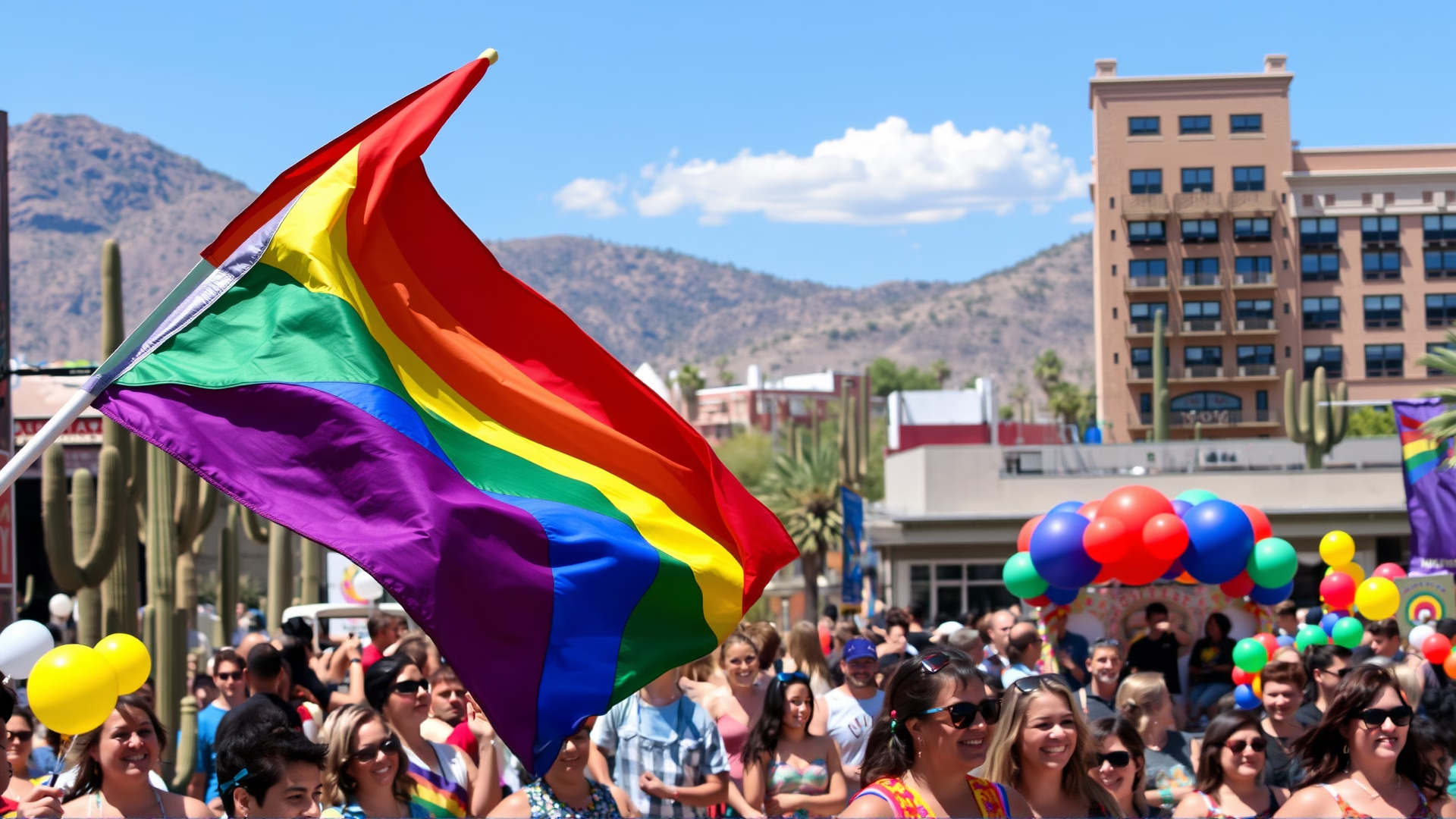
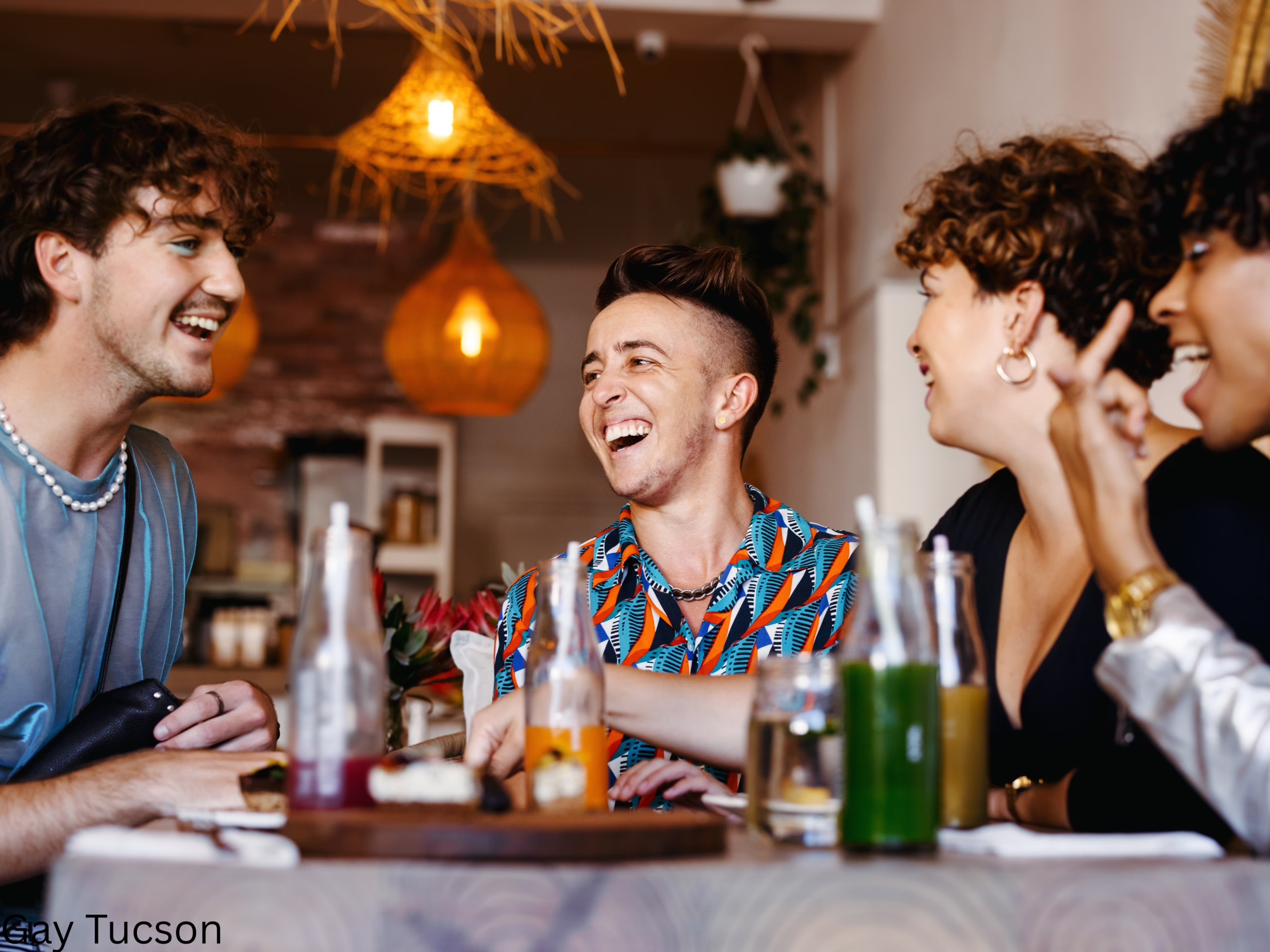
Pride in Tucson doesn’t look like Pride in bigger cities. There’s no corporate float parade down Congress Street in June. Instead, there’s a month of drag brunches, bar crawls, night markets, and small-town parades. Restaurants and bars in Tucson and Southern Arizona Pride host them. They hold this community together, the other eleven months too.
That’s not an accident. It’s how it started here.
Pride Began from Violence in Tucson
Tucson’s Pride didn’t begin because of New York’s uprising. It began outside Stonewall Tavern in June 1976 in murder as 21-year-old Richard Heakin, a tourist from Nebraska, was a victim of a hate crime by four teenagers. The name “Stonewall” is a coincidence. This Stonewall had nothing to do with the 1969 riots in Greenwich Village. Unfortunately, the killers were tried as juveniles and got probation.
Tucson, as a community, responded fast. By 1977, organizers had pushed the Tucson City Council to pass one of the first anti-discrimination ordinances in the country to protect gay and lesbian residents. That June, the Tucson Gay Coalition held the Gay Pride and Richard Heakin Memorial Picnic at Himmel Park. About 50 people came, and it marked Arizona’s first Pride event. Phoenix wouldn’t hold one for more than a decade.
And to be truthful, that ordinance didn’t come from nowhere. Tucson sits in the homeland of the Tohono O’odham and the Pascua Yaqui. The first peoples resided in this basin for more than 4000 years, making room for those who lived outside the gender binary long before any government could vote on it. The two-Spirit has long been an Indigenous identity that predates colonization. Indeed, the Tohono O’odham Two-Spirit community is still here, hosting its own Pride gatherings on the Nation. So when the city acted in 1977, it wasn’t inventing acceptance but rather honoring the character of the land on which it was built.
For almost fifty years, Tucson’s queer history could be found in places where people shared food, so it stood to reason that, from that picnic, a festival would emerge that lasted nearly five decades. In 1982, marchers walked from Tucson to Phoenix to turn Pride into a civil rights march against discrimination across the state.
Unfortunately, this year is different. Tucson Pride, the organization, dissolved in early 2026 after 49 years. However, new groups are forming to carry into the future. Today, Pride has returned to restaurants, bars, and patios where it was in 1977. It’s the simple act of gathering together.
Tucson has been an Arizona trailblazer for nearly half a century. It was among the first cities in the nation to ban anti-gay discrimination, and it consistently earns a perfect 100 on the Human Rights Campaign’s Municipal Equality Index. The city provides explicit protections in housing, employment, and public accommodations. Phoenix and Tempe hold perfect 100s, too, on the strength of inclusive employment policies, non-discrimination ordinances, and LGBTQ+ liaisons.
Those are pockets, though, not the whole state. Advocacy is still necessary. The State of Arizona does not protect LGBTQ people across the board. Unfortunately, a bill that would create one keeps dying in the legislature, specifically over faith-based exemptions and transgender rights. Thus, belonging is still contested; the answer a restaurant gives at its own door matters. None of these places requires a membership card.
Chela’s Latin Cuisine
Disco Divas Drag Brunch, Sunday, June 28, noon. 256 E. Congress St. $20 to $25.
The Divas Illusion Show marks two years of brunches at Chela’s. The Latin restaurant on Congress has quietly become one of downtown’s most reliable stages for drag. Two years isn’t a one-off Pride gesture. It’s a standing commitment, renewed monthly, in the middle of the city’s busiest dining corridor. Come for the performances. Stay for the food. It holds its own without the show.
HighWire
Drag Brunch at The Grand, Saturday, June 21, 10 a.m. to 2 p.m. 33 S. Sixth Ave. $60.
HighWire built its name on molecular mixology. Its annual Pride drag brunch returns with a buffet, HighWire Craft Spirits cocktails, and performances from Mya McKenzie, Chris Mort, Onika Grande, and Ezmerelda Felix. This one sells out. Buy tickets early.
Tito & Pep
4122 E. Speedway Blvd. Dinner nightly, brunch Saturday and Sunday.
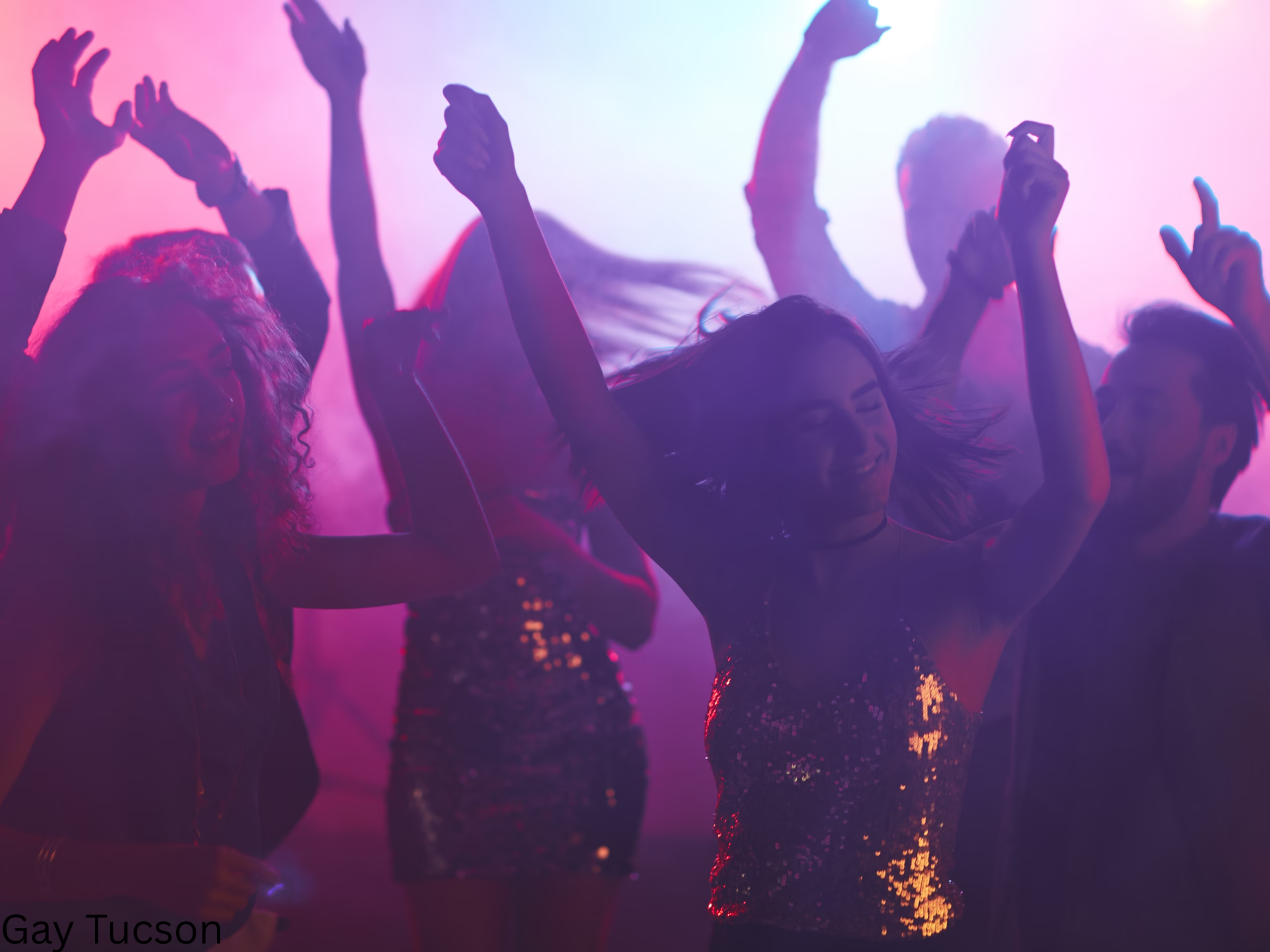
Chef and owner John Martinez built Tito & Pep into one of the city’s best-known tables (NY Times, Arizona Highways), with Southwest cooking and a cocktail program to match. It’s an inclusive, Latinx-owned dining space that runs a gender-neutral restroom and is listed as a transgender safe space. A restaurant doesn’t put that on the record by accident. It does it because it decided, on purpose, who gets to feel at home at the table. Go for the food, but linger because of how it treats you.
The Royal Room
450 N. Sixth Ave. Open 7 days a week, happy hour 4 to 7 p.m.
Sitting at the corner of Sixth and Sixth, on the border of the Fourth Avenue district, guests will discover craft beer, a rotating cocktail list, Sunday trivia nights, and, from the patio, El Taco Royale’s outdoor street tacos. Pride flags decorate the space, while a go-with-the-flow group occupies the seats, as good neighborhood bars always do. It’s the kind of local hangout where everyone is welcome, no matter the color or gender. Grab a table after work, before a show at Rogue Theater, or hang out sipping something refreshing while reading an analog book. They all work.
The Official Pride Bar Crawl
Saturday, June 20, starting at 4 p.m. Multiple downtown venues.
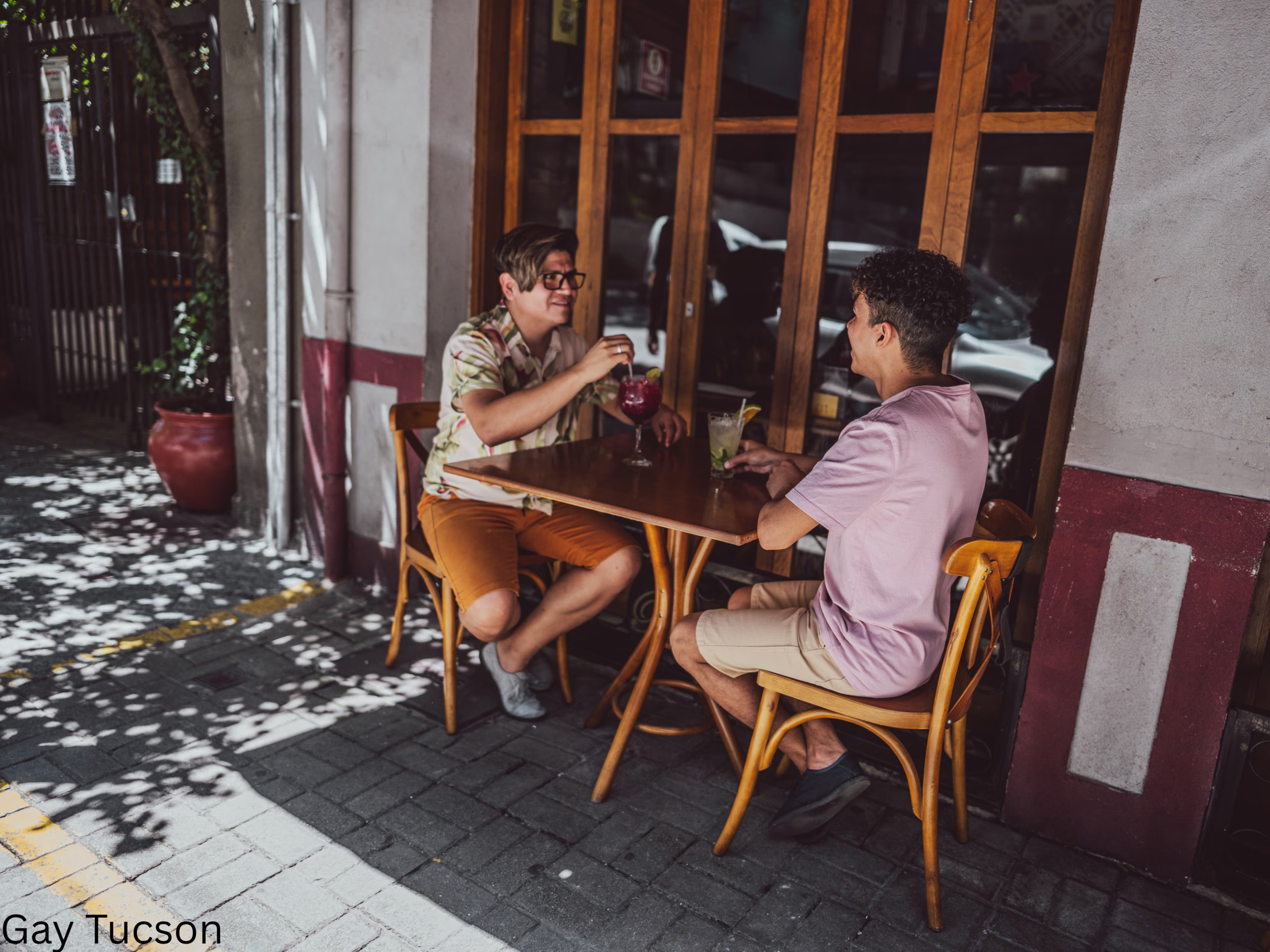
A multi-stop crawl through downtown bars. Drink and food specials at participating venues, drag shows along the route, and an after-party. Twenty percent of proceeds go to the Tucson LGBT Chamber of Commerce. Your bar tab supports queer-owned businesses across the region. Tickets at crawlwith.us/tucson/pride.
Tucson Hop Shop
3230 N. Dodge Blvd.
The beer garden in the Dodge Flower district opened in June with its Summer Queer Bazaar, a night market with more than 30 vendors, a DJ, food, and aerialists. That event has passed. The welcome hasn’t. Hop Shop runs one of the most come-as-you-are patios in the city, with rotating food trucks most nights. Bring the dog. Order a local hazy. This is the low-key option.
IBT’s
616 N. Fourth Ave.
IBT’s (”It’s ‘bout Time) stand the test of time as being a long-running Tucson gay bar of record for more than 40 years. Drag shows, karaoke, and a patio built for summer nights. It anchors the north end of the avenue the way a courthouse anchors a town square. Every Pride event in this city traces back to this room.
Venture-N
1239 N. Sixth Ave.
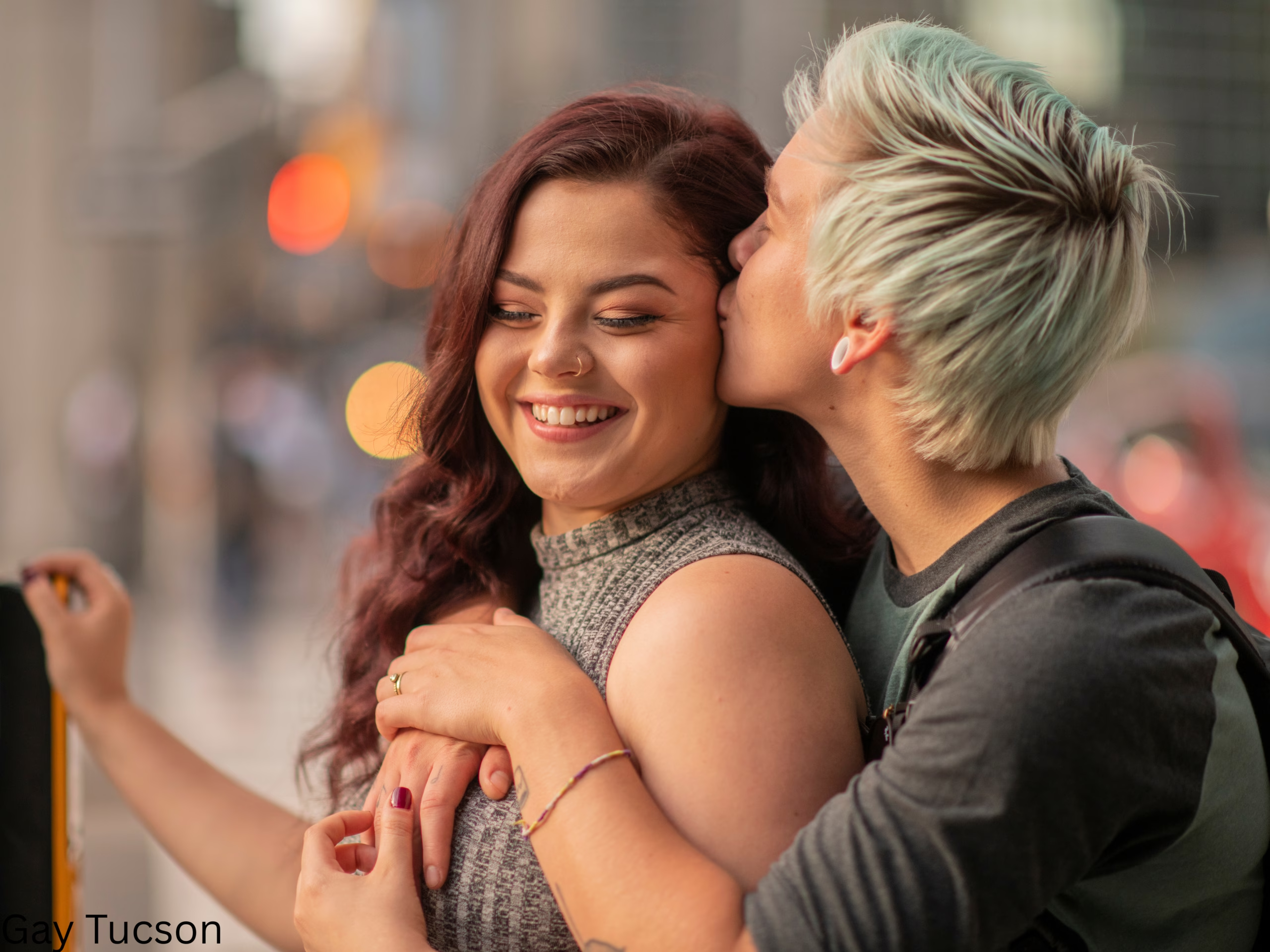
Tucson’s leather bar is also one of the city’s friendliest. It’s a straightforward (lol) bar with pool tables, a patio with a fire pit, strong drinks, and a regular event calendar of theme nights. The crowd skews older. The welcome extends to everyone who walks in. That combination is rarer than it should be.
Sky Bar
536 N. Fourth Ave.
A solar-powered cafe serving coffee and breakfast calzones by day; at night, it turns into an astronomy bar with telescopes so that you can have a signature Lunar Lemonade or a Cosmic Mule while gaping at Saturn and the moon. Occasional events that focus on the LGBTQIA crowd, but it’s more about the inclusivity.
Bisbee Pride
Friday through Sunday, June 19 to 21. Old Bisbee.
Bisbee Pride turns the whole mining town into a festival every Father’s Day weekend. The restaurants and bars of Old Bisbee are the infrastructure that makes it run. The parade steps off Saturday morning at the Cochise County Courthouse and winds down Tombstone Canyon and Main Street, past the cafés and saloons that feed and water the crowd all weekend. There’s a pool party. There’s a doggy drag show. There’s history. Bisbee was the first municipality in Arizona to pass a civil union ordinance, before marriage equality became federal law. A town of fewer than 5,000 got there before the state did. Book a room now or plan to drive back, because Bisbee gets busy!
One More Thing
There’s no official festival this fall. Not yet. The organization that started with a picnic in Himmel Park is gone, and the groups forming to replace it are still finding their feet. So, this year, Pride in Tucson is what it was in 1977. People showing up for each other at tables, on patios, in bars. Honestly, forty-nine years later, that still works.
Eat well. Make sure to tip your queens, kings and everyone in between.
Frequently Asked Questions
When is Bisbee Pride 2026?
Bisbee Pride happens June 19 to 21, 2026, over Father’s Day weekend. The parade steps off Saturday morning at the Cochise County Courthouse in Old Bisbee. Restaurants and bars across town host events all weekend.
Where are the best Pride events in Tucson in June?
This year — 2026 — Tucson’s Pride is in its restaurants and bars. Chela’s Latin Cuisine and HighWire host drag brunches. The downtown Pride Bar Crawl runs June 20. Tito & Pep, Tucson Hop Shop, IBTs and The Royal Room welcome the community year-round.
Does Tucson have a Pride festival?
Unfortunately. Tucson’s longtime Pride organization dissolved in early 2026 after 49 years due to financial issues. Successor groups are forming.
When did Tucson Pride start?
Tucson held its first Pride event on June 26, 1977, a sweet picnic at Himmel Park. Organizers began planning after the 1976 murder of Richard Heakin outside a local bar. That same year, the city passed one of the first anti-discrimination ordinances in the country, protecting gay and lesbian residents. It was Arizona’s first Pride, more than a decade before Phoenix’s.
Is Tucson LGBTQ friendly?
Tucson earns a perfect 100 on the Human Rights Campaign’s Municipal Equality Index. The city protects against discrimination in housing, employment, and public accommodations. The State of Arizona has no statewide law covering public accommodations.
ABOUT THE AUTHOR: Brian Garrido is a Tucson-based food and culture writer and editor of i8tonite


