Category: Food Musings

Recipes from Editors and their Musings on food and life. It’s fun.

  • Mesquite Shortbread Cookies with Pecans, Baked in Tucson

    Mesquite Shortbread Cookies with Pecans, Baked in Tucson

    Mesquite shortbread cookies with toasted pecans and dark chocolate dip on a baking sheet
    Mesquite shortbread cookies with pecans, partially dipped in dark chocolate.

    I’ve been baking and cooking with mesquite lately. It’s an ingredient you don’t see on many menus or listed in recipes except as wood used for burning meat. As a wood, it imbues an aroma and smoky flavor you’d associate with a campfire or a grill. That savory, romantic smell of open flame alone is part of the reason many pitmasters pair it with apple and cherry woods.

    But mesquite has a much longer history as an edible food. Across the Sonoran Desert, Indigenous communities have harvested not only the wood from the trees but also the pods, drying them and grinding them into flour for thousands of years. That flour was mixed with water or fat and baked into tortillas, bread, or porridge. Mesquite flour isn’t meant to be used as a substitute for wheat. Because it’s derived from a tree pod, it’s grainy in a way that feels closer to rough-hewn corn or barley than sugar. It works best when blended with another flour, such as almond.

    I decided to try my hand at gluten-free shortbread made with mesquite. I paired it with almond flour, folded in pecans, and dipped it in melted dark chocolate. Pecans feel like a natural choice. They’re the only nut native to North America and appear across Indigenous, Mexican, and American kitchens. Cacao, indigenous to Mexico and the Amazon, adds another layer,  chocolate, to the cookie. Shortbread made sense because it’s traditional and feels like a holiday, and it doesn’t need frosting or messy sprinkles to contend with. This cookie relies on butter and balance, creating a sturdy texture that holds up to being dipped in chocolate.

    When they are finished, they make a good Santa treat. How could the jolly man, after squeezing himself down a Tucson chimney, covered in Sonoran dirt, not find joy with these and a glass of milk?

    I like mesquite – I’m using it in sauces too –  because it connects Indigenous foodways, Mexican culture, and the American Borderlands kitchen that absorbed both, often without being acknowledged.

    Did I say these were gluten-free?

    Mesquite shortbread cookies with pecans, dipped in chocolate.
    (Gluten-free) Makes about 24 cookies

    Ingredients

    1 cup almond flour
    1/3 cup mesquite flour
    1/4 cup powdered sugar
    1/4 teaspoon fine salt
    1/2 cup cold unsalted butter, cut into small cubes
    1 teaspoon vanilla extract
    1/2 cup finely chopped pecans
    4 ounces dark chocolate, chopped

    Instructions

    1. Heat the oven to 325°F. Line a baking sheet with parchment paper.
    2. In a bowl, whisk together the almond flour, mesquite flour, powdered sugar, and salt.
    3. Add the butter and work it in with your fingers or a pastry cutter until the mixture looks like coarse sand and holds together when pressed.
    4. Stir in the vanilla, then fold in the pecans. If the dough feels dry, add 1–2 teaspoons of cold water.
    5. Roll out the dough so it’s about a quarter inch thick, then cut it into. Cut into rectangles for a classic shortbread shape, then place them on the baking sheet. Repeat the process with the remaining dough.
    6. Bake for 14–16 minutes, until set and just lightly golden at the edges. Let cool completely.
    7. Melt the chocolate gently. Dip half of each cookie into the chocolate, then return it to the parchment to set. You can even paint the chocolate onto the cookie with the back of a spoon – which is what I did. I tried dipping a couple of times, but found the cookie broke under the weight. I didn’t wait for the cookie to cool completely.

    Aside: Because mesquite flour is naturally sweet, it doesn’t need additional sugar. These keep well for several days and freeze well, both as a dough and as a finished product.

    Leftovers

    Local: Tucson Foodie reported that brothers Erick and Jose Quintero have opened Kintoki Sushi House & Bar in the former El Berraco space on North First Avenue, bringing a modern sushi concept with subtle Latin influences to a longtime neighborhood location. The restaurant, which opened Dec. 5, retains the building’s recognizable exterior while introducing a new menu of sushi, small plates and cocktails, keeping the cultural focus of the brothers’ Tucson ties.

    Regional: According to KJZZ, winter vegetable growers in southwestern Arizona are preparing for another uncertain season as water constraints and rising input costs continue to pressure food production in the Sonoran Desert. The Yuma region, which supplies a majority of the nation’s leafy greens during the winter months, remains heavily dependent on Colorado River allocations, even as short-term conservation agreements provide some stability. Growers say labor costs, transportation expenses and long-term water security remain key concerns heading into 2026.

    National: Labor shortages across U.S. agriculture are continuing to strain the food supply chain, with growers warning that limited access to workers could reduce output and contribute to higher food prices, according to national trade publication, FreshPlaza.

    The end. Go eat.

  • The Thanksgiving We Didn’t Expect

    The Thanksgiving We Didn’t Expect

    A move from Indianapolis to Tucson reshapes our holiday season and inspires a Sonoran sweet potato and green chile gratin.

    We thought we had two more years in Indianapolis. Two more winters of fall-back clock changes, farmers’ market routines, and knowing exactly where to find good greens or a reliable gluten-free loaf for the poultry stuffing. But as we know, life doesn’t exist for our specific timelines. Instead of a nice, slow transition, we decided to pack up boxes, say as many goodbyes as our last month in Indy would allow and drive southwest toward Tucson. The move to the Old Pueblo felt like stepping back into a familiar space – Nick and I had lived in Phoenix for a year and, of course, Palm Springs, which has a similar weather pattern: warm, arid and dry, with occasional heavy rain. Tucson, though, feels safer than both. More diverse and friendly, perhaps it’s due to the Indigenous and Mexican cultures, which lean heavily into their foodways. 

    Thanksgiving is next week, and we are still getting into our familiar patterns. Back in the Midwest, the holiday always had a specific blueprint, as it had over the last 12 years of our relationship. Nick makes the turkey, and I would cook everything else, including the cheesecake. It’s usually the two of us and occasionally someone else. Last year, we had Tanya, a longtime New York City friend who moved up from Nashville. This year, we will have some of Nick’s cousins who live in Phoenix, Bill and Anne and possibly the new neighbors – Collen and Greg –  our Lucy and Ricky, to our Fred and Ethel. 

    Moving sooner than expected shifted everything. We’re still figuring out which grocery stores offer the best deals – especially in this challenging economy – where to walk Betsy and Rufus, and how to create a neighborhood in our builder community. 

    This Tucson Thanksgiving wasn’t the one we planned at the beginning of 2025 – we also didn’t plan on losing George – but we have Betsy for Rufus. 

    If you are looking for a change of scenery other than your kitchen stove, bring friends and family to the newly opened Redbird at Sam Hughes. It offers something for everyone and a great local back story. Located in the historic, former Rincon Market building, the restaurant opened in September and appeals to everyone with seemingly little effort, but most likely requires more than most.  The former grocery outlet, which had been part of the area for almost a century, has been divided into two spaces, and Redbird Scratch Kitchen + Bar “flits” right into it, meaning it’s the kind of restaurant that feels cared for because the people running it care.

    Pretty much everything is made from scratch: sauces, dressings, and marinades. The only exceptions are the gluten-free hamburger buns and waffle fries, which are bought from a wholesaler. Think of Redbird as a place to hang out, watching sports in a creative atmosphere with someone else doing all the cooking, such as tacos, wings and burgers. They also have a house-made black bean burger for the vegetarians in the group. Another great touch: they offer a hot towel to clean off their hands at the end of the meal. The first time I saw this was at a high-end resort in Bali. I asked Sergio Pinon, one of the owners and general managers, about this amenity. He basically said they saw it at a luxury property and wanted it at Redbird.

    It offers coziness and the aromas of the Sonoran Desert as soon as you walk in, but the neighborly atmosphere of a “Cheers” bar.  Sometimes it’s enough to sit in a place that welcomes you without hesitation, especially when you’re still figuring out what it means to belong in a new city.

    I

    Sonoran Chile and Sweet Potato Gratin

    This is a dish that bridges both worlds. It nods to the Midwest—where casseroles anchor every gathering—but pulls its warmth from Tucson. Roasted Hatch or Anaheim chiles replace the traditional green bean casserole’s heaviness, and sweet potatoes stand in for richer autumn sides. It’s comforting, regional, and quietly celebratory.

    Ingredients

    • 2 large sweet potatoes, peeled and thinly sliced
    • 2 Hatch or Anaheim chiles, roasted, peeled, seeded, and chopped
    • 1 small yellow onion, thinly sliced
    • 2 cloves garlic, minced
    • 1 cup heavy cream
    • 1 cup whole milk
    • 1 teaspoon smoked paprika
    • 1 teaspoon ground cumin
    • ½ teaspoon Mexican oregano
    • Salt and pepper to taste
    • 1½ cups grated asadero Oaxaca or Chihuahua. If you can’t find these cheeses, substitute Monterey Jack or a mild white cheddar
    • Olive oil for sautéing

    Instructions

    1. Heat the oven to 375 degrees. Butter a medium baking dish (about 9 x 9).
    2. In a skillet, heat up the of olive oil. Sauté the onions until soft and lightly browned. Add in the garlic and cook for another minute.
    3. Stir in the chopped roasted chiles, then season with smoked paprika, cumin, Mexican oregano, salt, and pepper. Remove from heat.
    4. In a small saucepan, warm the cream and milk together until just steaming. Don’t boil.
    5. Layer half the sweet potatoes into the baking dish. Scatter half of the chile-onion mixture over the top. Add a handful of the cheese.
    6. Repeat with the remaining sweet potatoes, chile mixture, and cheese.
    7. Pour the warmed cream and milk mixture over the potatoes.
    8. Cover with foil. Bake for 30 minutes. Remove the foil and then bake another 20–25 minutes or until the top has turned a lovely brown, bubbly and the potatoes are tender.
    9. Let it rest for 10 minutes to allow the layers to settle.
  • Discovering Flavor and Community in Tucson

    Discovering Flavor and Community in Tucson

    What We Eat When We Move

    A view from my backyard.

    When you pack up your life and start over somewhere new, you think about the job, the weather, the cost of living, and finding a community. When Nick and I moved to Tucson, a city framed by the Sonoran Desert and celebrated for its food culture, I didn’t expect to miss my grocery store so much.

    After six years in Indianapolis, I knew where to buy the best gluten-free baked goods (Gluten Free Creations), which great butcher (Moody’s) to buy meat, and which farmers market stand (Warfield Cottage) sold the best greens. Moving to Tucson meant trading the Midwest’s cornfields for the desert’s cactus, and where much of the food is born of Mexican and Indigenous ingredients, even an easy meal of rice and beans felt like an introduction to another language.

    There is no doubt that moving from one state to another changes the way you eat. In Indiana, I cooked broths and experimented with braising, especially during the fall, winter and early spring, eating warm, stewy dishes. Here, I think more about citrus, chilies, and beans. Dinners are full of flavors that make up the region: mesquite, nopales, prickly pear, and the “three sisters” comprised of corn, beans, and squash. Now our pantry will be stocked with dried chiles and freshly made corn tortillas, replacing the hoarded Red Gold pasta sauce of my Hoosier days.

    The four sauces: I think they are meant so customers can try them.

    The relocation isn’t only about ingredients; it’s about discovering a community. For Nick and me, it’s how we find and make friends. In our first week in our new home, we joined our next-door neighbors, Greg and Colleen, at La Frida’s Mexican Grill, a charming, well-designed spot located on East 22nd Street with a painterly mural honoring the late artist. The meal started with a basket of chips and — surprise — jalapeño crema (instead of salsa) for dipping, touched with habanero. Zesty, rich, and impossible to stop eating. Alongside it came an additional four sauces to try: salsa verde, black refried beans, a smoky coloradito, and a deep, chocolatey mole. The chef, originally from Hermosillo, cooks with an appreciation for her birthplace and presents dishes in a hearty, picturesque manner: deep browns, rich greens, and sauces with royal crimson overtone. We had a variety of dishes, but the quesabirra, historically from Tijuana and developed by the region’s taqueros, had that buttery crunch with tender meat, salty creaminess from the cheese and that rich flavor from the consommé for dipping. The corn ribs, quartered and eaten off the cob, smeared with cotija, were a reminder of how delicious street food can be. We arrived at 4:00 p.m. and by the time we left two hours later, it felt like the whole of Tucson was waiting for a table.

    Quesabirria at La Frida's.

    In every move I’ve made — Los Angeles, San Francisco, Irvine, Palm Springs, New York City, Indianapolis, now Tucson — I’ve learned that the fastest way to feel at home is through its restaurants and markets. Each city teaches you its flavors, and Tucson shows the earthiness of Sonoran wheat tortillas, the char on a roasted green pepper, and the comfort of beans simmering away on the stove. These are image postcards tattooed into my memory banks that will last longer than any logo t-shirt ever will. Indeed, Tucson’s UNESCO City of Gastronomy status only reinforces the idea that what we eat tells the story of who and where we are.

    In the freezer, there’s still a loaf of gluten-free bread from Native Bread Company in Indianapolis. I slice and toast it on mornings when I miss the Midwest. It’s that heady scent of bread, with a smear of local prickly pear jam bridging my recent past to today in a way no moving truck can.

    What we eat when we move isn’t just about adapting to a new market or menu. It’s about creating continuity. The table’s location may change, but the act of sitting down, of being fed and feeding others, remains constant.

    But in a short time, here in the Old Pueblo, I’ve found that the desert’s vastness, beauty and indigenous ingredients are finding a way into my kitchen. As I’ve said before, moving isn’t about leaving something behind. It’s about eating and discovering what’s next.

    Chips and jalapeno crema

    Recipe: Prickly Pear and Lime Agua Fresca

    Makes 2 quarts

    • 2 cups prickly pear puree (fresh or bottled)

    • Juice from 3 limes

    • 4 cups cold water

    • 2 tablespoons agave syrup (more to taste)

    • Dash of sea salt

    Whisk or blend all ingredients until smooth. Taste and adjust the sweetness. Chill for at least 30 minutes. Serve over ice with a sprig of mint or a lime slice. While this is a simple beverage, it tastes like the Sonoran Desert, which I think of as being bright, sweet, and restorative. If you’re feeling festive, add a touch of rum, tequila, or vodka.

    The End. Go eat.

    A mural of the restaurant's namesake. on the back wall.

  • My Father & Food: My Filipino American Story

    My Father & Food: My Filipino American Story

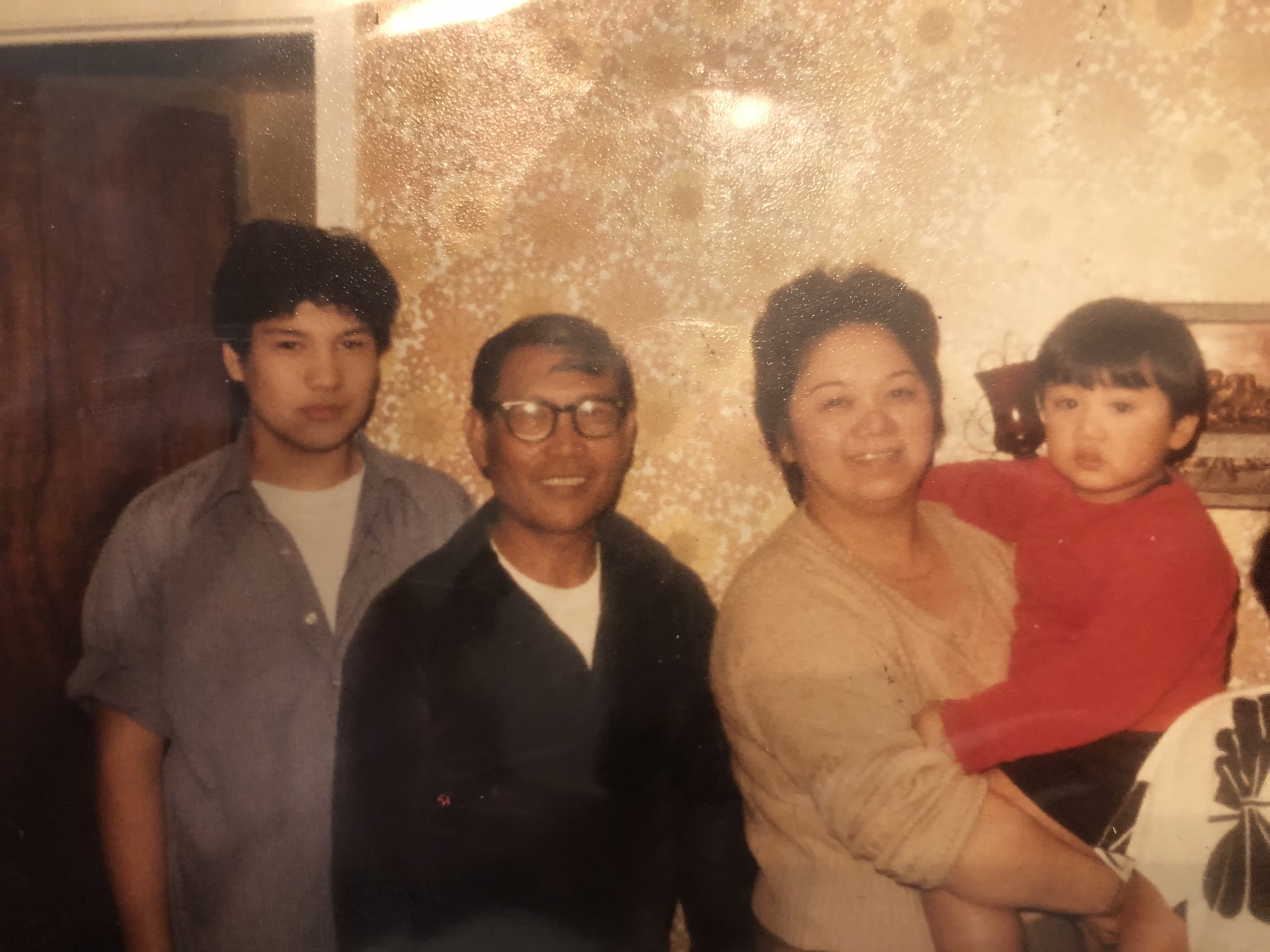
    When I think of my father, the only good thoughts appear around food. It’s often how we remember people, how we ate with them at a dinner table or cooked beside them. It’s not how we wish they were, but as they were. In a time when immigration has yet again become so politicized and misunderstood, I think about my father, whose name was Primo. He was a complicated man, an immigrant, an enlisted Navy veteran of 40-plus years and a man I never truly knew. I knew that he walked to school on pristine beaches and white sand. His parents — my grandparents — were killed by U.S World War II pilots, flushing out enemies that hid in the dense jungles of the archipelago. Casualties of friendly bombings, if you will. He, along with three siblings, was adopted by family members. Tropical Cindafella — only hard work, cleaning the relative’s home for his keep, but grieving his childhood and loss. He was never quite taught how to be a father because he didn’t have one, nor were those around him capable. They, too, were mourning the deaths of their children and others. War, ultimately, guarantees that generations will suffer.

    Because of his loss, what I received from him wasn’t warmth or fatherly advice, barely even love — although, my stepmother might argue that. However, when I lived with him briefly in my teen years, I was given his childhood memories of growing up and eating in the Philippines.

    My dad's family and me.
    My father’s family and me.

    But Primo enlisted in the U.S. Navy and served a country that didn’t always see him. He stood watch on ships, served abroad, and carried that discipline into every corner of his life. It wasn’t gentle. But it was service and took him away from what he knew. You might even say joining the armed forces gave him a father. He learned about combat and racial discrimination. He learned infidelity and deceptiveness — to lie when he was caught. He did that quite often.

    But he loved seafood.

    If it came from the ocean, it was on his plate. Prawns, squid, bangus, and crab legs soaked in garlic butter and eaten with his hands. He would suck loudly suck the juice out of the shrimp’s head. “Mmmm, that’s good,” he would say to us around the table: my half-siblings, his second wife, her mother and me.

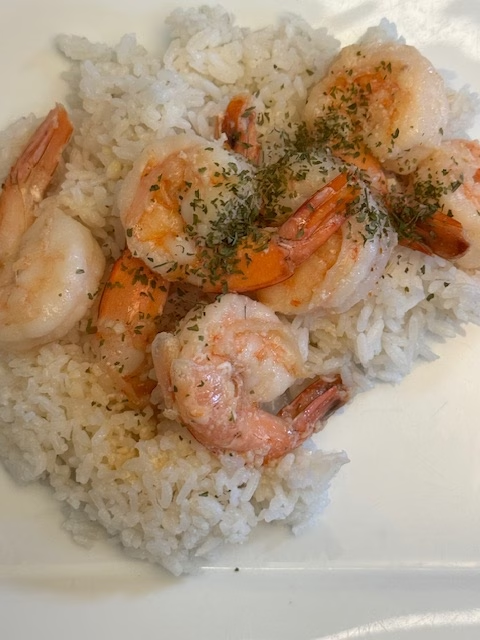
    The sea reminded him of something he had left behind: it was full of free and accessible food. It was easy for him to catch fish with a handmade net and cook the nightly meal he had to make as an indentured child servant. When my stepmother or her mother didn’t cook adobo or pancit, he would make a bowl of halabos na hipon—Filipino-style buttered shrimp and rice—always rice.

    When I cook this dish today, I can focus on his trials as an immigrant and his service in the Navy. Not as a father or someone I knew well, but as a figure in my history, a uniformed man who battled on iron ships and his demons. While I toss the garlic and shrimp, with splashes of carbonated lemon soda, and simmer to a tasty syrup, I imagine his life’s grueling and uphill battle. I never fully understood him dismissing me as his son until I wound up on his doorstep, thinking he could save me.

    My dad's family.

    Today, we wrestle, yet again, needlessly, around immigration. As if that’s the problem. My father wasn’t perfect, but his journey — from the Philippines to military service in the U.S. — helped build this country. It’s easy to forget how many of our most valued dishes — tacos, pizza, hamburgers, French fries, dumplings — were brought here in the bags and bellies of people like him. Immigrants have never taken anything from the United States and this country, they bring flavor, resilience, and stories.

    This isn’t a tribute to Primo on Father’s Day. Although he was my blood, he was many things: a loving father to his other kids, a daughter and a son, a veteran, a man who loved seafood and a proud settler to the United States. He loved this country as so many immigrants do.

    Garlic Butter Shrimp (Halabos na Hipon)

    Serves 2–3

    Ingredients:

    • 1 lb head-on shrimp, shell on (I used shelled shrimp. Since I live in Indiana, it’s hard to find whole shrimp).
    • 2 tablespoons unsalted butter
    • 1 tablespoon neutral oil (canola or vegetable)
    • 6 cloves garlic, finely chopped
    • 1/4 cup Sprite or 7-Up
    • 1 tablespoon fish sauce (optional, or substitute with a pinch of salt or a splash of soy sauce)
    • Freshly ground black pepper
    • Cut lemon for serving
    • Steamed white rice

    Directions:

    1. In a large skillet, heat the butter and oil over medium heat. Add the garlic and sauté until golden and fragrant, about 1–2 minutes.
    2. Add the shrimp and toss to coat in the garlic butter.
    3. Pour in the soda and fish sauce (if using). Let it bubble and reduce slightly, then cook the shrimp until pink and curled—3 to 5 minutes.
    4. Season with black pepper. Serve hot with calamansi or lemon wedges and plenty of steamed rice to soak up the sauce.
  • I8tonite: Final Top Three Favorite 2023 Indy Eating Experiences

    I8tonite: Final Top Three Favorite 2023 Indy Eating Experiences

    We selected eight experiences from all the Indianapolis restaurants we dined in 2023.

    We have a French bulldog puppy, Rufus. He came home this summer with us not long after our other Frenchie, J.J., passed. As I write this, the eight-month-old trundles through the backyard strewn with falling leaves. Sniffing. Munching on things that he shouldn’t. That is all he wants to do. Eat. Anything that might have a taste, he is willing to try. That journey of discovery, flavors and aromas compels him to sample anything in his path. George, our chocolate doesn’t help, either. Canine garbage can. 

    Strangely, as a human baby, that’s all we do, too. As we grow, we seek nourishment to strengthen and teach us. As an adult, I seek dining experiences that make me feel fortified, give me vigor and energy, and are memorable. I think that way as I continue going through my remaining years. 

    In the Midwest, it’s difficult for a gay man of color who grew up in progressive areas to have a favorable reception, even in a very blue city. Having worked as a waiter in New York City restaurants to pay my college tuition, I met the world, all races, creeds and colors. To be even more specific, as a server at Soho Kitchen & Bar, my colleagues came from Tunisia, Jamaica, the Netherlands, the country of Georgia, Mexico, Venezuela, France, Israel and China. Of course, the U.S. came out on top with struggling artists from various disciplines, hailing from every corner but many from the Midwest. With so many backgrounds and different religions, we learned under this one roof about wines and food. The cavernous space focused on essential bar eats – pizzas, wings, salads, pasta – to accompany the star, the new global world of wine tasting. It was the first restaurant to offer 110 varietals from every grape-growing region. They even had 75 beers on tap. We needed to attend weekly Thursday tastings; sickness and a doctor’s note would get us out from a Kevin Zraly-taught sommelier (it might even have been Mr. Zraly himself a few times). It was the beginning of an eatery to offer such a vast line-up of flights, a now ubiquitous term for small tastes of anything. 

    I bring this up because I have faced bigotry, intolerance, and racial discrimination throughout my life. While I expected to see it, I didn’t think it would bother me as now that I’m older. And, I thought after all the pandemics and epidemics we have collectively weathered over the last 50 years, it would have been a moot point. 

    While I would love to say what food and beverage company have treated me in such a fashion, I’m not going to give them any credit. 

    All of this to say, everyone should work in a restaurant. You may not like everyone, but you are there to ensure your customers eat and drink well. 

    Let us recap the first five of eight I8tonite’s Favorites of 2023: 

    Lady Tron’s, New Albany, Indiana

    Perillos Pizzeria, New Hope, Indiana

    Tinker Street, Indy

    Chicken Scratch, Indy and Cincinnati 

    Anthony’s Chophouse, Carmel

    When I thought about the list, I wanted to include Midwest restaurants where we have eaten over the past year. Then, as I mentioned, the New York Times 50 Best Restaurants came out without even a whisper of Indiana. I thought it was unfair and not democratic in the least. Selecting 50 establishments implies one from every state, not only a set number with several in one location. Also, we paid for every meal. It wasn’t because we had a media pass. 

    Here are the final three for i8tonite. They should get a T-shirt. 

    Petit Chou Bistro & Champagne Bar

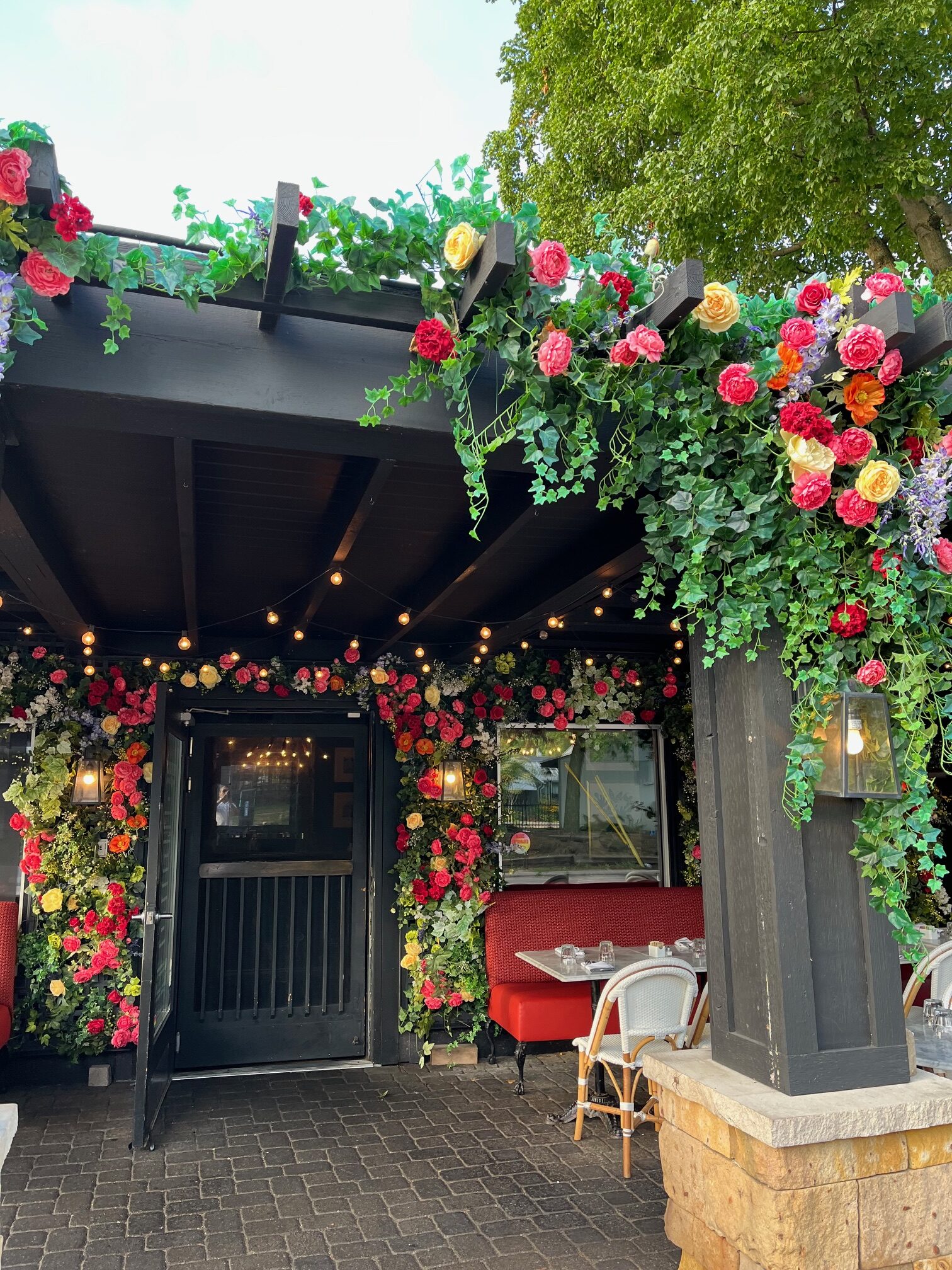
    Patio for Petit Chou Bistro & Champagne Bar

    Four years ago, Nick took a position in Indianapolis. We visited the city seeking a place to live before his start date in Fall 2019. That was the first time I stepped onto Midwest soil. I had eaten everywhere but the Midwest. As a public relations professional in various industries, including tourism and hospitality, I could boast about sleeping and eating on six continents and over 200 destinations. Before my debut flight to this patch of green – Nick is from Wisconsin – I researched places to eat. I couldn’t live in some place without good food. Two of the places I selected were Cafe Patachou and Napolese, two of Martha Hoover’s establishments. 

    We found a house around the corner from Martin Luther King Jr. Park & Memorial. Napolese, the pizza and wine bar, still stands as a favorite – notably because they offer gluten free, but Petit Chou Bistro holds a special place. The establishment is inclusive, as are all of Ms. Hoover’s places, making everyone feel welcome. Bright plastic flowers and garland edging the windows make it feel like perpetual spring, and I feel a surge of Gallic love without the price of an airline ticket. Of course, the food is delicious Parisian bistro fare such as omelets, salads, rillettes, burgers, steak, and frites. The combination of everything makes me feel good about dining here: the food, the atmosphere and the service. 

    823 E Westfield Blvd, Indianapolis, IN 46220

    (317) 259-0765

    9th Street Bistro

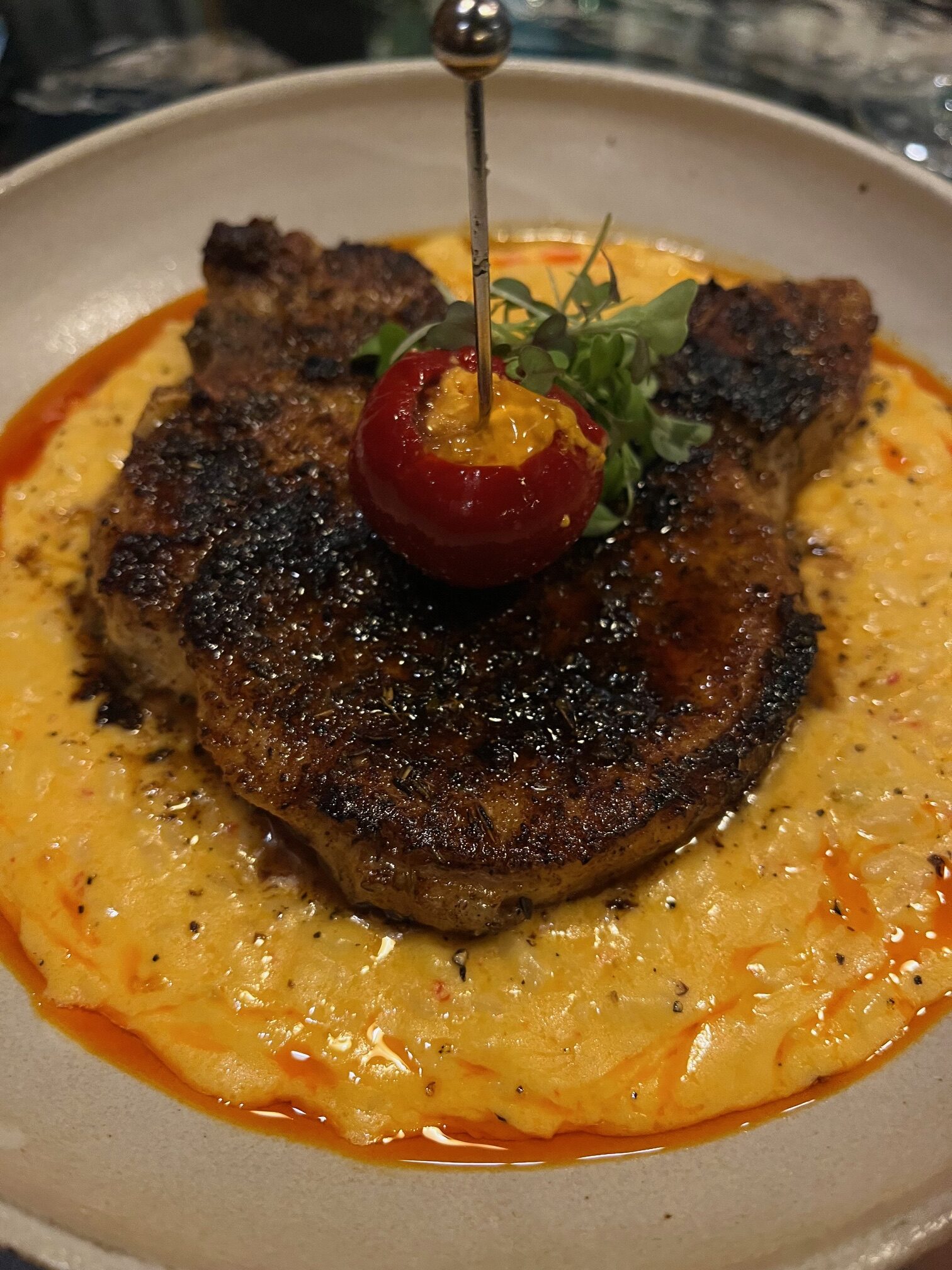
    Pork Chop crusted with
    Pork Chop Crusted with ras al hanout, Brian Garrido

    Husband and wife team Chef Samir Mohammed and his wife Rachel Firestone launched this 35-seat restaurant in 2020 at the beginning of the pandemic. It took me three years to get here, but it was one of the most memorable meals I had anywhere this year, including places in New York, Chicago, and Nashville. It’s a gem, situated a few doors from the Noblesville landmark courthouse and about a 45-minute drive from downtown Indianapolis. Its diverse menu featuring American classics and globally inspired dishes has already captured attention.

    On the night that we were there, the menu, which changes monthly, offered gluten-free hushpuppies, a ras al hanout crusted pork chop on a bed of saffron risotto, and a luscious rib eye with butter and fingerlings. While it was simple, there was a deft execution from a chef who knew his ingredients, primarily local Indiana produce and meats, to serve their customers who traveled to get there.  

    Nominated for a James Beard award for the Great Lakes region, Mohammed and Firestone should win in the coming years. It offers rustic and welcoming interior decor, attentive service, and delicious flavors from the Mediterranean, Middle East, Southwest, and California in America’s heartland. 

     56 S 9th St, Noblesville, IN 46060

    (317) 774-5065

    Love Handle

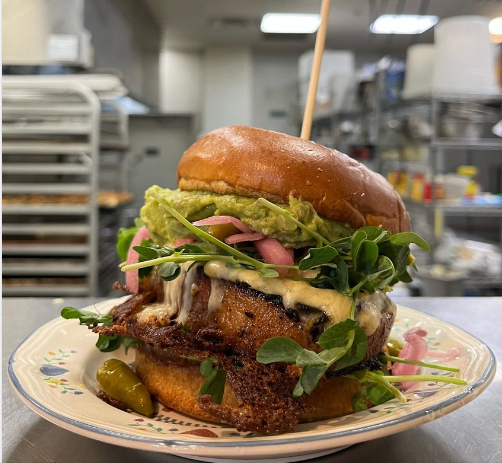
    Pork belly sandwich, three melted cheeses, courtesy
    Pork Belly Sandwich, courtesy of Facebook, Love Handle

    When I first ate at Love Handle, it was love at first bite. Scrumptious lumberjack breakfasts and thick Dagwood sandwiches populate the handwritten chalkboard. It’s an eating experience of depth, clogged arteries and breathtaking flavors. For example, a typical daily special included a roast pork belly sandwich with homemade guacamole, pea shoots, red salsa, three cheeses melted, pickled red onion, and Sport pepper. And for those vegetarians, one can sup on baked taleggio grilled cheese, raspberry compote, marinated spinach, and a sunny-side-up egg. 

    The brainchild of Chefs Chris and Ally Benedyk – she makes the sweets – I feel a touch of Southern California kitschy nostalgia when I dine here. It’s a mish-mash of thrift store finds and curiosities that can help bring on a conversation for a first date or perhaps end it. There is a quarter-munching video game, curated clown paintings, and paint-by-numbers pulled out of second-hand bins, creating an eclectic atmosphere to match the food.  

    It’s not a place for dieters, but one can have a pound of pulled pork if need be. And it’s tough for those who are celiac or gluten intolerant, but the sandwiches can’t be found anywhere but right here in Indy. That’s a good thing. 

    877 Massachusetts Ave., Indianapolis, IN, United States, Indiana

    (317) 384-1102

  • i8tonite: Top Favorites Eats, 2023: Delicious, Easy Recipe for Hasselback Potatoes

    i8tonite: Top Favorites Eats, 2023: Delicious, Easy Recipe for Hasselback Potatoes

    Our favorite meals over the last year. And a Thanksgiving Hasselback Potato Recipe.

    I spoke to a born and bred Hoosier who said to me, “Hoosiers are humble. We don’t talk about the great things we offer.” In today’s day and age of marketing and promotion, no one wants to dine at your table if they don’t know what’s available. We have many opportunities to promote local Indiana food entrepreneurs, and we should. A friend and former editor-in-chief of the biggest food magazine in the world said her life was about traveling to eat. In 2004, London-based food writer Andy Hayler went to every three Michelin-starred restaurants worldwide and was the first to do so. He continued to do it six more times until the pandemic. Traveling for food is big business. 

    Having lived, worked and promoted destination and resort towns across the United States and internationally for most of my life, it’s always about the food and drink first, even more so than the hotels. Think about heading to Napa Valley without the wine? Leaving the lackluster conference hotel room, the food – and service –will make or break the experience. Before living in Indy, except once, I never read about great food from the Hoosier state, but there are stellar places. I’ve eaten at them. 

    Read our first two of 2023 until we get to eight!

    Tinker Street

    Four years ago, Nick and I spent my first birthday in Indy at Tinker Street, one of the city’s mainstays, which I place as one of the finest eateries in the Midwest. Opened in 2015, the small restaurant on 16th Street in the historic district of Herron Morton provides Chef Tyler Shortt an opportunity to be creative with Indiana-grown ingredients. It’s one of the few restaurants that promote the area farmers while also being in the 21st century with a female sommelier, Ashlee Nemeth, and providing reservations. 

    Shortt’s recipes showcase regional agriculture, corn and tomatoes, and meats like duck and pork. That’s a good thing. The New American fusion – that ubiquitous term that uses herbs and spices from international flavors with European cooking methods – shows in the sauces such as the yuzu garlic aioli on the scallop and scallion risotto or the cappelletti with a Korean braised short rib. It’s an eating destination where one is never disappointed in the food or service. Importantly, it’s that place you bring your Chicago, Los Angeles and New York City friends when they finally come to visit you. Thankfully, it’s 21 and over, too. 

    402 E. 16th Street

    Indianapolis, IN 46202

    (317) 925-5000

    Reservations

    Chicken Scratch

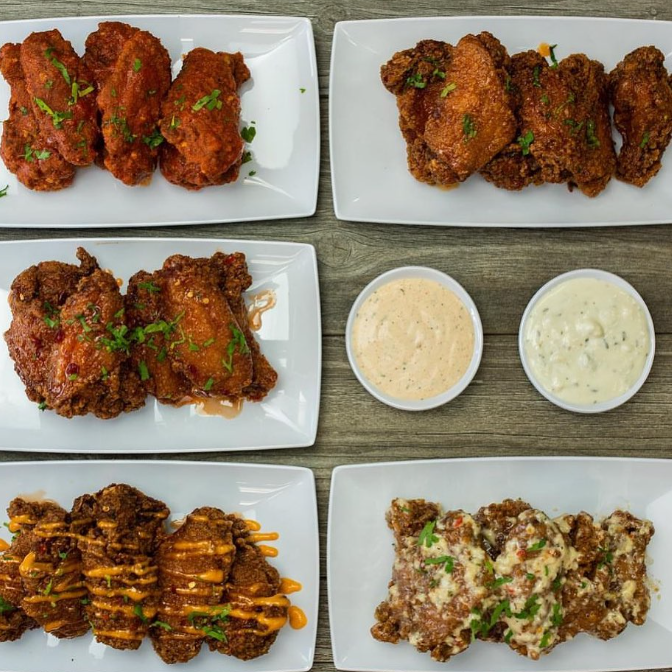
    A graduate of Ivy Tech’s Culinary School, Chef Tia Harrison, who catered for ten years before opening her restaurant called Chef Tia & Co., started serving her wings as a special on Wednesdays. Upon being one of two $25,0000 Discover Financial Services recipients to support Black-owned food entrepreneurs, she opened her first standalone devoted to the hump day special on Keystone. It’s a pickup and delivery spot with over a thousand reviewers from happy customers giving it a thumbs up. Ms. Harrison creates mighty tasty wings and loaded fries from this location. And as a customer, your choices feel endless. Who knew there were so many variations on wings? Naked or breaded, bone-in, boneless, and vegan, made with cauliflower florets and tossed in almost a dozen hand-crafted sauces that make everything finger-licking good. 

    Parmesan garlic is a house specialty, and the spicy jerk BBQ fires up the tastebuds, but no one can do wrong with the hot honey. If you’re visiting Indianapolis, have them delivered to your room and source a wine from one of the Black female winemakers in Indiana (Sip & Share or Cultured Urban Winery). You will remember the meal much more than the keynote speaker. 

    Since debuting in 2021, Harrison opened two more this year, one in Cincinnati and another downtown Indy location. 

    5308 N. Keystone Avenue

    Indianapolis, IN 46220

    Order

    Anthony’s Chophouse

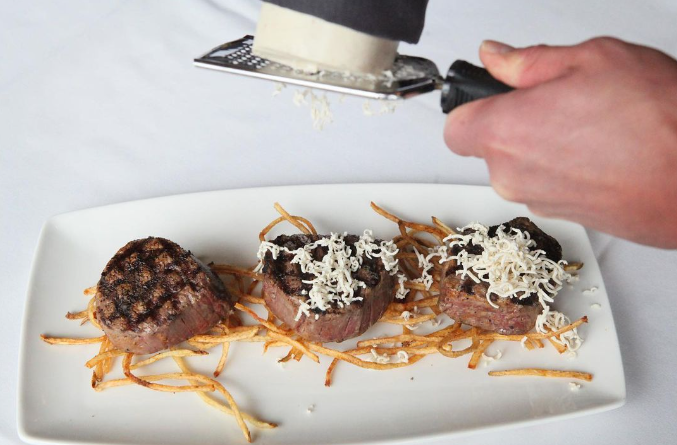
    Filet of Beef, courtesy of Anthony’s Chophouse

    I’m fascinated by Carmel’s carefully planned community design, so much so that I often drove by Carmel’s Anthony Chophouse without noticing. The developed city has entranced me with its perfect walkways and storefronts, that I missed the illuminated sign, mistaking it for another chain. 

    But once inside, they transport you past the white picket fences and into a South Beach atmosphere, exuding sex appeal. A gas fireplace framed by brick illuminated the staircase leading upstairs and packed the bar area with crowds of Carmelites — sculpture and texture play in the dining room, with Rat Pack chocolate-covered banquettes and brass mid-century lights. A wood-planked floor allows for runway arrivals of Manholos and To Boots before stepping onto a modern weave. And, of course, the glass-walled kitchen allows diners to see the back of the house between sips of ready-to-pair meat cabernets. 

    As for the boeuf, it was standard with freshly seared ribeye and filets. We like the flight of beef, like tastes of wine, that featured four-ounce portions of USDA prime, grass-fed, and Wagyu. We have yet to eat in every steakhouse in the world, but we found this to be a novel idea. Dining at a butcher emporium, for the most part, is about something other than the steaks. It’s about the wine, the cocktails, service, appetizers and the sides. Diners will find creativity in these dishes, wine menu and libations. The bone marrow, harvest pig and the gambas pil pil are worth visiting every single evening. And if we could afford it, we would. 

    201 W. Main Street

    Carmel, IN 46032

    (317) 740-0900

    Reservations

    A Thanksgiving Recipe for Hasselback Potatoes

    Ingredients:

    • 4 large russet or Yukon Gold potatoes
    • Olive oil or melted butter
    • Salt and pepper
    • Optional toppings: grated cheese, chopped herbs (such as rosemary or thyme), garlic powder, paprika, sour cream, bacon bits, or any preferred toppings

    To Make:

    1. Preheat your oven to 400°F (200°C). Wash the potatoes thoroughly and pat them dry with a kitchen towel. Place a potato on a cutting board. Using a sharp knife, make vertical slices across the potato, about 1/8 to 1/4 inch apart, ensuring it does not cut all the way through. Pro tip: To prevent cutting through the potato, place chopsticks or wooden spoons on either side to act as a barrier.
    2. Once all the potatoes are sliced, place them on a baking sheet or in a baking dish.
    3. Drizzle olive oil or melted butter over the potatoes, making sure to get some in between the slices. Use your hands or a brush to evenly coat each potato with oil or butter.
    4. Season generously with salt and pepper, ensuring the seasoning gets into the crevices.
    5. Optional: Add your preferred toppings such as grated cheese, chopped herbs, garlic powder, or paprika between the slices or on top of the potatoes.
    6. Place the baking sheet or dish in the preheated oven and bake for about 50-60 minutes, or until the potatoes are crispy on the outside and tender on the inside. The cooking time may vary depending on the size and type of potatoes used.
    7. Once done, remove the potatoes from the oven and let them cool slightly for a few minutes before serving.
    8. Serve the Hasselback potatoes as a side dish with your favorite main course. Optionally, garnish with additional toppings like sour cream or bacon bits before serving.
  • I8tonite: A New York Pizza Experience

    I8tonite: A New York Pizza Experience

    Pepperoni Pizza

    On a recent work trip to the Big Apple, I found myself working voraciously from one area of the boroughs to another, with only an opportunity to grab a quick slice of pizza for lunch, before hailing an Uber (Who takes cabs?) or jumping on the subway, repeating this action until dinner. I did this for five days. By the end of the trip, exhausted and not feeling well plus I felt bloated from the amounts of consumed dairy and wheat. (Yes. I  realized that milk products including trace amounts of butter and I are no longer friends.)

    With this said, the trip provided me a rewarding experience that only Lactaid can cure the next time I venture forth with so much mozzarella. And, although, the New York slice, the version that you dab with a napkin to relieve of extra grease, rolling-up like a New York Times straphanger, is becoming extinct like said transit-rider, it still is served deliciously — and for me, gratefully.

    On Quora – the internet answer for everything — someone tried to figure out the number of shops, reckoning it’s anywhere from 3200 to 32500.  Suffice it to say it’s a broad number. They even try and figure out how many per day a pizzaiolo must toss, bake and sell (about 50) to stay in business.

    Whatever the case and take this with a grain of well-tossed salt hidden in the folds of rising dough, here are my selections for a few grand pizzas – in today’s Manhattan.

    Prince Street Pizza

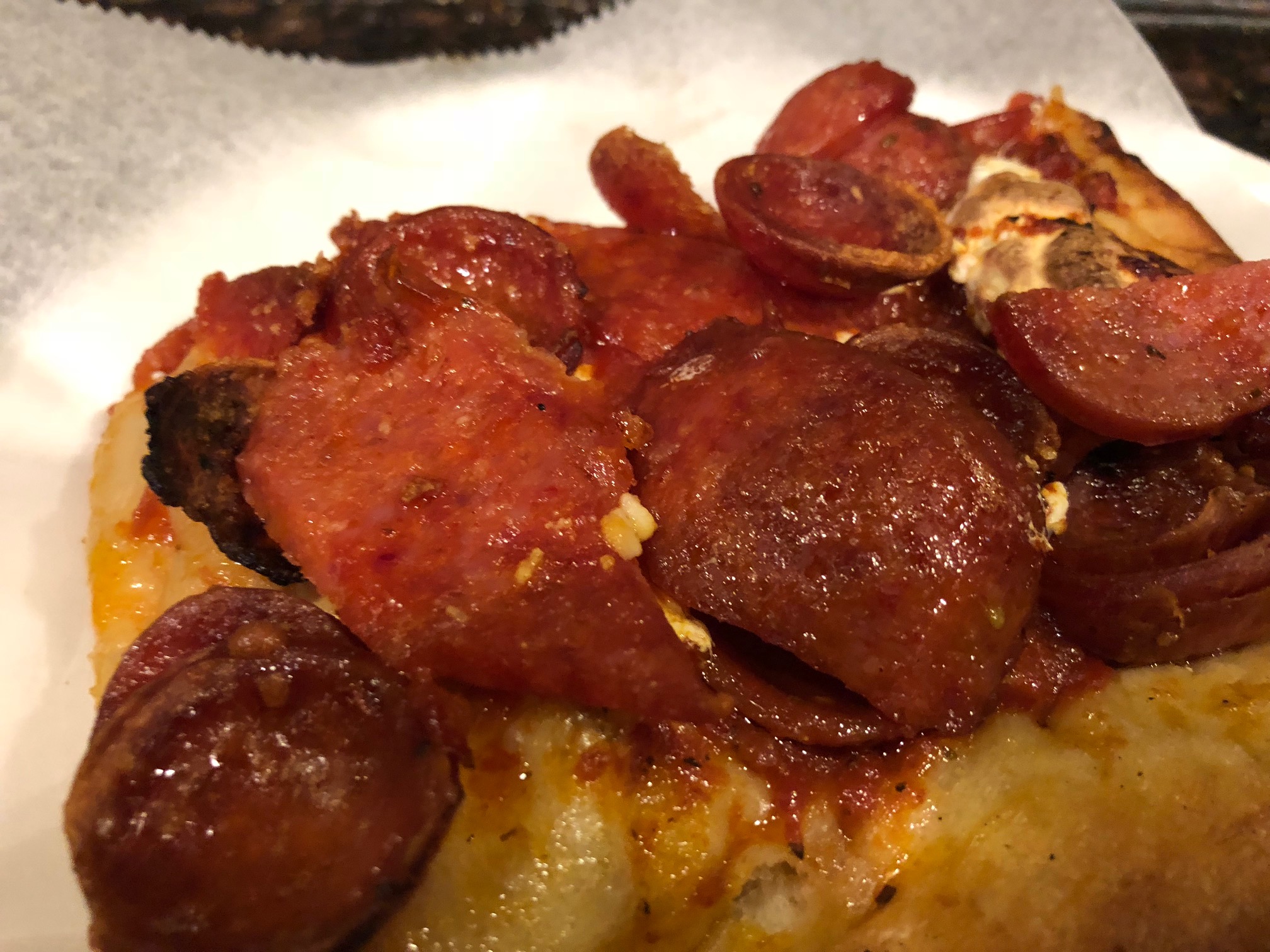
    Formerly known as Ray’s when I lived was a poor New York student in the eighties, I would stumble by for a pepperoni slice after nightclubbing, something to soak up the alcohol. Purchased a decade ago, the existing owners kept the place alive and very much a Soho tradition. Instead of the fold-and-go variety of pies, they execute a Sicilian square loaded with small circles of spicy pepperoni. When baked onto one of the gooey delicacies, they become mini-cups of flavor, holding liquid fat, ready to drip down your chin or shirt. There are only a line and a counter so may do like a New Yorker and eat while walking.

    27 Prince Street (between Elizabeth and Mott Streets)

    (212) 966 – 4100

    Princestreetpizza.com

    Farinella

    Days of cheese and pepperoni

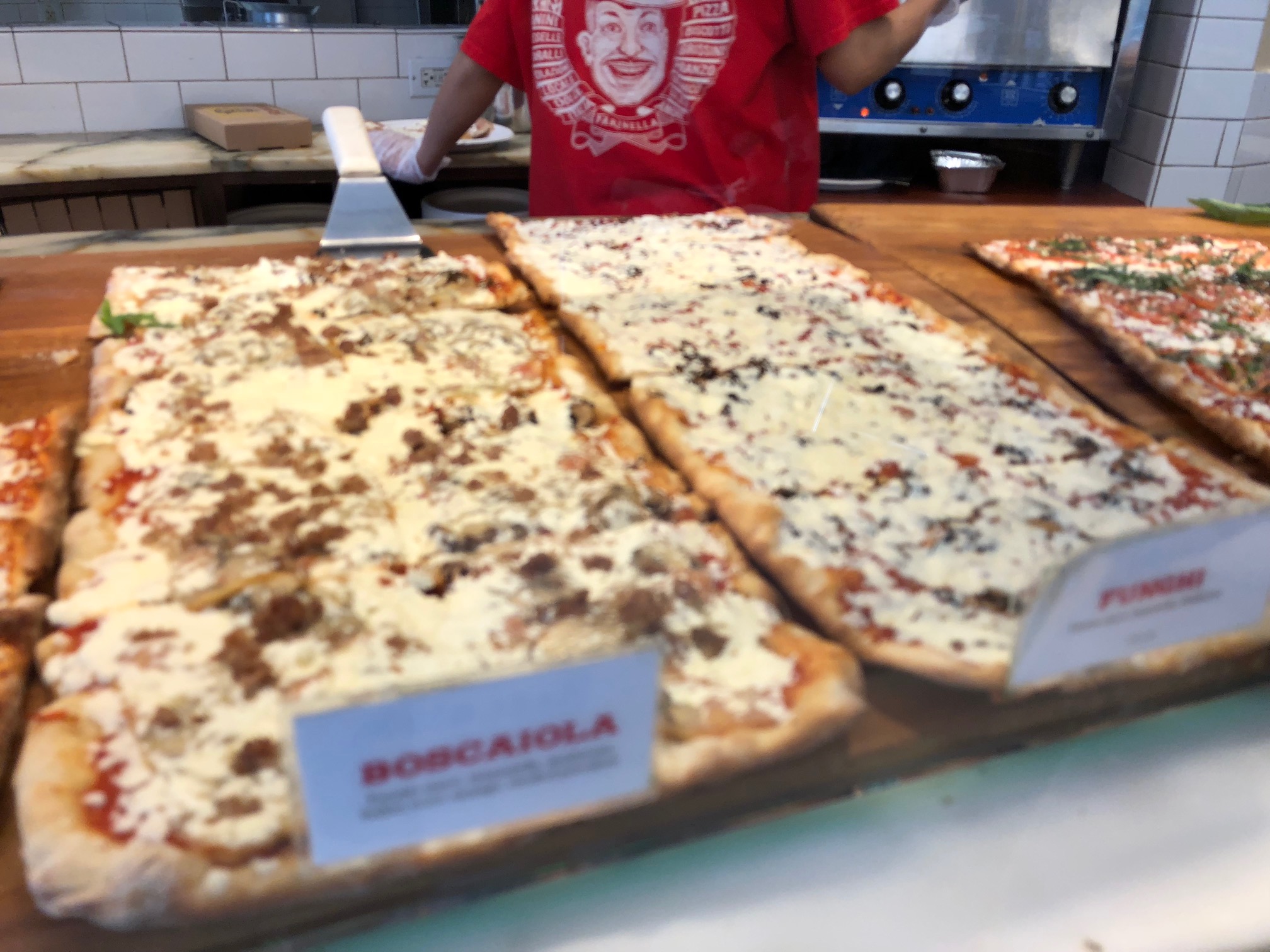
     I came by the Romanesque pizza shop after Uber hightailing from a meeting in Brooklyn to Lexington and 78th only to be thirty minutes early. Rarely do opportunities arise with time on your side, so I sought out a quick place to eat and came across Farinella Pizza and Bakery.  Here the pies are elongated rather than round and the dough stretched rather than tossed. Regardless, it’s really delicious with a crispy under-carriage while it grips onto the selected toppings. The margherita is divine Italian simplicity at it’s best.

    1132 Lexington Avenue (between 78th and 79th Streets)

    New York, New York, 10075

    (212) 327 – 2702

    Champion’s

    Pepperoni Pizza

    Who knew that pizza – an import foodstuff brought over by Italian immigrants – could be so delicious in the hands of a Turk? Hakki Akdeniz worked for many years making $300 per week to learn the tasks of pizzaiolo trade. The outcome is a true slice of New York pizza. Folded in half, paper plate underneath – and a walk to the subway – or hanging out at one of the few tables. Eating the chewy dough and cheese with just that right amount of giving made me feel like all is right with the world – that Andy Warhol, Deelite and Nell’s where still around.

    17 Cleveland Place, New York, New York

    The end. Go eat.

    (P.S. Apologies for the long space between posts. Life happens.)

    [prosperInsert gtm=”merchant” id=”123522~123477~” ft=”fetchMerchant” imgt=”original” fb=”123522123477″ ni=”true”][/prosperInsert]
  • i8tonite: Farm Musings – Husbandry at Hateful Acres

    i8tonite: Farm Musings – Husbandry at Hateful Acres

    This is part of the on-going series on Food Musings written by award-winning poet and writer, Julie Fisher. She is also  the founder of Litmore, Baltimore’s Center for the Literary Arts. 

    ***

    “The industrial mind is a mind without compunction; it simply accepts that people, ultimately, will be treated as things and that things, ultimately will be treated as garbage.” Wendell Berry

    These Musings are a reflection of my amateur farming experiences and research which intertwine with waxing poetic about the genuine pleasures of cooking, growing, harvesting, and sharing food. Our relationship to food is a biological imperative first, of course. But I believe the evolution of our food science and artistry is also an ingredient of our humanity. The good, generous, and delightfully curious part of all of us.

    How we eat is no longer dependent strictly on what we can hunt or gather. It’s become this incredibly complex soup of choices and emotions and evocative memories and politics and class and income and marketing and industry. We no longer eat just to survive. Our daily lives are consumed by food and eating. We order our schedules and plans around food- shopping, preparation, and clean up. Food is a part of ritual. Food is so closely intertwined with our memories as to be inseparable. We remember the cooking smells of growing up, the scents of certain foods linked to great experiences, there’s the association of food eaten during an illness or particularly rough time. We are as fervent about food and eating as we are about religion and politics and sports. Our emotions and intensities cannot be separated from what we eat.

    Some of us are fortunate and were taught to treat food mindfully and with a reverence for the ordinary. Some of us have such a helter skelter relationship to food we find ourselves with addictions and other harmful eating habits. Most of us fall in the middle. We don’t take food for granted, but we like convenience and ease of preparation. We are aware there are nutritious food choices and comfort food choices – and we tend to teeter between the two. As modern lifestyles evolve, we spend huge chunks of time away from home and we overschedule our time. This feeling of time scarcity makes us so susceptible to food impulses. As citizens of modern civilization, we are also recklessly bombarded with food marketing. We are consistently taunted by food AND food like substances.

    Husbandry at Hateful AcresAs farmers, our food choices are simplified. We eat what we’ve grown or managed to stock up on, freeze, or jar. We only get taunted by the food industry when we are out and about, like when we are shopping for what we can’t grow or we didn’t pack snacks to bring along and we’re starving. I’m so grateful for this simplicity, because we spend less money on conglomerates and we eat nutritious food.

    But farming has attuned our minds another way too-food is no longer an abstract list of purchases. Food becomes not just a thing but an interlocking process. Food is not just a jaunt to the store or market to get onions but a continuity. It’s also not a process with a beginning and end. Of course we plant, grow, and harvest onions but the harvest is not the “end.” There is no concrete end to the process because a) once you grow onions you will want to continue to grow onions, and b) the ability to grow onions doesn’t happen in a vacuum. Growing onions requires un-polluted, nutrient dense soil. Growing onions also requires sunlight, and non polluted rain water and good drainage and few predatory insects and a watchful eye on potential blights.

    Nutrient dense soil is acheived with the right mix of compost and manure. Compost and manure don’t arrive magically, but through a fantastic, reciprocal energy exchange between animals, dead matter and decomposition. The result is beautiful, dark, rich soil full of complex nutrients, beneficial bacteria and good microorganisms. Nothing is wasted, there’s no garbage because a millenial old natural cycle is maintained.

    AND we are intrinsically included in this natural cycle as labor and as consumers. We aren’t an anonymous cog in an assembly line wheel. We see and eat the fruits of our labor.

    Husbandry at Hateful AcresSince we are learning from scratch to be farmers, we’ve had to make a significant choice early in our farming goals and decisions.
    The decision was whether we would go into food production or farming. That seems at first glance to be a semantic choice, but any, even brief, research into food growing advice uncovers the duality of food production or farming. One method is heavily mechanized, reliant on machinery and man made chemicals. The other is small scale and labor intensive. We chose the latter. Part of the decision was pragmatic. We didn’t want to go into heavy debt. We aren’t borrowing money to buy equipment we can’t afford, much less maintain. One part of the decision was impulsive. We prefer the sensation of our hands in soil and the “normal” sounds of outside like birdsong and creek burble over the constant sound of large tractor engines.

    Before WWII, it was simply farming. but its not simple now. The military/industrial complex learned large scale food production ccould use up the stores of unused munitions chemicals. Farming “science” spread and convinced farmers that bigger is better and more profitable. I don’t begrudge farmers who had their eyes on a comfortable, future living. But as it turns out, what seems to be too good to be true is mega-agriculture/factory farming.

    Wendell Berry is a writer and farmer who I respect immensely. His writing has been instrumental in clarifying my goals as someone who grows food and raises animals. I am currently re-reading Bringing It To The Table, Wendell Berry On Farming and Food,  and I’d like to share this excerpt that somewhat sums up our aim…

    “Husbandry pertains first to the household; it connects the farm to the household. It is an art wedded to the art of housewifery. To husband is to use with care, to keep, to save, to make last, to conserve. Old usage tells us that there is a husbandry also of the land, of the soil, of the domestic plants and animals-obviously because of the importance of these things to the household. And there have been times, one of which is now, when some people have tried to practice a proper human husbandry of the nondomestic creatures in recognition of the dependence of our households and domesti life upon the wild world. Husbandry is the name of all the practices that sustain life by connecting us conservingly to our places and our world; it is the art of keeping tied all the strands in the living network that sustains us.

    And so it appears that most and perhaps all of industrial agriculture’s manifest failures are the result of an attempt to make the land produce without husbandry. The attempt to remake agriculture as a science and an industry has excluded from it the age-old husbandry that was central and essential to it, and that denoted always the fundamental domestic connections and demanded a restorative care in the use of the land and it creatures.”

    We practice husbandry at Hateful Acres.

    Husbandry at Hateful Acres
    Farm Cooking: Vegetable Stock

    There are infinite uses for cooking with vegetable stock. AND you can use the “scraps” from vegetables you use in other dishes.

    Take any vegetable scraps you have around – carrot peelings, onion skins, celery ends and leaves, etc. If you think ahead, freeze these as you get them, and then just pull them out of the freezer when you make stock.

    Cook the scraps with a little bit of your favorite oil – just until soft. Then add water (how much you add depends on the quantity of your vegetable scraps), and simmer gently for an hour. Cool, strain, and use. Freeze extras!


  • Our Pastured Chicks Kill Fascists

    Our Pastured Chicks Kill Fascists

    This is the second of the ongoing series on Food Musings written by award-winning poet and writer Julie Fisher. She is also the founder of Litmore, Baltimore’s Center for the Literary Arts.

    Our Pastured Chicks Kill Fascists. Musings by Julie FisherSo! Hateful Acres has chickens! Fifteen at the moment. Six who are in the weird feathered but still slightly fluffy, huge feet, awkward stage and nine fluff balls with emerging feathers. I am SO excited. I have wanted chickens of my own for AGES. Our wonderful outdoor space coupled with shared labor and generosity is making it possible.

    Chickens are a fun mix of endearing and industrious. I’m repeatedly surprised how long I can just watch them and listen to their little conversations. Even my mostly city slicker kids are enchanted by the chicks and their antics. It’s not that chickens do anything particularly dramatic, they are simply a little silly in their seriousness.

    Before I go any further, a disclaimer: I make sweeping generalizations and OVER simplify complex politics and science. I do this hesitantly, but with the goal of opening conversations and encouraging us to investigate for ourselves. End of disclaimer.

    Chickens are currently an excellent symbol for the controversy over where our food should come from. In the United States, the science, technology, and expectations of our food culture changed dramatically post World War II. Advertising from food manufacturers waxed poetic and seduced us with promises that new convenience foods would grant us more leaisure time. After war time years of rationing and Victory gardens and let’s face it, quite a bit of labor, we were ready for some convenience.

    But behind the scenes and with little media coverage, relationships were forged between chemical manufacturers who had a surplus of stock post war, agricultural colleges, and food regulating branches of the federal government. Strategies were put in place for a long term process to move wealth from the large number of traditional American family farms to a tiny sliver of corporate owned mega farms. In a kind of stealth mode, farmers were “taught” that modern farming informed by space age science could be very profitable. Agricutural colleges were at the forefront of the new science and praised introduction of chemical feritlixers and pesticides. The resulting high volume yields could be farmed with very expensive machinery. It was expensive but it was modern machinery with perks like air conditioning and fast processing speeds. Not to worry, the money for the purchases of all these chemicals and machines could be easily borrowed and the fat cat life would soon be in the palm of the farmers’ hands.

    Our Pastured Chicks Kill Fascists. Musings by Julie Fisher

    But Willie Nelson and John Mellencamp alerted us back in 1985 that American farmers weren’t making a living anymore…farmers were finding out that all those loans became a heavy burden. The market that promised to make them rich instead got flooded with crops and prices plummeted. No profits mean no money to pay back all those loans. The banks didn’t want to hear what happened to the market, they just wanted their money. So, many farmers lost farms that had sustained their families for generations. Despite the best funds raised by FarmAid, auctions for farms and equipment became common place and farm families were evicted from their farms.

    Can you guess who swooped in and bought all those deeply discounted farms? Property developers who build Mcmansions? Sure, a few. But the bulk was purchased by corporations like Purdue and Tyson. Farming became food manufacturing. Instead of pockets of farms raising small numbers of animals based on what the land could support and the farm families could sustain. Food production rather than farming became the new normal. For example, here is some information from the United States Department of Agriculture’s Economic Research Service:

    U.S. poultry meat production totals over 43 billion pounds annually: over four-fifths is broiler meat; most of the remainder is turkey meat; and a small fraction is other chicken meat. The total farm value of U.S. poultry production exceeds $20 billion. Broiler production accounts for the majority of this value, followed by eggs, turkey, and other chicken.

    Broiler production is concentrated in a group of States stretching from Delaware, south along the Atlantic coast to Georgia, then westward through Alabama, Mississippi, and Arkansas.
    Most U.S. broiler production is under contract with a broiler processor. The grower normally supplies the growout house with all the necessary heating, cooling, feeding, and watering systems. The grower also supplies the labor needed in growing the birds. The broiler processor supplies the chicks, feed, and veterinary medicines. The processor schedules transportation of the birds from the farm to the processing plant. In many cases, the processor also supplies the crews who place broilers into cages for transportation to the slaughter plant.

    The U.S. turkey industry produces over one-quarter of a billion birds annually, with the live weight of each bird averaging over 25 pounds. Production of turkeys is somewhat more scattered geographically than broiler production.

    The United States is by far the world’s largest turkey producer, followed by the European Union.

    U.S. egg operations produce over 90 billion eggs annually. Over three-fourth of egg production is for human consumption (the table-egg market). The remainder of production is for the hatching market. These eggs are hatched to provide replacement birds for the egg-laying flocks and to produce broiler chicks for growout operations. The top five egg-producing States are Iowa, Ohio, Pennsylvania, Indiana, and Texas.

    The large majority of the U.S. table-egg production is consumed domestically. U.S. egg and egg product exports are a relatively minor proportion of production. U.S. per capita consumption of eggs and egg products is around 250 eggs per person.

    Did you catch that? 43 BILLION pounds of poultry. Also notice the language in the obove excerpt. Does it sound like the USDA is discussing sentient animals that breathe and have feelings and enjoy the sun on their feathers? No. The language refers to products. Units, not actual animals.

    That staggeringly immense number of birds are not raised on a farm and they are not treated like animals. Food manufacturers, otherwise known as factory farms, raise chicken-like animals in sunless warehouses where they sit in their own excrement or in tiny cramped wire cages, eating and fattening up or laying eggs in an endless succession. Factory-farmed chicken-like animals don’t get to manifest their “chicken-ness,” to borrow a term from farmer/ food activist Joel Salatin. Factory chicken-like animals are not given the chance to act on the chicken behaviour impulses embedded in their chicken biology. They don’t get to scratch for tasty stuff outside like grubs or caterpillars or peck at vegetation to hunt aphids. They don’t get to select their own obscure egg laying spot or even get to choose which roost to claim for the evening.

    Our Pastured Chicks Kill Fascists. Musings by Julie FisherMaking space for these distinctive chicken activities is the hallmark of a good chicken farmer. In my opinion, genuine farming includes, no – plans, the space for animals to be themselves. A good farmer helps chickens produce eggs and offspring or fattens them to be food in exchange for a steady food supply and thwarting predators and illness. But in this exchange, a good farmer RESPECTS his animals are alive and have feelings and sensations. A good farmer doesn’t try to just ignore this fact.

    Factory farming subjugates an animal ONLY according to its use and with zero respect. Factory farms don’t recognize consciousness or sentience, only product and profit. Even the human workers in factory farms are de-humanized. They are expected to just distribute food, dose the antibiotics, and remove corpses from the same toxic climate the where the chickens live.

    I’m drawn to raising chickens because I feel like my family and I are closer to the truth of eating. We can see how we are included in our “food chain”, not isolated from it and misled about the origins of our food. Most consumers have almost no awareness of HOW their eggs appear in a carton under flourescent lights in the refrigerated food warehouse. Or HOW the pre-butchered meat wrapped in plastic wrap gets there. This lack of awareness severs all of us intellectually from our animal-ness. The tragedy is we can pretend we aren’t predators. We are just shoppers.

    Our Pastured Chicks Kill Fascists. Musings by Julie Fisher

    This is the crux of our Earth crisis. Consumers do not recognize the consequences of being a shopper. Consumers cannot comprehend their purhases are the end point of a chain of events that ravages nature at the total expense of the future. Advertising has brainwashed us into believing all animals are raised and nurtured on bucolic red barned farms. But food manufacturers are lying to you. Only a tiny fraction of the animals we eat are raised as animals. The majority of those 43 billion birds are birthed, fed and butchered in a cruel, mechanical over medicated feedlot or warehouse and most of us don’t even know it.

    So I confess my urge to keep chickens is because I love the cluck and the scratch and the funny way they look up to swallow water and how freaking adorable the fluff muffin chicks are in the first couple weeks and the squee! I will get when we see our first eggs. But I DECIDED to raise chickens becasue pasturing chickens is one of the most subversive things you can do on a piece of land in 21st century United States. So in homage to Woody Guthrie, my bumper sticker is gonna say, “Our pastured chickens kill fascists.”

    Care to find a middle ground between total dependency on convenience foods and and raising your own animals? Find a local farm that pastures their animals and buy from that farmer. I also offer you the EASIEST chicken breast recipe ever, if you have access to a crockpot:

    3 Ingredient Salsa Chicken

    Yield: 4 servings
    Prep time: 5 minutes
    Total time: 6 hours, 5 minutes

    Ingredients

    4 chicken breasts, trimmed
    2 cups salsa
    2 cups shredded sharp cheddar cheese
    ¼ cup fresh chopped cilantro (optional)
    2 cups cooked rice (for serving)

    Directions

    Place 4 chicken breasts in your slow cooker, top with 2 cups of salsa. Cover and cook for 4-5 hours on low.
    Top with cheddar cheese, cover and continue to cook for 1-2 hours more, or until the cheese is very melted and the chicken is tender and cooked through.
    Top with cilantro and serve over rice.

  • i8tonite: On the Joy of Deviled Eggs

    i8tonite: On the Joy of Deviled Eggs

    Deviled Eggs – the highlight of any group gathering…one look and people cluster to snag some, long for more, become sad when they are gone too soon.

    What is it about deviled eggs that we so love? It could be the variations – from Chef Thomas Keller’s classic deviled eggs for the Oscars last night to the blasphemy/brilliance of buzzfeed’s deep fried deviled eggs. It could be that they are comfort food, or holiday food, or party food, or deeply nourishing food.

    I don’t know one person who doesn’t love deviled eggs – if I met one, I’d be suspicious (Are they human? Do they have taste buds? Who are these people?).

    i8tonite: On the Joy of Deviled Eggs

    While in Milwaukee last month (“researching” our great food recommendations for our Cheat Sheet to eating in Milwaukee), my friend Amy Sobczak and I started discussing deviled eggs (because Vanguard was OUT of them. Oh, the sadness). The longer Amy and I talked, the more I realized how important deviled eggs are – to our meals, families, and celebrations.

    i8tonite: On the Joy of Deviled Eggs

    Here are some deviled egg musings from Amy and I – and a few family recipes.

    i8tonite: On the Joy of Deviled Eggs

    What is your first memory of deviled eggs?
    A: Ah, the deviled egg… a cherished treat made for holidays and celebrations. I realized as a young girl that these little delights go fast at family functions, so the hover and snatch move at the serving table was necessary to enjoy as many as possible. Once they’re gone, they’re gone!
    J: I remember peeking over the table when I was small, eyeing that platter of deviled eggs and wondering if “they” would know if I took one out. Of course, I was too short to see that the deviled eggs were placed on special dishes that had egg-shaped indentations on them, thus letting anyone know that there had been a egg-snitcher. Two words: WORTH IT. And, I went back for more.

    What family traditions do you have around deviled eggs?
    J: Well, deviled eggs are holiday food in my extended family. My aunt brings them at Christmas. Others bring them to summer gatherings. In our house, I make them often because they are good protein, and good snacks, and we can’t get enough of them.
    A: Deviled eggs are a special occasion treat for us as well, rarely made for just your typical day. A family member or friend would always bring them to showers, birthday parties, and holiday get togethers.

    egg plates. From i8tonite: On the Joy of Deviled Eggs
    My mom’s collection of deviled egg plates

    What ingredient can’t you stand in deviled eggs?
    A: I never met a deviled egg ingredient I didn’t like.
    J: Pickles. Onions. Anything super strong or crunchy. My granny added olives, and/or topped them with caviar and I’d (gasp) avoid them.

    i8tonite: On the Joy of Deviled Eggs

    Favorite part of the deviled egg… Yolk or white?
    J: YOLK all the way!
    A: The yolk… hands down!


    What’s with the name ‘deviled egg?’
    A: Hmm… perhaps it’s deviled because of the mixing and mashing of several ingredients.
    J: I add a titch of horseradish – devil-ish? Or maybe that the Hungarian paprika we sprinkle on top can be spicy?

    i8tonite: On the Joy of Deviled Eggs
    Why yes, there are *four* kinds of Paprika here.

    Why do you think deviled eggs are so popular? They are always first to go, at a potluck!
    J: Maybe because they can be tedious to make (although easier than many) and people reserve that cooking effort for holidays? I’m not sure, but when I see them anywhere, I grab a few!
    A: They go with anything and everything!

    We’ve seen some pretty crazy things (such as deep fried deviled eggs!) – would you eat them? why or why not?
    A: Look, I love to try new things but I’m old school when it comes to the deviled egg. There’s something about that delicate balance between the firm white against the tangy yolk mixture. It’s just so delicious. Can’t mess with that.
    J: Um, NO. Just no. It’s blasphemy. Eggs need to be cold, not warm; soft, not fried. Please stop.

    Our favorite ingredients:
    A: A good horseradish, pickle relish, and celery seed
    J: Mayo, mustard, horseradish, chives, topped with paprika and salt

    How to boil eggs

    You can’t beat the directions from Food 52 and Serious Eats.

    Recipe: Amy’s Deviled Eggs

    i8tonite: On the Joy of Deviled Eggs
    Amy’s Deviled Eggs

    6 eggs, hard boiled, shelled, cut in half
    1 tbsp Dijon mustard
    2 tbsp mayonnaise
    1 tbsp pickle relish (drained)
    ½ tbsp cream style horseradish
    ¼ tbsp dried chopped chives
    ⅛ tbsp dried green onion flakes
    ⅛ tbsp dried onion powder
    ¼ tbsp dried celery seed
    Hungarian paprika to taste/finish

    Remove the yolk from each egg half and place in a small bowl. Put whites aside. Mash yolks with a fork add next eight ingredients and mix well to a fluffy consistency. Add relish juice if mixture is too dry (¼ tsp at a time). Fill egg whites full to heaping and sprinkle with paprika. Store in refrigerator.


    Recipe: Jessie’s Deviled Eggs

    i8tonite: On the Joy of Deviled Eggs
    Jessie’s Deviled Eggs. See the ones my dad loves at the bottom?

    1 dozen eggs (from a local farm is best. Trust me, I grew up reaching under chickens to grab them)
    Squirt of yellow mustard
    Mayonnaise, to taste
    Grated horseradish, to taste
    Fresh chives, snipped to small pieces
    Salt, to taste
    Sweet and Hot paprika, to taste

    Boil your eggs. Run them under cold water and crack the shells a tiny bit, to let the cold water in and cool them down. Drain. Peel the eggs and cut in half.

    i8tonite: On the Joy of Deviled Eggs

    Place the whites onto your special deviled egg plate (or a regular plate, if you don’t have one yet). Put the yolks into a food processor and buzz a few times to create crumbles. Scrape into a bowl and add your ingredients.

    Be careful with how much mayonnaise you put in – you can always add more, but you can’t take it out. Stir carefully until all is blended. Then scrape with a spoon into the hollows of the whites. Sprinkle with paprika, to taste. Keep them chilled until serving.

    My husband and dad love the hot paprika. I love the sweet. Everyone loves different amounts, so start with a light hand and keep the paprika next to the plate, for those that like to add more. We usually have several kinds of paprika around – the latest is some very delicious paprika direct from Budapest, brought back by my best friend (thank you!).


    What do you add to your deviled eggs? How often do you make them?

    i8tonite: On the Joy of Deviled Eggs
    – The End. Go Eat. –