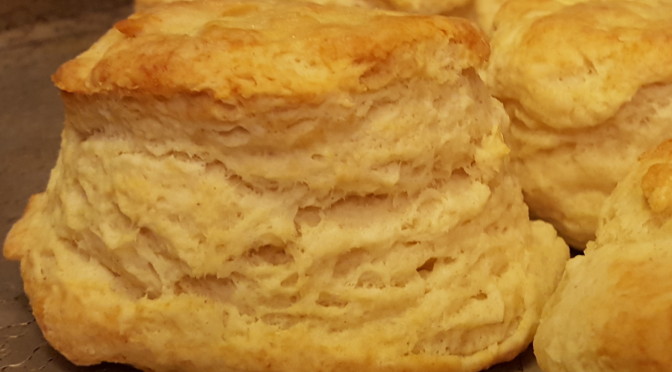
Warm, flaky, steam rising, slathered with creamy Irish butter… you’re visualizing my favorite food in the world: BISCUITS.
Brush the tops with butter
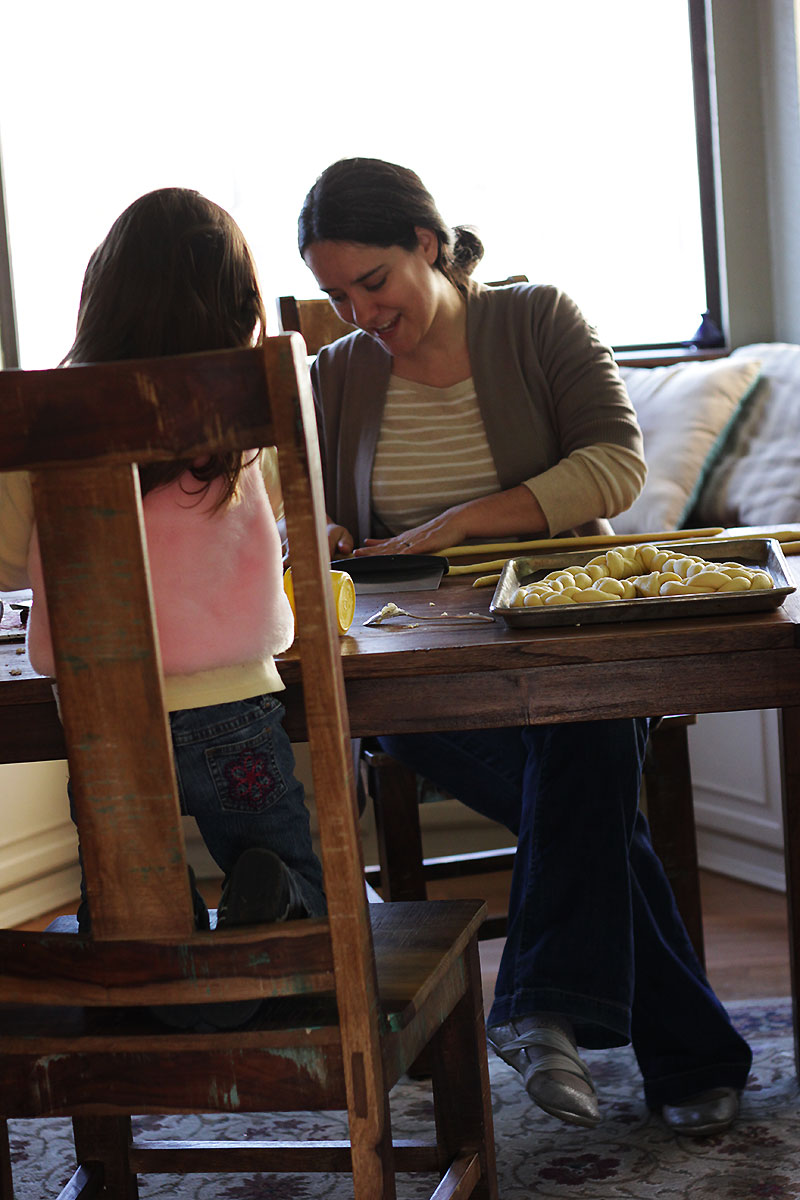
It started when I was small. No tube biscuits for this family, oh no. We’ve got strong southern blood in our veins, and it shows at biscuit time. My gramma or my mom would make them, and I’d sit in the kitchen and “help” by taste testing. Of course, anyone knows that when you have this kind of help, you need to double the recipe. It’s worth it for the hot biscuits, enjoyed before dinner with someone who appreciates them. Who GETS YOU. You know who you are.
Hungry yet?
There are (vast) differences between southern biscuit culture and northern biscuit culture. Here’s a bit of history from our family, showing just how different they are. My gramma and her mother (full south, all the way) went over to my grampa’s mom’s house (northerners, every one). Biscuits were on the menu. My paternal great gramma pulled the biscuits from the oven, and SET THEM ON THE COUNTER TO COOL. Gramma and Gramma Lillie waited, aghast, for these northern biscuits. Who eats cold biscuits on the first bake?Sure, for leftovers (ha! who has leftover biscuits?), with country ham for a sandwich, or buttered and sprinkled with cinnamon sugar and put under the broiler until the tops are crunchy. Those are all great uses for old, cold biscuits. But to not eat them hot? Well, I can’t even imagine. I’d have stared, too, sad at the warm biscuity goodness rising into the air and not into my mouth.
One of the ways my gramma served up biscuits was with southern ham (a country ham, salty and chewy) and milk gravy. Sometimes, she’d make redeye gravy (with coffee). Now, the only gravy I want to touch my biscuits is sausage gravy – homemade, because everyone else puts too much pepper in, and I don’t do hot.
But mostly, I love biscuits hot, buttery, and plentiful. For my birthday this year, I asked for biscuits for dinner at my parents’ house. My mom asked what I wanted for sides – ribs? salad? coleslaw? She gets me.
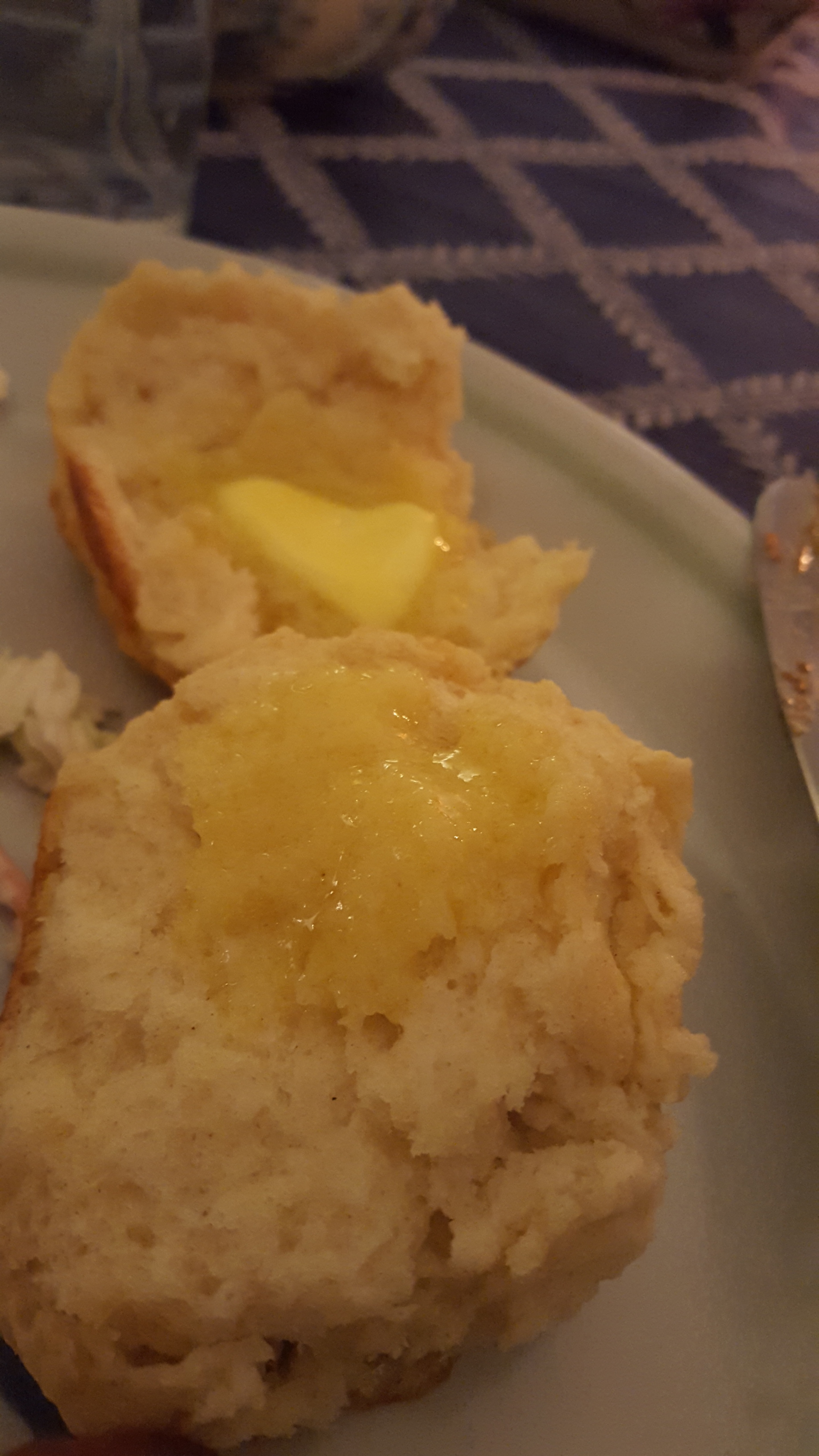
Melted butter works best like this: put a large slab of butter on one half, then put the two halves back together and flip upside down, so the butter melts one way – then flip it and let it melt another way. IF you can wait, that is. Here, I obviously could not wait. That poor biscuit half needs more butter.
Ingredients:
2 cups all-purpose flour or cake flour
3 t baking powder
1 t baking soda
1 t sea salt, fine grain
5 T cold butter, plus a bit more, melted, to brush the tops
7/8 c plain yogurt (I love Trader Joe’s European whole milk yogurt) or buttermik
Directions:
Preheat oven to 400 degrees. Combine flour, baking powder, baking soda, and salt in your food processor. Add the butter, cut into bits, and pulse until it is crumbly. If you don’t have a food processor, mix it with your hands until it is completely blended.
Add the yogurt and stir until it is just mixed into a ball – no more! Knead 10 times. Too sticky? Add a tiny bit of flour. It will stick to your hands – this is normal.
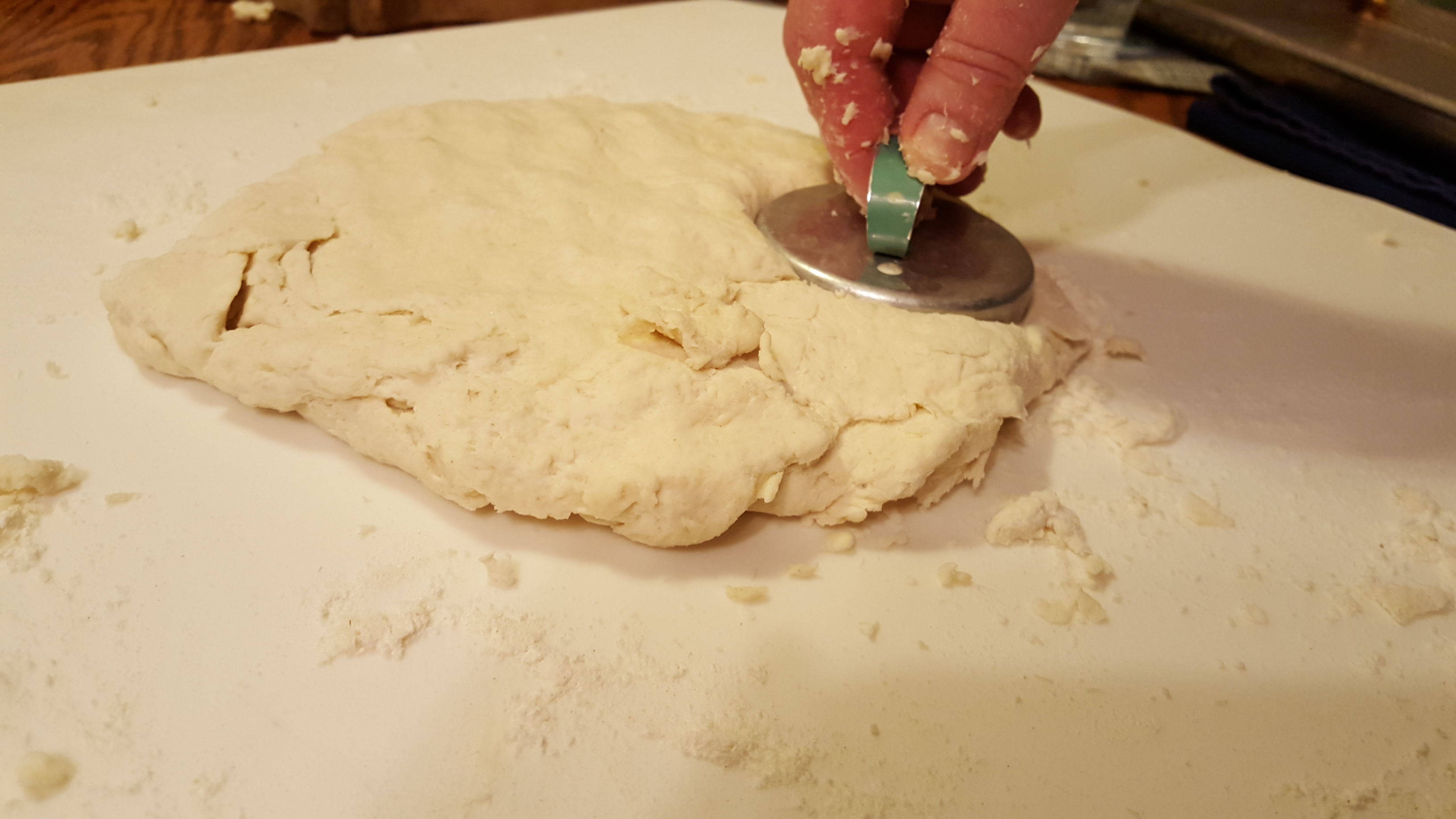
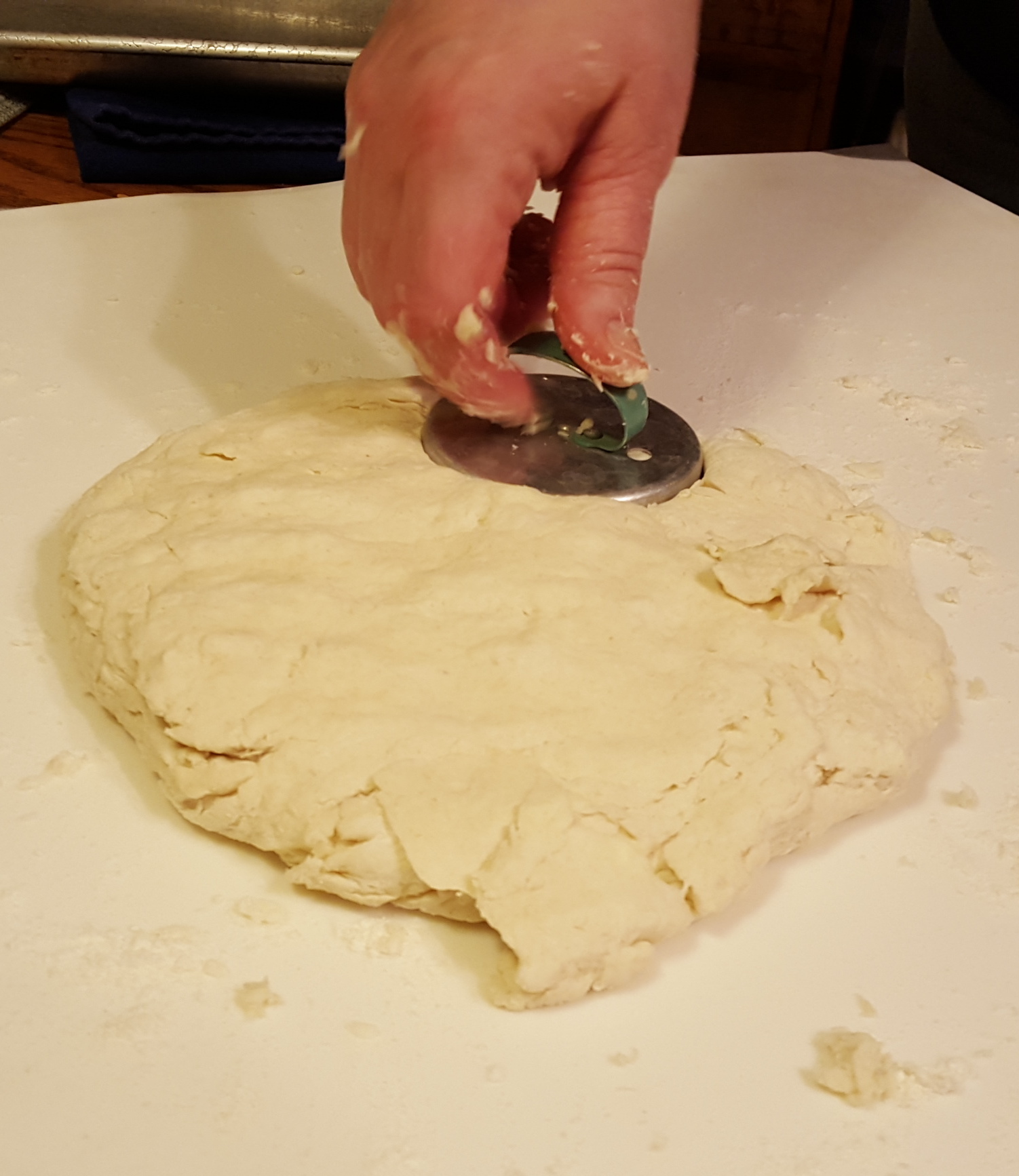
Scoop out onto a floured board and pat it into a 3/4 inch rectangle. Cut rounds with a biscuit cutter or glass. Bittman notes this will produce 10-14 biscuits. Au contraire for me – 9 max. So, you might want to double or triple it. Note: In the photos below, my dough is a bit too thick – I could have gotten a few more biscuits out if it was patted out a bit more.
Cutting out biscuits – just push STRAIGHT down, do not twist.Cutting out biscuits – if the dough goes over the top of the biscuit cutter, as this one shows, you need to pat it out a bit more.
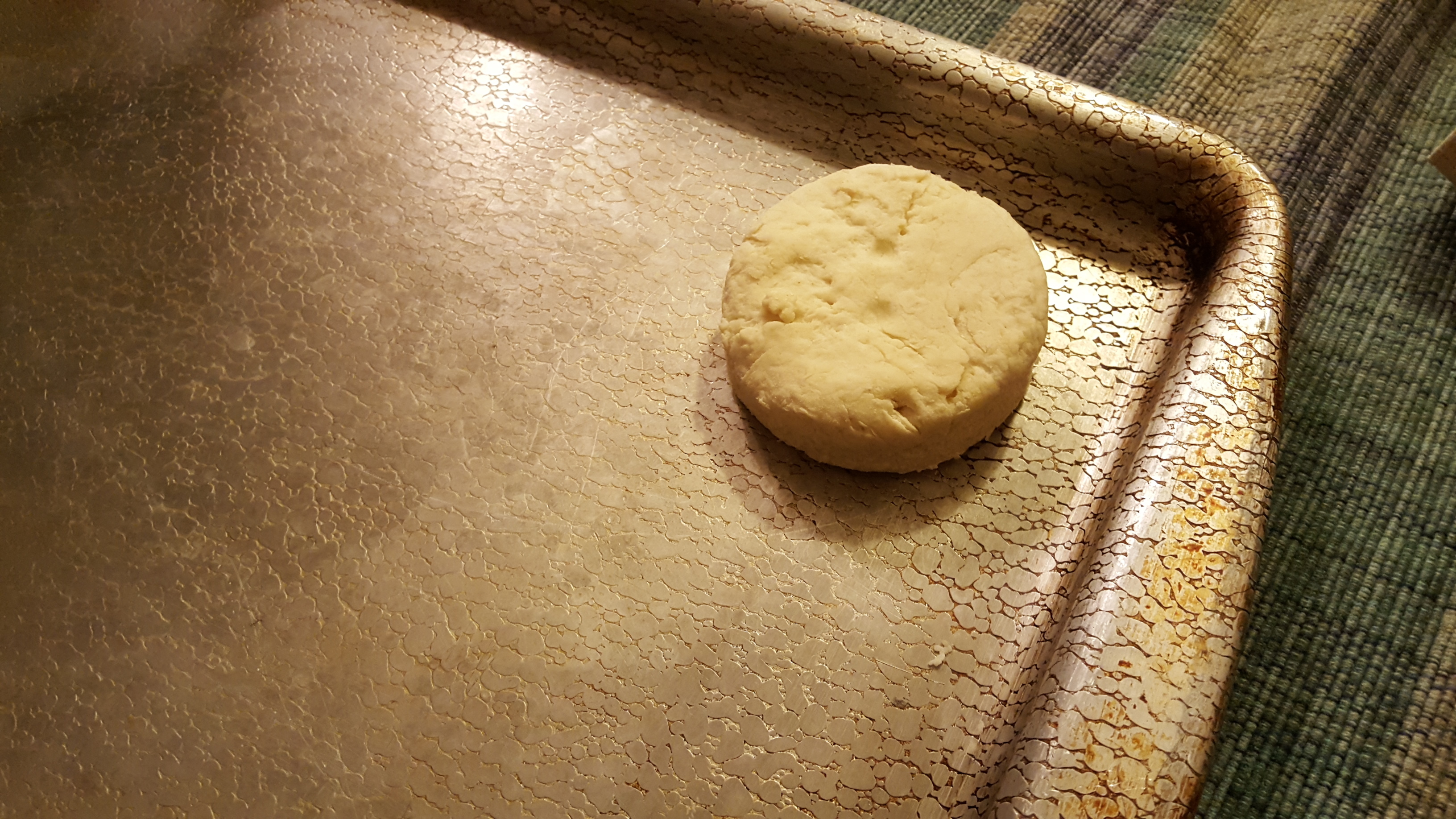
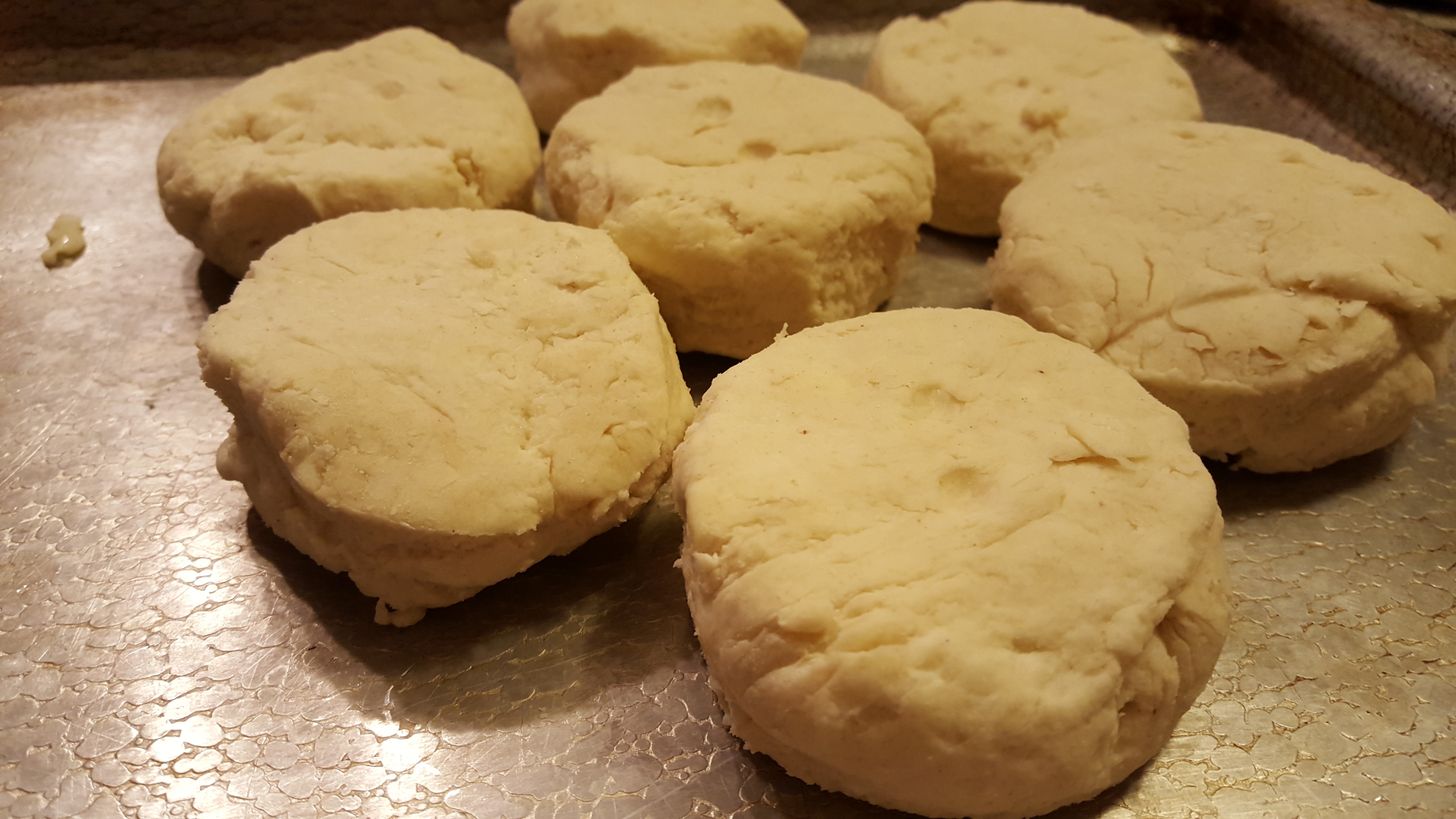
Place onto an ungreased cookie sheet, with or without a silpat. Take the last bit of scraps and form into the tester biscuit (cook’s reward!).
Place biscuits on an ungreased cookie sheetIf you put them close together, the sides that touch will be extra tender
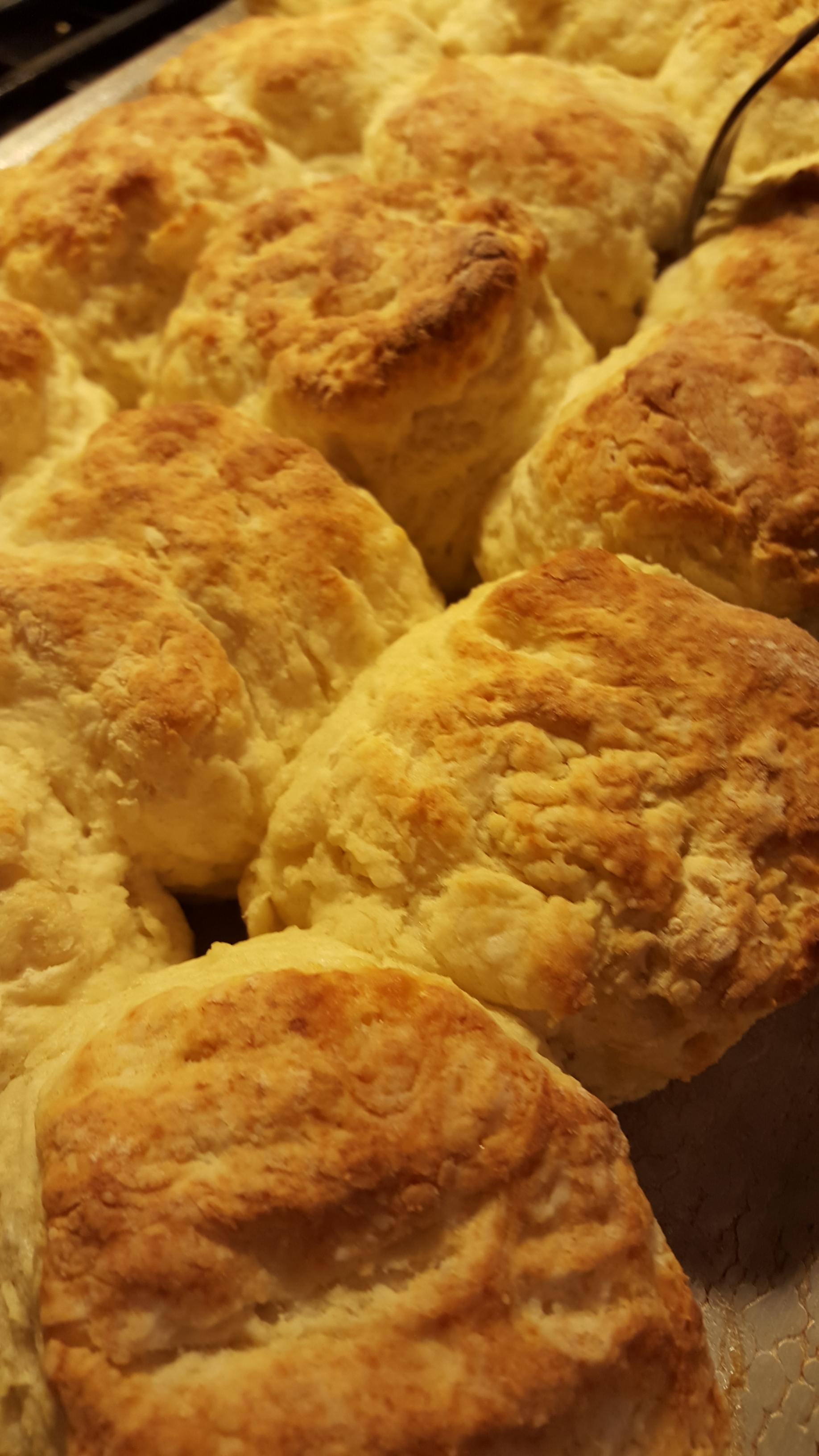
Bake 7-9 minutes, until golden brown. If you want to gild the lily, brush those tops with melted butter. My dad eats them with honey. My daughter eats them with jam. I just eat them.
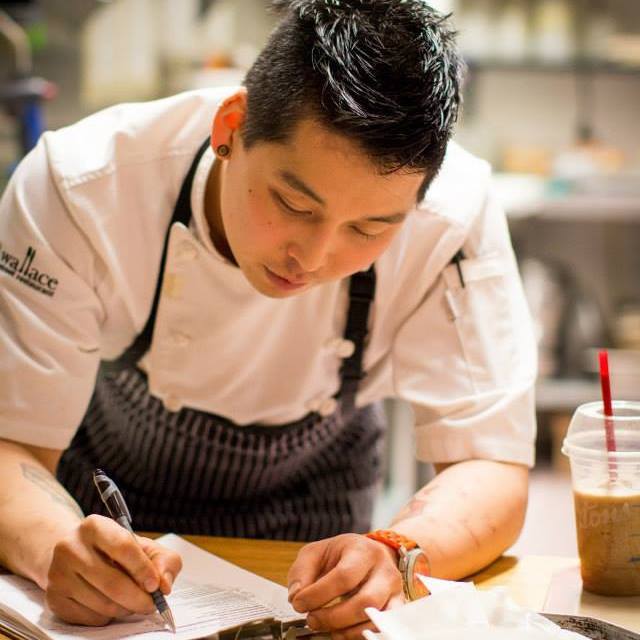
Inspired by his father, who was a chef before he became an ice carver, Hiro Takeda began his career at Newlands Golf and Country Club, completing his three year apprenticeship before the age of 20. Working at the Fairmont Hotel Vancouver and Diva at the Met gave him valuable experience in Vancouver, and a job at Squeah Camp and Retreat Centre brought him out to Hope.
noma
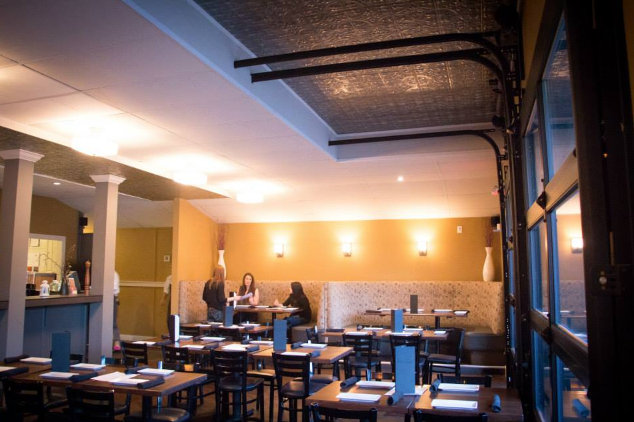
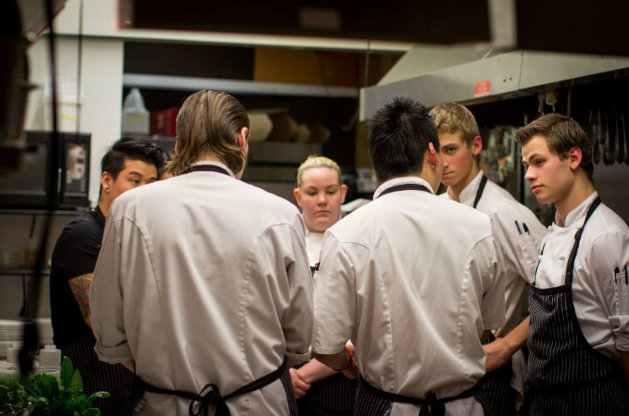
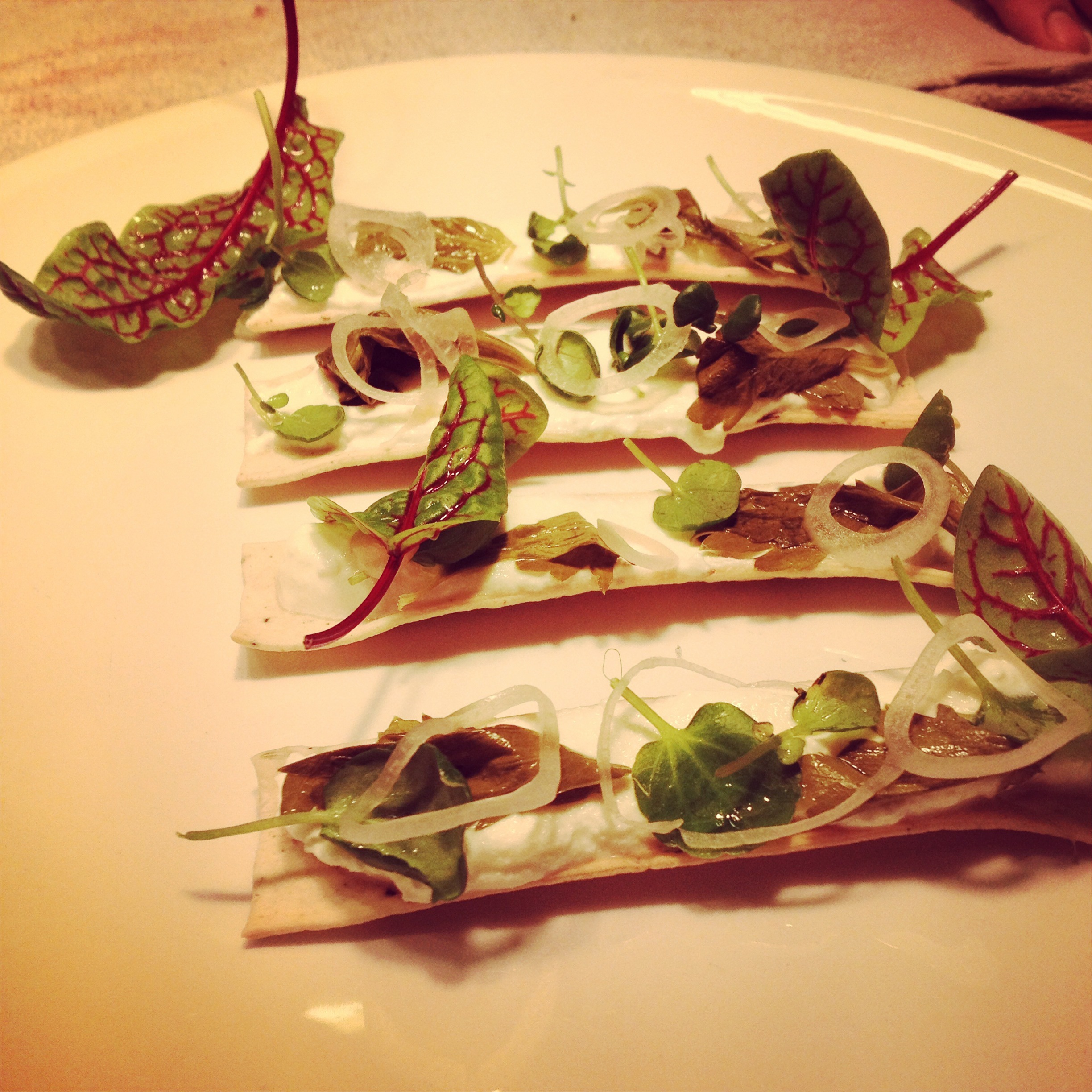
Opening 293 Wallace Street Restaurant in May of 2013, Hiro hassince completed a 3 month internship at restaurant noma in Copenhagen, Denmark. Using local suppliers and foraged ingredients, Hiro focuses on providing his guests with a mixture of comfort food as well as creative tasting menus, while sharing his philosophy and providing mentorship to his young team.
at noma
I first met Hiro a few years ago, through a mutual friend, the Maplemusketeer. I will tell you that anyone that is a friend of Jordan’s is a friend of mine – and so here we are today, years later, chatting about food and sharing a delicious, easy recipe. I’m impressed with Hiro’s work with local foraging and ingredient sourcing, as well as his creativity and sense of humor. I think you will be, too.
I have a soft spot for seafood, fish, but have lately been enjoying cooking with foraged greens.
What do you always have in your fridge at home?
Sriracha, Japanese mayo
What do you cook at home?
Instant noodles…mi goreng is the bomb
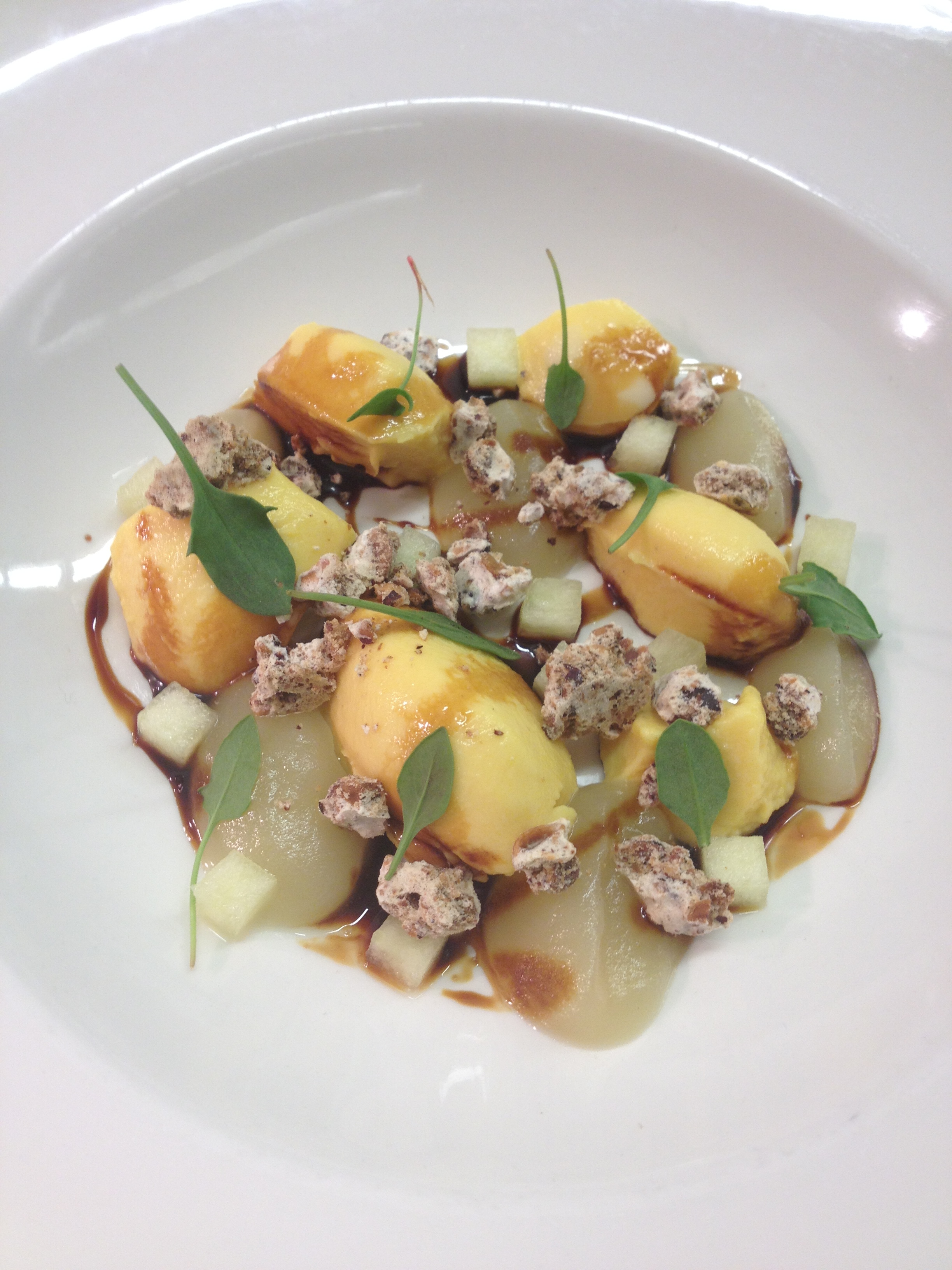
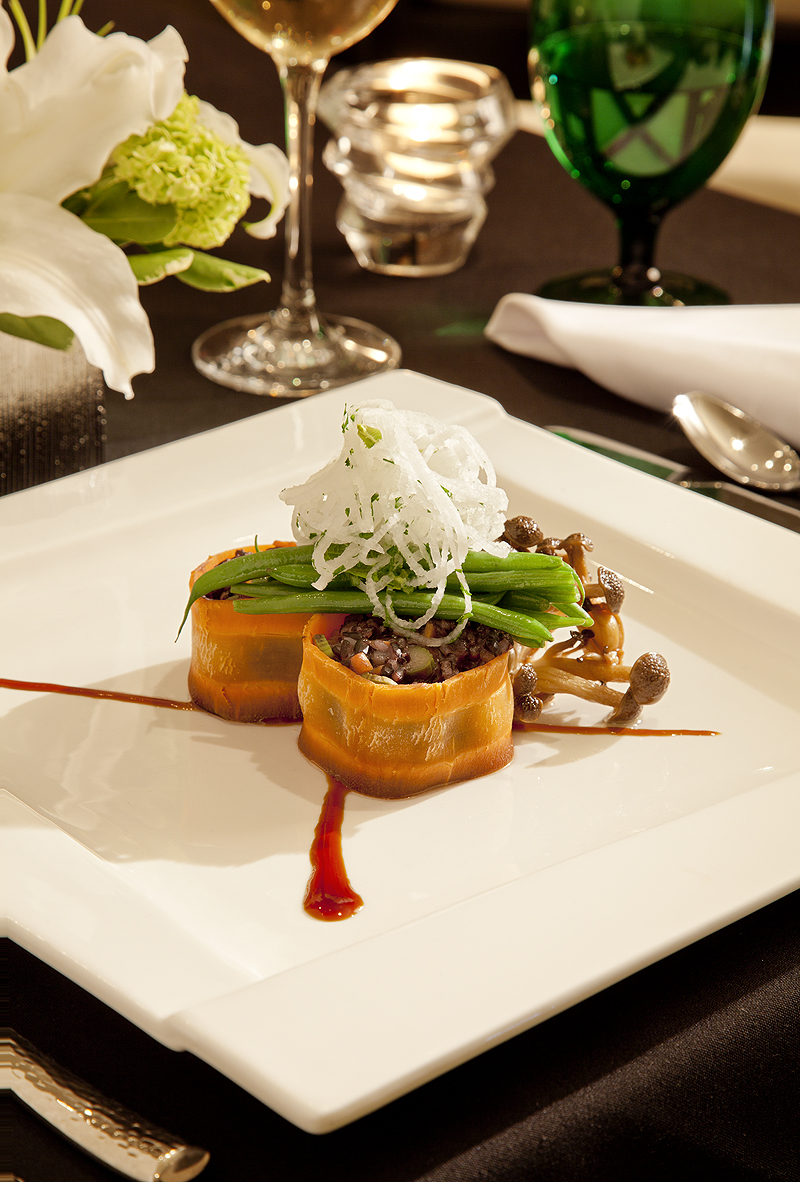
butternut squash panna at 293 Wallace, Hope, BC
What marked characteristic do you love in a customer?
Someone who just gets it, understands the work that goes into the food, is willing to get out of their comfort zone to try things they’ve never tried before.
What marked characteristic do you find unappealing in a customer?
Those who are rude to our staff. We don’t tolerate that.
Tupperware, Rubbermaid, or Pyrex?
Tupperware
Beer, wine, or cocktail?
All of the above. Gin and Grapefruit is king right now.
Your favorite cookbook author?
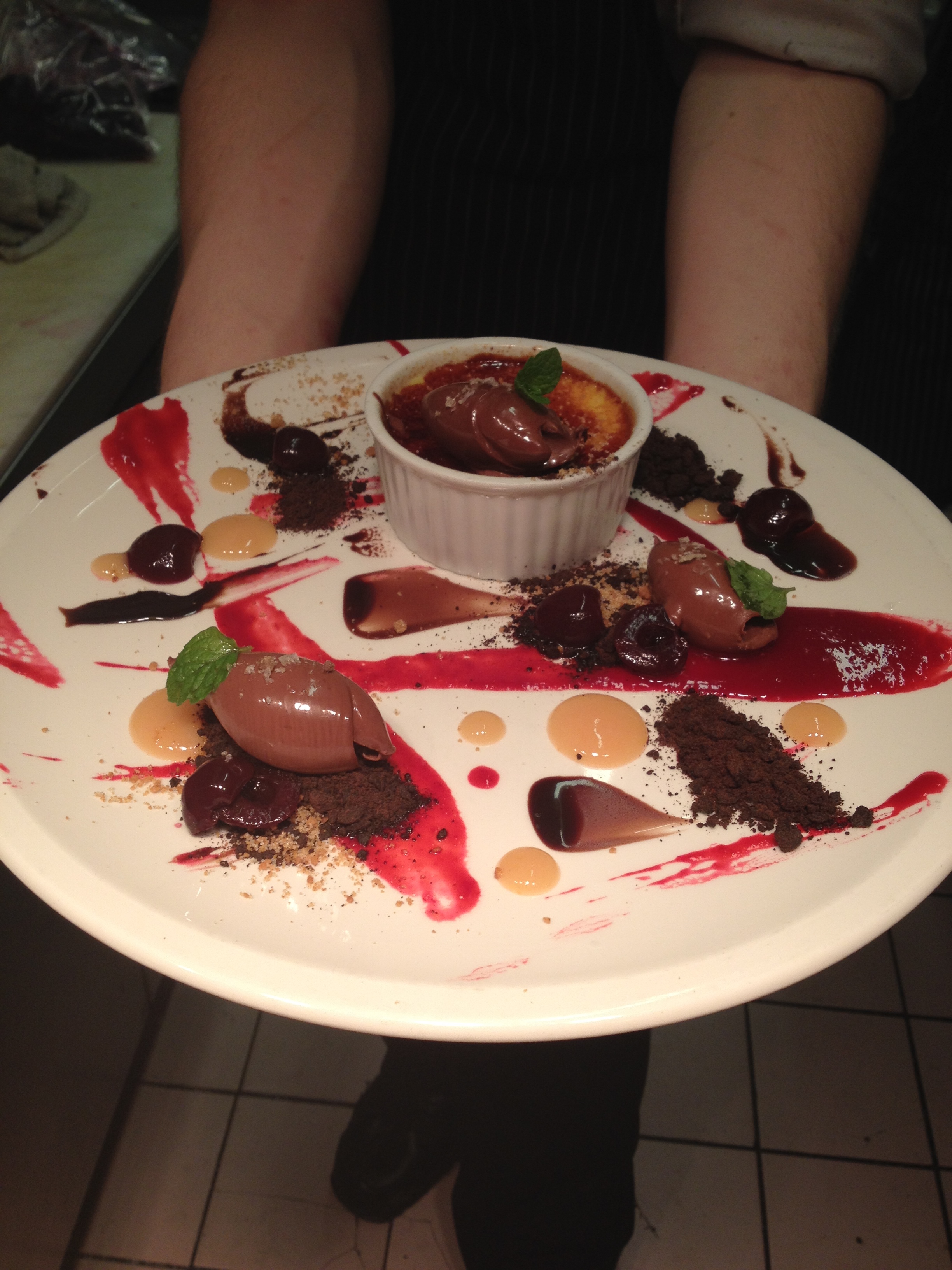
creme brulee at 293 Wallace, Hope, BC
Too many to count! Off the top of my head, Rene Redzepi or Ferran Adria.
Your favorite kitchen tool?
Chopsticks or utility knife
Your favorite ingredient?
Scallops, or pine mushrooms
Your least favorite ingredient?
Chicken breast
Least favorite thing to do in a kitchen?
Repeat what I’ve already said.
Favorite types of cuisine to cook?
Indian, and, well, anything that requires foraging and using wild foods.
Beef, chicken, pork or tofu?
Beef
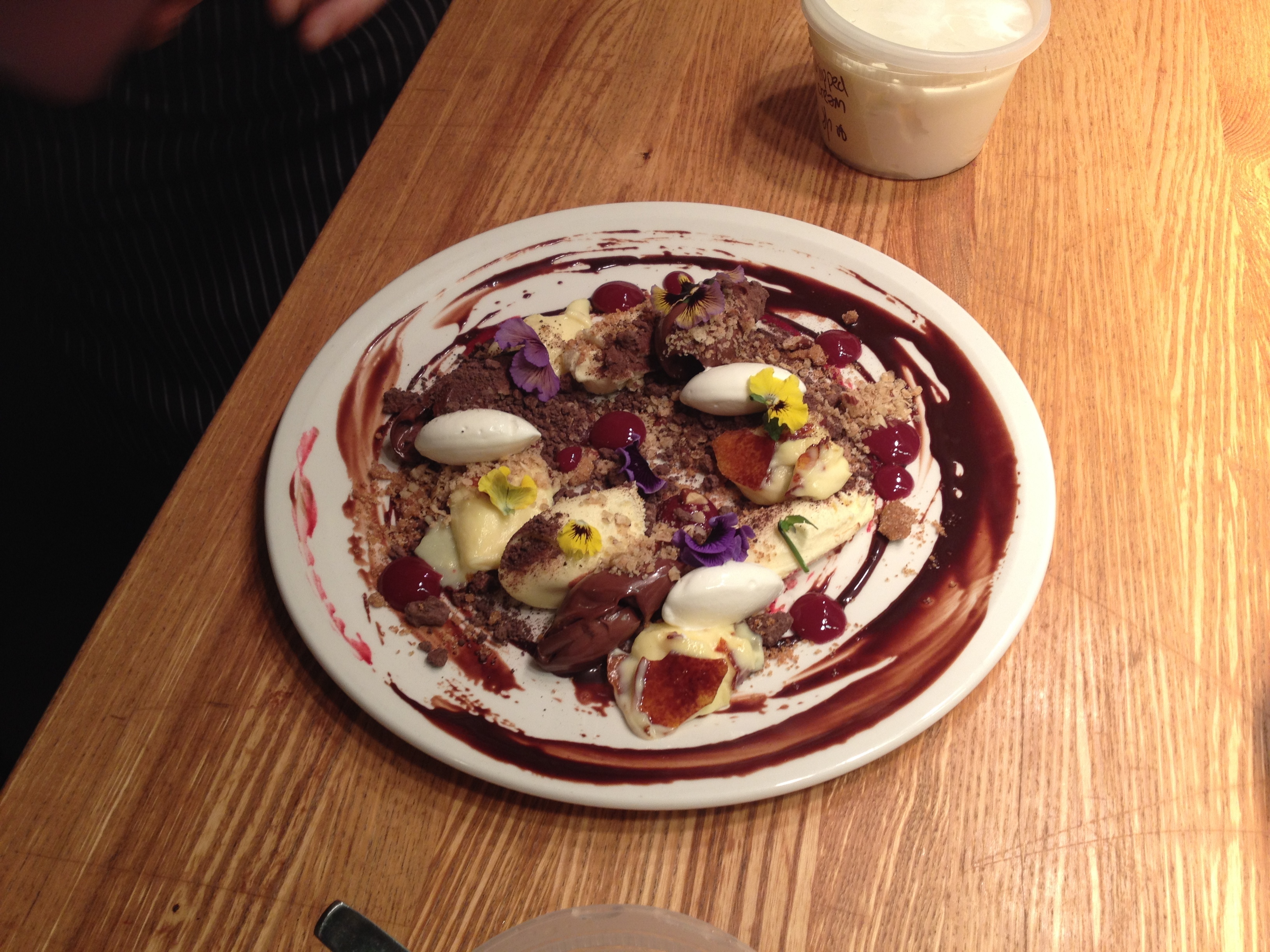
Valentine’s dessert by Chef Hiro Takeda
Favorite vegetable?
Sunchokes
Chef you most admire?
Lars Williams, head of Research and Development at noma.
Food you like the most to eat?
Ramen or Japadogs
Food you dislike the most?
Uninspired food…or roasted/baked potatoes
How many tattoos? And if so, how many are of food?
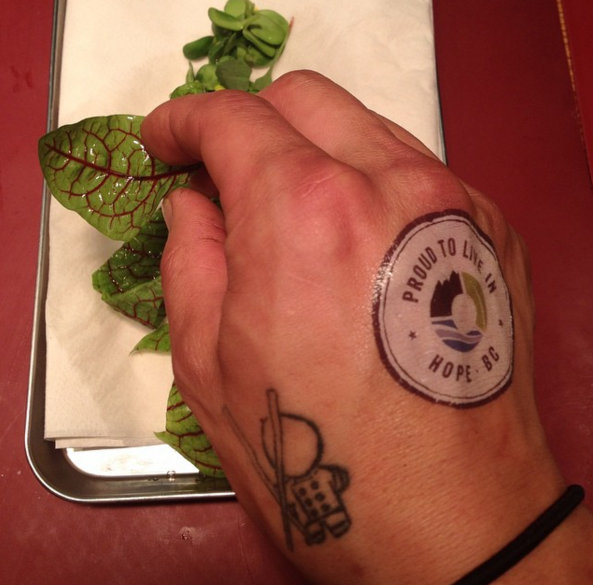
A glimpse of one of Chef Hiro Takeda’s tattoos…
Seven, and just one…a little chef on my hand…. Well and I have koi on my leg…I guess that counts, if you cook it.
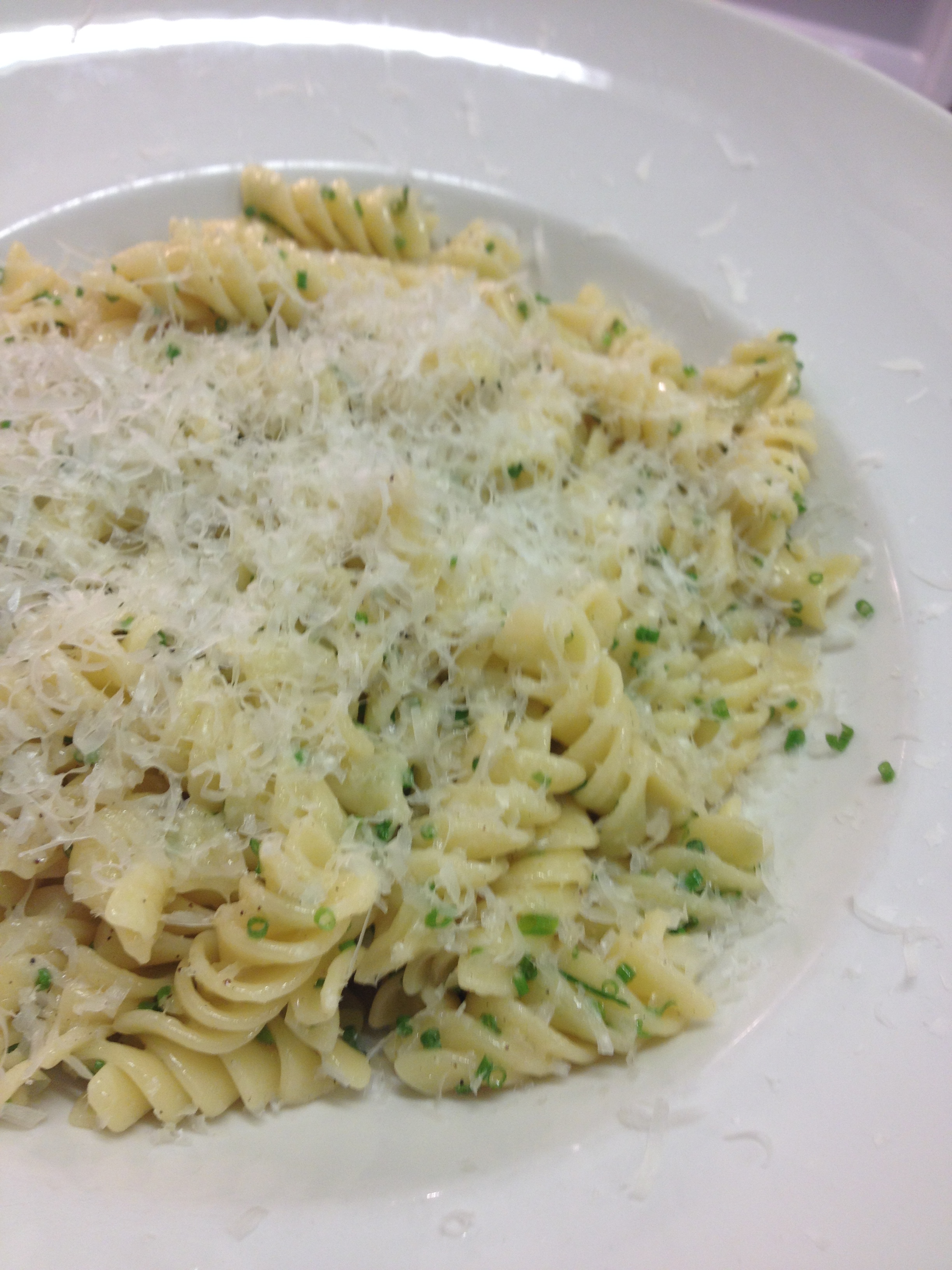
Recipe: Cacio e pepe with a couple extras
Cacio e Pepe
Cacio e pepe is a really simple recipe, with black pepper and pecorino. Pasta is easy for home cooking, filling and easy to pair with other things.
Take pasta, whatever shape you like, and cook in boiling water with olive oil and salt until al dente.
At the same time, in a fry pan, start with a touch of canola oil and add minced onions and garlic. Sweat until onions are translucent. Deglaze with white wine, add lots of freshly cracked black pepper. When pasta is done, toss into the fry pan, along with a touch of pasta water. Grate pecorino into pasta; add some whole butter, chopped chives, and a touch of lemon juice to finish. Season with kosher salt. Put it into a bowl, then grate pecorino on top.
What began as a love for baking at a young age, developed into a passionate and successful career for Abby Dodge. A widely respected, award-winning expert in baking and cooking for both kids and adults, as well as a popular food writer, instructor and media personality, Abby has a simple mission: To streamline baking and cooking for home cooks of all ages.
She studied in Paris at La Varenne and worked under superstars Michel Guerard and Guy Savoy, specializing in pastry. She has held food editorial posts at Parents and Woman’s Day, and has contributed to over seven dozen special-interest publications focusing on baking and family cooking. Abby is currently a contributing editor at Fine Cooking magazine, where she has been on the masthead since its first issue in 1994. She founded the magazine’s test kitchen, has written and contributed to over eighty articles to date, and serves as the magazine’s guru for all things baking.
In addition to her regular blog postings, Abby hosts a Baking Boot Camp video class on the popular site Craftsy.com, where she teaches and encourages an international group of bakers of all skill levels to become better bakers.
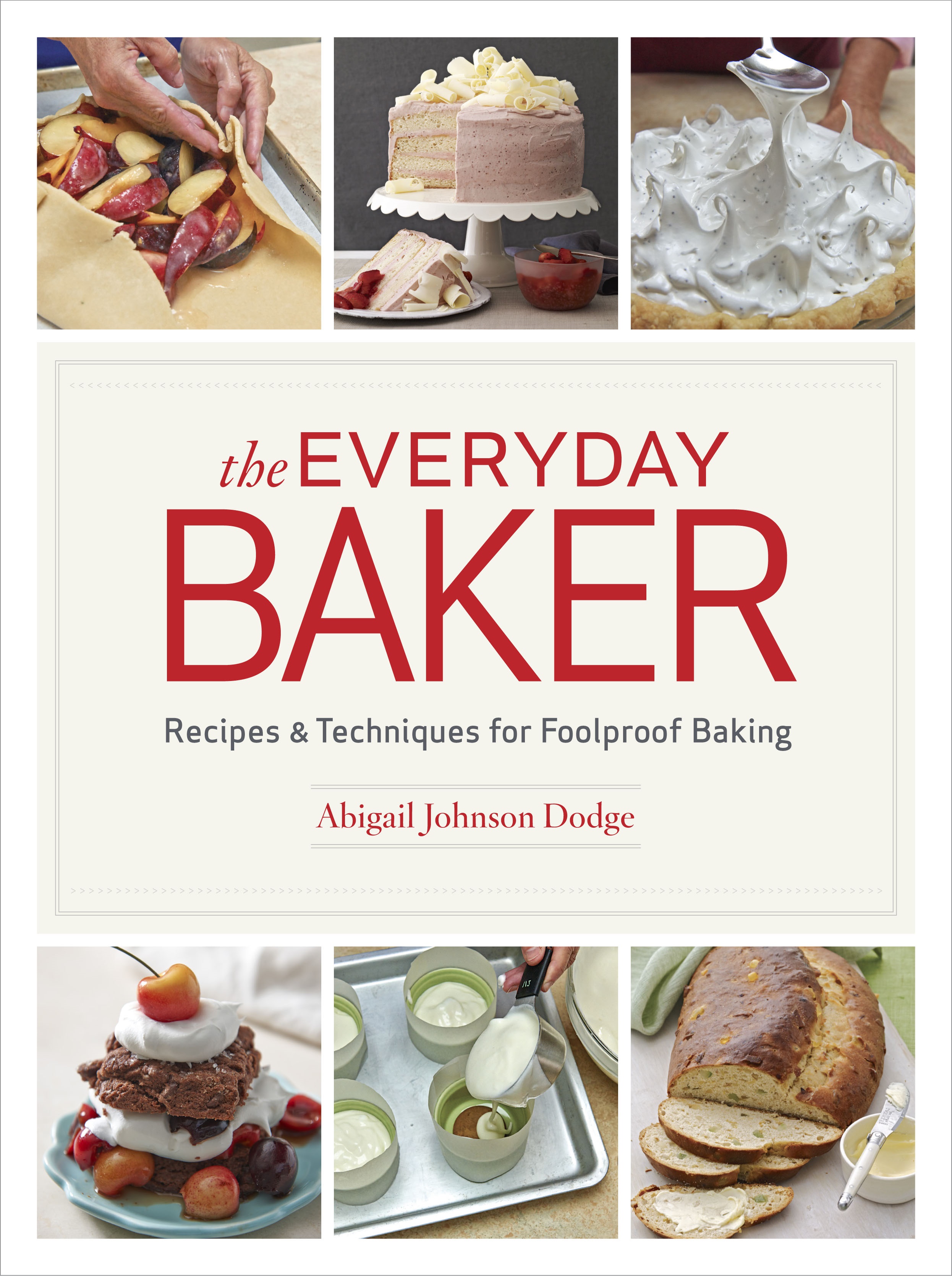
Her tenth book, The Everyday Baker ~ Recipes & Techniques For Foolproof Baking (The Taunton Press, Dec. 2015), has just been released to much critical praise – including my own! I love this book – and have recommended it far and wide. It’s the most comprehensive – and interesting – baking cookbook I’ve ever seen (and I own more than 5,000 cookbooks). I love the detailed instructions (with photos), as well as the creative, intriguing recipes (176 of them!). I’ve reviewed many of Abby’s cookbooks through the years – they are all amazing, and keep getting better. Highly recommended.
Abby’s Ten Popular and Award-Winning Cookbooks:
The Everyday Baker ~ Recipes & Techniques for Foolproof Baking, 2015 (Washington Post Top Ten Cookbooks of 2015; Dorie Greenspan Top Baking Cookbooks of 2015)
Mini Treats & Handheld Treats ~ Delicious Desserts to Pick Up & Eat (September, 2012)
Desserts 4 Today – Flavorful Desserts with just FOUR INGREDIENTS , 2010 (a viral & critically acclaimed sensation)
Williams-Sonoma Mini Pies, 2010
Around the World Cookbook, 2008 (Good Morning America Top 10 Cookbooks of 2008; Parents Choice Recommended Award 2008; Cordon d’Or Culinary Academy Award 2008)
The Weekend Baker, 2005, reprinted 2008 (Food + Wine Top Ten Cookbooks of 2004; IACP Cookbook Award Finalist)
Kids Baking, 2003 (Over 347,000 copies in print, translated into Spanish)
Williams-Sonoma Dessert, 2002 (Over 300,000 in print, translated into Spanish)
The Kid’s Cookbook, 2000 (Over 368,000 copies in print)
Great Fruit Desserts, 1997 (Translated into six languages)
Abby has also contributed or co-authored many cookbooks, including:
Baking Out Loud (Hedy Goldsmith, Clarkson Potter 2012)
B. Smith’s Southern A to Z (Scribner, 2008)
The Joy of Cooking, 75th Anniversary Edition, 2006
Savoring America, 2002 (James Beard Award finalist; Ben Franklin Award winner)
Cookies for Christmas, 1999
The All New Joy of Cooking, 1997
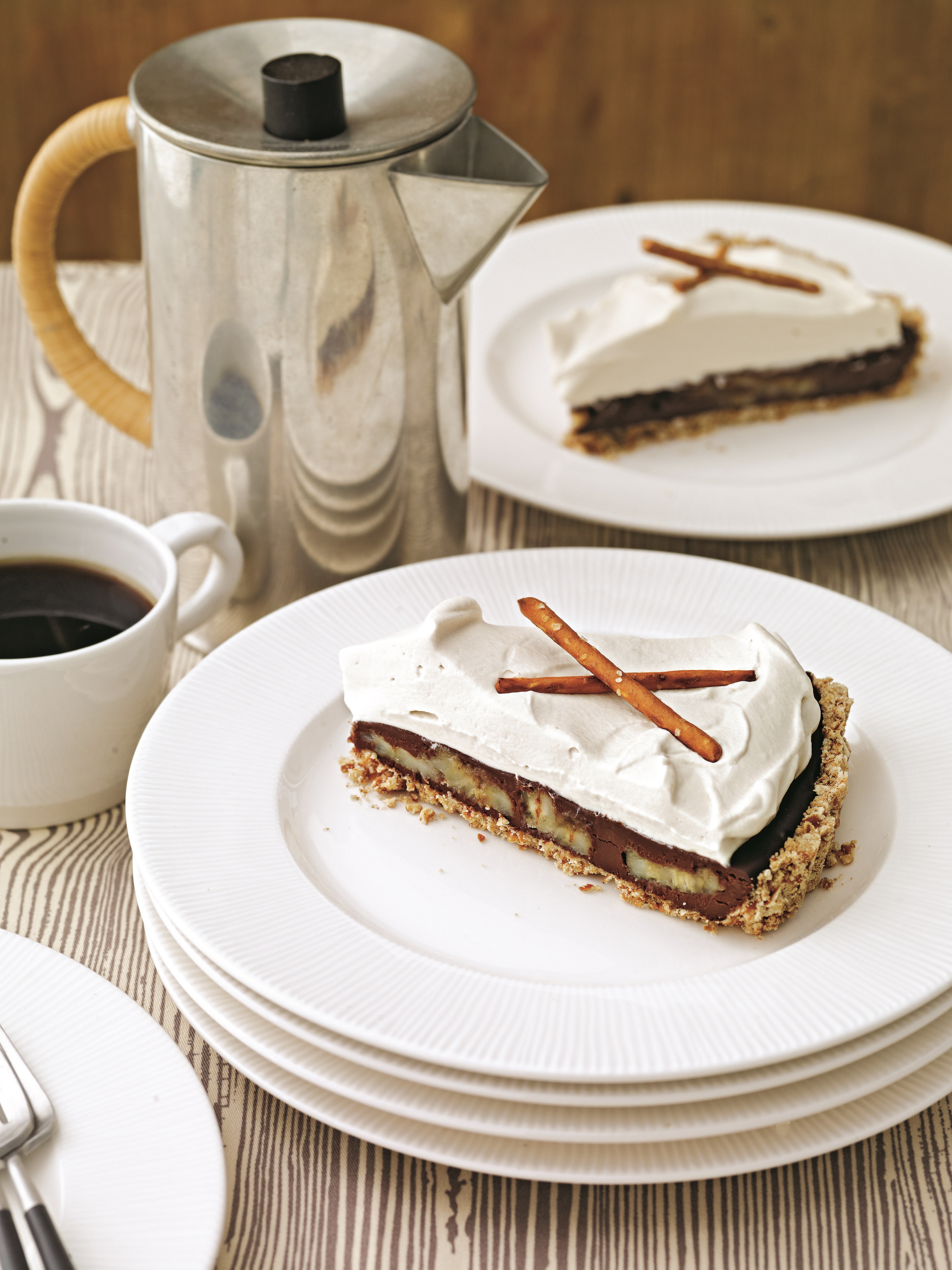
Banana Rum Truffle Tart
Food Questions (with a nod to Proust):
What is your favorite food to cook at home?
Eggs. Easy & options abound.
What do you always have in your fridge at home?
Unsalted butter.
What marked characteristic do you love in a person with whom you are sharing a meal?
Keeping it real – no posers at my table.
What marked characteristic do you find unappealing in a person with whom you are sharing a meal?
Open-mouth chewer.
Favorite types of cuisine to cook?
French… Italian… Greek… Spanish… don’t make me chose.
Beef, chicken, pork, or tofu?
Easy: Chicken
Favorite vegetable?
Brussel sprouts but ask me again tomorrow, I happily bounce all over the veggie aisle.
Chef you most admire?
Alfred Portale – insanely gifted, a bear to work for & surprisingly shy.
Food you like the most to eat?
Cake. Make mine chocolate and in big pieces, please.
Food you dislike the most?
I’ll take some heat for this one but… beets. Chalk it up to a bad childhood experience.
Don’t ask.
What is your favorite non-food thing to do?
Watching RHOBH with my darling daughter- a guilty pleasure.
Who do you most admire in food?
Michael Rulhman. A straight talker and brilliant writer worth listening to.
Where is your favorite place to eat?
On a warm day, I’ll be sitting at an outside table, preferably by the water. Please pass the Rose.
What is your favorite restaurant?
See above.
Do you have any tattoos? And if so, how many are of food?
My Motto: Don’t answer questions that you don’t want your kids to read.
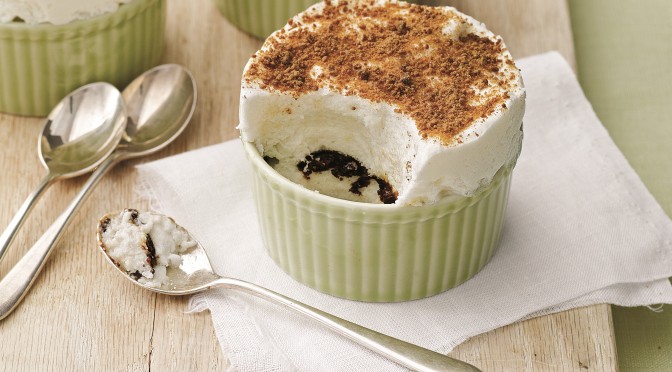
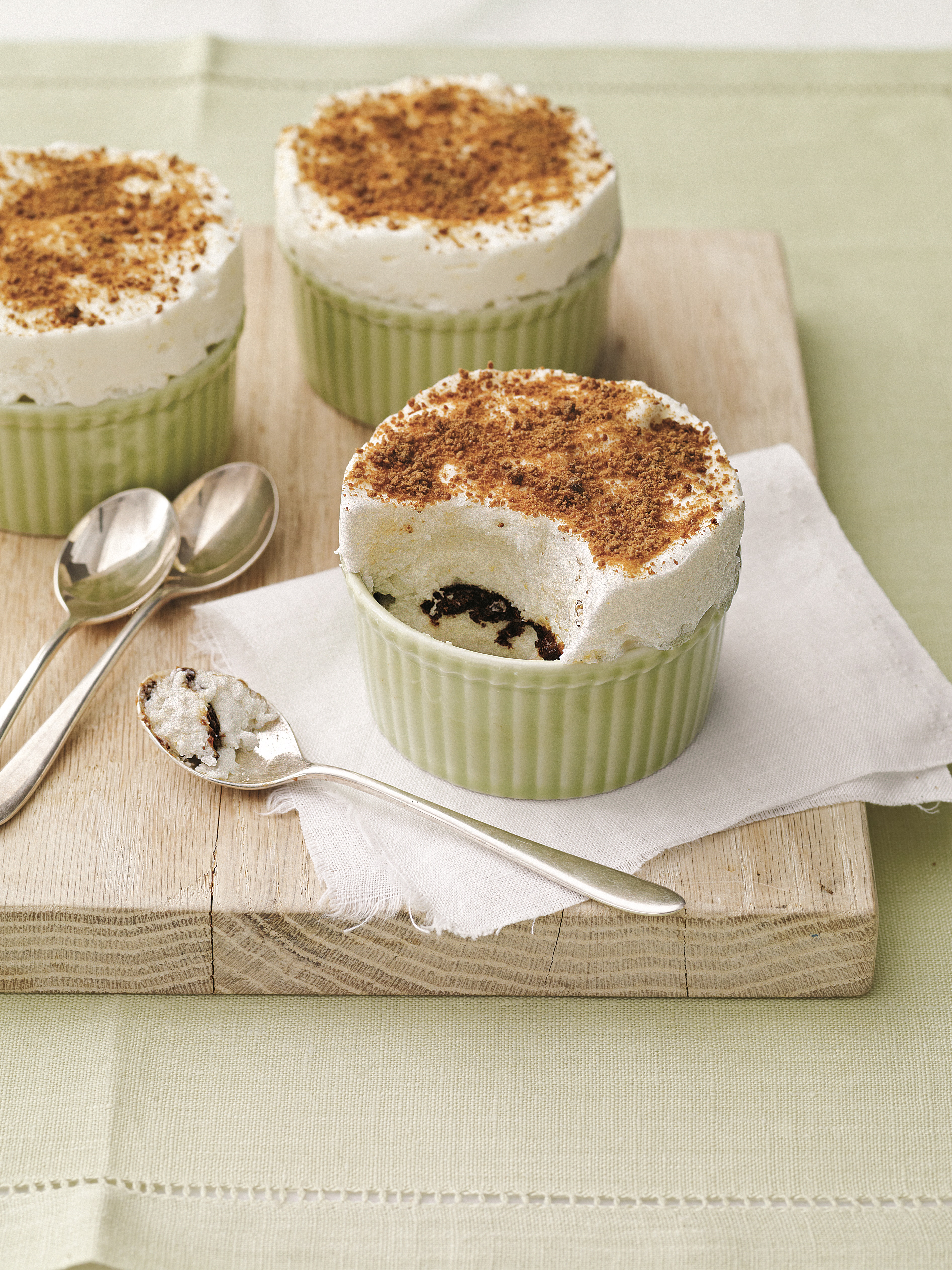
Lemon Ginger Mousse Souffle
Recipe: Lemon Ginger Mousse Soufflés from The Everyday Baker
Serves 6
These light, billowy individual soufflé-like mousses are a variation on a pie filling in my book, The Weekend Baker. Instead of adding heavy cream to the mousse, I use puréed ricotta (for a smooth texture) to add richness without heaviness. The lemon and fresh ginger make for a refreshing flavor profile, but it’s the ginger cookies hidden inside that are the surprise ingredient. Softened by the mousse, they bring texture and a burst of ginger flavor.
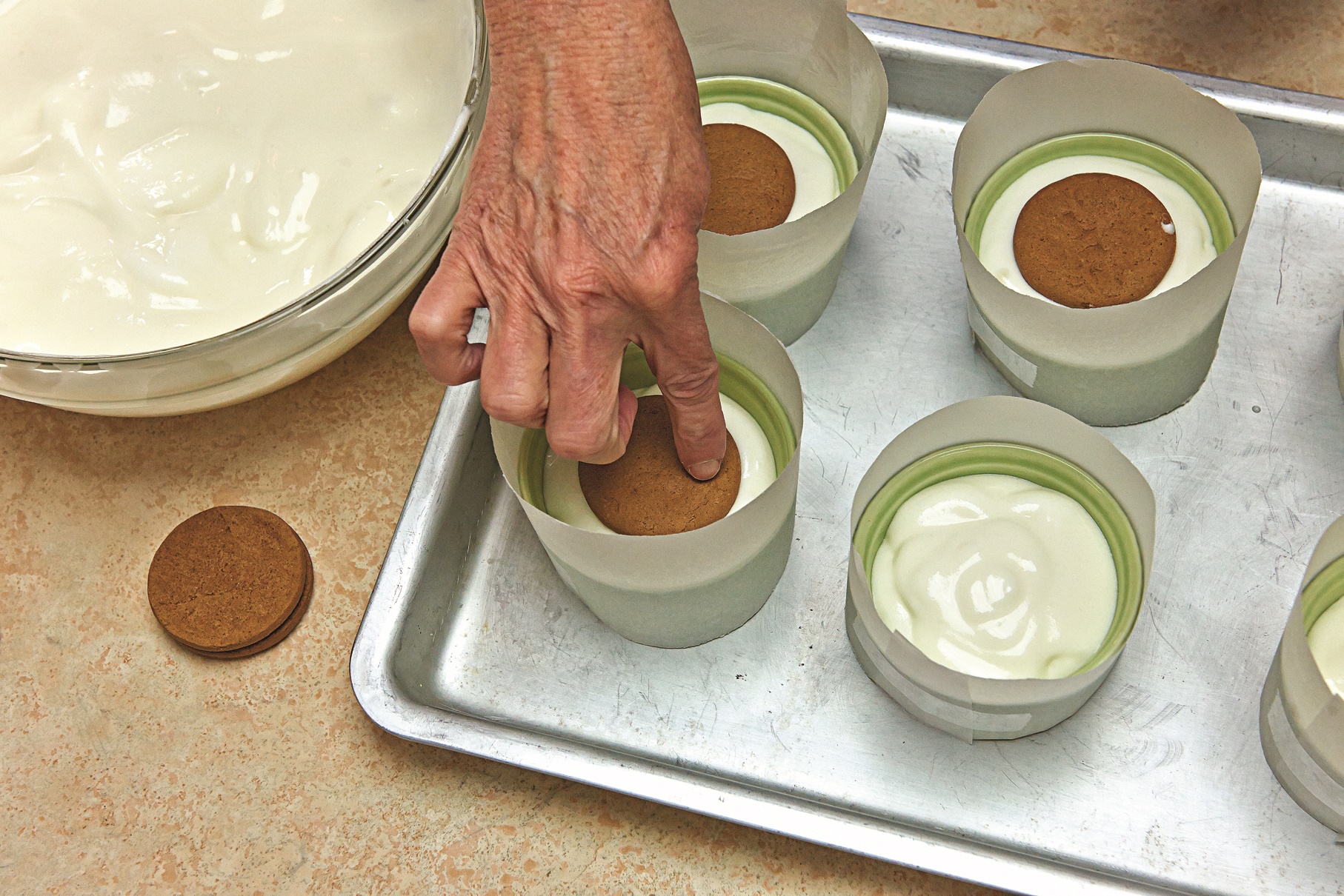
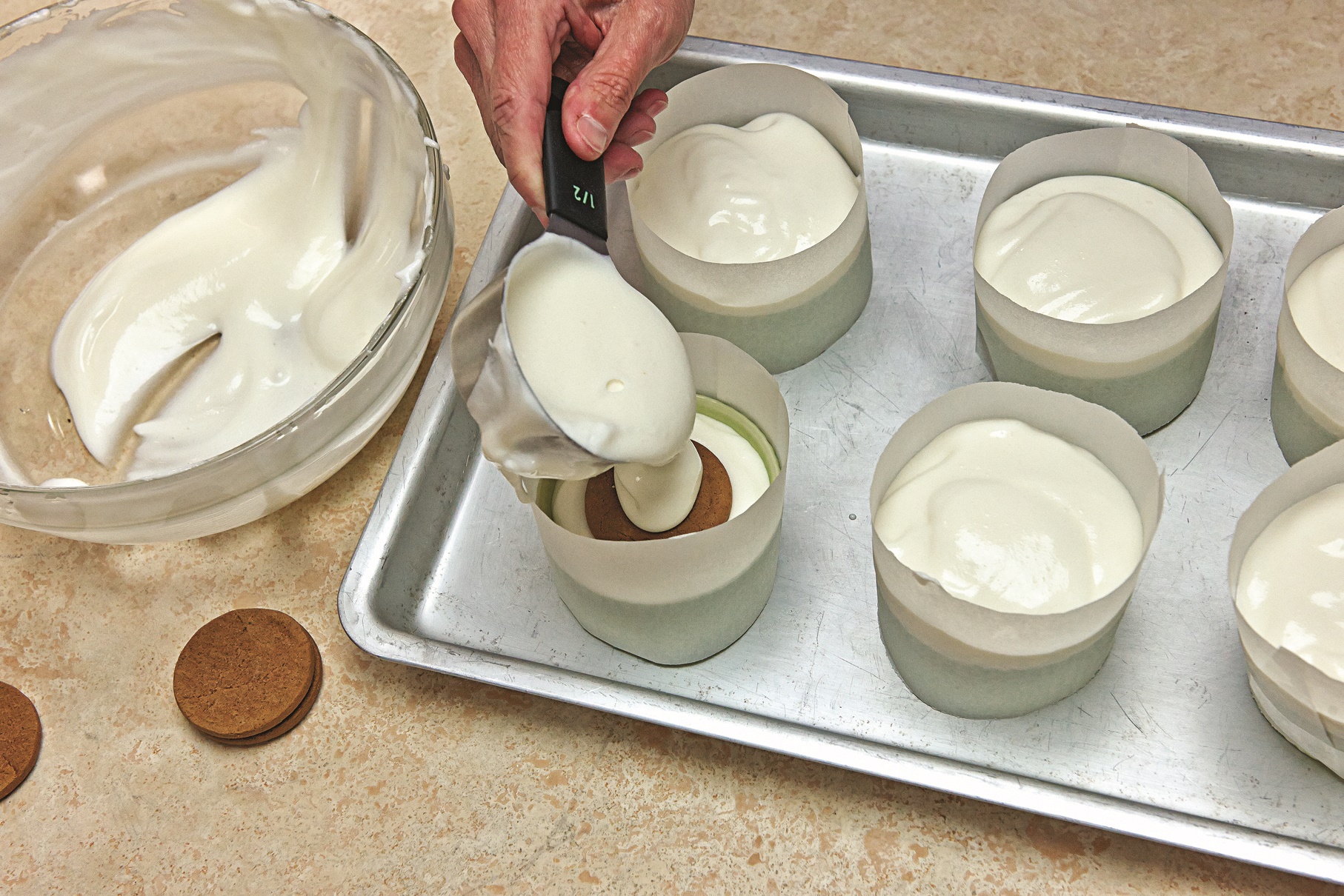
Adding a collar of parchment adds additional height to the ramekins. This way you can mimic the impressive height of a baked soufflé without the need for any last-minute fussing.
Neutral oil (safflower, canola, vegetable, or corn), for the
ramekins
For the mousse
3⁄4 cup (180 ml) freshly squeezed lemon juice
1 envelope (1⁄4 oz./7 g) unflavored powdered gelatin
11⁄4 cups (111⁄4 oz./319 g) ricotta (part skim is fine)
3⁄4 cup (51⁄2 oz./156 g) granulated sugar
1 Tbs. finely grated lemon zest
2 tsp. finely grated fresh ginger
Pinch of table salt
4 whites from large eggs (4 oz./ 113 g), at room temperature
1⁄2 tsp. cream of tartar
1⁄2 cup (2 oz./57 g) confectioners’ sugar, sifted if lumpy
12 gingersnap cookies + more for the crushed cookie topping
(I use Nabisco or homemade molasses cookies)
Blackberry Compote (recipe in the book) or other berry sauces, optional
Have ready six 6-oz. (180 ml) ramekins (31⁄2 inches wide and 12⁄3 inches high/9 cm wide and 4.25 cm high) arranged on a flat plate or quarter sheet pan. Cut parchment into six strips 21⁄2 inches (6 cm) wide and 12 inches (30.5 cm) long. Wrap one strip around each ramekin so that the paper covers the ramekin and stands 1 inch (2.5 cm) above the rim; secure with tape. Lightly grease the inside of the paper rim (I use a paper towel dipped in a bit of neutral oil).
Make the mousse
1. Pour the lemon juice into a small heatproof ramekin (or keep it in the measuring cup) and sprinkle the gelatin evenly over the top. Set aside to soften. Once the gelatin has absorbed the liquid and is plump (about 3 minutes), microwave briefly until it is completely melted and crystal clear, 1 to 2 minutes. This can also be done in a small saucepan (instead of the ramekin) over low heat.
2. Put the ricotta, granulated sugar, lemon zest, ginger, and salt in a blender. Scrape the lemon–gelatin mixture into the blender, cover, and process until the ricotta is smooth and the mixture is well blended, about 11⁄2 minutes, scraping down the sides once or twice. Pour into a medium bowl and refrigerate, stirring frequently, until the mixture is cooled and thickened, 20 to 30 minutes. It should be as thick as unbeaten egg whites. For faster cooling, set the bowl over a larger bowl filled with ice, stirring and scraping the sides frequently until cooled.
3. Put the egg whites and cream of tartar in the bowl of a stand mixer fitted with the whisk attachment (or in a medium bowl and using an electric handheld mixer fitted with wire beaters) and beat on medium speed until the whites are frothy, 30 to 45 seconds. Increase the speed to medium high and beat until the whites form soft peaks, 1 to 2 minutes. Continue beating while gradually adding the confectioners’ sugar, stopping occasionally to scrape down the sides of the bowl. Beat until the whites form firm and glossy peaks when the beater is lifted.
4. Scoop about one-quarter of the whites into the thickened lemon mixture and, using a silicone spatula, gently stir until blended. Add the remaining whites and gently fold in until just blended.
Assemble the mousses
Arrange one cookie in the bottom of each ramekin. Using a large spoon, fill the ramekins halfway with the mousse. Arrange a cookie on top of the mousse and evenly portion the remaining mousse on top of the cookies. Using a small offset spatula, smooth the tops.
Cover loosely with plastic wrap and refrigerate until firm, at least 6 hours or up to 1 day.
To serve
Using a sharp paring knife, carefully peel away the parchment from the ramekins (up to 3 hours ahead). Just before serving, place each ramekin on a small plate and top with some of the crushed ginger cookie or a little of the blackberry compote, passing the remainder at the table.
MAKE AHEAD
The soufflés can be prepared, covered, and refrigerated for up to 2 days before serving.
– The End. Go Eat. –
Recipe and author photo courtesy and copyright Abby Dodge. Recipe photos courtesy and copyright Tina Rupp [finished dishes] and Sloan Howard, Taunton Press [how-to photos]
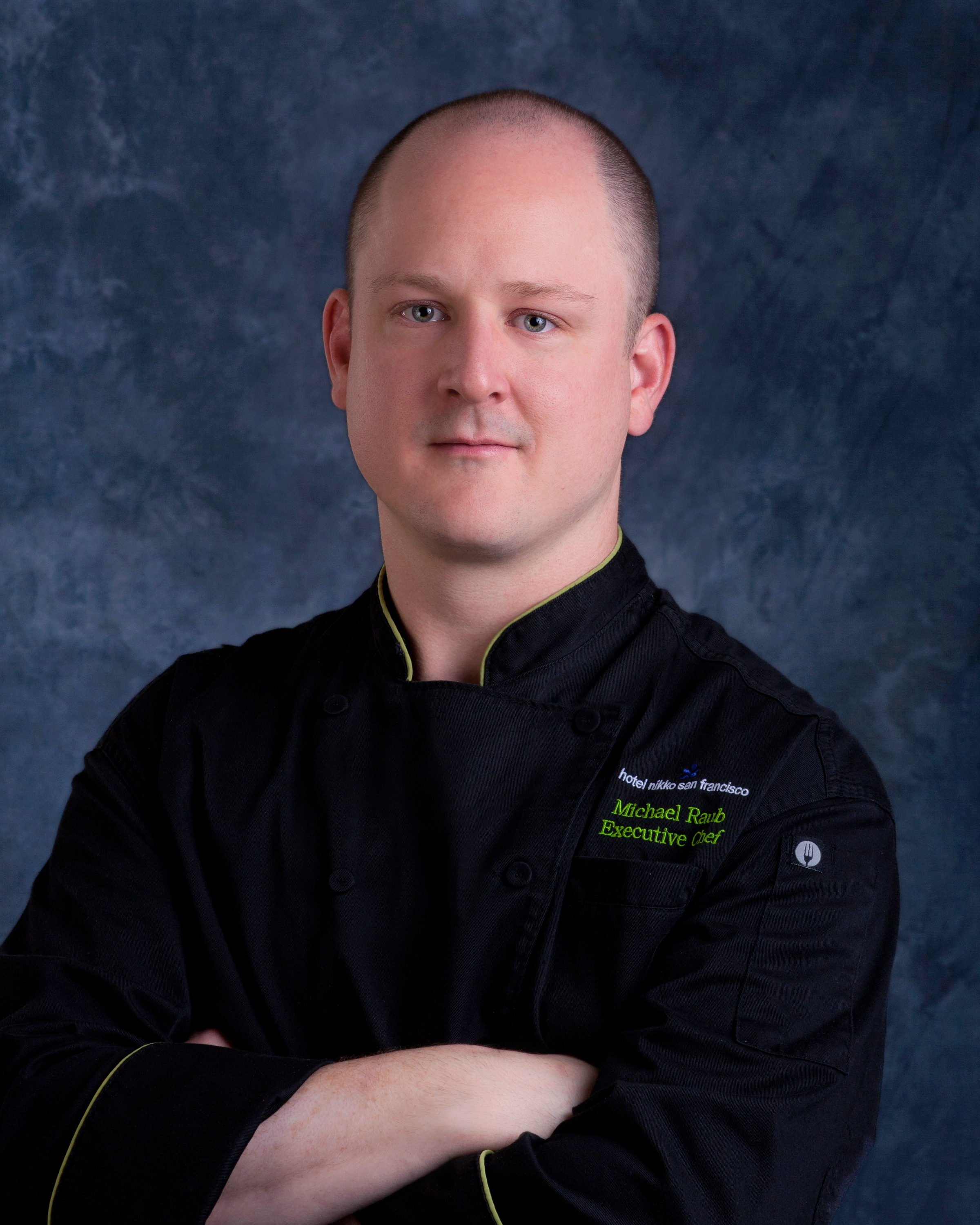
Anzu’s Chef Michael Raub‘s story is one that seems to exemplify the phrase, “Life is what happens when you’re making plans.”
From Texas barbecue to the French Laundry to Asian-Fusion cuisine, Michael Raub, Executive Chef at the Hotel Nikko San Francisco, didn’t plan a career in the restaurant business.
Though cooking was a big part of his youth (with not one, but two grandmothers in the kitchen at every family gathering), his coursework was in marketing while at university in Houston, Texas. After college, he went to Colorado to pursue an internship in the hospitality industry. It was there that fate (or life) took over, and Michael’s career in the restaurant business really began.
After a brief return to Texas, he pursued the best of the best: The Thomas Keller Restaurant Group. His ambition and initiative served him well, and he was soon on his way to Napa Valley, California, where he interned at Bouchon, quickly moving on to a full time position as Garde Manager. In 2010, he was promoted to Sous Chef. Michael stayed with the Keller Group for four years, also working at Ad Hoc and the French Laundry, a Michelin three star restaurant.
In 2012, Michael accepted a position as Executive Sous Chef at Ame Restaurant in the St. Regis Hotel, San Francisco, where he worked with Hiro Sone, winner of the James Beard Foundation’s Best Chefs of California award.
Michael credits both of his grandmothers with instilling in him an appreciation of good food and fresh ingredients, his first employers with his work ethic, and his determination with a bit of luck, for the opportunity to work alongside some of the best chefs in the business.
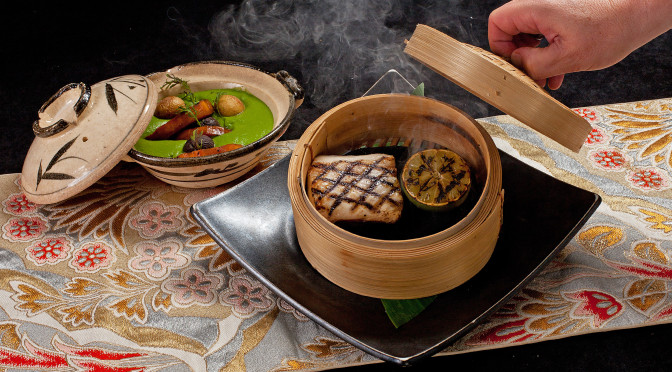
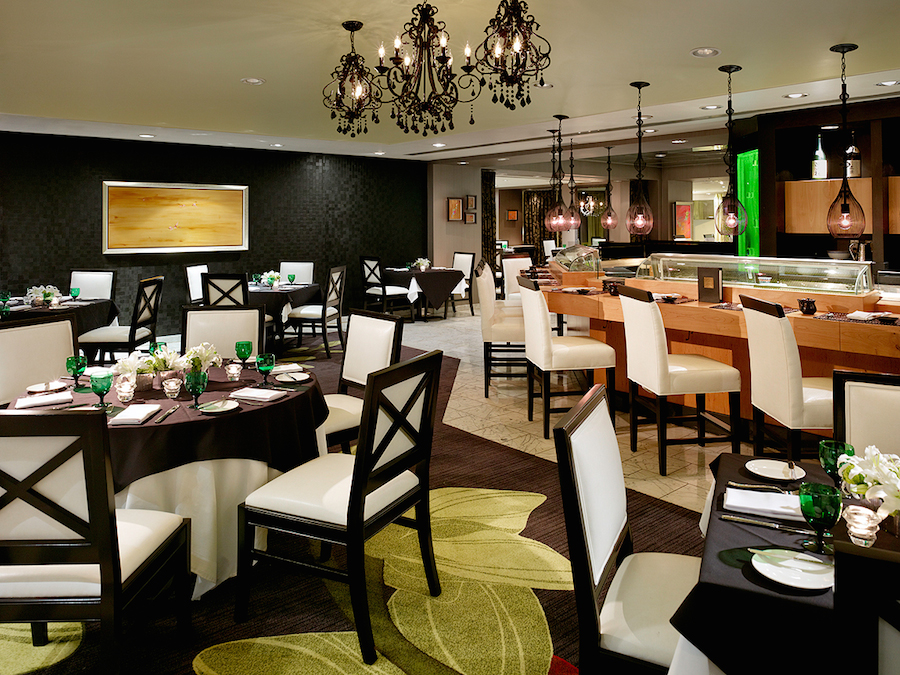
Anzu is the perfect venue, allowing him to create dishes like Sichuan Peppered Filet Mignon and Citrus Glazed Mahi Mahi (recipe below). The menu incorporates his love of high quality meats and fresh local sustainable seafood. It seems that life was just waiting to bring Michael’s particular blend of experience and skill to Anzu at the Nikko.
Chef’s Questionnaire (with a nod to Proust):
How long have you been cooking?
16 Years
What is your favorite food to cook?
I love cooking with fresh seafood. It is very delicate and takes constant attention.
What do you always have in your fridge at home?
Kimchi
What do you cook at home?
I love the experience of smoking fish and meat all day to make delicious Barbeque. A great way to spend a day off!
What marked characteristic do you love in a customer?
I haven’t served a customer in a very long time. What I find appealing about one of our guests is a sense of adventure.
What marked characteristic do you find unappealing in a customer?
Rudeness
Tupperware, Rubbermaid, or Pyrex?
Pyrex, but prefer a good old fashioned mason jar.
Beer, wine, or cocktail?
Wine
Your favorite cookbook author?
Right now, I can’t put Dominique Crenn’s new book down
Your favorite kitchen tool?
My hands
Your favorite ingredient?
The lettuces and herbs we are getting from Ecopia Farms right now!
Your least favorite ingredient?
Lavender
Least favorite thing to do in a kitchen?
Leave for the day
Favorite types of cuisine to cook?
French, Japanese, Italian, and Korean
Beef, chicken, pork or tofu?
Chicken
Favorite vegetable?
Whatever is at the peak of the season
Chef you most admire?
Laurent Gras
Food you like the most to eat?
Grilled Fish
Food you dislike the most?
Hard Boiled Eggs
How many tattoos? And if so, how many are of food?
0
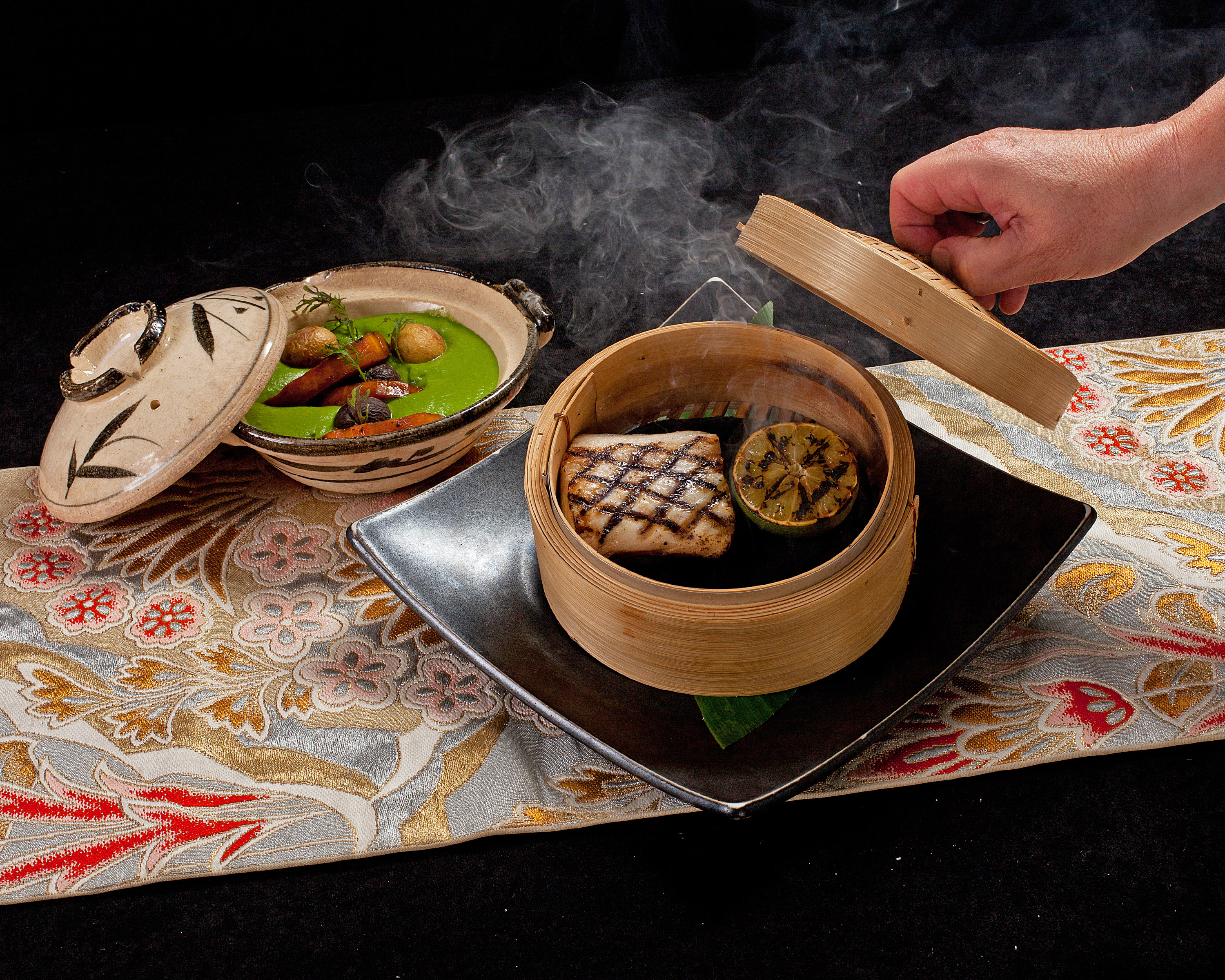
Citrus Glazed Mahi Mahi
Recipe: Citrus Grilled Mahi Mahi with Thai Green Curry
Serves 4
Ingredients:
Curry
1 T Olive Oil
3 T Green Curry Paste
1 Shallot (Minced)
1 Inch Peeled Ginger (Minced)
2 Cloves Garlic (Minced)
.5 Each Lemon Grass (Chopped)
1 C Coconut Milk
1 C Dashi
5 Each Kaffir Lime Leaves
1 T Fish Sauce
1 T Brown Sugar
2 Bunches Thai Basil
1 C Baby Spinach
Citrus Cure
2 T Kosher Salt
1 T Sugar
1 Lime (Zested)
1 Lemon (Zested)
1 Orange (Zested)
1 t Cracked Coriander
4 each 5 Ounce Mahi Mahi Portions
1 Large Butternut Squash
12 Mixed Marble Potatoes
4 C Baby Spinach
1 Clove Garlic (Minced)
.5 Lime
For the curry, heat the oil in a medium heavy bottom pot on high heat until slightly smoking.
Add the shallot, garlic, ginger, and lemongrass and brown for about two minutes.
Add the curry paste and kaffir limes and continue cooking another minute. Add the coconut milk and dashi and bring to a simmer.
Add the sugar and fish sauce and cook for thirty minutes.
Season to taste and let cool to room temperature.
Remove the kaffir lime leaves and place the curry in a blender with the spinach and basil.
Puree until completely smooth and pass through a fine mesh strainer.
For the citrus cure, combine all the ingredients in a small mixing bowl and reserve.
Cut the butternut squash in half lengthwise and remove the seeds and flesh. Peel the outer layer and cut into one inch pieces and roast in the oven at 400 degrees.
Season with salt and pepper and keep warm.
Season the mahi with the citrus cure and grill until medium to medium well. The internal temperature should be 150 degrees F.
Take the half of lime and place on the grill, flesh side down, until a dark caramel crust forms.
We like to finish our mahi in the oven on a smoking plank of cherry wood.
Take a large sauté pan and heat up a small amount of olive oil and place the garlic in the pan and sweat for thirty seconds.
Place the spinach in the pan and cook until just wilted.
Blanch the mixed marble potatoes in boiling salted water until just tender. Heat the curry and add the squash and potatoes.
Ladle the curry in four separate bowls and top with the wilted spinach.
Serve the fish on the side on the wood planks, so you can add the fish as you eat the curry.
The End. Go Eat.
All photos courtesy and copyright Anzu at the Hotel Nikko, San Francisco
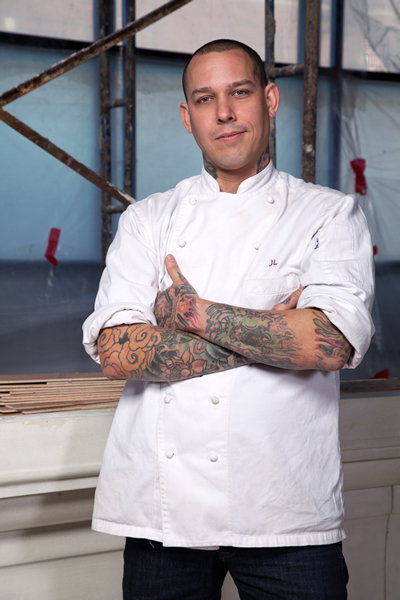
Jamie Lynch is a New York native and graduated from New England Culinary Institute in Burlington, Vermont. He has worked at New York Time’s 4 star Le Cirque 2000 Restaurant in The Palace Hotel, Aureole under Charlie Palmer and Daniel Boulud’s Café Boulud, and Touquevillle Restaurant in Union Square. Reflecting on his years cooking in NYC, Jamie notes, “At that time we had an all or nothing approach to cooking, we ate, drank and slept food. It was ether the very best we could do or it was garbage.” Chef Jamie has anchored some of Charlotte’s most notable restaurants such as Blue with Chef Gene Briggs and Barrington’s as Bruce Moffet’s Chef De Cuisine, and garnered many accolades such as being Voted BEST CHEF in 2013, 2014 and 2015 in Charlotte Magazine’s BOB (Best of the Best) Awards.
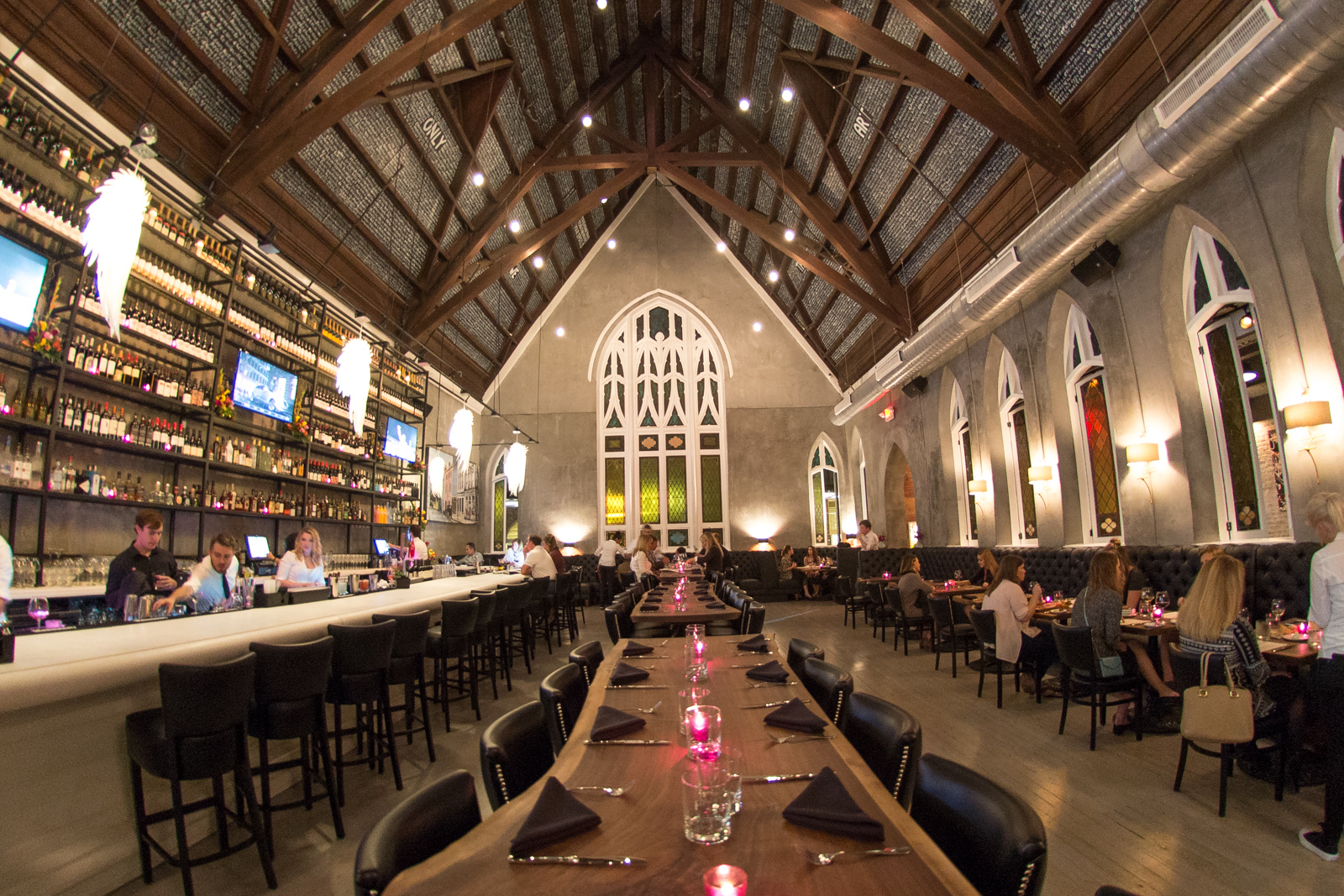
Chef Jamie recently moved to Charleston in 2015 to serve as Executive Chef of 5Church Charleston. 5Church Charleston is a new restaurant in a historic old church (Church of the Redeemer and Harriott Pinckney House) in downtown’s bustling Market Street district. The restaurant’s elaborate, modern décor features awe-inspiring stained glass windows, a white concrete bar, black leather banquettes, eye-catching chandeliers, large-scale pop-art, and hand-painted written verbiage of Sun Tzu’s “The Art of War” on the church ceiling. The restaurant’s award-winning food, top-rate service and nationally-acclaimed design will mimic its sister property in Charlotte, N.C., which opened in 2012. Be sure to visit for the Sunday Brunch – swoon!
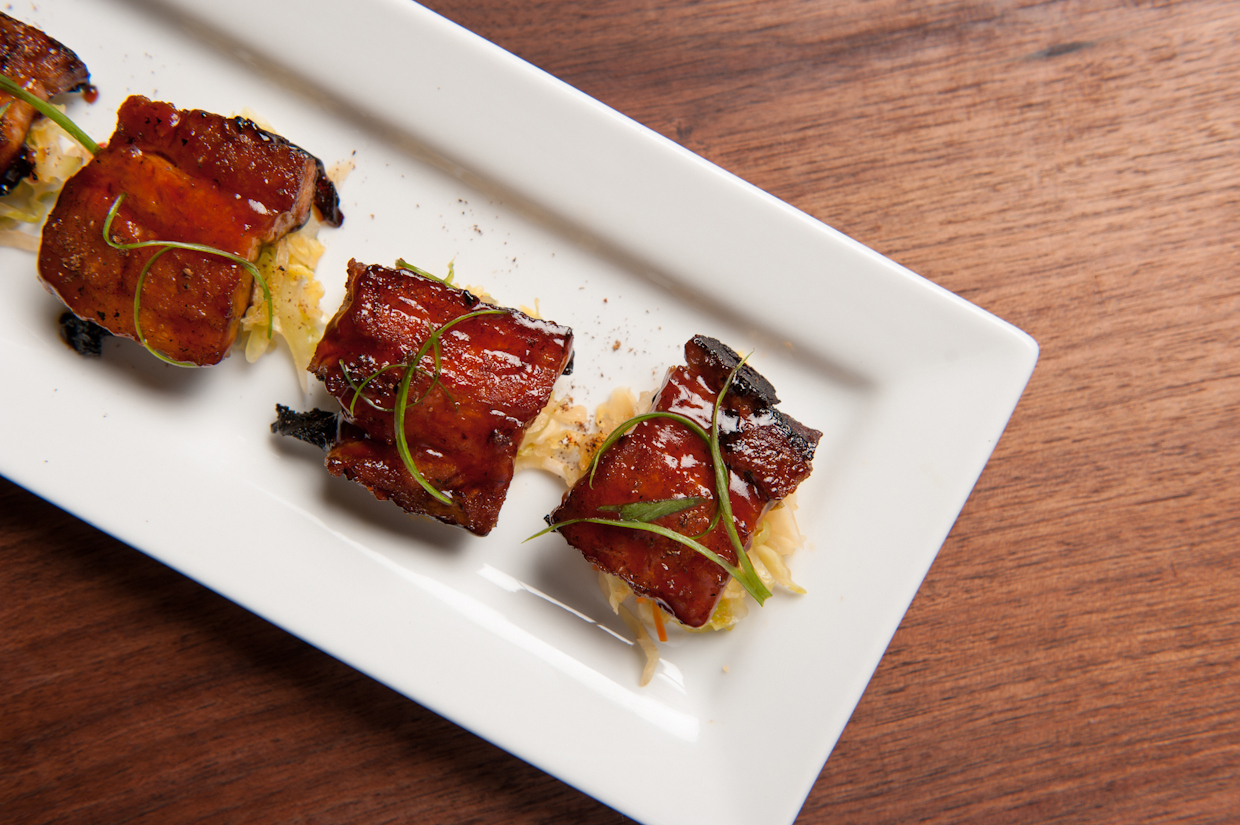
Crispy Szechuan Pork Belly
Chef Questionnaire from Chef Jamie Lynch:
How long have you been cooking?
I started cooking at the age of 16 at a small bar and grill. I have been at this for 24 years.
What is your favorite food to cook?
I really enjoy cooking fresh pasta. Pasta when cooked perfectly is the perfect vehicle to deliver a wide range of flavors to the palate in a most satisfying way!
What do you always have in your fridge at home?
Hot Sauce… all makes and models. It is my favorite condiment by far!
What do you cook at home?
Frozen pizza, if anything at all. I do all of my cooking at the restaurants and there is rarely time for a proper meal at home.
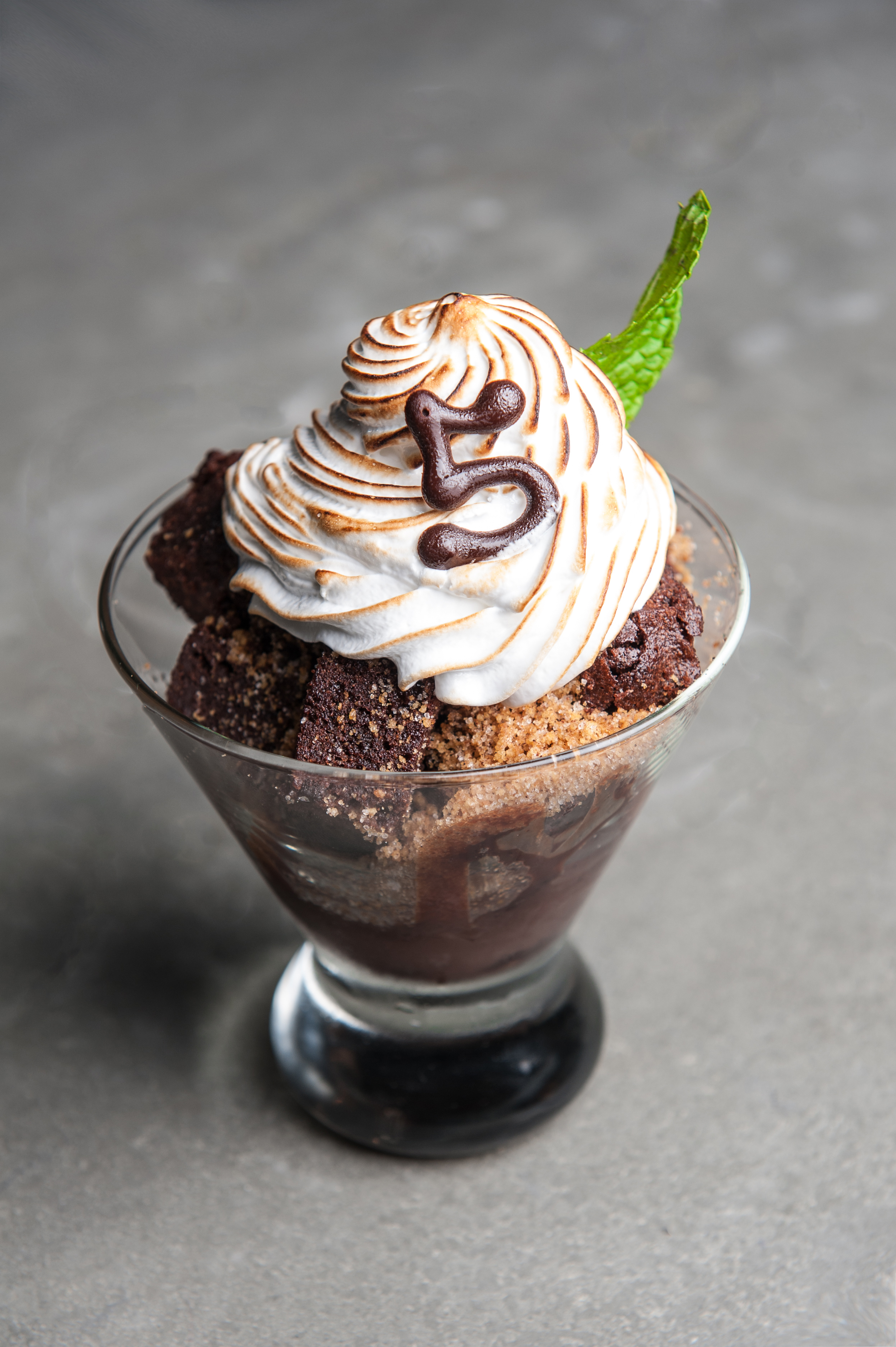
S’mores Trifle
What marked characteristic do you love in a customer?
It’s a toss-up between open mindfulness and patience. The open minded guest can appreciate the fun and interesting things we do with food while the patient guest will understand to cook at an excellent level takes time.
What marked characteristic do you find unappealing in a customer?
Rude or unpleasant. I do not like guests that are rude to their servers or bartenders. Dining out is supposed to be a fun and enjoyable experience.
Tupperware, Rubbermaid, or Pyrex?
Rubbermaid
Beer, wine, or cocktail?
Wine and beer usually – I’m a purist when it comes to booze, so I like my liquor to taste like liquor.
Your favorite cookbook author?
Andrew Carmellini. He taught me everything I know over the years, so I’m biased.
Your favorite kitchen tool?
A heavy, deep welled spoon that holds about an ounce is the most versatile tool.
Your favorite ingredient?
I am very fond of Ramps!
Your least favorite ingredient?
Salmon
Least favorite thing to do in a kitchen?
Leave! I find myself lingering around well after my “shift,” either talking with my staff about food or restaurant experiences they have. Those are the interactions that inspire what I do!
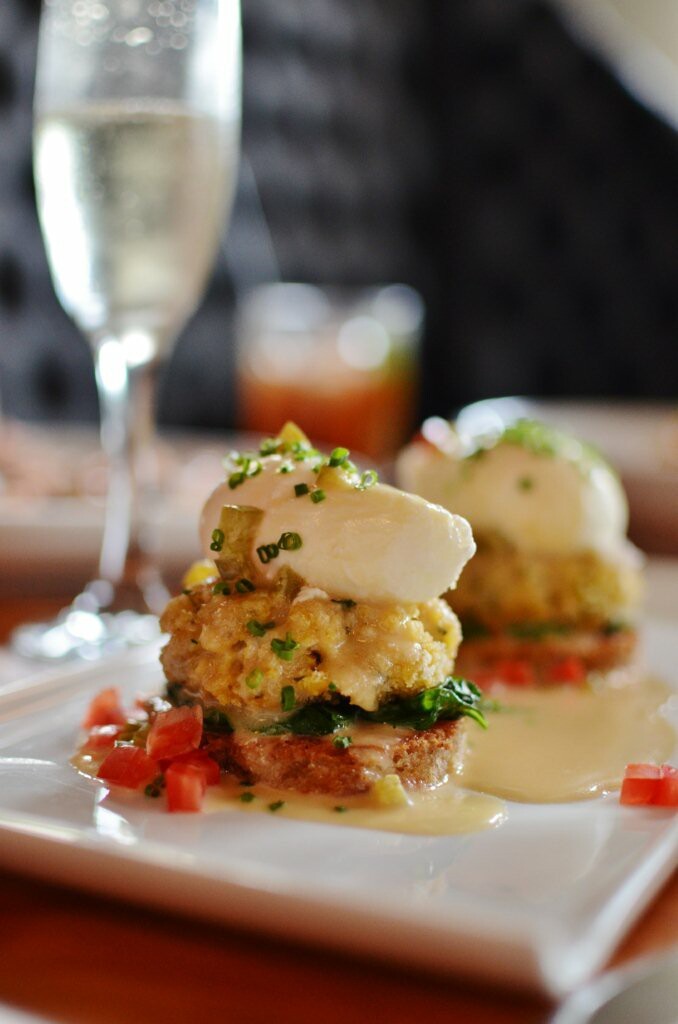
Crab Cakes Poached Eggs
Favorite types of cuisine to cook?
My own style of cooking is rooted in traditional French and Italian technique, but “New -American” is the label that best suites my cuisine.
Beef, chicken, pork, or tofu?
Pork
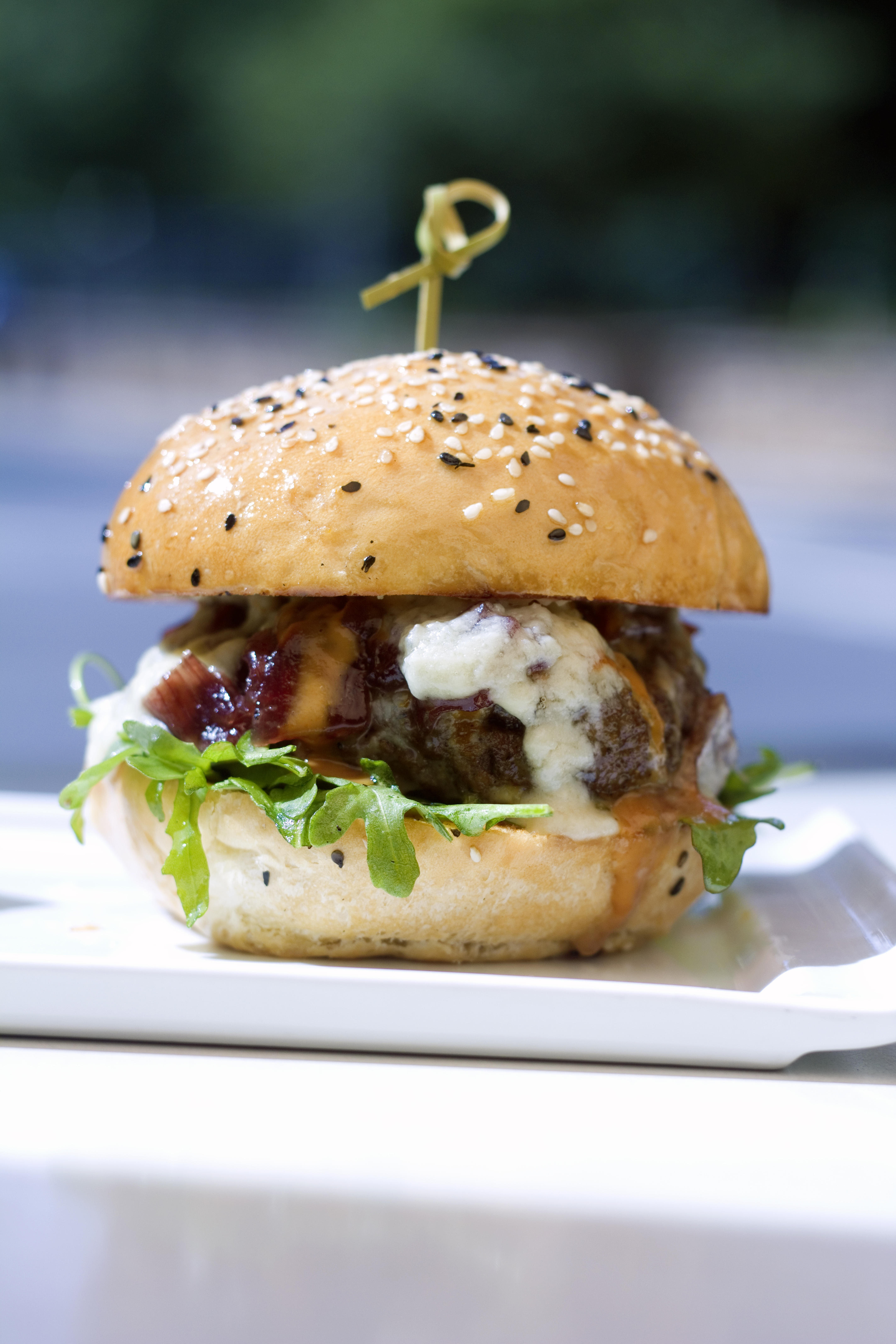
5Church Lamb Burger
Favorite vegetable?
I was the Entrmettier at Le cirque 2000 and Cafe Boulud, I have a deep affection for fresh vegetables. I couldn’t pick one.
Chef you most admire?
Andrew Carmellini
Food you like the most to eat?
Anything traditionally ethnic. In Charlotte, N.C. we have really good Vietnamese, and one particularly good Korean joint.
Food you dislike the most?
Salmon Roe. It is the seed of salmon, which i can’t stand, so the egg has to be worse.
How many tattoos? And if so, how many are of food?
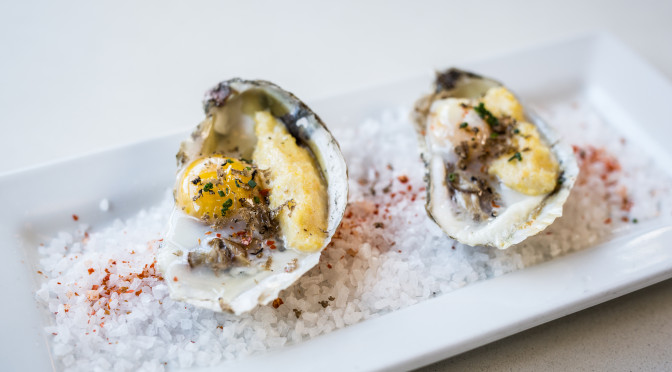
Too many to count. They have sort of melded into one giant one. None of them are of food items specifically but more tell the story of my life in kitchens through imagery. Broiled Oysters with Polenta and Quail Egg
Yields: 2 servings
Ingredients:
6 oysters, shucked on the half shell
1 cup cooked creamy polenta, preferably Anson Mills
6 quail eggs
6 dashes black truffle oil
1 small black truffle
Bull’s Bay Red Mash Sea Salt
Directions:
1. Preheat broiler in oven.
2. Cut aluminum foil into 8-inch pieces, and twist ends to create rope. Form into circle-shaped holder to hold the oysters in place, and put into oven-proof dish. Set oysters in dish.
3. Spoon ½ -ounce of polenta onto lip of each oyster to create a little dam, then crack quail egg on other half of oyster to completely cover.
4. Place oysters under broiler with 6-8 inches of clearance from heat. Bake until quail eggs are just set, approximately 4 minutes or until the quail eggs.
5. Remove oysters from oven and put a drop of truffle oil. Shave truffles with microplane, and place shavings on each oyster. Sprinkle with Red Mash Salt and serve.
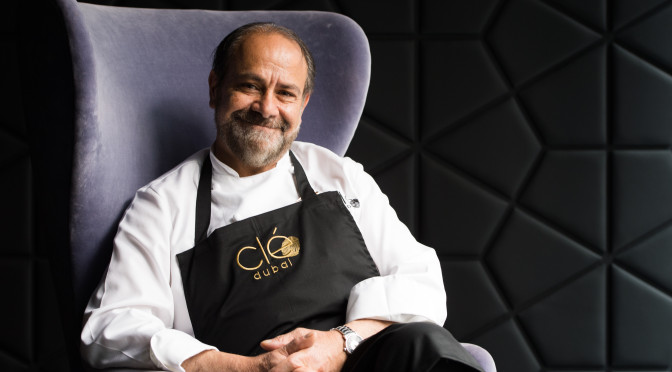
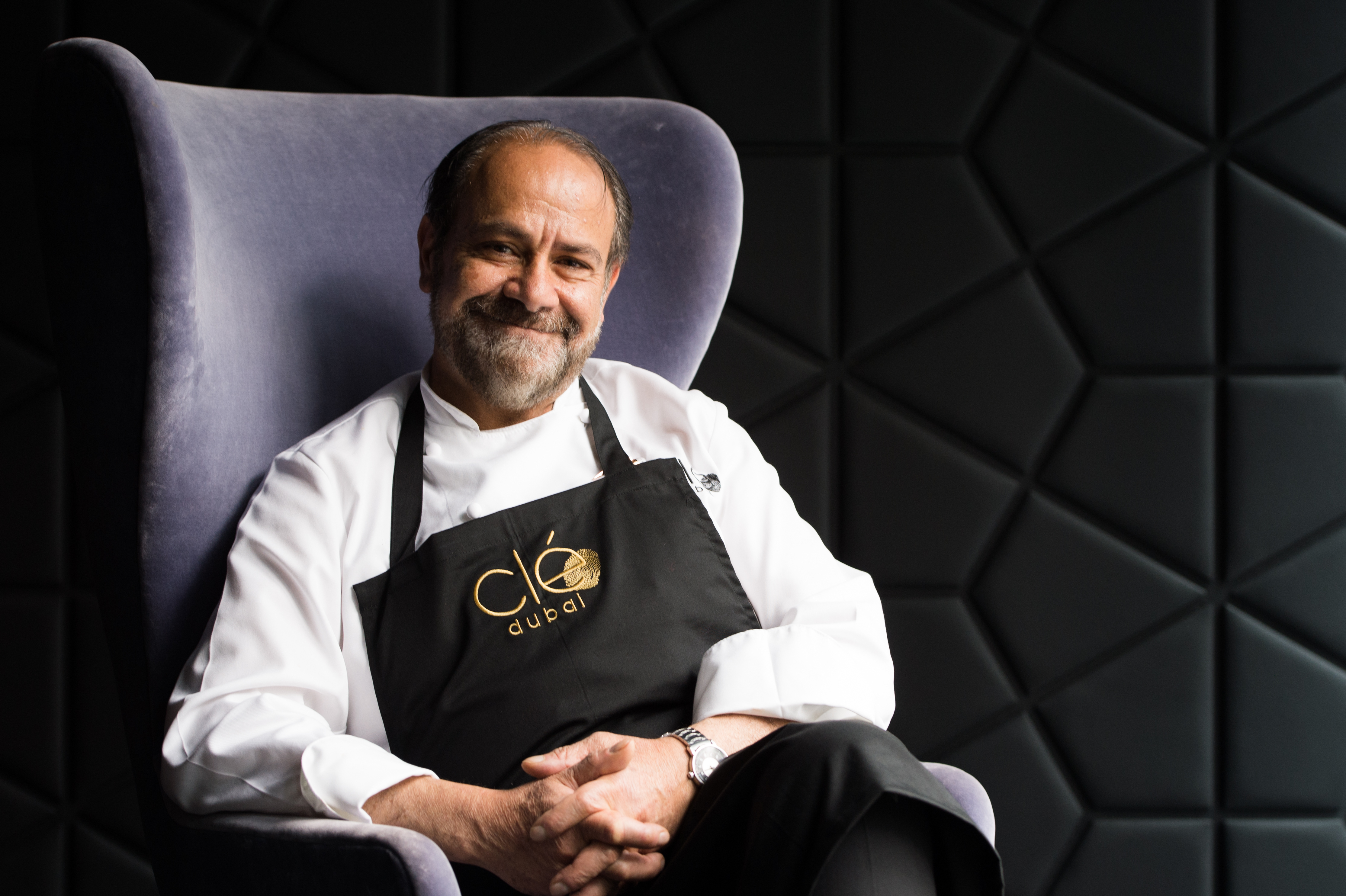
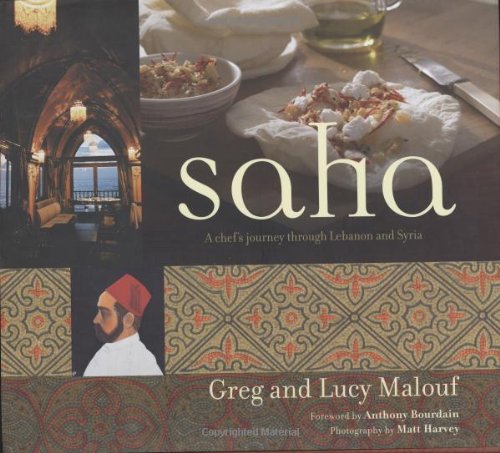
He was born in Melbourne, Australia of Lebanese parents. After serving his formal training in several of Australia’s finest restaurants, he went on to work in France, Italy, Austria, and Hong Kong. Drawing on his cultural heritage and European training, Greg has forged a unique style of cooking that combines Middle Eastern tradition with contemporary flair. Greg is in constant international demand for chef master classes, media interviews and guest-chef appearances in leading hotels of the world.
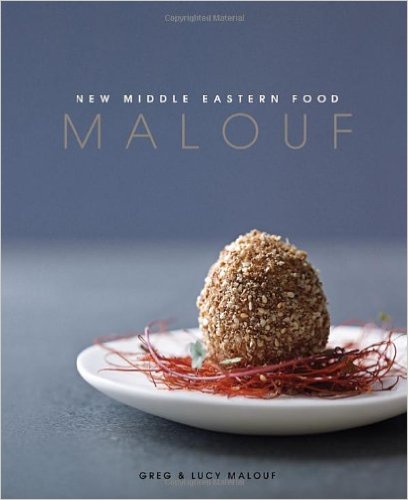
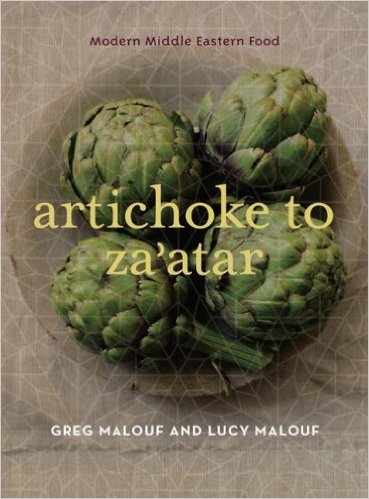
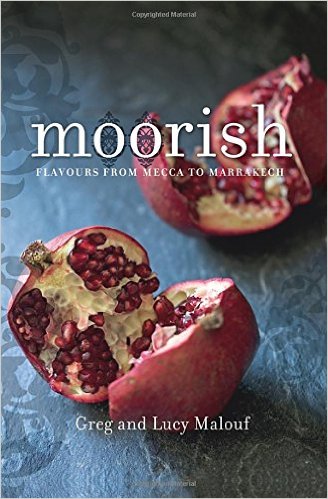
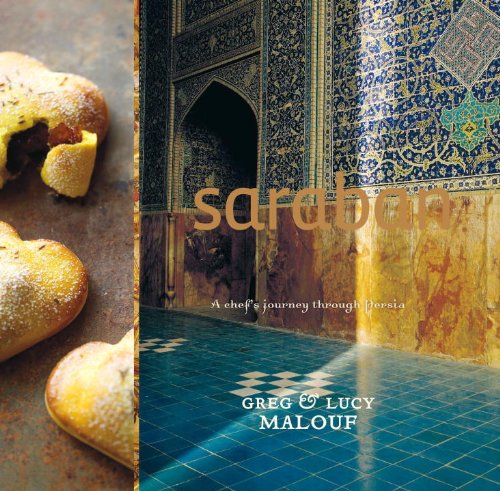
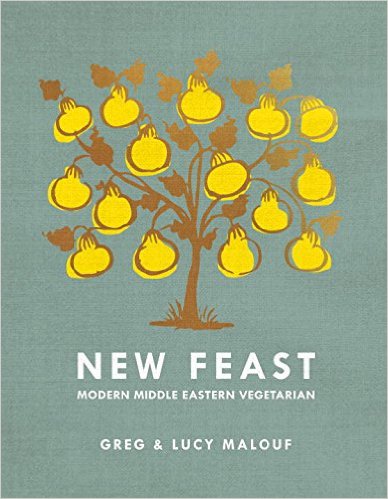
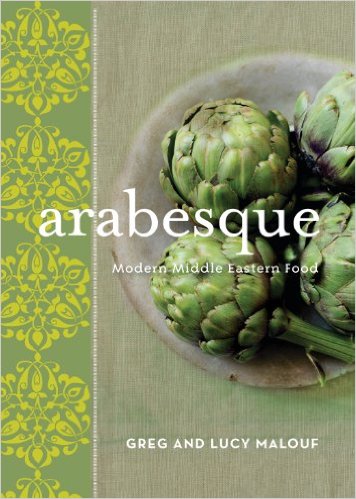
He is the co-author, with Lucy Malouf, his former wife, of the multi-award-winning cookbooks Arabesque, Moorish, Saha, Turquoise, Saraban – and his latest book Malouf – New Middle Eastern Food. In 2014, Greg and his co-author, released their new vegetarian Middle Eastern cookbook, New Feast.
‘But it’s not just brave, it’s clever…. Dishes like hummus, moutabel, muhammara, fattoush and tabbouleh are recipes we eat constantly in the region, and those which many of us will gauge a restaurant’s capabilities by. They set a benchmark, and by giving us his versions, Malouf has painted his own standard.’ – Sarah Walton, The Hedonista
From the United Kingdom Michelin Guide: While Malouf has rolled out such touches slowly at Petersham, they have not gone without notice. The editor of the 2013 Michelin Guide to Great Britain & Ireland, Rebecca Burr, says Michelin’s reviewers had been impressed with Malouf’s originality. ”The star was retained solely on the food and it was an easy decision to make,” Burr says. ”Greg Malouf has stamped his own mark on Petersham Nurseries and we are delighted to highlight his original cuisine to our readers.”
How long have you been cooking? It frightens me to think this but I started cooking at the age of 17 (1978). 37 years!
What is your favorite food to cook? My favorite cuisine is Lebanese and I love to cook with all its exotic ingredients.
What do you always have in your fridge at home?
Yogurt, olives, and eggs.
What do you cook at home?
I spend most of my time in my kitchen at work. However, when at home cooking, it’s usually for friends. Lentil tabbouleh, salmon kibbeh nayee and chicken in saj (mountain) bread are a staple for a dinner party.
What marked characteristic do you love in a customer? The willingness to leave a part of their mother’s food at home and understand what a restaurant experience offers.
What marked characteristic do you find unappealing in a customer? Customers who aren’t open to any interpretation in a restaurant.
Tupperware, Rubbermaid, or Pyrex?
Glassware = Pyrex Beer, wine, or cocktail?
Wine and champagne
Your favorite cookbook author? Claudia Roden – her inspiration book called The New Book of Middle Eastern Food
Your favorite kitchen tool? Mortar and pestle. Smashing garlic with sea salt and blending it with spices and olive oil.
Least favorite thing to do in a kitchen? Kill and skin live eels.
Favorite types of cuisine to cook? Lebanese, Italian. and Cantonese.
Beef, chicken, pork or tofu?
Grass fed beef from Scotland, Bresse chicken from France and UK old breed pork ….. I don’t eat tofu! Favorite vegetable?
Eggplant (aubergine).
Chef you most admire? Raymond Capaldi. He is an unmarked bottle of poison. He’s such an explosive character and you never know what you’ll get from him and on his plates.
Food you like the most to eat?
Late night Lebanese mezza
Food you dislike the most?
Capsicum. (Bell peppers.)
How many tattoos? And if so, how many are of food?
One tattoo – a scar that produced two heart transplants
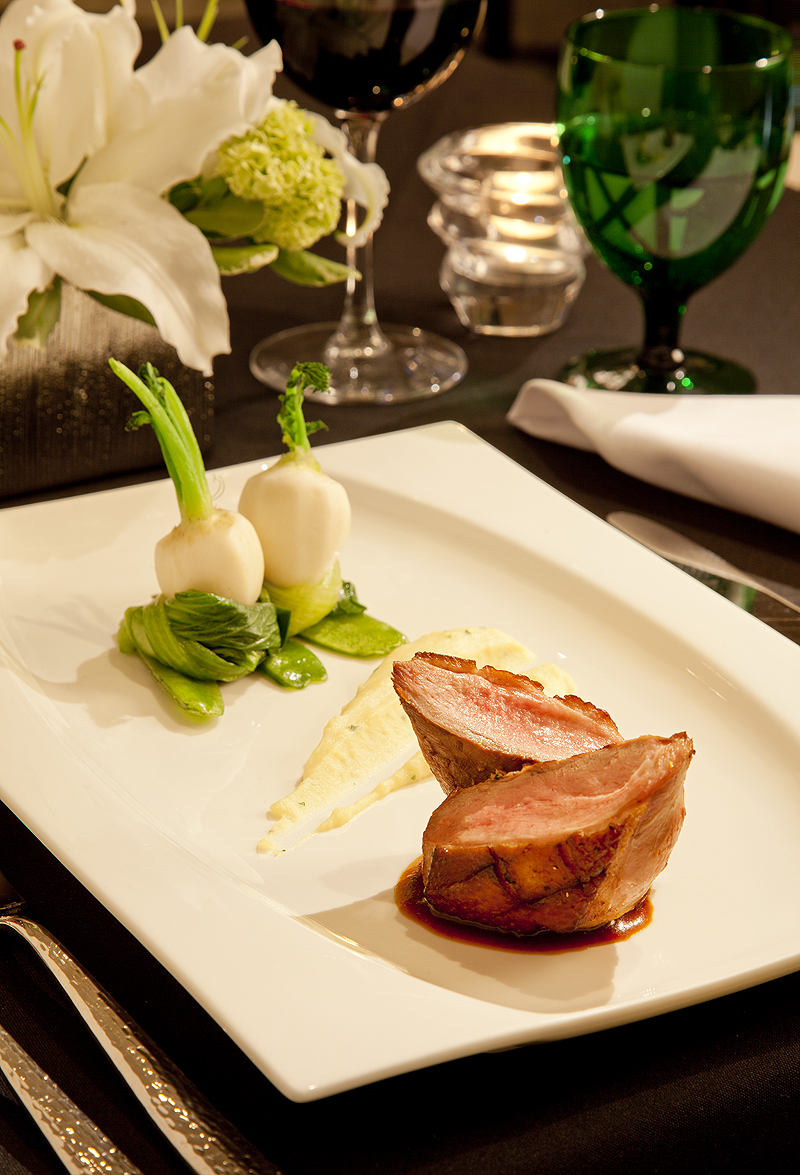
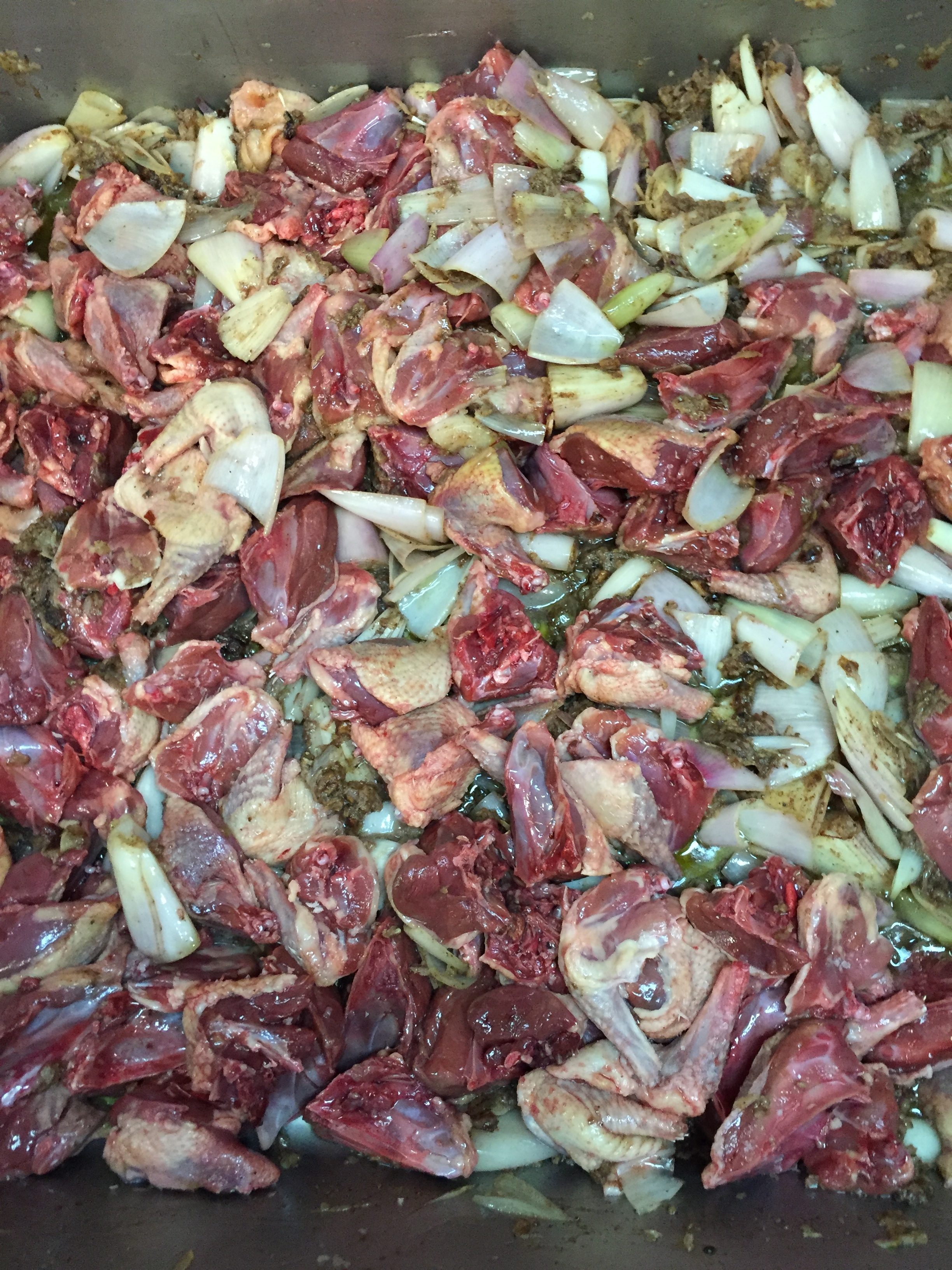
Recipe: Pigeon tagine with Dates and Ginger (Or Cornish Game Hens)
4 squab pigeons, breasts and marylands removed (Or Cornish Game hens)
6 tablespoons butter
1/4 cup of sherry
2 medium onions, finely chopped
2 cloves garlic, finely chopped
1 tablespoon fresh black pepper
1/4 teaspoon saffron (1/2)
2 teaspoons cinnamon
1 teaspoon ginger
2 cups dates, chopped
3 tablespoons olive oil
1/2 cup parsley
6 cups water or chicken stock
1/2 teaspoon salt
Prepare the pigeons or hens by cutting them into quarters. If you don’t feel confident about doing this yourself, ask your butcher to prepare them for you.
Briefly sauté the carcasses to add colour, then add the vegetables and sauté a few more minutes. Add sherry and scrape any bits from the bottom of the pan. Pour on the water and bring to the boil. Skim off any surface fat, then lower heat and simmer for an hour, skimming off any fat from time to time.
Melt the butter and oil and fry the onions and garlic over a medium heat until softened. Add the pepper, saffron, cinnamon and ginger and stir well. Season pigeon pieces with salt and sauté in the spicy mixture for about 2 minutes, until well coated. Add the stock and bring to the boil. Lower the heat, cover and simmer for 15 minutes. Then add the chopped dates and stir in well. Cover again, and simmer for a further 20-30 minutes – check to see when pigeon pieces are nice and tender. Taste and adjust seasoning if necessary. Serve with plain buttered couscous or a simple rice pilaff.
(Editor’s Note: We decided to re-run last week’s story as we had some technical glitches…besides, the Lanzone Brothers are attractive enough to see every week. )
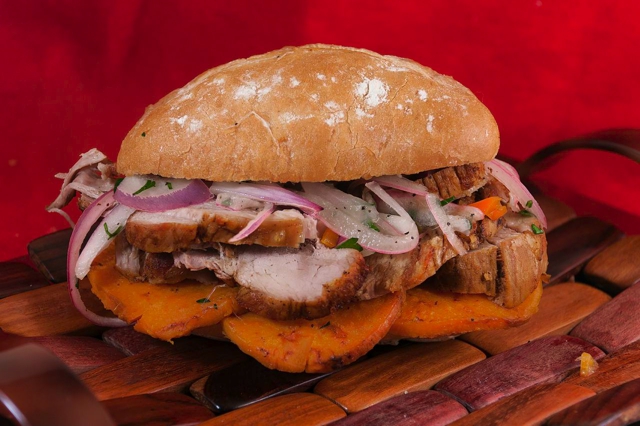
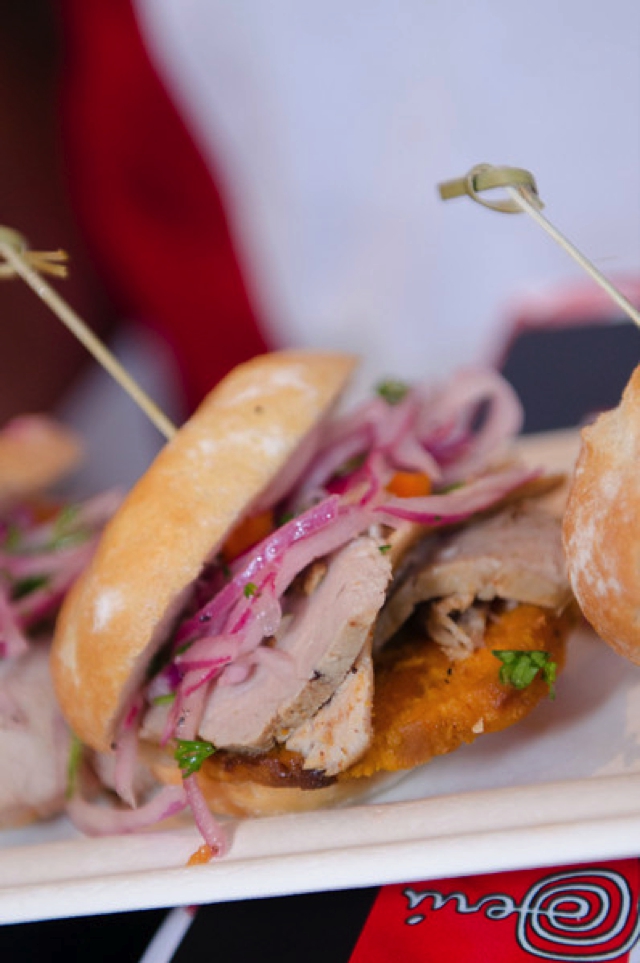
As Washington, DC food entrepreneurs, Giuseppe and Mario Lanzone are certainly no strangers to hard work. Mario is a full time bartender at Napoleon Bistro & Lounge and spends his summers captaining yachts in the Mediterranean. Giuseppe competed in the 2008 Beijing Olympics and 2012 London Olympics for the United States rowing team and currently coaches rowing at Georgetown University. He applies the same Olympic intensity and drive towards he and his brother’s Washington, DC food truck, Peruvian Brothers. In fact, the duo spent two full months hunting down the perfect bread that most accurately inspired their Peruvian taste buds – now a custom Peruvian Brothers recipe on the menu at The French Bread factory in Sterling, Virginia.
The brothers were born and raised off the coast of Lima, Peru, in a close-knit community of La Punta, where family and the ocean reigned. The flavors that dominated their childhood are the tastes they crave the most, inspiring the Lanzone brothers to team up to represent the tastiest part of their Peruvian heritage.
The history behind the Peruvian Comida Criolla cuisine is as appealing and complex as the unique combinations of flavor. With roots in Andean-Spanish-Afro-Peruvian and Asian influences, Comida Criolla boasts powerful flavors that are sorely missing from the streets of D.C. Recipes passed down in the Lanzone family, as well as Mario’s own original spins on traditional Peruvian favorites, give their menu an authentic taste with a unique twist.
To sample their authentic Peruvian fare, follow the Peruvian Brothers truck via @PeruBrothers on Twitter and Facebook, and find them online at http://peruvianbrothers.com/
Chefs Questionnaire
Giuseppe Lanzone = GL
Mario Lanzone = ML
How long have you been cooking?
GL: Since I can remember
ML: For the past 15 years
What is your favorite food to cook?
GL: Breakfast
ML: Peruvian food
What do you always have in your fridge at home?
ML: Eggs, milk, avocados
ML: Milk, eggs, vegetables, ice cream
What do you cook at home?
GL: Omelettes with whatever meat and cheese I can get my hands on
ML: Meat stews, stir fries and ceviche in the summer
What marked characteristic do you love in a customer?
GL: When they are cordial
ML: When a costumer assumes they know what they want because they’ve been to our food truck many times
What marked characteristic do you find unappealing in a customer?
GL: When you say hello, and they answer by saying nothing or by saying that they are just looking at the menu
ML: Some of them are just never happy
Tupperware, Rubbermaid, or Pyrex?
GL: Pyrex, it’s cleaner
ML: Pyrex
Beer, wine, or cocktail?
GL: Dark beer or a good whiskey
ML: Cocktail
Your favorite cookbook author?
GL: Any book with good ideas is my favorite book
ML: Ceviche by Martin Morales
Your favorite kitchen tool?
GL: Meat slicer
ML: My really sharp knife
Your favorite ingredient?
GL: Rocoto pepper
ML: Yellow Peruvian Pepper
Your least favorite ingredient?
GL: None, really
ML: Cumin by itself
Least favorite thing to do in a kitchen?
GL: Clean the floors
ML: Wash dishes
Favorite types of cuisine to cook?
GL: Peruvian, of course!
ML: Peruvian
Beef, chicken, pork or tofu?
GL: Beef
ML: Pork
Favorite vegetable?
GL: Beets
ML: Onions
Chef you most admire?
ML: Gaston Acurio
GL: My brother
Food you like the most to eat?
ML: Peruvian and Thai
GL: Italian and Peruvian
Food you dislike the most?
ML: Indian
GL: none
How many tattoos?
ML: One on my arm. I got it about 10 years ago. It has faded away.
GL: none
Recipe: Ceviche
8 lb fresh fish fillets (tilapia works well)
Fresh lime juice
Cilantro
Garlic
Salt
Aji limo pepper
Red onion
Baked sweet potatoes
Corn
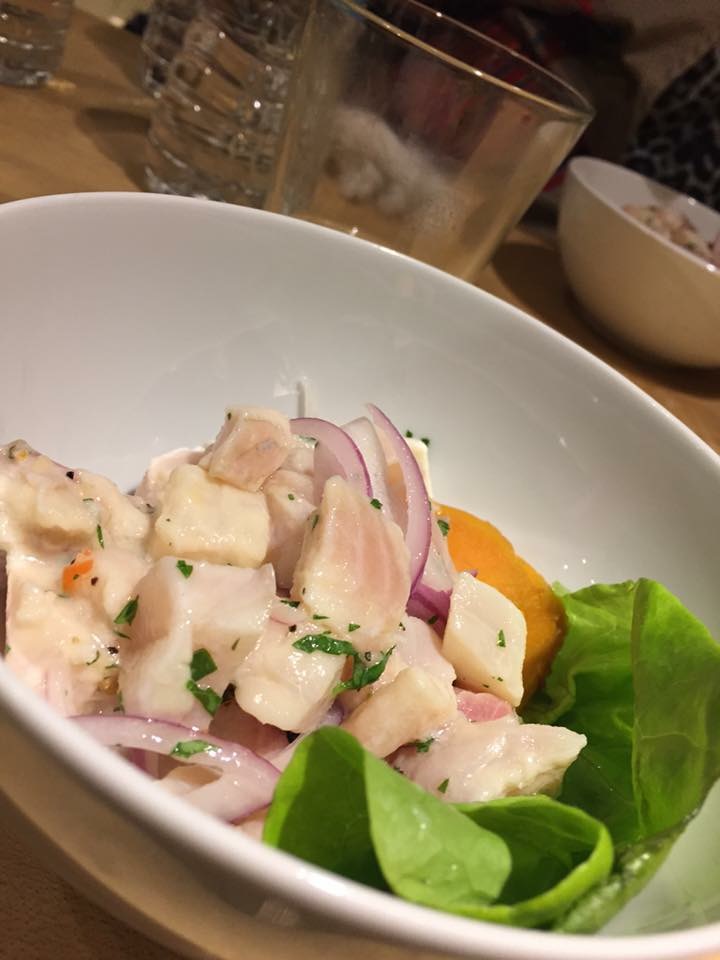
Cut the fish in small cubes and put them in a large bowl with a couple of ice cubes to keep the fish cold. Then add minced aji limo pepper, salt, pepper, garlic, cilantro, thinly julienned onion, and one cup of freshly squeezed lime juice. Mix for a couple minutes and add a squirt of evaporated milk. Plate on a butter lettuce leaf and accompany with corn kernels and thickly sliced baked sweet potatoes.
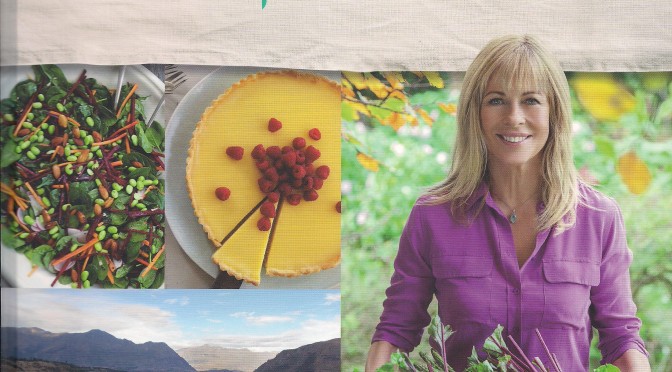
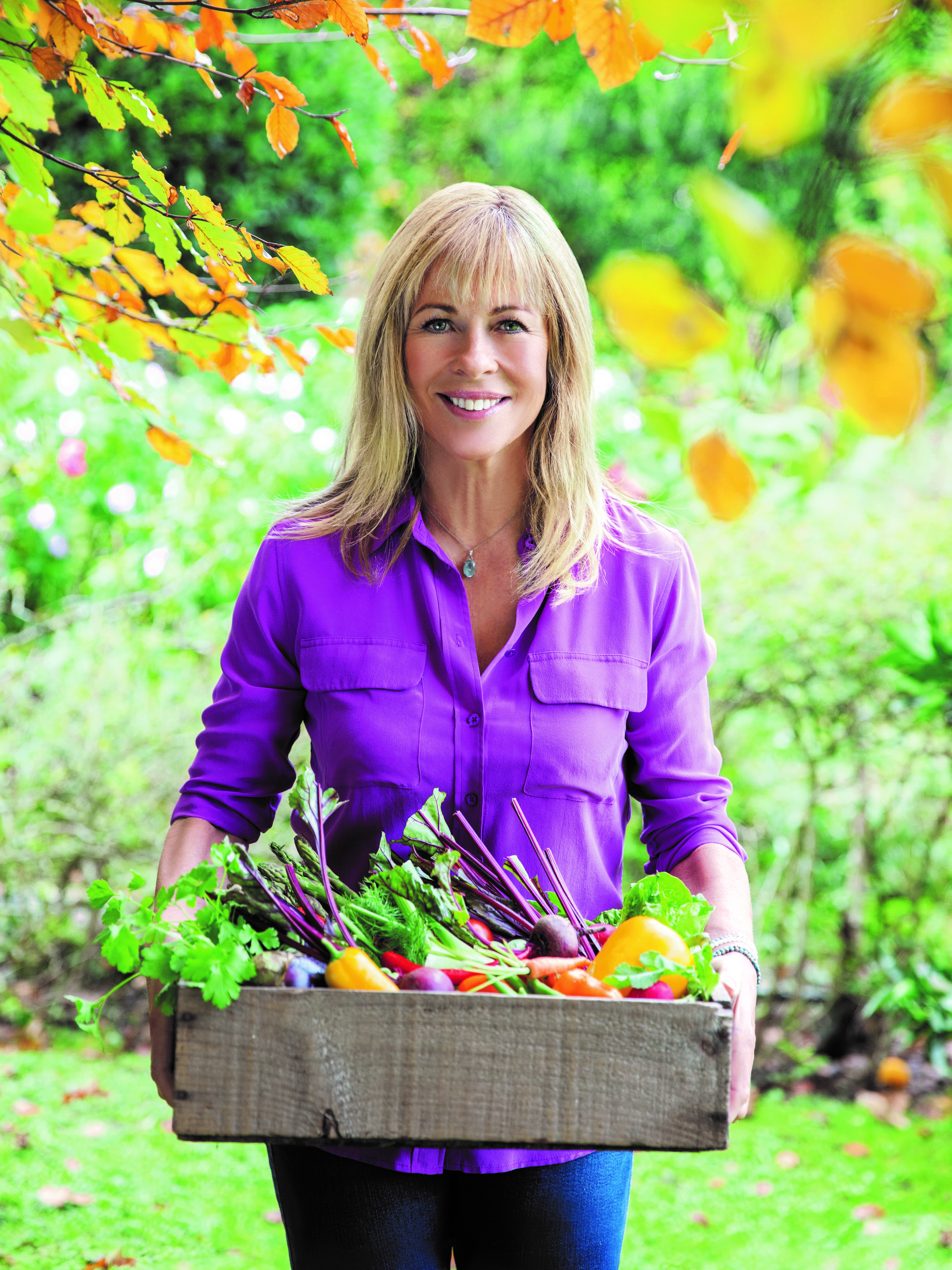
Several weeks ago, I was sent a cookbook The Free Range Cook: Simple Pleasures by a lovely celebrity cook, Annabel Langbein, from New Zealand. From the onset, Ms. Langbein seems to be the country’s answer to Martha Stewart – prettier, younger, and from a whole different continent.
She has a line of cookbooks – 21 and counting — a television and radio series plus her own line of products. Her television series has been seen in 70 countries. New Zealand, as a country, has a population of under five million. The United States has a population far beyond that number, and she wants to conquer it.
She means well and seems like the real thing. Before Langbein became a cooking superstar, she was a food writer for a variety of Australian magazines. She met her husband while she was a possum trapper and he was a farmer. Her trademark term – free range – means organic living and gardening. She lives off the land, taking daily walks into her garden, locating what’s ripe, and deciding whatever is picked will be dinner that evening.
It’s a little idyllic and hard for me to believe that Langbein gets her own veggies from any garden. She’s perfectly coiffed along with an impeccable manicure. I just can’t imagine Ms. Langbein, or Martha for that matter, sending business emails from their garden. It kills the romantic ideal of owning a lake house, which Langbein mentions often. (Admittedly, in the back of the book, she acknowledges the assistants who create this picturesque lifestyle.)
Aside from being a little too picture-perfect, the recipes are easy to recreate. The idea of a Halloumi (the Greek cheese) and Papaya Salad sounds deliciously refined. There is also a Salmon Confit made with a liter of olive oil.
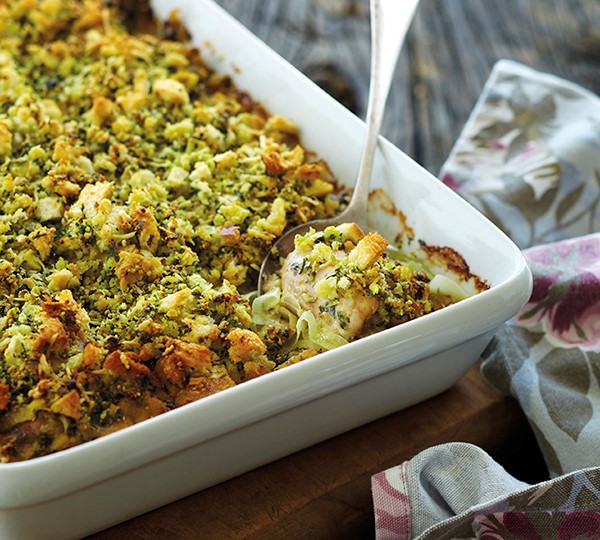
It’s a beautiful cookbook. I made a delicious and fairly easy, Chicken and Leek Gratin. The topping looked interesting and fun for a variety of dishes including a coating for chicken or on top of poached eggs. Simple and easy – or maybe I should say free range.
All Photos Courtesy of Annabel Langbein Publishing
Chicken and Leek Gratin (Serves 6)
3 tablespoons butter
4 large leeks, washed and thinly sliced
12 boneless and skinless chicken thighs (No need to go out to your garden and do your own butchering. Your local grocery store has them in a yellow styrofoam package.)
3 tablespoon dijon mustard
2 tablespoons worchestershire
½ teaspoon cayenne
1 teaspoon thyme (She doesn’t specify from her garden. I bought some at my farmers’ market.)
½ cup cream or chicken broth
And Provencal crust. (1 to 2 cups of dried breadcrumbs, 1 handful of torn parsley, zest of 1 lemon, 2 garlic cloves, 2 oz butter, coarsely grated Parmesan, 1 anchovy filet. Place all into a food processor and pulse until mixed together.)
Let’s make this puppy:
Melt butter in a large skillet. Add leek and season with salt and pepper. Cook for about 15 minutes until softened and translucent.
In a bowl, add the chicken thighs, mustard, thyme, worchestershire sauce and a couple pinches of salt. Mix well and set aside.
Remove leeks from heat and stir in cream or broth. Pour this into an oven proof casserole dish or shallow baking pan. Arrange chicken on top. Cover with the Provencal Crust.
Bake at 350 degrees for about an hour. It should be fragrant, bubbly and a golden topping.
“Most people who have had a rough background will admit there’s something unsettling about finding happiness after difficulty – that even after we unwrap this gift, we don’t know how to stop searching, rummaging, pilfering for something else. We walk haltingly through life, ready for the other shoe to drop. The question is not if, but when.” – Sasha Martin, “Life from Scratch” (National Geographic Society, March 2015).
I had never heard of the food blog GlobalTableAdventure.com until I read Sasha Martin’s engaging food memoir “Life from Scratch: A Memoir of Food, Family and Forgiveness” (ISBN 978 – 1- 5462 – 8, National Geographic Society) published in March of this year. Martin’s blog is about cooking globally and bringing that experience of culture to the table, but it’s her book and story that’s the winner. “Life from Scratch” begins light-heartedly enough but as Martin’s life progresses from child to teenager, it becomes disquieting and uneasy. Once, Martin moves to Tulsa, Oklahoma as an adult, I breathed a sigh of relief. To Ms. Martin’s credit, it’s her calm style of writing that gives the reader emotional balance to understand the truth of what’s transpiring. Otherwise, one might get squirmy reading in the Lazy-boy.
Speaking with Martin on the phone is a pleasure. Her voice is like her writing — soft, easy with hints of apprehension. (Apprehension because she’s talking to me. I make people wary.) She disclosed that Life from Scratch came about in an unusual manner. Martin was approached by a literary agent who liked GlobalTableAdventure. The agent shopped the proposal around to a variety of publishing houses — they all loved it — but Martin felt a “kinship” to National Geographic Society (NGS). Interestingly, her NGS editor really liked the story of the blog and global cooking up until the first draft. But she felt that Martin wasn’t forthcoming with her childhood history…. that she was holding back. Martin admitted she was. She explained to her editor about growing up, the death of her brother and the twelve European countries she visited with her legal guardians. She details the story of her mother letting her and her brother go into foster care. Once, the real story of Sasha Martin was out, it was the truth and book the editor wanted.
Martin said, “I never expected so much of this book to be about my past. It was supposed to be a lighthearted exploration of world cooking but digging deeper made me realize the real story wasn’t how I cooked the world but why. Being forced to face my past was a gift. I have so much more understanding and perspective now.
Punctuated with loving memories of home cooking with her mother, a lonely teenager in European and global cuisine from her blog, GlobalTableAdventure.com, such as Hungarian Paprika Chicken, German Cake and Maldivian Fire-Roasted Fish, “Life from Scratch” may turn out to be my favorite book of 2015. It offers hope and fulfillment on a spiritual scale.
“There’s a difference between poverty of resources and poverty of spirit.” – Sasha Martin, Life from Scratch.
(Correction/Revision: Previously, it was noted that Ms. Martin lived in twelve countries her foster parents. She visited twelve with her legal guardians. A correction and revision to the original post was made. )
Food People Questions: (with a nod to Marcel Proust)
What do you always have in your fridge at home? Spicy mustard.
What marked characteristic do you love in a person with whom you are sharing a meal? Warmth.
What marked characteristic do you find unappealing in a person with whom you are sharing a meal? Treating their cellphone like a guest at the party.
Beer, wine or cocktail? Any cocktail with grapefruit or a Riesling spritzer with a wedge of orange.
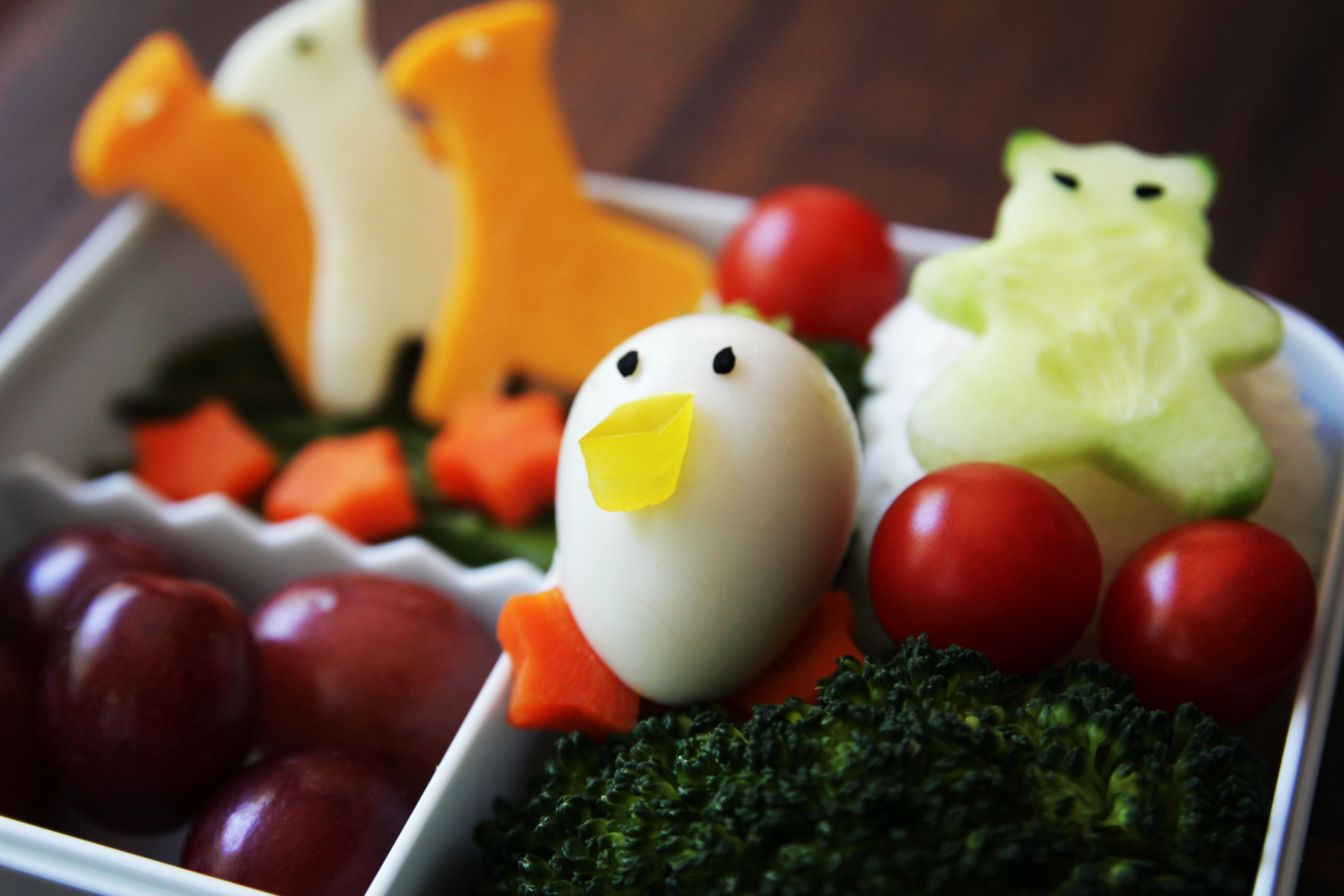
Japanese Bento Box for kids
Your favorite cookbook author? I’m a huge fan of what Christopher Kimball does – very methodical, reliable recipes. Every single time.
Your favorite kitchen tool? Microplane.
Favorite types of cuisine to cook? Cooking a meal from every country in the world taught me to love trying recipes from obscure-to-me parts of the world.
Beef, chicken, pork or tofu? Tofu.
Favorite vegetable? Brussels Sprouts.
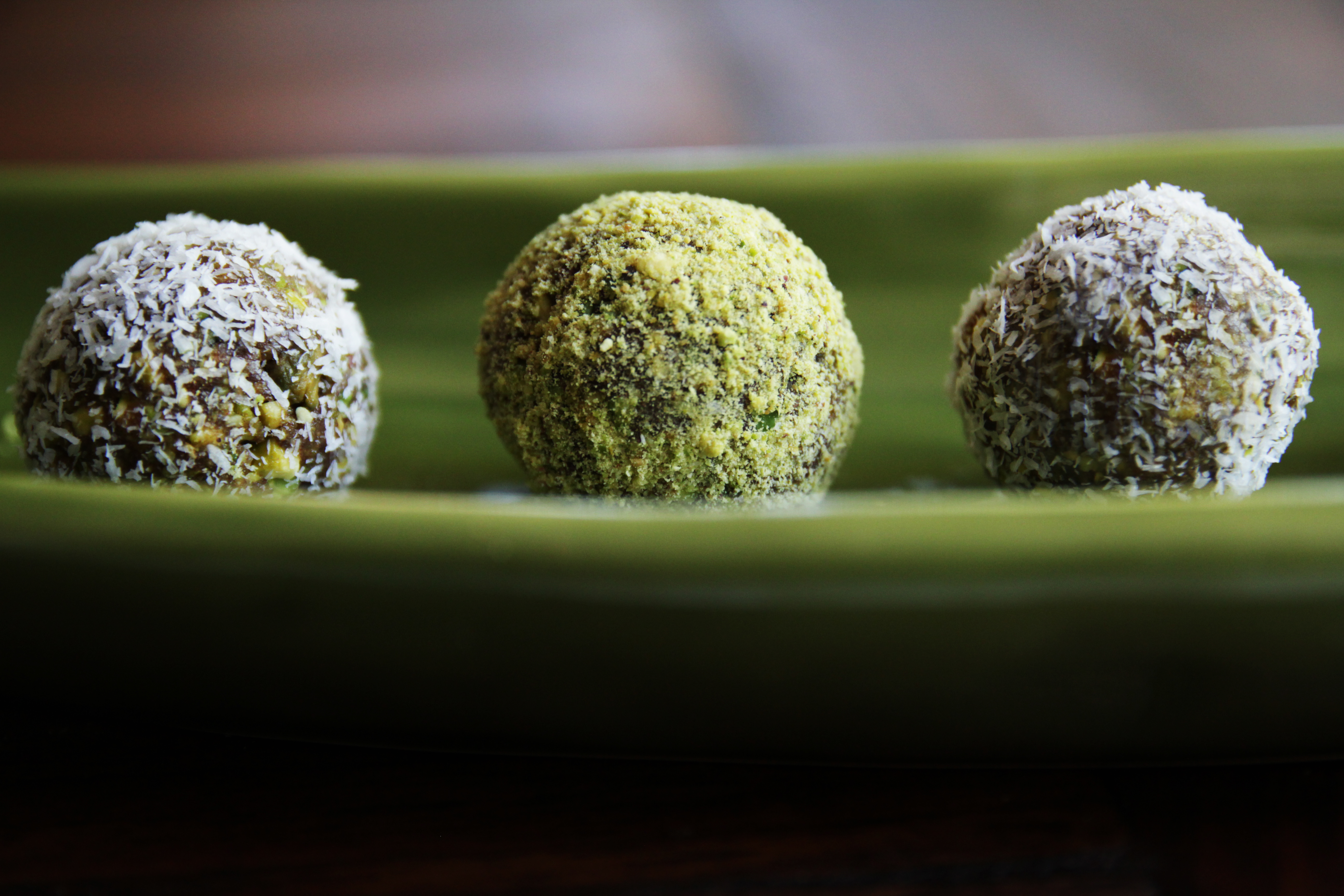
Date Balls
Chef you most admire? Nigel Slater – he overcame a rough childhood and has the most beautiful way with words. Tender and Ripeare masterpieces
Food you dislike the most? I’m not much for eating something just for the shock value. My goal is to share international food that’s easy enough for a weeknight and elegant enough for the weekend.
What is your favorite non-food thing to do? Write or paint.
Who do you most admire in food? The millions of families struggling to make ends meet. My own mother struggled to make ends meet and yet she scrimped and saved so we could eat foods like 19-layer German Tree Cake. She taught me that food can help us see beyond our circumstances; there’s a real difference between poverty of resources and poverty of spirit.
Where is your favorite place to eat? Any patio, 75F.
What is your favorite restaurant? I have fond memories of eating at Vietnamese restaurants in Paris. Go figure!
Martin and her daughter cooking.
Do you have any tattoos? And if so, how many are of food? No. I have a theory that I could never truly be naked if I ever got a tattoo.
1 lb carrots, grated or julienned (on a mandolin is easiest)
1/2 cup raisins, soaked in hot water
For the dressing:
1 large clove of garlic, grated
3 tablespoons vegetable oil
2 tablespoons white wine vinegar
1 1/2 teaspoons of sugar
salt & pepper, to taste
Toss everything together and refrigerate until needed. Best after about 30 minutes. Check seasonings before serving (be sure to use plenty of salt to bring out the flavors).
I was in a yet to be opened LA restaurant at a friends and family tryout. It’s a common practice among well-financed restaurants – a testing of the waters before media reviews and the paying patrons type of thing. Invited along with some media, local chefs, restaurant bon vivants and a few Los Angeles gadflies my fellow dining compatriot who was actually the invitee. I was along for the ride. We had met over several bottles of Sonoma Cutrer Chardonnay, Russian River at the Four Seasons Los Angeles years before. (One of my favorite — I used to drink it like water back in the day.) As we sat there eating the comped food — testing and trying – I was disappointed. I mean, I know it was free – and had I been paying I would have sent some of it back. (The waitstaff was tipped on the bill that we would have been charged.) There was too much sauce on everything, the squid had been broiled too long and the flatbread – which used to be known as pizza — was a blackboard with artisanal toppings. Seated at the next deuce to us, were the lovely husband and wife team of one my favorite LA eateries. My dining companion, the unnamed couple and I were talking amongst ourselves about how the best food is sometimes the simplest. It doesn’t always need the sauce or maybe a little less of the herb; perhaps the watermelon radish pesto needs to evolve into something less. As we chatted about how disenchanted with the food we were, the phrase “keep it simple” kept popping up. Matter of fact, the female half – she was the pastry chef — of the cooking couple said, “Always take one thing away.” (Famed fashion designer Coco Chanel said that about dressing but it works for food just as well.)
Simple. It’s something that the famed chefs Alice Waters references in her cookbook, The Art of Simple Food; Cal Peternell’s Twelve Recipes– a series of cooking instructions for his college-going son on the essential twelve recipes – and Marcella Hazan, the Queen of Italian home-cooking who said, “What you keep out is as significant as what you put in.”
I try and apply this to my everyday life now – what I keep out is as significant as I put in.
(October 1 was Ms. Hazan’s second anniversary of her death. I didn’t know her but I’ve cooked from her books often. This recipe is adapted from her Essentials of Italian Cookingand is dedicated to her.)
Ingredients:
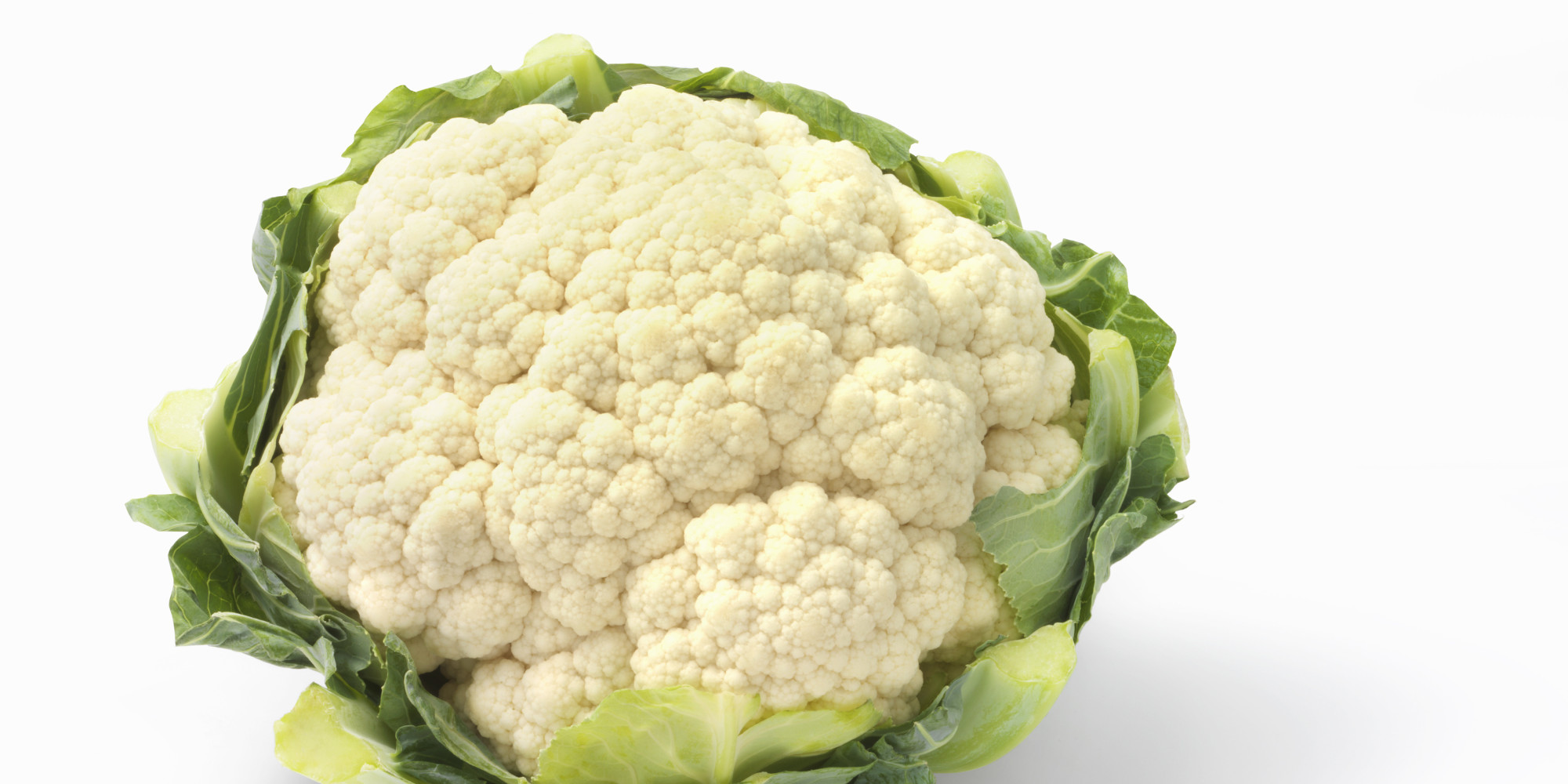
1 large head of cauliflower, cut into florets. Keep the rest for a vegetable or chicken stock later on.
1 – 2 grated cups really good parmigiana-reggiano.
Half stick of unsalted butter
(Optional and my suggestion: A clove or two of garlic, several dashes of red chili flakes and parsley).
Let’s make this puppy:
Preheat an oven to 400 degrees. While that gets nice and toasty, boil a large pot of salted water. Once the H2O it’s roiling and toiling, throw in the cauliflower and cook al dente – about 10 minutes. (It should have a little bit of a bite.) Drain in a colander.
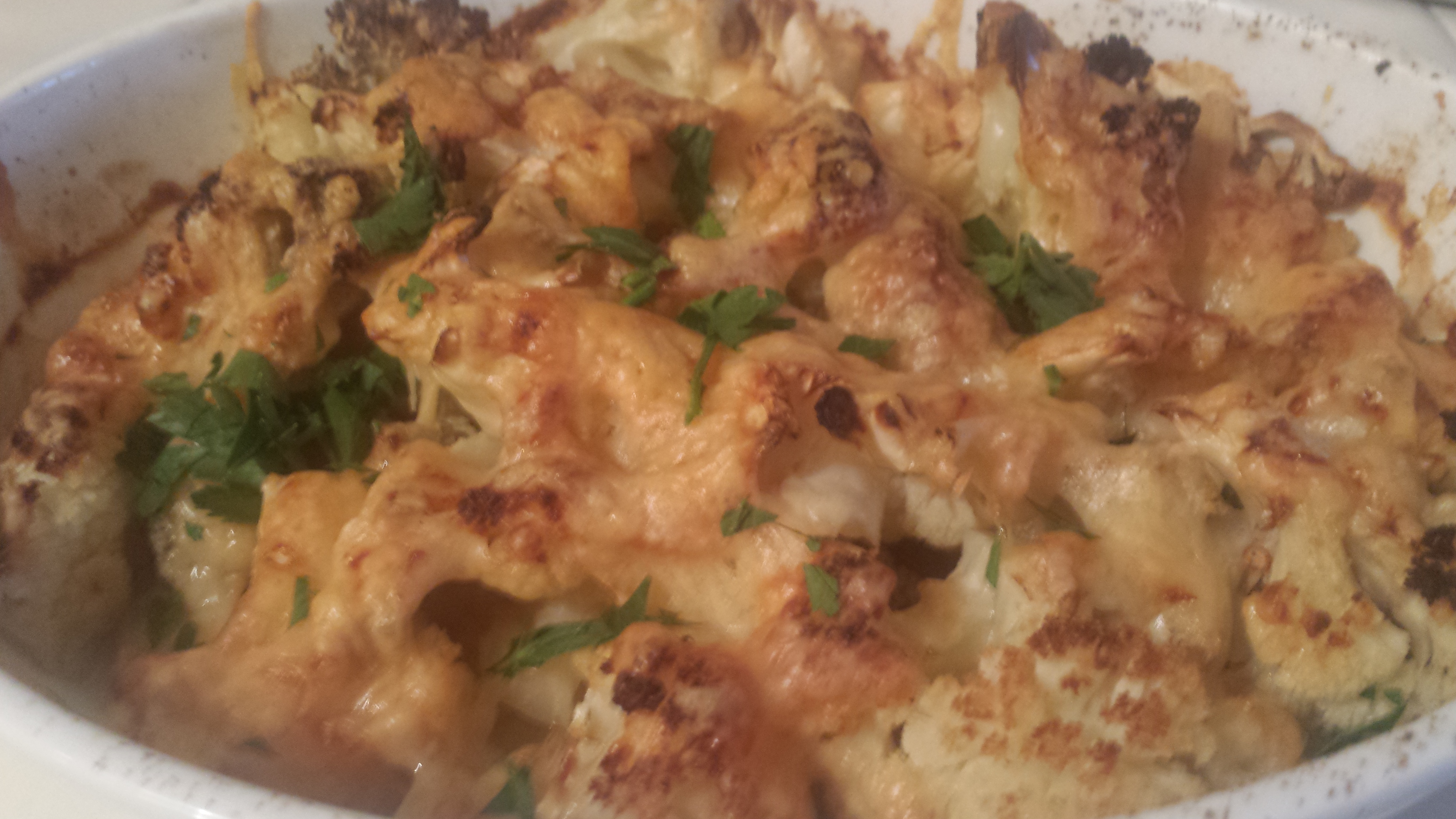
Take a baking dish which will go from oven to table. Using the butter, grease up the dish liberally. Add the florets packing them in tightly. Dot with more butter and cover with the cheese. (This is where I slide in some garlic and sprinkle lightly with the chili flakes. You don’t have to – it just adds a little to the final product.) Place in the oven. Cook for 20 minutes until the cheese is a browned and beautifully crusted.
Chop some fresh parsley, throw on top and serve.
You can also do this with ramekins so you serve individually. That’s up to you….isn’t it amazing what you can do with three ingredients?
The End. Go Eat.
Manage Consent
To provide the best experiences, we use technologies like cookies to store and/or access device information. Consenting to these technologies will allow us to process data such as browsing behavior or unique IDs on this site. Not consenting or withdrawing consent, may adversely affect certain features and functions.
Functional
Always active
The technical storage or access is strictly necessary for the legitimate purpose of enabling the use of a specific service explicitly requested by the subscriber or user, or for the sole purpose of carrying out the transmission of a communication over an electronic communications network.
Preferences
The technical storage or access is necessary for the legitimate purpose of storing preferences that are not requested by the subscriber or user.
Statistics
The technical storage or access that is used exclusively for statistical purposes.The technical storage or access that is used exclusively for anonymous statistical purposes. Without a subpoena, voluntary compliance on the part of your Internet Service Provider, or additional records from a third party, information stored or retrieved for this purpose alone cannot usually be used to identify you.
Marketing
The technical storage or access is required to create user profiles to send advertising, or to track the user on a website or across several websites for similar marketing purposes.






 As Washington, DC food entrepreneurs, Giuseppe and Mario Lanzone are certainly no strangers to hard work. Mario is a full time bartender at Napoleon Bistro & Lounge and spends his summers captaining yachts in the Mediterranean. Giuseppe competed in the 2008 Beijing Olympics and 2012 London Olympics for the United States rowing team and currently coaches rowing at Georgetown University. He applies the same Olympic intensity and drive towards he and his brother’s Washington, DC food truck, Peruvian Brothers. In fact, the duo spent two full months hunting down the perfect bread that most accurately inspired their Peruvian taste buds – now a custom Peruvian Brothers recipe on the menu at The French Bread factory in Sterling, Virginia.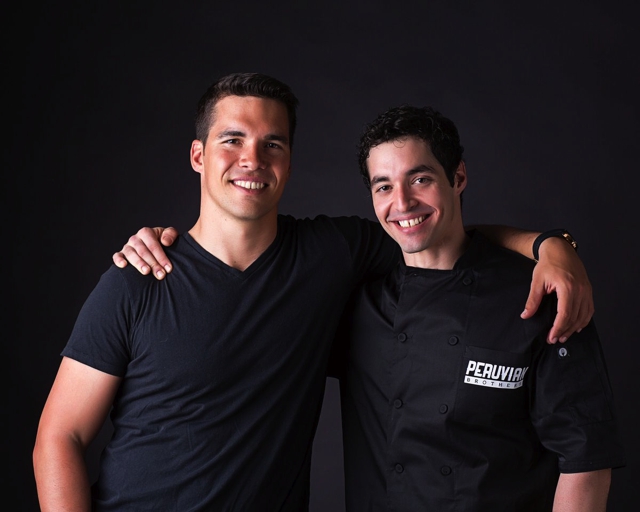




 “Most people who have had a rough background will admit there’s something unsettling about finding happiness after difficulty – that even after we unwrap this gift, we don’t know how to stop searching, rummaging, pilfering for something else. We walk haltingly through life, ready for the other shoe to drop. The question is not if, but when.” – Sasha Martin, “Life from Scratch” (National Geographic Society, March 2015).

 favorite LA eateries. My dining companion, the unnamed couple and I were talking amongst ourselves about how the best food is sometimes the simplest. It doesn’t always need the sauce or maybe a little less of the herb; perhaps the watermelon radish pesto needs to evolve into something less. As we chatted about how disenchanted with the food we were, the phrase “keep it simple” kept popping up. Matter of fact, the female half – she was the pastry chef — of the cooking couple said, “Always take one thing away.” (Famed fashion designer Coco Chanel said that about dressing but it works for food just as well.)