Month: September 2015

  • i8tonite: with Chef Ilson Goncalves of Samba and Acorn Moranga

    i8tonite: with Chef Ilson Goncalves of Samba and Acorn Moranga

    SambaMontclairAcornMorangaOne of the great things about the United States are our individual food stories. It’s inspirational to share epicurean traditions from one’s native country showcasing edible discoveries. Like many chefs, Ilson Gonçalves of Samba Montclair, was inspired by his Brazilian mother and her restaurant. Gonçalves makes annual pilgrimages to his birthplace, Blumenau, a small city located in Southern Brazil, to discover and re-imagine traditional and non-traditional recipes alike for his guests.

    Samba, the bring-your-own-bottle, 32-seat venue has been reviewed by many regional dining critics as well as the venerable The New York Times. The latter citing in an enthusiastic review, “The kitchen is small and the food that comes out of it is guileless: straightforward, hearty, built for comfort”. The dining writer ended his eating observations stating, “Diners…may be pleasantly surprised by Samba’s homey pleasures and mellow atmosphere. This Brazilian place proudly bops to a different beat.”

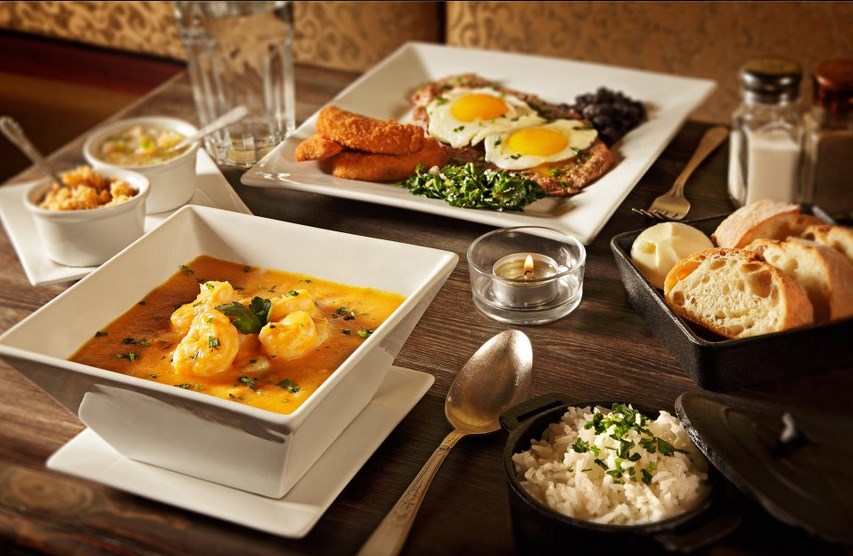
    All year round Samba offers stellar dining, but fall is really special when guests can avail themselves of Chef SambaMontclairOwnerIlsonGoncalvesGonçalves childhood Brazilian memories with signature dishes such as Mandioca frita com linguica calabresa e cebola (fried yucca with Brazilian pork sausage and caramelized onions), Bobó de camarão (yucca purée with coconut milk, tomatoes and onion served with whole shrimp and white rice) or Bifo a cavalo (thin pan fried steak topped with two fried eggs served with sautéed collard greens, white rice and breaded fried banana). New Jersey Monthly notes that Gonçalves “serves up an excellent version” of the traditional feijoada, Brazil’s national dish, a gently braised stew of black-bean, pork, dried beef, and linguiça.
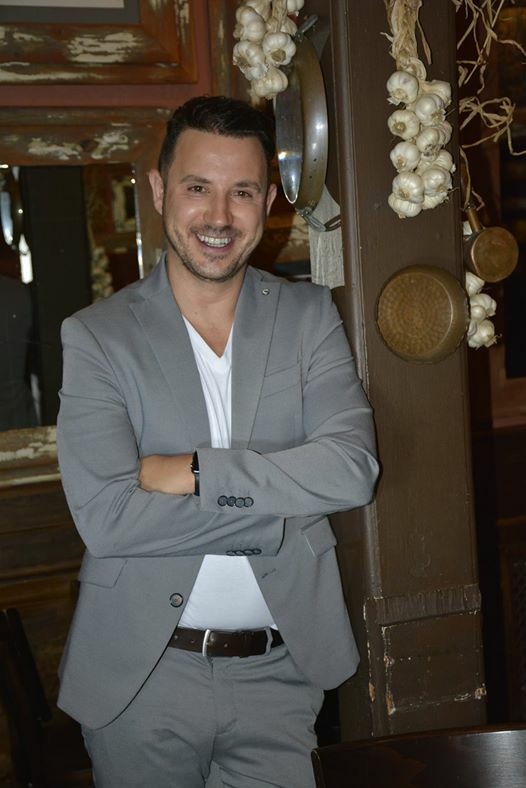
    Samba’s success clearly lies with Gonçalves culinary skills, affection for his mother and Brazilian cooking techniques. It is a delicious and loving homage to Brazilian home-cooking and mothers who cook, inspiring generations to do the same.
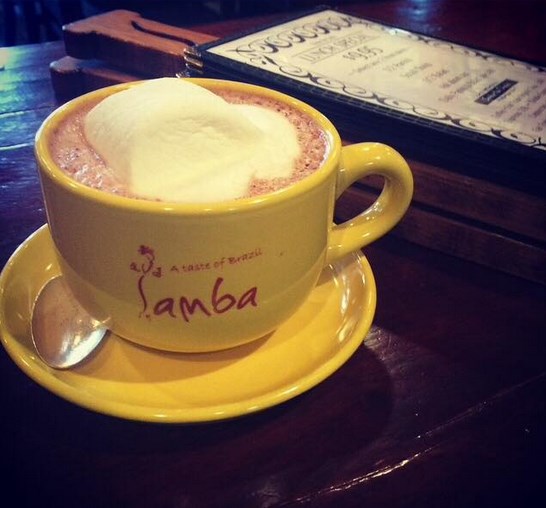
    SambaMug

    Chef Questionnaire from Chef Ilson Gonçalves:

    How long have you been cooking? I learned to cook when I was 11 years old in my mom’s restaurant in Brazil.

    What is your favorite food to cook? Chicken soup.

    What do you always have in your fridge at home? Pomegranates. When I watch a movie, pomegranate for me is like popcorn.
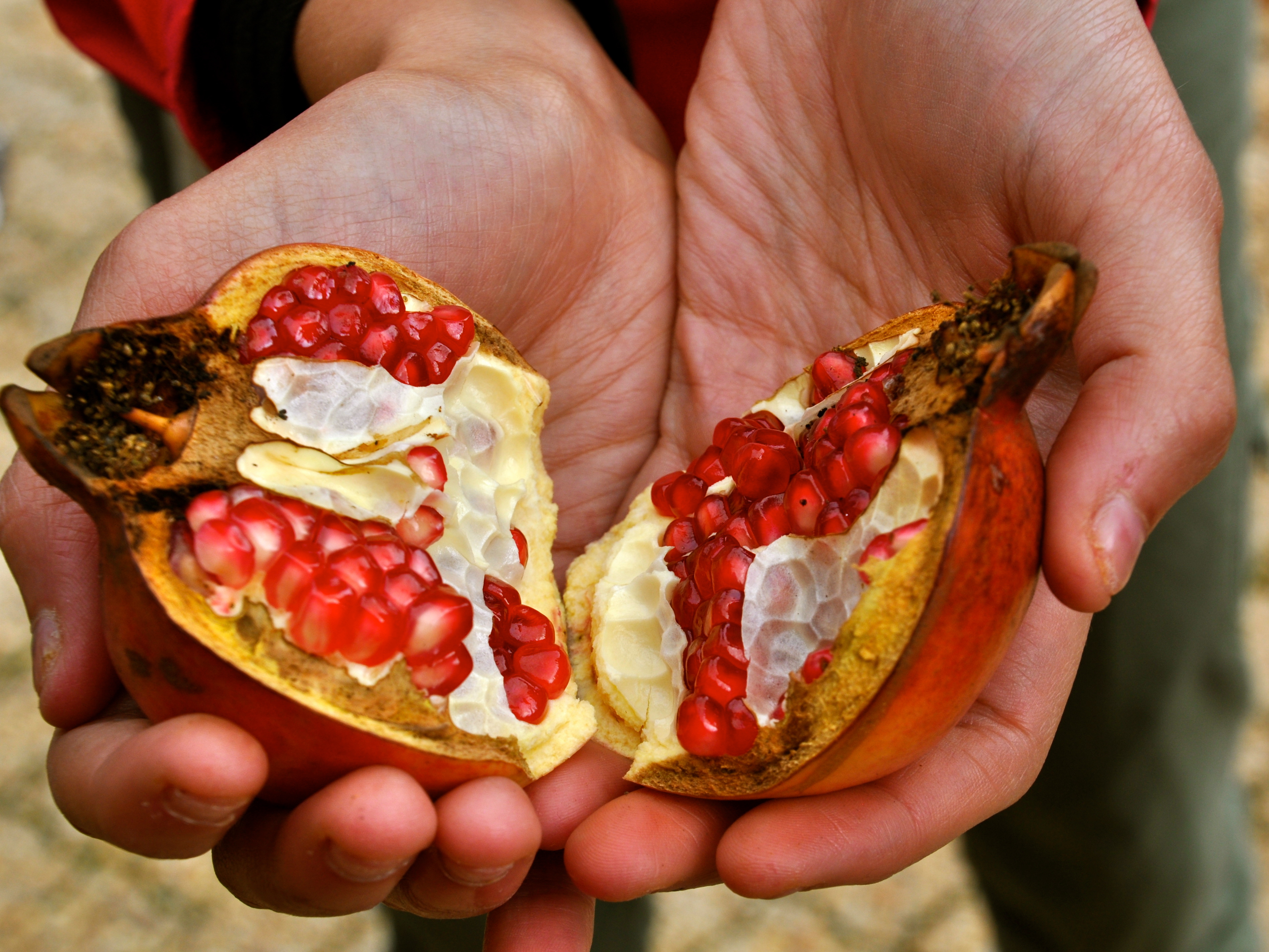
    Photo by Shelby Stewart
    Photo by Shelby Stewart

    What do you cook at home? I don’t really cook much at home because I live by myself.

    What marked characteristic do you love in a customer? People who are open-minded about trying different foods.

    What marked characteristic do you find unappealing in a customer? The (individuals) who eat the whole plate then complain about the food.

    Tupperware, Rubbermaid, or Pyrex? Pyrex. I hate Tupperware. My mother used to have so much Tupperware that when I opened her cabinet it would fall on my head.

    Beer, wine or cocktail? Wine. But it depends, if I go to a bar with friends, I
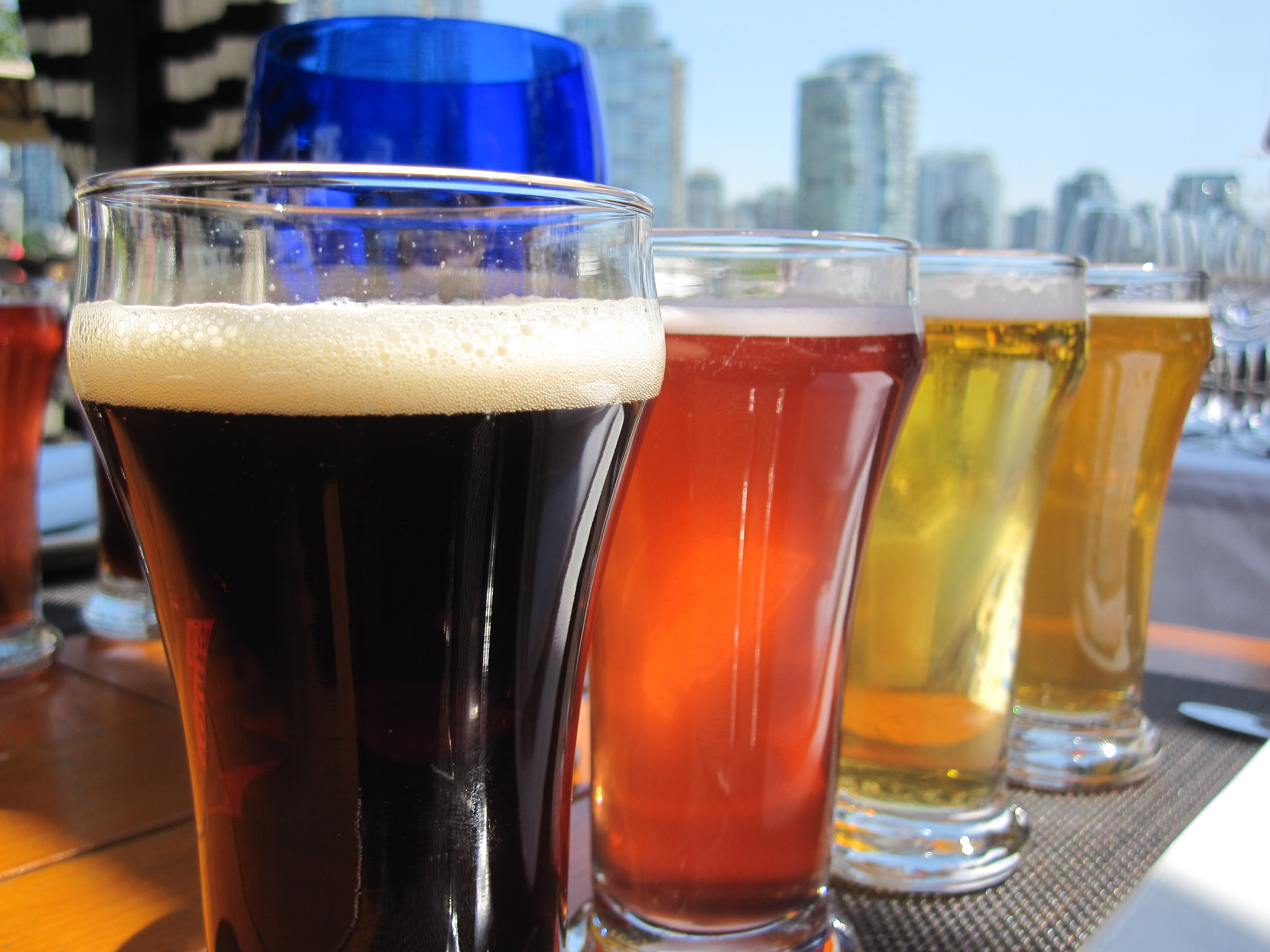
    Photo by TravelJunction
    Photo by TravelJunction

    like beer.

    Your favorite cookbook author? I don’t follow cookbooks.

    Your favorite kitchen tool? You can do anything with a knife.

    Your favorite ingredient? Yucca. I think it’s very universal, like flour.

    Your least favorite ingredient? Cucumber. It makes me nauseous just to think about it.

    Least favorite thing to do in a kitchen? Wash burnt pans.

    Favorite types of cuisine to cook? Brazilian, but I’m biased.

    Beef, chicken, pork or tofu? Everything depends on what I’m in the mood for. I can’t eat tofu, though, because I’m allergic.

    Cassava
    Yucca/ Cassava: Photo by Tom Rulkens

    Favorite vegetable? Yucca.

    Chef you most admire? Alex Atala of D.O.M. in Sao Paulo, Brazil

    Food you like the most to eat? Rice and fried eggs.

    Food you dislike the most? Anything that has cucumber.

    How many tattoos? And if so, how many are of food? None. I think they look good on others, but I can’t see myself with tattoos.
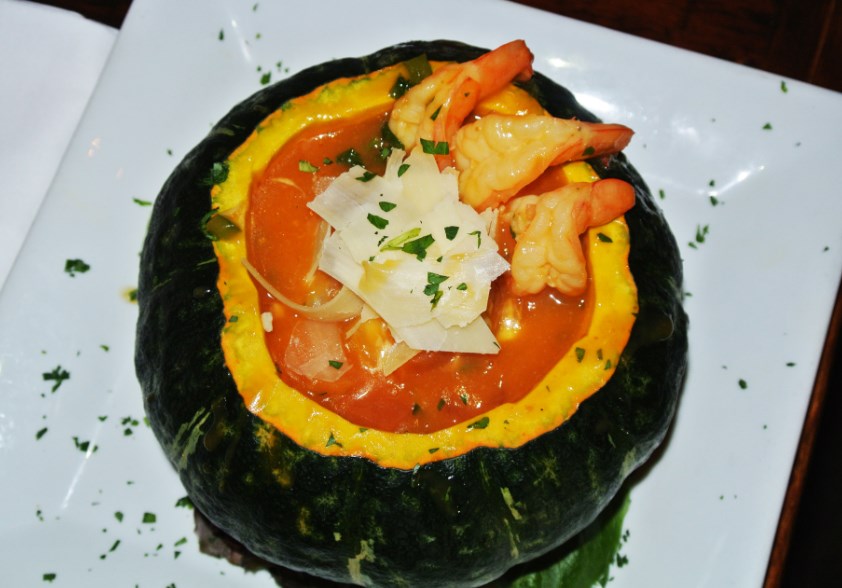
    SambaAcornMoranga
    Acorn Moranga: Photo by Samba Montclair

    Recipe: Acorn Moranga

    • 2 medium acorn squash
    • 1 medium butternut squash, diced
    • 1/4 cup extra virgin olive oil
    • 2 medium white onions, diced
    • 4 gloves of garlic, minced
    • 1 pint heavy cream
    • 1 13.5 oz. can coconut milk
    • 1 lb. u12 shrimp
    • Parsley and cilantro for garnish
    • 1/4 cup shaved Parmesan cheese

    Cut acorn squash in half and remove seeds, creating a bowl. Cover squash with aluminum foil and cook in a 350 degree oven until tender,  60-75 minutes.

    Heat extra virgin olive oil in a large skillet. Over medium heat, cook the onion with garlic and caramelize the butternut squash.  When squash is tender, add the heavy cream and coconut milk and simmer. Add the shrimp and cook another 4 minutes.

    Pour the cooked butternut squash and shrimp mixture into the acorn squash. Garnish with parsley and cilantro and top with shaved Parmesan. Makes 4 servings.
    SambaFood

     The End. Go Eat.


  • Meatless Monday: NYC Style Tofu and Vegetable Tempura

    Meatless Monday: NYC Style Tofu and Vegetable Tempura

    (Note: This is re-run — currently traveling in Denver.  We will be back to our regularly scheduled program on Wednesday.)

    Way back….way back…in the old days, the 80s, I was a vegan. Yup. Yup. I know it’s hard to believe but I was and living the romantic (not!) bohemian (not!) life in New York’s Tribeca. Times were tough. Money was not plentiful (It’s not now either). I was young, idealistic, hungry having just graduated school, working in an art gallery doing marketing plus waiting tables to make ends meet.

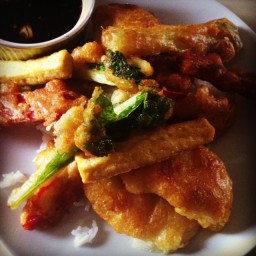
    Vegetables and Tofu for Tempura

    It was the late 80s, early 90s. The Tunnel was the place to go. Tama Janowitz was big in the literary circles. Madonna was doing “voguing”. Ross Bleckner was the artist everyone was buying and I got involved in my first relationship and started to cook vegan. We decided to stop eating dairy products since he was lactose intolerant. His parents never removed his tonsils as a child, he was now subjected to severe bouts of strep throat for weeks at a time, especially after he drank milk or ate cheese. Bacteria clung to his tonsils and had a party.

    We lived in a converted loft in Tribeca on Franklin Street, between West Broadway and Broadway, three blocks south of Canal Street. At the time, there was a store about three blocks to the West, called Commodities just up from the glorious restaurant Chanterelle. It was a huge massive store. One of the few groceries stores in the area (down a little further there was a Gristedes or some chain supermarket) and it featured a lot of soy products, tempeh, meatless burgers, seitan. This was long before Whole Foods or Erewhon. This may have been the first store of its kind in Manhattan but I don’t remember. I do remember it wasn’t cheap. But it was their produce section and soy area that I started to make tempura without egg. It’s a simple process of a cup of flour (any flour), a teaspoon of baking soda and powder and club soda, maybe 1/2cup. (I eyeball it.) Stir until you get a thick paste with lumps. Throw in your veggies: onions, carrots, broccoli, whatever you have. (In tonight’s Meatless Monday, I used Swiss Chard stems. Yum!) Fry up in a wok or sautee pan and dip. Salt while still hot. And since, it was a rainy LA Monday, it was perfect comfort food.

    Tofu, Zucchini, Swiss Chard Stems, Red Bell Pepper, Carrots
    Tofu, Zucchini, Swiss Chard Stems, Red Bell Pepper, Carrots
  • i8tonite: A Cheat Sheet for Eating in South Beach, Miami

    i8tonite: A Cheat Sheet for Eating in South Beach, Miami

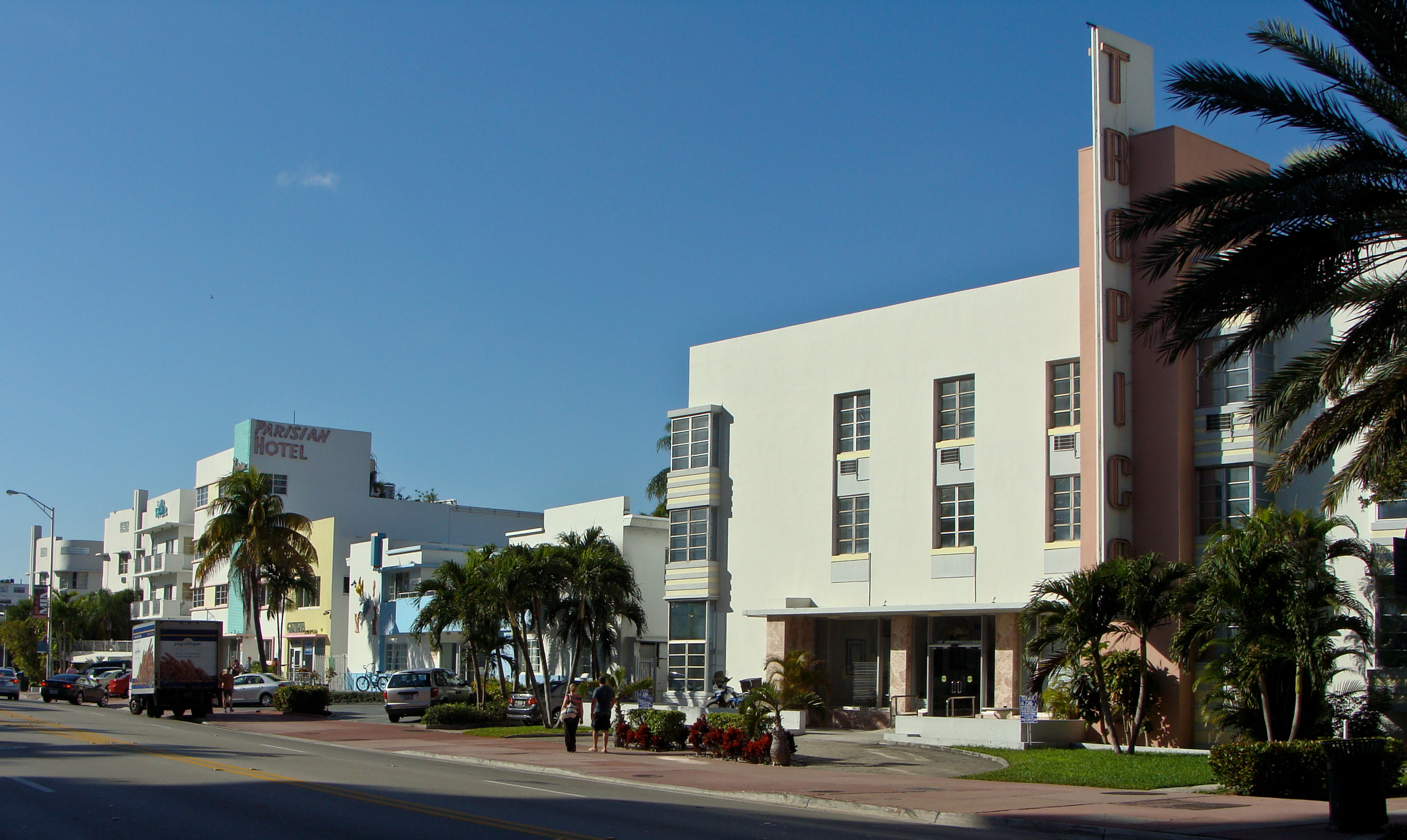
    When i8tonite came up with the idea of a dining out series highlighting neighborhood eateries, we South Beachwere a little surprised by some of the suggestions which included South Beach.  My partner, Nick, lived there for 20 years and the perception of South Beach – at least mine – is through a Hollywood camera. Beautiful but violent, with really pretty people in muted pinks and blues (“Miami Vice”) or hot crimson, emerald greens and bright yellows (“CSA: Miami”). It’s colorful, lively and murderous. (Let’s not forget “Scarface”).

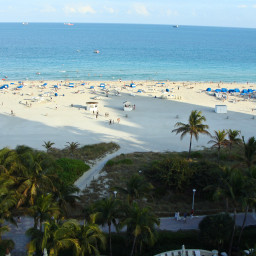
    Our cultural viewing of these shows cloud the real goodness of South Beach which is its Star islandvery much an American city, a melting pot of cultures and cuisines.  Smack dab in the South Beach’s presumed debauchery is a charming enclave of young families, vintage buildings and elementary schools. This is the area of South Beach that Nick hearts and that I know. Truth be told, South Beach is a neighborhood with superb, laid-back eating where the old and the young sit languishing with Cuban coffee in the tropical heat.

    Photo by Taki Lau.
    Photo by Taki Lau.

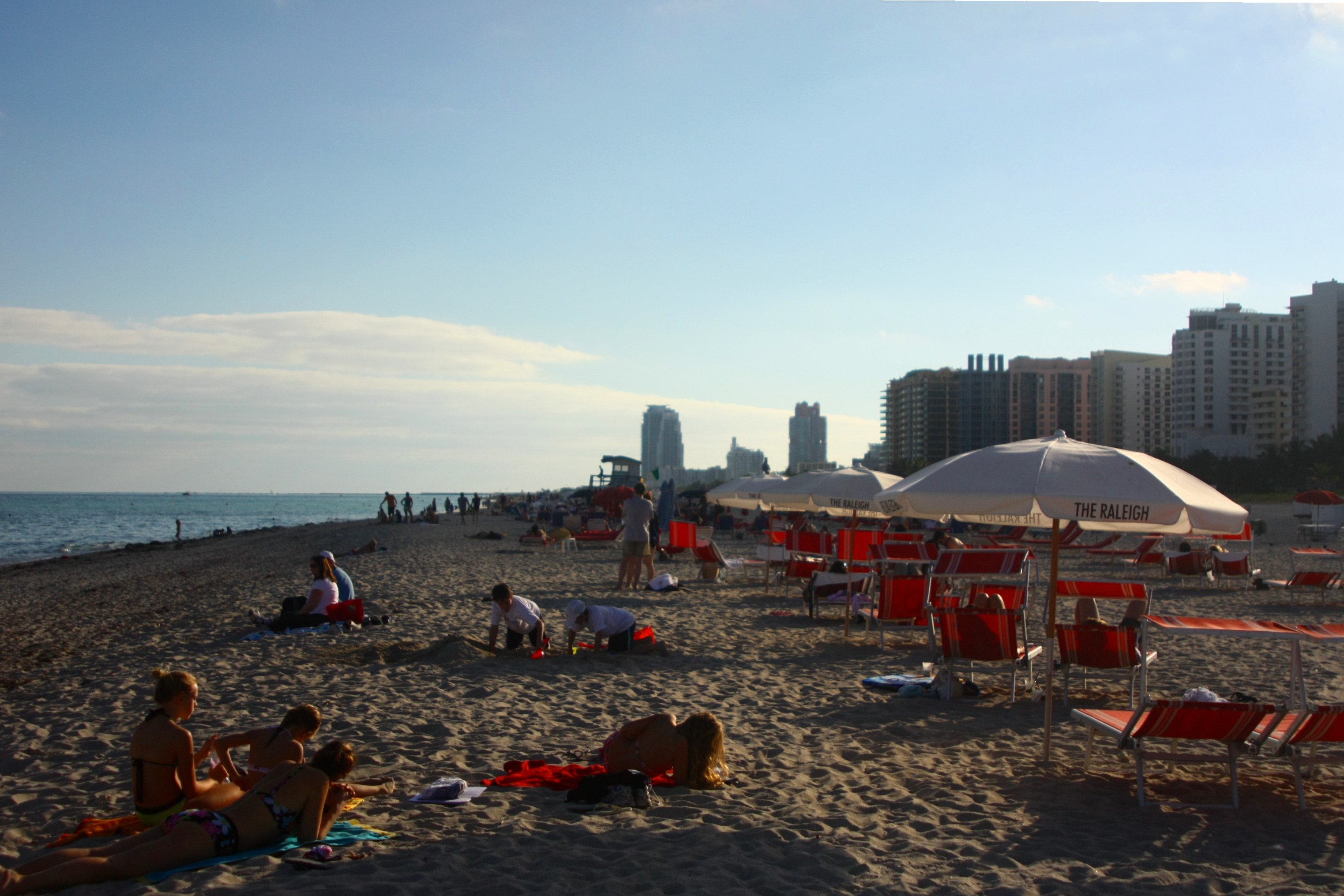
    Animated with Cuban, Puerto Rican and Haitian music throughout the day, provided by street performers, the sun-drenched neighborhood is a showcase for the Caribbean culture, with a smattering of New York City’s Jewish retirees who defected from the harsh winters. Once visitors push past the paparazzi, the Latin and Hollywood stars and the world-weariness of the second-home owning Europeans, South Beach is a charming mix of American values and delicious foods which is really what gives it bragging rights — finding a new and exciting culture without having to drag out your passport or get on that plane – which is just a big expensive bus with wings.

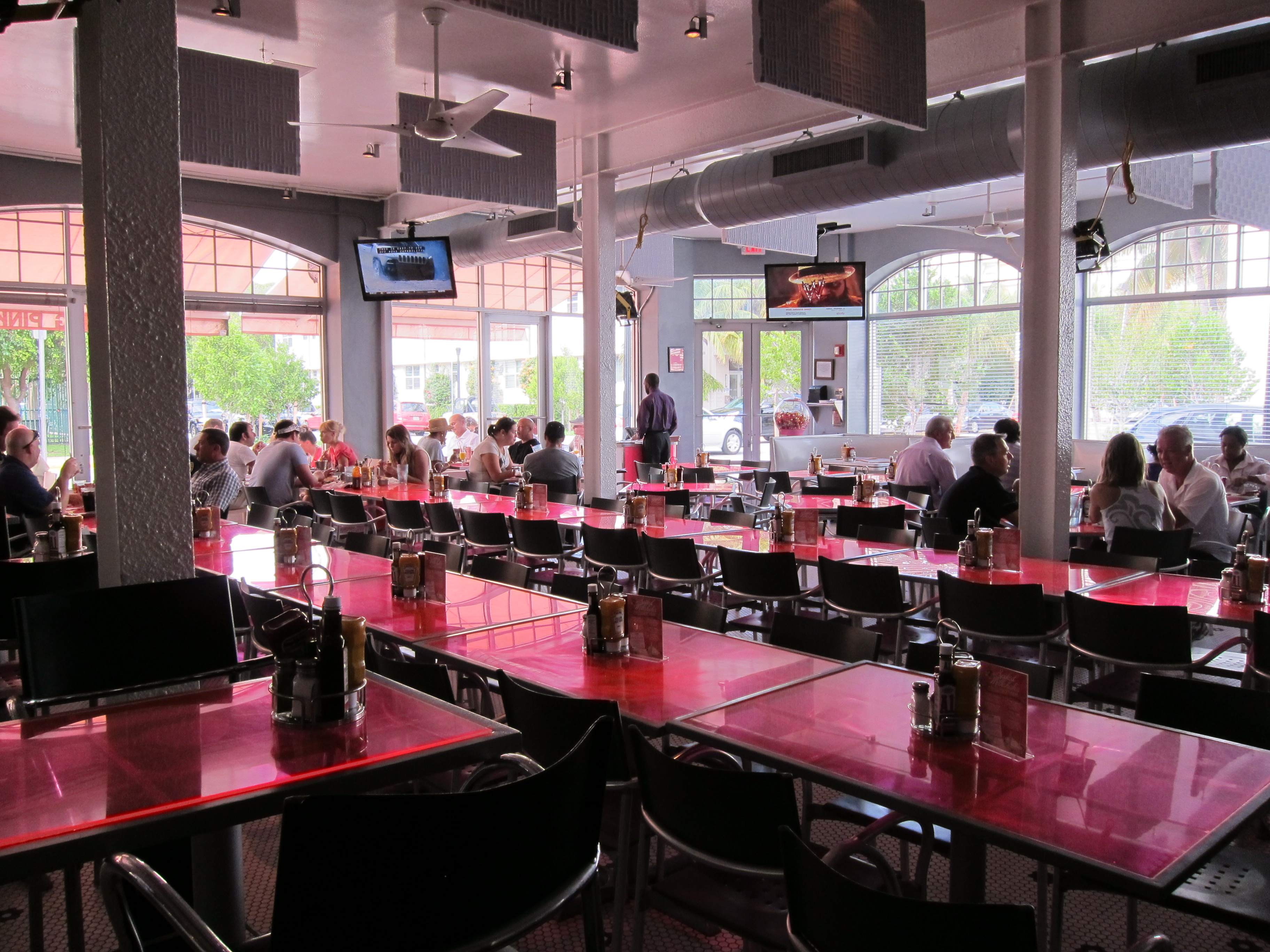
    Big PinkBreakfast: Big Pink which was been opened for almost 20 years is a mainstay in the South Beach neighborhood. Serving breakfast to late night dinner – soaking up the alcohol, this diner is the place where people stroll or roll in (on skates). Big Pink is spotted by the pink VW “bugs” parked outside. Delivery is a popular way for tourists to order late night snacks if wobbling out your hotel is out of the question. The restaurant menu is not inventive as much as comforting and tasty. That’s okay because it’s guaranteed that serving up big burgers, hand-cut fries, waffles, breakfast burritos and of course, matzo brei, will satiate that American appetite. Swimming in the clear waters of South Beach will help burn those excess calories.

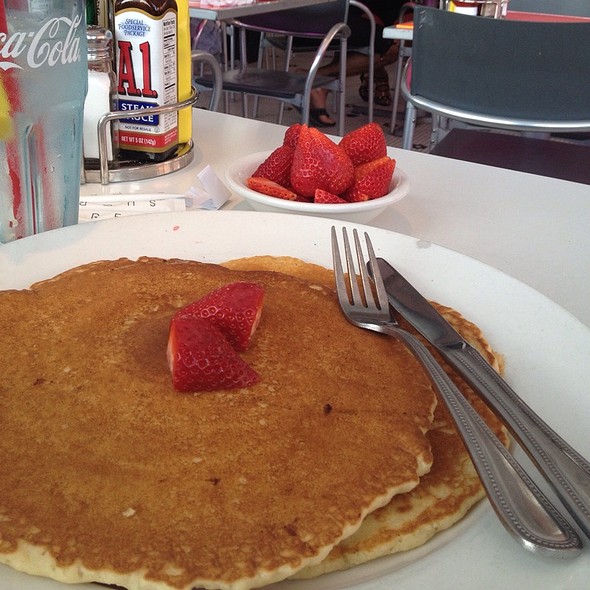
    • Big Pink PancakesMy suggestion: Big Pink’s Pancakes served with fresh strawberries.
    • Price: $12.50
    • Hours: Monday – Wednesday, 8am – 12am. Thursday – Saturday, 8am – 5:30am (Why even bother closing?). Sunday 8am – 2am.
    • Address: 157 Collins, Miami Beach, FLA. 33139
    • Phone Number: (305) 531 -0888
    • Website: www.bigpinkstakeout.com

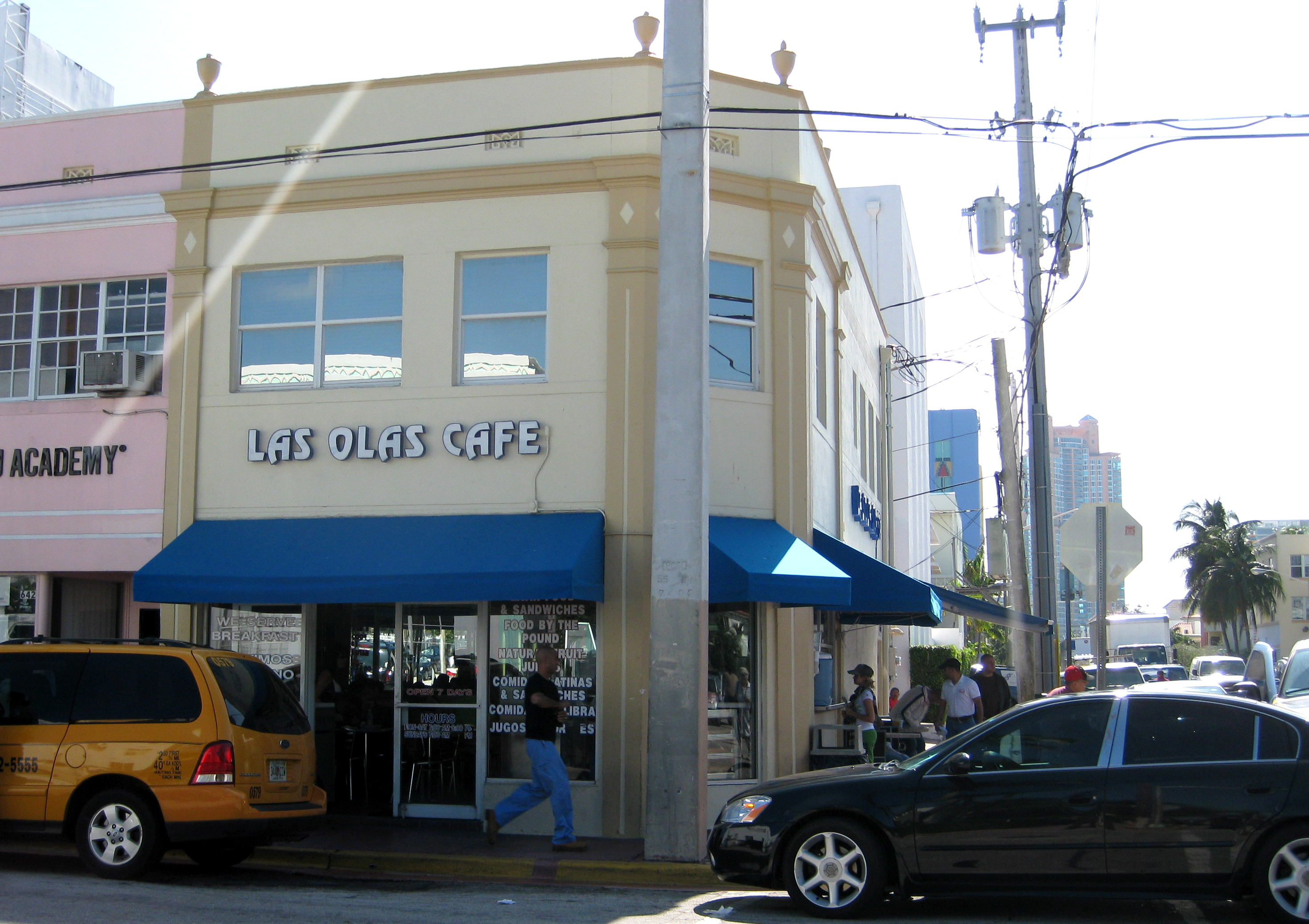
    Las OlasLunch:  Las Olas Café has been featured in “Travel + Leisure”, Miami “New Times” and by Anthony Bourdain, who seems to have become a barometer for all things culinary. Take away all the fluffiness, and what you have is a Cuban-American family owned and operated neighborhood loncheria (luncheonette) serving up the best of Cuba. The best part about it, it’s good. Sometimes, the hype strips a business of its authenticity but that’s not the case for Las Olas.  Nothing is over $10 and it’s a cash only affair which makes me feel I’m getting old world treatment and not something that’s been branded waiting for an IPO.

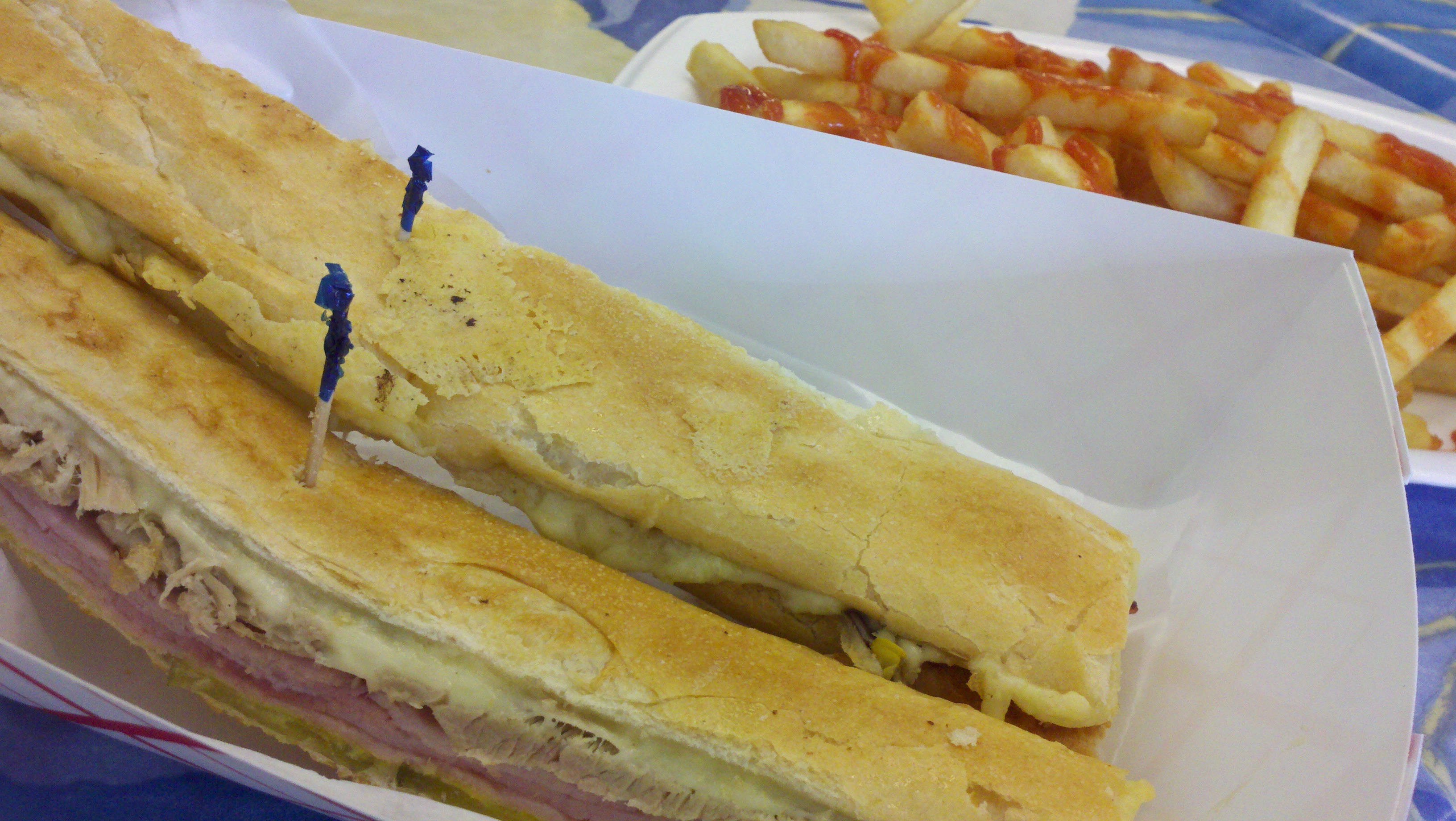
    My suggestion: The Cuban. The bread, the roasted pork-loin, the ham, the cheese, the Cuban Presspickle and the pressing make mighty fine eating. Supposedly, the real test of a great Cubano is the bread which is made with lard – making it richer – and the “la Plancha”, the grill or the sandwich press. The combination essentially steams the inside without the use of extra moisture such as mustard or mayonnaise. One of the top ten dishes in the world…right up there with cassoulet and Filipino adobe. Only in Miami or Cuba. Luckily the borders are opening.

    • Price: $8. You will come back the next day.
    • Hours: Open seven day a week, 6am – 8pm.
    • Address: 644 6th Street, Miami Beach, Fla., 33139.
    • Phone Number: (305) 534 – 9333
    • Website: None. Refreshing, huh?

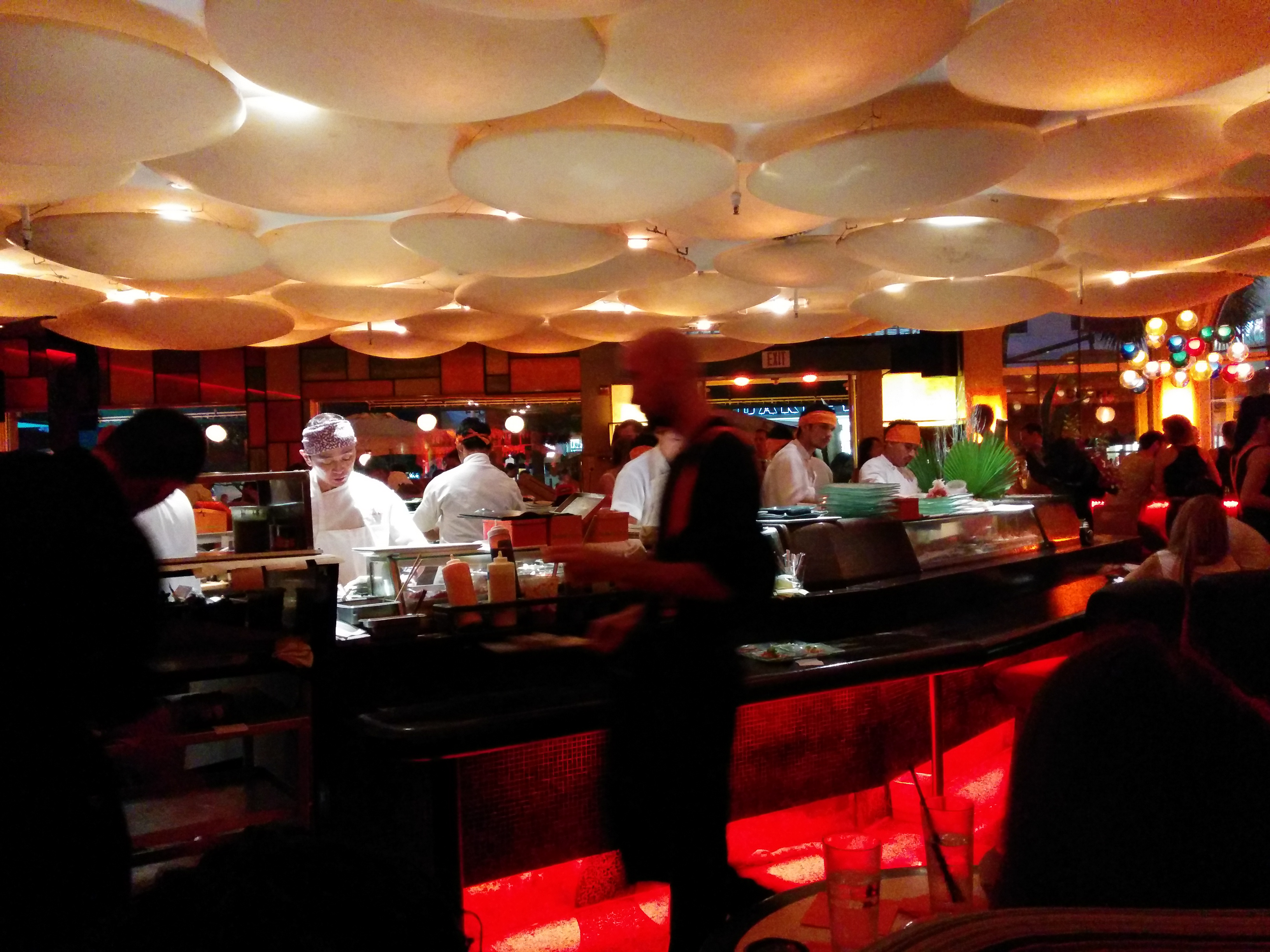
    Snack Time: Okay, I know – Sushi Samba is a chain. Albeit, an interesting chain that started in New York City and now has five outposts including 011 - Sushi SambaLondon. Sushi Samba celebrates South American culture that we don’t see very often, which is a triumvirate of Japanese, Peruvian and Brazilian cuisine. The United States doesn’t have a hold on the patent of melting pots. At one time, I was in Seattle on a food-related marketing event and my colleague from Miami kept talking about Sushi Samba and their happy hour. Nick does the same. It sort of cements it in this South Beach listing.

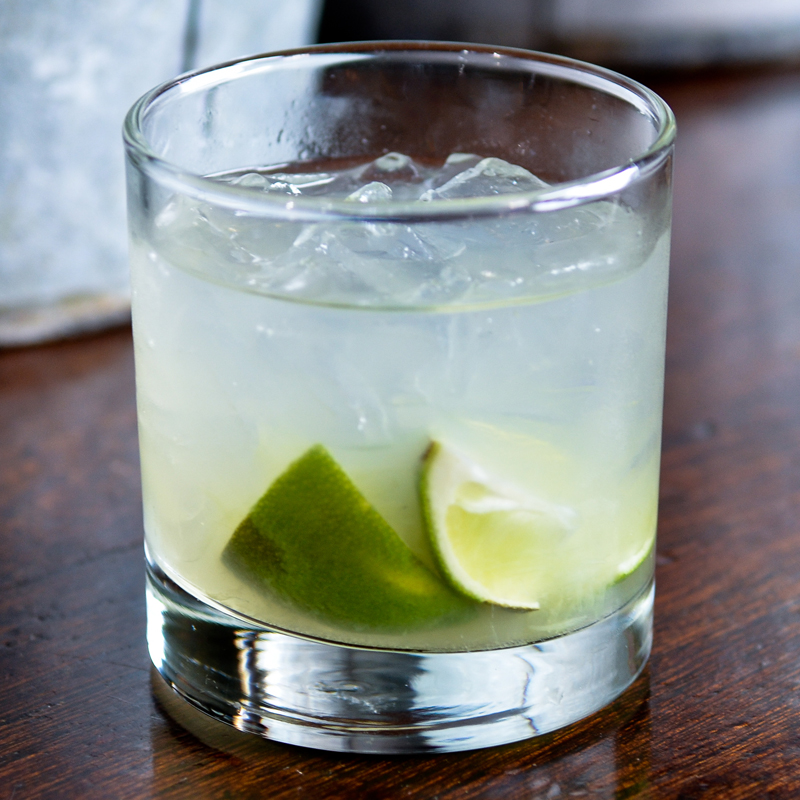
    Caipirinha-1My suggestion: Caipirinha. Sushi Samba has a happy called “Samba Hour”. Cute. It offers up some excellent sushi and food along with Brazil’s greatest export besides Gisele.

    • Price: $5.00 for the Caipirinha. Everything else is extra.
    • Hours: Monday, Noon – Midnight; Tuesday – Thursday, Noon – 1am; Saturday, 11:30am – 2:00pm and Sunday 11:30 am – Midnight.
    • Address: 600 Lincoln Road, Miami Beach, Fla, 33139
    • Phone Number: (305) 673 – 5337
    • Website: www.sushisamba.com

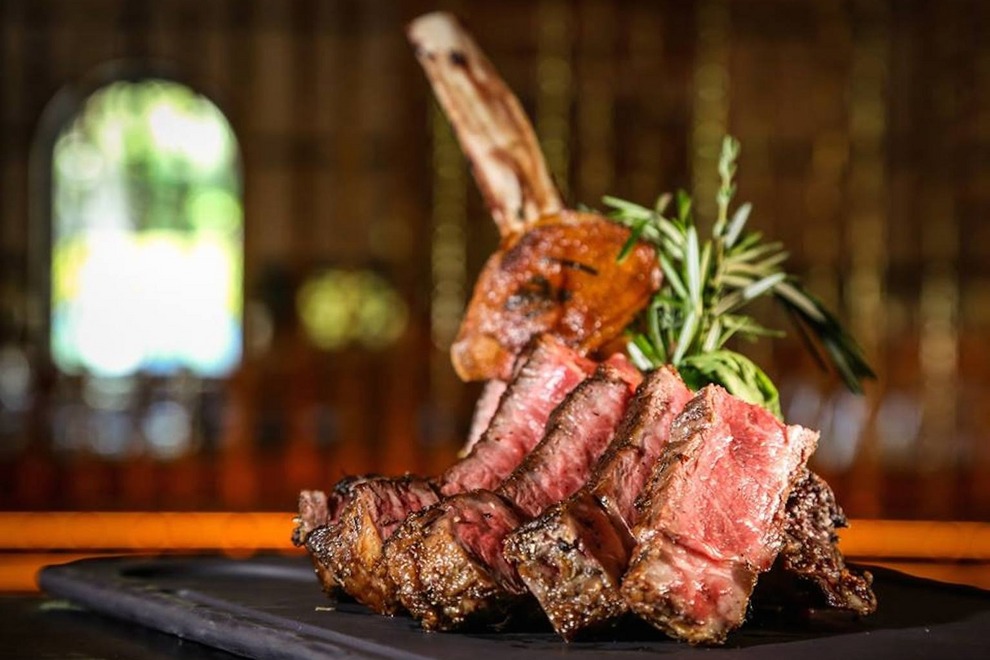
    Dinner: You would think a steakhouse is a just a steakhouse but it really doesn’t work that way. Steakhouses are a reflection of the city where they were created such as Brooklyn’s Peter Luger’s (working man’s dinner with big cuts of beef), Wolfgang Puck’s Cut in Beverly Hills (star sighting and pristine, untouchable vibe) and George & Georgetti in Chicago with big, oversized martinis. In South Beach, it’s Meat Market, a sexy, sleek eatery with a blush-centric atmosphere. Most diners are dressed like its a fashion runway strutting between tables in Hérve Leger and Tom Ford. (I’m not really sure where that rich food is going.) An excursion to Meat Market – which sounds like retro gay men’s leather bar in Manhattan – will set someone back easily $150 to $200 per person but it’s excellent and you won’t find this everywhere – only in Miami. (They are also in San Juan and Coral Cables — so it doesn’t count.)

    Meat-Market_54_990x660My suggestion: Mixed Grill. This is a trio of two cuts of meat and seafood. It rotates daily and is never the same each day. It’s a good way to try different items. Call ahead.

    • Price: $55 – $65, depending upon the chef selections.
    • Hours: Sunday – Thursday, Noon to Midnight; Friday – Saturday, Noon to 1:00am. Kitchen is closed 4pm – 6pm daily. (That’s okay. You’re at Sushi Samba. See above.)
    • Address:  915 Lincoln Road, Miami, FLA 33139
    • Phone: (305) 532 -0088
    • Website: www.meatmarket.net


    Pin for later:

    i8tonite: A Cheat Sheet for Eating in South Beach, Miami

    The End. Go Eat. 

  • i8tonite: Chef Questionnaire with Brian Konefal, Flagstaff’s Coppa Cafe, and Lemon Tarragon Vinaigrette

    i8tonite: Chef Questionnaire with Brian Konefal, Flagstaff’s Coppa Cafe, and Lemon Tarragon Vinaigrette

    Dining Room at Coppa Cafe. Photo by Awe Collective.
    Dining Room at Coppa Cafe. Photo by Awe Collective.

    Roses, Spain. Yountville, California. Terni, Italy. Corenc, France. Flagstaff, Arizona. These small, unique picturesque towns share a very special attribute. Each offers a gastronomic dining experience in their respective locations created by master chefs. Roses was home to El Bulli with Ferran Adrià. Thomas Keller’s The French Laundry located in Yountville. Terni, a small town of less than three thousand houses the two-Michelin starred Casa Vissani, home to celebrated Italian chef, Gianfranco Vissani. The Golden Horn (Le Corn d’Or) in Corenc, France is populated by a little less than four thousand and Flagstaff, Arizona (population: 68,784) is becoming notable for Coppa Café.

    Since opening four years ago, Coppa Café, helmed by husband and wife cooking team, Brian Konefal and Paola Fiorvanti, has become a noteworthy restaurant in Arizona’s growing epicurean scene. Konefal was born in Flagstaff and trained to be a chef in Italy. While in culinary school, he met the lovely Fiorvanti, Brazilian by birth, she was learning the dessert trade – spinning sugar and learning the nuances of buttercream.

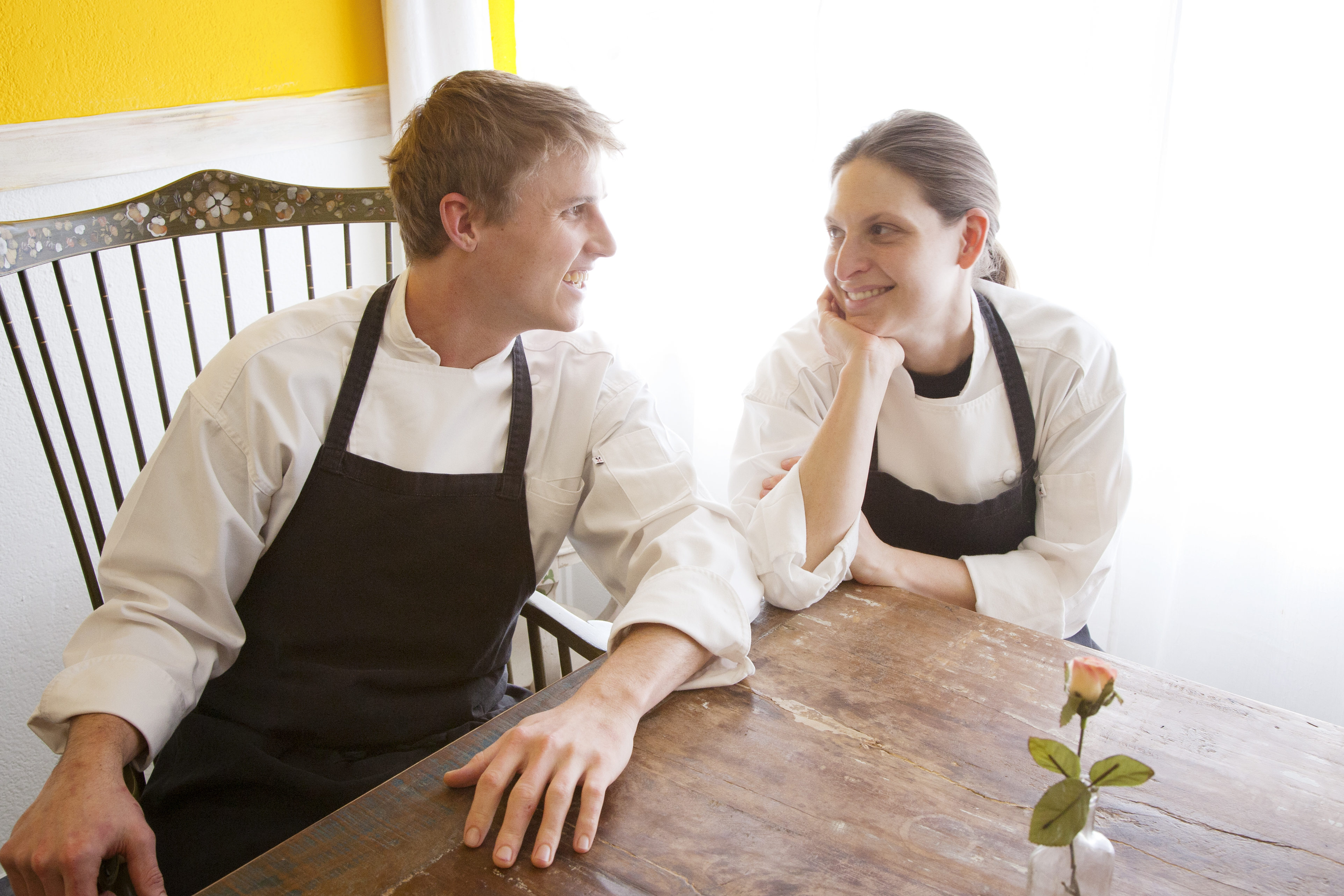
    Chefs/ Co-Owners, Brian Konefal and Paola Fiovanit. Photo by Awe Collective.
    Chefs/ Co-Owners, Brian Konefal and Paola Fiovanit. Photo by Awe Collective.

    Once married, they traveled throughout Europe and the gastronomic countryside, learning the hallmarks of great European cooks. Eventually, Konefal landed a position at San Francisco’s famed Campton Place working under Chef Daniel Humm. At this petite and elegant hotel, a block from the celebrated Union Square and just feet from Michael Mina and Hubert Keller  establishments — Humm and Konefal, became an award-winning culinary team gaining praise from the finicky City by the Bay’s food world; ultimately receiving four stars from Michael Bauer, San Francisco Chronicle’s noted restaurant critic.

    IMG_6276The restaurant world took notice and Konefal moved with Humm to New York City’s Eleven Madison Park, then just another elegant eatery. Humm, Konefal and the Eleven Madison Park team established the restaurant as a destination inside the Big Apple – already one of the world’s great culinary stops. During their tenure as a team, the restaurant received multiple New York Times stars, accolades from the James Beard Foundation and eventually received three coveted Michelin stars making it only one of nine establishments in the United States to do so.

    All  things come to an end and Konefal and Paola, ambitious in their cooking wanted to open their own establishment. They looked no further than Konefal’s hometown of Flagstaff. Hence, the couple opened, Coppa Cafe, a delicate and nuanced European eatery.

    With its global sensibilities, small town location and it’s attentiveness to flavorful French techniques, Coppa Café is a restaurant to be reckoned; indeed, some of the interesting menu aspects include locally foraged edibles such as herbs and mushrooms,

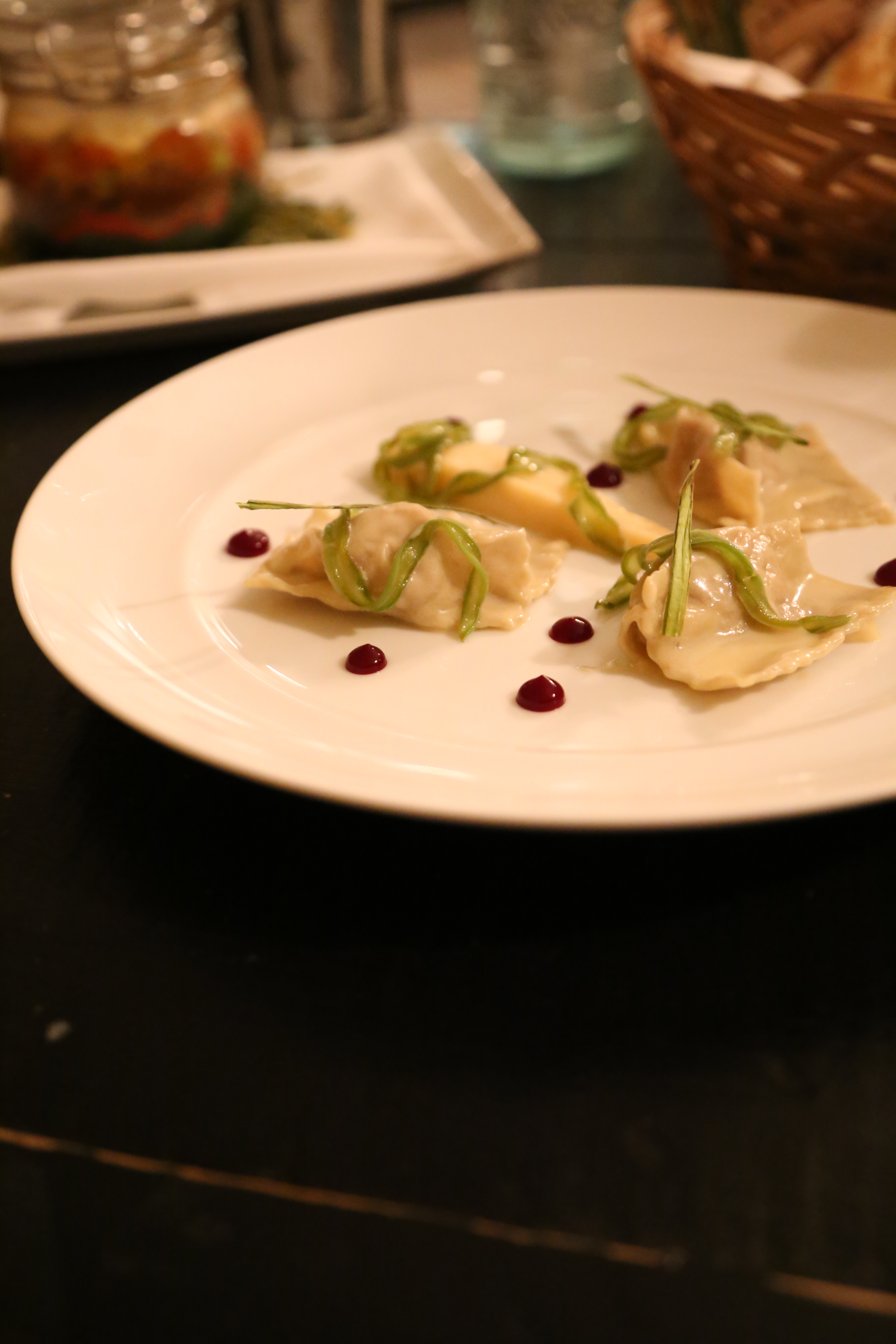
    Veal Agnolotti. Photo by Awe Collective.
    Veal Agnolotti. Photo by Awe Collective.

    a growing trend in France, Umbria and the burgeoning Arizona restaurant industry. The café atmosphere is homespun filled with thrift-store finds, not the fussiness one associates to an accomplished chef who once dwelled in a Michelin-starred room. All the charcuterie is house-cured. The pastries and breads are made in-house and I don’t believe you will find too many Flagstaff restaurants serving Seared Foie Gras, Roasted Braised Wild Boar with Juniper Berries, RidgeView Farm Quail or “Kelly Farm” Veal Agnolotti raised humanely from a local Arizona producer.

    So, if you are traveling Route 66 or headed up to the Grand Canyon, you might want to stop for the night and eat a little bit of sophistication. Good food exists all around us, sometimes you just have to travel outside your comfort zone.

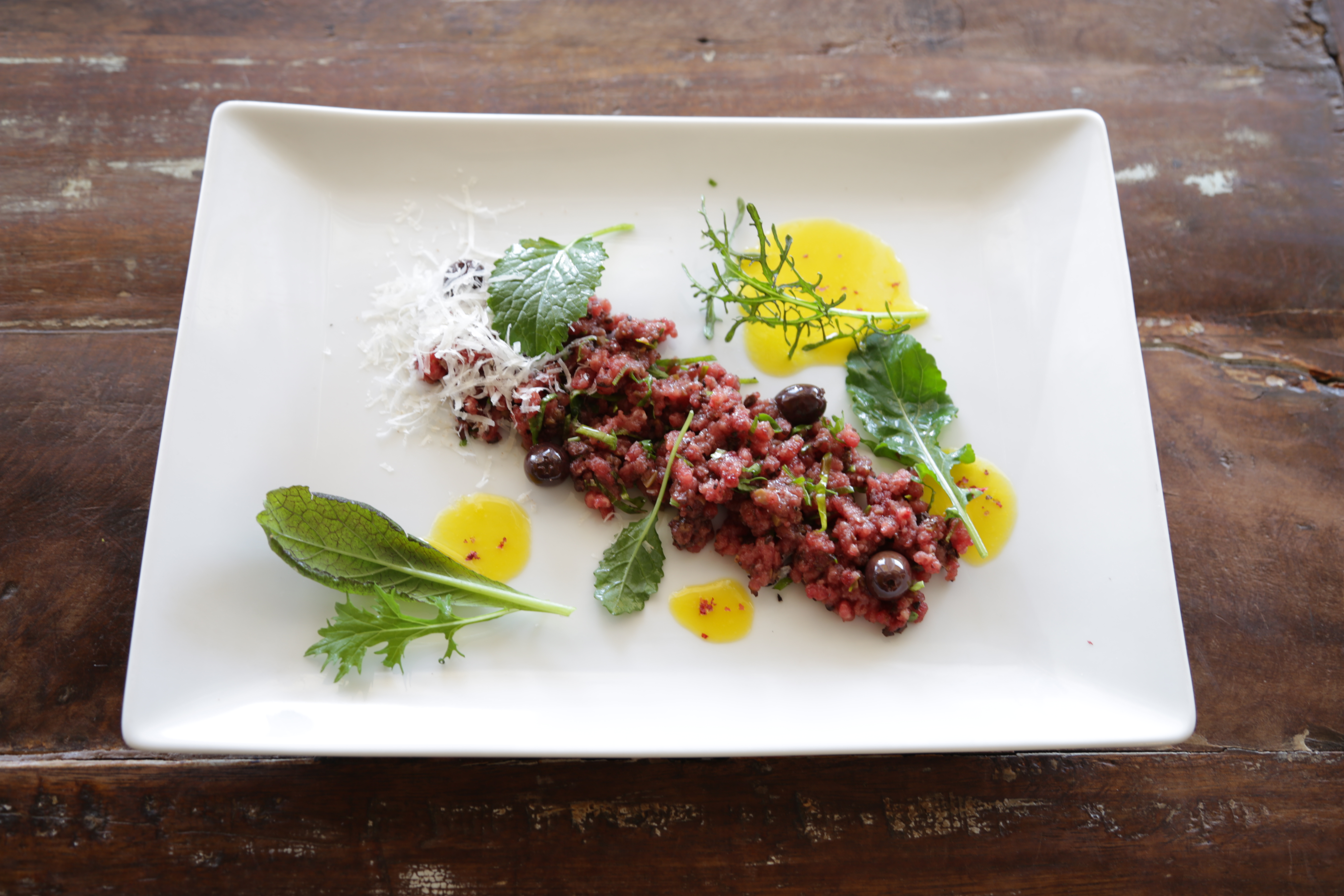
    Beef Tartare
    Beef Tartare with Juniper Berries. Photo by Awe Collective.

    How long have you been cooking? I’ve been cooking 13 years in professional kitchens. Personally at home, nearly all my life.

    What is your favorite food to cook? Foie gras.

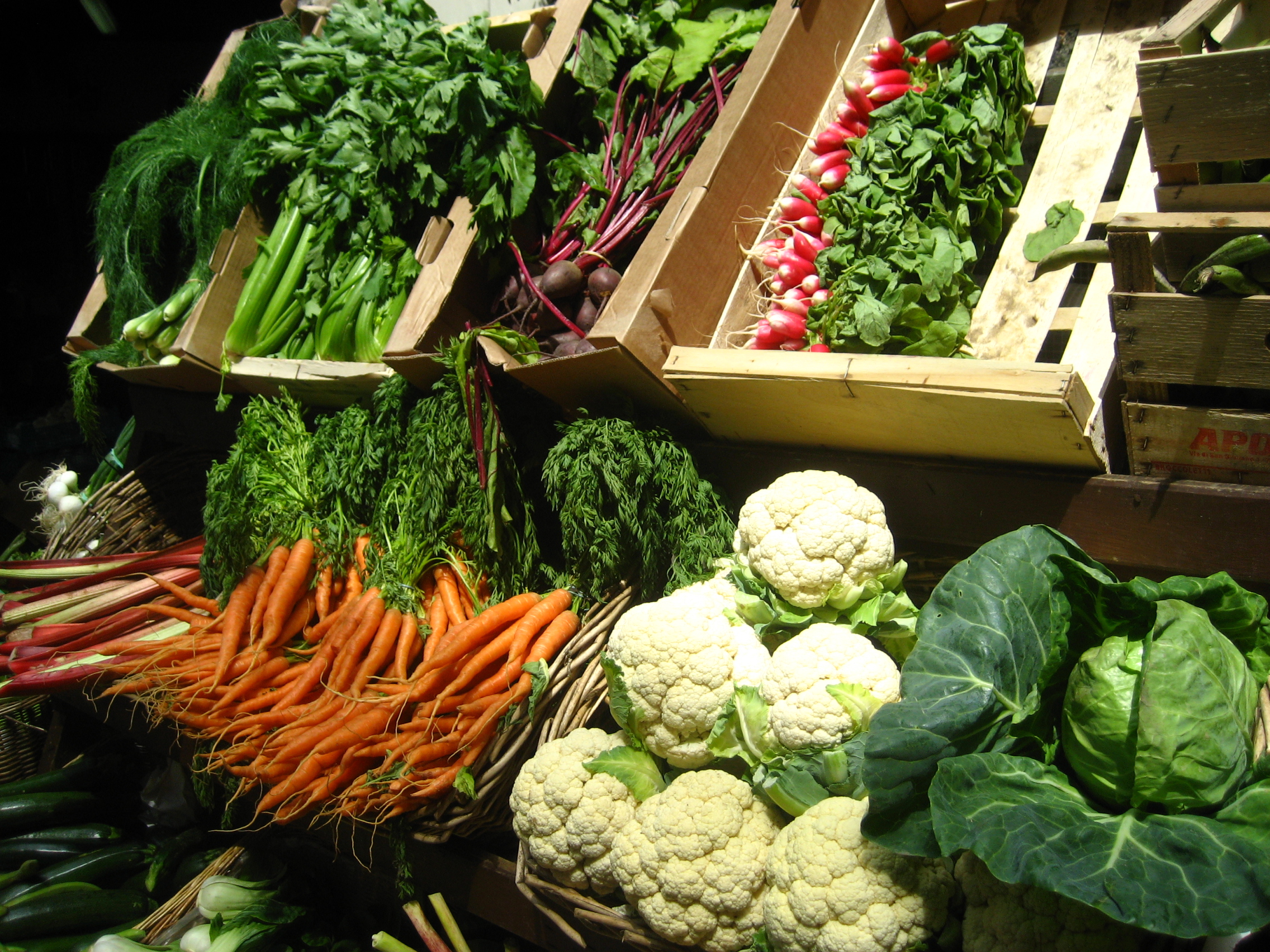
    Photo by Jeremy Keith.
    Photo by Jeremy Keith.

    What do you always have in your fridge at home? Fermented veggies. I eat them with everything.

    What do you cook at home? A mix of everything. Mostly ethnic foods, particularly Brazilian. Lots of rice and beans.

    What marked characteristic do you love in a customer? An adventurous and curious diner.

    What marked characteristic do you find unappealing in a customer?  Legitimate allergies aside, diners with stubborn food hang-ups. Life’s too short to limit yourself from exploring different foods and new flavors.

    Tupperware, Rubbermaid, or Pyrex? Pyrex.

    WINE_previewBeer, wine or cocktail? Wine.

    Your favorite cookbook author? Pellegrino Artusi.

    Your favorite kitchen tool? A great chef’s knife.

    Your favorite ingredient? Good quality salt.

    Your least favorite ingredient? Cheap table salt.

    Least favorite thing to do in a kitchen? Yelling. I like a quiet, organized and efficient kitchen environment.

    Favorite types of cuisine to cook? French.

    Beef, chicken, pork or tofu? Pork.

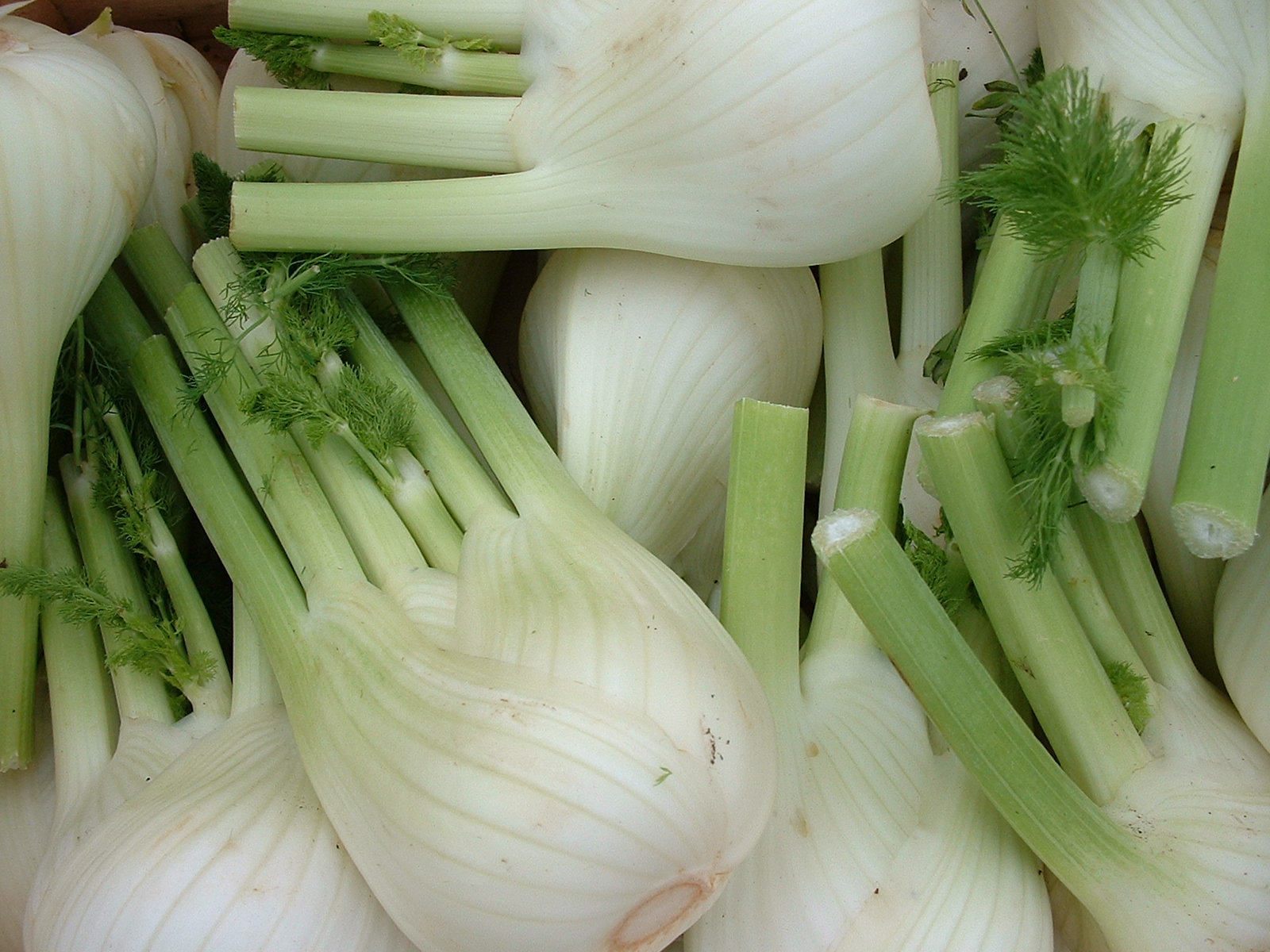
    Favorite vegetable? Fennel.

    Photo by Nick Saltmarsh.
    Photo by Nick Saltmarsh.

    Chef you most admire? Daniel Boulud.

    Food you like the most to eat? French.

    Food you dislike the most? Hard to say. If prepared correctly, most foods can be delicious.

    How many tattoos? And if so, how many are of food? Non.

    Lemon Tarragon Vinaigrette: 

    A popular French dressing used on many salads or seasonal vegetable dishes throughout the year. One that needs to be in every homecook’s tool box. 

    • 1 tablespoon fresh squeezed lemon juice
    • 3 1/2 T olive oil
    • 1/4 small shallot, finely minced
    • 2 tsp freshly chopped tarragon
    • Pinch of good-quality kosher or sea salt

    Start by peeling and mincing the shallot, continuing until the shallots almost turn to a paste. Place shallots in a small mixing bowl, add lemon juice and pinch of salt. Whisk together vigorously while incorporating the most of the olive oil simultaneously in a small stream into the mixture, reserving just a little oil. Stop whisking temporarily to add the chopped tarragon. Begin whisking again while adding the remaining oil.

    Mix preferred greens or vegetables in a separate bowl and toss them with the vinaigrette. Finish with an additional sprinkle of salt to taste.

    The End. Go Eat.

  • I8tonite: Charred Broccoli with Lemon and Asiago

    I8tonite: Charred Broccoli with Lemon and Asiago

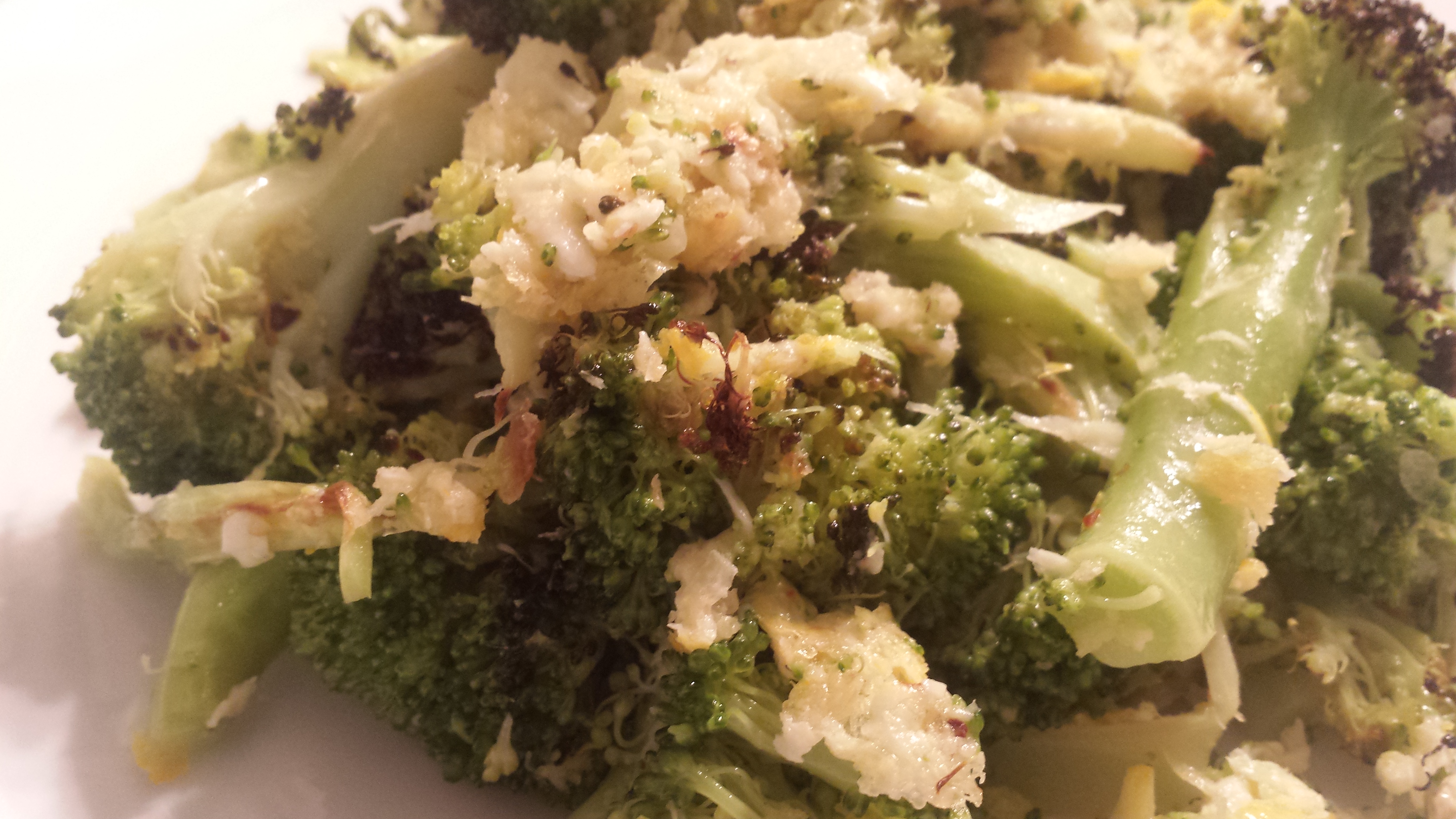
    I discovered Charred Broccoli with Lemon and Asiago absolutely tasty. Tasty enough that there aren’t leftovers the next day.  I now believe roasting is the best thing for anything even broccoli which I like but isn’t necessarily my go to. So, when in doubt — roast. (My new motto.)

    I discovered the recipe in “Family Table: Favorite Staff Meals, From Our Restaurants to Your Home”, compiled by Union Square Hospitality Group’s Culinary Director, Michael Romano and written by Karen Stabiner, with a forward by Danny Meyer, chef and owner of the just mentioned company. (Yes, Danny Meyer of Shake Shack fame.) I briefly worked for him as a waiter at Union Square Café back in the late eighties. Written in 2013, the cookbook’s recipes are staff meals from his restaurants that are part of the said conglomeration. These establishments include some of the Big Apple’s gastronomically acclaimed: Gramercy Tavern, Eleven Madison Park, The Modern and others. (Sadly, Union Square Café will be moving from its current space of 30 years to another area of Manhattan due to high rents.) Traditionally, staff meals are served at the beginning of the dinner shift and end of lunch.

    El Teddys. Courtesy of I Loved New York

    Truth be told,  taking all the romance out of the cookbook, along with the “familial” sappiness  — the  staff meals that we were given before or after our shifts came from leftovers that didn’t sell – too much chicken, Bibb lettuce getting ready to turn, fresh pasta that needed to be boiled so it didn’t go to waste.  Working at the now defunct Soho Kitchen & Bar (SKB), we were served pizzas and salad pretty much every staff meal.  The kitchen quickly needed to use up any dough from the day before and replenish with freshly made.  The salad was at least a couple of days old but it was still had a good crunch going on. At El Teddy’s, torn down in 2004 — we were allowed to eat any of the appetizers such as chicken achiote, machaca or steak arrachera burritos, any of the salads or the quesadillas which included huitlacoche (corn fungus), nopales and a puerco.  We could order as much as we wanted as the back of the house had already made the dishes with fresh ingredients for that day’s clientele. (We were eating yesterday’s.) At the Cajun/Mexican fusion of How’s Bayou – it was mostly leftover fried chicken, jambalaya, gumbo, day old enchiladas, reconstituted black beans, red rice and sometimes something green. (Not complaining about any of this. It was free food and truly delicious. The pizza at SKB was some of the best I had. I learned a lot about life, cooking, drinking and made some of the best friends ever while working in restaurants. I loved it.)

    This brings me back to this recipe and cookbook…yeah, I don’t think any of the staff at my restaurants would have eaten this as “family meal”. It would have would have been sitting under the heat lamps drying out…but now that I’m older and definitely stockier — it’s pretty stellar stuff.

    Charred Broccoli

    Ingredients:

    • 2 bunches of broccoli cut into trees with stems. Trim off about two inches from the bottom.
    • ¼ olive oil.
    • 2 lemons.
    • Several dashes of red pepper flakes.
    • Italian hard cheese such as asiago, pecorino or parmesan. Two to three cups grated.
    • Maldon salt, fresh cracked pepper. (Okay, you can use kosher….but I love the Maldon stuff.)
    • ½ cup of Panko bread crumbs.

    Let’s make this puppy:

    Preheat the oven to 450 – 475 degrees. Toss the broccoli, olive oil and breadcrumbs into a large bowl coating the broccoli really well. Spread into a single layer onto a baking sheet and roast for 10 to 15 minutes, charring the ends of the broccoli but not burning them.

    While the broccoli is cooking, zest the two lemons into a large bowl and add the grated cheese stirring well until mixed.

    Once the broccoli is cooked, toss the broccoli in the bowl mix with juice of a ½ a lemon. Serve.

    The End. Go Eat.

  • i8tonite: Late Summer Corn Hash

    i8tonite: Late Summer Corn Hash

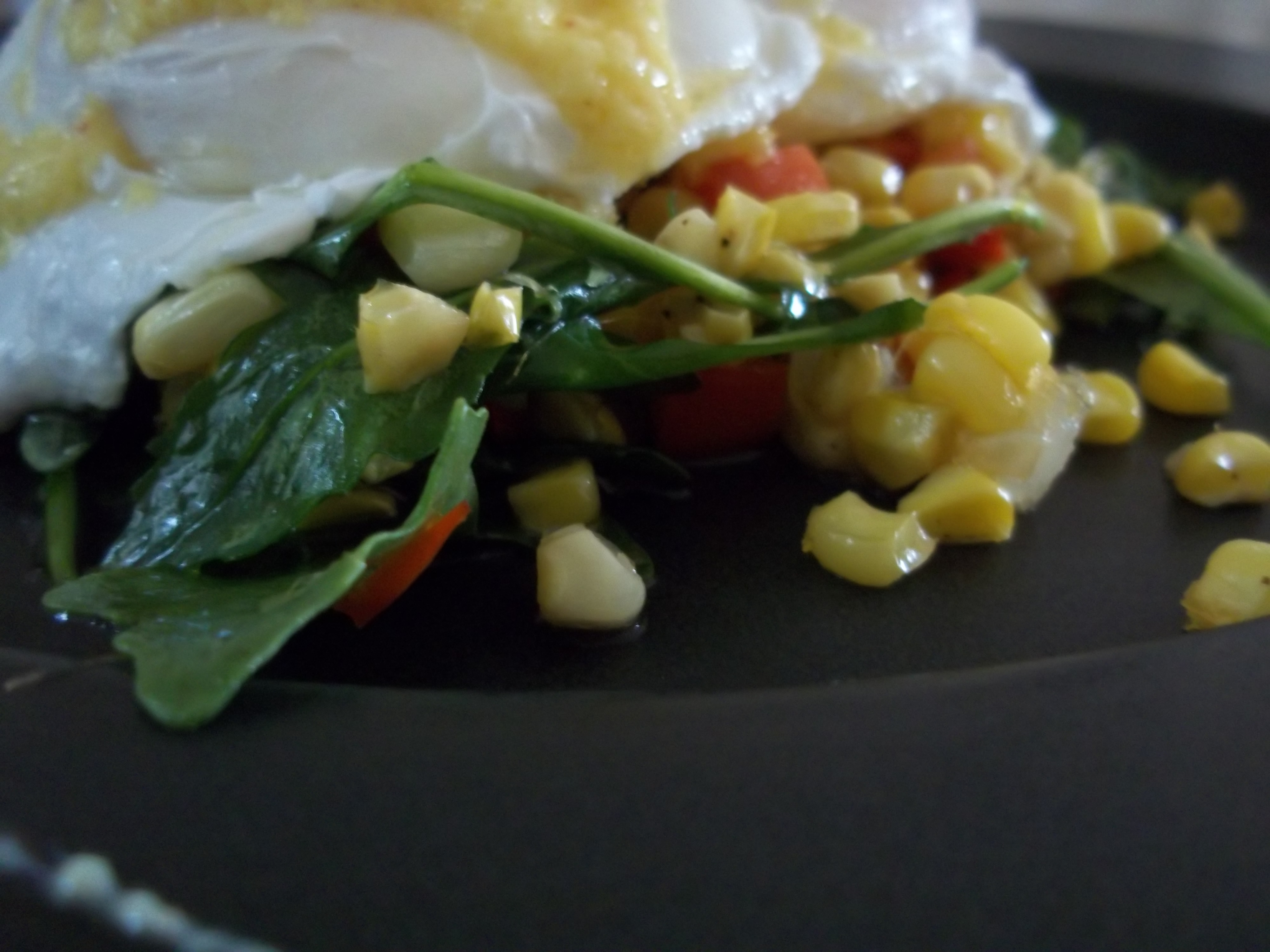
    Corn HashI saw this corn hash recipe from Alice Waters’ cookbook, The Art of Simple Food. She deemed it a “hash” and I thought it sounded like a fresh take on the dense potato and onion variety. With a few of my own tweaks here and there — I made it and of course, it was delicious. How it could it not be? It’s a Ms. Waters’ creation.

    After posting the image on social media as is my wont, I was asked what makes it “hash?”  The answer to that my friends is the chopped onions. The word hash is from the French word “hacher” meaning to chop. Technically, anything with chopped onions can be called a hash; therefore, Ms. Waters called this hash and I did too, since we do not disagree with two fabled beings — Mother Nature and Mother to All Things Culinary, Ms. Waters.

    Instead of using butter and a skillet, I used olive oil and roasted my corn with the pepper and sweet onion with salt; while still hot from the oven, I tossed in the arugula so it wilted ever so slightly.  I poached two eggs, whipped up a hollandaise and added some Korean hot pepper to the sauce (Asian-French fusion going on there) and voila. Roasted Corn Hash with Wilted Arugula, Two Poached Eggs and Korean Red Pepper Hollandaise. It was truly easy and it could even be classified as a one sheet pan supper.

    Corn

    Ingredients:

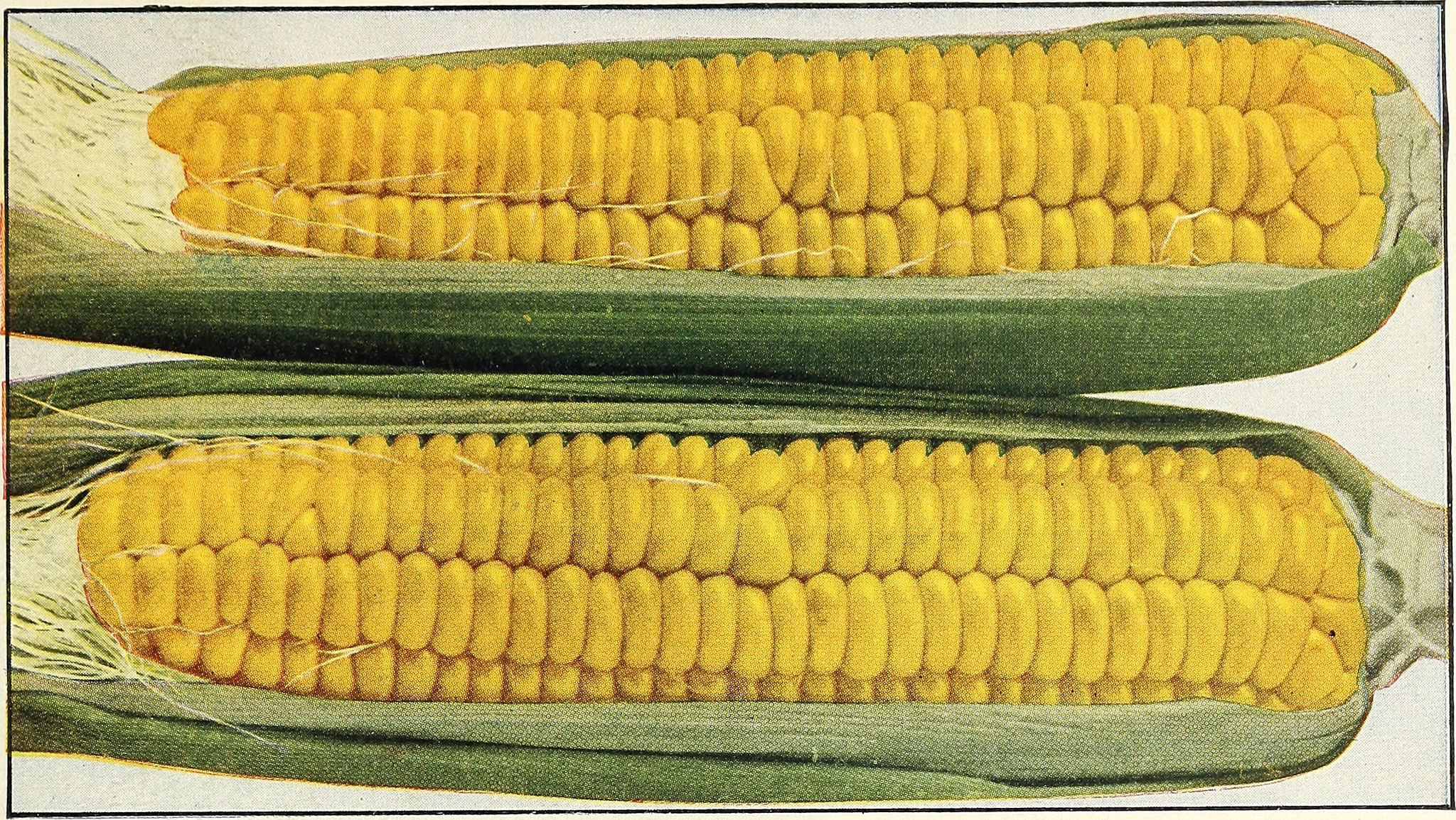
    • Fresh corn on the cob (3 to 4 ears).
    • 1 Red, green, or orange bell pepper or a combination or any two or three.
    • Maldon sea salt flakes. (I love this stuff. I love it’s texture but truthfully, kosher salt will do.)
    • 2 cups fresh arugula.
    • 1 small onion – it can be red if you like.
    • Olive oil.

    Preheat oven to 350 degrees. Shuck the corn and remove the kernels from the cob.  I find that a paring knife works well for this and a large bowl.  Place the smaller end of the cob into the bowl and press firmly on the cob with the other hand. Cut away from you. You might lose a few kernels…but like Julia Childs…just put them in the bowl.

    With the bell peppers, cut into strips and then dice. Place into the bowl. Dice the onion and put into the bowl as well. Mix corn, pepper/s and onions with the olive oil using your hands to coat well. Put on a rimmed baking sheet of 9 x 13, spread out the mixture and add a little salt. Roast for about 20 minutes.

    Remove the pan and then, add the arugula. Using a spatula, mix the lettuce until it wilts lightly around the edges. Sprinkle with a little more salt, fresh pepper and viola. Top as I did with poached eggs or oven roasted salmon, roasted chicken, pan seared rib eye or grilled tofu….or eat it right out of the pan. The possibilities are endless.


    The End. Go Eat.
  • i8tonite: A Cheat Sheet for Dining in Los Angeles’ PicFair Village

    i8tonite: A Cheat Sheet for Dining in Los Angeles’ PicFair Village


    i8tonite: A Cheat Sheet for Dining in Los Angeles' PicFair VillagePic Fair (Pico-Fairfax) Village is a demographically rich neighborhood, one of Los Angeles’ true and last assemblies of people with different cultural backgrounds — African-American, Latino, Asian, and Caucasian, middle-class and poor – some very wealthy.  It’s not one of the communities that LA decided to christen by its ethnic majority, such as Koreatown, Little Ethiopia, Thai Town, Historic Filipino-town, or Little Armenia. It’s a quiet microcosm of the United States and is a showcase of classic Southern California architecture along its wide, tree-lined streets with stunning Spanish duplexes and red-shingled single family homes built in the 1920s. At one time, the area was home to many upper-class African American families.

    Extending from Hauser Boulevard on the east, Crescent Heights to the west, Olympic Boulevard on the north,  and to the south, Venice; I lived the longest in this area – meaning that for seven years of my life, I lived in one building, one spot – so I hold this place very dear to my heart.

    i8tonite: A Cheat Sheet for Dining in Los Angeles' PicFair Village
    Bloom

    In the early to mid-aughts, the region started to become youth-oriented and a small coffee shop opened — Paper or Plastik — along with a restaurant called Bloom. Both of these places focused on local residents for support. Neither had a public relations campaign or had the local papers tout how good they were, although it did happen eventually. They became a part of the community’s multi-cultural quilt by just being there.

    Pic Fair is a great neighborhood for an afternoon stroll or a quiet place to get away from the rest of City of Angels.  You won’t find the paparazzi hiding behind bushes. This is the real L.A…young families with their strollers, same-sex couples walking their dogs (and strollers), a diverse mix of people in a quiet urban enclave getting along with the rest of the world….peacefully.

    i8tonite: A Cheat Sheet for Dining in Los Angeles' PicFair Village
    CJs Cafe
    • Breakfast: CJ’s Café.  This is an institution. I can’t be for certain but at one time it was an African-American owned diner, much like its highly-touted neighbor Roscoe’s Chicken & Waffles down the street. There are two locations, Pico and Baldwin Park…but this is the rock-star. They make up fresh juice smoothies. Saturday and Sunday the place is packed until after 3pm; during the week it’s easier to get a table.
    • My suggestion: Huevos Rancheros or Chicken Wings (with honey) and Eggs.
    • Price: Varies. Nothing over $12.95
    • Hours:  7:00am – 4:00pm
    • Address:  5501 West Pico Boulevard
    • Phone Number: (323) 936 – 3216
    • Website: http://www.cjscafe.net/
    • Lunch:  Olson’s Swedish Restaurant. Opened since 1948, it was recently purchased by Christian Kneedler, the former maître‘ d of Dan Tana’s, a famous Hollywood, checkered table-cloth eatery. A Swede by birth, he took over the place and has transformed it into a Southern California outpost of Swedish tastes. Along one wall is a bulk bin of Swedish
      i8tonite: A Cheat Sheet for Dining in Los Angeles' PicFair Village
      Olson’s Deli

      candies and the menu offers better than Ikea Swedish meatballs and, of course, house-cured gravlax. They also have a large menu of cheeses and deli meats such as the dense and meaty goteborgskorv, a form of Swedish pate.

    • My suggestion: Their Swedish pancakes – which are more like a thicker crepe or a thinner pancake – are stunningly delicious. Served warm with preserves such as lingonberry on the side just like in Sweden.
    • Price: $8.00
    • Hours: 10:00am – 5:00pm, Monday – Sunday
    • Address: 5660 West Pico Boulevard
    • Phone Number: (323) 938 – 0742
    • Website: www.olsonsdeli.com
    • Snack Time:  A family-owned neighborhood place, Paper or Plastik is the coffee joint that started it all. Like the song goes, “my milkshake brings all the boys to the yard”…so it is with coffee and hipsters. Each time I go in here, the eatery has small changes – such as the pastries have gotten better, a little flakier and more butter; although they don’t make them here. The iced-coffee is heavy and will put hair on your chest…just the way I like it. With great Wi-Fi, it’s easy to do research and write your next screenplay, to meet a
      i8tonite: A Cheat Sheet for Dining in Los Angeles' PicFair Village
      Paper or Plastik

      friend for a mid-afternoon snack, get a caffeine fix or an afternoon glass of wine. At one time, the menu had been created by Chef Jeremy Fox, a one-time chef of Napa Valley’s Ubuntu and winner of Food & Wine’s “Best New Chef”.

    • My suggestion: The iced coffee. Although, they now have a beer and wine license.
    • Price: Expensive, clocking in at around $3.50 for a 12 ounce cup. But really black and really caffeinated. It will make you the Energizer bunny.
    • Hours: 7:00am – 10:00pm
    • Address:  5772 Pico Boulevard, LA, CA 90019
    • Phone Number: (323) 935 – 0268
    • Website: http://paperorplastikcafe.com/
    My Two Cents. i8tonite: A Cheat Sheet for Dining in Los Angeles' PicFair Village
    My Two Cents
    • Dinner: My Two Cents. Healthy soul food.
    • My suggestion:  Soul food normally conjures up images of heavy-battered fried chicken, grits and collards with bacon. Here, Chef Alisa Reynolds removes some of the butter and lard by using a lot of vegetable stock. It’s quite good and doesn’t have the heavy richness that you expect of a soul food restaurant – but make no mistake, this is soul food. My Two Cents serves up gluten-free fried chicken, small tender shrimp and grits…and my favorite, the grit fries. There is nothing like these grit fries….I know they can’t be that healthy…but they are sooo delicious.
    • Price: $5.00 Grit Fries
    • Hours: 12pm – 10pm. Closed on Mondays.
    • Address: 5583 West Pico Boulevard, LA, CA 90019
    • Phone: (323) 938 – 1012
    • Website: www.mytwocentsla.com

    Pin for later:

    i8tonite: A Cheat Sheet for Dining in Los Angeles' Picfair Village

    The End. Go Eat. 

  • i8tonite: with Raw Food Chef Diana Stobo, The Retreat Costa Rica and “Naked” Mac-and Cheese.

    i8tonite: with Raw Food Chef Diana Stobo, The Retreat Costa Rica and “Naked” Mac-and Cheese.

    thai-lettuce-wrap Food has transformative powers. There is no denying it. It can make you feel better but it can also make you feel terrible. That’s what makes Chef Diana Stobo’s story – a tale in eating naturally — fascinating. After attending Cornell University with a degree in the culinary arts and food chemistry, she had a career as a food professional. It was at that time, Stobo topped the scale at 247 pounds while she was pregnant with her twins. Once giving birth, she found the medications she had used to become pregnant – via in-vitro –they had perpetuated serious health issues. Furthermore, she states on her website and YouTube channel, that her weight was a proverbial yo-yo throughout most of her life. She is now a fit mother of three and defies age categories with her glowing taut skin, lean frame and healthy chestnut hair. She pulled this feat by transforming her diet and becoming a “vegan raw” chef. She now writes about her transformation and how she maintains it with her book such as Get Naked Fast and Naked Bliss. Matter of fact, the Southern California-based entrepreneur has fashioned a mini-empire discussing how she became fabulous and fit.

    Recently, Stobo opened up The Retreat Costa Rica situated in a mountain area 45 minutes outside of San Juan, the Central American’s country capital. It’s a hotel – nay, a retreat — to provide calming sanctuary, yoga and amazing food. The secluded and verdant town of Altos del Monte is her backdrop, while Stobo’s fitness and food philosophy become realized with farm-to-table dining and daily yoga sessions. It provides visitors the opportunity to slow-down and experience the beauty of the country as well as quench the desire to become healthier through fitness and eating. All the food is provided by local farms including the meats and seafood. There are a variety of food menus – omnivore, carnivore and vegetarian — for guests to choose from and yes…there is even wine.

    As I’m witness to my own family and their eating habits – my mother and stepmother are both severely diabetic — food can be quite toxic if not consumed with clarity, wellness and appropriately. There are all a variety of ways to be healthy and consumers need to be find the best fit for them.

    _C9G5527

    How long have you been cooking? I’ve been cooking since I was a little girl.  My mother and I would make specialty cakes, very decorative and festive.  I remember one cake where we crystallized grapes and created a sugar crystal sculpture on top of a shaved coconut cake.

    What is your favorite food to cook? Well, I am truly an artist, so many of my items need to have an art form, so baking and chocolates were my go to when I was in my early years,  but now, I play with healthier version of everything- so making classic food with a healthy twist is my favorite go to now.

    What do you always have in your fridge at home?  I tend to have tons of produce, greens and fruits, almond milk (home-made of course), Kefir, green juice that I make fresh and tons of condiments.  I’m sort of a grocery store addict, I love finding new condiments that add punch and flavor to a new dish when cooking on the fly.

    What do you cook at home? I’m a simple eater but love throwing dinner parties.  So when it’s time to party, anything goes.  Again, I tend to take the classic home-style favorites and give them a healthy or what I call “naked” twist.  Naked means substituting classic dairy, wheat, and sugar, with healthy alternatives.  I just made ribs, with mashed yams, sautéed spinach with shallots and honey glazed carrots last weekend.  What was new and unusual is that I made a broccoli coleslaw using cashew butter as the cream base instead of mayonnaise.  Everybody loved it.

    thai-lettuce-wrap
    Thai Lettuce Wraps

    What marked characteristic do you find unappealing in a customer? The unwillingness to try something new.

    What marked characteristic do you love in a customer? Openness to new things.

    Tupperware, Rubbermaid, or Pyrex? Pyrex- Glass ONLY!

    Beer, wine or cocktail? Tequila or bust!  And, only the best.

    Your favorite cookbook author? I can’t say since I don’t follow cookbooks.

    Your favorite kitchen tool? An 8” chef’s knife. (Global)

    Your favorite ingredient? Goat cheese and coconut milk.

    Your least favorite ingredient? Soy sauce.

     Least favorite thing to do in a kitchen? Grate cheese ….. and dishes.

    Favorite types of cuisine to cook? From all regions and international cuisines, I call them component meals.  Making several different flavors and layering them on top of each other to make the perfect dish.   Imagine Sprouted Quinoa Moussaka with Bean Béchamel, or Butternut Squash Lasagna, layered with Pine Nut Ricotta, Pistachio Pesto and Sundried Tomato Puree.  I’m just making this up but you get the idea.

    Beef, chicken, pork or tofu? None of the above.

    Favorite vegetable? That’s a tough question, because I am a vegetable lover all around.

    Chef you most admire? Jamie Oliver- not because of his food, but his message.

    Food you like the most to eat? Totally embarrassed, but I love Mexican food. (It’s) mostly the beans —  but what can I say, it’s the ultimate comfort food.

    Food you dislike the most? I’m just not into meat.   Once in a while I crave it, but really- it’s not my thing.

     How many tattoos? And if so, how many are of food?  Not a one.

    Naked Mac and cheeese

    “Naked” Macaroni & Cheese

    Diana Stobo says of this recipe, “I’m a lover of rich sauces so a good, old-fashioned macaroni and cheese is at the top of my list as a decadent and delicious treat. If you like “mac and cheese” like I do, I know you will be delighted at this “Naked” version my daughter affectionately named “mac-a-faux-ni”. The butternut squash adds a bit of sweetness as well as creaminess. The macadamia nut butter and coconut milk provide a richness and the ghee gives it that buttery taste. The rest is magic.

    Ingredients:

    • 2 heaping cups of butternut squash cut into 1-inch cubes
    • 1 ½ tablespoons of ghee (clarified butter)
    • 1 ½ tablespoons of sea salt
    • 1 cup coconut milk
    • ¼ cup nutritional yeast
    • 2 tablespoons lemon juice
    • 12 ounce package Tinkyada Brown Rice Pasta elbows (or any gluten-free pasta of your choice).

    For the topping:

    • ¼ cup walnuts, pine nuts or sunflower seeds
    • 2 teaspoons nutritional yeast
    • ½ teaspoon sea salt
    • ¼ teaspoon freshly ground pepper (optional)

    Directions:

    In a 4-quart pot, prepare pasta according to package directions. Cook al dente, strain and run under cold water to immediately stop the cooking process. Pour cooled pasta back into the pot.

    In a medium saucepan over the medium heat, melt ghee and gently sweat the squash, do not brown. Add sea salt and coconut milk, simmering uncovered for 10 minutes. Carefully pour hot squash into blender and add macadamia butter, nutritional yeast and lemon juice. Blend on low with the machine’s center cap lid removed to release the heat while blending. Slowly increase speed until the sauce is smooth and creamy. Pour mixture over pasta and stir.

    This can be served immediately with topping sprinkled over the macaroni or baked in a 350 degree over for 15 minutes until browned.

    The End. Go eat.

  •  i8tonite: Any Day Spice Rub-A-Dub Dub

     i8tonite: Any Day Spice Rub-A-Dub Dub

    After doing a bit of research on the history of spice “rubs” there really isn’t that much. I did discover that the United States is number one importer of spices in the world. That’s a pretty significant claim. Thus, in our country we have all the spices at our fingertips to make our own “artisanal” housemade rub just by going to the store or local spice market.  The most basic of rubs is plain ol’ salt and pepper. Just massage a couple of grinds into any piece of meat, fish or tofu. Roast, pan sear, grill and you have yourself a mighty fine meal.

    If you start to add other things to the salt and pepper, you begin to create your own. For me, I like to add some brown sugar, cayenne, a little smoked salt, paprika, cumin, fennel seed, dry mustard and a little more sugar….like turbinado.  You can experiment…and that’s what cooking and life is all about exploring, experimenting…trying something new.

    To make your own rub:

    Use a tablespoon of each dry ingredient. If you decide to add a little more of one and less of another, it’s okay, you won’t be graded.

    • Brown sugar (I like a little more so I normally do two tablespoons)
    • Cayenne
    • Paprika
    • Ground cumin
    • Garlic powder (for me, two tablespoons)
    • Onion powder
    • Fennel seed
    • Salt (Kosher salt or Maldon flaky salt)
    • Black Pepper

    Or make a Curry Rub. Again starting with the salt and pepper, add to that:

    • Curry Powder (I like a lot of curry. I go with 3 or 4 tablespoons)
    • Ground coriander
    • Ground ginger
    • Ground Cumin
    • Brown sugar

    So this Labor Day, you’ve labored by looking at two different rubs. Take a couple of tablespoons of the mixture and massage your protein (tofu works too)…front and back. Work your way into it. Ahhh…and let it rest for about 45 minutes to an hour. Turn on your oven, light up your grill, melt some butter in your cast iron pan – and sear, bake, broil or roast. It’s like getting all “jiggy wit dit” without removing an ounce of clothing. Store the extra in an air-tight container in a cool dark place and pull it — ahem — out when you’re feeling like a quickie….meal.

    The End. Go Eat. 
  • i8tonite: with New York City’s Chef Joey Campanaro, The Little Owl featuring his Eggplant Parmigiana

    i8tonite: with New York City’s Chef Joey Campanaro, The Little Owl featuring his Eggplant Parmigiana

    Image result for the little owl nyc gravy meatball sliders
    Meatball Sliders, photo courtesy of Little Owl

    The Little Owl is one of the New York City’s quintessential and great dining institutions. Sitting on the corner of Grove and Bedford, this West Village establishment is romantic in it’s atmosphere yet serves up lusty food. On the outside, with its scarlet-painted window panes and large blue awnings it seems like a colonial Manhattan bistro or tavern and comforting as if it’s been there forever. You almost expect to have Woody Allen or Martin Scorsese yell, “CUT!” it seems that familiar. On the inside, in the 28 seat dining room with vaulted ceilings, Chef Joey Campanaro creates seasonal American menus for which he has become known. Some of the restaurant’s signature dishes include Campanaro’s Gravy Meatball Sliders (featured on the website), Pork Chop with Butter Beans and a burger which was called by The London Observer as one of the “50 Best Things in The World to Eat.”

    Image result for little owl nyc pork chop
    The burger; photo courtesy of The Little Owl

    He is co-owner with Chef Mike Price of Market Table and still maintains his own catering and consulting firm, Blackfoot Consulting. Not far from The Little Owl is The Little Owl Venue which can host up to 40 people for receptions, meetings and assorted gatherings. Campanaro has appeared seemingly on every Food Network show and been interviewed by every food writer….and now this one. (Small aside: Campanaro was also the Executive Chef of The Harrison, which used to be Hows Bayou, a Cajun restaurant in Tribeca. Hows Bayou was the restaurant in the late 80s where I waited tables for about 3 years and met some of my greatest friends – whom I still know today.)

    Like each one of these Chef’s Questionnaires, we learn something a little interesting about the person at the stove such as his love of pasta and that his favorite cookbook author is Donna Hay.

    • How long have you been cooking? 25 years.
    • What is your favorite food to cook? Pasta.

    • What do you always have in your fridge at home? Butter and grated cheese.
    • What do you cook at home? Pasta.
    • What marked characteristic do you love in a customer? (People) with no expectations.
    • What marked characteristic do you find unappealing in a customer? Know-it-alls.
    • Tupperware, Rubbermaid, or Pyrex? Tupperware.
    • Beer, wine or cocktail? Beer.

    • Your favorite cookbook author? Donna Hay.
    • Your favorite kitchen tool? My hands.
    • Your favorite ingredient?  Clams.
    • Your least favorite ingredient? Heavy cream.
    • Least favorite thing to do in a kitchen? Washing lettuce.

    • Favorite types of cuisine to cook? Italian.
    • Beef, chicken, pork or tofu? Pork.
    • Favorite vegetable? Onion.
    • Chef you most admire? Jimmy Bradley.
    • Food you like the most to eat? Blue claw crabs.
    • Food you dislike the most? Falafel.
    • How many tattoos? And if so, how many are of food? Zero.

    90 Bedford Street, corner of Grove

    New York, New York 10014

    Website: www.thelittleowl.com

    Hours:

    Lunch:

    Monday to Friday 12 – 2:30pm, Saturday (Lunch) and Sunday (Brunch) 11:00am – 2:30pm

    Dinner: Monday – Saturday 5pm – 11pm, Sunday 5pm – 10pm.

    Eggplant Parmigiana
    Eggplant Parmigiana, photo courtesy of The Little Owl

    Eggplant Parmigiana at little owl restaurant by Chef Joey Campanaro

    Note: I loved the way Campanaro wrote out this recipe. It was beautiful — reading it, I felt like I was watching him cook — so I just left it with very few edits.

    • Canned whole peeled tomato
    • Medium eggplant
    • Garlic (chopped)
    • Onion (diced)
    • Basil
    • Parsley
    • Olive oil
    • Chili flakes
    • s/p

    In an ample sauce pot, add olive oil and garlic and onion and cook for 5 minutes on medium heat, then add the tomatoes. I simply squeeze them (with my hands) before adding them to the pot. Add the cleaned chopped parsley and basil, season with salt and pepper and simmer for up to 2 hours. Cool and reserve.

    Slice the eggplant, sprinkle with salt and layer on paper towels for 3 hours, this removes the bitter liquor. Prepare to bread the eggplant, you‘ll need, flour, eggs and bread crumbs mixed with grated parmesan cheese. The slices get dredged in the flour, then dipped into the beaten eggs and then finally in the mixed bread crumbs to coat thoroughly. Layer on to a baking sheet, drizzle the breaded slices with olive oil and then bake on very heat until lightly browned, remove from the oven and all time to cool. When cooled and the sauce has had time to cook and taste delicious, prepare the cheese mixture.

    I mix grated fontina, parmesan, aged provolone and pecorino romano. The slices are layered each with sauce and cheese and stacked and baked.

    The stacks get re-heated until the cheese melts, plated with a bit more of the sauce and then topped with a tomatoes salad. The tomatoes are diced and tossed with olive oil, a splash of sherry vinegar basil leaves, salt pepper and basil.

    The End. Go Eat.