Year: 2015

  • i8tonite’s Chef Questionnaire: Monica Glass, A Food & Wine’s Best Pastry Chef

    i8tonite’s Chef Questionnaire: Monica Glass, A Food & Wine’s Best Pastry Chef

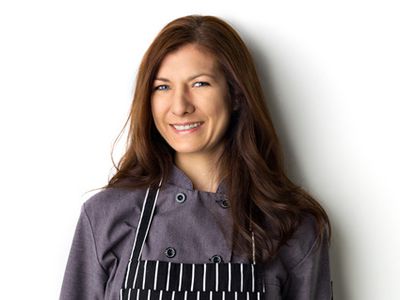
    Monica Glass via Eater Philly

    It seems as if Monica Glass was always destined to become one of the best pastry chefs in the country given her oeuvre with some of the preeminent Northeast kitchens and chefs. After starting one career as a public relations executive, she transitioned into a more creative profession to become an award-winning pastry chef. Her first job was at the Gotham Bar & Grill, which has long been one of Manhattan’s top restaurants. She started off in an apprenticeship under Deborah Racicot and ultimately wound up working beside her.

    10 Arts Lounge, Ritz Carlton. Courtesy of Ritz Carlton.

    Her next station was under Executive Pastry Chef Michael Laiskonis at Manhattan’s world-renowned and Michelin-starred Le Bernardin. Owned and operated by famed Chef Eric Ripert, Glass worked at perfecting her craft under these masters. Ripert seized the aspiring Glass to work directly with him at the opening of his restaurant 10 Arts at Philadelphia’s Ritz Carlton —   that’s icing on the cake for someone who deals in confectionaries.
    Clio
    Photo Courtesy of Clio.

    Glass took on new challenges in the fall of 2012 — professionally and personally — by moving to Boston to take on the role of Pastry Chef     at the award-winning Clio Restaurant. The flagship restaurant of Ken Oringer and his famed use of avant-garde ingredients, tools and instruments, gave Glass the opportunity and ability to grow her knowledge of the pastry arts. At Clio, Glass created desserts that told a story and that served as a seamless finishes started by Clio’s savory meals. In 2013, she was awarded, by Food & Wine Magazine editors as one of five Best New Pastry Chefs for her delicious endeavors.

    Glass is now back in the City of Brotherly Love working as the Corporate Pastry Chef at Starr Catering. However, it’s a testament to her ongoing pursuit of culinary challenges and Glass’s own personal battle with a gluten allergy to create a broader menu of gluten-free morsels. Indeed,  it seems that catering to others with celiac disease, the youthful pastry queen can experiment with an indulgent assortment of non-wheat sweets. We don’t care just as long as she never stops creating edible indulgences.

    Chef’s Questionnaire with Monica Glass: 
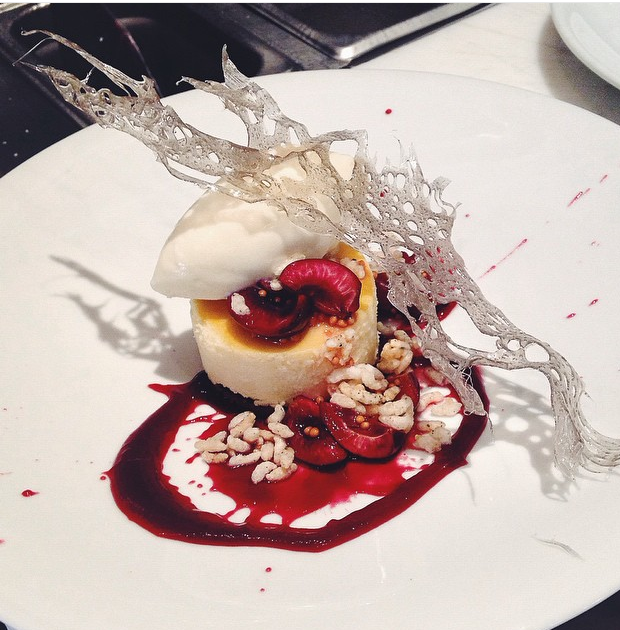
    Photo by Monica Glass
    Photo by Monica Glass

    How long have you been cooking? 10 years professionally, a lifetime for fun.

    What is your favorite food to cook? Ice cream.

    What do you always have in your fridge at home? Eggs, ketchup, cheese, yogurt or kefir, flax seeds, a bag of Reese’s peanut butter cups

    What do you cook at home? Not much for just myself — eggs, smoothies, cereal. But I love to entertain and have people over for a nice dinner and wine! However, the oven at my new apartment doesn’t even fit a half sheet pan!
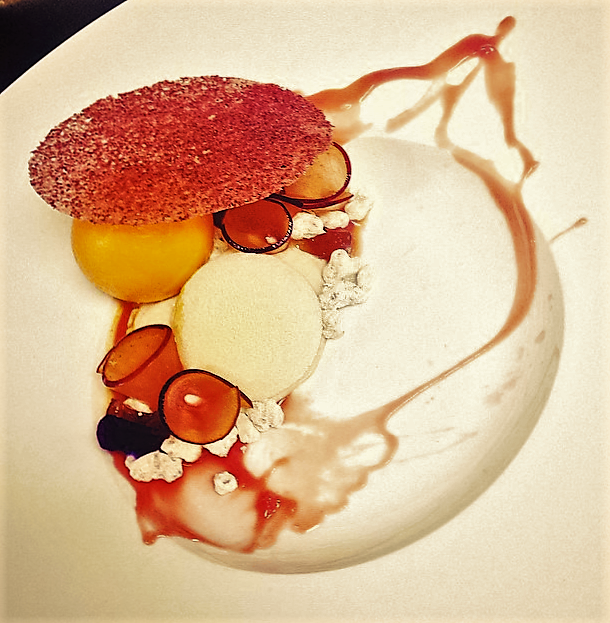
    Photo by Monica Glass.
    Photo by Monica Glass.

    What marked characteristic do you love in a customer? Glee! Giddiness over good food… excitement!

    What marked characteristic do you find unappealing in a customer? Rude, short-patience, assuming, condescending.

    Tupperware, Rubbermaid, or Pyrex? Pyrex.

    Beer, wine or cocktail? Rye whiskey, rocks

    Your favorite cookbook author? Hmmm….it’s too hard to pick one: Notes from a Kitchen (Jeff Scott.) Alain Ducasse’s Grand Livre de Cuisine Desserts and PastriesThe Secrets of Baking, Sherry Yard. The Flavor Bible, Karen Page & Andrew Dornenburg. Nancy Silverton’s Pastries from La Brea Bakery

    Your favorite kitchen tool? My hands. Baby offset.

    Your favorite ingredient? Hmmmm…. so many! Probably cardamom, kaffir lime, finger limes.

    Your least favorite ingredient? Blood.
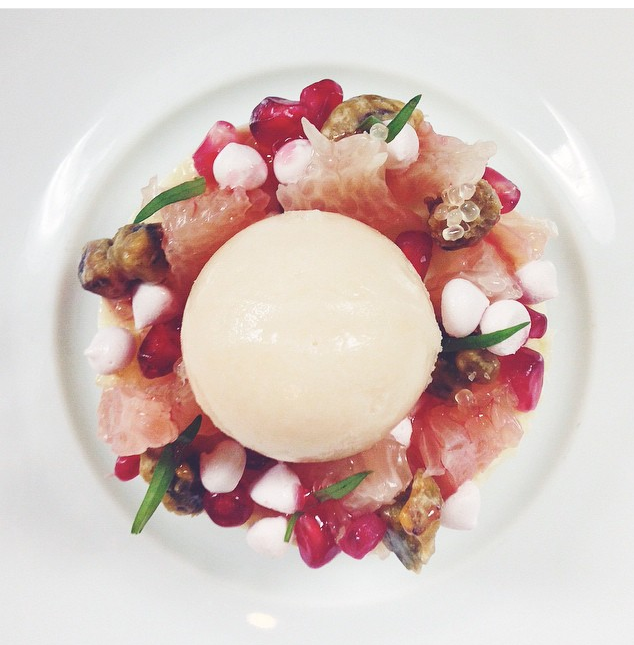
    Photo by Monica Glass.
    Photo by Monica Glass.

    Least favorite thing to do in a kitchen? Anything to do with fabricating meat; hence I’m in pastry.

    Favorite types of cuisine to cook? Comfort American, nouvelle, Spanish, French.

    Beef, chicken, pork or tofu? Depends on what cut!

    Favorite vegetable? Brussels sprouts. They have to be super crispy though.

    Chef you most admire? Michael Laiskonis.

    Food you like the most to eat? Ice cream, peanut butter, French fries, Doritos, Reese’s. Not all together though…that would be gross.

    Food you dislike the most? I love foie when it’s seared properly but I can’t really do it creamy and cold, like foie torchon or even liver mousses.

    How many tattoos? And if so, how many are of food? Two tattoos. One is a whisk with the worlds “vis ta vie” wrapped around it. For my mother.

    Apples by George Polychrones

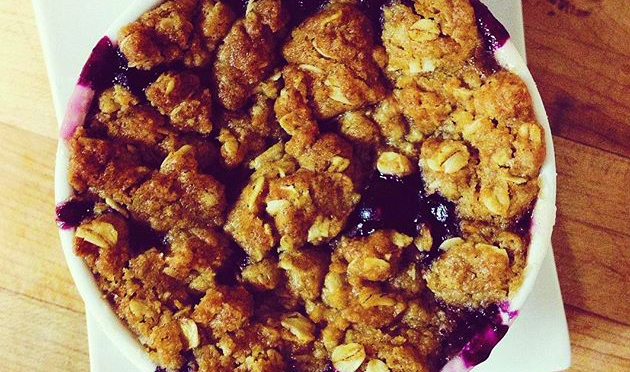
    Favorite Apple Crisp Recipe by Monica Glass.

    You’ll want to make the  streusel topping first. I put gloves on and mix together 75g dark brown sugar, 75g white sugar, 150g flour, a pinch salt/cinnamon/cardamom. Add in 150g melted butter and mix to thoroughly coat.

    Next, peel 3 each Granny Smith and Honeycrisp apples. Slice each side into two pieces, moving around the pit and seeds. Dice each slice into small cubes. Toss the diced apples with about a half cup of sugar (more or less to your liking and the fruit’s natural sweetness), about two tablespoons of cornstarch, another pinch salt/cinnamon/cardamom and the juice of one lemon. Pile into a buttered ramekin and top with streusel. Preheat oven to 325 and bake until bubbly and browned, about 30-40 minutes. Devour with some ice cream!

    The End. Go Eat. 

     

  • i8tonite in New Brunswick, Canada: Executive Chef Jesse MacDonald, 1809

    i8tonite in New Brunswick, Canada: Executive Chef Jesse MacDonald, 1809

    This is a guest post from Dr. Jessie Voigts of WanderingEducators.com

    20150814_092224Tucked away on the mighty Miramichi River in Miramichi, New Brunswick is a long, yellow hotel with a big heart. The Rodd Miramichi River Hotel shows, like all Rodd hotels, the essence of friendliness and luxury. And the restaurant, 1809, at Rodd Miramichi is exquisite. We dined there this summer, at first on the riverside deck and then inside by the fireplace, as mosquitoes chased us in after dark.

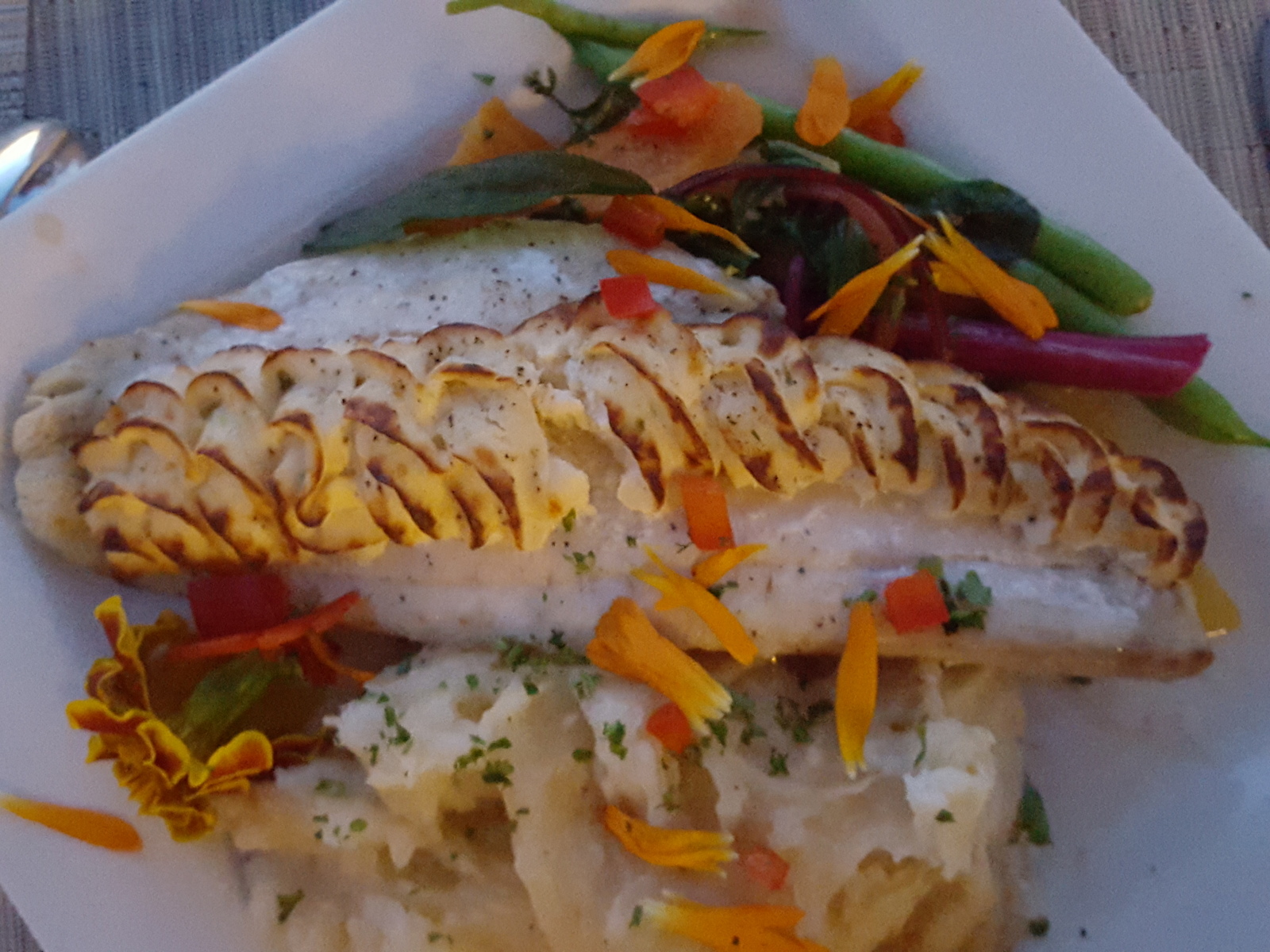
    Of course, the menu featured plenty of fish, including freshly caught Atlantic salmon (which New Brunswick, one of Canada’s Maritime Provinces, is known for) prepared 5 ways. There’s also lobster, classically prepared chicken, fresh pastas, and sandwiches and burgers. The seafood chowder was the best I’ve ever had – even with daily seafood chowder eating in Ireland – and my stuffed haddock filet was divine.

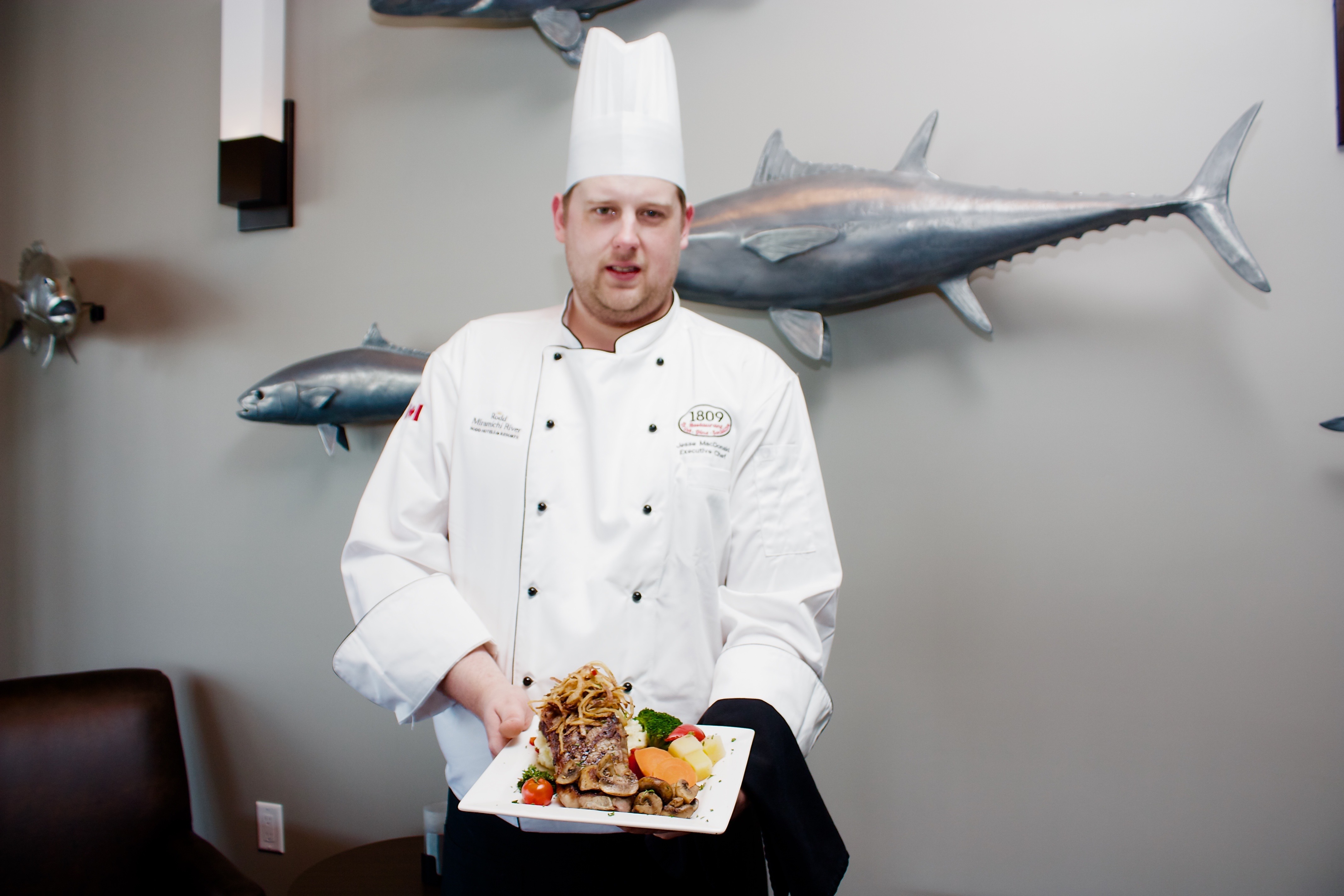
    Chef Jesse MacDonald, 1809 Restaurant. Photo by Jessie Voight
    Chef Jesse MacDonald, 1809 Restaurant. Courtesy by Jesse MacDonald

    Executive Chef Jesse MacDonald hails from nearby Prince Edward Island, a 4th generation fishing family that led to him captaining a lobster boat. Jesse is young for an executive chef – he graduated from The Culinary Institute of Canada in 2010 – and it shows in his rapport with the staff and the delicious output of the high-volume kitchen. Known as the youngest Executive Chef in New Brunswick, his vision for sharing and eating locally sourced seafood and other fine ingredients sets him apart from the crowd. I had a chance to talk with him and share his vision (Watch an interview with Chef Jesse MacDonald) , which made me all the more impressed.

    20150813_210707How long have you been cooking? 10 years.

    What is your favorite food to cook? Anything seafood.

    What do you always have in your fridge at home? Not much sometimes– life of a chef, water/Gatorade/milk.

    What do you cook at home? Depends on the day.

    20150813_215613What marked characteristic do you love in a customer? Willingness to experiment.

    What marked characteristic do you find unappealing in a customer? Preconceived opinions.

    Tupperware, Rubbermaid, or Pyrex? Pyrex.

    Beer, wine, or cocktail? Beer to drink, wine to cook.

    Your favorite cookbook author? Tough one, I love to read, I’ve been enjoying a lot of Michael Ruhlman’s books lately, currently in the middle of “Salumi“. I intend to read “Ratio: The Simple Codes behind the Craft of everyday Cooking” by the same author once I am finished. Michel Bras and Anthony Bourdain are toward the top of my list as well.

    New Brunswick, Canada. Courtesy of Tourism New Brunswick

    Your favorite kitchen tool? 10 ” Shun Classic Chefs Knife. I have a set of Richmond Plating Spoons my Grandmother got me for Christmas a few year back I am quite partial to.

    Your favorite ingredient? Anything pork.

    Your least favorite ingredient? Kale.

    Least favorite thing to do in a kitchen? I started out in the dish-pit (washing dishes), so I really believe no job is too big or too small for anyone in a kitchen.

    Favorite types of cuisine to cook? Italian or French.

    Beef, chicken, pork or tofu? Hard to beat a good steak but, pork, not even a question.

    Favorite vegetable? Cucumber.

    Chef you most admire? Chef Dave Mottershall of Loka in Toronto, Ontario & Chef Warren Barr of Wickaninnish Inn, Tofino, British Columbia. I had the privilege to work for both of these Chefs in the past and they had a huge influence on me in my young career. Both of them have the desire and passion to allow you to see food differently. It was a huge eye opening experience for me. If you don’t know who these two are yet, give it time, you will.

    Food you like the most to eat? That’s too tough. Although, I’ll always be satisfied with some fresh bread, cured meat, and something  “pickley“.

    Food you dislike the most? Lobster.

    How many tattoos?  Two. None of food yet, but there will be in the future.

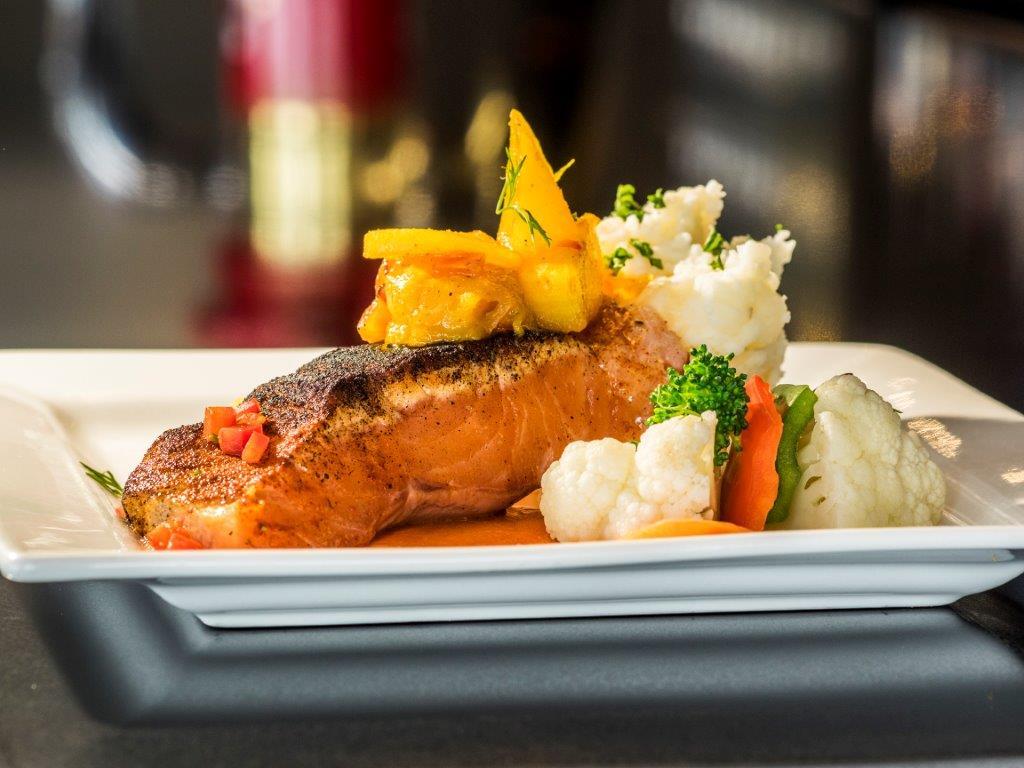
    Blackened Atlantic Salmon with Mango Pineapple Chutney

    Blackened Salmon with Mango Pineapple Chutney. Photo by Jessie Voight
    Blackened Salmon with Mango Pineapple Chutney. Courtesy of Chef Jesse MacDonald.

     Blackening Spice:

    • 4 Tbsp Paprika
    • 1 Tbsp Onion Powder
    • 1 Tbsp Garlic Powder
    • 1 Tbsp White Pepper
    • 1 Tbsp Cayenne Pepper
    • 1 Tbsp Seasoning Salt
    • 1 Tbsp Dry Thyme

    1) Mix all above ingredients well, set aside in bowl.

    2) Roll filets of Salmon in Blackening Spice Mixture. Ensure to get all sides/edges of the fish. Discard remaining spice.

    3) Once salmon is seasoned, sear in a  pan with olive oil on medium-high heat. Your fish is ready to place in the pan once the oil is almost smoking.

    4) Sear the salmon show side down. (The show side is the top piece of the fillet, the bottom piece of the filet will be a slightly different colour pink as that’s where the skin was present at one time). Once a nice caramelization has formed, flip it and sear the bottom for about 2 minutes.

    Miramachi River. New Brunswick. Courtesy of Tourism New Brunswick

    5) Finish in oven for 4-9 minutes depending on the thickness of your salmon filet, or until the fish just begins to flake.

    6) Remove from oven and let rest for 1 minute. Top salmon with a hearty tablespoon of Pineapple-Mango Chutney.

    7) Serve with choice of Starch and your favourite mix of Local New Brunswick Vegetables!

    Pineapple-Mango Chutney:

    • Mango, fresh     10 oz
    • Pineapple, fresh   1 whole
    • Curry Powder    1.5 oz
    • White Wine Vinegar       4 oz
    • Red Pepper, diced           8 oz
    • Red Onion, brunoise      3 oz

    1) Combine all ingredients.

    2) Simmer on medium-low heat for 35-60 minutes. Stirring well every 2-5 minutes.

    3) There should be no residual moisture when the chutney is completed, it should be “au sec” a French cooking term which means “almost dry.” 

    The End. Go Eat. 

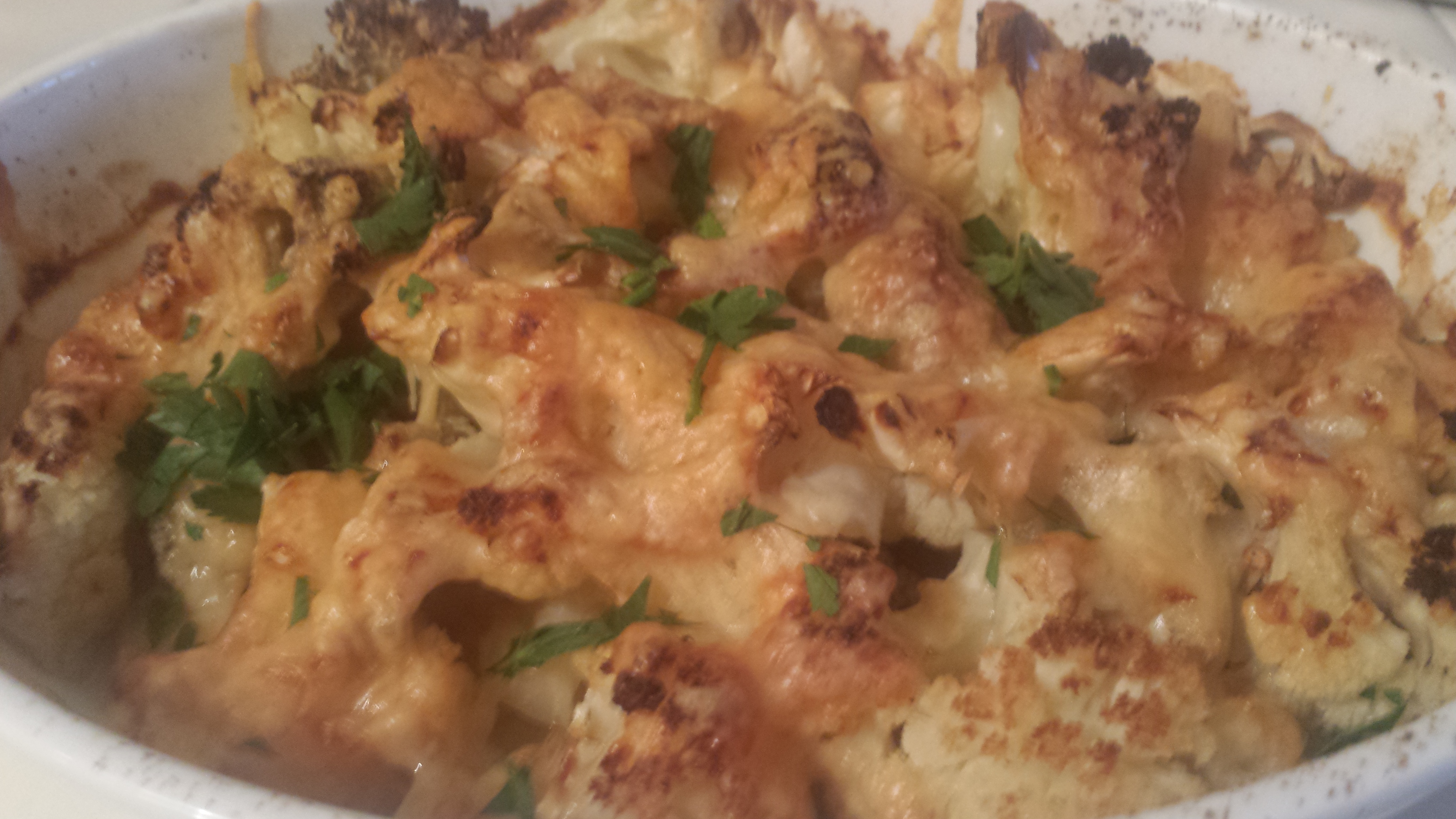
  • I8tonite: Gratineed Cauliflower with Parmigiana -Reggiano

    I8tonite: Gratineed Cauliflower with Parmigiana -Reggiano

    20151003_180219I was in a yet to be opened LA restaurant at a friends and family tryout. It’s  a common practice among well-financed restaurants –  a testing of the waters before media reviews and the paying patrons type of thing.  Invited along with some media, local chefs, restaurant bon vivants and a few Los Angeles gadflies my fellow dining compatriot who was actually the invitee. I was along for the ride. We had met over several bottles of Sonoma Cutrer Chardonnay, Russian River at the Four Seasons Los Angeles years before.  (One of my favorite — I used to drink it like water back in the day.) As we sat there eating the comped food — testing and trying – I was disappointed. I mean, I know it was free – and had I been paying I would have sent some of it back. (The waitstaff was tipped on the bill that we would have been charged.) There was too much sauce on everything, the squid had been broiled too long and the flatbread – which used to be known as pizza — was a blackboard with artisanal toppings.  Seated at the next deuce to us, were the lovely husband and wife team of one my favorite LA eateries. My dining companion, the unnamed couple and I were talking amongst ourselves about how the best food is sometimes the simplest.  It doesn’t always need the sauce or maybe a little less of the herb; perhaps the watermelon radish pesto needs to evolve into something less. As we chatted about how disenchanted with the food we were, the phrase “keep it simple” kept popping up. Matter of fact, the female half – she was the pastry chef — of the cooking couple said, “Always take one thing away.” (Famed fashion designer Coco Chanel said that about dressing but it works for food just as well.)
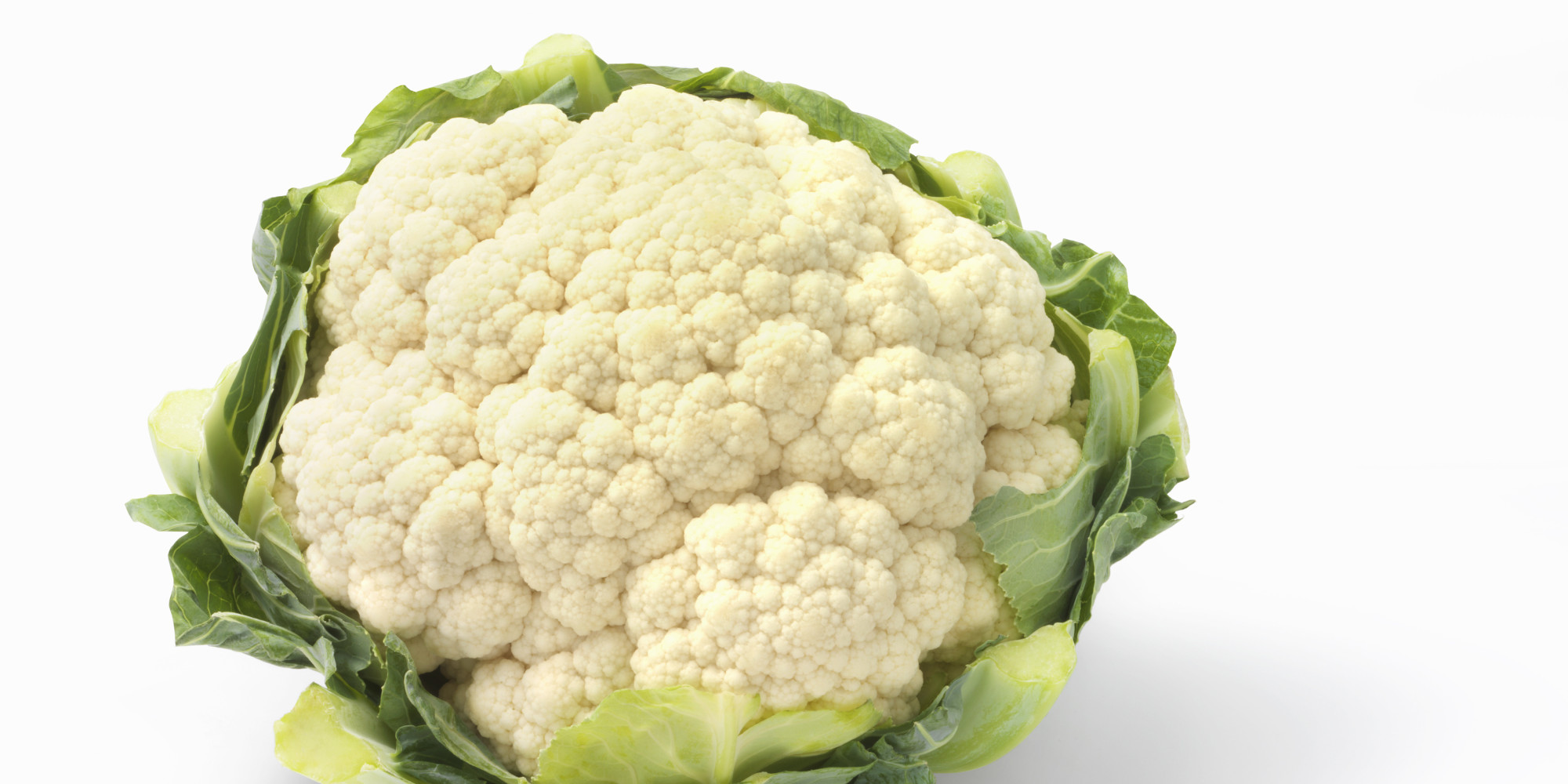

    Simple. It’s something that the famed chefs Alice Waters references in her cookbook, The Art of Simple Food; Cal Peternell’s Twelve Recipes – a series of cooking instructions for his college-going son on the essential twelve recipes – and Marcella Hazan, the Queen of Italian home-cooking who said, “What you keep out is as significant as what you put in.”

    I try and apply this to my everyday life now – what I keep out is as significant as I put in.

    (October 1 was Ms. Hazan’s second anniversary of her death. I didn’t know her but I’ve cooked from her books often.  This recipe is adapted from her Essentials of Italian Cooking and is dedicated to her.)


    Ingredients:

    • 1 large head of cauliflower, cut into florets. Keep the rest for a vegetable or chicken stock later on.
    • 1 – 2 grated cups really good parmigiana-reggiano.
    • Half stick of unsalted butter
    • (Optional and my suggestion: A clove or two of garlic, several dashes of red chili flakes and parsley).

    Let’s make this puppy:

    Preheat an oven to 400 degrees. While that gets nice and toasty, boil a large pot of salted water. Once the H2O it’s roiling and toiling, throw in the cauliflower and cook al dente – about 10 minutes. (It should have a little bit of a bite.) Drain in a colander.
    Take a baking dish which will go from oven to table. Using the butter, grease up the dish liberally. Add the florets packing them in tightly. Dot with more butter and cover with the cheese. (This is where I slide in some garlic and sprinkle lightly with the chili flakes. You don’t have to – it just adds a little to the final product.) Place in the oven. Cook for 20 minutes until the cheese is a browned and beautifully crusted.

    Chop some fresh parsley, throw on top and serve.

    You can also do this with ramekins so you serve individually. That’s up to you….isn’t it amazing what you can do with three ingredients?

    The End. Go Eat.

  • i8tonite: with “Food Person” Victoria Granof and Recipe for Chickpea Soup

    i8tonite: with “Food Person” Victoria Granof and Recipe for Chickpea Soup

    Victoria Granof
    Granof. Courtesy of Granof.

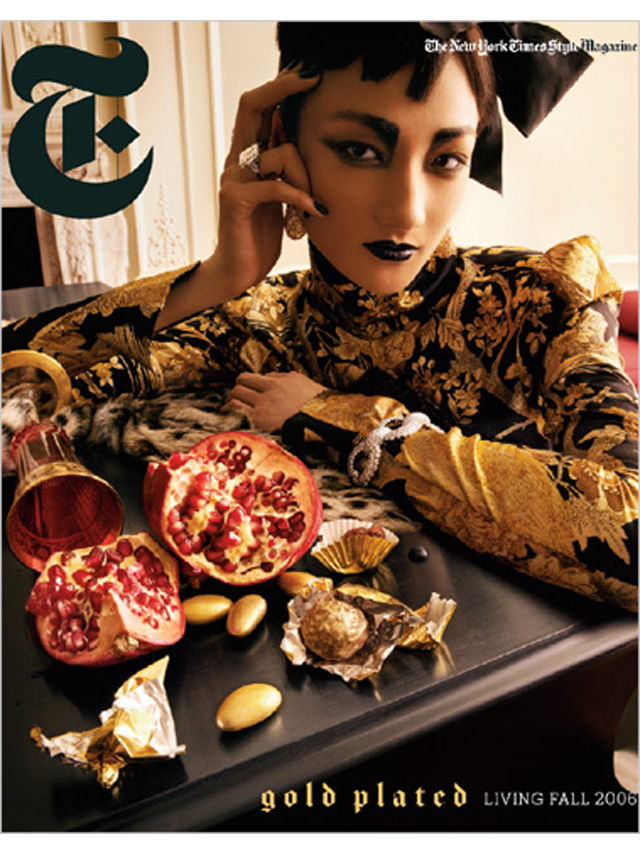
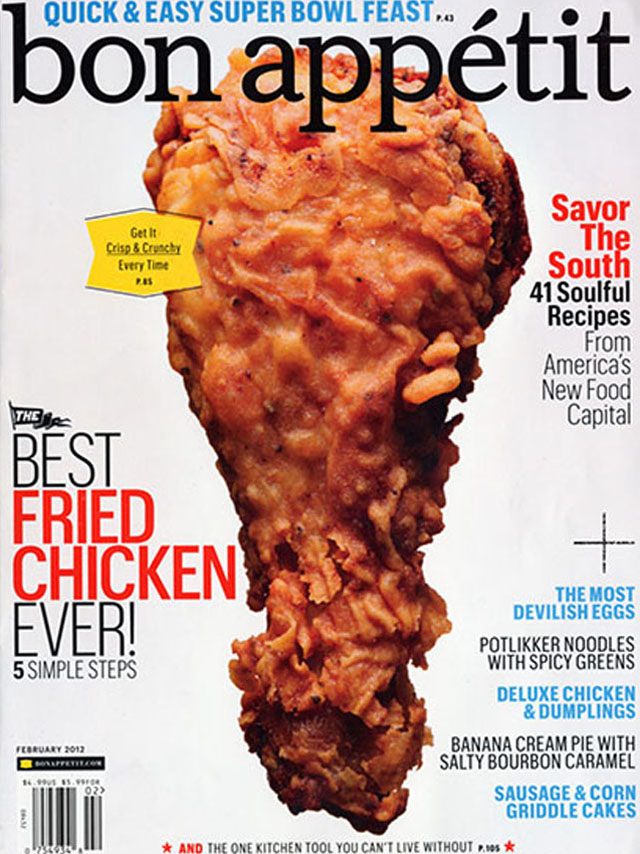
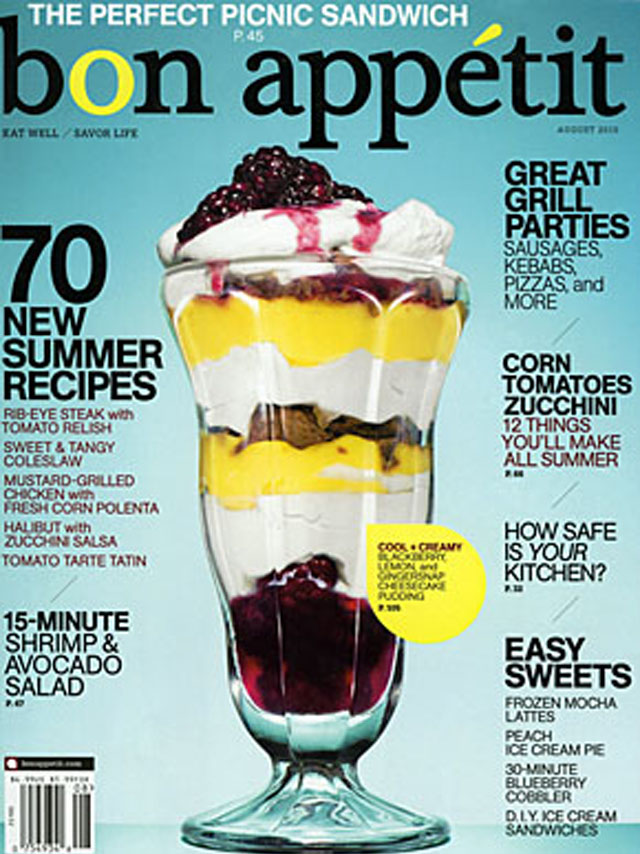
    With work published in T: Magazine (New York Times Sunday Magazine), Vogue, Bon Appetit, The New Yorker and many more  beside such acclaimed photographers as Irving Penn, Steven Klein and Annie Leibowitz, you would assume that we would be talking about Gisele, Naomi or Kate. In fact, we are talking about, Victoria Granof – whom I’ve personally dubbed the Madonna of the food stylists. Why the comparison? Like the entertainer, there isn’t anyone like Granof. She took food styling to innovative heights using her art and culinary background to convey the editorial or advertising message.  She’s everywhere. (Vogue, Bon Appetit, the New York Times? Who are we kidding – she’s worked for all the mighty publications on multiple occasions.) Lastly, she’s good. No matter what you say about Madonna, she made us dance and sing and gets paid for it – Granof makes us look at food as beauty, edible and artistic – and gets paid for it.

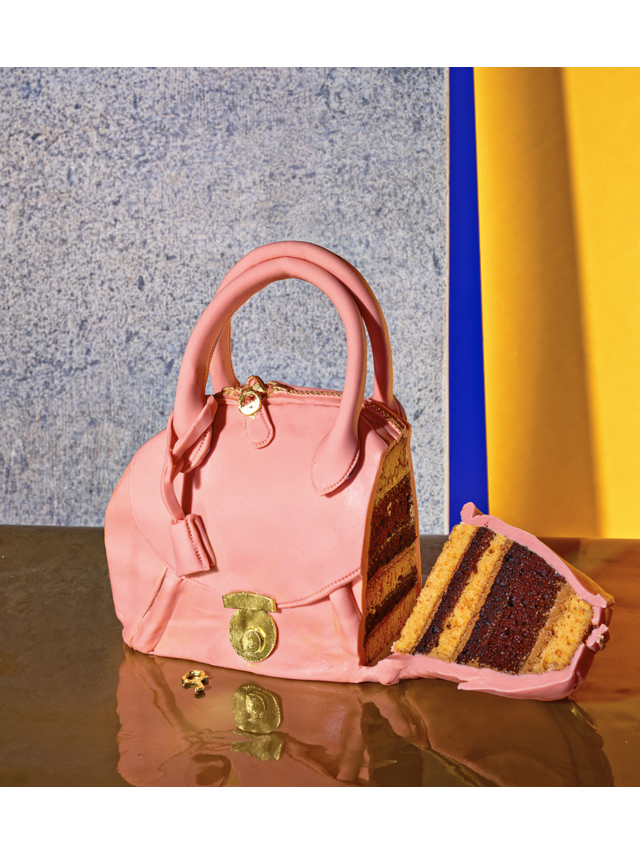
    Purse CakeHaving studied at Le Cordon Bleu in Paris, Granof has been a pastry chef, cooking instructor and chef in her hometown of Los Angeles before she became a food stylist. Cherry Bombe, a print publication devoted to women and food did an in-depth profile about Granof and food styling, working with photographers and staying at the top of the food chain.

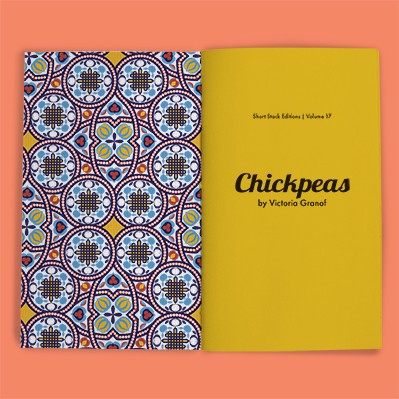
    Currently, Granof published Short Stack editions cookbook with the ingredient of chickpeas. (You get to test a recipe below). Short Stack cookbooks are ingenious collectors’ item that highlight one ingredient.  The mighty food stylist was asked contribute to the growing series oeuvre accompanied by likes of Chef Virginia Willis, Liquor.com’s editor in chief Scott Hocker and Jessica Battaliana, editor of San Francisco’s Tasting Table.

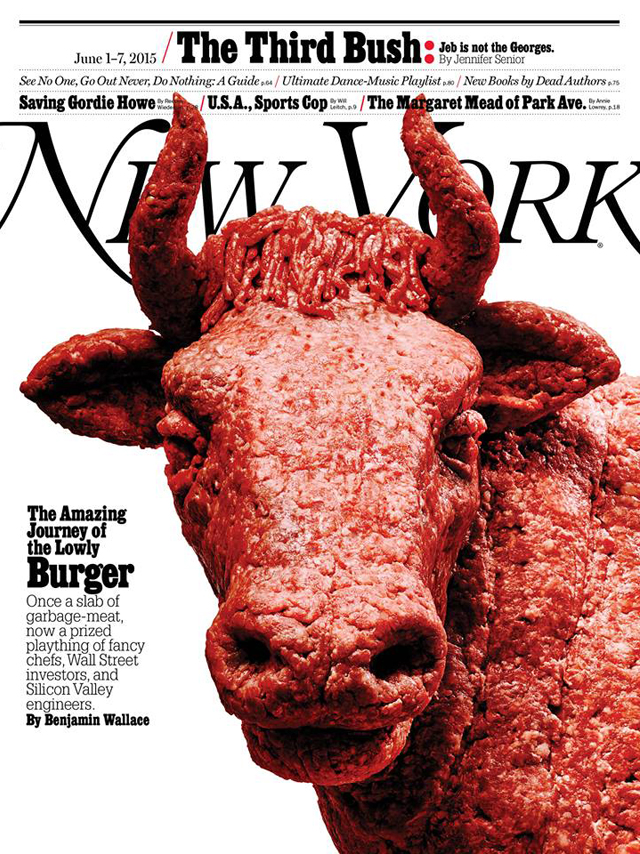
    Photo Courtesy of New York Magazine
    Photo Courtesy of New York Magazine

    As we chatted over the phone for the introduction to i8tonite’s newly developed “Food People Questionnaire”, — which was created specifically to interview her and people in the food industry not in front of a stove —   I could hear deep affection for her son, Theo, who played in the background, admiration for Irving Penn, the first big photographer and love of her job. (C’mon, she gets to play with food.) As far as food people go, Granof is many things besides a food stylist – she is an artist, observer, food lover, inventor, and inspirational.

    Food People Questions (with a nod to Marcel Proust’s Questionnaire):

     Times New YorkWhat is your favorite food to cook at home? Duck confit.  I make a huge pot when the weather cools, and eat it all winter long — with red cabbage and apples.

     What do you always have in your fridge at home? Yogurt, greens, milk, anchovies, miso and a jar of tomato paste covered in oil to keep it fresh.

     What marked characteristic do you love in a person with whom you are sharing a meal? I’m completely in love with anyone who pauses to regard their food (even better – to close their eyes and let the aromas waft up!) –  before they begin eating.

    Sonia Arrison What marked characteristic do you find unappealing in a person with whom you are sharing a meal? POOR TABLE MANNERS!  Also can’t stand anyone who salts their food without tasting it first.

     Beer, wine or cocktail? Never beer, always wine, sometimes cocktail.

     Your favorite cookbook author? Mary Taylor
    Simeti.

     Your favorite kitchen tool? Tongs.

    Favorite types of cuisine to cook? Cuisine Mènager, Sicilian, and Ukrainian.

    VG00055 Beef, chicken, pork or tofu? You forgot beans!  And seafood! I love a good steak about once a month, pork if I’m down South, tempeh rather than tofu and chicken only if it’s been cavorting outside and not in a factory.

    Favorite vegetable? The kabocha that I smell burning as I write this!

     Chef you most admire? Massimo Bottura.

     Food you like the most to eat? Anything with tomatoes, lemon and salt.

     Food you dislike the most? Cheese and lamb.  Yes I know – blasphemous – but true.

     What is your favorite non-food thing to do? Salsa dancing and flea marketing!

    Bon Appetit 2 Who do you most admire in food? Mothers and fathers who feed their children well.

     Where is your favorite place to eat? My friend Monica’s table.  Which is now at her restaurant, Nickle Diner, but it still feels like you’re eating at her home.

     What is your favorite restaurant? Cafe Katja in New York, during Asparagus Week.  They do a whole menu based on white asparagus.

     Do you have any tattoos? And if so, how many are of food? I have the sun (with the face of Pele, the goddess of fire) on one ankle and the moon (from the Mexican lotería card) on the other.  Not food exactly, but I remember stopping at a shave ice truck in Kauai right after getting the sun tattoo done and having a shave ice with coffee, condensed milk and whipped cream.

    Chick peas

    RECIPE: Dead-Easy Chickpea Soup:  

    Chop a peeled onion and boil it in a pot with 6 cups water, 2 tsp. ground fennel seed and 2 tsp. salt for 10 minutes. Take a stick blender to it while you slowly pour in a cup of chickpea flour.  Simmer another 5 minutes, and finish with 1/3 cup of good olive oil.  Do NOT skimp on either the salt or the olive oil.  Serve it in bowls topped with sautéed greens and aleppo pepper flakes.

    The End. Go Eat.   

    Note: All photos were styled by Victoria Granof.

  • i8tonite: with Chef Ilson Goncalves of Samba and Acorn Moranga

    i8tonite: with Chef Ilson Goncalves of Samba and Acorn Moranga

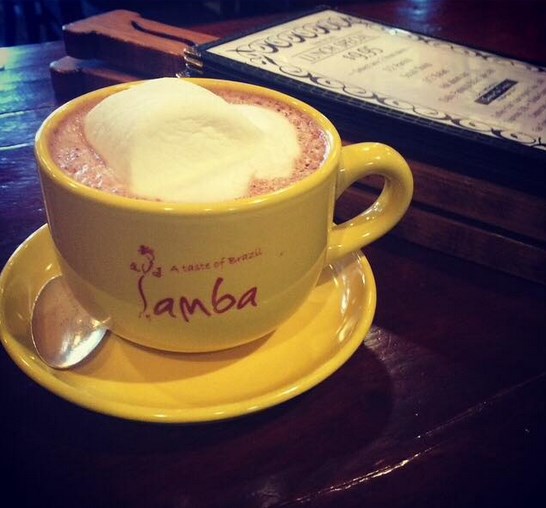
    SambaMontclairAcornMorangaOne of the great things about the United States are our individual food stories. It’s inspirational to share epicurean traditions from one’s native country showcasing edible discoveries. Like many chefs, Ilson Gonçalves of Samba Montclair, was inspired by his Brazilian mother and her restaurant. Gonçalves makes annual pilgrimages to his birthplace, Blumenau, a small city located in Southern Brazil, to discover and re-imagine traditional and non-traditional recipes alike for his guests.

    Samba, the bring-your-own-bottle, 32-seat venue has been reviewed by many regional dining critics as well as the venerable The New York Times. The latter citing in an enthusiastic review, “The kitchen is small and the food that comes out of it is guileless: straightforward, hearty, built for comfort”. The dining writer ended his eating observations stating, “Diners…may be pleasantly surprised by Samba’s homey pleasures and mellow atmosphere. This Brazilian place proudly bops to a different beat.”

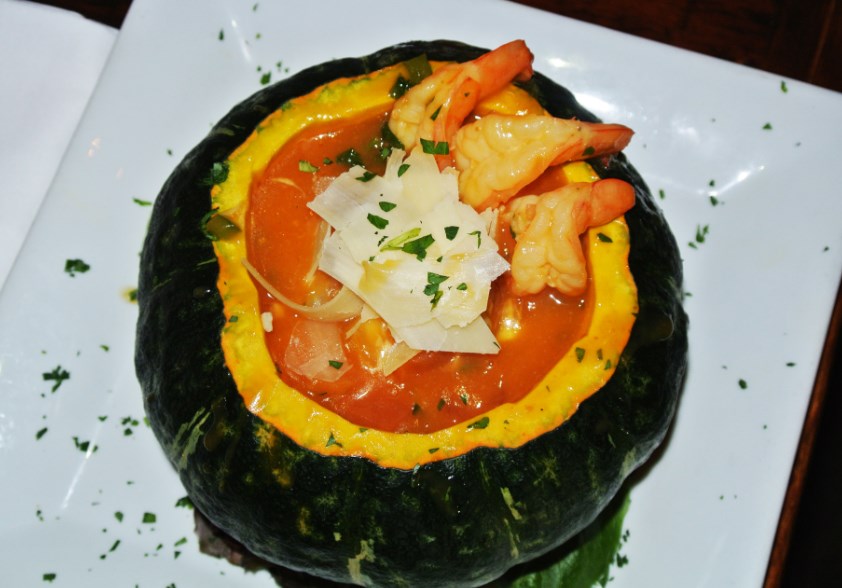
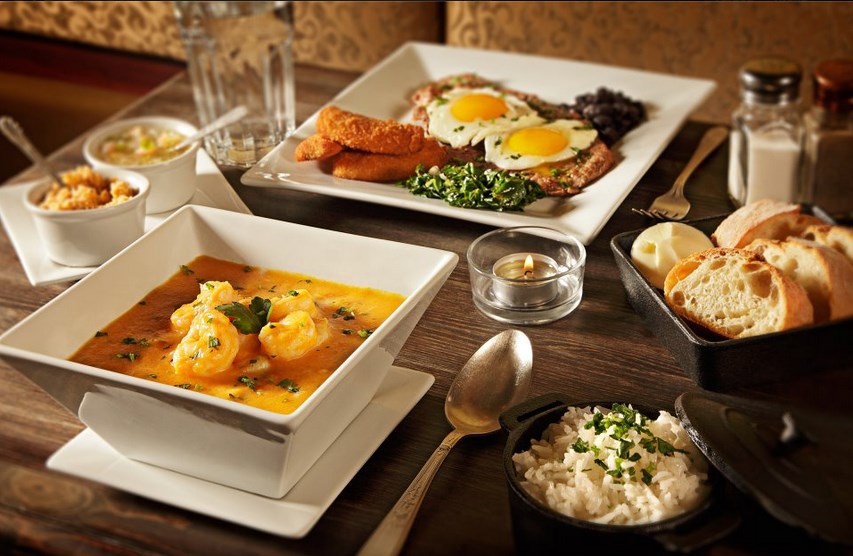
    All year round Samba offers stellar dining, but fall is really special when guests can avail themselves of Chef SambaMontclairOwnerIlsonGoncalvesGonçalves childhood Brazilian memories with signature dishes such as Mandioca frita com linguica calabresa e cebola (fried yucca with Brazilian pork sausage and caramelized onions), Bobó de camarão (yucca purée with coconut milk, tomatoes and onion served with whole shrimp and white rice) or Bifo a cavalo (thin pan fried steak topped with two fried eggs served with sautéed collard greens, white rice and breaded fried banana). New Jersey Monthly notes that Gonçalves “serves up an excellent version” of the traditional feijoada, Brazil’s national dish, a gently braised stew of black-bean, pork, dried beef, and linguiça.

    Samba’s success clearly lies with Gonçalves culinary skills, affection for his mother and Brazilian cooking techniques. It is a delicious and loving homage to Brazilian home-cooking and mothers who cook, inspiring generations to do the same.

    SambaMug

    Chef Questionnaire from Chef Ilson Gonçalves:

    How long have you been cooking? I learned to cook when I was 11 years old in my mom’s restaurant in Brazil.

    What is your favorite food to cook? Chicken soup.

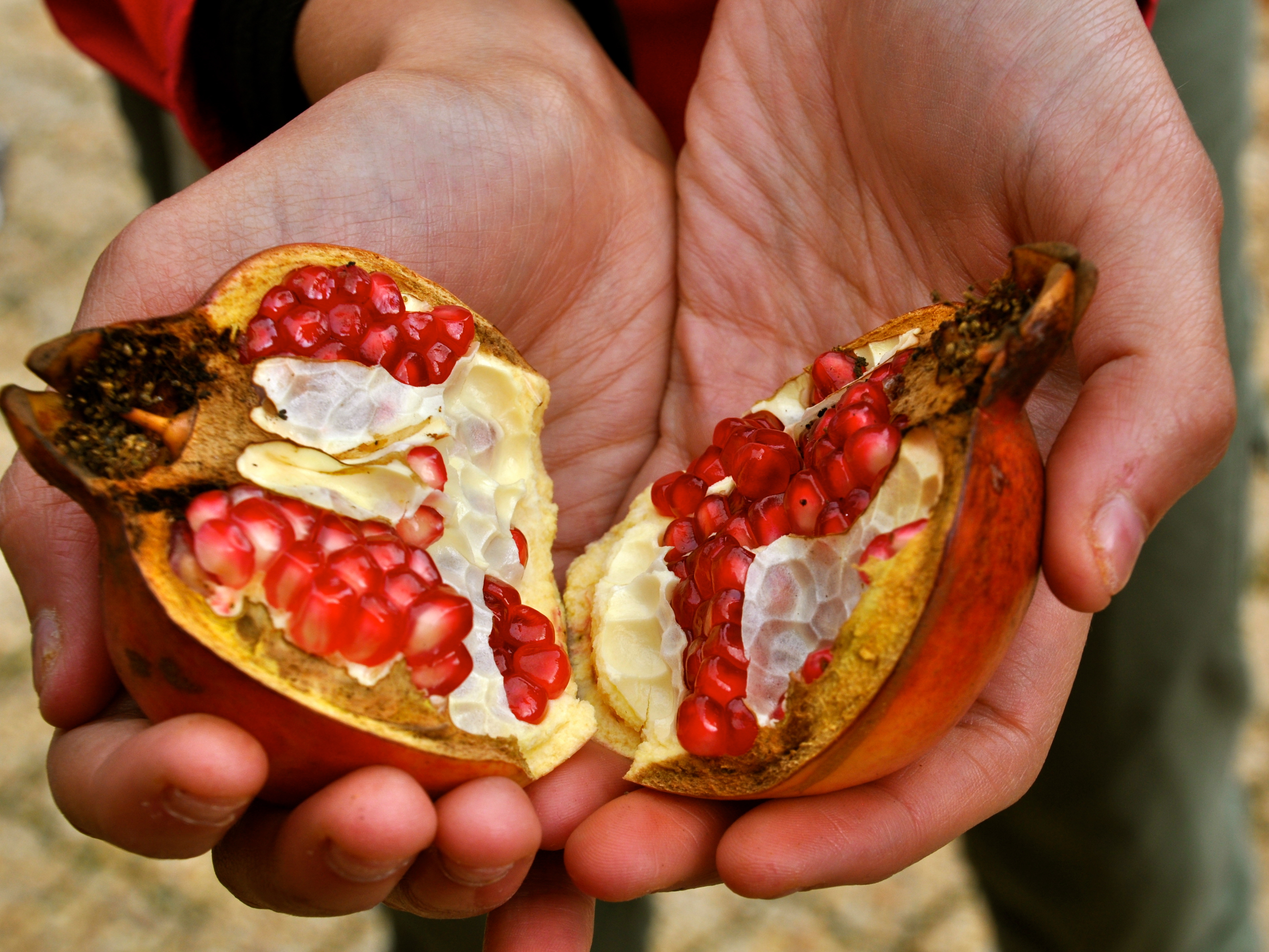
    What do you always have in your fridge at home? Pomegranates. When I watch a movie, pomegranate for me is like popcorn.

    Photo by Shelby Stewart
    Photo by Shelby Stewart

    What do you cook at home? I don’t really cook much at home because I live by myself.

    What marked characteristic do you love in a customer? People who are open-minded about trying different foods.

    What marked characteristic do you find unappealing in a customer? The (individuals) who eat the whole plate then complain about the food.

    Tupperware, Rubbermaid, or Pyrex? Pyrex. I hate Tupperware. My mother used to have so much Tupperware that when I opened her cabinet it would fall on my head.

    Beer, wine or cocktail? Wine. But it depends, if I go to a bar with friends, I

    Photo by TravelJunction
    Photo by TravelJunction

    like beer.

    Your favorite cookbook author? I don’t follow cookbooks.

    Your favorite kitchen tool? You can do anything with a knife.

    Your favorite ingredient? Yucca. I think it’s very universal, like flour.

    Your least favorite ingredient? Cucumber. It makes me nauseous just to think about it.

    Least favorite thing to do in a kitchen? Wash burnt pans.

    Favorite types of cuisine to cook? Brazilian, but I’m biased.

    Beef, chicken, pork or tofu? Everything depends on what I’m in the mood for. I can’t eat tofu, though, because I’m allergic.

    Cassava
    Yucca/ Cassava: Photo by Tom Rulkens

    Favorite vegetable? Yucca.

    Chef you most admire? Alex Atala of D.O.M. in Sao Paulo, Brazil

    Food you like the most to eat? Rice and fried eggs.

    Food you dislike the most? Anything that has cucumber.

    How many tattoos? And if so, how many are of food? None. I think they look good on others, but I can’t see myself with tattoos.

    SambaAcornMoranga
    Acorn Moranga: Photo by Samba Montclair

    Recipe: Acorn Moranga

    • 2 medium acorn squash
    • 1 medium butternut squash, diced
    • 1/4 cup extra virgin olive oil
    • 2 medium white onions, diced
    • 4 gloves of garlic, minced
    • 1 pint heavy cream
    • 1 13.5 oz. can coconut milk
    • 1 lb. u12 shrimp
    • Parsley and cilantro for garnish
    • 1/4 cup shaved Parmesan cheese

    Cut acorn squash in half and remove seeds, creating a bowl. Cover squash with aluminum foil and cook in a 350 degree oven until tender,  60-75 minutes.

    Heat extra virgin olive oil in a large skillet. Over medium heat, cook the onion with garlic and caramelize the butternut squash.  When squash is tender, add the heavy cream and coconut milk and simmer. Add the shrimp and cook another 4 minutes.

    Pour the cooked butternut squash and shrimp mixture into the acorn squash. Garnish with parsley and cilantro and top with shaved Parmesan. Makes 4 servings.

    SambaFood

     The End. Go Eat.


  • Meatless Monday: NYC Style Tofu and Vegetable Tempura

    Meatless Monday: NYC Style Tofu and Vegetable Tempura

    (Note: This is re-run — currently traveling in Denver.  We will be back to our regularly scheduled program on Wednesday.)

    Way back….way back…in the old days, the 80s, I was a vegan. Yup. Yup. I know it’s hard to believe but I was and living the romantic (not!) bohemian (not!) life in New York’s Tribeca. Times were tough. Money was not plentiful (It’s not now either). I was young, idealistic, hungry having just graduated school, working in an art gallery doing marketing plus waiting tables to make ends meet.

    Vegetables and Tofu for Tempura

    It was the late 80s, early 90s. The Tunnel was the place to go. Tama Janowitz was big in the literary circles. Madonna was doing “voguing”. Ross Bleckner was the artist everyone was buying and I got involved in my first relationship and started to cook vegan. We decided to stop eating dairy products since he was lactose intolerant. His parents never removed his tonsils as a child, he was now subjected to severe bouts of strep throat for weeks at a time, especially after he drank milk or ate cheese. Bacteria clung to his tonsils and had a party.

    We lived in a converted loft in Tribeca on Franklin Street, between West Broadway and Broadway, three blocks south of Canal Street. At the time, there was a store about three blocks to the West, called Commodities just up from the glorious restaurant Chanterelle. It was a huge massive store. One of the few groceries stores in the area (down a little further there was a Gristedes or some chain supermarket) and it featured a lot of soy products, tempeh, meatless burgers, seitan. This was long before Whole Foods or Erewhon. This may have been the first store of its kind in Manhattan but I don’t remember. I do remember it wasn’t cheap. But it was their produce section and soy area that I started to make tempura without egg. It’s a simple process of a cup of flour (any flour), a teaspoon of baking soda and powder and club soda, maybe 1/2cup. (I eyeball it.) Stir until you get a thick paste with lumps. Throw in your veggies: onions, carrots, broccoli, whatever you have. (In tonight’s Meatless Monday, I used Swiss Chard stems. Yum!) Fry up in a wok or sautee pan and dip. Salt while still hot. And since, it was a rainy LA Monday, it was perfect comfort food.

    Tofu, Zucchini, Swiss Chard Stems, Red Bell Pepper, Carrots
    Tofu, Zucchini, Swiss Chard Stems, Red Bell Pepper, Carrots
  • i8tonite: A Cheat Sheet for Eating in South Beach, Miami

    i8tonite: A Cheat Sheet for Eating in South Beach, Miami

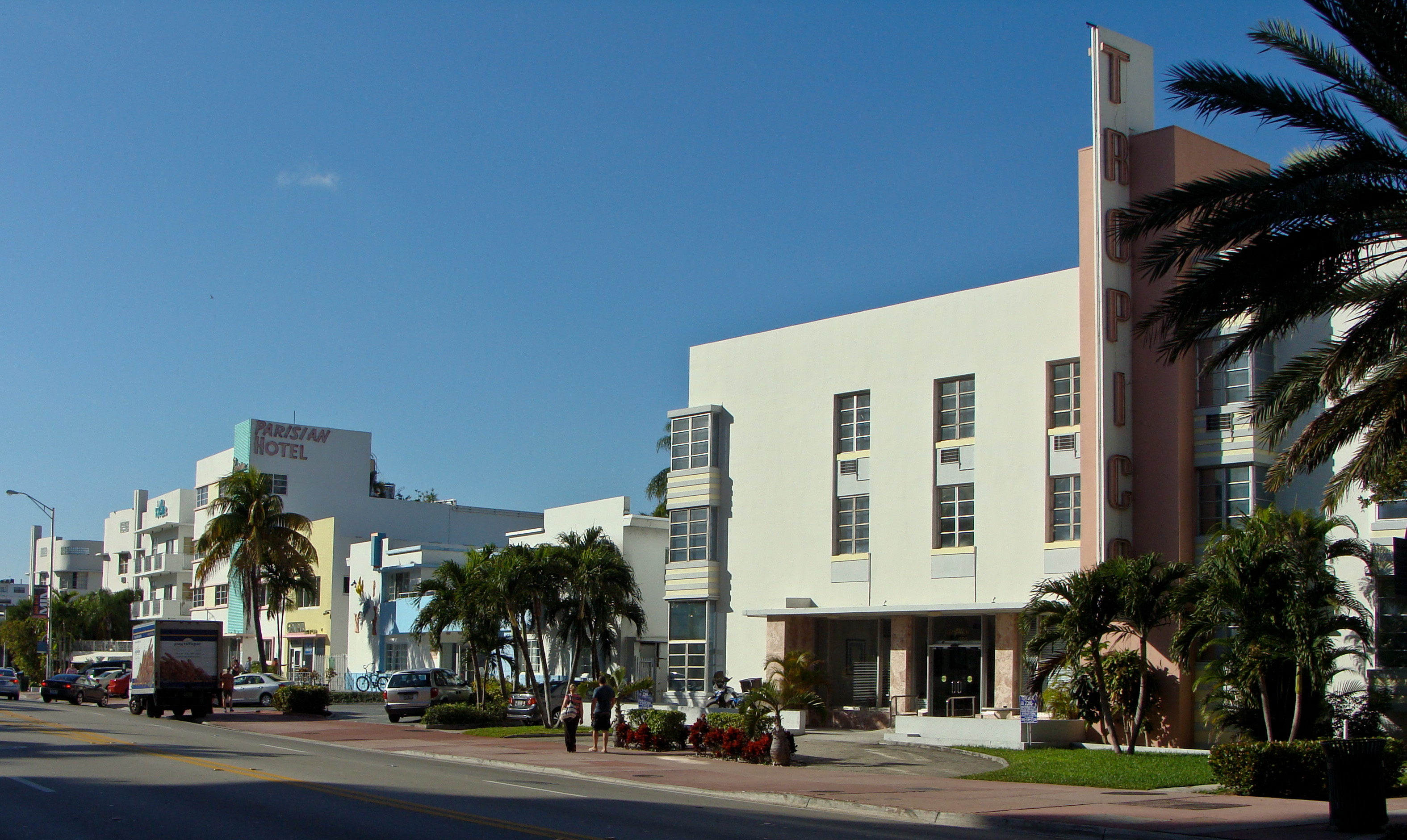
    When i8tonite came up with the idea of a dining out series highlighting neighborhood eateries, we South Beachwere a little surprised by some of the suggestions which included South Beach.  My partner, Nick, lived there for 20 years and the perception of South Beach – at least mine – is through a Hollywood camera. Beautiful but violent, with really pretty people in muted pinks and blues (“Miami Vice”) or hot crimson, emerald greens and bright yellows (“CSA: Miami”). It’s colorful, lively and murderous. (Let’s not forget “Scarface”).

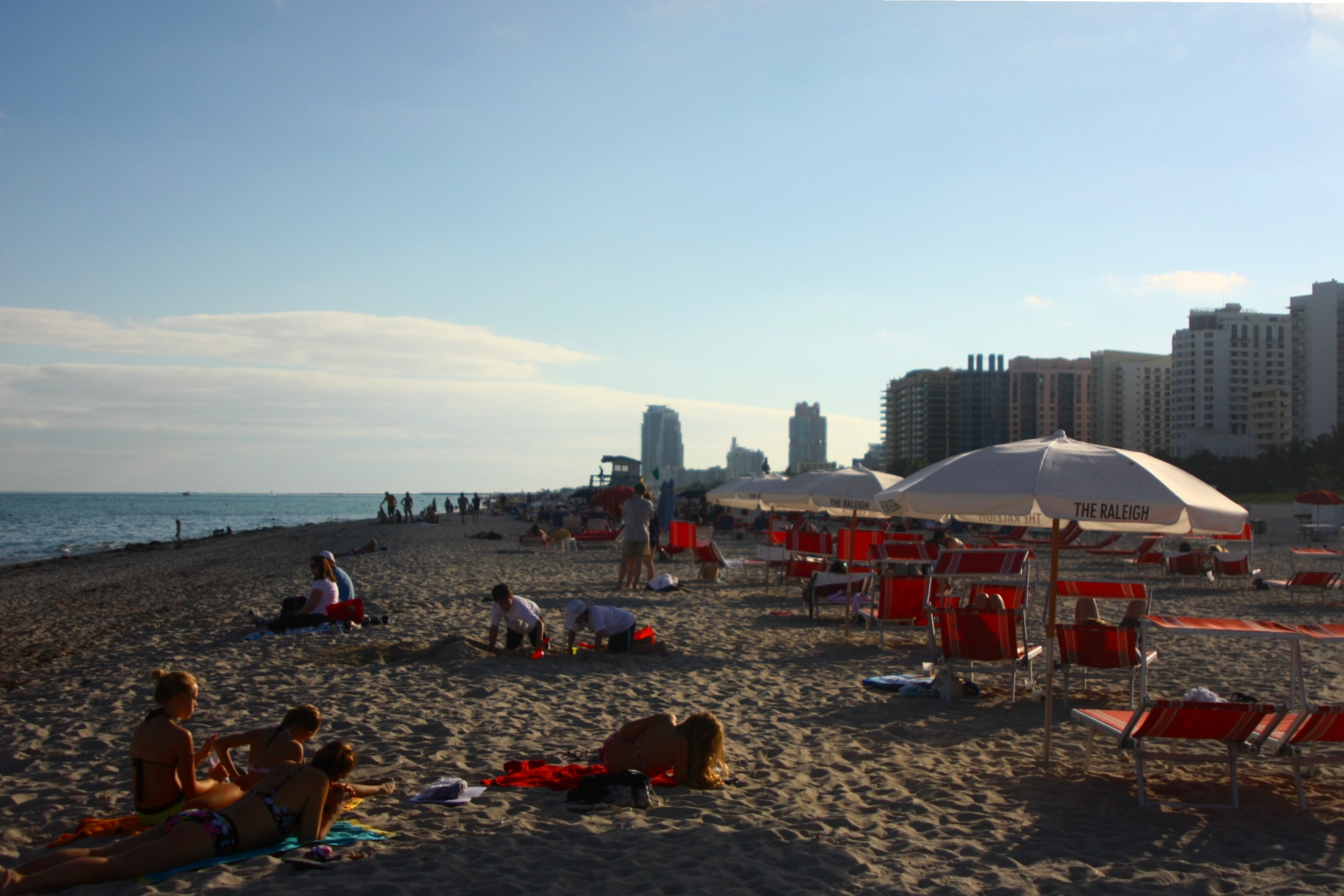
    Our cultural viewing of these shows cloud the real goodness of South Beach which is its Star islandvery much an American city, a melting pot of cultures and cuisines.  Smack dab in the South Beach’s presumed debauchery is a charming enclave of young families, vintage buildings and elementary schools. This is the area of South Beach that Nick hearts and that I know. Truth be told, South Beach is a neighborhood with superb, laid-back eating where the old and the young sit languishing with Cuban coffee in the tropical heat.

    Photo by Taki Lau.
    Photo by Taki Lau.

    Animated with Cuban, Puerto Rican and Haitian music throughout the day, provided by street performers, the sun-drenched neighborhood is a showcase for the Caribbean culture, with a smattering of New York City’s Jewish retirees who defected from the harsh winters. Once visitors push past the paparazzi, the Latin and Hollywood stars and the world-weariness of the second-home owning Europeans, South Beach is a charming mix of American values and delicious foods which is really what gives it bragging rights — finding a new and exciting culture without having to drag out your passport or get on that plane – which is just a big expensive bus with wings.

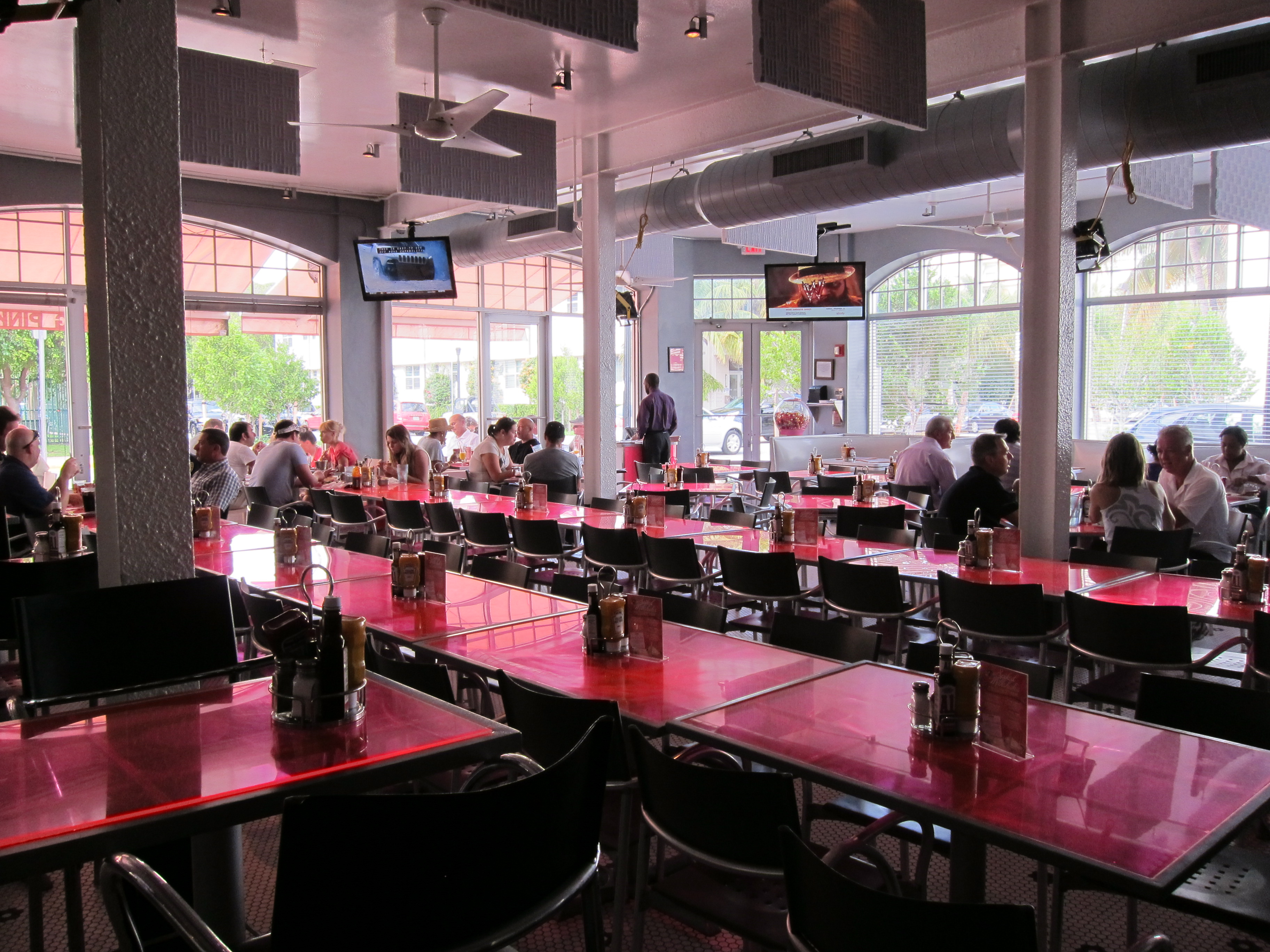
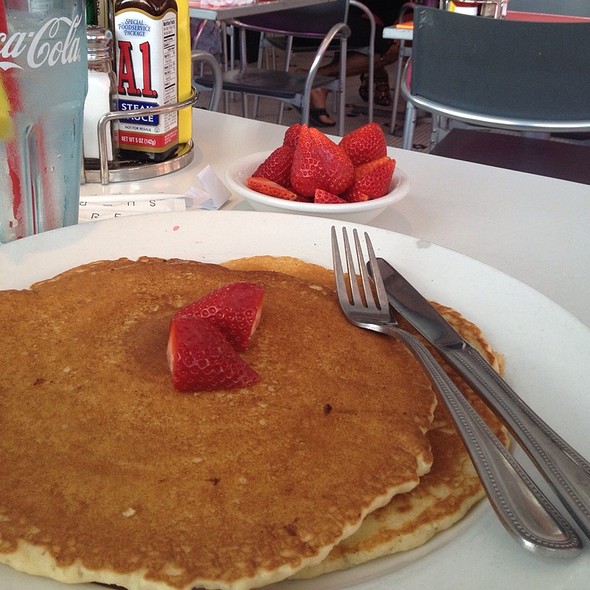
    Big PinkBreakfast: Big Pink which was been opened for almost 20 years is a mainstay in the South Beach neighborhood. Serving breakfast to late night dinner – soaking up the alcohol, this diner is the place where people stroll or roll in (on skates). Big Pink is spotted by the pink VW “bugs” parked outside. Delivery is a popular way for tourists to order late night snacks if wobbling out your hotel is out of the question. The restaurant menu is not inventive as much as comforting and tasty. That’s okay because it’s guaranteed that serving up big burgers, hand-cut fries, waffles, breakfast burritos and of course, matzo brei, will satiate that American appetite. Swimming in the clear waters of South Beach will help burn those excess calories.

    • Big Pink PancakesMy suggestion: Big Pink’s Pancakes served with fresh strawberries.
    • Price: $12.50
    • Hours: Monday – Wednesday, 8am – 12am. Thursday – Saturday, 8am – 5:30am (Why even bother closing?). Sunday 8am – 2am.
    • Address: 157 Collins, Miami Beach, FLA. 33139
    • Phone Number: (305) 531 -0888
    • Website: www.bigpinkstakeout.com

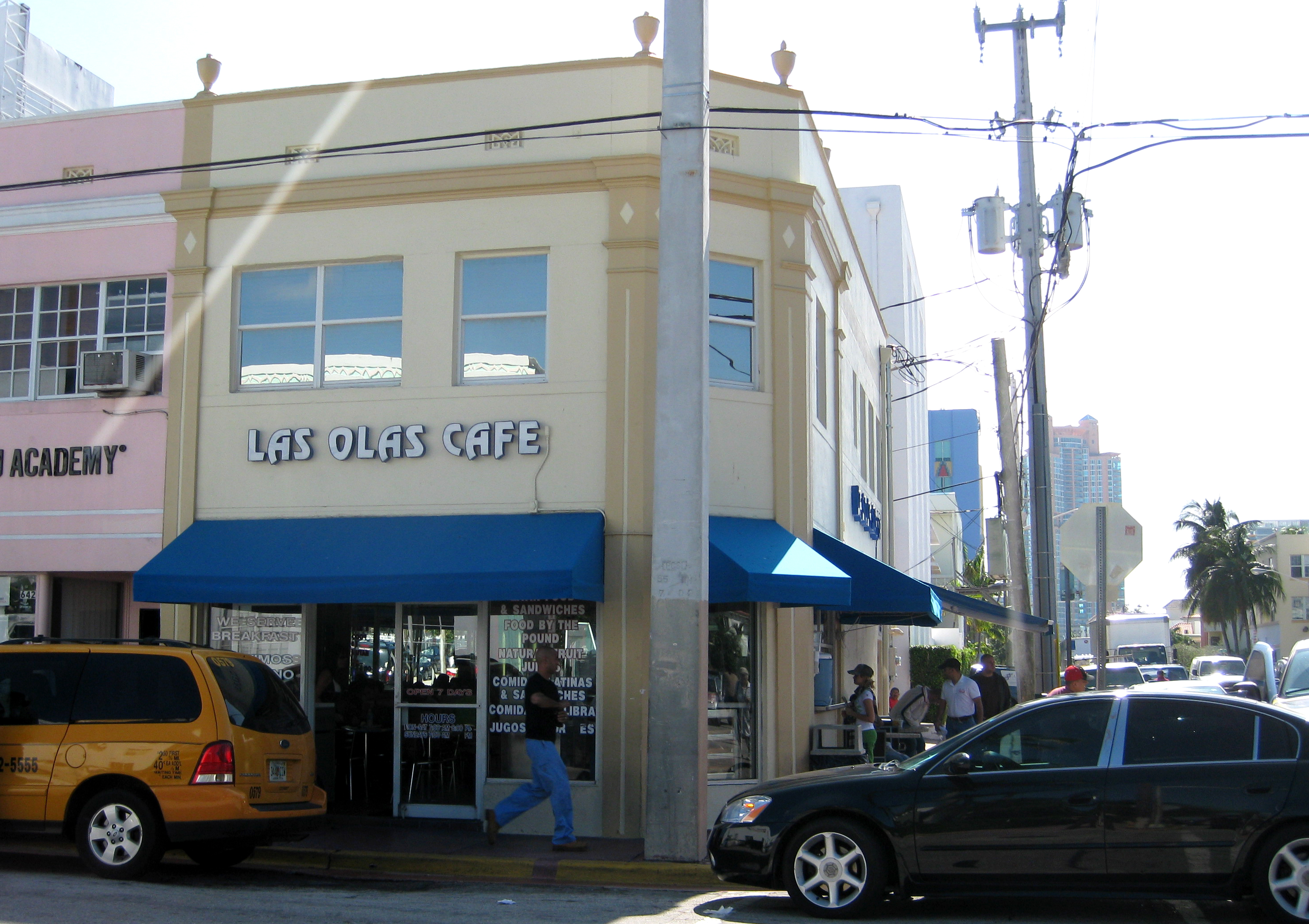
    Las OlasLunch:  Las Olas Café has been featured in “Travel + Leisure”, Miami “New Times” and by Anthony Bourdain, who seems to have become a barometer for all things culinary. Take away all the fluffiness, and what you have is a Cuban-American family owned and operated neighborhood loncheria (luncheonette) serving up the best of Cuba. The best part about it, it’s good. Sometimes, the hype strips a business of its authenticity but that’s not the case for Las Olas.  Nothing is over $10 and it’s a cash only affair which makes me feel I’m getting old world treatment and not something that’s been branded waiting for an IPO.

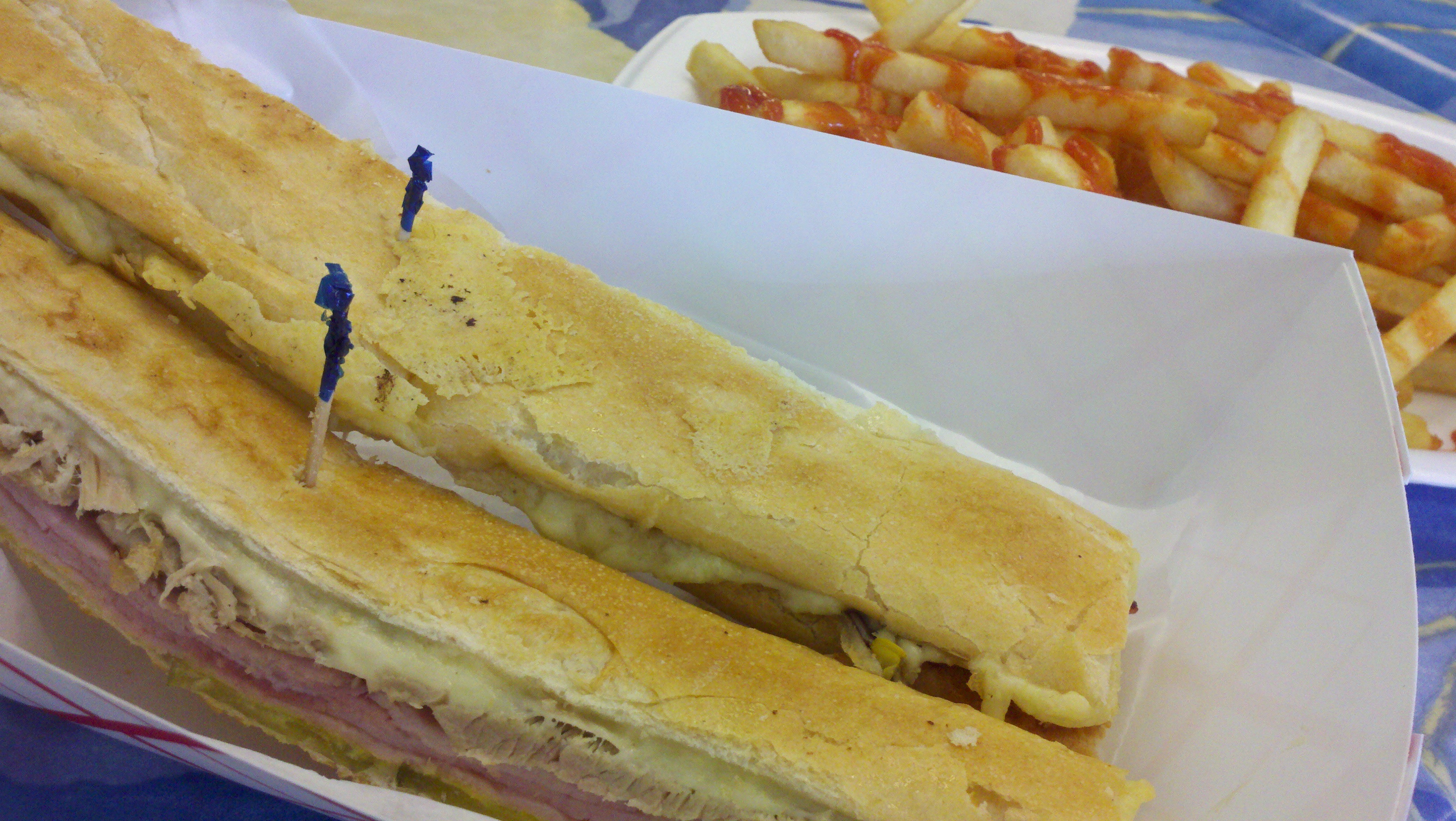
    My suggestion: The Cuban. The bread, the roasted pork-loin, the ham, the cheese, the Cuban Presspickle and the pressing make mighty fine eating. Supposedly, the real test of a great Cubano is the bread which is made with lard – making it richer – and the “la Plancha”, the grill or the sandwich press. The combination essentially steams the inside without the use of extra moisture such as mustard or mayonnaise. One of the top ten dishes in the world…right up there with cassoulet and Filipino adobe. Only in Miami or Cuba. Luckily the borders are opening.

    • Price: $8. You will come back the next day.
    • Hours: Open seven day a week, 6am – 8pm.
    • Address: 644 6th Street, Miami Beach, Fla., 33139.
    • Phone Number: (305) 534 – 9333
    • Website: None. Refreshing, huh?

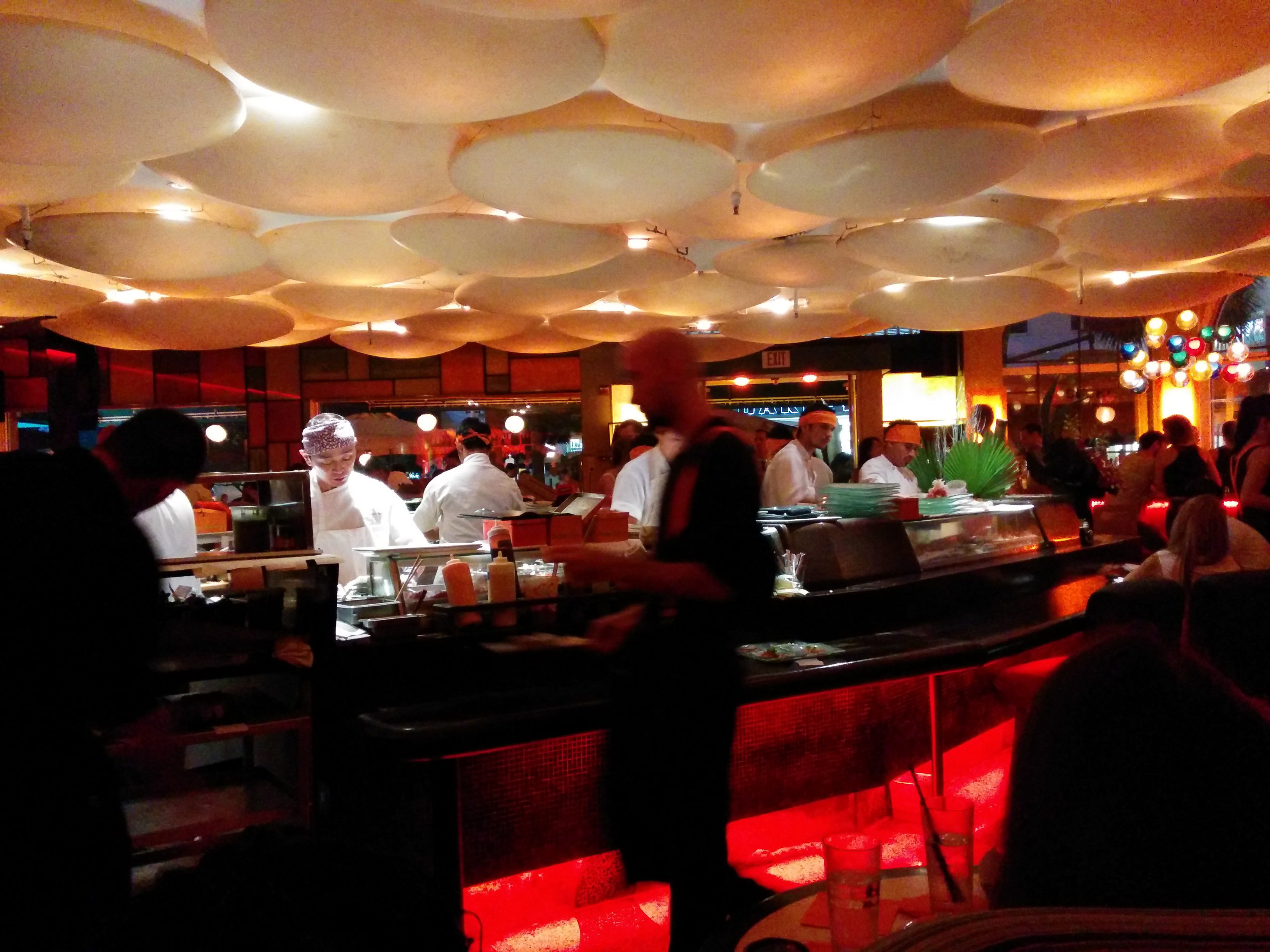
    Snack Time: Okay, I know – Sushi Samba is a chain. Albeit, an interesting chain that started in New York City and now has five outposts including 011 - Sushi SambaLondon. Sushi Samba celebrates South American culture that we don’t see very often, which is a triumvirate of Japanese, Peruvian and Brazilian cuisine. The United States doesn’t have a hold on the patent of melting pots. At one time, I was in Seattle on a food-related marketing event and my colleague from Miami kept talking about Sushi Samba and their happy hour. Nick does the same. It sort of cements it in this South Beach listing.

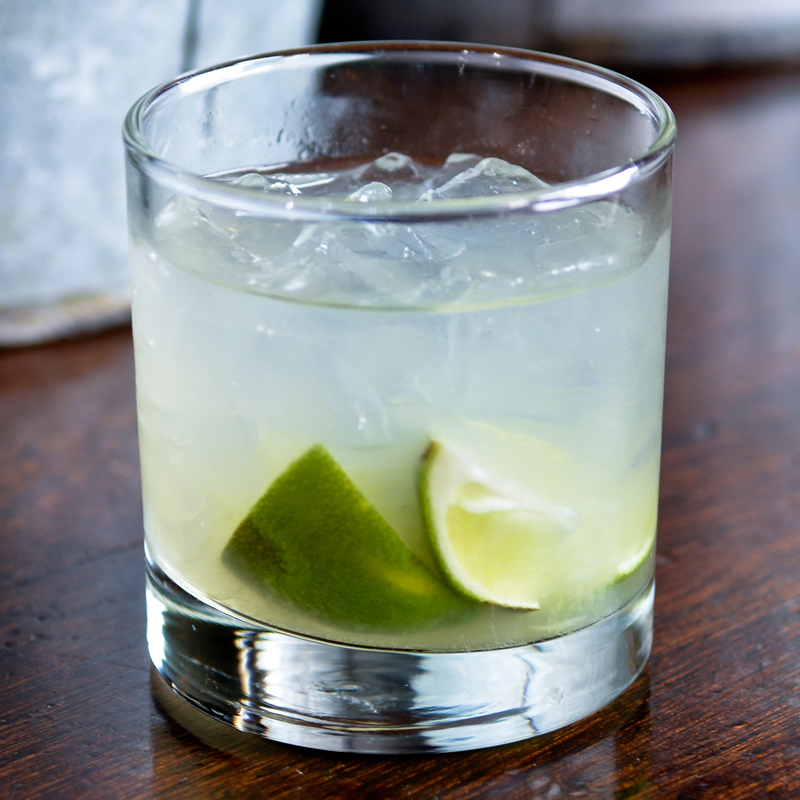
    Caipirinha-1My suggestion: Caipirinha. Sushi Samba has a happy called “Samba Hour”. Cute. It offers up some excellent sushi and food along with Brazil’s greatest export besides Gisele.

    • Price: $5.00 for the Caipirinha. Everything else is extra.
    • Hours: Monday, Noon – Midnight; Tuesday – Thursday, Noon – 1am; Saturday, 11:30am – 2:00pm and Sunday 11:30 am – Midnight.
    • Address: 600 Lincoln Road, Miami Beach, Fla, 33139
    • Phone Number: (305) 673 – 5337
    • Website: www.sushisamba.com

    Dinner: You would think a steakhouse is a just a steakhouse but it really doesn’t work that way. Steakhouses are a reflection of the city where they were created such as Brooklyn’s Peter Luger’s (working man’s dinner with big cuts of beef), Wolfgang Puck’s Cut in Beverly Hills (star sighting and pristine, untouchable vibe) and George & Georgetti in Chicago with big, oversized martinis. In South Beach, it’s Meat Market, a sexy, sleek eatery with a blush-centric atmosphere. Most diners are dressed like its a fashion runway strutting between tables in Hérve Leger and Tom Ford. (I’m not really sure where that rich food is going.) An excursion to Meat Market – which sounds like retro gay men’s leather bar in Manhattan – will set someone back easily $150 to $200 per person but it’s excellent and you won’t find this everywhere – only in Miami. (They are also in San Juan and Coral Cables — so it doesn’t count.)

    Meat-Market_54_990x660My suggestion: Mixed Grill. This is a trio of two cuts of meat and seafood. It rotates daily and is never the same each day. It’s a good way to try different items. Call ahead.

    • Price: $55 – $65, depending upon the chef selections.
    • Hours: Sunday – Thursday, Noon to Midnight; Friday – Saturday, Noon to 1:00am. Kitchen is closed 4pm – 6pm daily. (That’s okay. You’re at Sushi Samba. See above.)
    • Address:  915 Lincoln Road, Miami, FLA 33139
    • Phone: (305) 532 -0088
    • Website: www.meatmarket.net


    Pin for later:

    i8tonite: A Cheat Sheet for Eating in South Beach, Miami

    The End. Go Eat. 

  • i8tonite: Chef Questionnaire with Brian Konefal, Flagstaff’s Coppa Cafe, and Lemon Tarragon Vinaigrette

    i8tonite: Chef Questionnaire with Brian Konefal, Flagstaff’s Coppa Cafe, and Lemon Tarragon Vinaigrette

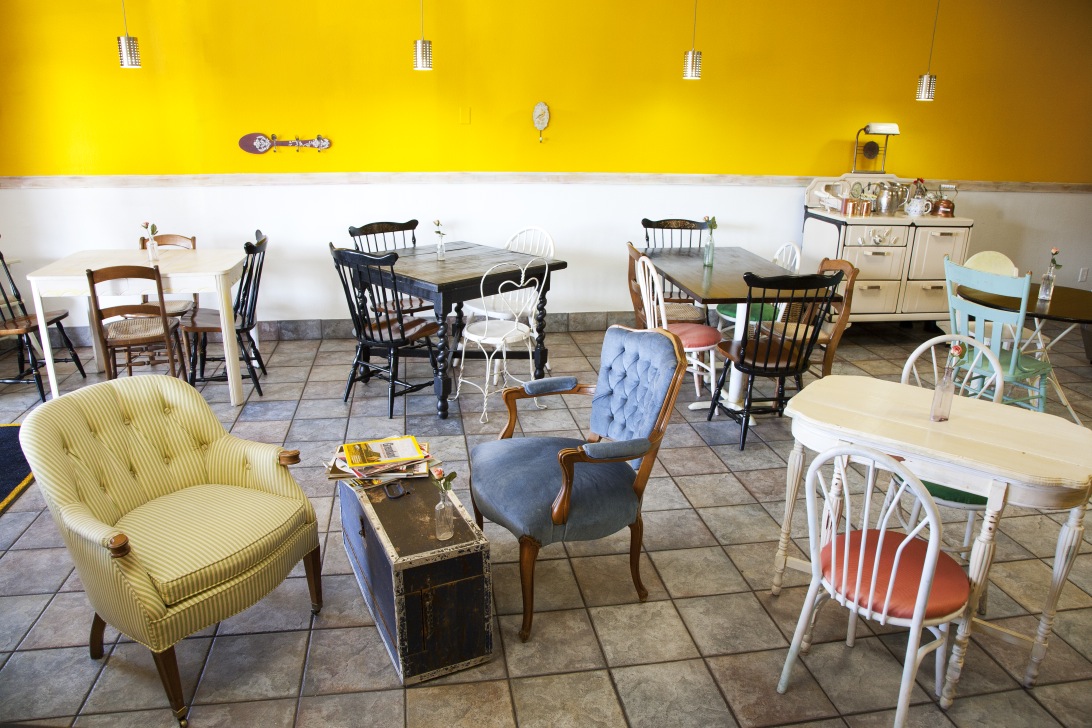
    Dining Room at Coppa Cafe. Photo by Awe Collective.
    Dining Room at Coppa Cafe. Photo by Awe Collective.

    Roses, Spain. Yountville, California. Terni, Italy. Corenc, France. Flagstaff, Arizona. These small, unique picturesque towns share a very special attribute. Each offers a gastronomic dining experience in their respective locations created by master chefs. Roses was home to El Bulli with Ferran Adrià. Thomas Keller’s The French Laundry located in Yountville. Terni, a small town of less than three thousand houses the two-Michelin starred Casa Vissani, home to celebrated Italian chef, Gianfranco Vissani. The Golden Horn (Le Corn d’Or) in Corenc, France is populated by a little less than four thousand and Flagstaff, Arizona (population: 68,784) is becoming notable for Coppa Café.

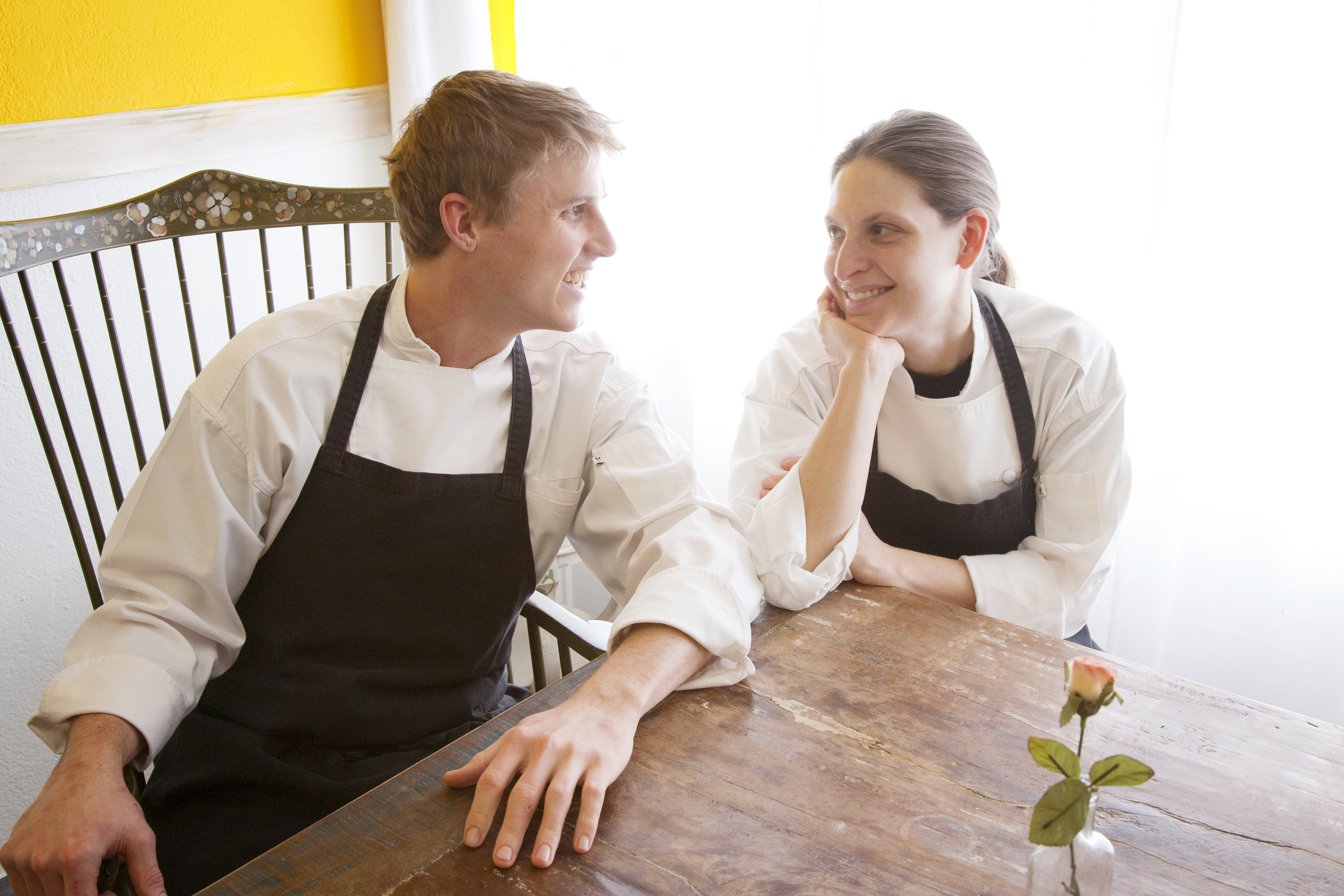
    Since opening four years ago, Coppa Café, helmed by husband and wife cooking team, Brian Konefal and Paola Fiorvanti, has become a noteworthy restaurant in Arizona’s growing epicurean scene. Konefal was born in Flagstaff and trained to be a chef in Italy. While in culinary school, he met the lovely Fiorvanti, Brazilian by birth, she was learning the dessert trade – spinning sugar and learning the nuances of buttercream.

    Chefs/ Co-Owners, Brian Konefal and Paola Fiovanit. Photo by Awe Collective.
    Chefs/ Co-Owners, Brian Konefal and Paola Fiovanit. Photo by Awe Collective.

    Once married, they traveled throughout Europe and the gastronomic countryside, learning the hallmarks of great European cooks. Eventually, Konefal landed a position at San Francisco’s famed Campton Place working under Chef Daniel Humm. At this petite and elegant hotel, a block from the celebrated Union Square and just feet from Michael Mina and Hubert Keller  establishments — Humm and Konefal, became an award-winning culinary team gaining praise from the finicky City by the Bay’s food world; ultimately receiving four stars from Michael Bauer, San Francisco Chronicle’s noted restaurant critic.

    IMG_6276The restaurant world took notice and Konefal moved with Humm to New York City’s Eleven Madison Park, then just another elegant eatery. Humm, Konefal and the Eleven Madison Park team established the restaurant as a destination inside the Big Apple – already one of the world’s great culinary stops. During their tenure as a team, the restaurant received multiple New York Times stars, accolades from the James Beard Foundation and eventually received three coveted Michelin stars making it only one of nine establishments in the United States to do so.

    All  things come to an end and Konefal and Paola, ambitious in their cooking wanted to open their own establishment. They looked no further than Konefal’s hometown of Flagstaff. Hence, the couple opened, Coppa Cafe, a delicate and nuanced European eatery.

    With its global sensibilities, small town location and it’s attentiveness to flavorful French techniques, Coppa Café is a restaurant to be reckoned; indeed, some of the interesting menu aspects include locally foraged edibles such as herbs and mushrooms,

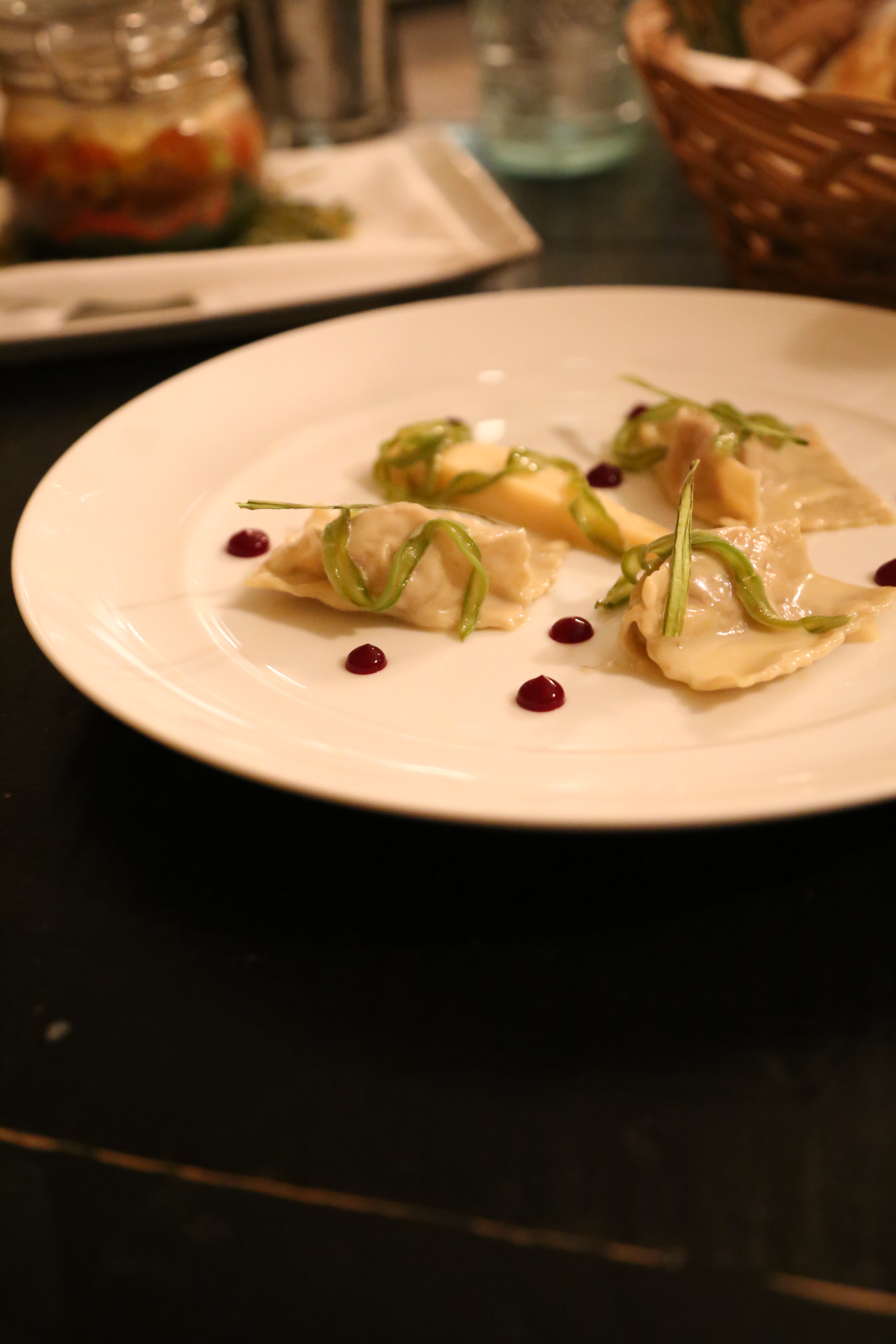
    Veal Agnolotti. Photo by Awe Collective.
    Veal Agnolotti. Photo by Awe Collective.

    a growing trend in France, Umbria and the burgeoning Arizona restaurant industry. The café atmosphere is homespun filled with thrift-store finds, not the fussiness one associates to an accomplished chef who once dwelled in a Michelin-starred room. All the charcuterie is house-cured. The pastries and breads are made in-house and I don’t believe you will find too many Flagstaff restaurants serving Seared Foie Gras, Roasted Braised Wild Boar with Juniper Berries, RidgeView Farm Quail or “Kelly Farm” Veal Agnolotti raised humanely from a local Arizona producer.

    So, if you are traveling Route 66 or headed up to the Grand Canyon, you might want to stop for the night and eat a little bit of sophistication. Good food exists all around us, sometimes you just have to travel outside your comfort zone.

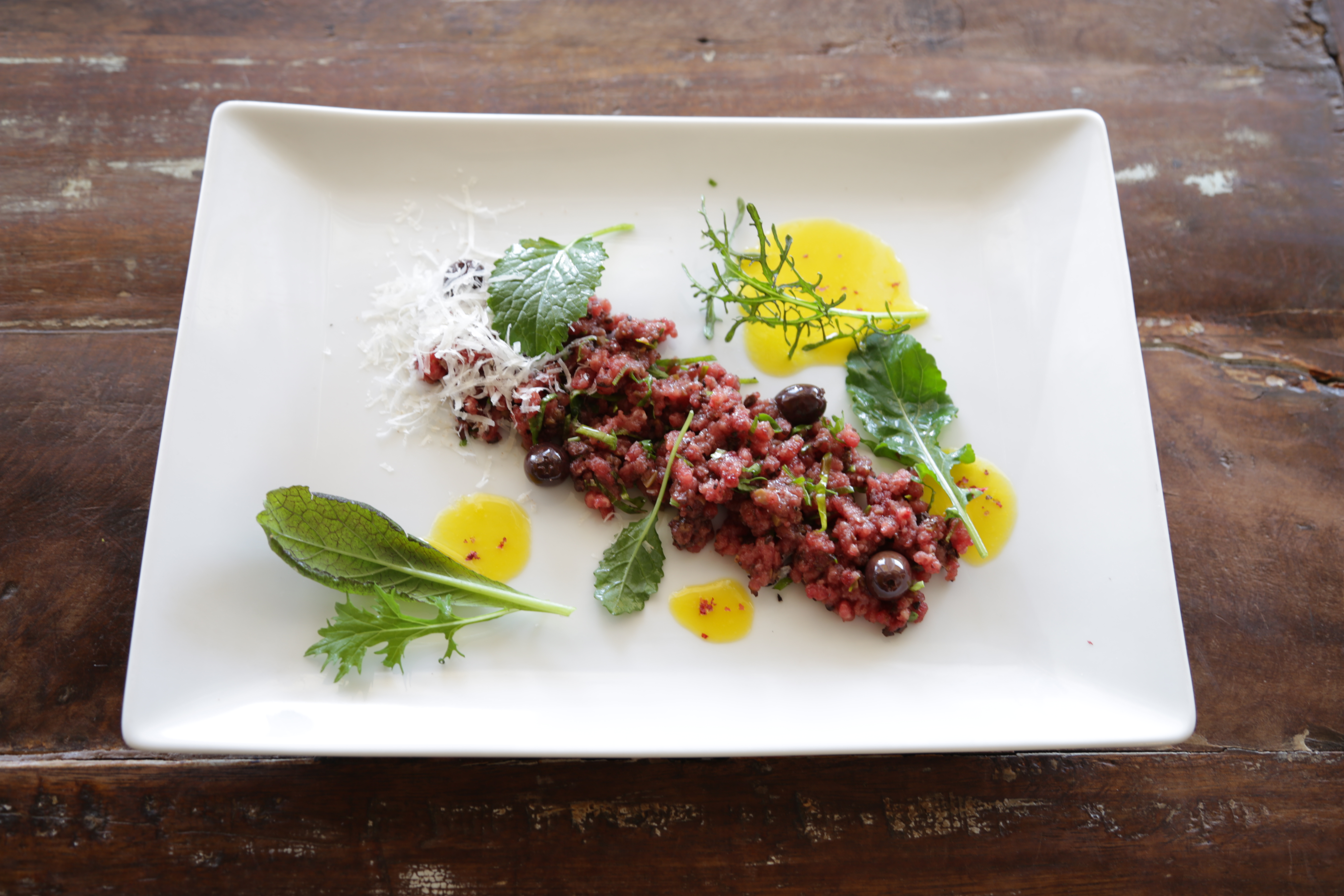
    Beef Tartare
    Beef Tartare with Juniper Berries. Photo by Awe Collective.

    How long have you been cooking? I’ve been cooking 13 years in professional kitchens. Personally at home, nearly all my life.

    What is your favorite food to cook? Foie gras.

    Photo by Jeremy Keith.
    Photo by Jeremy Keith.

    What do you always have in your fridge at home? Fermented veggies. I eat them with everything.

    What do you cook at home? A mix of everything. Mostly ethnic foods, particularly Brazilian. Lots of rice and beans.

    What marked characteristic do you love in a customer? An adventurous and curious diner.

    What marked characteristic do you find unappealing in a customer?  Legitimate allergies aside, diners with stubborn food hang-ups. Life’s too short to limit yourself from exploring different foods and new flavors.

    Tupperware, Rubbermaid, or Pyrex? Pyrex.

    WINE_previewBeer, wine or cocktail? Wine.

    Your favorite cookbook author? Pellegrino Artusi.

    Your favorite kitchen tool? A great chef’s knife.

    Your favorite ingredient? Good quality salt.

    Your least favorite ingredient? Cheap table salt.

    Least favorite thing to do in a kitchen? Yelling. I like a quiet, organized and efficient kitchen environment.

    Favorite types of cuisine to cook? French.

    Beef, chicken, pork or tofu? Pork.

    Favorite vegetable? Fennel.

    Photo by Nick Saltmarsh.
    Photo by Nick Saltmarsh.

    Chef you most admire? Daniel Boulud.

    Food you like the most to eat? French.

    Food you dislike the most? Hard to say. If prepared correctly, most foods can be delicious.

    How many tattoos? And if so, how many are of food? Non.

    Lemon Tarragon Vinaigrette: 

    A popular French dressing used on many salads or seasonal vegetable dishes throughout the year. One that needs to be in every homecook’s tool box. 

    • 1 tablespoon fresh squeezed lemon juice
    • 3 1/2 T olive oil
    • 1/4 small shallot, finely minced
    • 2 tsp freshly chopped tarragon
    • Pinch of good-quality kosher or sea salt

    Start by peeling and mincing the shallot, continuing until the shallots almost turn to a paste. Place shallots in a small mixing bowl, add lemon juice and pinch of salt. Whisk together vigorously while incorporating the most of the olive oil simultaneously in a small stream into the mixture, reserving just a little oil. Stop whisking temporarily to add the chopped tarragon. Begin whisking again while adding the remaining oil.

    Mix preferred greens or vegetables in a separate bowl and toss them with the vinaigrette. Finish with an additional sprinkle of salt to taste.

    The End. Go Eat.

  • I8tonite: Charred Broccoli with Lemon and Asiago

    I8tonite: Charred Broccoli with Lemon and Asiago

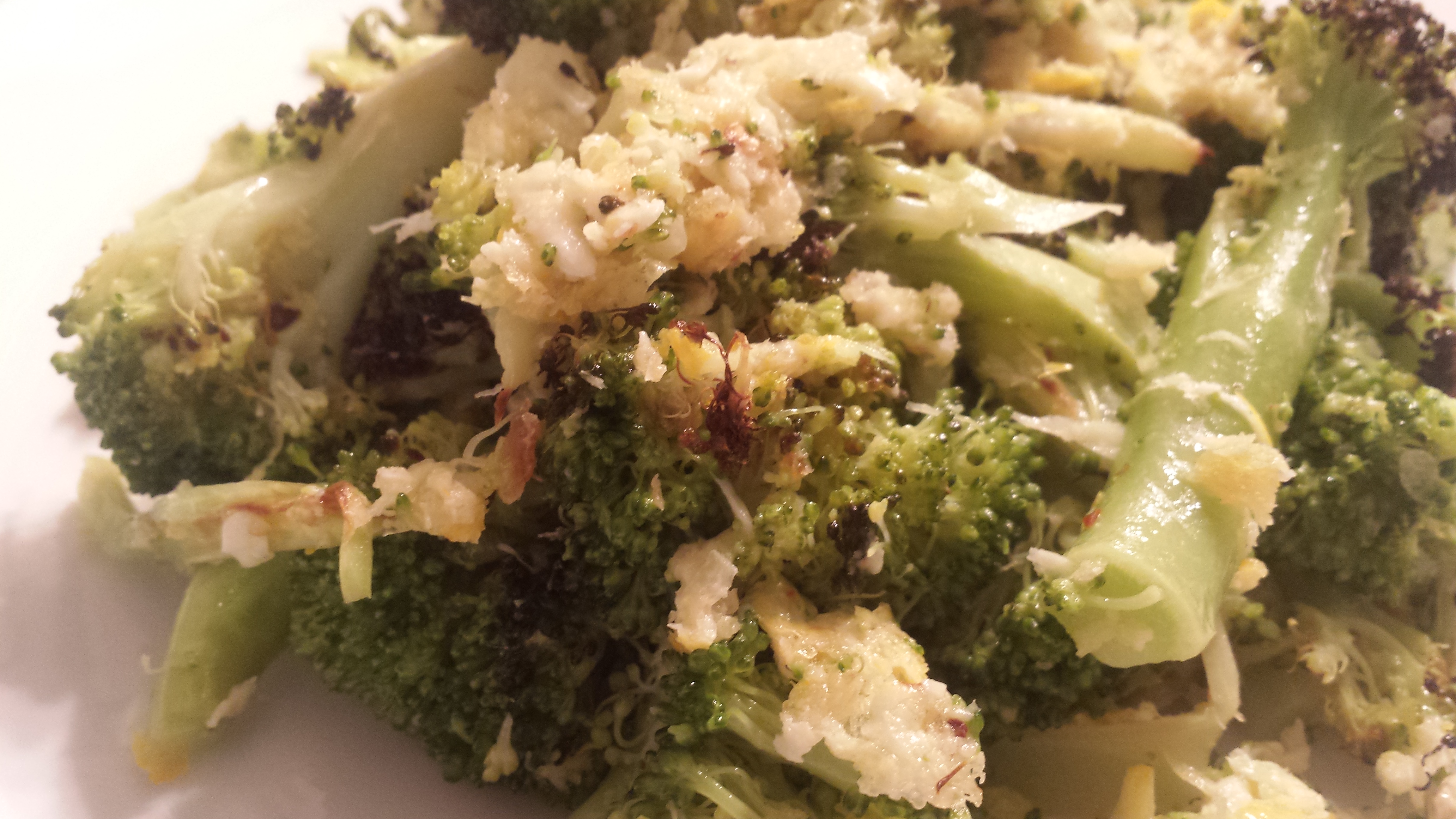
    I discovered Charred Broccoli with Lemon and Asiago absolutely tasty. Tasty enough that there aren’t leftovers the next day.  I now believe roasting is the best thing for anything even broccoli which I like but isn’t necessarily my go to. So, when in doubt — roast. (My new motto.)

    I discovered the recipe in “Family Table: Favorite Staff Meals, From Our Restaurants to Your Home”, compiled by Union Square Hospitality Group’s Culinary Director, Michael Romano and written by Karen Stabiner, with a forward by Danny Meyer, chef and owner of the just mentioned company. (Yes, Danny Meyer of Shake Shack fame.) I briefly worked for him as a waiter at Union Square Café back in the late eighties. Written in 2013, the cookbook’s recipes are staff meals from his restaurants that are part of the said conglomeration. These establishments include some of the Big Apple’s gastronomically acclaimed: Gramercy Tavern, Eleven Madison Park, The Modern and others. (Sadly, Union Square Café will be moving from its current space of 30 years to another area of Manhattan due to high rents.) Traditionally, staff meals are served at the beginning of the dinner shift and end of lunch.

    El Teddys. Courtesy of I Loved New York

    Truth be told,  taking all the romance out of the cookbook, along with the “familial” sappiness  — the  staff meals that we were given before or after our shifts came from leftovers that didn’t sell – too much chicken, Bibb lettuce getting ready to turn, fresh pasta that needed to be boiled so it didn’t go to waste.  Working at the now defunct Soho Kitchen & Bar (SKB), we were served pizzas and salad pretty much every staff meal.  The kitchen quickly needed to use up any dough from the day before and replenish with freshly made.  The salad was at least a couple of days old but it was still had a good crunch going on. At El Teddy’s, torn down in 2004 — we were allowed to eat any of the appetizers such as chicken achiote, machaca or steak arrachera burritos, any of the salads or the quesadillas which included huitlacoche (corn fungus), nopales and a puerco.  We could order as much as we wanted as the back of the house had already made the dishes with fresh ingredients for that day’s clientele. (We were eating yesterday’s.) At the Cajun/Mexican fusion of How’s Bayou – it was mostly leftover fried chicken, jambalaya, gumbo, day old enchiladas, reconstituted black beans, red rice and sometimes something green. (Not complaining about any of this. It was free food and truly delicious. The pizza at SKB was some of the best I had. I learned a lot about life, cooking, drinking and made some of the best friends ever while working in restaurants. I loved it.)

    This brings me back to this recipe and cookbook…yeah, I don’t think any of the staff at my restaurants would have eaten this as “family meal”. It would have would have been sitting under the heat lamps drying out…but now that I’m older and definitely stockier — it’s pretty stellar stuff.

    Charred Broccoli

    Ingredients:

    • 2 bunches of broccoli cut into trees with stems. Trim off about two inches from the bottom.
    • ¼ olive oil.
    • 2 lemons.
    • Several dashes of red pepper flakes.
    • Italian hard cheese such as asiago, pecorino or parmesan. Two to three cups grated.
    • Maldon salt, fresh cracked pepper. (Okay, you can use kosher….but I love the Maldon stuff.)
    • ½ cup of Panko bread crumbs.

    Let’s make this puppy:

    Preheat the oven to 450 – 475 degrees. Toss the broccoli, olive oil and breadcrumbs into a large bowl coating the broccoli really well. Spread into a single layer onto a baking sheet and roast for 10 to 15 minutes, charring the ends of the broccoli but not burning them.

    While the broccoli is cooking, zest the two lemons into a large bowl and add the grated cheese stirring well until mixed.

    Once the broccoli is cooked, toss the broccoli in the bowl mix with juice of a ½ a lemon. Serve.

    The End. Go Eat.

  • i8tonite: Late Summer Corn Hash

    i8tonite: Late Summer Corn Hash

    Corn HashI saw this corn hash recipe from Alice Waters’ cookbook, The Art of Simple Food. She deemed it a “hash” and I thought it sounded like a fresh take on the dense potato and onion variety. With a few of my own tweaks here and there — I made it and of course, it was delicious. How it could it not be? It’s a Ms. Waters’ creation.

    After posting the image on social media as is my wont, I was asked what makes it “hash?”  The answer to that my friends is the chopped onions. The word hash is from the French word “hacher” meaning to chop. Technically, anything with chopped onions can be called a hash; therefore, Ms. Waters called this hash and I did too, since we do not disagree with two fabled beings — Mother Nature and Mother to All Things Culinary, Ms. Waters.

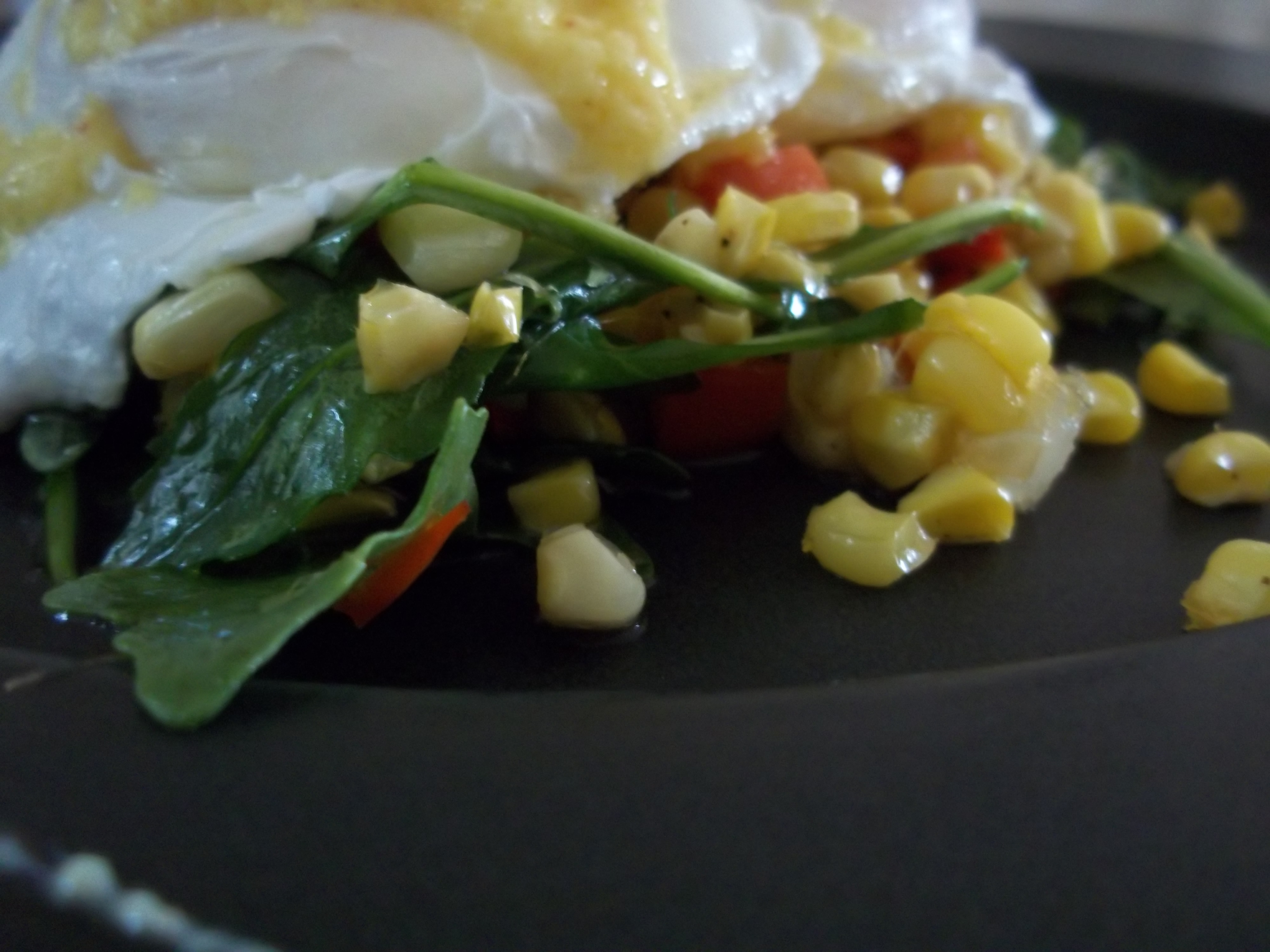
    Instead of using butter and a skillet, I used olive oil and roasted my corn with the pepper and sweet onion with salt; while still hot from the oven, I tossed in the arugula so it wilted ever so slightly.  I poached two eggs, whipped up a hollandaise and added some Korean hot pepper to the sauce (Asian-French fusion going on there) and voila. Roasted Corn Hash with Wilted Arugula, Two Poached Eggs and Korean Red Pepper Hollandaise. It was truly easy and it could even be classified as a one sheet pan supper.

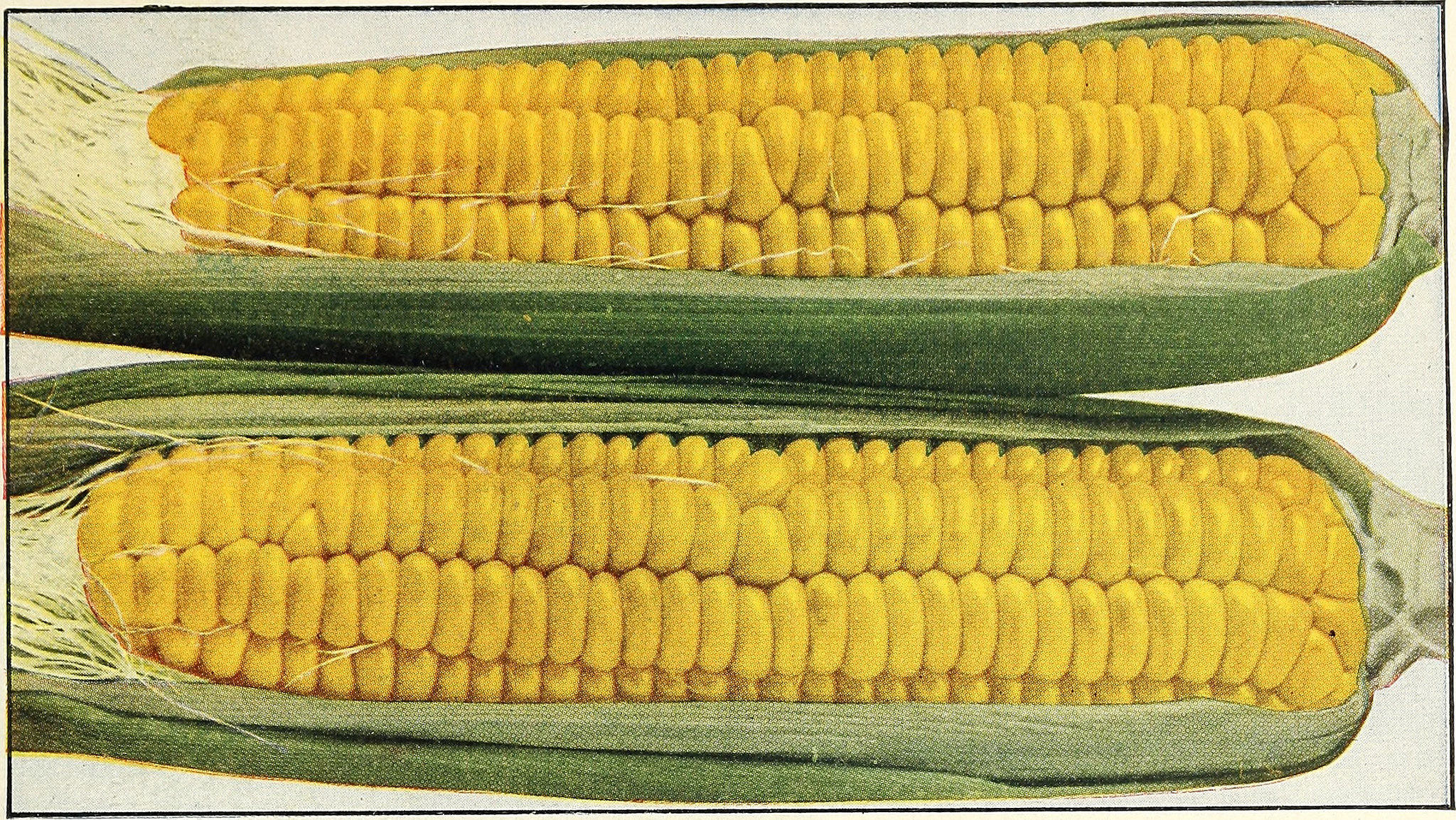
    Corn

    Ingredients:

    • Fresh corn on the cob (3 to 4 ears).
    • 1 Red, green, or orange bell pepper or a combination or any two or three.
    • Maldon sea salt flakes. (I love this stuff. I love it’s texture but truthfully, kosher salt will do.)
    • 2 cups fresh arugula.
    • 1 small onion – it can be red if you like.
    • Olive oil.

    Preheat oven to 350 degrees. Shuck the corn and remove the kernels from the cob.  I find that a paring knife works well for this and a large bowl.  Place the smaller end of the cob into the bowl and press firmly on the cob with the other hand. Cut away from you. You might lose a few kernels…but like Julia Childs…just put them in the bowl.

    With the bell peppers, cut into strips and then dice. Place into the bowl. Dice the onion and put into the bowl as well. Mix corn, pepper/s and onions with the olive oil using your hands to coat well. Put on a rimmed baking sheet of 9 x 13, spread out the mixture and add a little salt. Roast for about 20 minutes.

    Remove the pan and then, add the arugula. Using a spatula, mix the lettuce until it wilts lightly around the edges. Sprinkle with a little more salt, fresh pepper and viola. Top as I did with poached eggs or oven roasted salmon, roasted chicken, pan seared rib eye or grilled tofu….or eat it right out of the pan. The possibilities are endless.


    The End. Go Eat.