Tag: farmers market

  •  Cooking with Tucson’s Indigenous Ingredients

     Cooking with Tucson’s Indigenous Ingredients

    How a Newcomer to the Southwest Dips His Toes into the Holiday Festive Glaze.

    When Nick and I picked Tucson as (hopefully) our final move and — yes, our last destination — I knew I didn’t have a clear picture of Tucson’s Indigenous ingredients or the region’s complex food history, even after living on both U.S. coasts and in seven cities. Tucson, also known as the Old Pueblo, is full of gastronomical history, indeed the country’s oldest, going back nearly four centuries. In comparison, I’ve spent years writing about ingredients, cooking techniques, and chefs in their kitchens, and I’ve felt confident in my descriptions and use of both gluten-free and non-gluten-free ingredients. Living in the Sonoran Desert is making me realize my usual approach doesn’t apply here.

    This Tucson gluten-free almond cake came out of that intention — something simple, something I could bake without fuss, but still tasting like the Sonoran Desert brushing up against my kitchen. Hibiscus for tang and color, citrus for brightness, almonds for body. It’s the kind of dessert that lets the region show up without trying too hard.

    Tucson isn’t a “farm-to-table” town in the way the Midwest is. It’s much older than that. What you see in markets and farmers’ markets traces back to Indigenous farming methods that have been here long before the United States existed. Tepary beans. Mesquite. Chiltepin. The three sisters — corn, squash and beans. Sonoran white wheat. These are foods created by people who figured out how to thrive in arid conditions, stark heat and scarcity, including long periods of drought. Yet, they managed to build a culinary region with depth.

    I’ve certainly not used many of the new ingredients I’m surrounded by, such as the beans or nopales.  Instead of asking myself, “What’s seasonal?” I’m now asking no one but me, “What survived here, continues to grow and why?” It creates a different way of viewing local Ingredients. And, these, of course, carry stories as well as the people who cultivate them, too.

    I’ve also been reading how longtime Tucson restaurants have done this work. Wildflower, native Tucsonan and restaurant impresario Sam Fox’s first restaurant, manages to highlight the region without leaning on trends. No doubt you know his Culinary Dropout or Flower Child, and the selling of his empire to the Cheesecake Factory netted him $800 million. It opened more than two decades ago and still draws a regular clientele because it balances a sense of place with a contemporary atmosphere: no adobe wall or cactus but a well-lit, sexy space. The menu changes enough to keep new and old customers happy, but you’ll always find something tied to the desert, such as mesquite, squash, cinnamon and Oaxaca cheese. 

    So, I’m trying to cook with the foods that matter to my new home. I’m buying mesquite flour. I’m reading up on tepary beans. I’m reaching for chiltepin instead of the usual red pepper flakes. And I’m letting Tucson teach me to look at food from a different, more inclusive perspective.

    This week’s recipe is an almond cake with cinnamon, covered in a “pretty in pink” hibiscus glaze, which isn’t ancient or Indigenous. But it uses items such as almond flour (while wild desert almonds can be made into a flour—this Bob’s Red Mill almond flour), hibiscus, an edible flower found throughout the Southwest, and cinnamon, brought to the region in the 16th century by the Spanish. It tastes sweet and right while showcasing the beauty of where I’m living now. It’s easy, with hints of sweet floral notes and pantry ingredients I have on hand – except the hibiscus syrup. (You can find that online or at specialty stores like AJ Fine Foods. It’s where I purchased mine.)  And sometimes it’s enough to acknowledge the food where you moved, combined with familiar elements that you know. 

    Importantly, it’s festive enough for the holidays.

    Almond Cake with Cinnamon and Hibiscus Glaze

    Serves 8

    Almond Cinnamon Cake with Hibiscus and Orange Glaze

    Ingredients

    • 1 ½ cups almond flour
    •  ½ cup white rice flour
    •  1 teaspoon baking powder
    •  ¼ teaspoon baking soda
    • ½ teaspoon kosher salt
    • 1 teaspoon ground cinnamon
    • 2 large eggs, room temperature
    • ⅓ cup neutral oil (avocado, canola, grapeseed)
    • ½ cup sugar
    • 1 teaspoon vanilla extract
    • ½ cup milk or a milk alternative

    Hibiscus Glaze

    • ½ cup powdered sugar
    • 2 to 3 tablespoons hibiscus syrup (adjust to taste and thickness)
    • A gentle squeeze of fresh orange juice for brightness (Optional)  

    Directions

    1. Preheat oven to 350°F. Grease an 8-inch round cake pan and line the bottom with parchment.
    2. Whisk the dry ingredients together in a medium bowl: almond flour, rice flour, baking powder, baking soda, salt, and cinnamon.
    3. In a separate bowl, whisk the eggs, oil, sugar, vanilla, and milk until smooth.
    4. Combine the wet and dry ingredients. Mix until just blended. The batter will be slightly thick.
    5. Pour into your prepared pan and smooth the top.
    6. Bake for 22 to 28 minutes, or until the center is set and a toothpick comes out clean.
    7. Cool completely before glazing.
    8. Make the glaze: whisk the powdered sugar with hibiscus syrup until it reaches a pourable consistency. Add lime juice if using.
    9. Drizzle glaze over the cooled cake. Let it sit for at least 15 minutes before slicing.

    LEFTOVERS

    Local: Tucson
    Tucson’s KGUN reports that the MSA Annex at Tucson’s Mercado District continues to grow, adding two new food spots to its westside lineup. BŌS Burger opened with Japanese-leaning Wagyu smash burgers and katsu-style sandwiches, while Hidden Hearth Bakery started serving whole-grain, fresh-milled breads in late November.

    Regional: Arizona and the Southwest
    According to The Glendale Star, A 16-year-old was hospitalized after visiting the fair on Oct. 26. She and several others say the illness began after petting pigs at the fair’s zoo. 

    National:
    The USDA Economic Research Service says food prices in the United States will continue to rise in 2026. The agency’s latest Food Price Outlook projects an increase over all food categories of about 2.7 percent next year, with grocery costs climbing roughly 1.2 percent and restaurant prices up an estimated 3.3 percent. The forecast states that uncertainty remains high, driven by tariffs and climate-related disruptions.

  • This Is American Food

    This Is American Food

    If a corn cake and crab dip chatted in the kitchen, they would say, “Gurl, this is real food for the Fourth of July.

    We know our founding fathers did not eat hot dogs, hamburgers, and apple pie after signing one of the world’s most important political documents. Most likely, their plates were heaped with pancakes made of cornmeal served with roasted meats and seafood gathered from nearby waterways. 

    It makes sense that corn, cultivated by Indigenous peoples for thousands of years, was the staple of early cuisine. Indeed, cakes made from ground maize, such as hoecakes or johnnycakes, were easy to make and eat, piping hot out of a wood-burning fireplace. Coupled with the abundance of seafood along the Eastern Seaboard, tables featured paired combinations like crab, oysters, and fish, to accompany the cornmeal staples.

    Indigenous Ingredients Were Already Here

    However, these flavors didn’t originate from European settlers; they were already grown and eaten by the existing populations of Indigenous people. New foods were introduced to the settlers including corn, squash, beans, and natural salts harvested from brine springs and coastal waters. These weren’t just ingredients, they were intertwined to the land, ceremony, and survival of the tribal nations.

    Enslaved Africans brought frying, stewing, and seasoning traditions that became the foundation of Southern and coastal cooking. Caribbean immigrants layered in citrus, chili, and preservation techniques that show up in seafood, spice blends, and pickled vegetables.

    Who Gets Credit for “American” Food?

    For too long, the narrative of “American food” has centered on Germanic and Eastern European traditions, sausages, stews, pies, because these communities, though once immigrants, came to hold power in cultural storytelling. Meanwhile, Indigenous, African, and Caribbean contributions were often erased, commercialized, or absorbed without credit.

    Thus, I decided to create a bit-sized corn cake appetizer dolloped with hot crab dip ontop. It’s inspired by the foods served during those first July celebrations in 1776. American cuisine has always been a blend of indigenous crops, African techniques, Caribbean flavors, and immigrant ingenuity.

    This 4th of July, Celebrate Interdependence.

    This Fourth of July, I’m celebrating not just independence, but interdependence. The shared hands, cultures, and histories that shaped what we eat today.

    Mini Corn Cakes with Crab Salad (Gluten Free)

    I created this recipe from many sources as a showcase of early American roots: Indigenous, African and early settlers.

    Makes about 12–16 mini corn cakes

    For the Corn Cakes:

    • 1 cup stone-ground cornmeal (medium grind works best)
    • ½ tsp baking powder
    • ½ tsp kosher salt
    • 1 cup buttermilk (or ¾ cup milk + 1 Tbsp vinegar, rested 5 minutes)
    • 1 large egg
    • 2 Tbsp melted butter or neutral oil
      ½ cup corn kernels (fresh, frozen, or canned—optional)
    • oil for frying

    If the batter seems too thin, let it sit for 5–10 minutes so the cornmeal can absorb more of the liquid. For a thicker batter, add 1 Tbsp finely ground cornmeal or masa harina.

    For the Hot Crab Dip:

    • 8 oz lump crab meat, drained and checked for shells
    • 2 Tbsp mayonnaise
    • 1 Tbsp sour cream or plain Greek yogurt
    • 1 tsp Dijon mustard
    • 1 tsp lemon juice (plus more to taste)
    • 1 tsp chopped chives or green onion
    • Pinch of Old Bay or cayenne (optional)
    • Salt and pepper to taste

    Instructions:

    Corn Cakes:

    1. in a medium sized bowl, mix cornmeal, baking powder, and salt.
    2. In another bowl, whisk buttermilk, egg, and melted butter. Add the wet ingredients to the dry and stir just until combined. Fold in corn kernels, if using. Let it sit for a few minutes to thicken.
    3. Heat a skillet or griddle over medium with a light layer of oil.
    4. Drop batter by heaping tablespoonfuls to form small cakes (~2 inches). Cook 2–3 minutes per side until golden and crisp on the edges. Transfer to a wire rack or paper towel.

    Crab Salad:

    1. Preheat the oven to 350 degrees. While that reaches temperature, Gently mix mayo, sour cream, mustard, lemon, chives, and spices in a bowl and place into a baking dish
    2. Fold in crab meat, being careful not to break it up too much. Taste and adjust seasoning.
    3. Bake for 15 – 20 minutes until heated through.

    Serving: 

    Top each corn cake with a spoonful of crab dip. Garnish with a sprinkling of fresh, chopped herbs (such as dill or chives) or a sprinkle of smoked paprika or lemon zest, if you’re feeling fancy. 

    Sources & Further Reading

    • Randolph, Mary. The Virginia Housewife (1824) – One of the earliest American cookbooks, documenting cornmeal-based dishes such as hoecakes.
    • Freedman, Paul. American Cuisine and How It Got This Way – A comprehensive look at the evolution of American food culture, including colonial influences and Indigenous ingredients.
    • Miller, Adrian. Soul Food: The Surprising Story of an American Cuisine, One Plate at a Time – Explores the role of African American culinary traditions in shaping Southern and early American cuisine.
    • Library of Congress – Food at Mount Vernon and American Memory collections: Primary source material on colonial food habits, including George Washington’s preference for hoecakes.
    • Southern Foodways Alliance – Oral histories and essays on cornmeal, seafood traditions, and foodways rooted in African, Indigenous, and Southern cultures.

    P.S. Photo was AI-generated. I made the crab dip for a party and planned to create the corn cakes. But, life got in the way.

    The end. Go eat.

  • Top Six Restaurant Dishes from Indianapolis to Fort Wayne

    Top Six Restaurant Dishes from Indianapolis to Fort Wayne

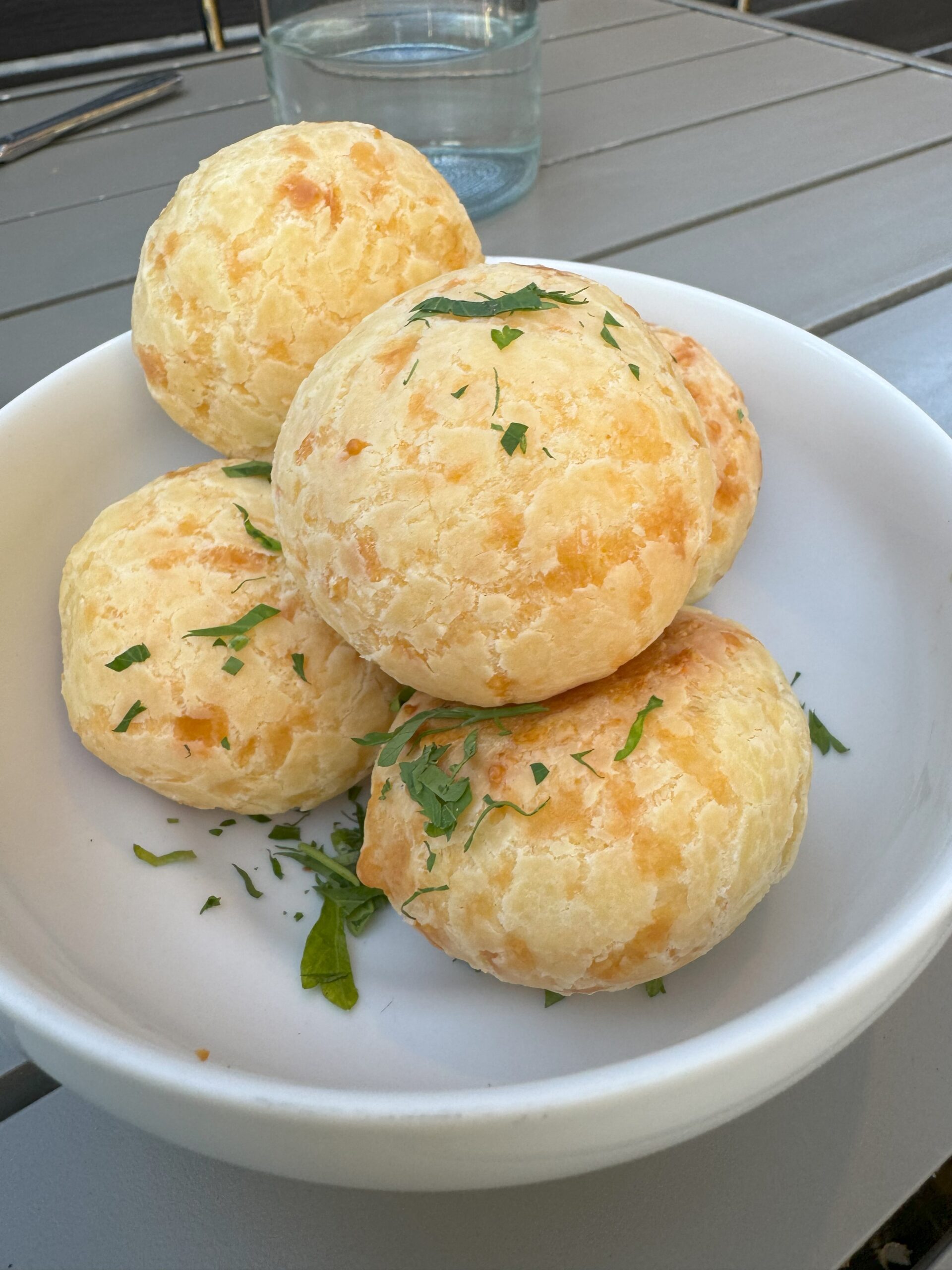
    Pão de queijo at Fernando's
    Four lovely baked Brazilian cheese rolls at Fernando’s

    How Hoosier chefs made the potato, chicken liver, octopus, beef, pimento cheese and gluten-free bread the talk of my table

    Nick and I have savored many of the diverse flavors of Indianapolis restaurants since our move to the city five years ago. I’ve had the opportunity to explore Indiana’s culinary landscape extensively, covering destinations for Culinary Crossroads for a year and a half. From the southernmost Evansville to Elkhart, in the north, a 10-minute drive to the Michigan border and other places, I’ve sampled a range of dishes, becoming well-versed in “Hoosier” food. Living here has expanded my tastebuds and evolved my understanding of the Midwest’s culture and people. 

    Exploring Indiana’s Diverse Culinary Landscape

    I recently attended a conference where the speaker said, “Hoosiers either leave and never come back, or they never leave, traveling only 20 minutes outside their neighborhood.” It’s an exaggeration, clearly, but it’s not far from the truth. I’ve met many natives who may have been to Paris but not to the neighboring region. (Carmel to Fishers doesn’t count.) I can’t tell you how many times I’ve asked if native Hoosiers have been to Terre Haute, which recently elected its first Democratic mayor, Brandon Sukbhan, in a dozen years. The answer is “not since grade school” or “never.” 

    They should. It’s a diverse hamlet and indicates the changing demographics of Indiana. Sakbun, a former Army captain with model looks, a mega-watt smile, and Elvis Presley hair, is the son of a Cambodian father and a Jamaican mother; we ate at an Indian buffet near city hall, talking about his then-wife and soon-to-be first child.

    The town, home to Clabber Girl Baking Powder, sold at Traders Joe’s throughout the land, is a swim to Illinois, just across the Wabash River. To get there from Indianapolis, though, a drive past small historic towns like Greencastle and Brazil, flush with red barns and still-working siloes, shows today’s farming. Tractors and bales dot the landscape.

    Indiana’s Changing Food Scene: The Influence of New Demographics

    I’m bringing this up because in a small town like Terre Haute, with a population of just under 60,0000 –  my former Los Angeles block had more people – it’s important to note that the 21st-century demographics are changing how the middle of the country eats. It’s a story that doesn’t get told as the media chase stories about the modifying electorate. All we need to do is find out what people eat and where. Think about it: A mayor born of two immigrants leads a predominantly Caucasian city in the middle of the Midwest while eating Punjabi food.

    How did I select my favorite? It was memorable—nothing more, nothing less. Nick and I talk about it or think about returning. After dining at Michelin-starred and James Beard Foundation-nominated experiences, or those I discovered across six continents and nearly 250 cities, I believe I am good at eating.

    ________________________________________________________________________________________________________________

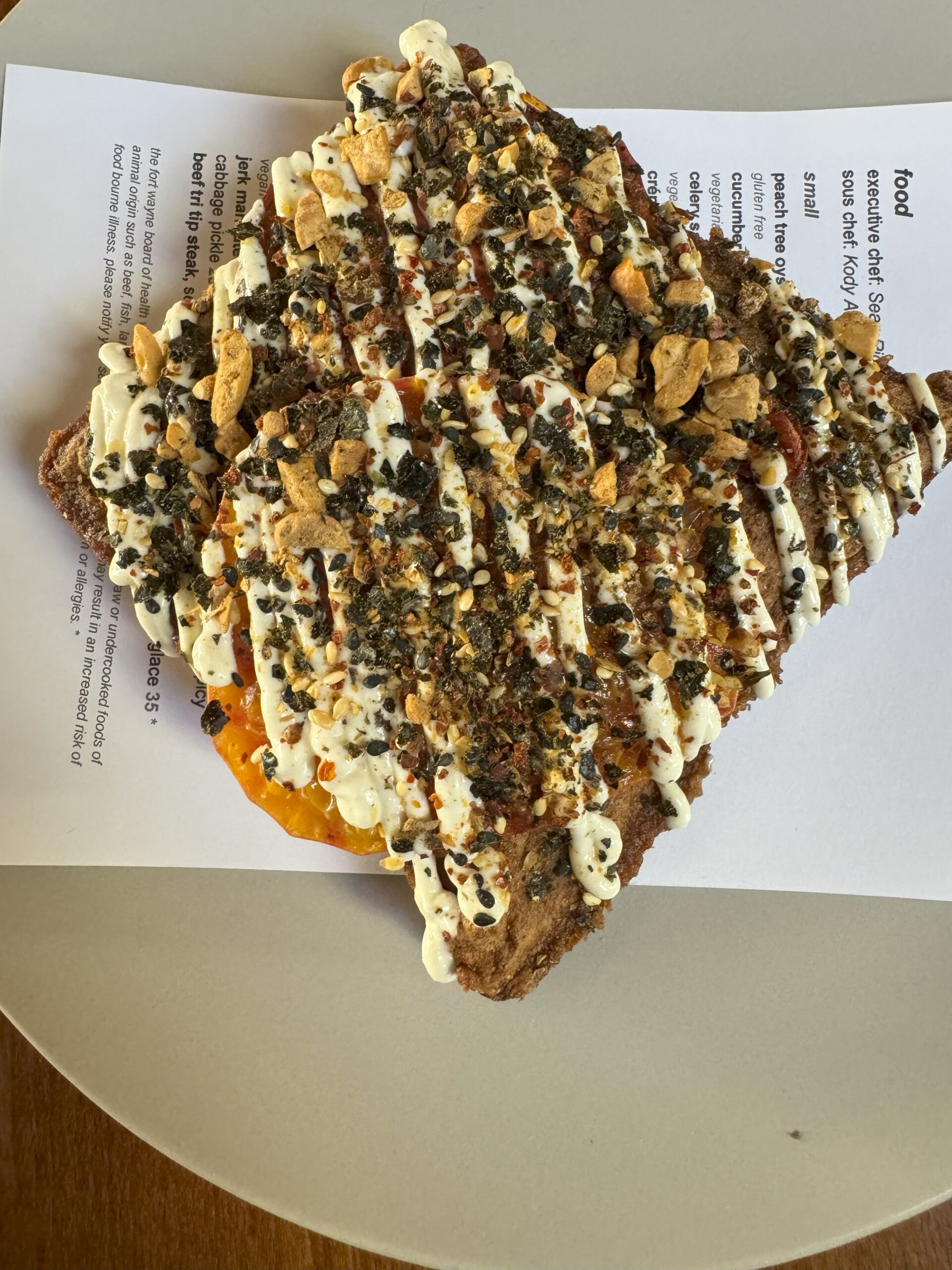
    Fried Chicken Toast, Rune Restaurant, Fort Wayne

    Fried Chicken Toast
    Fried Chicken Toast, Rune Restaurant

    James Bear-nominated Chef Sean Richardson (Great Lakes Region) opened Rune Restaurant in Fort Wayne in March 2024. It’s a garden-to-table experience with twists and turns on different foods. Richardson makes an appetizer, fried chicken toast, and a large helping of house-made chicken pate smeared over Pullman bread. He gently fries the bread – as you would the Cantonese shrimp toast – and then flips it with a flour coating over the spreadable liver. Once cooked and warmed through, a slice of heirloom tomato, a drizzled white aioli and crunchy leftover bits. Mine featured a bit of nori, herbs and peanuts, and he was recreating the traditional dim sum in a Midwest way, using a loaf native to the region and lots of livers.  While served on a plate, he repurposed an old menu that couldn’t be used again to keep the appetizer from careening off the plate instead of using a napkin. Just a touch of “greening.” 

    2725 Broadway, Fort Wayne, IN 46807, (260) 278-0674

    Rösti, Borage, Indianapolis

    Egg on top of bacon and rosti, potato confit
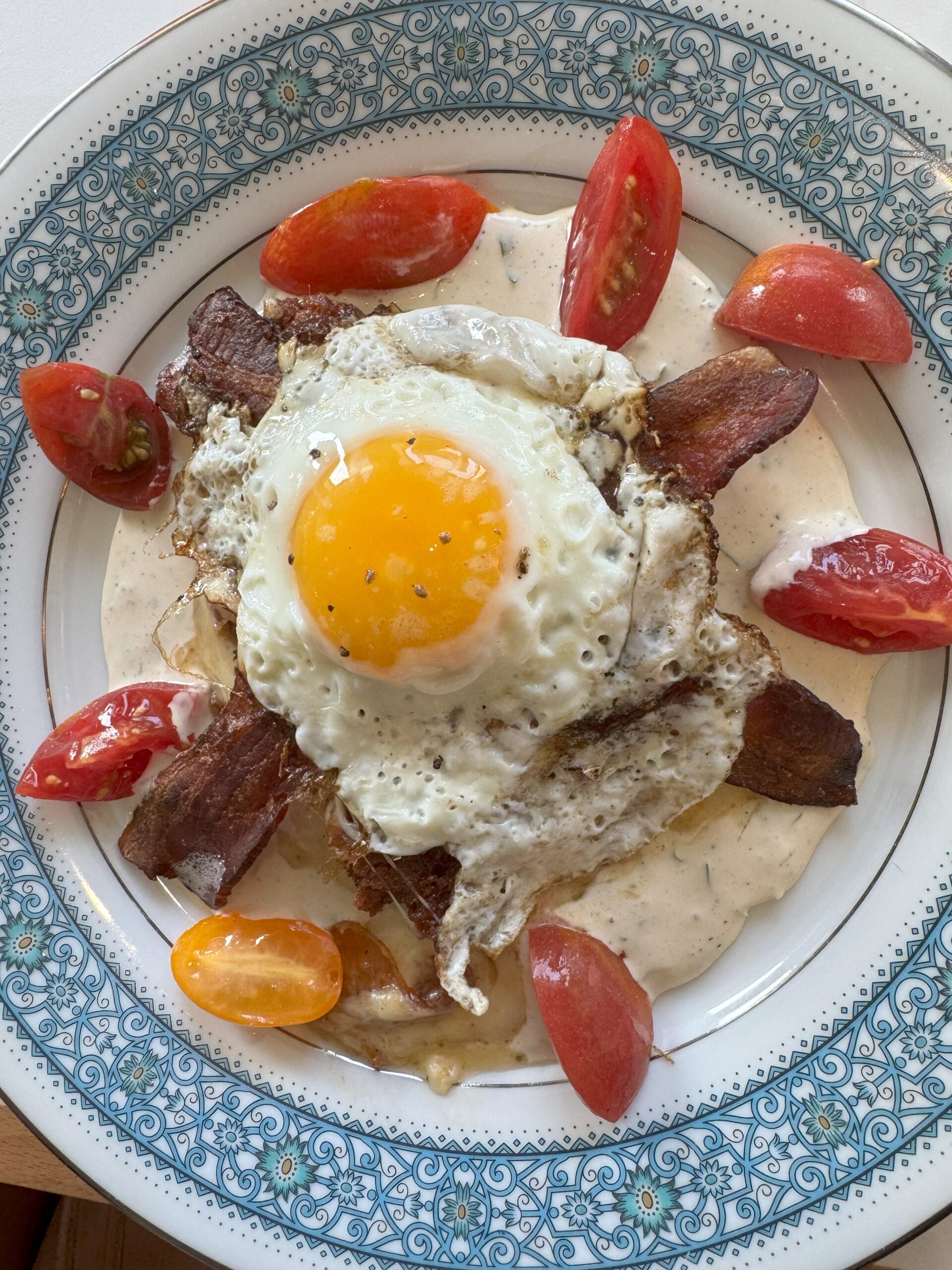
    Josh Kline’s rösti covered by an egg, bacon and sumac cream sauce

    During an interview with Chef Josh Kline, owner of Borage, and his wife, Zoe Taylor, he said, “I love potatoes.” I do, too! However, he loves them so much that he came up with a new version I’ve never had. The everyday eater might think of them as hash browns. Still, rösti, a traditional Swiss dish, is anything but browned and grated fried spuds. Kline’s version makes the tuber a confit – soaked in oil for 24 hours before baking it. It may sound oily, but the resulting dish melts in your mouth with a crackling. Typically made for breakfast, his dish is an upscale version and, frankly, a meal unto itself.  At brunch, he will top it with various proteins, from fish to an egg or two. 

    1609 N Lynhurst Dr, Indianapolis, IN 46224, (317) 734-3958, borageeats.com

    Pão De Queji, Fernando’s Mexican & Brazilian Restaurant, Indianapolis

    Pão de queijo at Fernando's
    Four lovely baked Brazilian cheese rolls at Fernando’s

    A long time ago, in a galaxy far, far away…meaning Los Angeles on La Cienega Blvd, I had dinner at a Brazilian chain restaurant more than two decades ago. I ate tough cubes of beef, which, moments before being on my plate, had been flaming on a skewer passed around by an oddly dressed man, and the pão de queji set before me was a baseball, dense and leaden. That memory fired up when Nick and I dined at the year-old Fernando’s in Broad Ripple. Unlike then, we ate alfresco, removed from the street on the separate patio and dined on a mix of Mexican and Brazilian cuisines. Notably, they serve the tapioca-based pao de quiet, slightly chewy and savory pillow puff of chewy with nutty flavors of aged hard Italian cheese. I could eat these daily for the rest of my life, but only if I eat them here.

    834 East 64th Street, Indianapolis, IN (317) 377-4779,

    https://fernandosindy.com

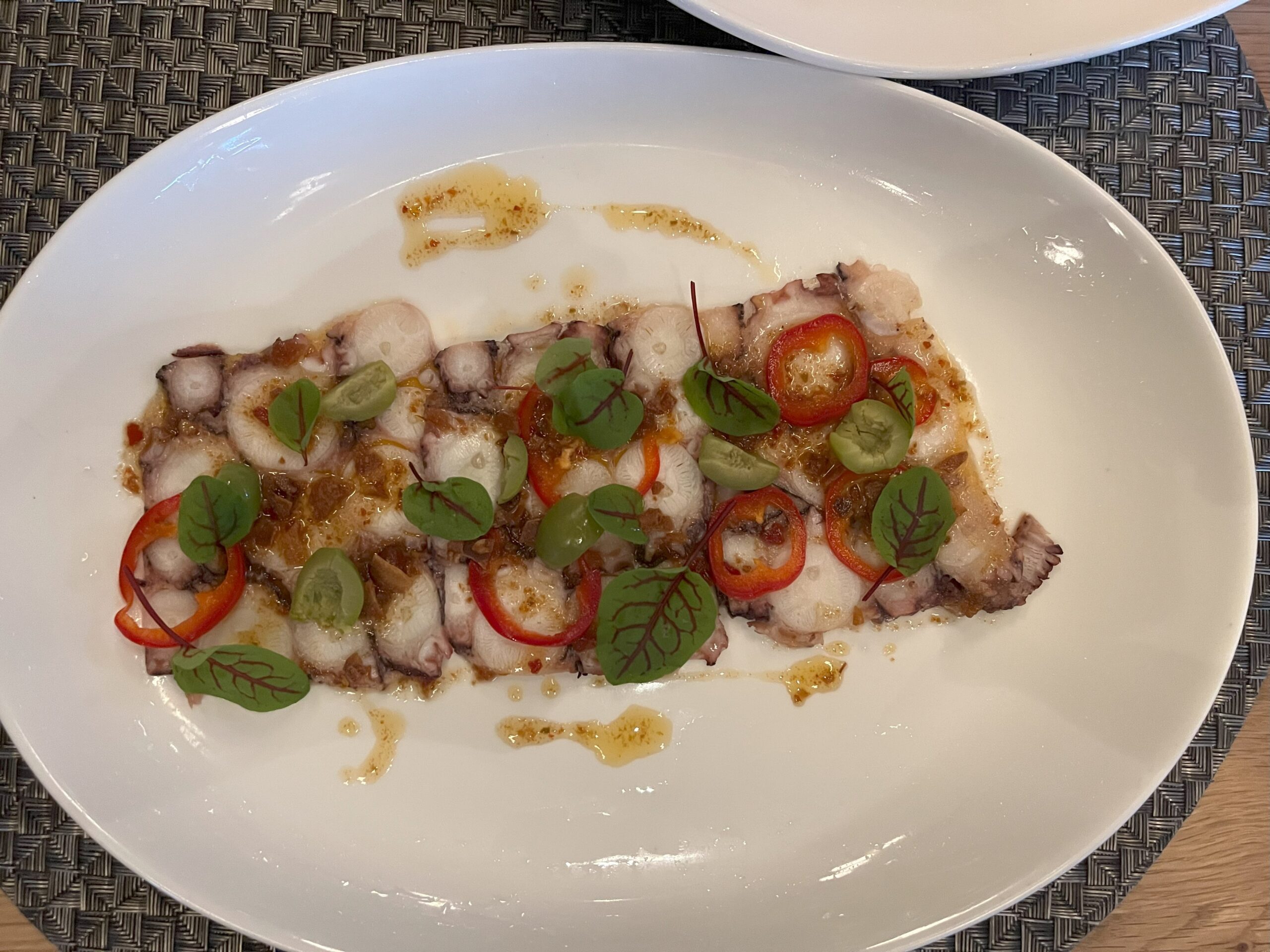
    Octopus Terrine, Commission Row, Indianapolis

    Octopus terrine with micro herbs and jalapenos.
    Commission Row’s Octopus Terrine with micro herbs and jalapenos.

    Nick and I attended a press dinner for Commission Row, the breathtaking restaurant opened by Cunningham Restaurant Group and designed by Ration Architects. It sits on the eastern edge of Bicentennial Unity Plaza, on the Delaware Street side, with views of the public basketball court or ice rick, depending on the time of year. By the third dining experience, the impeccable server recommended the octopus terrine. A thinly sliced rectangle with rings of several cephalopods compacted is set before me. It’s a visually stunning dish of texture, spice and brine, with the pickled jalapenos giving a welcome dash of heat.  Sublime eating. 

    110 S. Delaware Street, Indianapolis, IN, (317) 550 2500, https://www.commissionrow.com

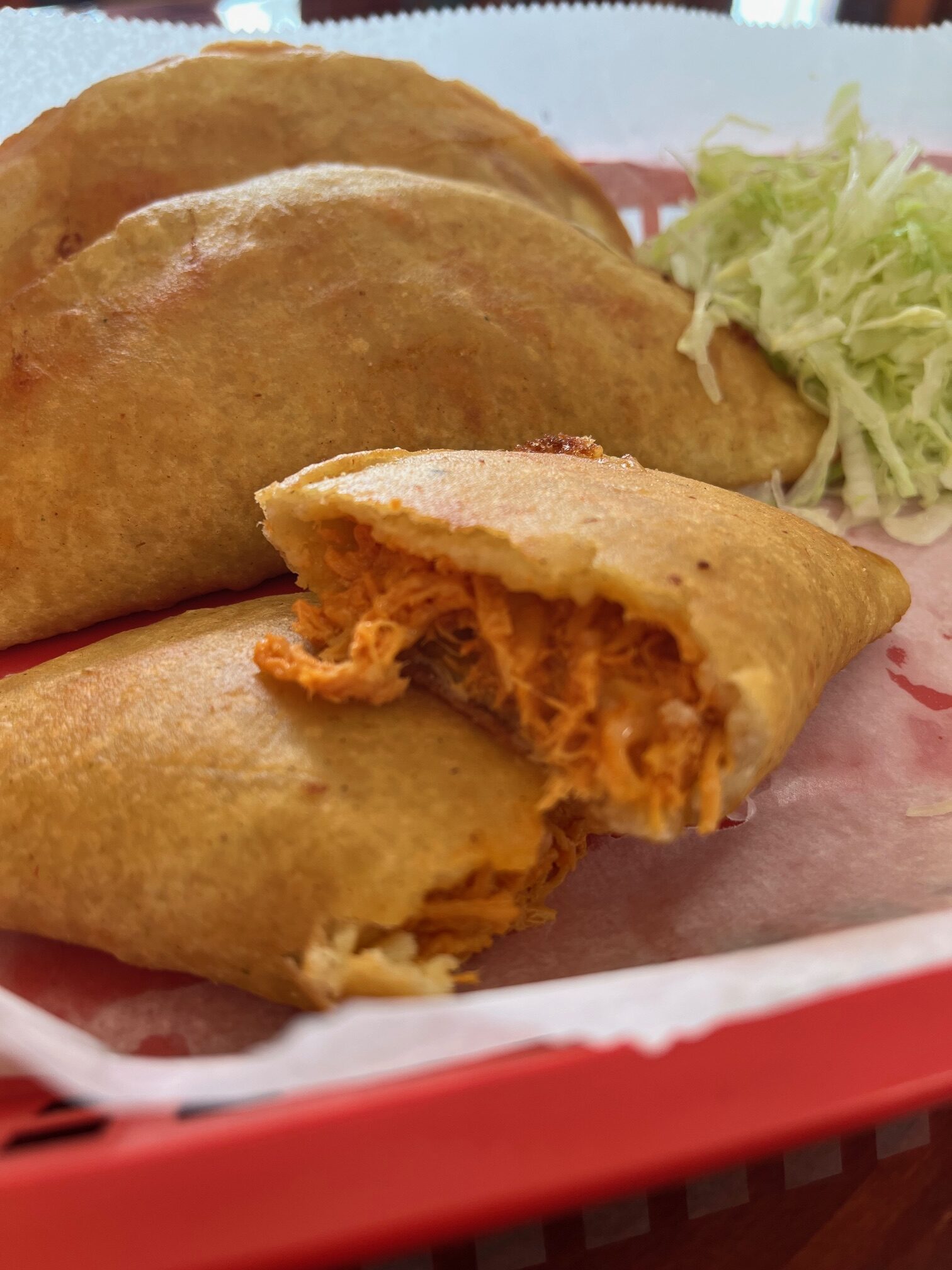
    Chicken Empanadas, La Mixteca, Frankfurt

    Chicken Empanadas at Frankfort's La Mixteca
    Chicken Empanadas at Frankfort’s La Mixteca

    Tacos are always the first thing people think of when they eat South of the Border food. That’s what I planned on eating when I walked into this Latina-owned restaurant in Frankfort, which, according to the 2020 U.S. Census, has a population of more than 16,000 and is one of Indiana’s farming communities tucked between cornfields and soybeans. After seeing a plate of empanadas pass by, I couldn’t resist the corn masa pockets stuffed with juicy braised chicken. My tastebuds reveled in the smokey achiote, garlic and onions permeating the filling. The tender golden crescent moon crust held a light sweetness and sturdiness to hold the meat without being tough or overly chewy. Three large hand-stuffed yeasty envelopes of poultry were more than sufficient, although I could have made it a meal with rice and beans that would have filled me into the next day. 

    408 N. Columbia Street, Franklin, (765) 601-4060, Facebook

    Brisket, Smokin’ Barrel, Indianapolis 

    Sliced brisket at Smokin Barrel
    Brisket: Photo courtesy of Smokin’ Barrel.

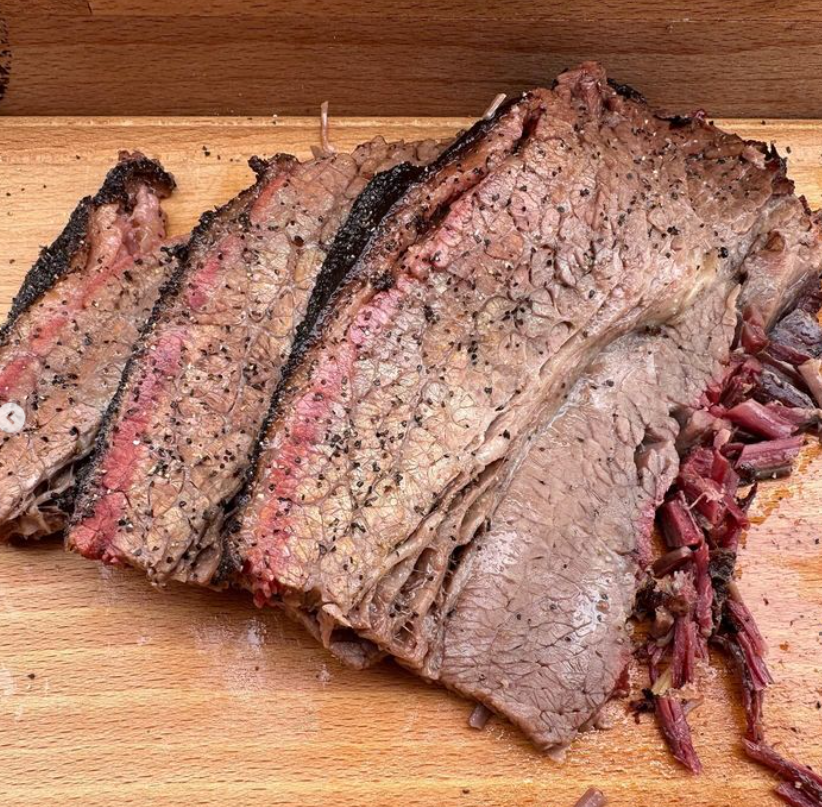
    I wrote a story about Indiana barbeque that was never published. In it, I argued that Indiana makes one of the great regional barbecues. Still, it never received the attention that others, partially because of the racism during the 1920s in the state—another story for another time. However, Mike and CJ McFarland smoke their meats in three different smokers outside a legion hall. Briskets, pulled pork, chicken are cured with locally sourced woods and seasoning, without sugar–brown or molasses in the open air, instead of indoors. Eaters get a wonderfully fruity yet succulent piece of meat from pitmaster McFarland’s patience over the embers.  McFarland’s roots and cooking hailed from Owensboro considered the birthplace of American barbecue or, at least, pit-cooked mutton. Still, with beef and pork, he crafts his smoked meats, which are all Hoosier. They have two locations, but I visited them on South German Road. 

    2316 South German Church Road, Indy, (317) 340 4502, https://www.smokin-barrel-bbq.com

  • i8tonite with Hawaiian Author and Food Writer Sonia R. Martinez & Recipe for Salade Niçoise with fresh ‘ahi

    i8tonite with Hawaiian Author and Food Writer Sonia R. Martinez & Recipe for Salade Niçoise with fresh ‘ahi

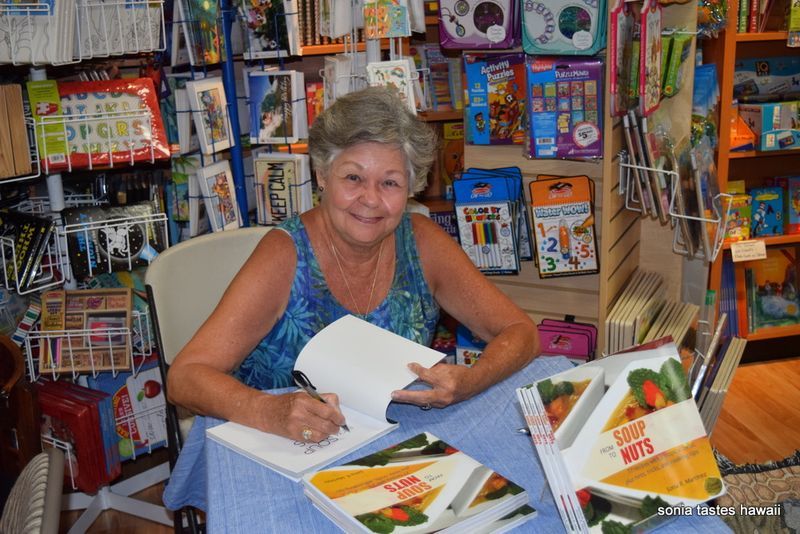
    i8tonite with Hawaiian Author and Food Writer Sonia R. Martinez & Recipe for Salade Niçoise with fresh ‘ahiSonia R. Martinez was born in the island of Cuba, and has always been drawn to tropical climes and cuisines. For the last 22 years she has lived on the Island of Hawai’i in a beautiful rain forest where she loves to play in the garden, grow herbs, collect cookbooks, test recipes, visiting farms; learning and reporting about new sustainable growing techniques, read voraciously, and work on crossword puzzles.

    Her passion for food and cooking led her to own kitchen/gourmet shops and cooking schools first in Orangeburg, South Carolina and later in the Miami, Florida area. After moving to Hawai’i, she and her son owned Akaka Falls Inn, a B&B, cooking school and gourmet shop in Honomu for several years.

    She has been a food writer and columnist since early 1999, writing a monthly column for The Hamakua Times newspaper of Honoka’a. Sonia is also a regular contributor to Ke Ola Magazine as well as many other local publications. I first met Sonia in the early days of Gather, a website that featured great writing and an even greater community. Her recipes, photos of life in Hawai’i, and generous, smiling personality attracted many followers, including myself. Her care and attention is genuine and I consider her decade+ friendship one of the best things coming from the islands to Michigan! She has been a beacon for visitors to visit Hawai’i, promoting the delicious local foods there, as well as encouraging healthy and fresh eating. Her recipes, food photos, and sharing of local farmer’s markets, island food, and the beautiful place she lives in has inspired countless readers.

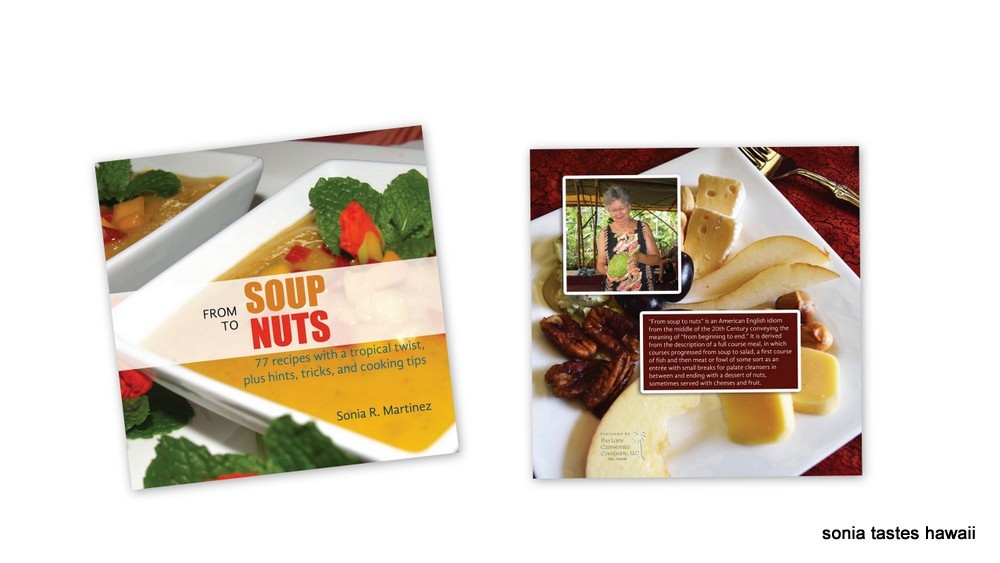
    i8tonite with Hawaiian Chef, Author, and Food Writer Sonia R. Martinez & Recipe for Salade Niçoise with fresh ‘ahiHer cookbook Tropical Taste, published in 2001, is a compilation of three years’ worth of monthly columns published in The Hamakua Times and is now in its second printing after being picked as one of the “Best of the Best” cookbooks in Hawai’i by Quail Ridge Press. Her second cookbook, From Soup to Nuts, was published a year ago .

    Sonia has maintained a blog for several years, sharing her adventures in food and gardening and her ongoing love affair with Hawai’i at www.soniatasteshawaii.com

    i8tonite with Hawaiian Chef, Author, and Food Writer Sonia R. Martinez & Recipe for Salade Niçoise with fresh ‘ahi


    Food People Questionnaire (with a nod to Proust):

    What is your favorite food to cook at home?
    Mainly simple and fresh…but I grew up with the ‘waste not’ concept and love to find creative ways to recycle leftovers so they don’t look or taste like leftovers.

    What do you always have in your fridge at home?
    Eggs, butter, cheese…I can live on cheese.

    What marked characteristic do you love in a person with whom you are sharing a meal?
    Appreciation and enjoyment of the food.

    What marked characteristic do you find unappealing in a person with whom you are sharing a meal?
    Inattention to the food or the other extreme, showing off their ‘gourmandise’

    Beer, wine, or cocktail?
    Definitely wine…unless I’m eating a paella or Arroz con Pollo…then I do enjoy a very cold beer. I am not fond of cocktails.

    Your favorite cookbook author?
    This is a hard one. At one time I owned a collection of well over 3000 cookbooks. Lost them in a fire, but in no time at all, my ‘new’ collection grew by leaps and bounds with gifts from friends who were trying to replace the lost ones, plus the many I added through the years. A couple of years ago, I started going through them and culling them to a manageable 4 shelf units in my office and hallway instead of all over the house. It was a time of hard decisions, but now know exactly what I have and where to find it…No mean feat, since I still own about 500, give or take.

    I have an extensive collection of Cuban and Hawaiian cookbooks; a few Spanish & Portuguese, some Italian ones and Tropical Fruit ones, plus several on herbs & spices, a few single topic ones (sushi, dim sum, chocolate) and several of the classics that don’t fit into any of the categories mentioned…and of course, my own two titles, Tropical Taste and From Soup to Nuts.

    Your favorite kitchen tool?
    My Santoku knife…I seem to reach for that one above all other ones.

    Favorite types of cuisine to cook?
    Tropical, Cuban, Italian.

    Beef, chicken, pork, or tofu?
    I’ll eat anything but am most creative with chicken. I am not fond of tofu.

    Favorite vegetable?
    Asparagus, any way it can be prepared.

    i8tonite with Hawaiian Chef, Author, and Food Writer Sonia R. Martinez & Recipe for Salade Niçoise with fresh ‘ahi

    Chef you most admire?
    Although I have met a few of the well-known chefs in the culinary world, and admire several of them, I will have to say that there are three ‘local’ chefs I admire the most on this island. Sam Choy of Sam Choy’s Kai Lanai in Kailua-Kona, James Babian of Pueo’s Osteria in Waikoloa, and Diana Soler of Aloha Bayfront Café in Hilo, for their commitment to using locally sourced ingredients whenever possible and their honest approach to food. Simple, fresh, beautifully prepared and presented without ostentation.

    Food you like the most to eat?
    Any shellfish but love scallops

    Food you dislike the most?
    Anything that is an imitation of the real thing

    What is your favorite non-food thing to do?
    Play in the garden…I love planting edibles among our ornamental landscaping (I even joy weeding!), and am a voracious reader.

    i8tonite with Hawaiian Chef, Author, and Food Writer Sonia R. Martinez & Recipe for Salade Niçoise with fresh ‘ahi
    View from Sonia’s back yard

    Who do you most admire in food?
    My mentor and inspiration from way back has always been Shirley O. Corriher, who came to my first cooking school as a guest cooking teacher fairly often in the early 80s. She demystified so many of my preconceived notions in cooking and her enthusiasm and love of all things food served as great encouragement.

    Where is your favorite place to eat?
    A good sushi or seafood restaurant.

    What is your favorite restaurant?
    Takenoko’s Sushi in Hilo, is in my opinion the best sushi restaurant anywhere. We’re lucky if we can get reservations since the waiting list is so long, but it is well worth the waiting. I also enjoy dropping by Aloha Bayfront Café in Hilo for lunch. The food is always fresh, delicious, and beautifully presented, the staff is friendly, and you’re never rushed to vacate the table.

    Do you have any tattoos? And if so, how many are of food?
    No tattoos. My mother would have killed me!

    Recipe: Salade Niçoise with fresh ‘ahi

    i8tonite with Hawaiian Chef, Author, and Food Writer Sonia R. Martinez & Recipe for Salade Niçoise with fresh ‘ahi

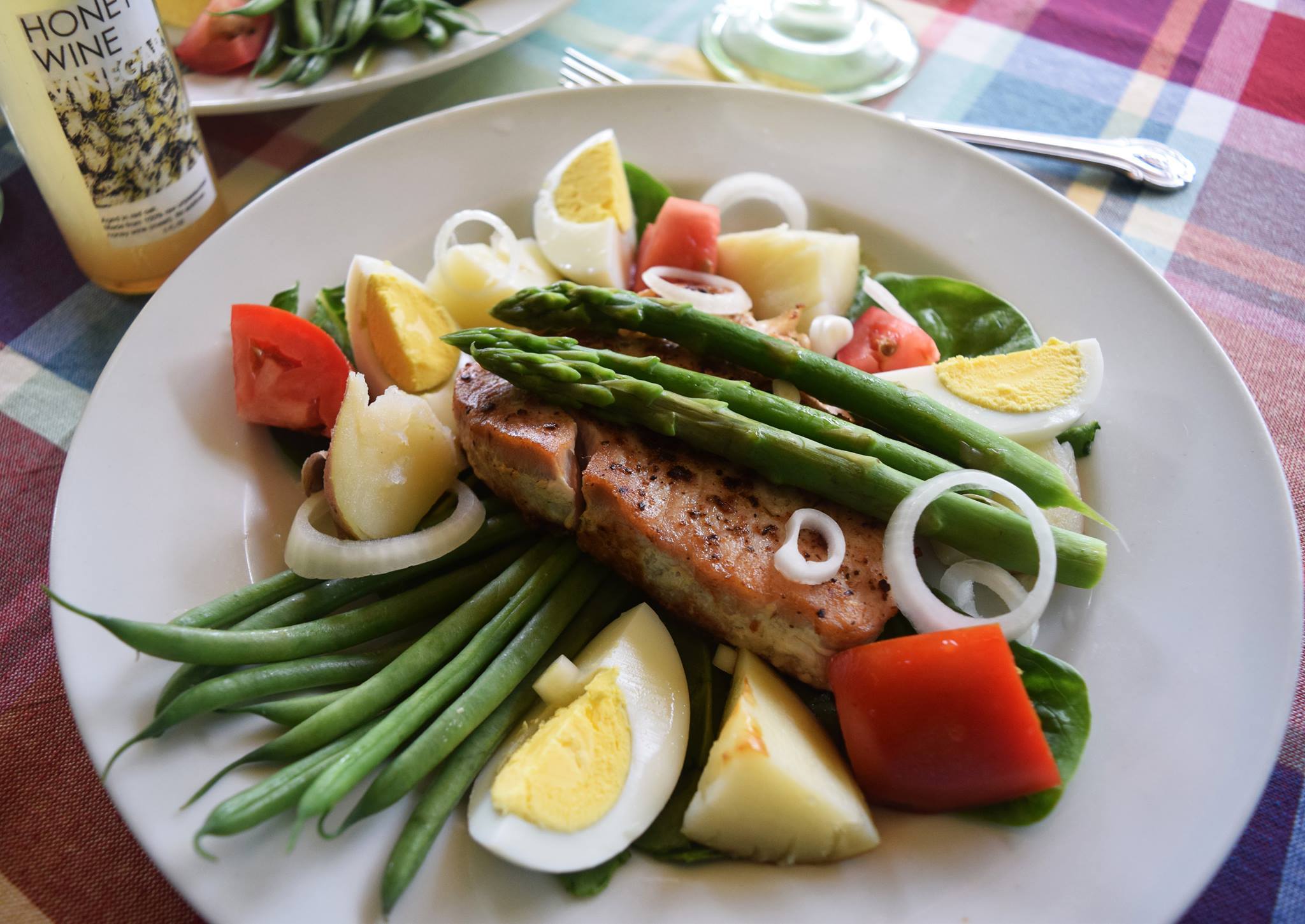
    One of my favorite simple and healthy meals to prepare at home when I can buy fresh ‘ahi (tuna) is my version of a Salade Niçoise.

    Season to taste fresh ‘ahi (tuna), sear in avocado oil, serve on a bed of fresh spinach or Manoa lettuce, boiled potato wedges, hard-boiled eggs, tomatoes, sliced onions, a handful of lightly steamed haricot vert, and asparagus, dressed simply with Honey Wine Vinegar to which I had added a vanilla bean.


    The End. Go Eat. 

    All photos courtesy and copyright Sonia R. Martinez

  • i8tonite: A Cheat Sheet to Eating in Stratford, Ontario

    i8tonite: A Cheat Sheet to Eating in Stratford, Ontario

    The famous Stratford Swans on the Avon River. i8tonite: A Cheat Sheet to Eating in Stratford, Ontario
    The famous Stratford Swans on the Avon River


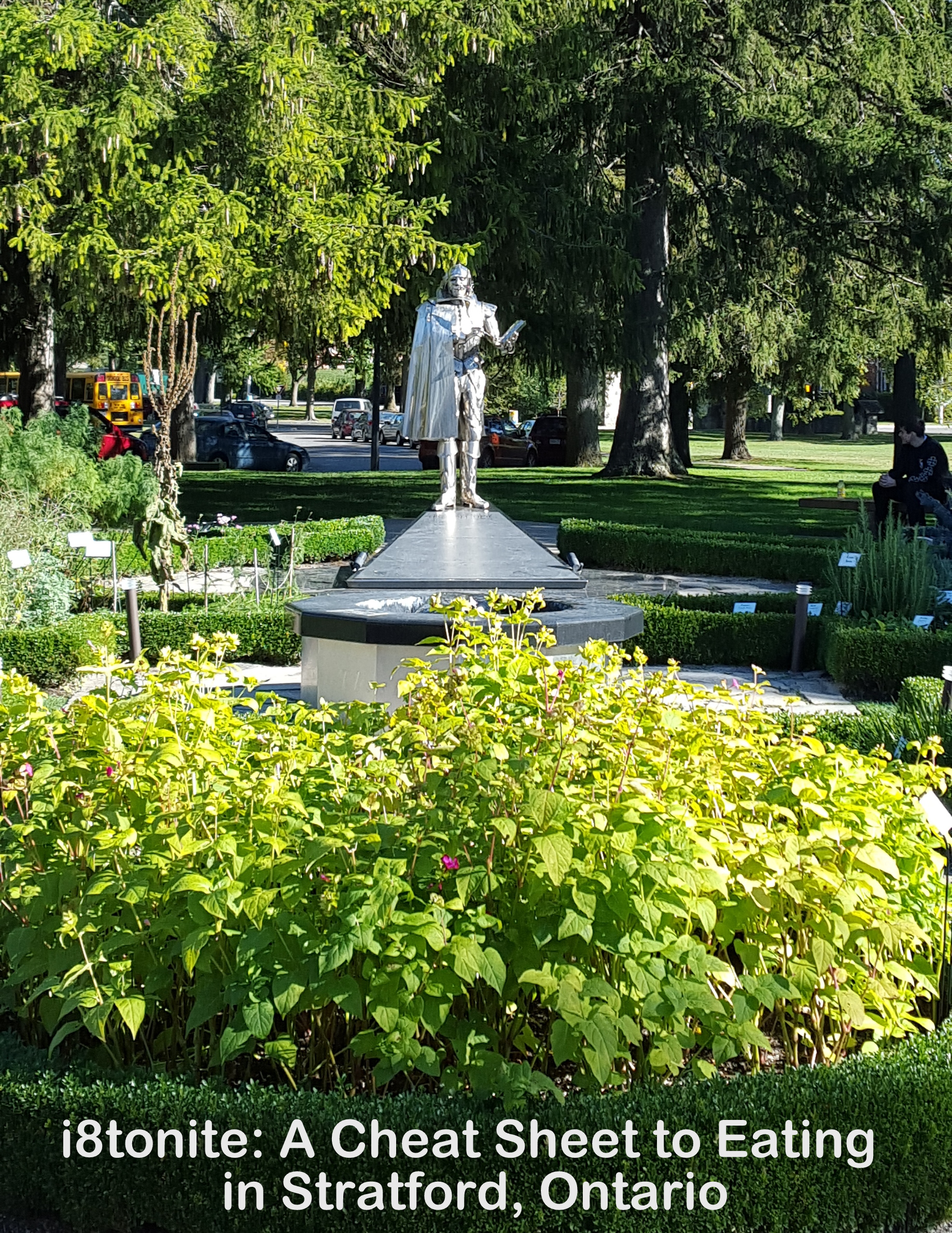
    Shakespeare, swans, shopping, and spectacular eats – where are you? You’re in Stratford, Ontario!

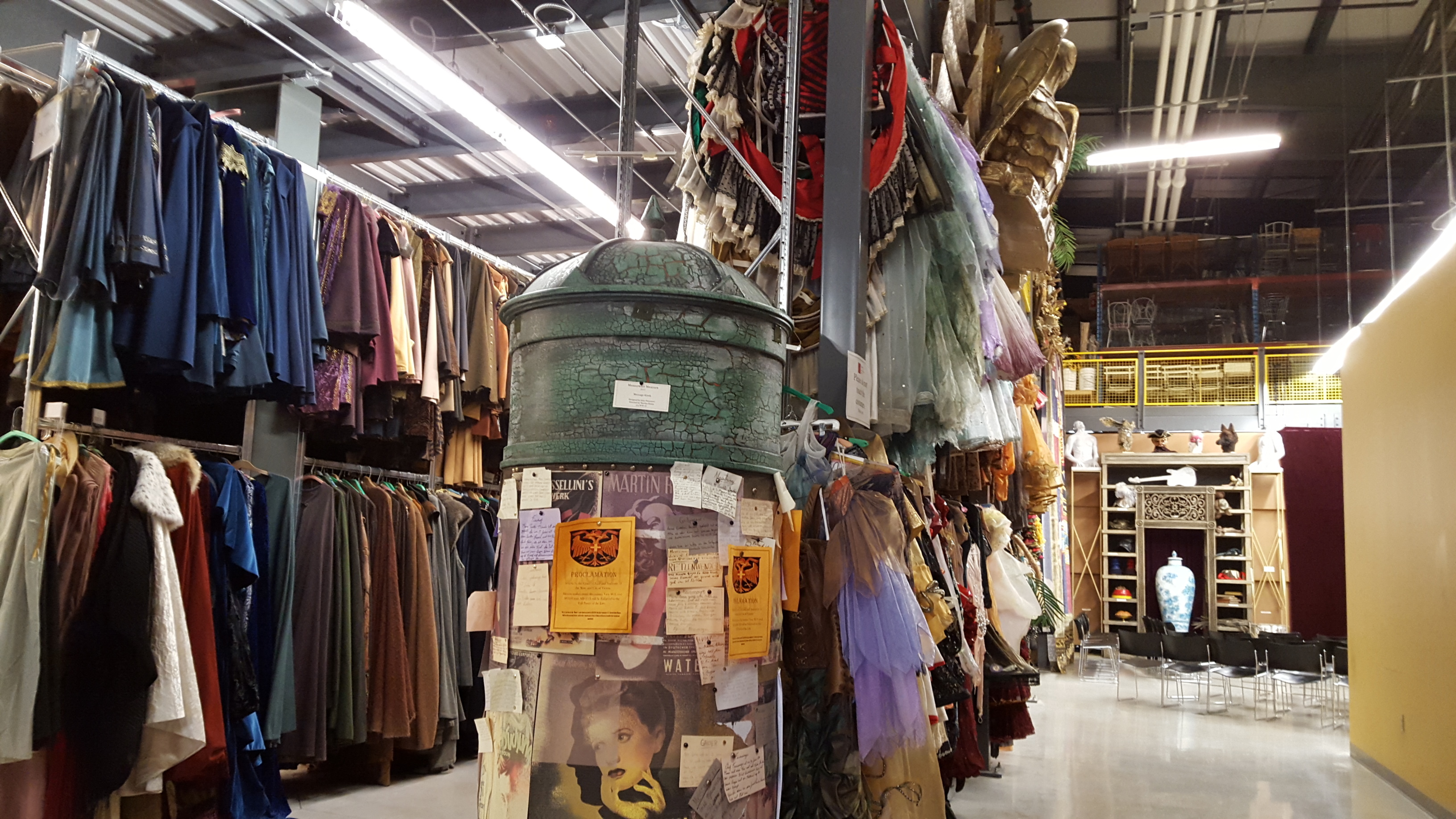
    This small town is one of the most vibrant arts and food towns I’ve ever visited – and like many who visit, I long to move there. Stratford is known for being a theatre town – it’s the home of the Stratford Festival, one of the best theatre festivals in the world (which runs from April through October each year). There are Shakespearean Gardens to meander through; make time to see the swans along the Avon River – the 24 swans are well-cared for and have an annual parade each spring! Be sure to tour the Costume Warehouse and see the tens of thousands of costumes used in the productions, and stop and shop at Bradshaw’s, a fantastic kitchen store.

    Stratford Costume Warehouse. i8tonite: A Cheat Sheet to Eating in Stratford, Ontario
    Stratford Costume Warehouse

    This town is a foodie town. There’s the Stratford Chef School and a plethora of extraordinary restaurants. The prevailing theme is locally grown/sourced, organic, fresh foods – you can see this when you talk with chefs, or shop the weekly farmer’s market. It’s amazing, and progressive, and just lovely.

    i8tonite: A Cheat Sheet to Eating in Stratford, Ontario
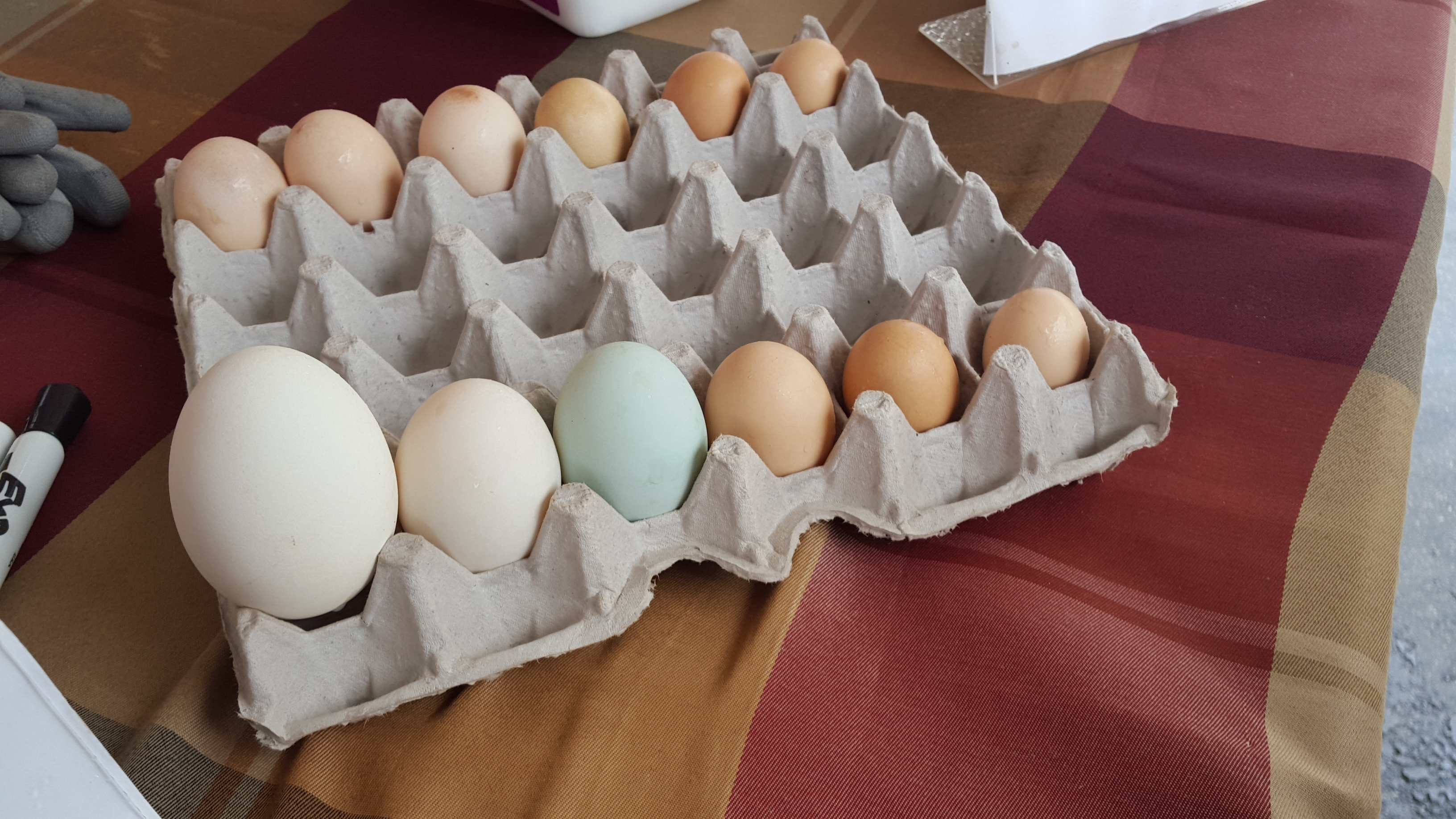
    A variety of sizes for your fresh eggs at the Stratford Farmer’s Market


    i8tonite: A Cheat Sheet to Eating in Stratford, Ontario
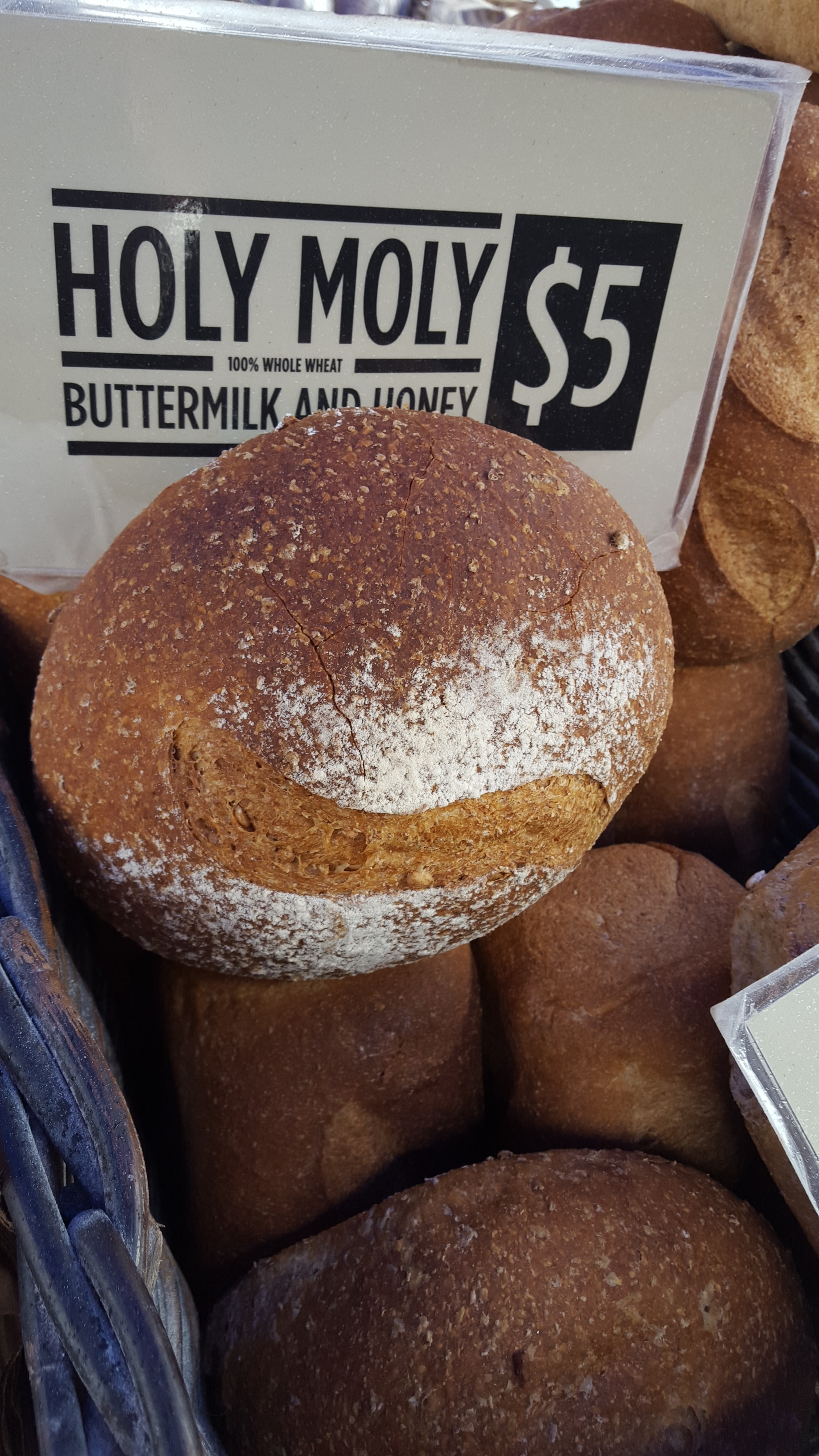
    Freshly baked bread at the Stratford Farmer’s Market

    Explore the Savour Stratford food trails – Bacon and Ale, Chocolate, Pumpkin, Maple, and other seasonal trails that offer food and food items at stores all throughout town. Purchase trail passes at the Visit Stratford office downtown – it’s a great way to explore local food – and local stores.

    I was completely surprised by the quantity of excellent food and great restaurants here – you will be, too. For a small town, Stratford just explodes with art, theatre, museums, and fine dining. The choices overflow – it was hard for me to narrow this down!

    Please note all prices are in Canadian dollars.

    Breakfast: The Bruce

    i8tonite: A Cheat Sheet to Eating in Stratford, Ontario
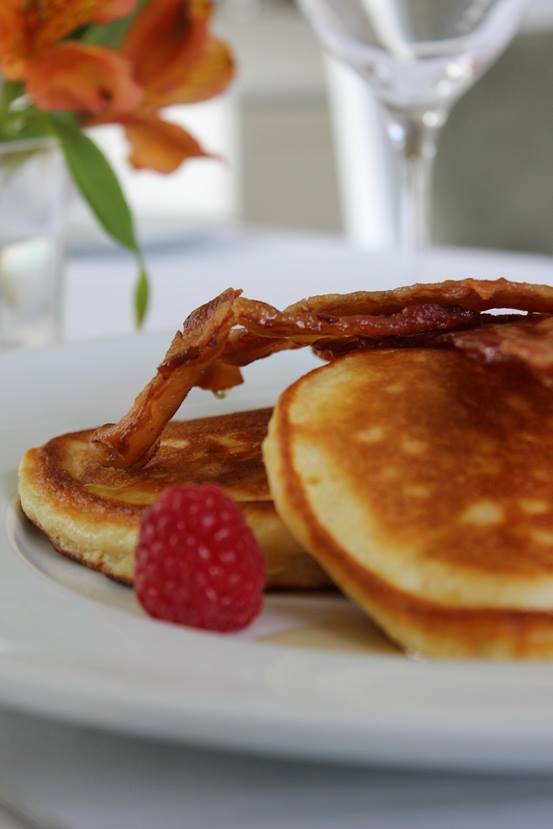
    Buttermilk & caramelized apple pancakes with bacon, courtesy of The Bruce

    My suggestion: We ate breakfast at our B&B, so I asked my foodie friend Cathy Rehberg, of Visit Stratford, for a suggestion. She made me hungry! Here’s what she recommended: “Chef Arron Carley, who will be featured on Food Network TV’s Chopped Canada, describes the vision for his new menus: “Looking into our past and understanding our roots as well as looking forward into the undiscovered wilderness of our nation we will forge New
    Canadian Cuisine.” Now he is offering the Bruce-alicious menu which offers excellent value. Take a look at the fall and winter breakfast menu. Everything I have had there has been so good! And, it comes with a lovely view of the gardens just south of Upper Queen’s Park and a 5 minute walk to the Festival Theatre.”

    Price: Bruce Breakfast Sandwich: Perth pork sausage, Avonlea cheddar, duck egg, tomato, awesome sauce, flaxseed bun, crispy spuds – $15
    Hours: Restaurant: Thursday-Saturday plus Sunday Brunch; Lounge open every day.
    Address: 89 Parkview Drive
    Phone Number: 855-708-7100
    Website: www.thebruce.ca


    Second Breakfast: Rheo Thompson Candies

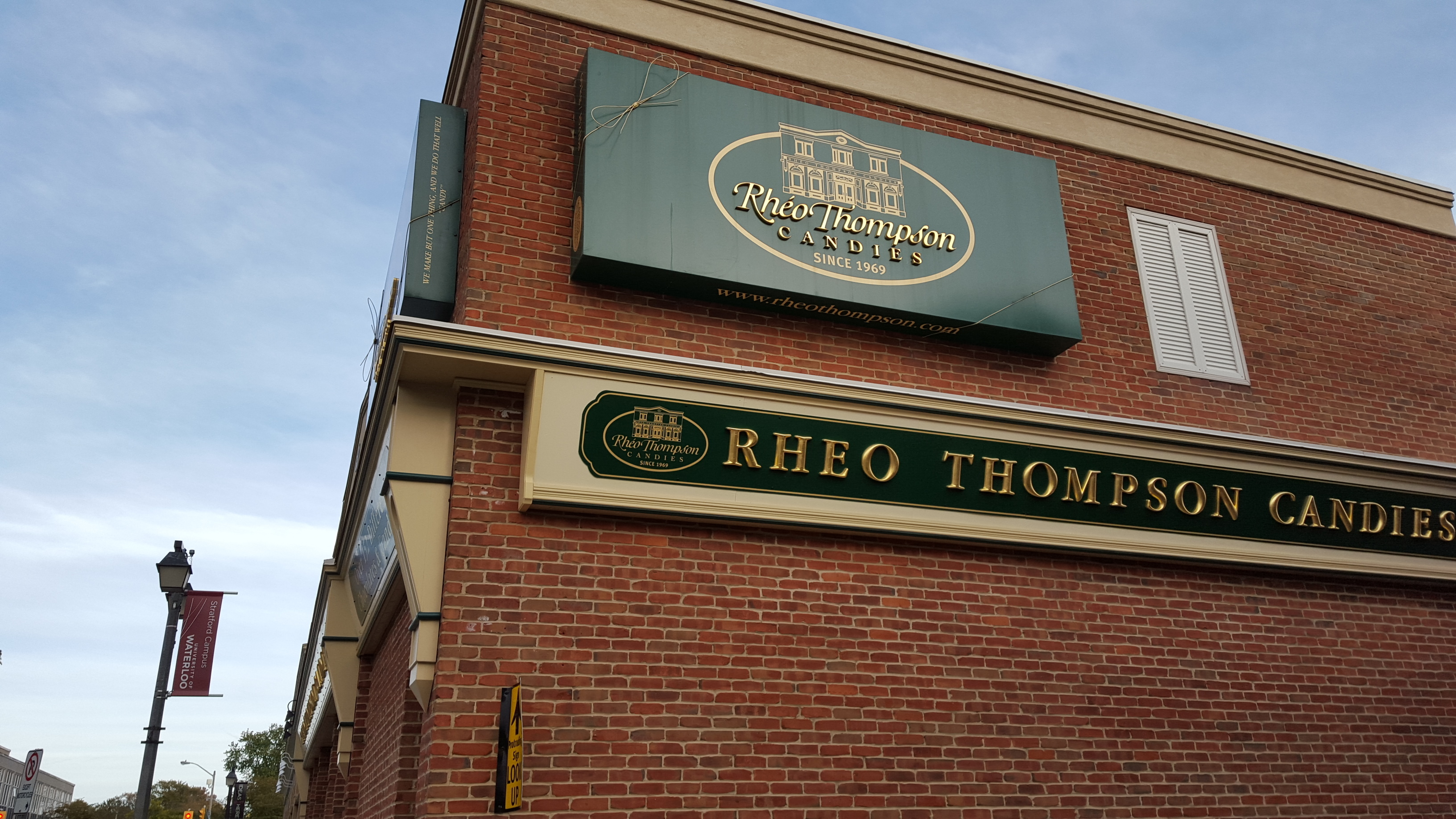
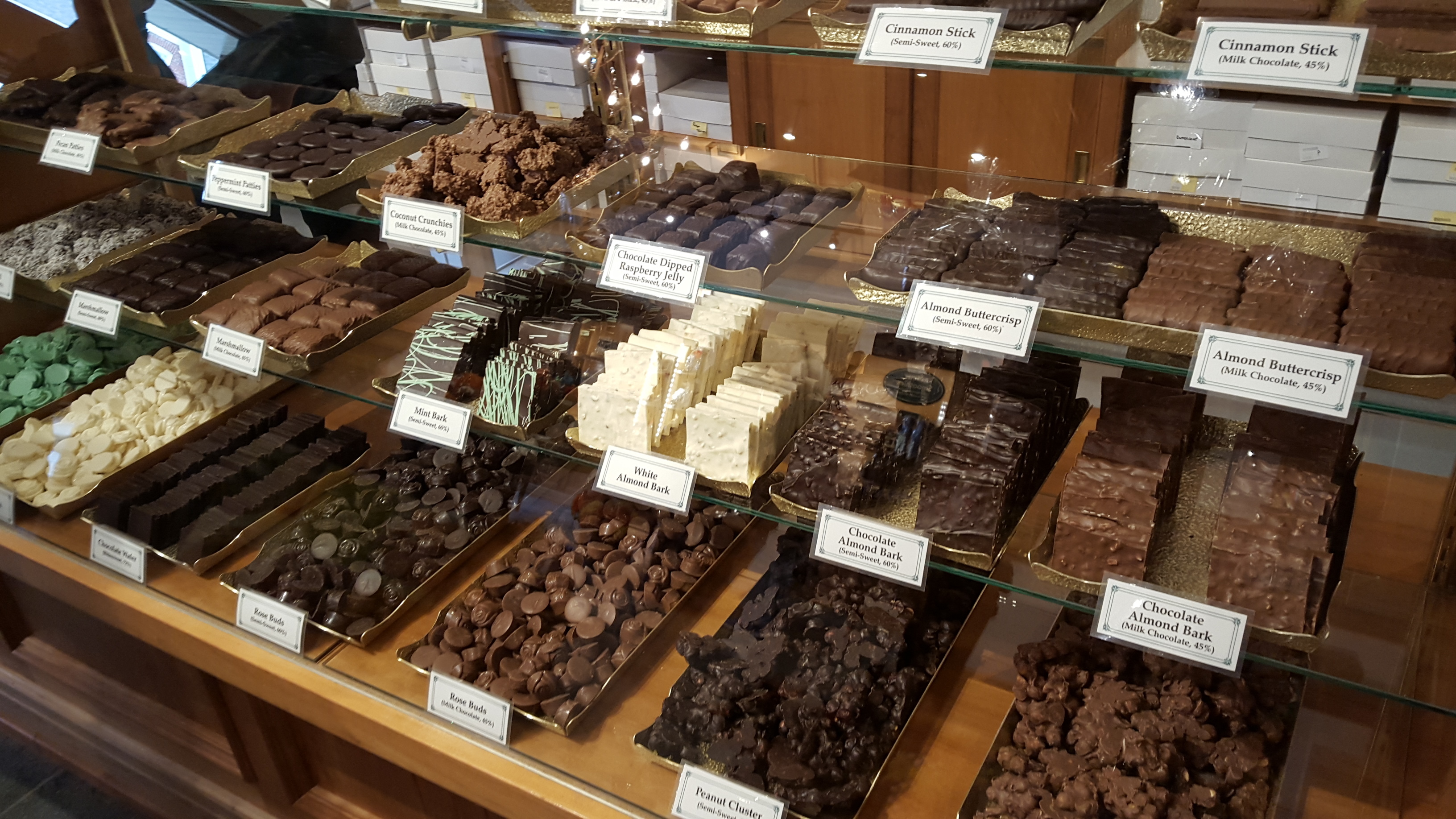
    Rheo Thompson Chocolates. i8tonite: A Cheat Sheet to Eating in Stratford, Ontario

    I have a soft spot in my heart for Rheo Thompson – not only for their extraordinary chocolates, but for the fact that we both came into this world in 1969. I adore this chocolate shop – and so does everyone who’s been to Stratford. It’s a must-visit. If you go on Savour Stratford’s Chocolate Trail, Rheo Thompson is one of the options.
    Rheo Thompson Chocolates. i8tonite: A Cheat Sheet to Eating in Stratford, OntarioMy suggestion: While all of the chocolates I have ever gotten from Rheo Thompson have been delicious, try to snag some Dark Chocolate Covered Marshmallows. They are homemade marshmallow pillows, square, drenched in a thin coating of luscious dark chocolate. Yes, they deserve all of those adjectives.

    Price: inexpensive
    Hours: Monday-Saturday, 9am-5:30pm, closed Sunday
    Address: 55 Albert Street
    Phone Number: 519-271-6910
    Website: https://www.rheothompson.com/


    Lunch: Mercer Hall

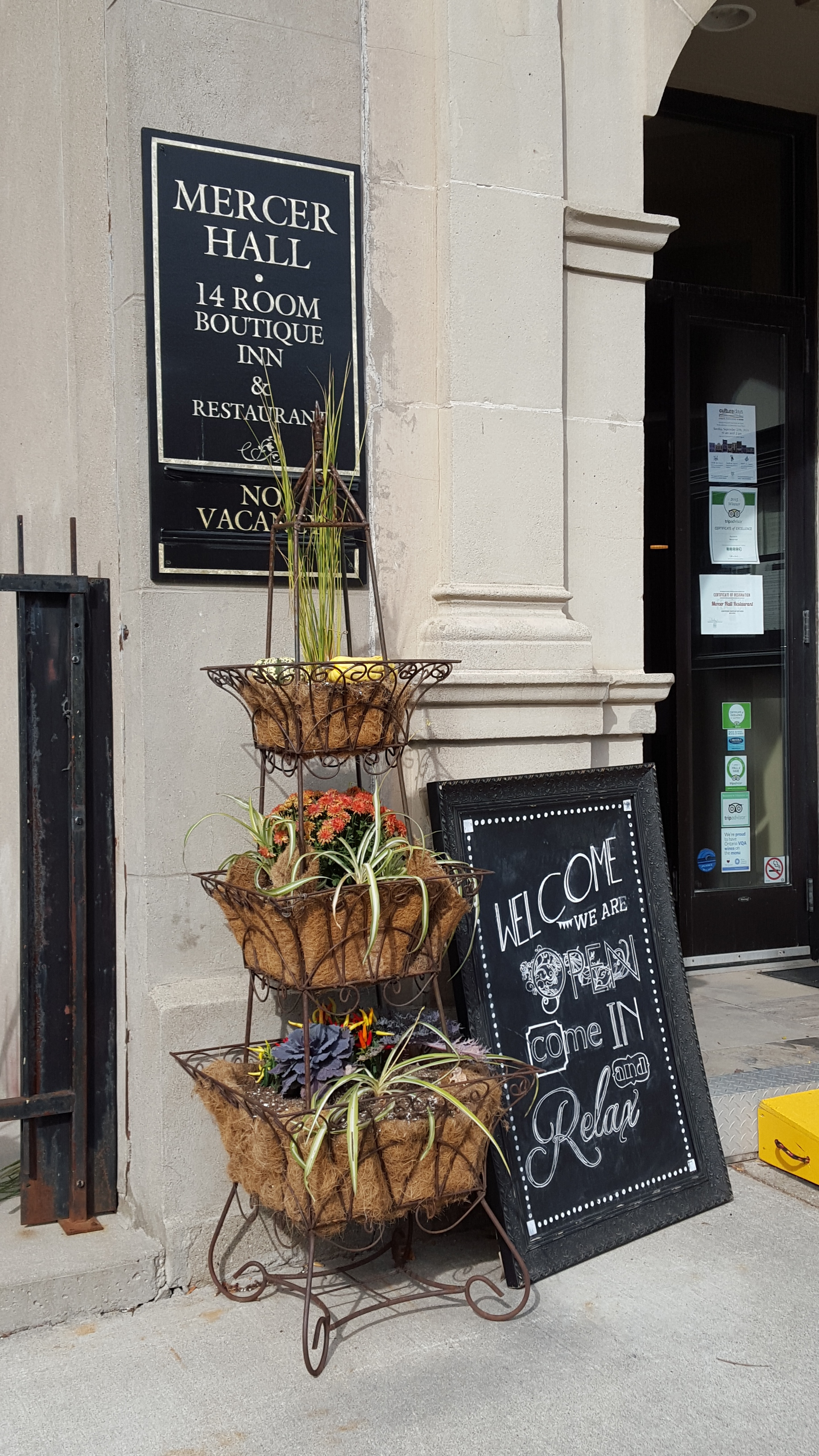
    Welcome to Mercer Hall. i8tonite: A Cheat Sheet to Eating in Stratford, OntarioI absolutely LOVE this restaurant. Chef Ryan O’Donnell is the epitome of a chef that cares about locally grown, sustainable food sources, while being a great mentor and boss, AND bringing his creativity to the table.

    Mercer Hall also serves hot tea from Canada’s first tea sommelier, Karen Hartwick (visit her shop, Tea Leaves, while you are in town), so be sure to order a pot.

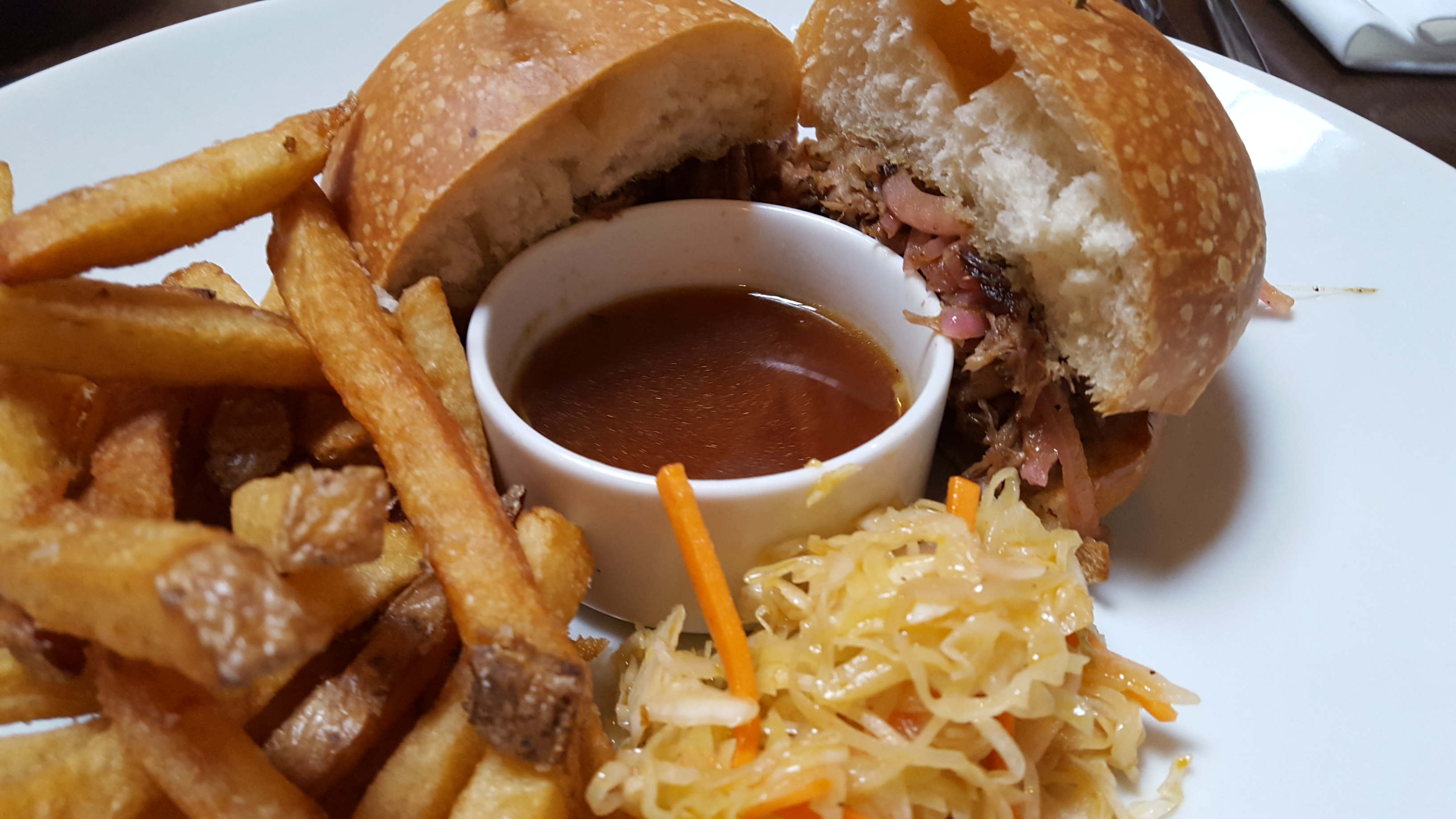
    My suggestion: House smoked beef dip sandwich, seasonal slaw, fries & jus – I can’t resist a great sandwich. This one was incredible.

    lunch at Mercer Hall. i8tonite: A Cheat Sheet to Eating in Stratford, Ontario
    House smoked beef dip sandwich, seasonal slaw, fries & jus


    Price: lunch mains $12-$17
    Hours: Monday-Thursday, 11am-9pm, Friday and Saturda, 11am-10pm, Sunday 11am-8pm
    Address: 104 Ontario St
    Phone Number: (888) 816-4011
    Website: http://www.mercerhall.ca/


    Coffeeshop: Revel Caffe

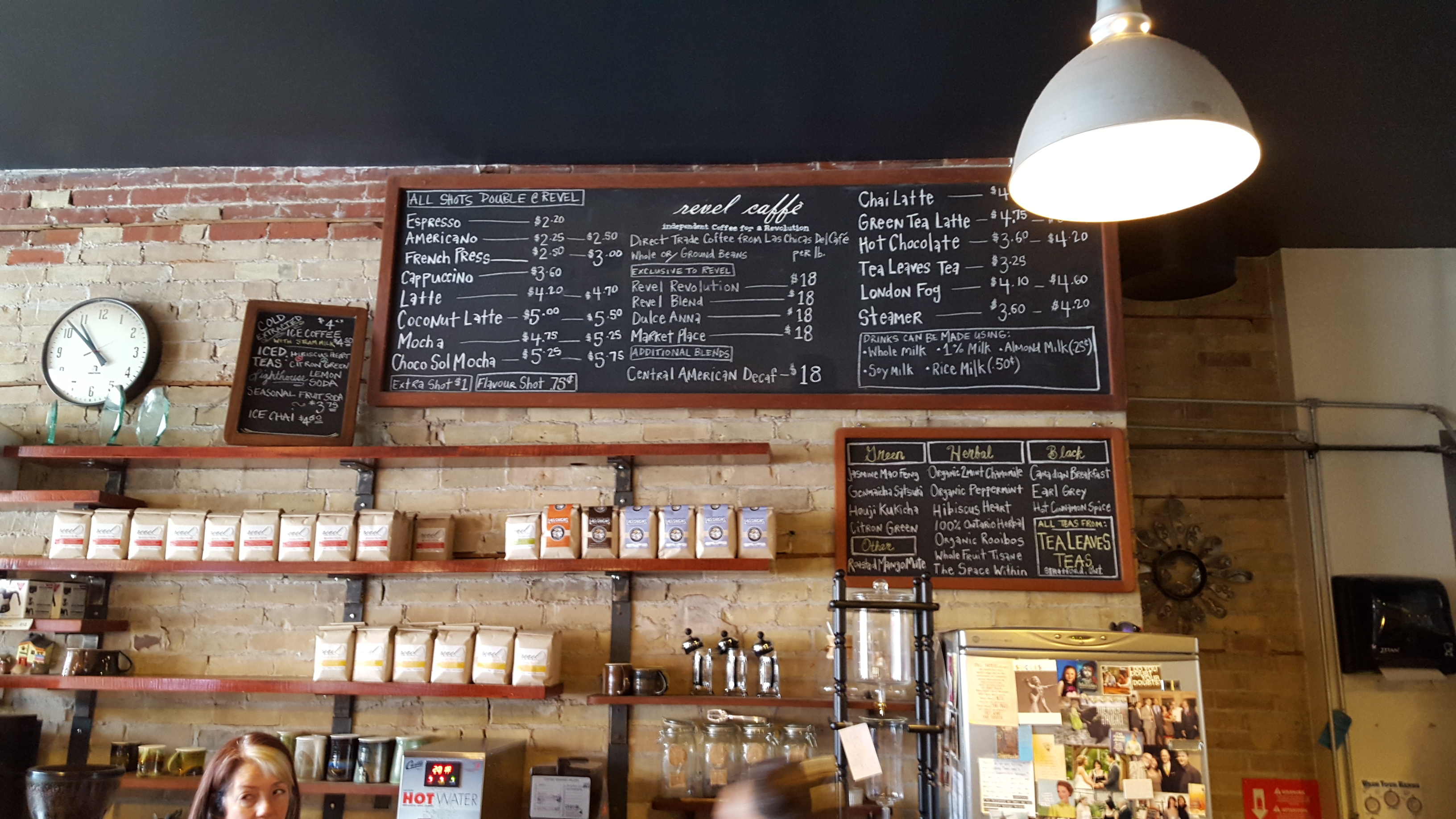
    Revel Caffe. i8tonite: A Cheat Sheet to Eating in Stratford, OntarioBecause there are many great coffeeshops in town, it’s hard to recommend just one. But I’ll try. Revel’s tagline notes: “independent coffee for a revolution home of direct trade coffee, delicious pastries & revelers” – indeed, this is the case. We walked into a bustling cafe – the sounds of the crowd were so happy and joyful – like old friends meeting up. Revel offers delicious baked goods and a variety of coffees and teas.

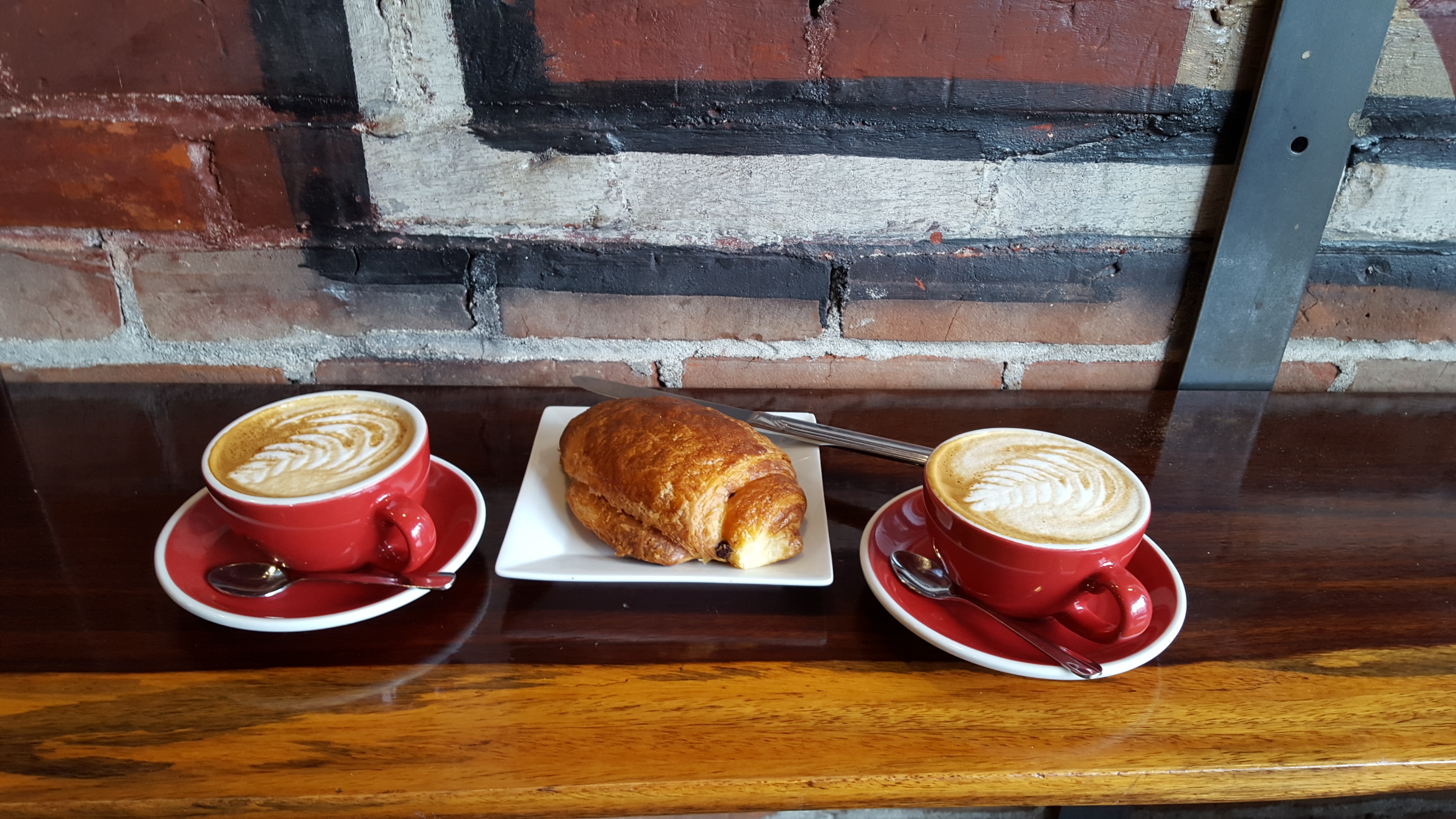
    My suggestion: We went for lattes and a chocolate croissant. Heaven.

    Revel Caffe. i8tonite: A Cheat Sheet to Eating in Stratford, Ontario

    Price: large latte – $4.70
    Hours: Monday – Saturday, 8am-6pm, Sunday 9am-5pm
    Address: 37 Market Place
    Phone Number: 519-305-1600
    Website: http://www.revelcaffe.com/


    Happy Hour: Revival House

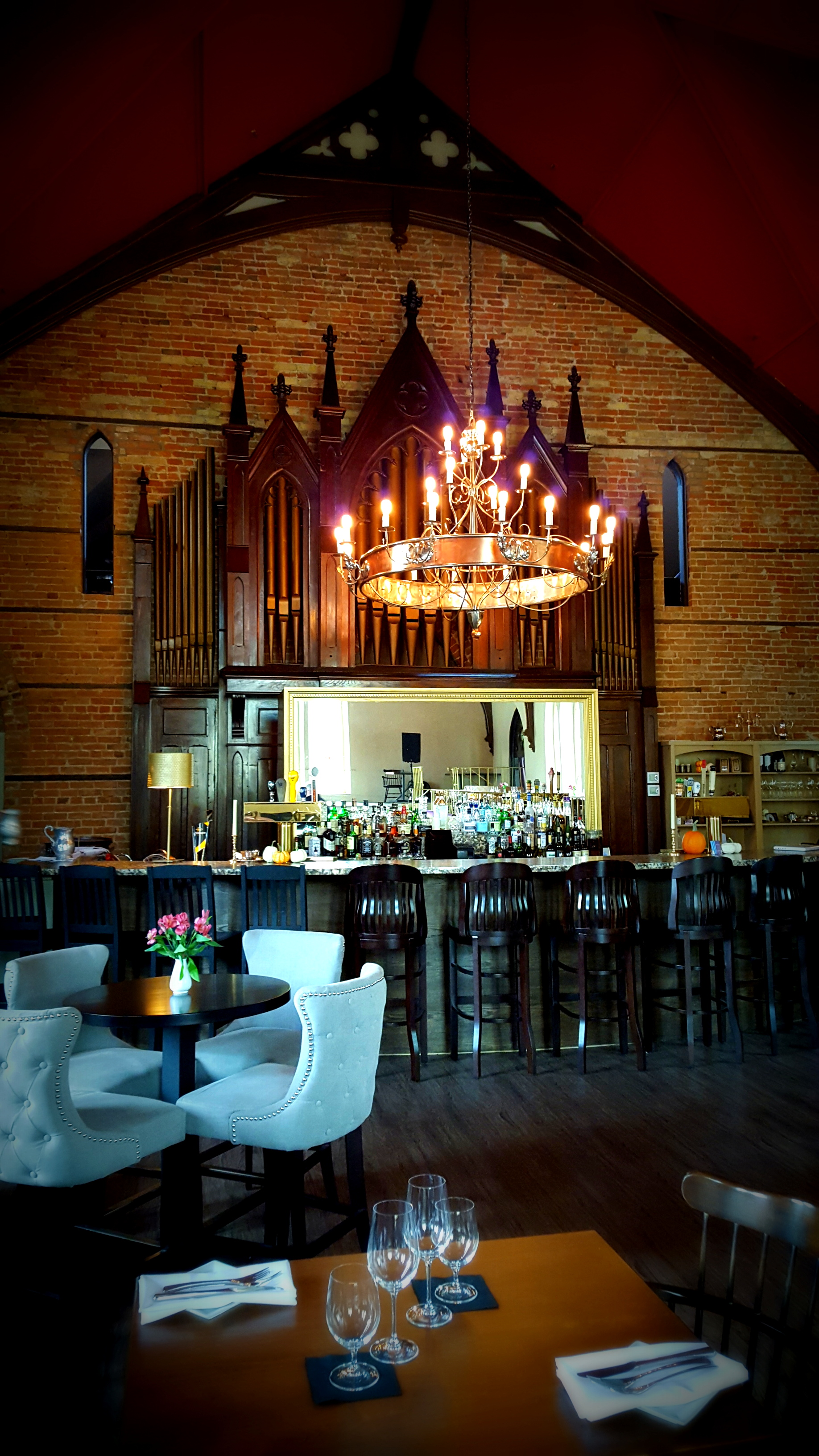
    A restaurant and bar in an old church? It works! You walk in to thisThe bar at Revival House. i8tonite: A Cheat Sheet to Eating in Stratford, Ontario gorgeous space, and immediately want to sit down and cozy in. There is sometimes a band at the front of the hall! Revival House uses fresh, local, seasonal ingredients in their menus. While we were there, we saw large families, couples, mother-daughter teams (us!), and more… This is a fun, upscale place that is hopping.

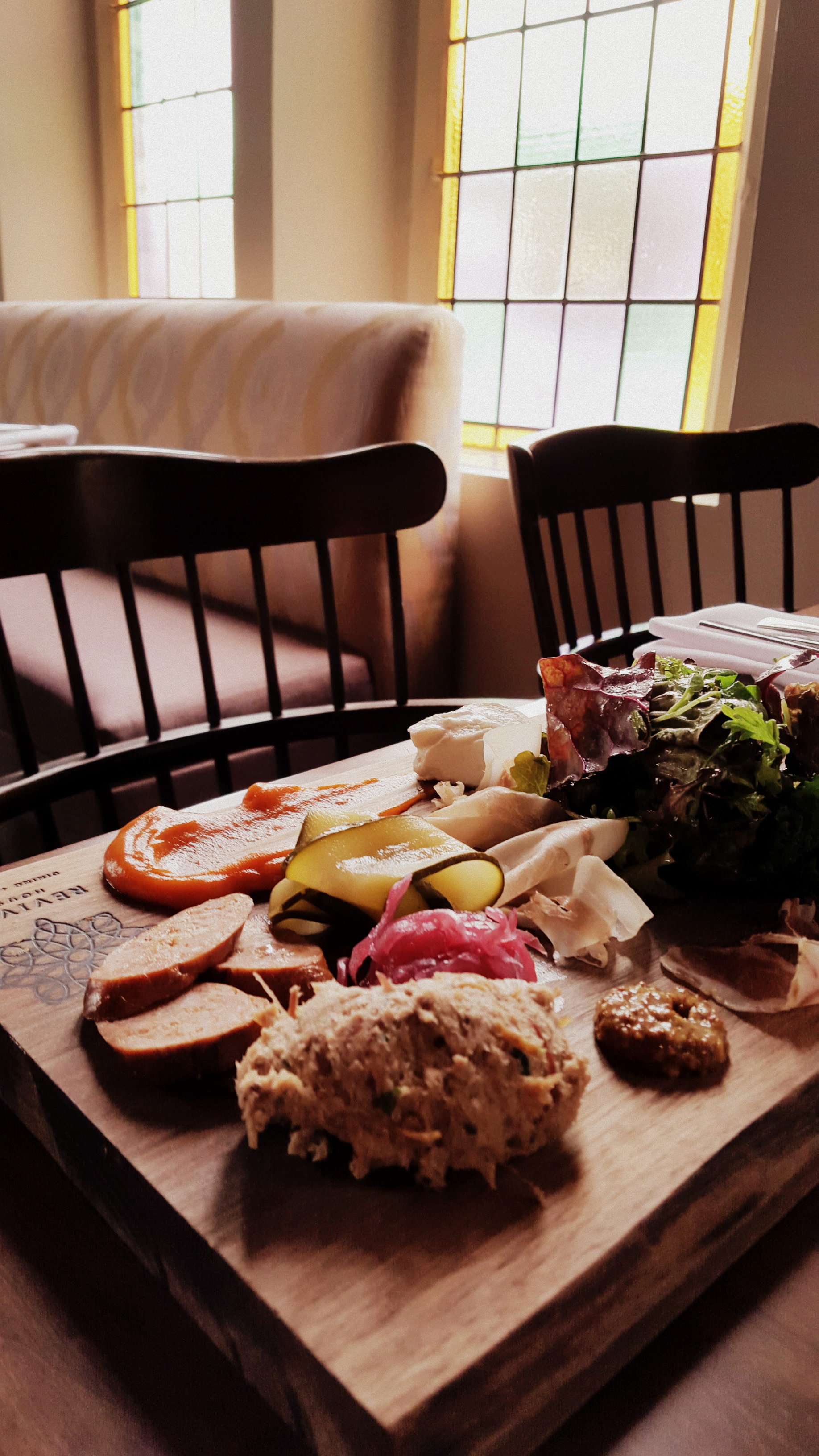
    My suggestion: I don’t drink, so take your pick from their extensive drinks menu. What I will suggest is the charcuterie board ($27, to share) to tide you over until dinner.

    Crudite platter at Revival House. i8tonite: A Cheat Sheet to Eating in Stratford, Ontario
    Just look at that!

    Hours: Wednesday-Sunday, 11am-1am. Closed Monday and Tuesday
    Address: 70 Brunswick Street
    Phone Number: 519-273-3424
    Website: www.revival.house

    Dinner: Pazzo

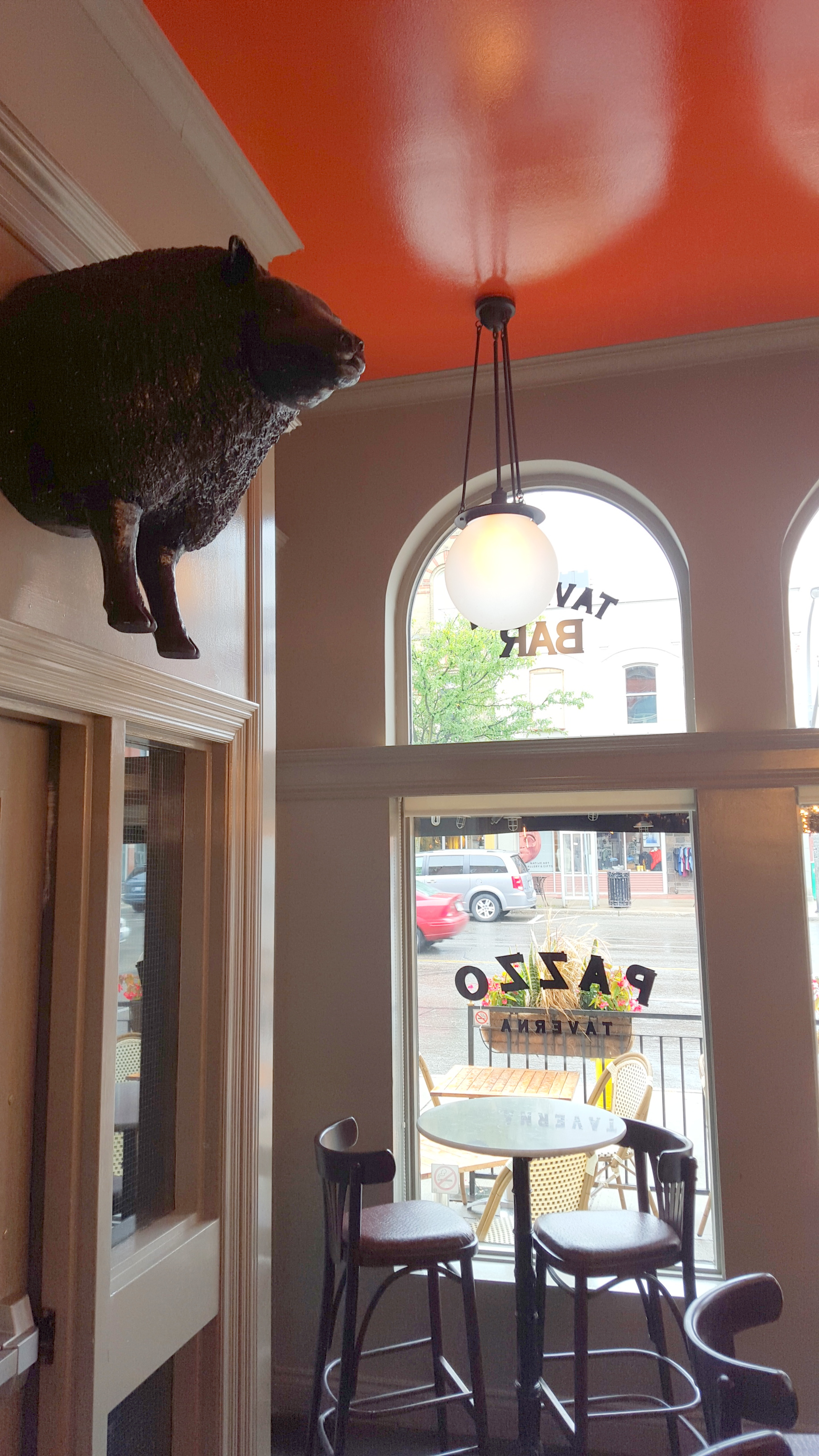
    i8tonite: A Cheat Sheet to Eating in Stratford, OntarioLocated on the main corner of Stratford’s downtown, this is the perfect place to stop in for dinner. BE SURE to make reservations if it is theatre season. If you’re not going to see a play that evening, make it after 7:30pm, so the theatre rush is done and you can relax in the large, comfy dining room. Chef Yva Santini, in her 9th year at Paazzo, received the Ontario Hostelry Institutes Top 30 under 30 award in 2014. She’s creative, friendly, and a genius in the kitchen. I love how she comes out into the dining room herself, to deliver the mains and chat with customers.

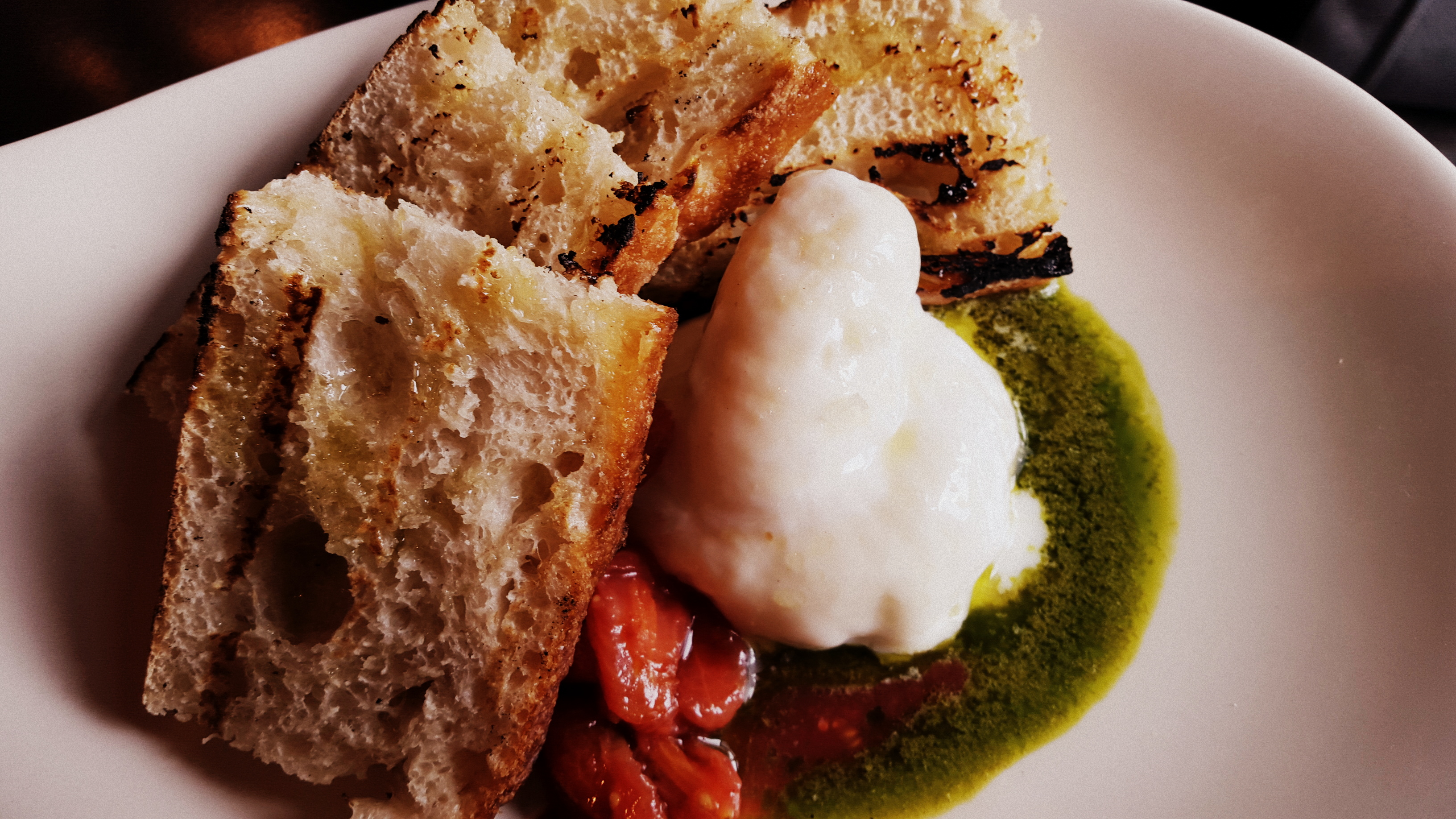
    My suggestion: I could eat just off the appetizer menu, honestly. My favorite is the Burrata with balsamic roasted cherry tomatoes and pesto, $13. But there is much to recommend on the mains menu, including the unlimited hand made pasta special – enjoy as much of Chef Yva’s daily pasta as you like, $20, or try the Taverna fondue (!!!).

    Burrata at Pazzo. i8tonite: A Cheat Sheet to Eating in Stratford, Ontario
    Burrata at Pazzo

    Price: $$
    Hours: Sunday, Tuesday-Thursday, 11:30am-10pm, Friday and Saturday 11:30am-12am, closed Monday
    Address: 70 Ontario St
    Phone: 519-273-6666
    Website: www.pazzo.ca

    Pazzo Taverna Dinner from One O Six Media on Vimeo.


    Pin for later:

    i8tonite: A Cheat Sheet to Eating in Stratford, Ontario


    – The End. Go Eat. –


    All photos courtesy and copyright Jessie Voigts, except where noted

  • i8tonite: with Palm Springs’ Workshop Chef Michael Beckman

    i8tonite: with Palm Springs’ Workshop Chef Michael Beckman

    i8tonite: with Palm Springs' Workshop Chef Michael Beckman
    Chef Michael Beckman: Photo by Van Roo

    Palm Springs is known as a resort town – an enclave for second homes, secret hotel pools, and cocktails. The cocktail culture is the town’s prevailing modus operandi. With a population of a little over 50,000, it’s never really been considered a food haven. Ask a few of the locals who live in the desert year round, and the answer is their private chef does the cooking. Or, they recommend one or two restaurants which are more about an elongated drink menu rather than a superbly pan-roasted fish or braised greens from the surrounding Coachella Valley farmers. There are a few notable exceptions to this observation.  The first that comes to mind is the four-year-old Workshop, owned and cheffed by Michael Beckman, which can be the honest answer to the question: “Where to eat in Palm Springs?”

    i8tonite: with Palm Springs' Workshop Chef Michael Beckman
    Workshop: Photo by Michael Horton

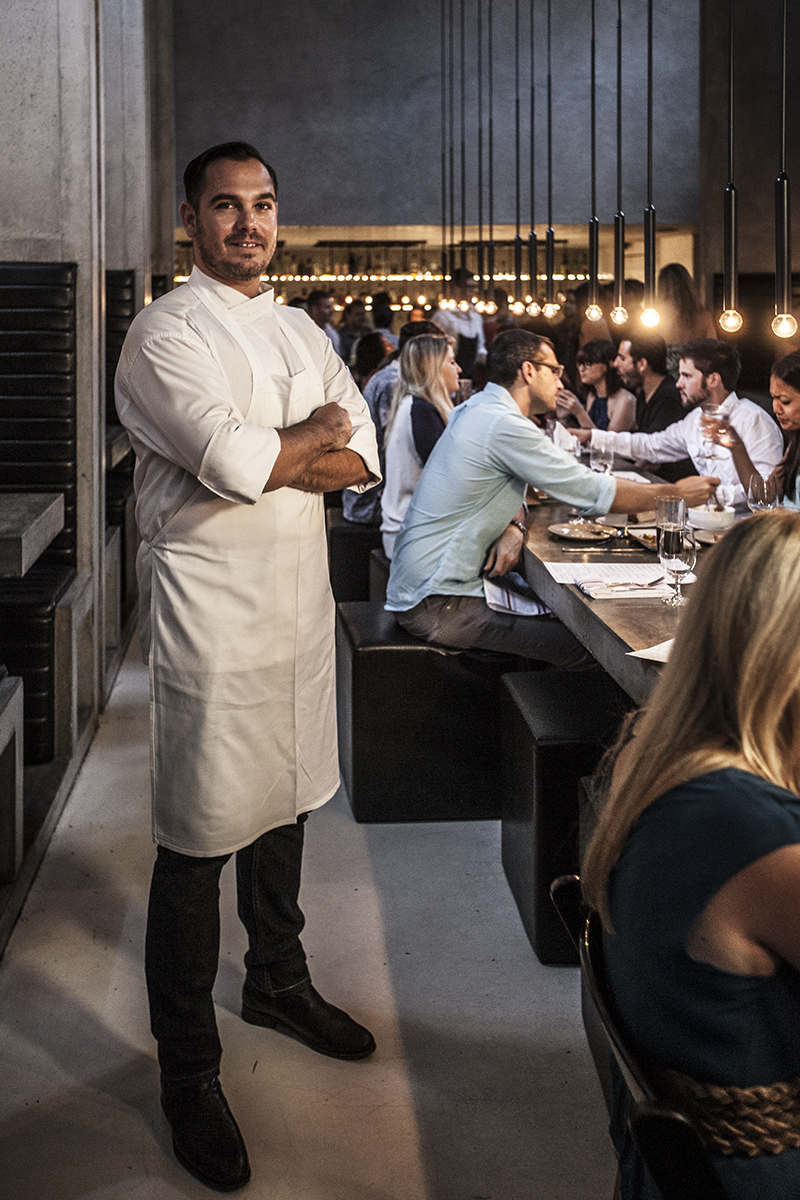
    There are two reasons for this. The first is that Mr. Beckman is a classically French-trained chef with stints apprenticing, cooking, and learning in European kitchens, including Burgundy’s three Michelin-starred Lameloise and working under noted German chef Thomas Kellerman at the Ritz-Carlton, Berlin. Beckman maybe the only independent chef in the Southern California desert communities to claim to work in a Michelin-starred dining room.

    i8tonite: with Palm Springs' Workshop Chef Michael BeckmanSecondly, he’s smart enough to promote his restaurant outside the Palm Springs area, getting the first and the last reservations from area visitors. It’s been a very smart business move to market his talents to the gourmand set, rather than wait for visiting travel media shuffling through for an annual Palm Springs pilgrimage. Instead of getting the backend of travel pieces, Beckman put forth the effort and it’s paid off with stories in Sunset Magazine, Bon Appetit, Eater, and Wall Street Journal. But the question remained: how could someone with Beckman’s background become part of Palm Springs? Truthfully, he stated he was a private chef working with a client based in Rancho Mirage. He grew to love the area’s farmers markets and vendors, as well as the community’s natural beauty, so he stayed, opening Workshop and having a family.

    Interestingly, Beckman – though successful — is so dedicated to his

    i8tonite: with Palm Springs' Workshop Chef Michael Beckman
    Workshop: Photo by Michael Horton

    craft that he recently completed a several month staaj (cooking apprenticeship) with celebrated New York City’s chefs Dan Barber, Blue Hill Farms and Daniel Hume, Nomad (also of the Michelin-starred Eleven Park Madison). Beckman, as a chef, wants to continue to creatively evolve.

    i8tonite: with Palm Springs' Workshop Chef Michael BeckmanBeckman will have another feather to add to his list of accomplishments – Truss + Twine, a bar serving handcrafted cocktails and small bites; a chef will work in tandem with the bartenders behind the bar in a dedicated cooking area. Palm Spring’s newest watering hole is slated to open fall 2016. Lastly, he also partnered to oversee the food and beverage program for an unnamed independent 44-room hotel concept that that will have a restaurant and rooftop pool area. The hotel’s construction will start at the end of 2016.

    Beckman will soon be hailed as Palm Springs’ Emperor to All Things Culinary. Rightly so.

    Chef’s Questionnaire (with a nod to Proust):

    How long have you been cooking? 16 years.

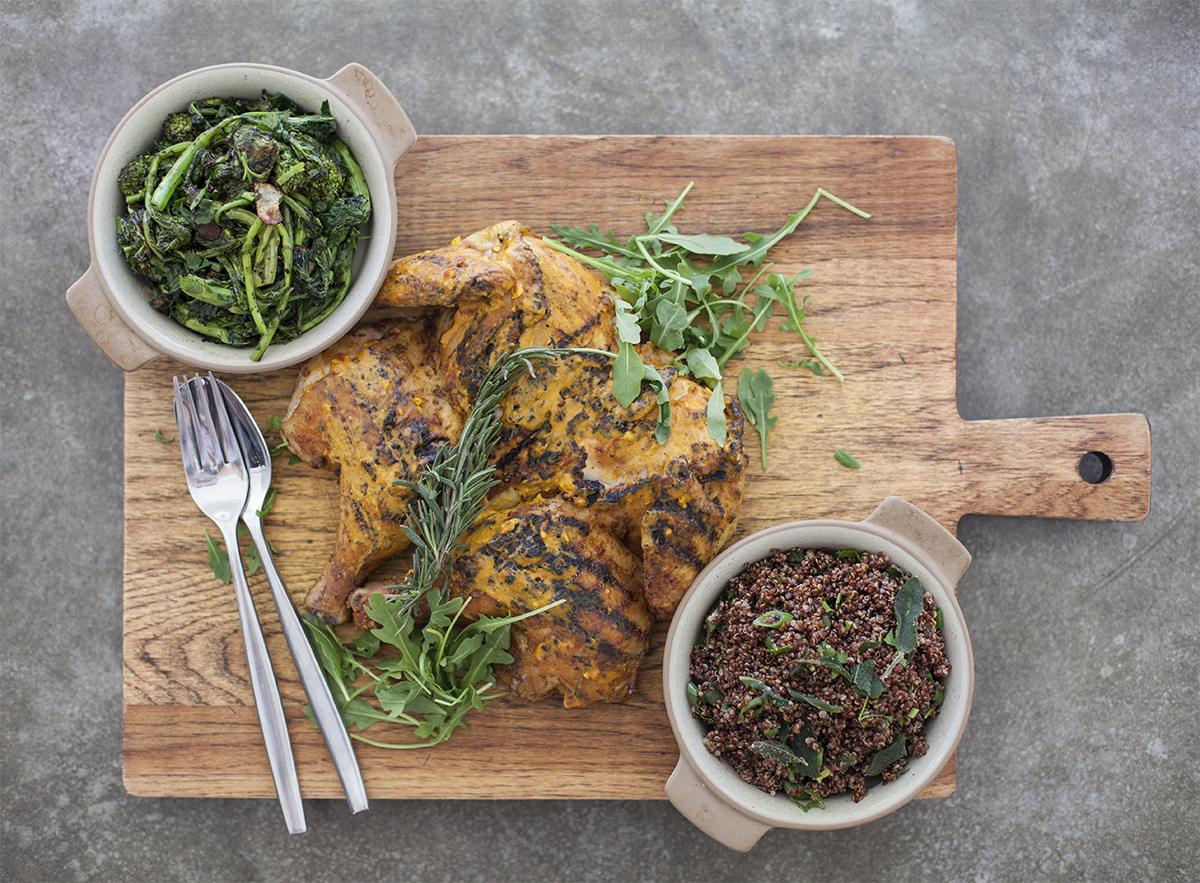
    Chicken Diavolo. From i8tonite: with Palm Springs' Workshop Chef Michael Beckman
    Chicken Diavolo: Photo by Van Roo.

    What is your favorite food to cook? Braises are most satisfying for me with deep flavors that develop, and the cozy aromas and feel of a braised dish is somehow emotional for me.

    What do you always have in your fridge at home? Quesadilla mise en place.  Eggs for omelettes.  A perfectly made omelette is one of my favorite challenges to see a chef’s skill set.

    i8tonite: with Palm Springs' Workshop Chef Michael Beckman
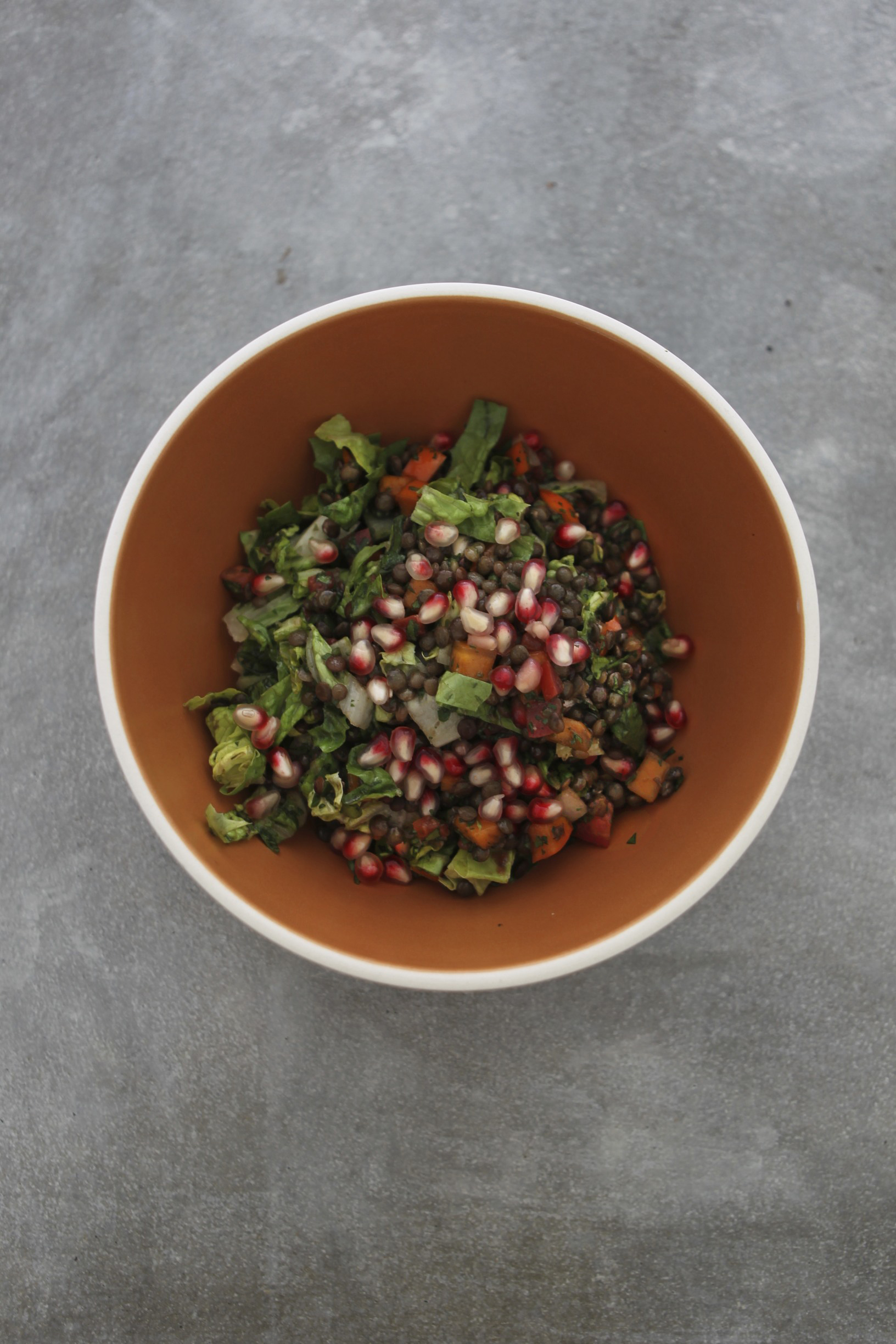
    Lentil salad

    What do you cook at home? I love my Weber grill for smoking and grilling fish and meats.  I also get nostalgic for the Lebanese food I cooked as a private chef in Beverly Hills and love those flavors.  Super healthy and super flavorful.

    What marked characteristic do you love in a customer? Someone who puts us in the drivers seat and trusts us.


    What marked characteristic do you find unappealing in a

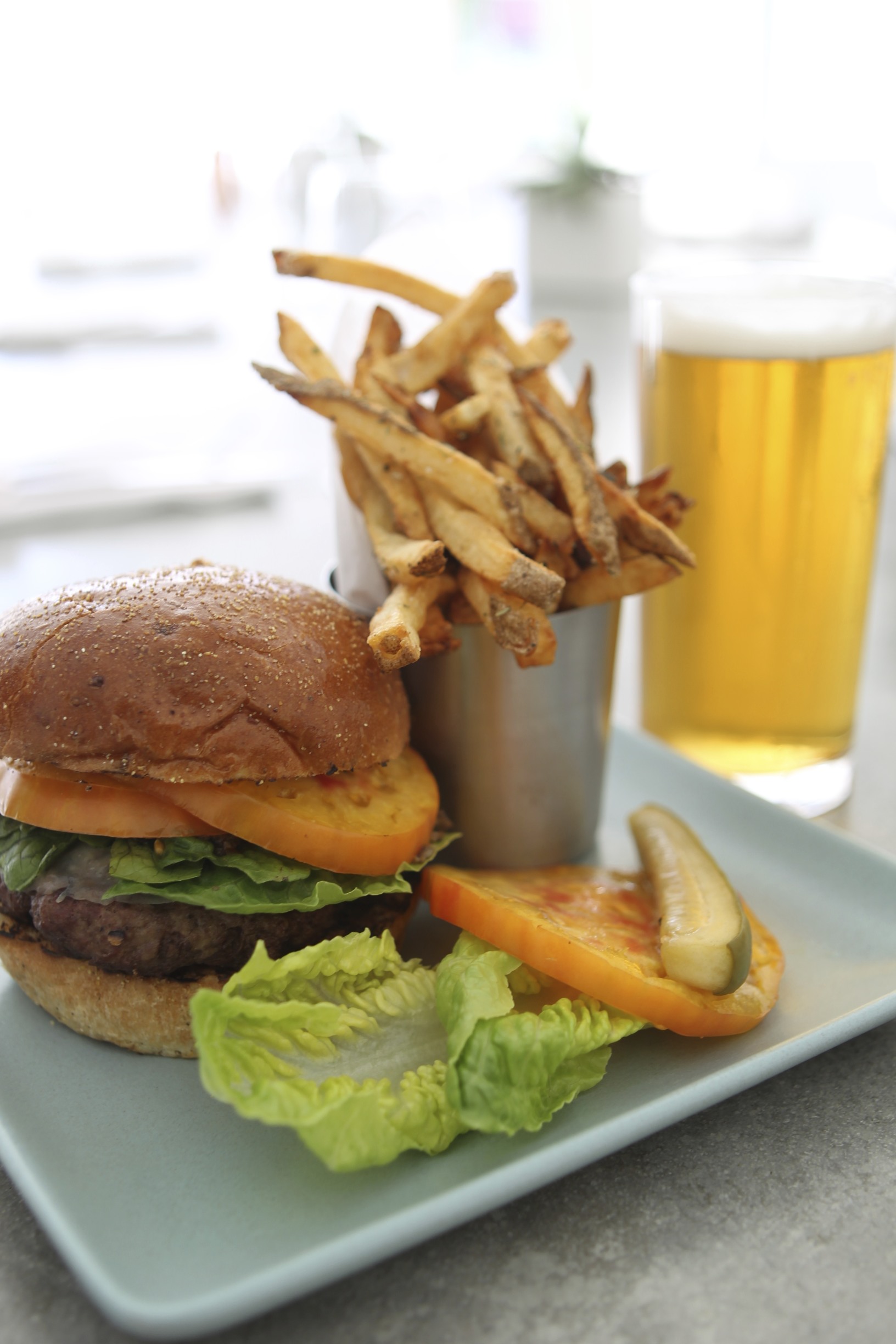
    Workshop Burger and Fries. i8tonite: with Palm Springs' Workshop Chef Michael Beckman
    Workshop Burger and Fries: Photo by Michael Horta

    customer? People who lie at the host stand about their reservation.  People who don’t even read the menu and want to order something they can get anywhere.

    Tupperware, Rubbermaid, or Pyrex? None of the above. Deli cups.

    Beer, wine or cocktail? Yes, please.

    Your favorite cookbook author? Dan Barber for “The Third Plate

    Your favorite kitchen tool? My Chef de Cuisine Max.

    i8tonite: with Palm Springs' Workshop Chef Michael BeckmanYour favorite ingredient? Eggs.

    Your least favorite ingredient? Balsamic reduction.

    Least favorite thing to do in a kitchen? Cleaning the fryer.

    Favorite types of cuisine to cook? Mediterranean basin.

    Beef, chicken, pork or tofu? Beef.

    Favorite vegetable? Right now I’m digging parsnips.

    Chef you most admire? I like Paul Kahan’s rustic straight-forward style and also how prolific he is with his projects.

    The food you like the most to eat? Oysters

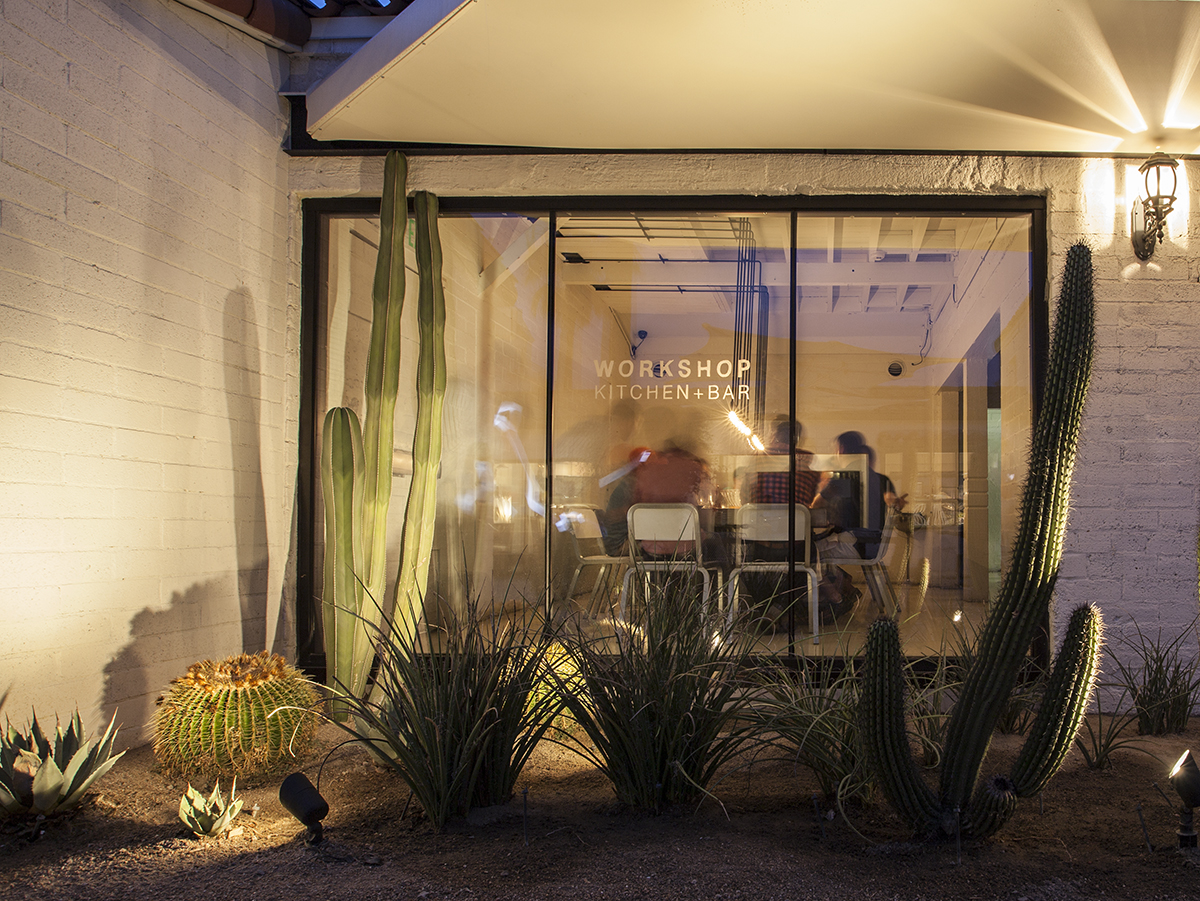
    i8tonite: with Palm Springs' Workshop Chef Michael Beckman
    Outside Workshop: Photo by David A. Lee.

    The food you dislike the most? Shitty banquet food.

    How many tattoos? And if so, how many are of food? None yet.  Never could figure out the first one…we’ll see.


    Recipe: Beet Braised Lentils

    Here’s a recipe from Feasting at Home, inspired by Chef Beckman’s dish at Workshop. She notes, “This recipe was inspired by a dish we had at a restaurant in Palm Springs, called Workshop. They topped their Beet braised lentils with a warm, crispy breaded goat cheese “cake”. It was divine. The chef, Michael Beckman, adds browned butter to the finished lentils, which brought it over the top.”

    Beet braised lentils, inspired by Chef Beckman, Workshop.
    Beet braised lentils, inspired by Chef Beckman, Workshop. Photo & Recipe: Feasting at Home

    Beet infused lentils are a healthy side dish, with chicken or fish, or serve it on its own, as a vegetarian meal in a bowl with crumbled goat cheese.

    Ingredients
    3 T olive oil
    1 C diced red onion ( ½ a red onion)
    1 C diced carrot
    ½ C diced celery
    1 Cup peeled and diced beet (one large beet, plus 2 more for juicing)
    4 cloves roughly chopped garlic
    1 T fresh Thyme leaves
    1 Bay leaf
    1 1/2 C black caviar, beluga, or Puy lentils ( soaked overnight if possible)
    4 C chicken or vegetable stock
    ½ tsp salt
    salt and pepper to taste
    splash balsamic vinegar
    1 Cup fresh beet juice (either purchase from a juice bar, or juice 2 extra large beets)
    2- 3 T browned butter (optional but delicious)
    crumbled goat cheese (optional)

    Directions
    In a large heavy bottom pot or dutch oven, heat olive oil over medium high heat. Add onion, carrot, beets and celery, and saute for 5 minutes, until slightly softened. Turn heat to medium, add garlic, lentils and herbs and sauté for 2 more minutes.

    Add stock and salt. Bring to a boil. Once boiling, cover with lid, and turn heat to low, maintaining a gentle simmer. Simmer for 30 minutes.

    After 30 minutes, add the beet juice, taste for salt, add more if necessary, and continue simmering on low for 10-15 more minutes or until tender. If you feel there is too much liquid for your liking, keep the lid off, and increase the heat, letting it reduce. (I like the braise slightly juicy, personally, so I just replace the lid.)

    Stir in a generous splash of balsamic vinegar and browned butter (optional) but the brown butter is divine.

    Serve in a bowl with crumbled goat cheese, or as a base for fish or chicken.

    Read about this recipe – and see more gorgeous photos – here.


    The end. Go eat. 


  • I8tonite: Gratineed Cauliflower with Parmigiana -Reggiano

    I8tonite: Gratineed Cauliflower with Parmigiana -Reggiano

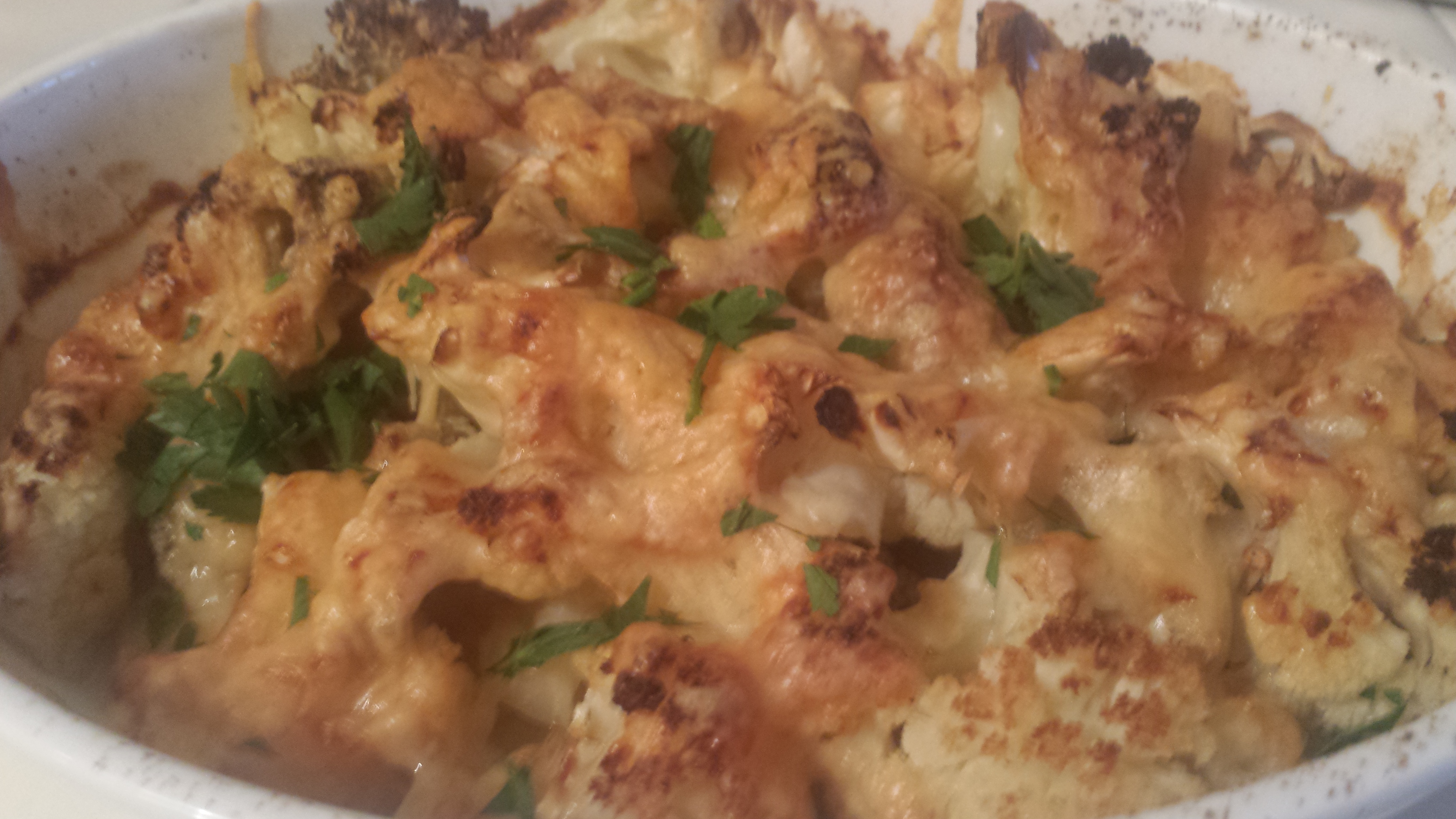
    20151003_180219I was in a yet to be opened LA restaurant at a friends and family tryout. It’s  a common practice among well-financed restaurants –  a testing of the waters before media reviews and the paying patrons type of thing.  Invited along with some media, local chefs, restaurant bon vivants and a few Los Angeles gadflies my fellow dining compatriot who was actually the invitee. I was along for the ride. We had met over several bottles of Sonoma Cutrer Chardonnay, Russian River at the Four Seasons Los Angeles years before.  (One of my favorite — I used to drink it like water back in the day.) As we sat there eating the comped food — testing and trying – I was disappointed. I mean, I know it was free – and had I been paying I would have sent some of it back. (The waitstaff was tipped on the bill that we would have been charged.) There was too much sauce on everything, the squid had been broiled too long and the flatbread – which used to be known as pizza — was a blackboard with artisanal toppings.  Seated at the next deuce to us, were the lovely husband and wife team of one my favorite LA eateries. My dining companion, the unnamed couple and I were talking amongst ourselves about how the best food is sometimes the simplest.  It doesn’t always need the sauce or maybe a little less of the herb; perhaps the watermelon radish pesto needs to evolve into something less. As we chatted about how disenchanted with the food we were, the phrase “keep it simple” kept popping up. Matter of fact, the female half – she was the pastry chef — of the cooking couple said, “Always take one thing away.” (Famed fashion designer Coco Chanel said that about dressing but it works for food just as well.)

    Simple. It’s something that the famed chefs Alice Waters references in her cookbook, The Art of Simple Food; Cal Peternell’s Twelve Recipes – a series of cooking instructions for his college-going son on the essential twelve recipes – and Marcella Hazan, the Queen of Italian home-cooking who said, “What you keep out is as significant as what you put in.”

    I try and apply this to my everyday life now – what I keep out is as significant as I put in.

    (October 1 was Ms. Hazan’s second anniversary of her death. I didn’t know her but I’ve cooked from her books often.  This recipe is adapted from her Essentials of Italian Cooking and is dedicated to her.)


    Ingredients:

    • 1 large head of cauliflower, cut into florets. Keep the rest for a vegetable or chicken stock later on.
    • 1 – 2 grated cups really good parmigiana-reggiano.
    • Half stick of unsalted butter
    • (Optional and my suggestion: A clove or two of garlic, several dashes of red chili flakes and parsley).

    Let’s make this puppy:

    Preheat an oven to 400 degrees. While that gets nice and toasty, boil a large pot of salted water. Once the H2O it’s roiling and toiling, throw in the cauliflower and cook al dente – about 10 minutes. (It should have a little bit of a bite.) Drain in a colander.

    Take a baking dish which will go from oven to table. Using the butter, grease up the dish liberally. Add the florets packing them in tightly. Dot with more butter and cover with the cheese. (This is where I slide in some garlic and sprinkle lightly with the chili flakes. You don’t have to – it just adds a little to the final product.) Place in the oven. Cook for 20 minutes until the cheese is a browned and beautifully crusted.

    Chop some fresh parsley, throw on top and serve.

    You can also do this with ramekins so you serve individually. That’s up to you….isn’t it amazing what you can do with three ingredients?

    The End. Go Eat.

  • Brews, Bread and Bumps in Life

    Last night, I published a blog item. In it, I was profusely apologizing about my lack of posting for the past two weeks (to my two fans). Life became life and with dinners out, work (which sometimes is about going out), seeing friends, looking for new apartments with Holly (the pitbull), JJ (the Frenchie) and Nick (the Man from Wisconsin) so I wasn’t able to write until this weekend. Once I hit publish, it vanished. Right then and there. Poof. Twilight Zone-like.  I talked to WordPress, “chatting” with “Pam” about where it could have possibly gone. (We both agreed that it went the way a pair of socks in the washer…). So, I have to recreate it which might be a good thing; right? Let’s take the lemons and make lemonade? Still, I hate re-dos.

    medium_198494799

    And through all of this up-and-down, in-and-out,  I find that I get a little anxious when I can’t eat or cook the way I want. Fresh, sustainable, local. For me, eating and being out is overwhelming at times.  Admittedly, it’s a personal control issue. Hands down. Who doesn’t want to go out? Isn’t that what commercials ask of us? Let’s eat at Applebee’s, Chili’s, MickeyD’s? But I do it frequently and have eaten out often, eating with clients and enjoying their meals…all in the name of work. However, I really like being in my home and cooking. There is such safety and calmness in it. Some people turn to the bottle of wine, videogame or television, I look at recipes and try to cook. It’s inspirational and very meditative. I sometimes think that if I could, I would grow my vegetables, butcher my livestock and sow my own wheatfields just so I can get as close as I can to eating well.  After all, eating well is the only thing I can control. Once, I step out my door, I feel that my life becomes an issue of circumstance.

    With all that said, I have eaten some glorious sandwiches at my client Carvery Kitchen. Handmade and house-baked bread, succulent meats piled in innovative ways with dipping sauces. My favorite: Eating the freshly roasted pastrami in a French dip. Clean and lustily juicy.

    Banh Mi Porchetta


    Over this past weekend, I attended The Shelton Bros “The Festival” which was hosted at clients Brouwerij West. I’m not a beer geek  but I’m learning a lot about the process of making beer. Sometimes, it a lot about engineering. There is a process to it. Winemakers let the liquid sit and ferment, creating delicious drinks. With beer, it’s a process of taking the grain and extracting the “wort” (sugar water) and turning it into lusty libation.

    Many amazing things were said about the event from LA Weekly and The Los Angeles Times famed beer writer, John Verive.  It was from these articles that I truly realized the importance of the craft beer movement. It’s not unlike the Slow Food Movement or artisan winemakers. Truly, craft beer making is an art form.

    Besides Brouwerij West, there was a really interesting beer from Treehouse Brewing in Ohio. It’s called “Double Shot”; like the name implies, it’s made with coffee from Oregon’s Stumpton. It’s aroma was powerful with coffee and malt. Not a combination I would ever have thought I would smell together. Coffee and beer. It used to be “Black Coffee“.

    Treehouse Brew

  • Pantry Preferences: Plainly Preferred

    As a home cook, I choose my recipes very carefully. I want them to be simple. I don’t need to have toasted fennel seeds, combined with homemade harissa, needing to stir the pot every 30 minutes to make sure the reduction is only reduced by a quarter. I’m sure most of us look at recipes that are easy to make without being unhealthy.

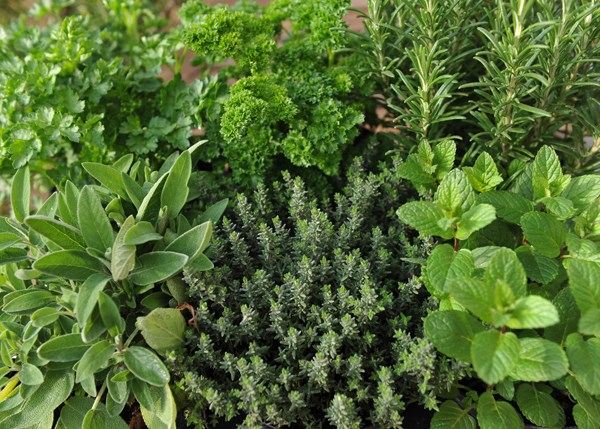
    Therefore, on a weekday night, after my Sunday farmers market grocery sprees when I get my herbs (rosemary, thyme, oregano, basil), garlic and lemons, lettuces, I start thinking about my menus. Planning the proteins, the vegetables, and preparations. I hate wasting food so I try…. it doesn’t always work…. but I try to plan around my work and social calendar. Often, I eat out at least 3 times a week. For me, that’s a lot. If I eat out more than that, I start to not feel so well. Too much rich food and not enough control over my diet. However, food is like medicine for me. I eat more vegetables, simply prepared, feeling great the next day. If I overindulge in sugar, alcohol or fats throughout the week, I start to feel less than stellar. But that’s I me. I’m approaching the mid-century mark….and like a 1950’s well oiled car, my body needs love and care. (Trust me, I danced in-and-on NYC dive bars after imbibing on my share of alcohol for decades…I need love and care! LOL.) I’m getting off topic but I do feel that it’s important to cook at home.  We have complete control over what we eat when we make it ourselves.No one can get it wrong if you do it yourself.
    For me, I need to have this following pantry items at all times to make anything taste yummy and for ease throughout my week.

    1. Salt and pepper (Gizmodo.com writes a brilliant essay on the pairing and noted use.) Kosher salt is the best for cooking and flavoring.

    2. Extra virgin olive oil.

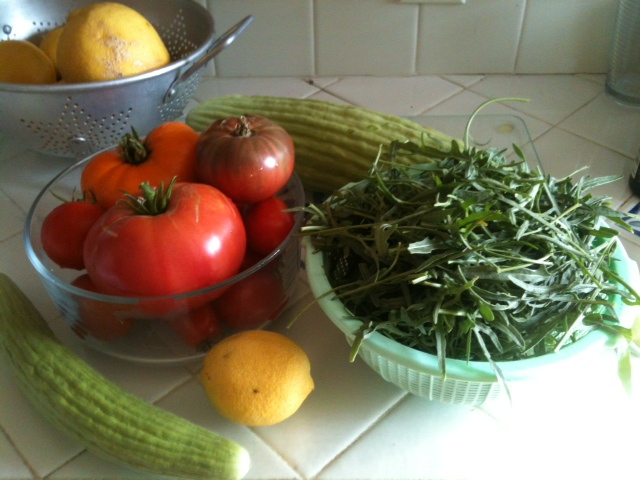
    3. Lemons (and sometimes limes, oranges or grapefruit are good to have)….lemons though are at the always in my house.

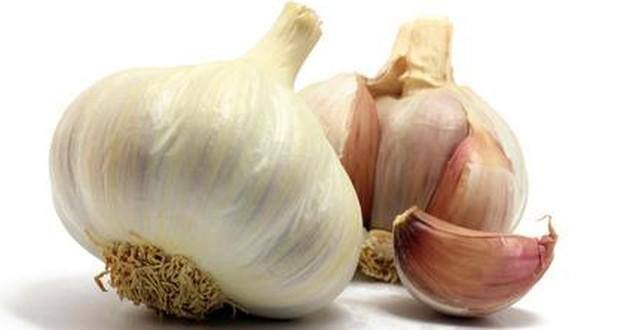
    4. Garlic

    5. Fresh herbs

    Optional

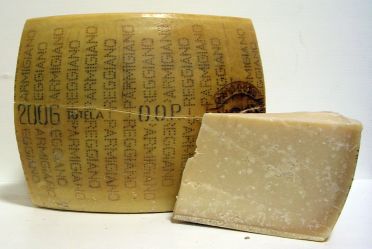
    1. Hard italian cheeses (Parmesan, Reggiano or Asiago)

    2. Flour

    3. Onions

    Clearly, this is based on a Mediterranean diet and I just find it simple. As long as I have the first 5 ingredients, I can make beef, poultry, seafood and vegetables taste amazing. And for me, I’m trying to keep it simple.

    Let’s Make Something:

    Salad Dressing: Two parts olive oil, 1 part lemon. Twist of Salt, twist of pepper. Boom!

    Roasted Fish: Take one lemon and slice into several rounds. Take the fish  (salmon,cod, halibut) and place on bed of the citrus rounds.Take your chosen herbs, rough chop. Stir with some olive oil and garlic, making a think paste. Coat the fish and roast at 350 degrees for about 20 to 25 minutes Boom! Pretty too!

    Chicken: Preheat oven to 400 degrees. Put slivers of garlic under chicken skin (breasts, thighs, legs), Heat up a pan that can go directly into oven. With the garlic stuffed chicken, place skin down and sautee until brown. Turn over and do the same. While chicken is browning, create herb paste, like above. Once chicken is browned, place face up squeeze juice of one lemon, and herb mixture onto onto poultry. Season with salt and pepper, and take lemon rind and place in skillet. Depending on the amount of chicken, cook for 30 to 45 minutes. Boom!

  • An Ode to Summer Tomato Sandwiches

    NYC Farmer

    As a kid, I didn’t like tomatoes. I found them not only tasteless but mushy or sometimes, hard and inedible. My mother, a good Southern woman, loved them. She was particularly fond of Tomato Sandwiches, which is a predominant lunch staple in the South. Food writer, John Kessler, wrote in the Atlanta Journal Constitution that for ten years, while he lived in Georgia, he had never had one.  One response to his posting on Facebook said, “he should renounce his citizenship”. (I don’t know whether that was to the Confederates or to the Yanks….the writer didn’t qualify.) But my mother, she loved them. It’s a simple process of two pieces of white bread, mayonaise and big beefsteak tomatoes. The kind that when you bite into them, dribble down your chin, almost like a greasy cheeseburger but without the cholesterol and animal fat. Kessler also references Chef Bill Smith, from his blog “Seasoned in the South” who states “that a riot ensued for the sandwiches”.

    Ingredients for Gazpacho

    Me? Although, I didn’t like them growing up, I began to love them while I lived in New York City and tomatoes in general. I couldn’t have been more than eighteen and was walking leisurely on a hot summer afternoon through Union Square’s Farmers Market. I still remember that there was a young, blondish woman barking out, “Try our heirlooms!!!” In her hand were striated wedges of red tomatoes, flecks of green in some, a couple with purple lines but all were poked with wooden toothpicks, offering the shoppers a chance to try her wares. I was game. I had only moved to the city in September the following year to attend school and I was trying everything. Dance clubs, drinking and decadence. (The things that made NYC in the 80s.) I thought I should give the tomato another try. So I bit into the pretty girl’s heirloom, which I had never had. It was life-changing. Juicy. Sweetly acidic. Warm from the sun. I bought two big red ones, which I couldn’t afford (I was a starving student, after all)  a loaf of white bread,  baked fresh for the market that day and swung by a bodega to pick-up some Hellman’s (throwing in a little urbanity with that down-home goodness.) I now eat them every year, sometimes daily.

    20140726_112641

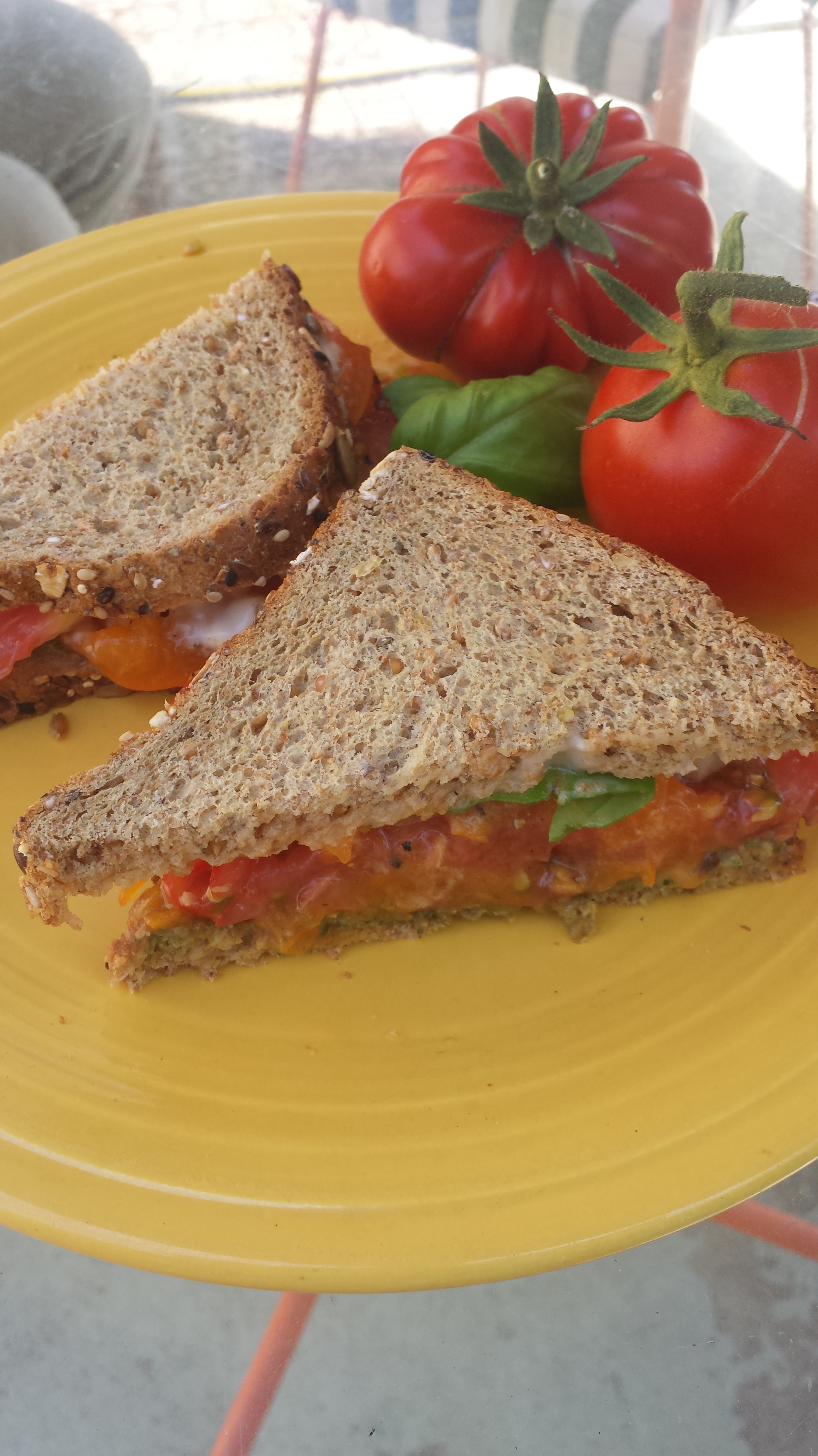
    My darling friend, Lulu, and I recently made the perfect tomato sandwich. We went to her backyard garden and pulled a couple of Persimmons and Consoluto Genoveses, two types of the nine varieties she was growing. (She also has grapes, pomegranates, zucchini, arugula, Meyer lemons, cantaloupes, watermelons, blackberries, raspberries, etc. It’s practically a farm.) Still warm from the Southern California sun, we sliced them with her mandoline, not too thick but enough to pile them on the whole grain toasted nut bread. (Truthfully, it should be made with Wonder Bread or Sara Lee.) On one piece of bread, we used some of her freshly made basil pesto with chunks of garlic, on the other, smeared it with Hellman’s (I prefer Hellman’s, less sugary and Duke’s isn’t available in California). With glasses of sweet tea, we sat at her outdoor table, shaded by a big orange umbrella and ate the deliciousness. It was a little bit of crunch from the toasted whole grain bread, the sweetness and balance of the acidic tomatoes, the creaminess of the mayo, with the bite of the garlic and basil. Perfection on a hot day.

    The authentic Southern sandwich is made with only two pieces of mushy white bread, mayo and tomato slices but if you want to get “all gourmet-like” and mess with the original by all means. It like eating a just a little bit of the summer sun.