Tag: food

  • Black Tepary Bean Hummus: A Sonoran Desert Recipe

    Black Tepary Bean Hummus: A Sonoran Desert Recipe

    Nick and I will have been in Tucson for a little over two months by the time I publish this post. While I often mention what I’ve done and where I’ve been, and, of course, what I eat, I try to keep things that are really important to me private. Sometimes, I leave Nick out. Not because I don’t want to share about him, but I believe I honor our life together by not sharing it with everyone. I also feel that way about my friendships. Sometimes, I post about them, but in this day and age of oversharing, I don’t want to share everything.

    Citrus growing at Mission Gardens

    But, oddly, kismet–happenstance–luck happened before Nick, and I arrived in the Sonoran Desert. Thus, I believe this warrants a blog post. 

    Unbeknownst to me, Kim, the former food editor for the now-defunct Cottage Living, which published from 2004 to 2008, and I worked together on a series of stories in Napa Valley. We became friendly as journalists and media relations people do. You spend hours – sometimes, days working beside journalists, helping keep clients on message, ensuring control over what your client may or may not say and in general, guiding both with helpful information. On one such venture, Kim stayed with me in San Francisco once, and another time, when I first got sober, she stayed with me in West Hollywood while she was on her memoir tour for Trail of Crumbs. Admittedly, I was a bit of a mess – my world imploded. I realized that those whom I thought cared about me – indeed, said they loved me – had thrown me to the wolves, in front of an oncoming train, under a bus and facing an avalanche.  

    Kim moved to Alaska with her then-new husband. When Kim said to me about moving to Anchorage, I replied, “They don’t even grow basil there!” (They do, but that’s not the point I was making. Luckily, she laughed.)  I floundered about until I met Nick and continued to be a fish out of water until – truthfully, until we decided to move to Southern Arizona.

    We didn’t stay in touch except maybe with our social media posts. In September, she posts something about moving to Tucson – and I reply, “No way! We are moving there too!” As a couple, they have been together for 15 years, almost as long as I’ve been sober. Nick and I bought a home in a developing neighborhood about 7 miles south of the entrance to Saguaro National Park. Our commutes to the grocery store and shopping pass through undulating mountain ranges and saguaros – desert sentinels, really – standing as tall as a four-story building. 

    We’ve spent time together now – the four of us eating magnificent meals cooked by Kim overlooking the Tucson Valley basin from her new home with Neil. If the desert can bring a longtime friend into the fold, perhaps it’s the Sonoran Desert telling us that this is home. 


    Tepary beans are native to the Sonoran Desert, which extends into Mexico from Arizona. It’s been cultivated by the indigenous peoples for more than 4,000 years and is drought-resistant, owing to its prevalence in the region’s foodways. When cooked, it’s sweet, if not a little sugary, a bit nutty too and stays firm.  I bought these at Mission Gardens, a four-acre agricultural museum that showcases the heirloom crops grown in the Sonoran Desert for thousands of years. 

    Black Tepary Bean Hummus 

    This version keeps the ingredients minimal, so you will find a sugariness. It has a deeper, more complex flavor than chickpea hummus and a gorgeous dark color that photographs beautifully.

    Ingredients

    • 1 ½ cups dried tepary beans
    • 2 tablespoons tahini
    • 2 tablespoons olive oil
    • 2 tablespoons fresh lemon juice
    • 1–2 cloves garlic, minced
    • ½ teaspoon ground cumin
    • ½ teaspoon salt, more to taste
    • ¼ cup of  cold water (to thin)
    • A pinch of chiltepin or red pepper flakes
    • A drizzle of chile oil
    • A squeeze of lime instead of lemon

    Instructions

    1. To begin, soak the tepary beans for at least 24 hours. They take a very long time to cook. I have found that they need at least 10 hours on the stove at a gentle simmer. I also add salt, pepper, a garlic clove and a bay to the water. Keep testing a bean or two until soft. 
    2. In a food processor, combine the tepary beans, tahini, olive oil, lemon juice, garlic, cumin and salt.
    3. Add ¼ cup of cold water at a time until the smooth texture to your liking. Tepary beans make hummus thicker, so continue adding a little water until the desired consistency is reached. Adjust seasoning as needed. 
    4. Add more salt, lemon or garlic as needed. If you’re using chiltepin or chile oil, add it now.
    5. Spoon into a serving bowl, drizzle with more olive oil and finish with your optional Tucson flourish.

    LEFTOVERS

    LOCAL

    Café Maggie, according to Tucson Foodie, a popular Fourth Avenue spot known for coffee, sandwiches, and a collegial atmosphere, has closed after an equipment failure and ongoing financial strain.

    REGIONAL

    KTAR News reported that Michelin Guides will now cover the Southwest. It will include Arizona, New Mexico, Nevada and Utah. 

    NATIONAL

    The James Beard Foundation announced new criteria for its 2026 Awards, placing greater emphasis on community impact, wage transparency, and equitable workplace culture. While culinary excellence remains central, nominees will now be required to show documented commitments to fair labor practices. 
    Bon Appétit did a beautiful story on Tucson. I wish I had the chance to write it. Bummed.

  •  Cooking with Tucson’s Indigenous Ingredients

     Cooking with Tucson’s Indigenous Ingredients

    How a Newcomer to the Southwest Dips His Toes into the Holiday Festive Glaze.

    When Nick and I picked Tucson as (hopefully) our final move and — yes, our last destination — I knew I didn’t have a clear picture of Tucson’s Indigenous ingredients or the region’s complex food history, even after living on both U.S. coasts and in seven cities. Tucson, also known as the Old Pueblo, is full of gastronomical history, indeed the country’s oldest, going back nearly four centuries. In comparison, I’ve spent years writing about ingredients, cooking techniques, and chefs in their kitchens, and I’ve felt confident in my descriptions and use of both gluten-free and non-gluten-free ingredients. Living in the Sonoran Desert is making me realize my usual approach doesn’t apply here.

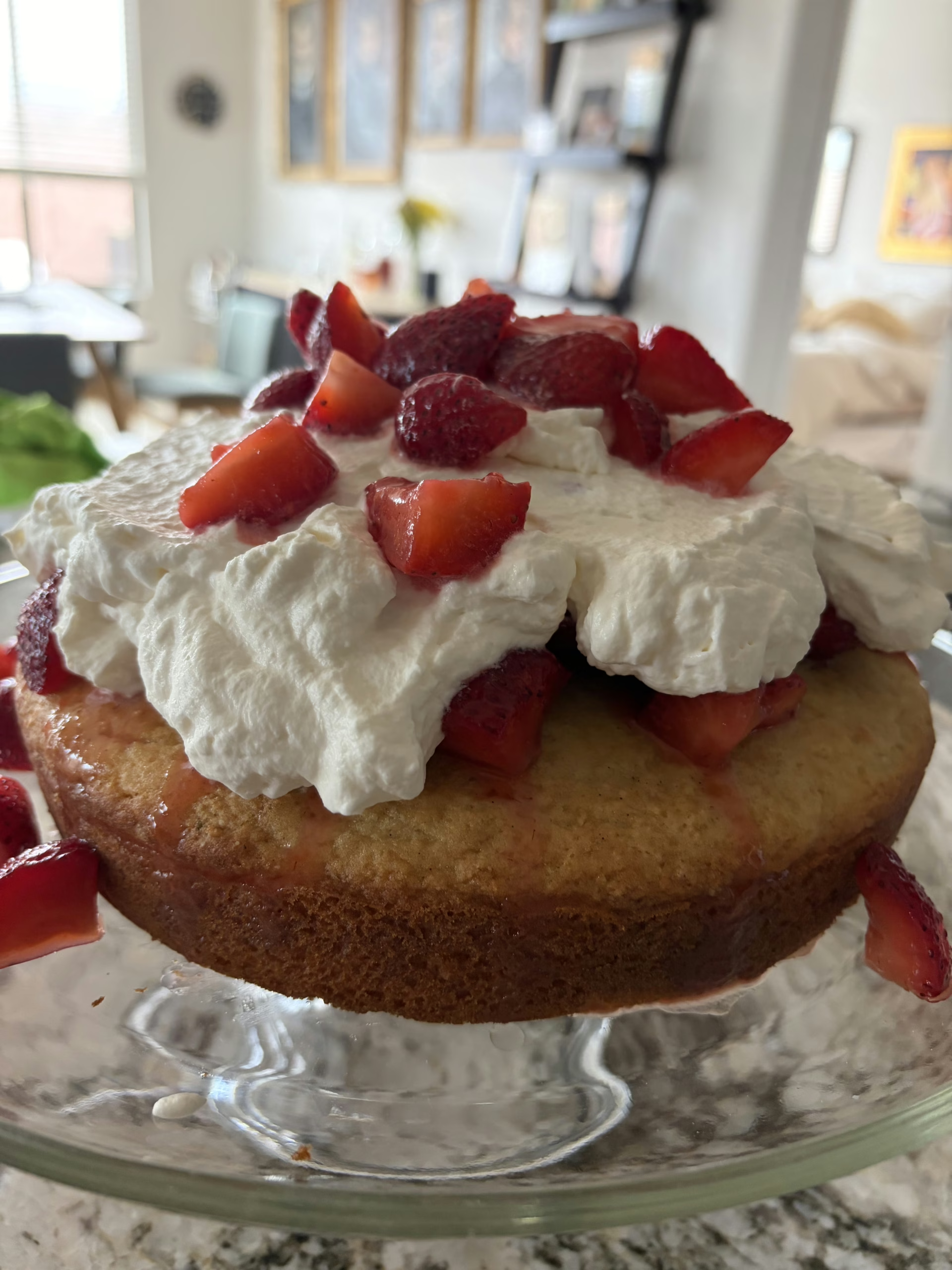
    This Tucson gluten-free almond cake came out of that intention — something simple, something I could bake without fuss, but still tasting like the Sonoran Desert brushing up against my kitchen. Hibiscus for tang and color, citrus for brightness, almonds for body. It’s the kind of dessert that lets the region show up without trying too hard.

    Tucson isn’t a “farm-to-table” town in the way the Midwest is. It’s much older than that. What you see in markets and farmers’ markets traces back to Indigenous farming methods that have been here long before the United States existed. Tepary beans. Mesquite. Chiltepin. The three sisters — corn, squash and beans. Sonoran white wheat. These are foods created by people who figured out how to thrive in arid conditions, stark heat and scarcity, including long periods of drought. Yet, they managed to build a culinary region with depth.

    I’ve certainly not used many of the new ingredients I’m surrounded by, such as the beans or nopales.  Instead of asking myself, “What’s seasonal?” I’m now asking no one but me, “What survived here, continues to grow and why?” It creates a different way of viewing local Ingredients. And, these, of course, carry stories as well as the people who cultivate them, too.

    I’ve also been reading how longtime Tucson restaurants have done this work. Wildflower, native Tucsonan and restaurant impresario Sam Fox’s first restaurant, manages to highlight the region without leaning on trends. No doubt you know his Culinary Dropout or Flower Child, and the selling of his empire to the Cheesecake Factory netted him $800 million. It opened more than two decades ago and still draws a regular clientele because it balances a sense of place with a contemporary atmosphere: no adobe wall or cactus but a well-lit, sexy space. The menu changes enough to keep new and old customers happy, but you’ll always find something tied to the desert, such as mesquite, squash, cinnamon and Oaxaca cheese. 

    So, I’m trying to cook with the foods that matter to my new home. I’m buying mesquite flour. I’m reading up on tepary beans. I’m reaching for chiltepin instead of the usual red pepper flakes. And I’m letting Tucson teach me to look at food from a different, more inclusive perspective.

    This week’s recipe is an almond cake with cinnamon, covered in a “pretty in pink” hibiscus glaze, which isn’t ancient or Indigenous. But it uses items such as almond flour (while wild desert almonds can be made into a flour—this Bob’s Red Mill almond flour), hibiscus, an edible flower found throughout the Southwest, and cinnamon, brought to the region in the 16th century by the Spanish. It tastes sweet and right while showcasing the beauty of where I’m living now. It’s easy, with hints of sweet floral notes and pantry ingredients I have on hand – except the hibiscus syrup. (You can find that online or at specialty stores like AJ Fine Foods. It’s where I purchased mine.)  And sometimes it’s enough to acknowledge the food where you moved, combined with familiar elements that you know. 

    Importantly, it’s festive enough for the holidays.

    Almond Cake with Cinnamon and Hibiscus Glaze

    Serves 8

    Almond Cinnamon Cake with Hibiscus and Orange Glaze

    Ingredients

    • 1 ½ cups almond flour
    •  ½ cup white rice flour
    •  1 teaspoon baking powder
    •  ¼ teaspoon baking soda
    • ½ teaspoon kosher salt
    • 1 teaspoon ground cinnamon
    • 2 large eggs, room temperature
    • ⅓ cup neutral oil (avocado, canola, grapeseed)
    • ½ cup sugar
    • 1 teaspoon vanilla extract
    • ½ cup milk or a milk alternative

    Hibiscus Glaze

    • ½ cup powdered sugar
    • 2 to 3 tablespoons hibiscus syrup (adjust to taste and thickness)
    • A gentle squeeze of fresh orange juice for brightness (Optional)  

    Directions

    1. Preheat oven to 350°F. Grease an 8-inch round cake pan and line the bottom with parchment.
    2. Whisk the dry ingredients together in a medium bowl: almond flour, rice flour, baking powder, baking soda, salt, and cinnamon.
    3. In a separate bowl, whisk the eggs, oil, sugar, vanilla, and milk until smooth.
    4. Combine the wet and dry ingredients. Mix until just blended. The batter will be slightly thick.
    5. Pour into your prepared pan and smooth the top.
    6. Bake for 22 to 28 minutes, or until the center is set and a toothpick comes out clean.
    7. Cool completely before glazing.
    8. Make the glaze: whisk the powdered sugar with hibiscus syrup until it reaches a pourable consistency. Add lime juice if using.
    9. Drizzle glaze over the cooled cake. Let it sit for at least 15 minutes before slicing.

    LEFTOVERS

    Local: Tucson
    Tucson’s KGUN reports that the MSA Annex at Tucson’s Mercado District continues to grow, adding two new food spots to its westside lineup. BŌS Burger opened with Japanese-leaning Wagyu smash burgers and katsu-style sandwiches, while Hidden Hearth Bakery started serving whole-grain, fresh-milled breads in late November.

    Regional: Arizona and the Southwest
    According to The Glendale Star, A 16-year-old was hospitalized after visiting the fair on Oct. 26. She and several others say the illness began after petting pigs at the fair’s zoo. 

    National:
    The USDA Economic Research Service says food prices in the United States will continue to rise in 2026. The agency’s latest Food Price Outlook projects an increase over all food categories of about 2.7 percent next year, with grocery costs climbing roughly 1.2 percent and restaurant prices up an estimated 3.3 percent. The forecast states that uncertainty remains high, driven by tariffs and climate-related disruptions.

  • Discovering Flavor and Community in Tucson

    Discovering Flavor and Community in Tucson

    What We Eat When We Move

    A view from my backyard.

    When you pack up your life and start over somewhere new, you think about the job, the weather, the cost of living, and finding a community. When Nick and I moved to Tucson, a city framed by the Sonoran Desert and celebrated for its food culture, I didn’t expect to miss my grocery store so much.

    After six years in Indianapolis, I knew where to buy the best gluten-free baked goods (Gluten Free Creations), which great butcher (Moody’s) to buy meat, and which farmers market stand (Warfield Cottage) sold the best greens. Moving to Tucson meant trading the Midwest’s cornfields for the desert’s cactus, and where much of the food is born of Mexican and Indigenous ingredients, even an easy meal of rice and beans felt like an introduction to another language.

    There is no doubt that moving from one state to another changes the way you eat. In Indiana, I cooked broths and experimented with braising, especially during the fall, winter and early spring, eating warm, stewy dishes. Here, I think more about citrus, chilies, and beans. Dinners are full of flavors that make up the region: mesquite, nopales, prickly pear, and the “three sisters” comprised of corn, beans, and squash. Now our pantry will be stocked with dried chiles and freshly made corn tortillas, replacing the hoarded Red Gold pasta sauce of my Hoosier days.

    The four sauces: I think they are meant so customers can try them.

    The relocation isn’t only about ingredients; it’s about discovering a community. For Nick and me, it’s how we find and make friends. In our first week in our new home, we joined our next-door neighbors, Greg and Colleen, at La Frida’s Mexican Grill, a charming, well-designed spot located on East 22nd Street with a painterly mural honoring the late artist. The meal started with a basket of chips and — surprise — jalapeño crema (instead of salsa) for dipping, touched with habanero. Zesty, rich, and impossible to stop eating. Alongside it came an additional four sauces to try: salsa verde, black refried beans, a smoky coloradito, and a deep, chocolatey mole. The chef, originally from Hermosillo, cooks with an appreciation for her birthplace and presents dishes in a hearty, picturesque manner: deep browns, rich greens, and sauces with royal crimson overtone. We had a variety of dishes, but the quesabirra, historically from Tijuana and developed by the region’s taqueros, had that buttery crunch with tender meat, salty creaminess from the cheese and that rich flavor from the consommé for dipping. The corn ribs, quartered and eaten off the cob, smeared with cotija, were a reminder of how delicious street food can be. We arrived at 4:00 p.m. and by the time we left two hours later, it felt like the whole of Tucson was waiting for a table.

    Quesabirria at La Frida's.

    In every move I’ve made — Los Angeles, San Francisco, Irvine, Palm Springs, New York City, Indianapolis, now Tucson — I’ve learned that the fastest way to feel at home is through its restaurants and markets. Each city teaches you its flavors, and Tucson shows the earthiness of Sonoran wheat tortillas, the char on a roasted green pepper, and the comfort of beans simmering away on the stove. These are image postcards tattooed into my memory banks that will last longer than any logo t-shirt ever will. Indeed, Tucson’s UNESCO City of Gastronomy status only reinforces the idea that what we eat tells the story of who and where we are.

    In the freezer, there’s still a loaf of gluten-free bread from Native Bread Company in Indianapolis. I slice and toast it on mornings when I miss the Midwest. It’s that heady scent of bread, with a smear of local prickly pear jam bridging my recent past to today in a way no moving truck can.

    What we eat when we move isn’t just about adapting to a new market or menu. It’s about creating continuity. The table’s location may change, but the act of sitting down, of being fed and feeding others, remains constant.

    But in a short time, here in the Old Pueblo, I’ve found that the desert’s vastness, beauty and indigenous ingredients are finding a way into my kitchen. As I’ve said before, moving isn’t about leaving something behind. It’s about eating and discovering what’s next.

    Chips and jalapeno crema

    Recipe: Prickly Pear and Lime Agua Fresca

    Makes 2 quarts

    • 2 cups prickly pear puree (fresh or bottled)

    • Juice from 3 limes

    • 4 cups cold water

    • 2 tablespoons agave syrup (more to taste)

    • Dash of sea salt

    Whisk or blend all ingredients until smooth. Taste and adjust the sweetness. Chill for at least 30 minutes. Serve over ice with a sprig of mint or a lime slice. While this is a simple beverage, it tastes like the Sonoran Desert, which I think of as being bright, sweet, and restorative. If you’re feeling festive, add a touch of rum, tequila, or vodka.

    The End. Go eat.

    A mural of the restaurant's namesake. on the back wall.

  •  My 9 Favorite Indiana Food Finds of 2025

     My 9 Favorite Indiana Food Finds of 2025

    Plate of vegetarian dishes at Corridor, in Indianapolis, Indiana
    Plate of vegetarian dishes at Corridor

    A year of eating throughout Indiana and what it taught me about community.

    I often think about the delicious six years I’ve spent exploring Indiana food. My path crossed many food folks and chefs, including Rachel Firestone and Samir Mohammed at 9th Street Bistro, as well as Zoe Taylor and Josh Kline at Borage. I ran into Shadow Lounge’s Chef Tia Wilson at one of the local markets one day and, the next, watched Jonathan Brooks man the line at Beholder. One of my favorite stories was seeing Burgeezy’s Kadeesha and Antonine Wiggins grow their dream business. Of course, there is pizza and Diavola may serve the best Neopolitan pie in all of Indy, in my humble opinion. 

    Some editors took notice, giving me a platform to write about food: Culinary Crossroads’ Jolene Katzenberger, former Edible Indy owner Jennifer Rubinstein, current publisher Adam Grubb and, of course, Indianapolis Monthly’s Eve Batey and Andrea Ratcliffe. Through them, I found a voice focused on Midwestern cuisine, especially as it relates to identity and immigration. But it also showed me something more profound: that food entrepreneurs create a sense of community wherever they are. 

    While I genuinely love fine-dining, destination experiences, it’s the local neighborhood spots that bring people together—whether over coffee, drinks, or dinner—that make communities thrive. Gather 22, for instance, with its hammocks and generous outdoor space, does that beautifully, along with its tasty bites. What Adam Reinstrom and Pablo Gonzalez have created — part restaurant and adult playground — is nothing short of remarkable. 

    The International Marketplace, one of the first places I wrote about, remains a touchstone. Saraga International Market and Indiana barbecue, especially the historic Bar-B-Q Heaven, continue to be regional legends deserving of an iconic Hooiser food status.

    This is only a partial list of what I ate this year. I’m eternally grateful to Culinary Crossroads’ Larry Dickerson for allowing me to travel all over Indiana during the course of my three years writing for them. After visiting nearly 100 towns and hamlets throughout the state, I’ve come to understand how both historians and restaurateurs have shaped the Midwest’s culinary history and, importantly, how interconnected the region truly is.  

    It’s not that my time in Indiana has come to an end. I’m working on a cookbook project that is part Midwestern history and part chef-driven stories from across the region, which I hope to see published next year. I also like to think that I’m evolving, which is vital to my well-being.

    While some people go to concerts, shop, watch IMAX, or attend large-scale sporting events, spending their hard-earned wages – and yes, any work today is hard-earned – I head to a locally owned restaurant or a farmers’ market. By doing so, my partner and I give back to the communities we live in. That’s important to the region’s economic health and vitality. 

    Last word: Writing about food, I can’t be tone-deaf to how nearly 40 million people will suffer without SNAP benefits. My childhood was marked by food insecurity and hunger. My mother raised me alone, stretching a meager salary that never went far enough. She tried really hard, but there were days when the sharp pain in my stomach could only be eased by water. Despite paying taxes on her modest income, she could never get ahead. It was systemic gender bias at work: no matter how hard she pushed, the system pushed back harder. I’m seeing this play out again; it’s always the hard workers who only want to raise families who suffer at the hands of the big corporate powers. 

    Roasted Kabocha Squash at Corridor, Indianapolis

    Komucha squash at Corridor
    Roasted Kombucha Squash at Corridor

    Chefs Erin Kem and Logan McMahan reimagined the venerable Tony and Rosa Hanslits’ Nicole-Taylor Pasta and Market, which had been an emporium focused on Italy, into a mostly vegetarian cafe and retail experience. What they do with simple ingredients is on full display with a roasted kombucha squash, caramelized and seasoned with restraint, which showed me how Indiana produce can shine when treated with respect.

    1134 East 54th Street, Studio C, Indianapolis, IN 46220

    (317) 257-7374

    Fried Chicken at Wagner’s Village Inn, Oldenburg

    Fried chicken at Wagner's Village Inn
    Fried chicken at Wagner’s Village Inn

    In Oldenburg, a small-town gripping tightly to its German Catholic heritage, Wagner’s has been feeding generations with its four-ingredient, family-style fried chicken. Crisp skin, juicy meat, and it makes it a southern Indiana tradition worth the drive. The James Beard Foundation even awarded it for Classic American. It’s one of those honors that tries to extend an olive branch to communities often dismissed in the cosmopolitan food world. Regardless, the eatery and the hamlet have a history and a sense of place, with church spires casting shadows over two-hundred-year-old cobblestone streets, and the highly seasoned chicken is pretty good. 

    22171 Main Street, Oldenburg, IN 47036

    (812) 934-3854

    Gluten-Free Pop-Tarts at Borage, Indianapolis

    Gluten free pop tarts at Borage
    Gluten free pop tarts at Borage

    Chefs Zoe Taylor and Josh Kline created an homage to Midwestern food at their restaurant, cafe and market. They elevated their dream business to something beyond nostalgia, transforming it into a refined yet rustic experience that stays true to their regional roots.  Sometimes, in their deft hands, childhood treats become both nostalgic and refined. At the bakery, the gluten-free Pop-Tarts  — technically made by their pastry chef Rachel de Masi — change with the seasons and serve as proof that playful baking can be serious food. I’ve often written about the duo and profiled them for Edible Indy, my last story for that publication. 

    1609 North Lynhurst Drive, Indianapolis, IN 46224

    (317) 734-3958

    Reuben with Smoked Corned Beef at Smokey’s Concession Stand 

    Rueben with smoked corned beef at Smokey's Concession's Stand in Lapel.

    I was on one of my small-town Culinary Crossroads travel excursions and decided to swing by Smokey’s Concession Stand. It was early on Friday, and a crowd was already seated at the bar. While some people say not to ask the server—or, in this case, the bartender—what’s good, I often do. A restaurant worker will honestly tell me what they prefer — and I, being a former dishwasher and waitperson who believes in excellent customer service, will point you in the right direction. The bartender recommended the smoked Reuben, which featured house-smoked corned beef that raised the bar. The smoke clung to each slice, balanced by tangy kraut and melted Swiss. It reminded me how a sandwich can be just as transportive as a tasting menu.

    732 Main St, Lapel, IN 46051

    (765) 534-4111

    Japchae at Sokuri in Kokomo

    Assprtment of Korean food at Sokuri
    Assprtment of Korean food at Sokuri

    Kokomo may be best known for auto manufacturing, but tucked into one of its Korean restaurants, I found japchae that took me to another continent. Sweet potato noodles, sesame oil, and vegetables created a plate that was comforting and unexpected in central Indiana. It’s hard to find great Asian food in this part of the country, but this was one of the best noodle dishes without having to fly to Seoul. It was also part of a destination piece I wrote for Indianapolis Monthly. 

    108 N Main St, Kokomo, IN 46901

     (765) 416-2848

    Hokkaido Scallop Crudo at Nesso, Indianapolis

    Hokkaido scallop crudo at Nesso
    Hokkaido scallop crudo

    Inside the Alexander Hotel, Nesso delivers an upscale Italian coastal dining experience under the direction of recently appointed Chef Zach Szabo. He’s a transplant from D.C, and brings “glam Italian” to the Midwest, meaning rustic yet refined.  An example was a special item: Hokkaido scallop crudo, bright, clean, delicate, citrusy and with a hint of heat. It was a dish that felt worldly without crossing the Atlantic. It was mastery of crudo, with thin rounds of the mollusk in a sauce meant for slurping. 

    339 South Delaware Street, Indianapolis, IN 46204

    (317) 643-7400

    Sweet Pea Agnolotti at Roselilly, South Bend

    South Bend is emerging as its own dining scene, and Roselilly, with its chef-owner Eamonn McParland, is at its center. The AAA four-diamond dining experience is one of two in town, which is also home to the University of Notre Dame. He created a tasting menu, and his sweet pea agnolotti, part of the experience, captured the freshness of spring in tender pasta pockets that were both delicate and celebratory.

    701 South Main Street, South Bend, IN 46601

    (574) 347-4560

    Fried Pork Tenderloin at The Tin Plate, Elwood

    Fried pork tenderloin at the Tin plate
    Fried pork tenderloin at the Tin plate

    The breaded tenderloin has long been considered Indiana’s official sandwich. And, truthfully, like many people, I love breaded, fried meats (chicken-fried steak, chicken tenders, fish and chips anyone?), but it’s not that unique. However, the version at The Tin Plate in Elwood — while not unique — made me a convert. The pork is pounded thin but not too thin, and then fried to a golden brown, retaining juiciness rather than a dry puck, which can happen without brining. Like a soft-brimmed hat, it flopped over the sides of the bun. It was a taste of pure Midwest and Hoosier comfort. I also loved the fact that Elwood is home to Red Gold Tomatoes. While the canning company is not related to the German-inspired pork tenderloin, add some sauce and fresh mozzarella and you have pork cutlet parmigiana

     2233 S J St, Elwood, IN 46036

     (765) 557-8231

    Pork and Foie Gras Meatloaf at 9th Street Bistro, Noblesville

    Pork and foie gras meatload at 9th Street Bistro
    Pork and foie gras meatloaf at 9th Street Bistro

    Noblesville’s 9th Street Bistro is intimate in size but ambitious in flavor. Husband-and-wife team Samir Mohammed and Rachel Firestone created a well-thought-out small-town bistro in the heart of Noblesville, half a block from the town square. It’s one of the places you would find in a European hamlet, owned and operated by the same family for decades, sewn into the community fabric.  The pork and foie gras meatloaf is an indulgent, warm dish —essentially a country pâté heated rather than served cold—that marries Midwestern comfort with French luxury. It is proof that, even in a small town, with this duo at the helm, grand tastes can fly without pretension.

    56 South 9th Street, Noblesville, IN 46060

    (317) 774-5065

    Read more:  My 9 Favorite Indiana Food Finds of 2025 Read more:  My 9 Favorite Indiana Food Finds of 2025
  • This Is American Food

    This Is American Food

    If a corn cake and crab dip chatted in the kitchen, they would say, “Gurl, this is real food for the Fourth of July.

    We know our founding fathers did not eat hot dogs, hamburgers, and apple pie after signing one of the world’s most important political documents. Most likely, their plates were heaped with pancakes made of cornmeal served with roasted meats and seafood gathered from nearby waterways. 

    It makes sense that corn, cultivated by Indigenous peoples for thousands of years, was the staple of early cuisine. Indeed, cakes made from ground maize, such as hoecakes or johnnycakes, were easy to make and eat, piping hot out of a wood-burning fireplace. Coupled with the abundance of seafood along the Eastern Seaboard, tables featured paired combinations like crab, oysters, and fish, to accompany the cornmeal staples.

    Indigenous Ingredients Were Already Here

    However, these flavors didn’t originate from European settlers; they were already grown and eaten by the existing populations of Indigenous people. New foods were introduced to the settlers including corn, squash, beans, and natural salts harvested from brine springs and coastal waters. These weren’t just ingredients, they were intertwined to the land, ceremony, and survival of the tribal nations.

    Enslaved Africans brought frying, stewing, and seasoning traditions that became the foundation of Southern and coastal cooking. Caribbean immigrants layered in citrus, chili, and preservation techniques that show up in seafood, spice blends, and pickled vegetables.

    Who Gets Credit for “American” Food?

    For too long, the narrative of “American food” has centered on Germanic and Eastern European traditions, sausages, stews, pies, because these communities, though once immigrants, came to hold power in cultural storytelling. Meanwhile, Indigenous, African, and Caribbean contributions were often erased, commercialized, or absorbed without credit.

    Thus, I decided to create a bit-sized corn cake appetizer dolloped with hot crab dip ontop. It’s inspired by the foods served during those first July celebrations in 1776. American cuisine has always been a blend of indigenous crops, African techniques, Caribbean flavors, and immigrant ingenuity.

    This 4th of July, Celebrate Interdependence.

    This Fourth of July, I’m celebrating not just independence, but interdependence. The shared hands, cultures, and histories that shaped what we eat today.

    Mini Corn Cakes with Crab Salad (Gluten Free)

    I created this recipe from many sources as a showcase of early American roots: Indigenous, African and early settlers.

    Makes about 12–16 mini corn cakes

    For the Corn Cakes:

    • 1 cup stone-ground cornmeal (medium grind works best)
    • ½ tsp baking powder
    • ½ tsp kosher salt
    • 1 cup buttermilk (or ¾ cup milk + 1 Tbsp vinegar, rested 5 minutes)
    • 1 large egg
    • 2 Tbsp melted butter or neutral oil
      ½ cup corn kernels (fresh, frozen, or canned—optional)
    • oil for frying

    If the batter seems too thin, let it sit for 5–10 minutes so the cornmeal can absorb more of the liquid. For a thicker batter, add 1 Tbsp finely ground cornmeal or masa harina.

    For the Hot Crab Dip:

    • 8 oz lump crab meat, drained and checked for shells
    • 2 Tbsp mayonnaise
    • 1 Tbsp sour cream or plain Greek yogurt
    • 1 tsp Dijon mustard
    • 1 tsp lemon juice (plus more to taste)
    • 1 tsp chopped chives or green onion
    • Pinch of Old Bay or cayenne (optional)
    • Salt and pepper to taste

    Instructions:

    Corn Cakes:

    1. in a medium sized bowl, mix cornmeal, baking powder, and salt.
    2. In another bowl, whisk buttermilk, egg, and melted butter. Add the wet ingredients to the dry and stir just until combined. Fold in corn kernels, if using. Let it sit for a few minutes to thicken.
    3. Heat a skillet or griddle over medium with a light layer of oil.
    4. Drop batter by heaping tablespoonfuls to form small cakes (~2 inches). Cook 2–3 minutes per side until golden and crisp on the edges. Transfer to a wire rack or paper towel.

    Crab Salad:

    1. Preheat the oven to 350 degrees. While that reaches temperature, Gently mix mayo, sour cream, mustard, lemon, chives, and spices in a bowl and place into a baking dish
    2. Fold in crab meat, being careful not to break it up too much. Taste and adjust seasoning.
    3. Bake for 15 – 20 minutes until heated through.

    Serving: 

    Top each corn cake with a spoonful of crab dip. Garnish with a sprinkling of fresh, chopped herbs (such as dill or chives) or a sprinkle of smoked paprika or lemon zest, if you’re feeling fancy. 

    Sources & Further Reading

    • Randolph, Mary. The Virginia Housewife (1824) – One of the earliest American cookbooks, documenting cornmeal-based dishes such as hoecakes.
    • Freedman, Paul. American Cuisine and How It Got This Way – A comprehensive look at the evolution of American food culture, including colonial influences and Indigenous ingredients.
    • Miller, Adrian. Soul Food: The Surprising Story of an American Cuisine, One Plate at a Time – Explores the role of African American culinary traditions in shaping Southern and early American cuisine.
    • Library of Congress – Food at Mount Vernon and American Memory collections: Primary source material on colonial food habits, including George Washington’s preference for hoecakes.
    • Southern Foodways Alliance – Oral histories and essays on cornmeal, seafood traditions, and foodways rooted in African, Indigenous, and Southern cultures.

    P.S. Photo was AI-generated. I made the crab dip for a party and planned to create the corn cakes. But, life got in the way.

    The end. Go eat.

  • Top Six Restaurant Dishes from Indianapolis to Fort Wayne

    Top Six Restaurant Dishes from Indianapolis to Fort Wayne

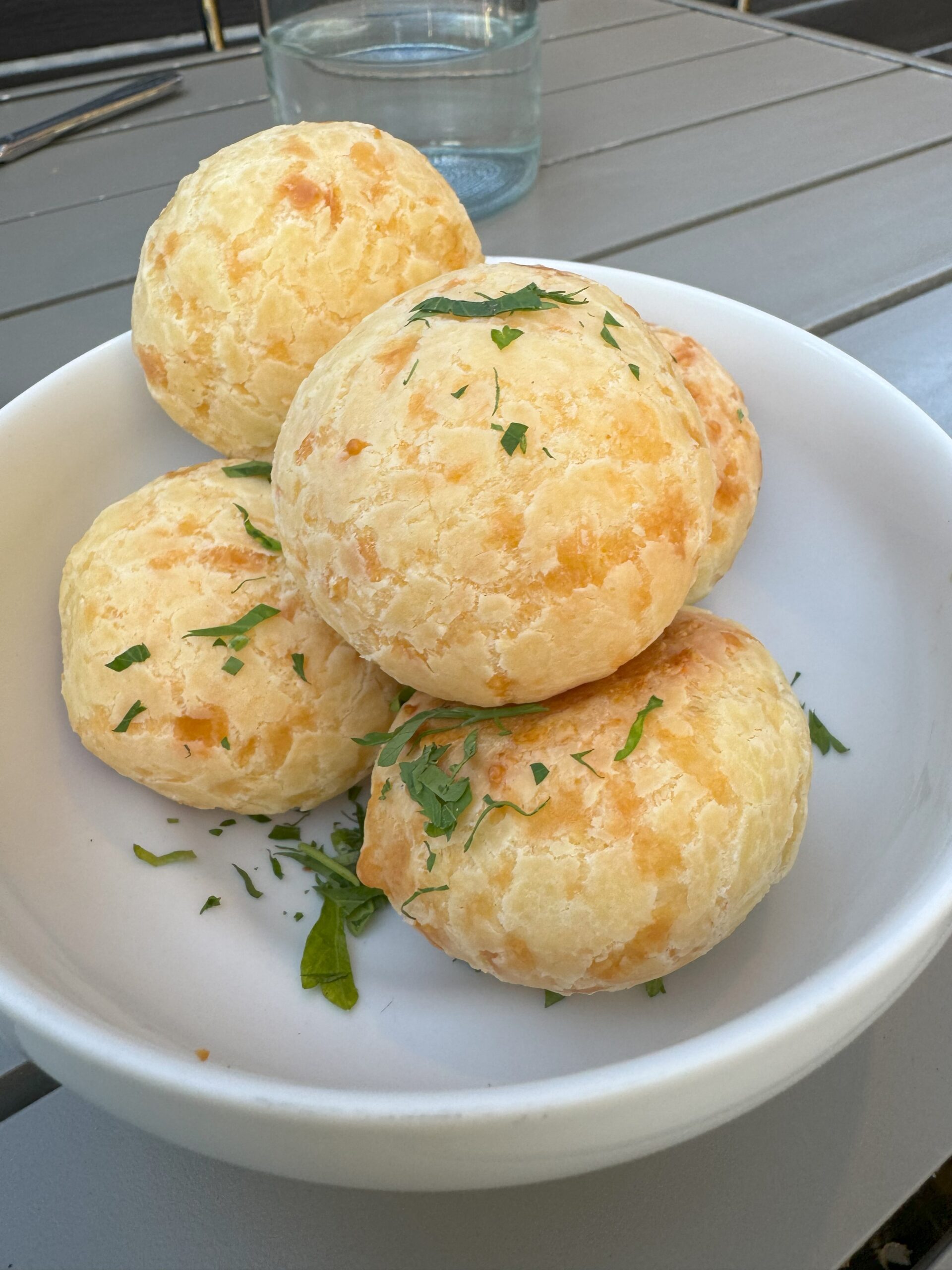
    Pão de queijo at Fernando's
    Four lovely baked Brazilian cheese rolls at Fernando’s

    How Hoosier chefs made the potato, chicken liver, octopus, beef, pimento cheese and gluten-free bread the talk of my table

    Nick and I have savored many of the diverse flavors of Indianapolis restaurants since our move to the city five years ago. I’ve had the opportunity to explore Indiana’s culinary landscape extensively, covering destinations for Culinary Crossroads for a year and a half. From the southernmost Evansville to Elkhart, in the north, a 10-minute drive to the Michigan border and other places, I’ve sampled a range of dishes, becoming well-versed in “Hoosier” food. Living here has expanded my tastebuds and evolved my understanding of the Midwest’s culture and people. 

    Exploring Indiana’s Diverse Culinary Landscape

    I recently attended a conference where the speaker said, “Hoosiers either leave and never come back, or they never leave, traveling only 20 minutes outside their neighborhood.” It’s an exaggeration, clearly, but it’s not far from the truth. I’ve met many natives who may have been to Paris but not to the neighboring region. (Carmel to Fishers doesn’t count.) I can’t tell you how many times I’ve asked if native Hoosiers have been to Terre Haute, which recently elected its first Democratic mayor, Brandon Sukbhan, in a dozen years. The answer is “not since grade school” or “never.” 

    They should. It’s a diverse hamlet and indicates the changing demographics of Indiana. Sakbun, a former Army captain with model looks, a mega-watt smile, and Elvis Presley hair, is the son of a Cambodian father and a Jamaican mother; we ate at an Indian buffet near city hall, talking about his then-wife and soon-to-be first child.

    The town, home to Clabber Girl Baking Powder, sold at Traders Joe’s throughout the land, is a swim to Illinois, just across the Wabash River. To get there from Indianapolis, though, a drive past small historic towns like Greencastle and Brazil, flush with red barns and still-working siloes, shows today’s farming. Tractors and bales dot the landscape.

    Indiana’s Changing Food Scene: The Influence of New Demographics

    I’m bringing this up because in a small town like Terre Haute, with a population of just under 60,0000 –  my former Los Angeles block had more people – it’s important to note that the 21st-century demographics are changing how the middle of the country eats. It’s a story that doesn’t get told as the media chase stories about the modifying electorate. All we need to do is find out what people eat and where. Think about it: A mayor born of two immigrants leads a predominantly Caucasian city in the middle of the Midwest while eating Punjabi food.

    How did I select my favorite? It was memorable—nothing more, nothing less. Nick and I talk about it or think about returning. After dining at Michelin-starred and James Beard Foundation-nominated experiences, or those I discovered across six continents and nearly 250 cities, I believe I am good at eating.

    ________________________________________________________________________________________________________________

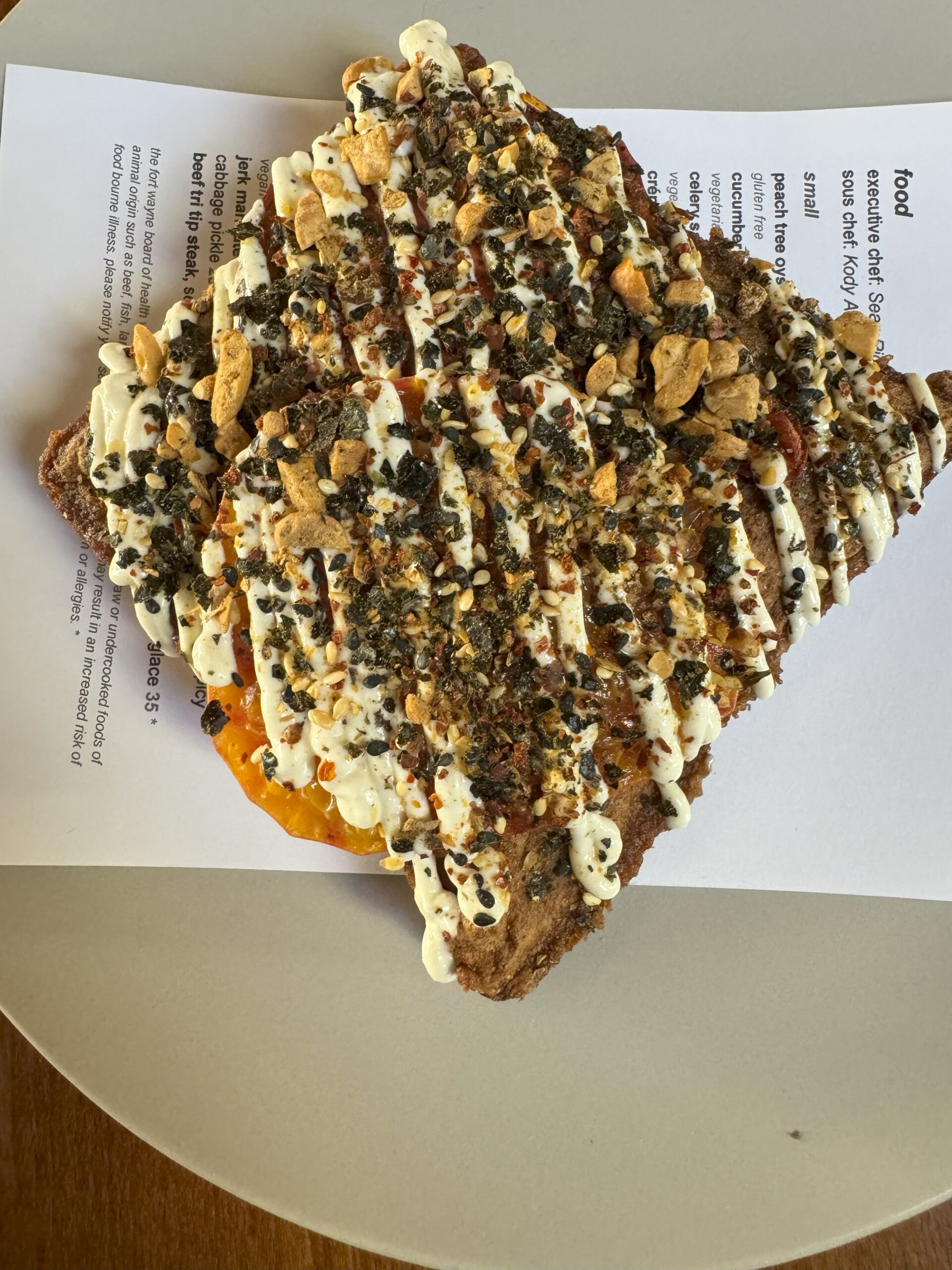
    Fried Chicken Toast, Rune Restaurant, Fort Wayne

    Fried Chicken Toast
    Fried Chicken Toast, Rune Restaurant

    James Bear-nominated Chef Sean Richardson (Great Lakes Region) opened Rune Restaurant in Fort Wayne in March 2024. It’s a garden-to-table experience with twists and turns on different foods. Richardson makes an appetizer, fried chicken toast, and a large helping of house-made chicken pate smeared over Pullman bread. He gently fries the bread – as you would the Cantonese shrimp toast – and then flips it with a flour coating over the spreadable liver. Once cooked and warmed through, a slice of heirloom tomato, a drizzled white aioli and crunchy leftover bits. Mine featured a bit of nori, herbs and peanuts, and he was recreating the traditional dim sum in a Midwest way, using a loaf native to the region and lots of livers.  While served on a plate, he repurposed an old menu that couldn’t be used again to keep the appetizer from careening off the plate instead of using a napkin. Just a touch of “greening.” 

    2725 Broadway, Fort Wayne, IN 46807, (260) 278-0674

    Rösti, Borage, Indianapolis

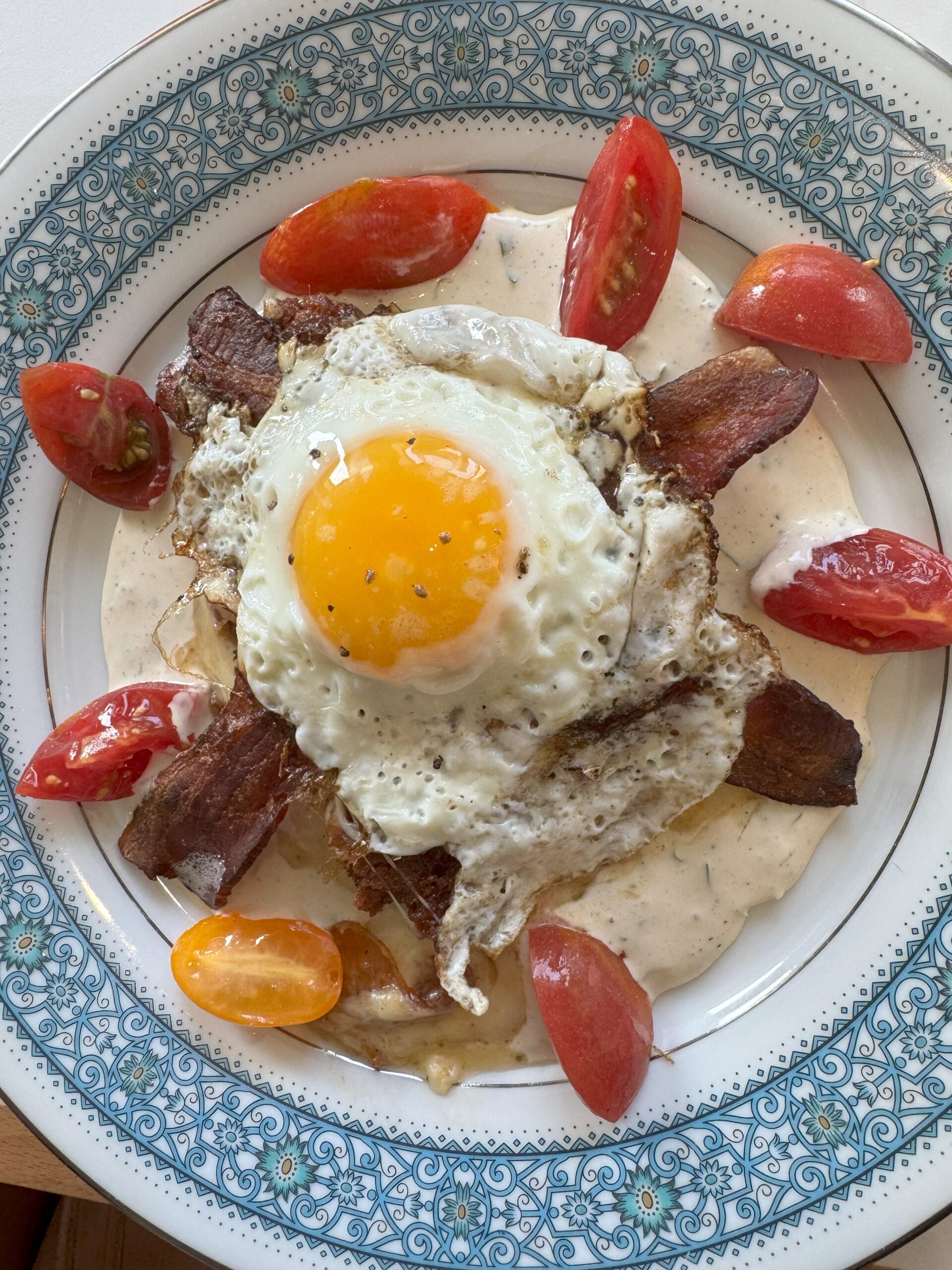
    Egg on top of bacon and rosti, potato confit
    Josh Kline’s rösti covered by an egg, bacon and sumac cream sauce

    During an interview with Chef Josh Kline, owner of Borage, and his wife, Zoe Taylor, he said, “I love potatoes.” I do, too! However, he loves them so much that he came up with a new version I’ve never had. The everyday eater might think of them as hash browns. Still, rösti, a traditional Swiss dish, is anything but browned and grated fried spuds. Kline’s version makes the tuber a confit – soaked in oil for 24 hours before baking it. It may sound oily, but the resulting dish melts in your mouth with a crackling. Typically made for breakfast, his dish is an upscale version and, frankly, a meal unto itself.  At brunch, he will top it with various proteins, from fish to an egg or two. 

    1609 N Lynhurst Dr, Indianapolis, IN 46224, (317) 734-3958, borageeats.com

    Pão De Queji, Fernando’s Mexican & Brazilian Restaurant, Indianapolis

    Pão de queijo at Fernando's
    Four lovely baked Brazilian cheese rolls at Fernando’s

    A long time ago, in a galaxy far, far away…meaning Los Angeles on La Cienega Blvd, I had dinner at a Brazilian chain restaurant more than two decades ago. I ate tough cubes of beef, which, moments before being on my plate, had been flaming on a skewer passed around by an oddly dressed man, and the pão de queji set before me was a baseball, dense and leaden. That memory fired up when Nick and I dined at the year-old Fernando’s in Broad Ripple. Unlike then, we ate alfresco, removed from the street on the separate patio and dined on a mix of Mexican and Brazilian cuisines. Notably, they serve the tapioca-based pao de quiet, slightly chewy and savory pillow puff of chewy with nutty flavors of aged hard Italian cheese. I could eat these daily for the rest of my life, but only if I eat them here.

    834 East 64th Street, Indianapolis, IN (317) 377-4779,

    https://fernandosindy.com

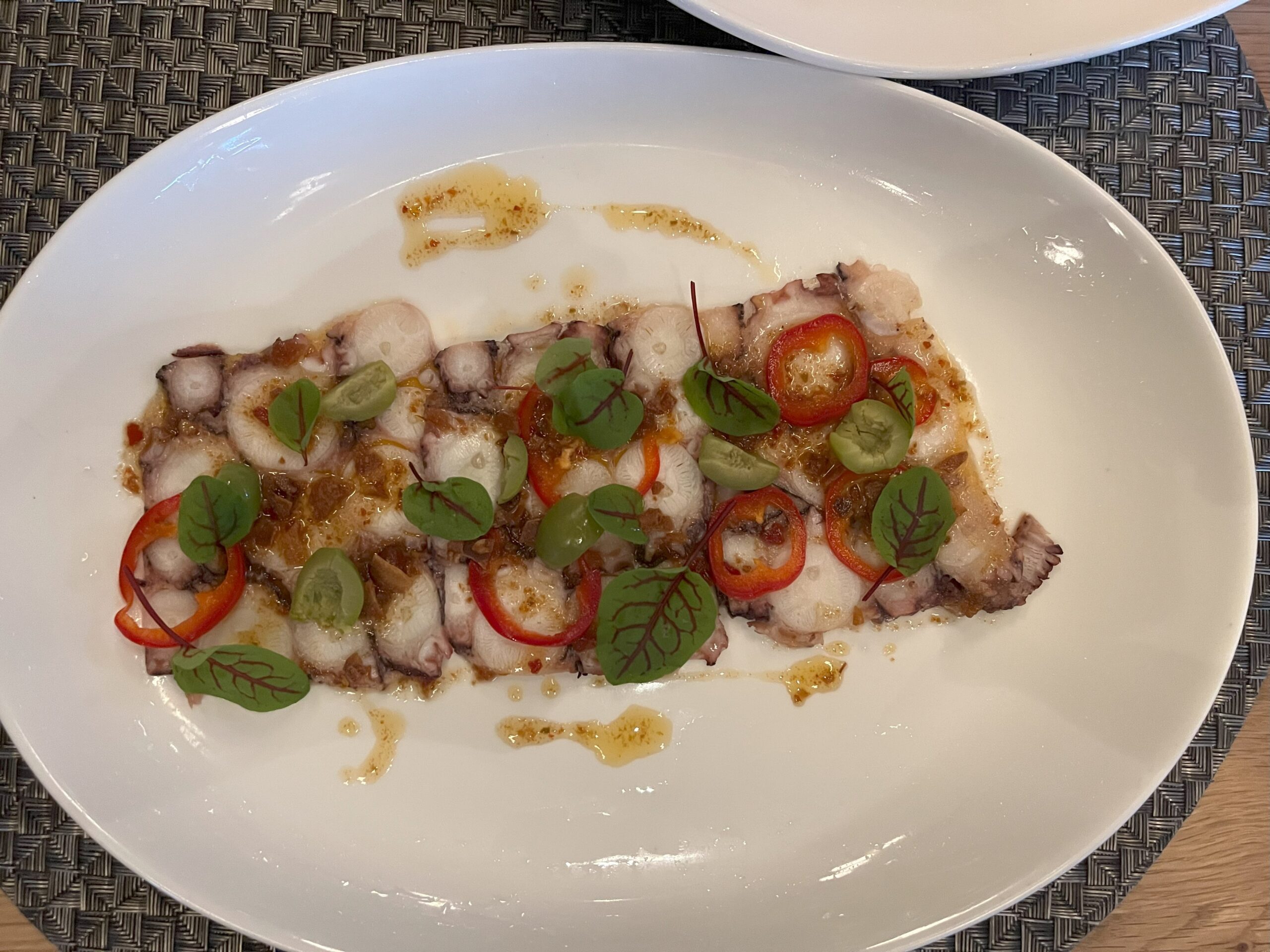
    Octopus Terrine, Commission Row, Indianapolis

    Octopus terrine with micro herbs and jalapenos.
    Commission Row’s Octopus Terrine with micro herbs and jalapenos.

    Nick and I attended a press dinner for Commission Row, the breathtaking restaurant opened by Cunningham Restaurant Group and designed by Ration Architects. It sits on the eastern edge of Bicentennial Unity Plaza, on the Delaware Street side, with views of the public basketball court or ice rick, depending on the time of year. By the third dining experience, the impeccable server recommended the octopus terrine. A thinly sliced rectangle with rings of several cephalopods compacted is set before me. It’s a visually stunning dish of texture, spice and brine, with the pickled jalapenos giving a welcome dash of heat.  Sublime eating. 

    110 S. Delaware Street, Indianapolis, IN, (317) 550 2500, https://www.commissionrow.com

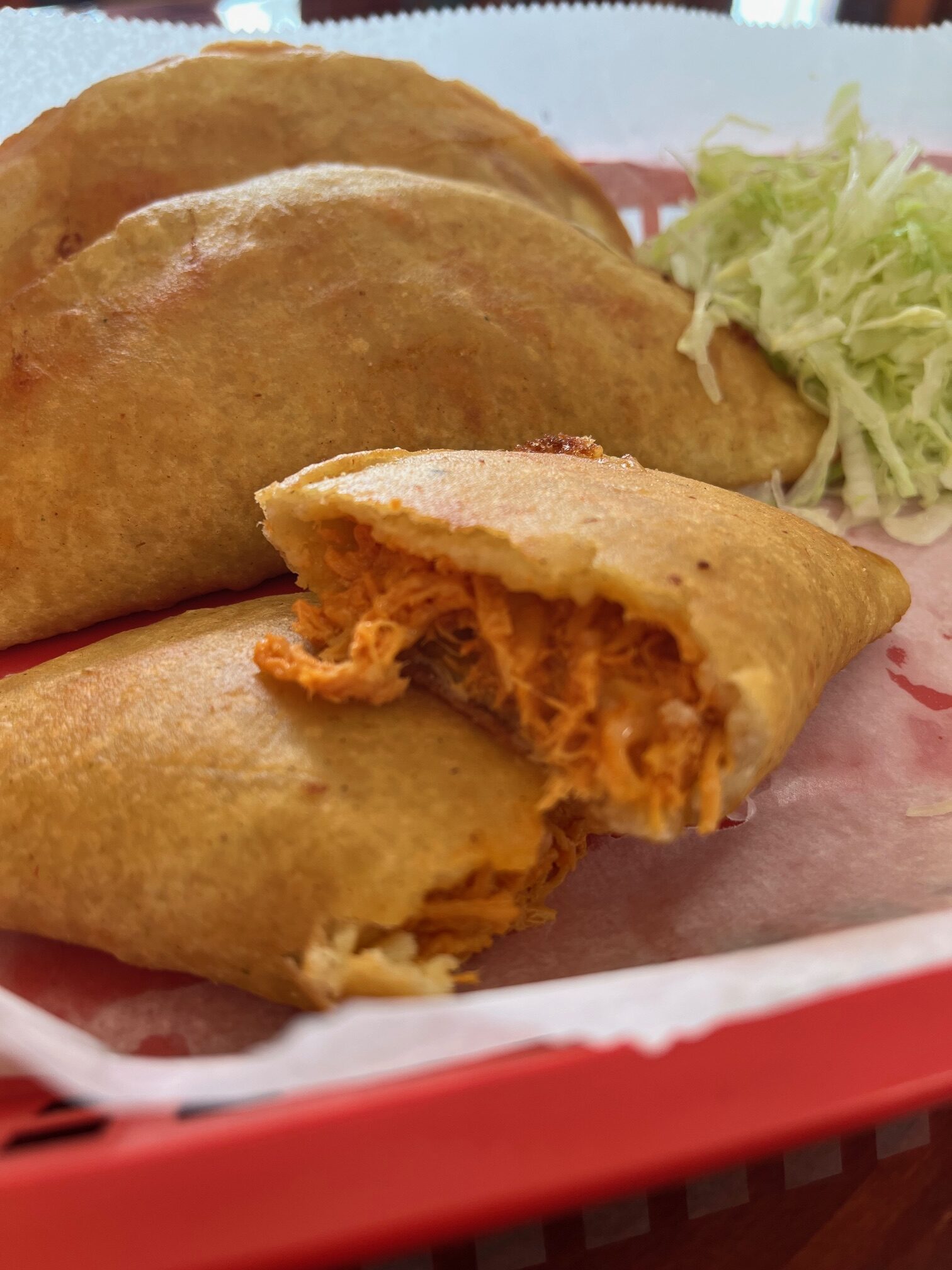
    Chicken Empanadas, La Mixteca, Frankfurt

    Chicken Empanadas at Frankfort's La Mixteca
    Chicken Empanadas at Frankfort’s La Mixteca

    Tacos are always the first thing people think of when they eat South of the Border food. That’s what I planned on eating when I walked into this Latina-owned restaurant in Frankfort, which, according to the 2020 U.S. Census, has a population of more than 16,000 and is one of Indiana’s farming communities tucked between cornfields and soybeans. After seeing a plate of empanadas pass by, I couldn’t resist the corn masa pockets stuffed with juicy braised chicken. My tastebuds reveled in the smokey achiote, garlic and onions permeating the filling. The tender golden crescent moon crust held a light sweetness and sturdiness to hold the meat without being tough or overly chewy. Three large hand-stuffed yeasty envelopes of poultry were more than sufficient, although I could have made it a meal with rice and beans that would have filled me into the next day. 

    408 N. Columbia Street, Franklin, (765) 601-4060, Facebook

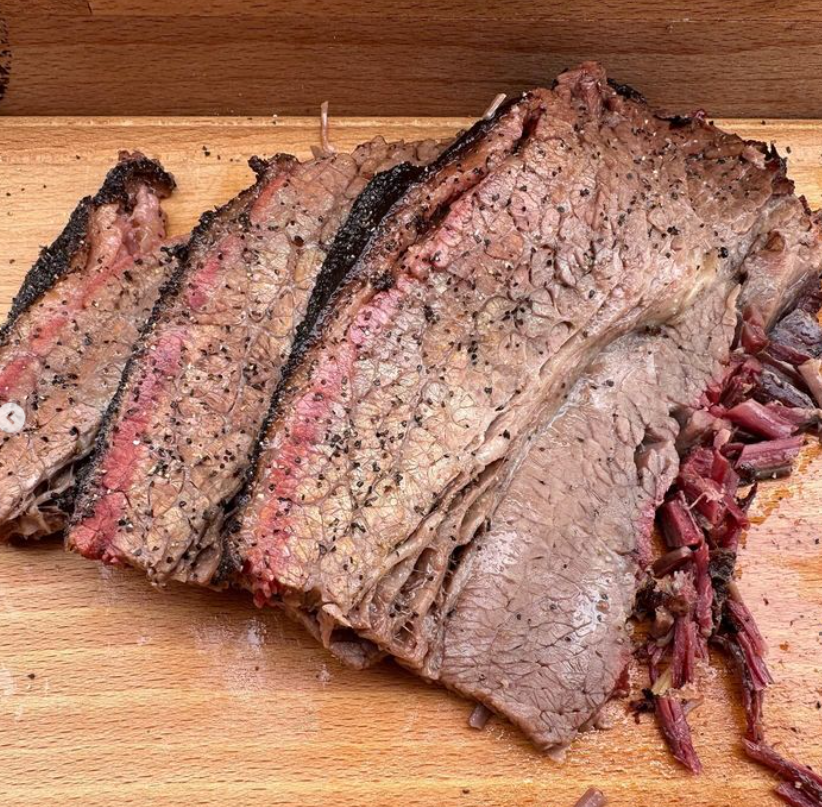
    Brisket, Smokin’ Barrel, Indianapolis 

    Sliced brisket at Smokin Barrel
    Brisket: Photo courtesy of Smokin’ Barrel.

    I wrote a story about Indiana barbeque that was never published. In it, I argued that Indiana makes one of the great regional barbecues. Still, it never received the attention that others, partially because of the racism during the 1920s in the state—another story for another time. However, Mike and CJ McFarland smoke their meats in three different smokers outside a legion hall. Briskets, pulled pork, chicken are cured with locally sourced woods and seasoning, without sugar–brown or molasses in the open air, instead of indoors. Eaters get a wonderfully fruity yet succulent piece of meat from pitmaster McFarland’s patience over the embers.  McFarland’s roots and cooking hailed from Owensboro considered the birthplace of American barbecue or, at least, pit-cooked mutton. Still, with beef and pork, he crafts his smoked meats, which are all Hoosier. They have two locations, but I visited them on South German Road. 

    2316 South German Church Road, Indy, (317) 340 4502, https://www.smokin-barrel-bbq.com

  • Beautiful, Longer Days: Foraging for Wild Onions & Garlic

    Beautiful, Longer Days: Foraging for Wild Onions & Garlic

    Imbloc, A Celtic Tradition: The Period Between Winter Solstice and Spring’s Beginning

    Did you know that cheesy onion biscuits with a big smear of butter are associated with gratefulness and optimism? It’s one of several dishes historically found at meals that celebrate February 1st—Imbolc or Astronomical Spring—and February 2nd, which has morphed into the modern Groundhog Day. Humans have enjoyed particular dishes to ritually and emotionally welcome the lengthening day for millennia. People understood they depended on seasonal food access and that even hunting was at the mercy of weather and animal behavior.

    The etymology of Imbolc refers to “in the belly” since domestic animals are pregnant in winter and produce milk for the babies born in the spring. It may still be quite cold or snowy, but tendrils of green are climbing up from the soil.

    Some communities stored domesticated animals and harvests for winter, while others relied primarily on foraging and hunting. By winter’s end, food was getting scarce. Imbolc marks the incrementally extended daylight that awakens wild garlic and onions—some of the first fresh plants to appear. People build fires, sharing revelry and gratitude for making it through winter with feasts. Grains, cheeses, butter, milk, and optimistic spring greens make up these meals. Even now, we enshrine these foods as symbols of early spring.

    We can invite this festive and grateful energy into this century and our lives. What a cheerful way to interrupt the sometimes oppressive cold and gray winter days. In the 21st century, people are not as tightly bound to seasonal rotations or natural light cycles due to their connection to the grid and the global food industry. We entrench ourselves in the hustle of deadlines, the economy, careers, staying informed, grocery shopping, laundry, rush hour, crime statistics, and paying bills.

    But we are also sensuous mammals, our senses enmeshed with light, temperature, scents, and sound changes. All of these stimuli trigger responses in our bodies and behavior. Our modernity abstracts how we entangle with nature, and trivializing its influence shrinks our impulse to be playful, contented and inspired. Consider an Imbolc-inspired meal with your family to root yourself back into rhythms and cycles. Or reach out to others and have a potluck feast with a gathering of people. You can share the Onion and Cheese biscuits and an excellent rich butter. The ingredients are probably already in your home or easily picked up at a market.

    Science and folklore agree that it is good for our health to give some time and attention to our environment and share it with other living beings.

    One way I’ve started to appreciate the living beings I interact with every day is to learn their names. I’ve begun discovering what wild plants are edible around me growing wild. I experiment with gardening but am more intimidated by it than Early Spring foraging. Early spring is a low-effort window for beginners like myself because there’s only a little green coloring in the soil. It’s much easier to discern one plant from another.

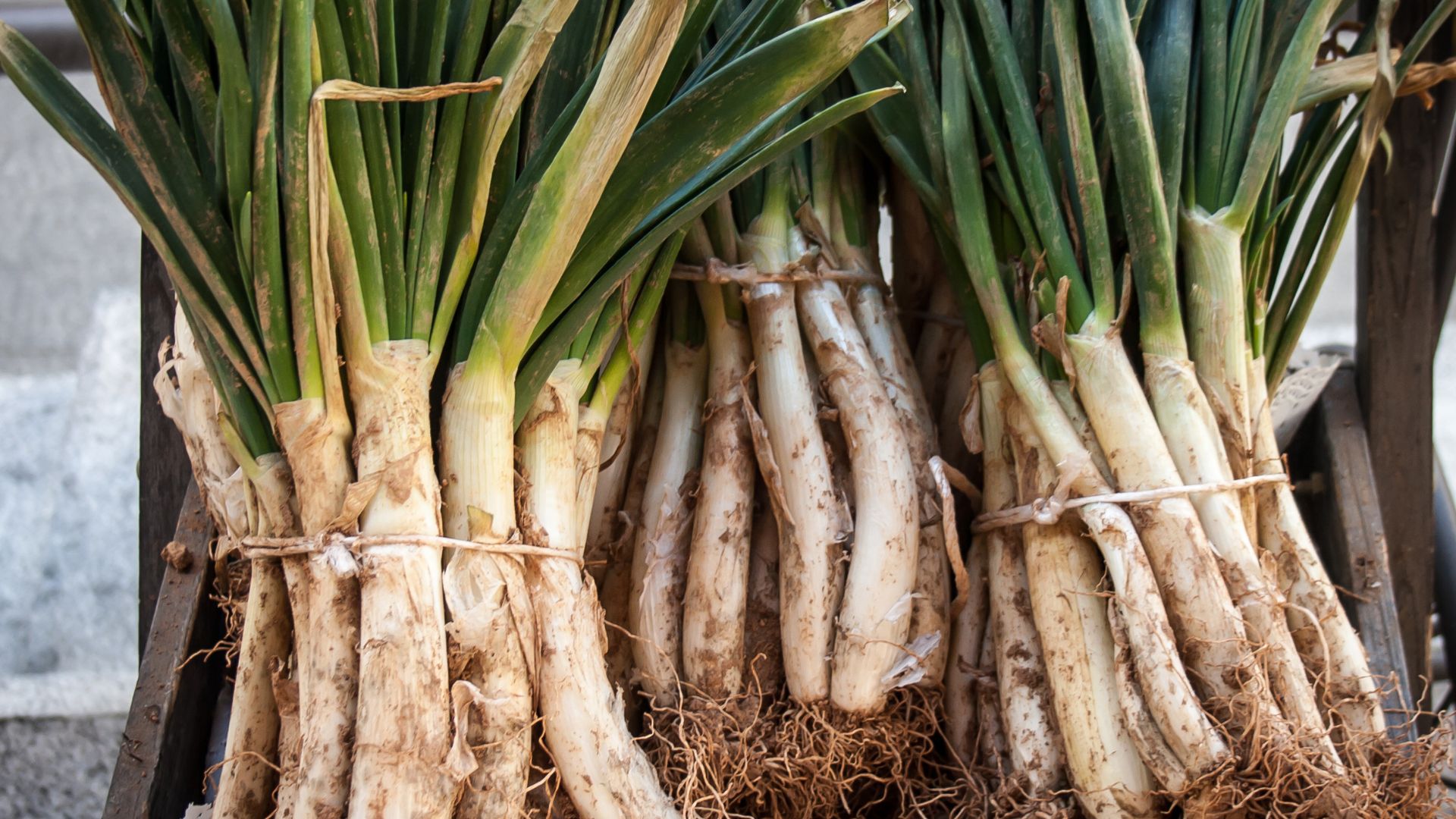
    If you’d like to be bold and find a plentiful, unassuming plant to forage and use immediately, find field garlic (allium vineale) and field onions (Allium Canadense). They grow almost anywhere. In the Northern Hemisphere, they sometimes appear on winter days with some warm sunshine. In early spring, they come forth and are often mistaken for fast-growing grass.

    Step one: Find a field or a yard. It could be your yard, a shared bit of grassy area in your apartment complex, landscaping at your place, a public park, or an edge of woods. Field onions and garlic grow anywhere in soil and sunlight.

    Do take a moment to consider the “isolation” of your spot. I prefer a place away from dog walkers or heavy industry. There are varying opinions about pesticides/herbicides. Still, I won’t harvest where little lawn treatment flags protrude from the ground. Many public parks and woodlands are sprayed with treatments, too. I prefer to forage inside a forest rather than from its edges, where they mainly concentrate the spraying. Sometimes, there is signage after an application.

    When you’ve picked your first spot, quickly scan and notice clumps growing taller than the surrounding grass. Please take a little pinch of stalk and smell it. If you smell either garlic or onion- bingo! You’ve found them. The garlic scent is so distinctive, while the onion is more subtle. Because they look so similar, the aroma will be your reliable identifier. Before the Spring Equinox, you are unlikely to have flowering, but you can see differences in their leaves. Field Garlic is a darker green, with hollow leaves like little straws. Field Onions are not hollow.

    You can gather leaves by pulling them or cutting them with scissors to harvest.

    The leaves are saturated with flavor, but if you want the little bulbs for extra punch, dig down around the plant with a tool like a spade or even a giant spoon. The bulbs will come out caked in soil, and you may not get all of them entirely, but that’s okay. The remaining bulbs will grow again. They are tenacious, and a lot of people consider them weeds.

    Bring something along to carry your treasure. It could be a basket or a washable bag. It will get dirty and soak up that Allium scent. Please give them a good soak in hot water at home, which will loosen the soil. Rinse them a few times, and that’s all there is to it. The next delight is deciding how you’ll use your treasure. Making the cheese and onion biscuits with these may make you feel optimistic and accomplished.

    Another bonus to discovering the wild plants we intermingle with daily is that many people already know what these plants look and taste like. There are field guides, websites, YouTube videos, local classes, and flesh-and-blood people who love to share their interests with you.

    Recipe for Cheesy Onion Biscuits

    • 2 cups all-purpose flour or gluten-free. (We like Cup4Cup)
    • 1 tablespoon baking powder
    • 1/2 teaspoon baking soda
    • 1/2 teaspoon salt
    • 1/2 cup cold unsalted butter, cut into small cubes
    • 1 cup shredded cheddar cheese
    • 1 small onion, finely chopped
    • 1/2 cup buttermilk
    • 1/4 cup sour cream
    • 1 tablespoon honey (optional, for a touch of sweetness)
    • 1 tablespoon chopped fresh parsley (optional, for garnish)

    Instructions:

    1. Preheat your oven to 425°F (220°C). Line a baking sheet with parchment paper or lightly grease it.
    2. In a large mixing bowl, combine the flour, baking powder, baking soda, and salt.
    3. Add the cold butter cubes to the dry ingredients. Use a pastry cutter or your fingertips to rub the butter into the flour mixture until it resembles coarse crumbs.
    4. Stir in the shredded cheddar cheese and chopped onion until evenly distributed.
    5. In a separate small bowl, whisk together the buttermilk, sour cream, and honey (if using).
    6. Make a well in the center of the dry ingredients, and pour the buttermilk mixture into the well. Gently stir until the dough comes together. Be careful not to overmix.
    7. Turn the dough out onto a lightly floured surface. Pat it into a rectangle about 1/2 to 3/4 inch thick.
    8. Use a biscuit cutter or a sharp knife to cut the dough into biscuits. Place the biscuits on the prepared baking sheet, leaving a little space between each one.
    9. If desired, brush the tops of the biscuits with a little extra buttermilk or melted butter for added flavor and color.
    10. Bake in the preheated oven for 12-15 minutes, or until the biscuits are golden brown and cooked through.
    11. Remove from the oven and sprinkle with chopped fresh parsley, if using. Serve warm and enjoy your cheesy onion biscuits!
  • My Indy Neighbor Makes the Best Jerk Chicken

    My Indy Neighbor Makes the Best Jerk Chicken

    Or, How I Learned About Chinese Jamaican Food

    It’s easy to meet your neighbors when you have dogs. Owners seem to be on the same schedule. It’s either before work or after, sometimes it’s in the afternoon when you work from home. Such as it is with Scott, whom I met as he rolled by on his skateboard with Indigo in tow. However, with her sylph-like form harnessed to her owner, it seemed that Indy pulled Scott like a husky. Indy is sweet to watch; she lopes with determination and zest, eager to exercise.

    In comparison, I trundled by with George. Our chocolate lab loves every dog, and every dog loves him. Indy, a pit and whippet mix, can be rough and needs galloping runs with her skater Dad. The two canines have become friends—a quick sniff and off to their worlds. George is finding good goose poop to eat – a never-ending process – and Indy is potentially racing the Iditarod.  

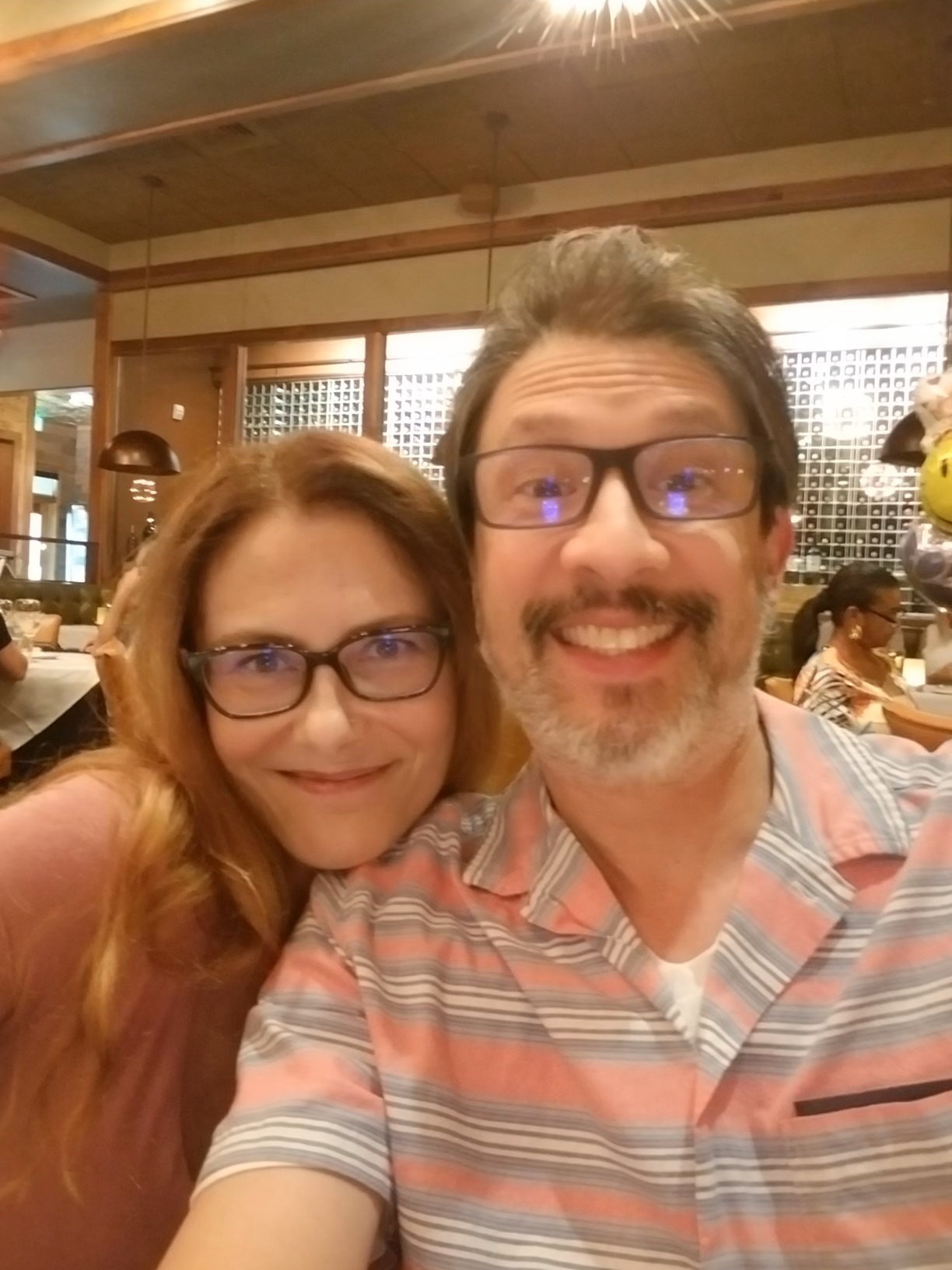
    Growing up as a half-Filipino and half-Caucasian-American boy, I feel acutely drawn to people like me. We are unique. I thought Scott might be bi-racial, too. As it turns out it, he identifies as Chinese Jamaican, a small group of the country’s immigrants that settled in the Caribbean. The son of an American Irish-Scottish father and a Chinese mother, he was born in the Caribbean nation of Jamaica. Raised in Indiana, he, a digital artist, and his wife, Berlin, a teacher are now empty nesters.  

    Scott and Berlin Hughes Photo, Scott Hughes

    Being the food lover I am, I immediately searched the internet for recipes from his Caribbean background. His cooking heritage includes many dishes such as stir-fried goat, jerk chicken chow mein, and char sui dahlpouri. The last dish, literally is a melting pot of cultures, with tastes from Southeast Asia, China, and the continent of Africa.  

    According to the National Library of Jamaica website, the Chinese, mostly Hakka, arrived as indentured servants to work the sugar plantations from 1854 until 1886. Three well-documented ships sailed with almost thousand immigrants during this period. Then, a second and third migration occurred from the early 20th century until the 1970s, mostly of individuals and entrepreneuers looking for better lives. The online publication Gal-Dem, dedicated to telling marginalized people’s stories, says that 50,000 Chinese Jamaicans live on the island today. During an ethnic revolt during the 1970s, several thousand Chinese Jamaicans moved to Canada and parts of the U.S. for safety. 

    When I learned that Scott was Chinese Jamaican, I took it upon myself to learn more. It’s a fascinating immigration story about how Asians and Pacific Islanders came to create a diverse culture in Caribbean history.  Through this, I discovered that the first Filipino settlement occurred in a Louisana in 1763 with a group of enslaved people and other people of color. Even earlier, Filipinos sailors aboard a Spanish ship landed in Morro Bay, California in 1587, reports PBS So Cal Focus, 33 years before the pilgrims land at Plymouth Rock. With this said, discovery of North America most likely were not European but from the Asian diaspora

    In his words: Scott Hughes

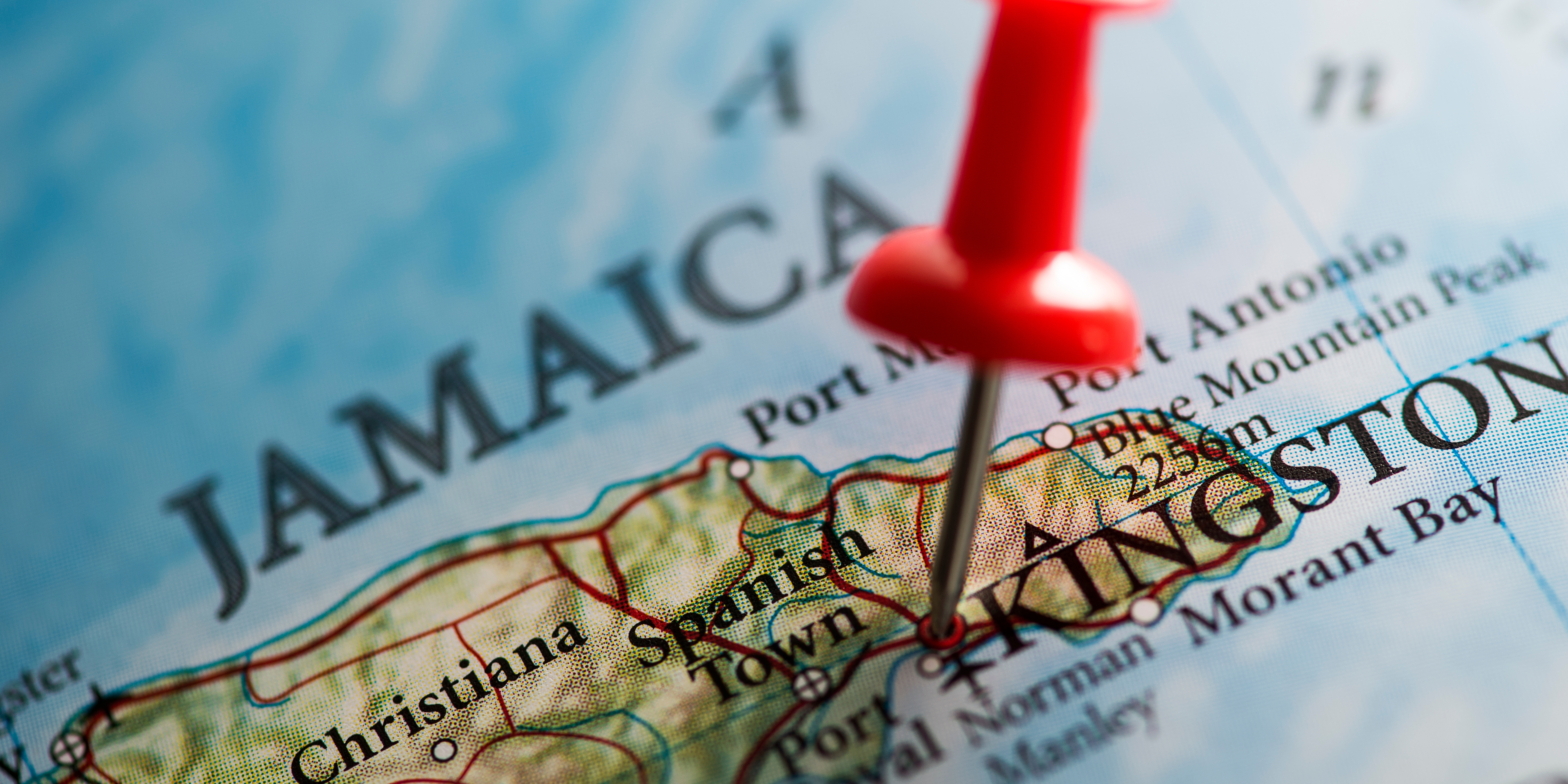
    I was born in Kingston, Jamaica in 1972. My father was American Scotch/Irish, and my mother was Chinese, whose parents came to China in the early 20th century. My mother’s people are called Hakka Chinese. They have a dialect but no longer speak it. They are native to Southern China but originally migrated to the region from the central part of China in ancient times. They are considered Han Chinese (a particular group which than moved to Southern China, before immigrating to Jamaica) and live in the traditional Hakka round houses.

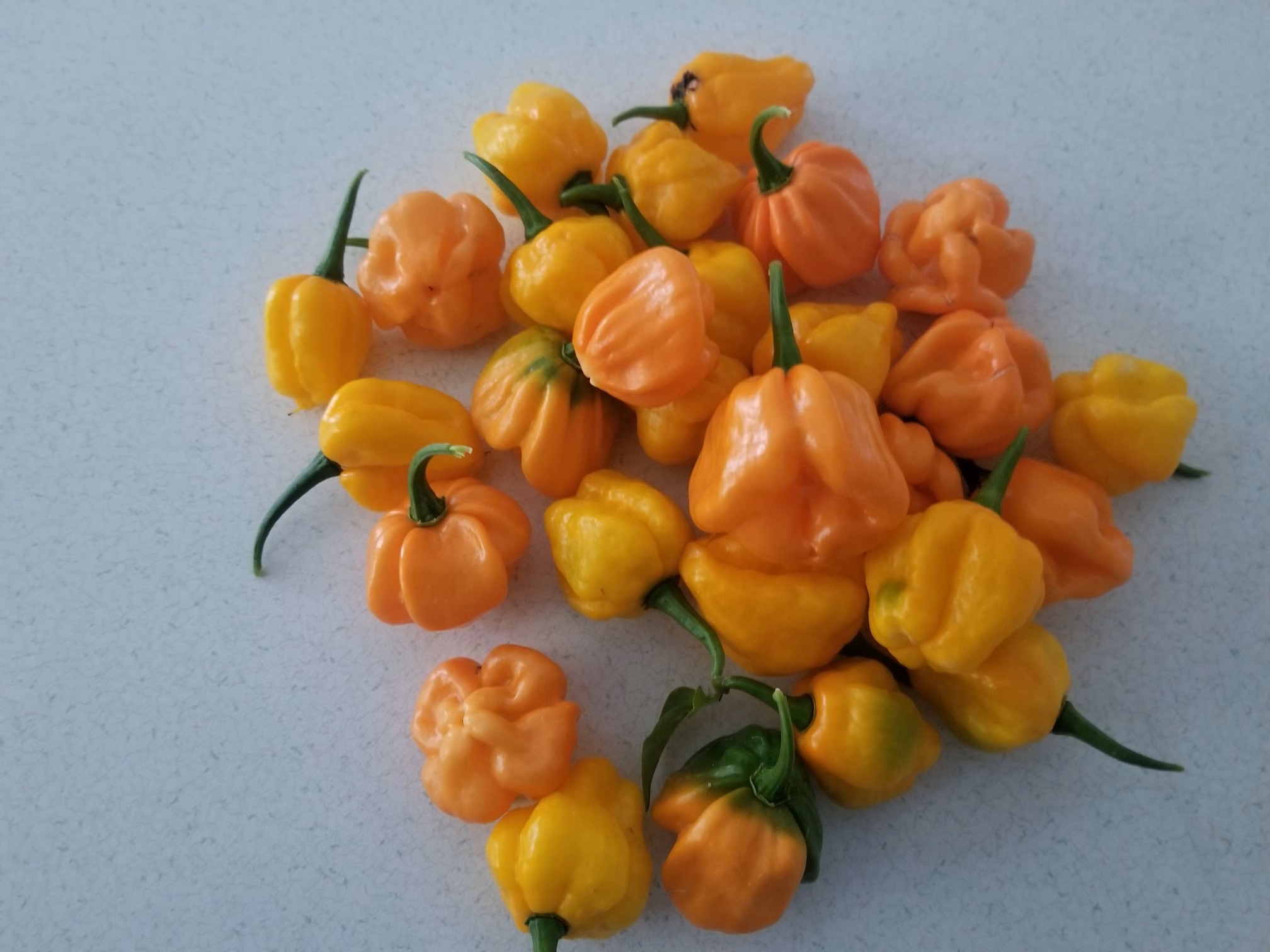
    Home grown scotch bonnets: Photo by Scott Hughes

    My mother came to America through Catholic school connections and attended Marian College in the sixties when she met my father. They moved to Jamaica and lived with my mother’s family before migrating back to the U.S. in the seventies. 
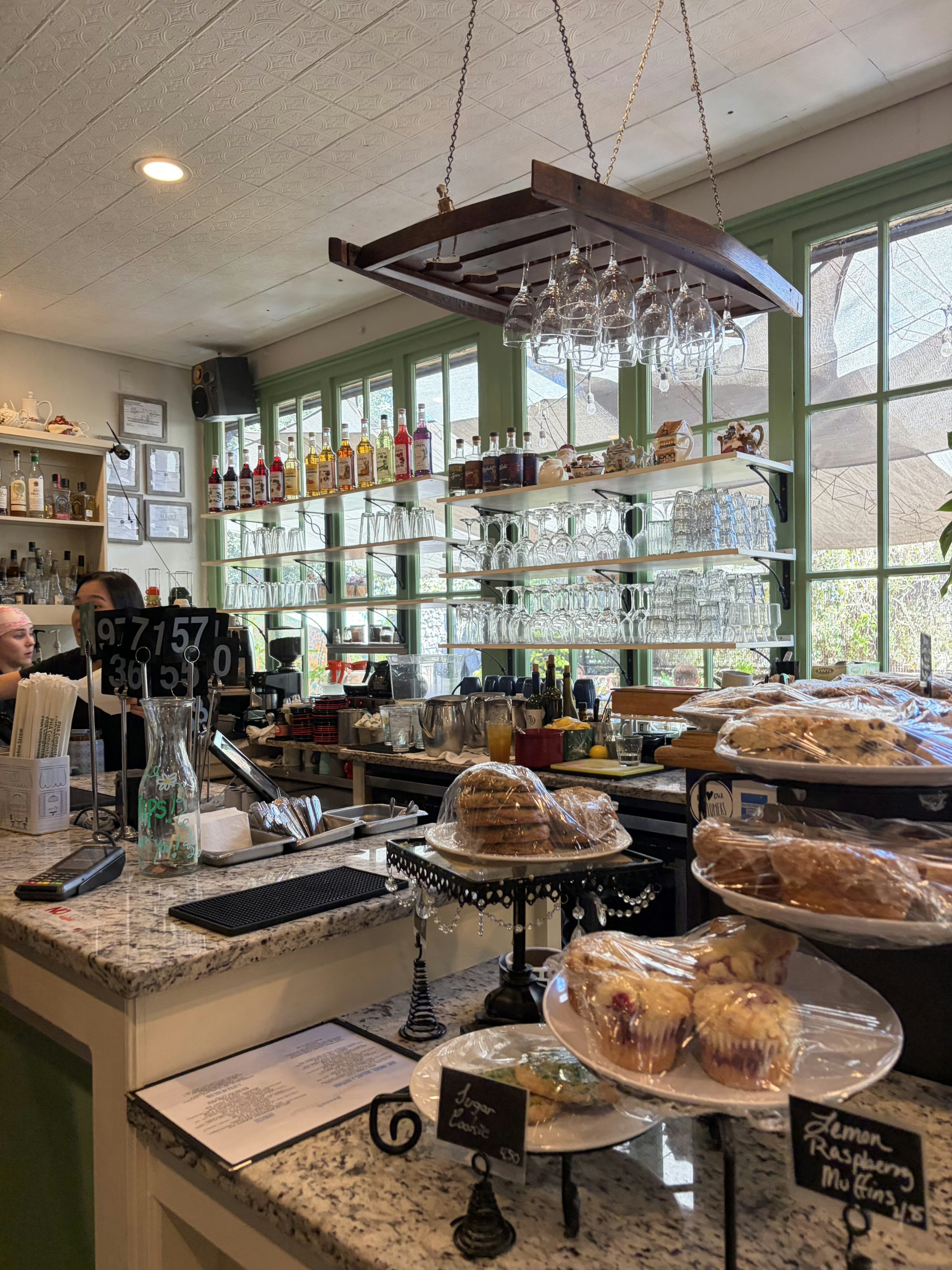
    My uncle owned a small Jamaican eatery called Patties of Jamaica at the 52nd and Allisonville Road intersection. It has been there for over 40 years, now run by my cousin.

    What is your favorite food to cook at home? 

    Jamaican food.

    What do you always have in your fridge at home?

    Scotch bonnet peppers that I grow.

    What marked characteristic do you love in a person you share a meal with?

    Trying new food.

    What marked characteristic do you find unappealing in a person with whom you share a meal?

    Hogging the best shrimp. 

    Beer, wine, or cocktail?

    No

    Who is your favorite cookbook author?

    Julia Child.

    What is your favorite kitchen or bar tool?

    Meat tenderizer mallet. 

    Favorite types of cuisine to cook?

    Chinese, Thai, and Caribbean.

    Beef, chicken, pork, seafood or tofu?

    I love chicken, beef and goat.

    Favorite vegetable?

    Green beans

    What chef or culinary person do you most admire?

    Bourdain

    What food do you like the most?

    Blueberries

    What is your favorite non-eating thing to do?

    skateboarding, water-coloring, digital design

    Whom do you most admire in food?

    Chef Ricardo 

    Where is your favorite place to eat/drink in the Midwest? Delicia

    Where is your favorite place to eat and drink outside the Midwest?

    New Orleans & Jamaica

    What is your favorite restaurant?

    Benyue Dim Sum House in Castleton.

    Who is/are the person/s with whom you would share your last meal?

    My wife. 

    Scott Hughes Recipe for Jerk Chicken

    • One medium onion, coarsely chopped
    • Three medium scallions chopped
    • 3 Scotch bonnet chiles, chopped
    • Two garlic cloves, chopped
    • One tablespoon five-spice powder
    • 1tsp ground cinnamon
    • 1 tsp ground fennel seeds
    • One tablespoon Jamaican allspice berries, coarsely ground
    • One tablespoon of coarsely ground black pepper
    • One teaspoon of fresh thyme
    • One teaspoon of freshly grated nutmeg
    • One teaspoon salt
    • 1/2 cup soy sauce
    • One tablespoon of olive oil
    • ¼ cup dark brown sugar
    • 2 (3 1/2 to 4-pound) chickens, quartered
    • 1tsp Chinese MSG (that’s right)
    • 1 Lime to wash the chicken pieces with (Jamaican practice but not needed)

    Prep chicken pieces by poking them with a fork to allow marinade to seep into the flesh. Rub chicken pieces with fresh lime (optional).

    Use a blender to make spices into a marinade, and place chicken into a 1-2 1-gallon size freezer bag(s) and marinate for a day. If you need to use two freezer bags, split the marinade into both.

    Bake or grill at around 415 degrees for approximately 40 -50 minutes, depending on the size of the pieces.

    If baking, use a slotted pan to release the chicken drippings below. However, roasting the meat in a glass baking dish allows the spices and juices to bathe. It all comes out delicious. 

    You can adjust to a lower heat but add extra time to accommodate.

    Best served with Jamaican rice and peas and a mango coleslaw

    [mc4wp_form id=3900]

  • Pot Roast & Kisses: Indiana’s Reverend Peyton’s Big Damn Band Sings the Blues about Love and Food

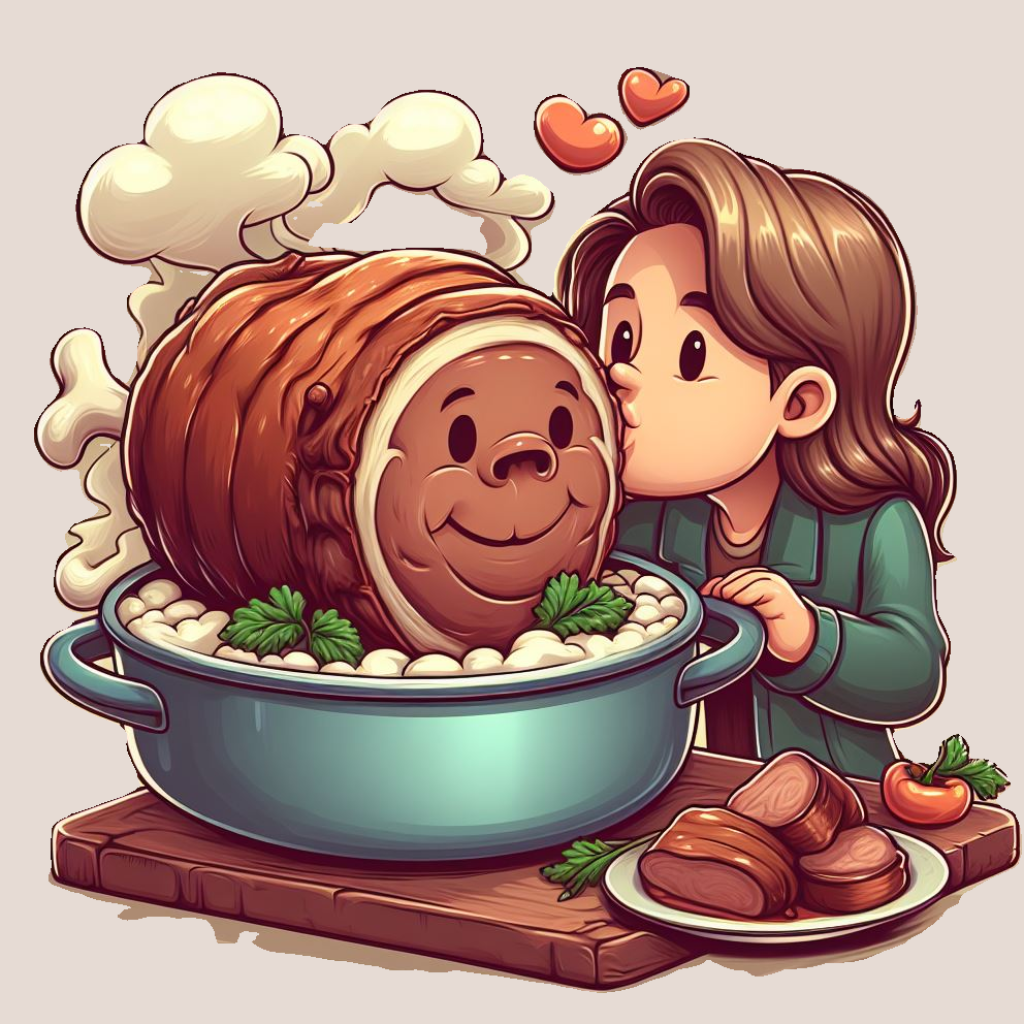
    Pot Roast & Kisses: Indiana’s Reverend Peyton’s Big Damn Band Sings the Blues about Love and Food

    Reverend Peyton’s Big Damn Band from Brown County, Indiana, is a chart-topping three-piece American country blues group, having reached number one on iTunes and Billboard with their latest, “Dance Songs for Hard Times.”  Guitarist and singer Reverend Peyton, along with his wife, the beguiling Breezy, a washboard-playing maestro, and drummer Max Senteney much of their music offers stories of romance, the difficulties of American life and, of course, food.  

    While playing nearly 250 dates a year, the hardworking trio crafts heartfelt tunes about heartbreak, and their love of Indiana and its food. Whether in full songs or a lyrical mention, Rev and the group warble about food. In “Pickin Pawpaws”, Peyton finds difficult in traveling all the time, finding peace in harvesting the native fruit of the Midwest, roaring “pickin paw paws with my maw maw/ come pick pawspaws with me now.” Pawpaws are a mango-banana-like fruit also called a Hoosier banana. In their rendition of the 1948 song Cornbread and Butterbeans, while playing in London, they change the lyrics to “goodbye and don’t you cry/ I’m going to Indiana/ buy a dog/ and a big fat hog” as an ode to their hometown state. 

    Belting out about food isn’t without precedent. According to CBC News food writer Andrew Copplino, the great master of the Delta-style blues Robert Johnson, found inspiration from tamales at a Mississippi restaurant called Abe’s BBQ, prompting him to pen a 1936 song called Hot Tamales, They’re Red Hot about a woman and steamed masa. Not only did the musical notes of an American institution start but also became synonymous with food. For the last century, blues and food evolved, becoming the best of friends, either as a euphemism for love or evangelizing great tastes, or both. 

    On one of Reverend Peyton’s Big Damn Band’s many hits, “Pot Roast and Kisses” , with more 2,000,000 streams, Peyton croons a husky hunger, “I got a Genie/ just granting wishes/ Like I won the lottery/by my misses / Pot roast and kisses/ So delicious/ I smell something sweet cookin up/ in the oven/ but there’s nothing like her lovin.”  It’s one of the best of the American musical genre showcasing a heartland heart smoldering with gravy laden affection. If only we could see the mashed potatoes. 

    After reading the email interview with Breezy and Rev, it felt like participating in one of the great romances of the world such as Richard and Elizabeth, Johnny and June, Stephen and Ayesha…and ahem, eating. 

    THE INTERVIEW

    What is your favorite food to cook when not touring?  

    Breezy: I do all the cooking, so when we get home from a tour, I am usually cooking for a ton of people. Our friends and family know I love to cook, so I’m always prepared to feed a crowd.

    Rev’s favorite is salmon, so we usually have that when we get home.

    REV: Breezy is a real cook, an absolute chef. She has a real passion and love for preparing food. All our friends and family look forward to her coming home, because she is always creating amazing spreads of food that she shares with so many people…. And luckily… me too!

    What is your favorite food when touring?

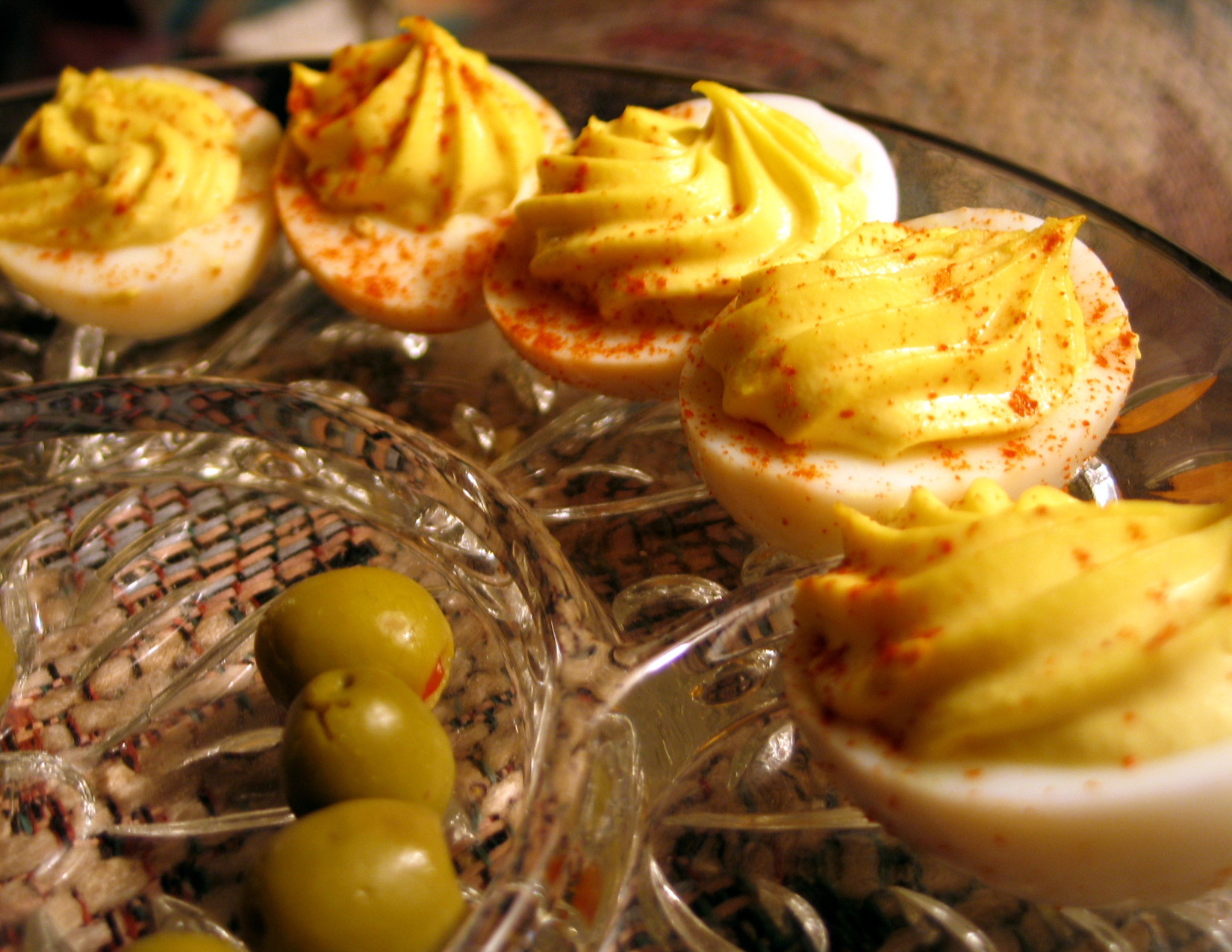
    B: We are fairly limited on the road, but I often make deviled eggs as a snack for the band and crew because we have the ingredients on our rider.  
    REV: Because of the nature of touring, we end up eating at restaurants a lot. After years of doing this though, we have so many favorite places all over the world. We avoid fast food at all costs.

    What do you always have in your fridge at home?

    B: Prairie Farms Cottage Cheese, small curd, full fat and cold brew. These are essential for Rev to live. He is obsessed with cottage cheese and that’s his favorite brand.

    REV: I would eat the same three or four things over and over if it weren’t for Breezy, making sure that I don’t. Breezy always has interesting things in the fridge, because she is usually planning meals way ahead.

    What marked characteristic do you love in a person with whom you are sharing a meal?

    REV: you know I have very rarely actually shared a meal with someone, really got to know them, and not liked them.

    Reverend Peyton Big Damn Band
    Photo: Tyler Zoller

    What marked characteristic do you find unappealing in a person with whom you are sharing a meal?

    REV: I’d say terrible manners, rudeness, if at a restaurant- treating servers with disrespect.

    What is your favorite thing to make for yourself and your family?

    B: Maybe Paleo chili, or creamed spinach.

    REV: Breezy’s creamed spinach might be mine too haha! It might be surprising, but so many people in my hillbilly family always ask her to make that dish. Her secret is Indian spices, and it is incredible.

    Beer, wine, or cocktail?

    B: For me bourbon, Rev doesn’t drink alcohol, but he does drink a lot of coffee.

    REV: Coffee for sure!

    Your favorite song about food?

    REV: Oh man, that’s a tough one, and probably would change day to day, but today… it’s Poke Salad Annie by Tony Joe White.

    Where do you get your inspiration when writing a song about food?

    REV: I just write about whatever inspires me. Sometimes a melody will just speak to me in a certain way, and sometimes…. That’s food!

    Your favorite kitchen or bar tool?

    B: My Blackstone Grill.

    Favorite types of cuisine do you like to cook?

    B: I use a lot of Indian spices in my food but I cook all different cuisines.

    Beef, chicken, pork, seafood or tofu?

    B: Seafood, hands down. We both fish, so as fresh as we can get it.

    Favorite vegetable?

    B: Cabbage, it’s so versatile and can be eaten raw or cooked.  

    What chef or culinary person do you most admire?

    B: That’s a hard one, because I am a cooking show fanatic, but Alex Guarnaschelli is my absolute favorite.

    What food do you like the most?

    B: I could eat a spicy tuna roll everyday for the rest of life and be happy.

    What food do you dislike the most?

    B: I love everything but for health reasons we don’t eat much fried food and heavy carb foods like potatoes.

    What is your favorite non-food thing to do?

    B: Cuddle up with our cat Chunkleberry Finn when we aren’t on tour.
    Whom do you most admire in food?

    B: The farmers. I have a small garden, but I’m pretty lousy at it.

    Where is your favorite place to eat/drink in Indiana?

    B: Our favorite restaurant is a place called Samira in Bloomington, Indiana. It’s Afghani good and it’s wonderful. I’ve been trying to duplicate one of their dishes for years and I’m getting close, but they are very secretive about the recipe and I think I’m missing one ingredient.

    REV: We have eaten at amazing places all over the world as we travel around and play music, and Samira is our favorite!

    Where is your favorite place to eat and drink outside the Midwest?

    B: Any place that has good fresh seafood.

    REV: Osteria Del Calderone, Parma, Italy

    Who is/are the person/s with whom you would share your last meal?

    B: When we are home we have dinner with our best friends/neighbors Michelle and Francie nearly every night. They own a wonderful store called The Wild Olive that sells olive oil, balsamic vinegars and other great food products. I use a lot of their products.

    REV: Breezy.

    What made you want to become a musician?

    REV: it’s just been in my soul since I was born. As soon as I was handed a guitar, I haven’t put it down.

    Tour Bus Deviled Eggs (Inspired by Breezy Peyton)

    What You Will Need: 

    • Hard-boiled eggs (6 eggs make 12 deviled egg halves)
    • Mayonnaise
    • Mustard (yellow or Dijon)
    • Salt and pepper
    • Paprika (optional, for garnish)
    • Optional: vinegar, ras al hanout, garam masala hot sauce, pickle relish, chopped herbs (such as parsley or chives) for extra flavor

    Let’s Make This Puppy: 

    Hard-boil the eggs: Place the eggs in a pot and cover them with cold water. Bring the water to a rolling boil, then turn off the heat, cover the pot, and let the eggs sit in the hot water for about 10-12 minutes. Afterward, transfer the eggs to a bowl of ice water to cool before peeling.

    Once the eggs have cooled, carefully peel them and slice them in half lengthwise. Remove the yolks and place them in a separate bowl. Arrange the egg white halves on a serving plate.

    Mash the egg yolks with a fork until they’re crumbly. Add the mayo and mustard to the mashed yolks. Start with about 2 tablespoons of mayonnaise and 1 tablespoon of mustard for 6 eggs, adjusting to your preferred taste and consistency. Mix well until you achieve a creamy texture. You can add a splash of vinegar, hot sauce, pickle relish or as an ode to Breezy, ras al hangout or garam masala. Season with salt and pepper to taste.

  • i8tonite: Top Favorites Eats, 2023: Delicious, Easy Recipe for Hasselback Potatoes

    i8tonite: Top Favorites Eats, 2023: Delicious, Easy Recipe for Hasselback Potatoes

    Our favorite meals over the last year. And a Thanksgiving Hasselback Potato Recipe.

    I spoke to a born and bred Hoosier who said to me, “Hoosiers are humble. We don’t talk about the great things we offer.” In today’s day and age of marketing and promotion, no one wants to dine at your table if they don’t know what’s available. We have many opportunities to promote local Indiana food entrepreneurs, and we should. A friend and former editor-in-chief of the biggest food magazine in the world said her life was about traveling to eat. In 2004, London-based food writer Andy Hayler went to every three Michelin-starred restaurants worldwide and was the first to do so. He continued to do it six more times until the pandemic. Traveling for food is big business. 

    Having lived, worked and promoted destination and resort towns across the United States and internationally for most of my life, it’s always about the food and drink first, even more so than the hotels. Think about heading to Napa Valley without the wine? Leaving the lackluster conference hotel room, the food – and service –will make or break the experience. Before living in Indy, except once, I never read about great food from the Hoosier state, but there are stellar places. I’ve eaten at them. 

    Read our first two of 2023 until we get to eight!

    Tinker Street

    Four years ago, Nick and I spent my first birthday in Indy at Tinker Street, one of the city’s mainstays, which I place as one of the finest eateries in the Midwest. Opened in 2015, the small restaurant on 16th Street in the historic district of Herron Morton provides Chef Tyler Shortt an opportunity to be creative with Indiana-grown ingredients. It’s one of the few restaurants that promote the area farmers while also being in the 21st century with a female sommelier, Ashlee Nemeth, and providing reservations. 

    Shortt’s recipes showcase regional agriculture, corn and tomatoes, and meats like duck and pork. That’s a good thing. The New American fusion – that ubiquitous term that uses herbs and spices from international flavors with European cooking methods – shows in the sauces such as the yuzu garlic aioli on the scallop and scallion risotto or the cappelletti with a Korean braised short rib. It’s an eating destination where one is never disappointed in the food or service. Importantly, it’s that place you bring your Chicago, Los Angeles and New York City friends when they finally come to visit you. Thankfully, it’s 21 and over, too. 

    402 E. 16th Street

    Indianapolis, IN 46202

    (317) 925-5000

    Reservations

    Chicken Scratch

    A graduate of Ivy Tech’s Culinary School, Chef Tia Harrison, who catered for ten years before opening her restaurant called Chef Tia & Co., started serving her wings as a special on Wednesdays. Upon being one of two $25,0000 Discover Financial Services recipients to support Black-owned food entrepreneurs, she opened her first standalone devoted to the hump day special on Keystone. It’s a pickup and delivery spot with over a thousand reviewers from happy customers giving it a thumbs up. Ms. Harrison creates mighty tasty wings and loaded fries from this location. And as a customer, your choices feel endless. Who knew there were so many variations on wings? Naked or breaded, bone-in, boneless, and vegan, made with cauliflower florets and tossed in almost a dozen hand-crafted sauces that make everything finger-licking good. 

    Parmesan garlic is a house specialty, and the spicy jerk BBQ fires up the tastebuds, but no one can do wrong with the hot honey. If you’re visiting Indianapolis, have them delivered to your room and source a wine from one of the Black female winemakers in Indiana (Sip & Share or Cultured Urban Winery). You will remember the meal much more than the keynote speaker. 

    Since debuting in 2021, Harrison opened two more this year, one in Cincinnati and another downtown Indy location. 

    5308 N. Keystone Avenue

    Indianapolis, IN 46220

    Order

    Anthony’s Chophouse

    Filet of Beef, courtesy of Anthony’s Chophouse

    I’m fascinated by Carmel’s carefully planned community design, so much so that I often drove by Carmel’s Anthony Chophouse without noticing. The developed city has entranced me with its perfect walkways and storefronts, that I missed the illuminated sign, mistaking it for another chain. 

    But once inside, they transport you past the white picket fences and into a South Beach atmosphere, exuding sex appeal. A gas fireplace framed by brick illuminated the staircase leading upstairs and packed the bar area with crowds of Carmelites — sculpture and texture play in the dining room, with Rat Pack chocolate-covered banquettes and brass mid-century lights. A wood-planked floor allows for runway arrivals of Manholos and To Boots before stepping onto a modern weave. And, of course, the glass-walled kitchen allows diners to see the back of the house between sips of ready-to-pair meat cabernets. 

    As for the boeuf, it was standard with freshly seared ribeye and filets. We like the flight of beef, like tastes of wine, that featured four-ounce portions of USDA prime, grass-fed, and Wagyu. We have yet to eat in every steakhouse in the world, but we found this to be a novel idea. Dining at a butcher emporium, for the most part, is about something other than the steaks. It’s about the wine, the cocktails, service, appetizers and the sides. Diners will find creativity in these dishes, wine menu and libations. The bone marrow, harvest pig and the gambas pil pil are worth visiting every single evening. And if we could afford it, we would. 

    201 W. Main Street

    Carmel, IN 46032

    (317) 740-0900

    Reservations

    A Thanksgiving Recipe for Hasselback Potatoes

    Ingredients:

    • 4 large russet or Yukon Gold potatoes
    • Olive oil or melted butter
    • Salt and pepper
    • Optional toppings: grated cheese, chopped herbs (such as rosemary or thyme), garlic powder, paprika, sour cream, bacon bits, or any preferred toppings

    To Make:

    1. Preheat your oven to 400°F (200°C). Wash the potatoes thoroughly and pat them dry with a kitchen towel. Place a potato on a cutting board. Using a sharp knife, make vertical slices across the potato, about 1/8 to 1/4 inch apart, ensuring it does not cut all the way through. Pro tip: To prevent cutting through the potato, place chopsticks or wooden spoons on either side to act as a barrier.
    2. Once all the potatoes are sliced, place them on a baking sheet or in a baking dish.
    3. Drizzle olive oil or melted butter over the potatoes, making sure to get some in between the slices. Use your hands or a brush to evenly coat each potato with oil or butter.
    4. Season generously with salt and pepper, ensuring the seasoning gets into the crevices.
    5. Optional: Add your preferred toppings such as grated cheese, chopped herbs, garlic powder, or paprika between the slices or on top of the potatoes.
    6. Place the baking sheet or dish in the preheated oven and bake for about 50-60 minutes, or until the potatoes are crispy on the outside and tender on the inside. The cooking time may vary depending on the size and type of potatoes used.
    7. Once done, remove the potatoes from the oven and let them cool slightly for a few minutes before serving.
    8. Serve the Hasselback potatoes as a side dish with your favorite main course. Optionally, garnish with additional toppings like sour cream or bacon bits before serving.