Tag: Indianapolis

  •  My 9 Favorite Indiana Food Finds of 2025

     My 9 Favorite Indiana Food Finds of 2025

    Plate of vegetarian dishes at Corridor, in Indianapolis, Indiana
    Plate of vegetarian dishes at Corridor

    A year of eating throughout Indiana and what it taught me about community.

    I often think about the delicious six years I’ve spent exploring Indiana food. My path crossed many food folks and chefs, including Rachel Firestone and Samir Mohammed at 9th Street Bistro, as well as Zoe Taylor and Josh Kline at Borage. I ran into Shadow Lounge’s Chef Tia Wilson at one of the local markets one day and, the next, watched Jonathan Brooks man the line at Beholder. One of my favorite stories was seeing Burgeezy’s Kadeesha and Antonine Wiggins grow their dream business. Of course, there is pizza and Diavola may serve the best Neopolitan pie in all of Indy, in my humble opinion. 

    Some editors took notice, giving me a platform to write about food: Culinary Crossroads’ Jolene Katzenberger, former Edible Indy owner Jennifer Rubinstein, current publisher Adam Grubb and, of course, Indianapolis Monthly’s Eve Batey and Andrea Ratcliffe. Through them, I found a voice focused on Midwestern cuisine, especially as it relates to identity and immigration. But it also showed me something more profound: that food entrepreneurs create a sense of community wherever they are. 

    While I genuinely love fine-dining, destination experiences, it’s the local neighborhood spots that bring people together—whether over coffee, drinks, or dinner—that make communities thrive. Gather 22, for instance, with its hammocks and generous outdoor space, does that beautifully, along with its tasty bites. What Adam Reinstrom and Pablo Gonzalez have created — part restaurant and adult playground — is nothing short of remarkable. 

    The International Marketplace, one of the first places I wrote about, remains a touchstone. Saraga International Market and Indiana barbecue, especially the historic Bar-B-Q Heaven, continue to be regional legends deserving of an iconic Hooiser food status.

    This is only a partial list of what I ate this year. I’m eternally grateful to Culinary Crossroads’ Larry Dickerson for allowing me to travel all over Indiana during the course of my three years writing for them. After visiting nearly 100 towns and hamlets throughout the state, I’ve come to understand how both historians and restaurateurs have shaped the Midwest’s culinary history and, importantly, how interconnected the region truly is.  

    It’s not that my time in Indiana has come to an end. I’m working on a cookbook project that is part Midwestern history and part chef-driven stories from across the region, which I hope to see published next year. I also like to think that I’m evolving, which is vital to my well-being.

    While some people go to concerts, shop, watch IMAX, or attend large-scale sporting events, spending their hard-earned wages – and yes, any work today is hard-earned – I head to a locally owned restaurant or a farmers’ market. By doing so, my partner and I give back to the communities we live in. That’s important to the region’s economic health and vitality. 

    Last word: Writing about food, I can’t be tone-deaf to how nearly 40 million people will suffer without SNAP benefits. My childhood was marked by food insecurity and hunger. My mother raised me alone, stretching a meager salary that never went far enough. She tried really hard, but there were days when the sharp pain in my stomach could only be eased by water. Despite paying taxes on her modest income, she could never get ahead. It was systemic gender bias at work: no matter how hard she pushed, the system pushed back harder. I’m seeing this play out again; it’s always the hard workers who only want to raise families who suffer at the hands of the big corporate powers. 

    Roasted Kabocha Squash at Corridor, Indianapolis

    Komucha squash at Corridor
    Roasted Kombucha Squash at Corridor

    Chefs Erin Kem and Logan McMahan reimagined the venerable Tony and Rosa Hanslits’ Nicole-Taylor Pasta and Market, which had been an emporium focused on Italy, into a mostly vegetarian cafe and retail experience. What they do with simple ingredients is on full display with a roasted kombucha squash, caramelized and seasoned with restraint, which showed me how Indiana produce can shine when treated with respect.

    1134 East 54th Street, Studio C, Indianapolis, IN 46220

    (317) 257-7374

    Fried Chicken at Wagner’s Village Inn, Oldenburg

    Fried chicken at Wagner's Village Inn
    Fried chicken at Wagner’s Village Inn

    In Oldenburg, a small-town gripping tightly to its German Catholic heritage, Wagner’s has been feeding generations with its four-ingredient, family-style fried chicken. Crisp skin, juicy meat, and it makes it a southern Indiana tradition worth the drive. The James Beard Foundation even awarded it for Classic American. It’s one of those honors that tries to extend an olive branch to communities often dismissed in the cosmopolitan food world. Regardless, the eatery and the hamlet have a history and a sense of place, with church spires casting shadows over two-hundred-year-old cobblestone streets, and the highly seasoned chicken is pretty good. 

    22171 Main Street, Oldenburg, IN 47036

    (812) 934-3854

    Gluten-Free Pop-Tarts at Borage, Indianapolis

    Gluten free pop tarts at Borage
    Gluten free pop tarts at Borage

    Chefs Zoe Taylor and Josh Kline created an homage to Midwestern food at their restaurant, cafe and market. They elevated their dream business to something beyond nostalgia, transforming it into a refined yet rustic experience that stays true to their regional roots.  Sometimes, in their deft hands, childhood treats become both nostalgic and refined. At the bakery, the gluten-free Pop-Tarts  — technically made by their pastry chef Rachel de Masi — change with the seasons and serve as proof that playful baking can be serious food. I’ve often written about the duo and profiled them for Edible Indy, my last story for that publication. 

    1609 North Lynhurst Drive, Indianapolis, IN 46224

    (317) 734-3958

    Reuben with Smoked Corned Beef at Smokey’s Concession Stand 

    Rueben with smoked corned beef at Smokey's Concession's Stand in Lapel.

    I was on one of my small-town Culinary Crossroads travel excursions and decided to swing by Smokey’s Concession Stand. It was early on Friday, and a crowd was already seated at the bar. While some people say not to ask the server—or, in this case, the bartender—what’s good, I often do. A restaurant worker will honestly tell me what they prefer — and I, being a former dishwasher and waitperson who believes in excellent customer service, will point you in the right direction. The bartender recommended the smoked Reuben, which featured house-smoked corned beef that raised the bar. The smoke clung to each slice, balanced by tangy kraut and melted Swiss. It reminded me how a sandwich can be just as transportive as a tasting menu.

    732 Main St, Lapel, IN 46051

    (765) 534-4111

    Japchae at Sokuri in Kokomo

    Assprtment of Korean food at Sokuri
    Assprtment of Korean food at Sokuri

    Kokomo may be best known for auto manufacturing, but tucked into one of its Korean restaurants, I found japchae that took me to another continent. Sweet potato noodles, sesame oil, and vegetables created a plate that was comforting and unexpected in central Indiana. It’s hard to find great Asian food in this part of the country, but this was one of the best noodle dishes without having to fly to Seoul. It was also part of a destination piece I wrote for Indianapolis Monthly. 

    108 N Main St, Kokomo, IN 46901

     (765) 416-2848

    Hokkaido Scallop Crudo at Nesso, Indianapolis

    Hokkaido scallop crudo at Nesso
    Hokkaido scallop crudo

    Inside the Alexander Hotel, Nesso delivers an upscale Italian coastal dining experience under the direction of recently appointed Chef Zach Szabo. He’s a transplant from D.C, and brings “glam Italian” to the Midwest, meaning rustic yet refined.  An example was a special item: Hokkaido scallop crudo, bright, clean, delicate, citrusy and with a hint of heat. It was a dish that felt worldly without crossing the Atlantic. It was mastery of crudo, with thin rounds of the mollusk in a sauce meant for slurping. 

    339 South Delaware Street, Indianapolis, IN 46204

    (317) 643-7400

    Sweet Pea Agnolotti at Roselilly, South Bend

    South Bend is emerging as its own dining scene, and Roselilly, with its chef-owner Eamonn McParland, is at its center. The AAA four-diamond dining experience is one of two in town, which is also home to the University of Notre Dame. He created a tasting menu, and his sweet pea agnolotti, part of the experience, captured the freshness of spring in tender pasta pockets that were both delicate and celebratory.

    701 South Main Street, South Bend, IN 46601

    (574) 347-4560

    Fried Pork Tenderloin at The Tin Plate, Elwood

    Fried pork tenderloin at the Tin plate
    Fried pork tenderloin at the Tin plate

    The breaded tenderloin has long been considered Indiana’s official sandwich. And, truthfully, like many people, I love breaded, fried meats (chicken-fried steak, chicken tenders, fish and chips anyone?), but it’s not that unique. However, the version at The Tin Plate in Elwood — while not unique — made me a convert. The pork is pounded thin but not too thin, and then fried to a golden brown, retaining juiciness rather than a dry puck, which can happen without brining. Like a soft-brimmed hat, it flopped over the sides of the bun. It was a taste of pure Midwest and Hoosier comfort. I also loved the fact that Elwood is home to Red Gold Tomatoes. While the canning company is not related to the German-inspired pork tenderloin, add some sauce and fresh mozzarella and you have pork cutlet parmigiana

     2233 S J St, Elwood, IN 46036

     (765) 557-8231

    Pork and Foie Gras Meatloaf at 9th Street Bistro, Noblesville

    Pork and foie gras meatload at 9th Street Bistro
    Pork and foie gras meatloaf at 9th Street Bistro

    Noblesville’s 9th Street Bistro is intimate in size but ambitious in flavor. Husband-and-wife team Samir Mohammed and Rachel Firestone created a well-thought-out small-town bistro in the heart of Noblesville, half a block from the town square. It’s one of the places you would find in a European hamlet, owned and operated by the same family for decades, sewn into the community fabric.  The pork and foie gras meatloaf is an indulgent, warm dish —essentially a country pâté heated rather than served cold—that marries Midwestern comfort with French luxury. It is proof that, even in a small town, with this duo at the helm, grand tastes can fly without pretension.

    56 South 9th Street, Noblesville, IN 46060

    (317) 774-5065

    Read more:  My 9 Favorite Indiana Food Finds of 2025 Read more:  My 9 Favorite Indiana Food Finds of 2025
  • Top Six Restaurant Dishes from Indianapolis to Fort Wayne

    Top Six Restaurant Dishes from Indianapolis to Fort Wayne

    Pão de queijo at Fernando's
    Four lovely baked Brazilian cheese rolls at Fernando’s

    How Hoosier chefs made the potato, chicken liver, octopus, beef, pimento cheese and gluten-free bread the talk of my table

    Nick and I have savored many of the diverse flavors of Indianapolis restaurants since our move to the city five years ago. I’ve had the opportunity to explore Indiana’s culinary landscape extensively, covering destinations for Culinary Crossroads for a year and a half. From the southernmost Evansville to Elkhart, in the north, a 10-minute drive to the Michigan border and other places, I’ve sampled a range of dishes, becoming well-versed in “Hoosier” food. Living here has expanded my tastebuds and evolved my understanding of the Midwest’s culture and people. 

    Exploring Indiana’s Diverse Culinary Landscape

    I recently attended a conference where the speaker said, “Hoosiers either leave and never come back, or they never leave, traveling only 20 minutes outside their neighborhood.” It’s an exaggeration, clearly, but it’s not far from the truth. I’ve met many natives who may have been to Paris but not to the neighboring region. (Carmel to Fishers doesn’t count.) I can’t tell you how many times I’ve asked if native Hoosiers have been to Terre Haute, which recently elected its first Democratic mayor, Brandon Sukbhan, in a dozen years. The answer is “not since grade school” or “never.” 

    They should. It’s a diverse hamlet and indicates the changing demographics of Indiana. Sakbun, a former Army captain with model looks, a mega-watt smile, and Elvis Presley hair, is the son of a Cambodian father and a Jamaican mother; we ate at an Indian buffet near city hall, talking about his then-wife and soon-to-be first child.

    The town, home to Clabber Girl Baking Powder, sold at Traders Joe’s throughout the land, is a swim to Illinois, just across the Wabash River. To get there from Indianapolis, though, a drive past small historic towns like Greencastle and Brazil, flush with red barns and still-working siloes, shows today’s farming. Tractors and bales dot the landscape.

    Indiana’s Changing Food Scene: The Influence of New Demographics

    I’m bringing this up because in a small town like Terre Haute, with a population of just under 60,0000 –  my former Los Angeles block had more people – it’s important to note that the 21st-century demographics are changing how the middle of the country eats. It’s a story that doesn’t get told as the media chase stories about the modifying electorate. All we need to do is find out what people eat and where. Think about it: A mayor born of two immigrants leads a predominantly Caucasian city in the middle of the Midwest while eating Punjabi food.

    How did I select my favorite? It was memorable—nothing more, nothing less. Nick and I talk about it or think about returning. After dining at Michelin-starred and James Beard Foundation-nominated experiences, or those I discovered across six continents and nearly 250 cities, I believe I am good at eating.

    ________________________________________________________________________________________________________________

    Fried Chicken Toast, Rune Restaurant, Fort Wayne

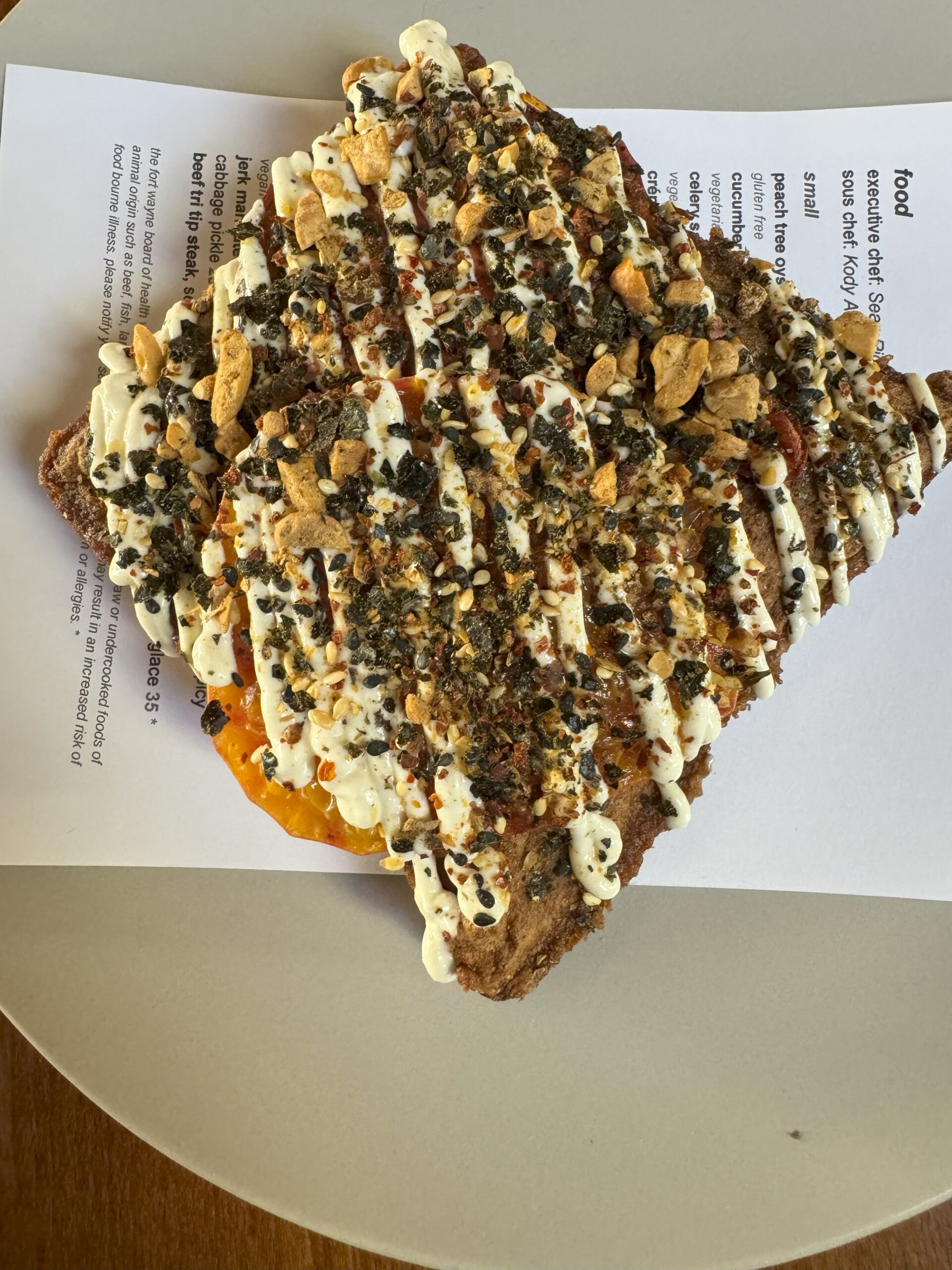
    Fried Chicken Toast
    Fried Chicken Toast, Rune Restaurant

    James Bear-nominated Chef Sean Richardson (Great Lakes Region) opened Rune Restaurant in Fort Wayne in March 2024. It’s a garden-to-table experience with twists and turns on different foods. Richardson makes an appetizer, fried chicken toast, and a large helping of house-made chicken pate smeared over Pullman bread. He gently fries the bread – as you would the Cantonese shrimp toast – and then flips it with a flour coating over the spreadable liver. Once cooked and warmed through, a slice of heirloom tomato, a drizzled white aioli and crunchy leftover bits. Mine featured a bit of nori, herbs and peanuts, and he was recreating the traditional dim sum in a Midwest way, using a loaf native to the region and lots of livers.  While served on a plate, he repurposed an old menu that couldn’t be used again to keep the appetizer from careening off the plate instead of using a napkin. Just a touch of “greening.” 

    2725 Broadway, Fort Wayne, IN 46807, (260) 278-0674

    Rösti, Borage, Indianapolis

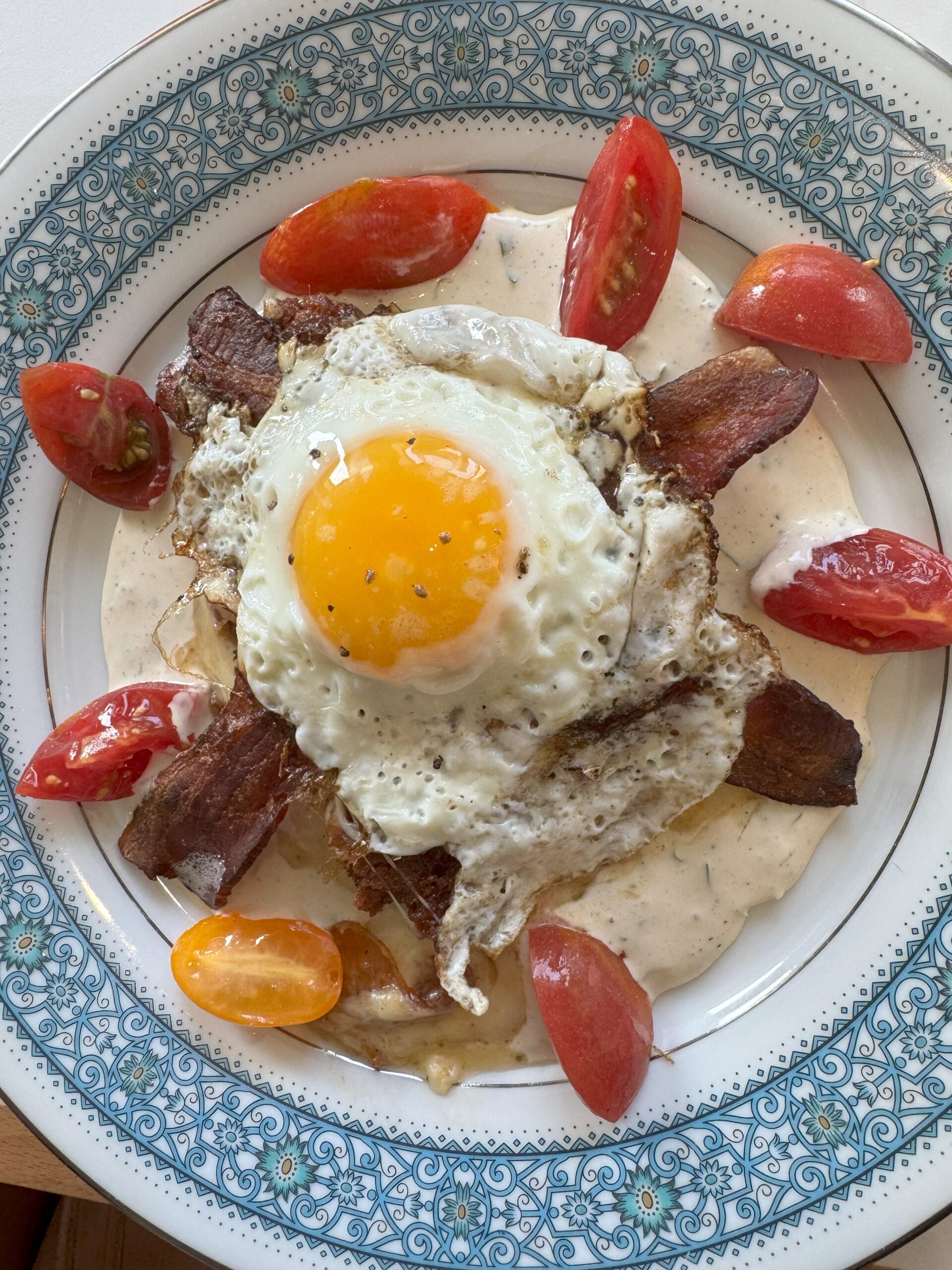
    Egg on top of bacon and rosti, potato confit
    Josh Kline’s rösti covered by an egg, bacon and sumac cream sauce

    During an interview with Chef Josh Kline, owner of Borage, and his wife, Zoe Taylor, he said, “I love potatoes.” I do, too! However, he loves them so much that he came up with a new version I’ve never had. The everyday eater might think of them as hash browns. Still, rösti, a traditional Swiss dish, is anything but browned and grated fried spuds. Kline’s version makes the tuber a confit – soaked in oil for 24 hours before baking it. It may sound oily, but the resulting dish melts in your mouth with a crackling. Typically made for breakfast, his dish is an upscale version and, frankly, a meal unto itself.  At brunch, he will top it with various proteins, from fish to an egg or two. 

    1609 N Lynhurst Dr, Indianapolis, IN 46224, (317) 734-3958, borageeats.com

    Pão De Queji, Fernando’s Mexican & Brazilian Restaurant, Indianapolis

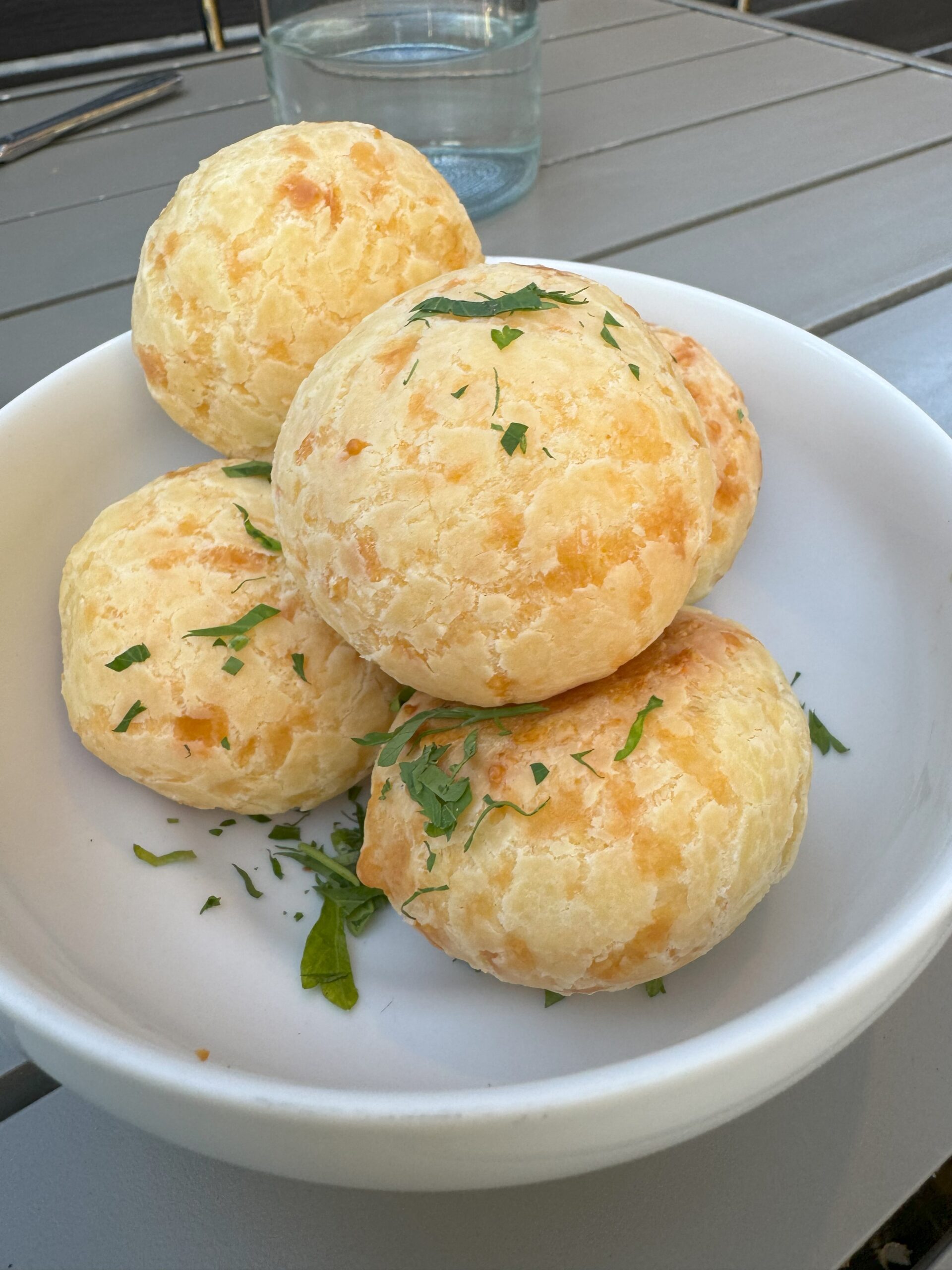
    Pão de queijo at Fernando's
    Four lovely baked Brazilian cheese rolls at Fernando’s

    A long time ago, in a galaxy far, far away…meaning Los Angeles on La Cienega Blvd, I had dinner at a Brazilian chain restaurant more than two decades ago. I ate tough cubes of beef, which, moments before being on my plate, had been flaming on a skewer passed around by an oddly dressed man, and the pão de queji set before me was a baseball, dense and leaden. That memory fired up when Nick and I dined at the year-old Fernando’s in Broad Ripple. Unlike then, we ate alfresco, removed from the street on the separate patio and dined on a mix of Mexican and Brazilian cuisines. Notably, they serve the tapioca-based pao de quiet, slightly chewy and savory pillow puff of chewy with nutty flavors of aged hard Italian cheese. I could eat these daily for the rest of my life, but only if I eat them here.

    834 East 64th Street, Indianapolis, IN (317) 377-4779,

    https://fernandosindy.com

    Octopus Terrine, Commission Row, Indianapolis

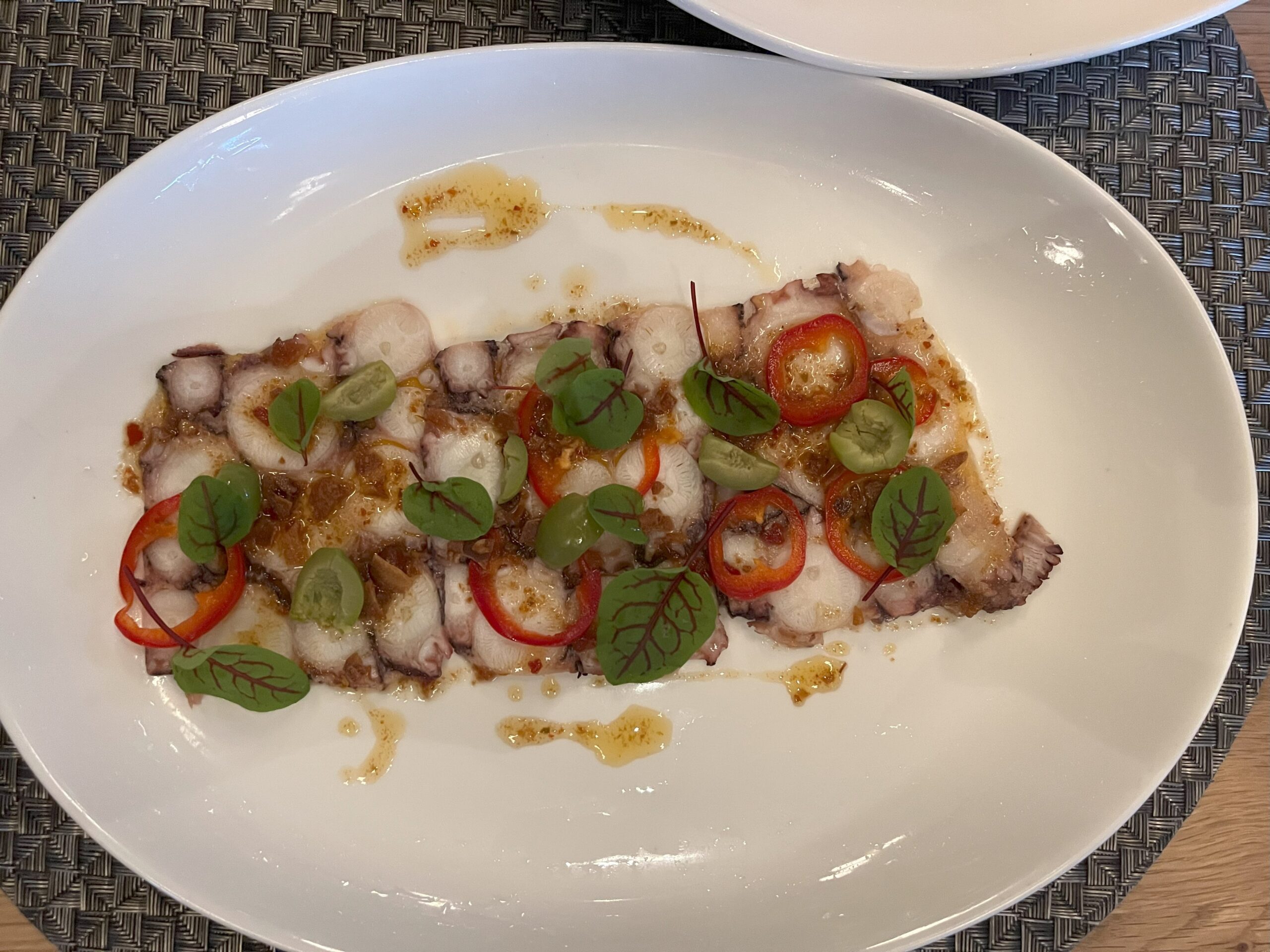
    Octopus terrine with micro herbs and jalapenos.
    Commission Row’s Octopus Terrine with micro herbs and jalapenos.

    Nick and I attended a press dinner for Commission Row, the breathtaking restaurant opened by Cunningham Restaurant Group and designed by Ration Architects. It sits on the eastern edge of Bicentennial Unity Plaza, on the Delaware Street side, with views of the public basketball court or ice rick, depending on the time of year. By the third dining experience, the impeccable server recommended the octopus terrine. A thinly sliced rectangle with rings of several cephalopods compacted is set before me. It’s a visually stunning dish of texture, spice and brine, with the pickled jalapenos giving a welcome dash of heat.  Sublime eating. 

    110 S. Delaware Street, Indianapolis, IN, (317) 550 2500, https://www.commissionrow.com

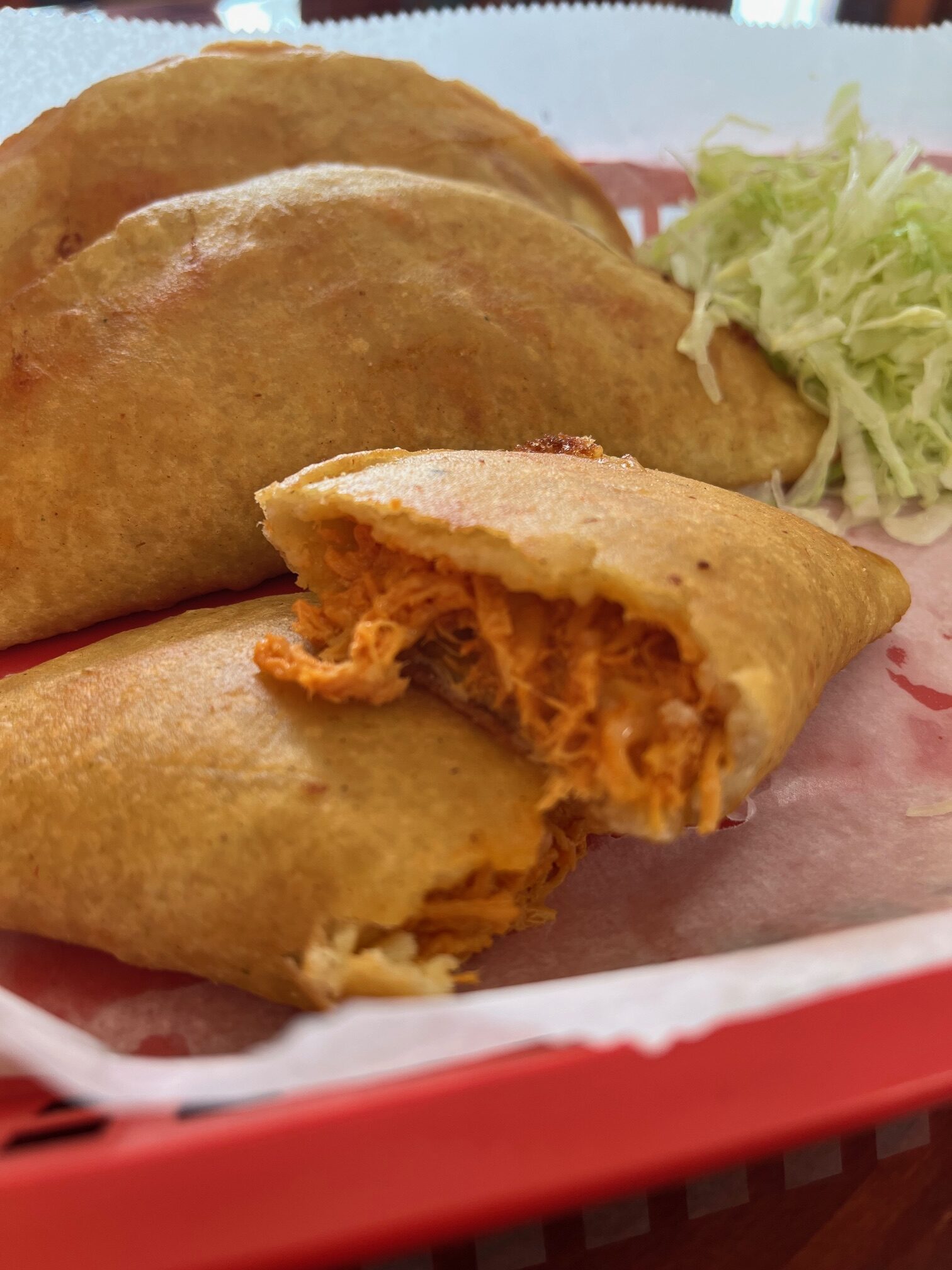
    Chicken Empanadas, La Mixteca, Frankfurt

    Chicken Empanadas at Frankfort's La Mixteca
    Chicken Empanadas at Frankfort’s La Mixteca

    Tacos are always the first thing people think of when they eat South of the Border food. That’s what I planned on eating when I walked into this Latina-owned restaurant in Frankfort, which, according to the 2020 U.S. Census, has a population of more than 16,000 and is one of Indiana’s farming communities tucked between cornfields and soybeans. After seeing a plate of empanadas pass by, I couldn’t resist the corn masa pockets stuffed with juicy braised chicken. My tastebuds reveled in the smokey achiote, garlic and onions permeating the filling. The tender golden crescent moon crust held a light sweetness and sturdiness to hold the meat without being tough or overly chewy. Three large hand-stuffed yeasty envelopes of poultry were more than sufficient, although I could have made it a meal with rice and beans that would have filled me into the next day. 

    408 N. Columbia Street, Franklin, (765) 601-4060, Facebook

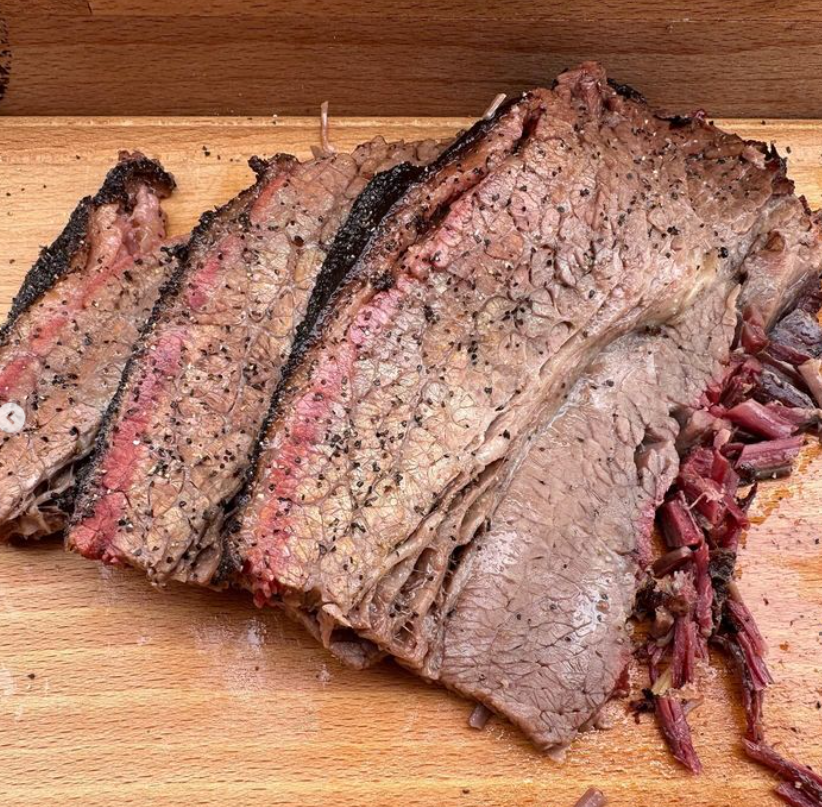
    Brisket, Smokin’ Barrel, Indianapolis 

    Sliced brisket at Smokin Barrel
    Brisket: Photo courtesy of Smokin’ Barrel.

    I wrote a story about Indiana barbeque that was never published. In it, I argued that Indiana makes one of the great regional barbecues. Still, it never received the attention that others, partially because of the racism during the 1920s in the state—another story for another time. However, Mike and CJ McFarland smoke their meats in three different smokers outside a legion hall. Briskets, pulled pork, chicken are cured with locally sourced woods and seasoning, without sugar–brown or molasses in the open air, instead of indoors. Eaters get a wonderfully fruity yet succulent piece of meat from pitmaster McFarland’s patience over the embers.  McFarland’s roots and cooking hailed from Owensboro considered the birthplace of American barbecue or, at least, pit-cooked mutton. Still, with beef and pork, he crafts his smoked meats, which are all Hoosier. They have two locations, but I visited them on South German Road. 

    2316 South German Church Road, Indy, (317) 340 4502, https://www.smokin-barrel-bbq.com

  • I8tonite: Bold Living in International Indianapolis, The Middle of Everything.

    I8tonite: Bold Living in International Indianapolis, The Middle of Everything.

    Indiana and South Korea’s Newest Relationship Grows Midwest Dining and Manfacturing.

    An AI-generated image of the Indiana and South Korean flag, flying over amber waves of grain and the city of Indianapolis.
    South Korean and Indiana become an international force of dining and EV battery

    Nick and I celebrated five years of living in Indianapolis. It was a big cross-country drive, but we were old hats at it, having relocated from West Hollywood to Phoenix, then Orange County and finally Palm Springs before motoring eastward. Each relocation was for Nick’s work. Since living here, we packed again from our first house in the historic Kennedy King neighborhood into our current “forever” home within walking distance of Broad Ripple if we had sidewalks to get there. (We have the same zip code.) 

    Initially, the city reminded me of my elementary and high school years in Baltimore. Charm City offers mature skyscraping trees and massive, historic turn-of-the-century homes built by transportation moguls. Both areas were hubs of the Second Industrialization Revolution due to the proximity of waterways and the burgeoning railroad system.  And it was walkable. I ran away from home once in my stocking, hiking seven miles from Roland Park to Fells Point.

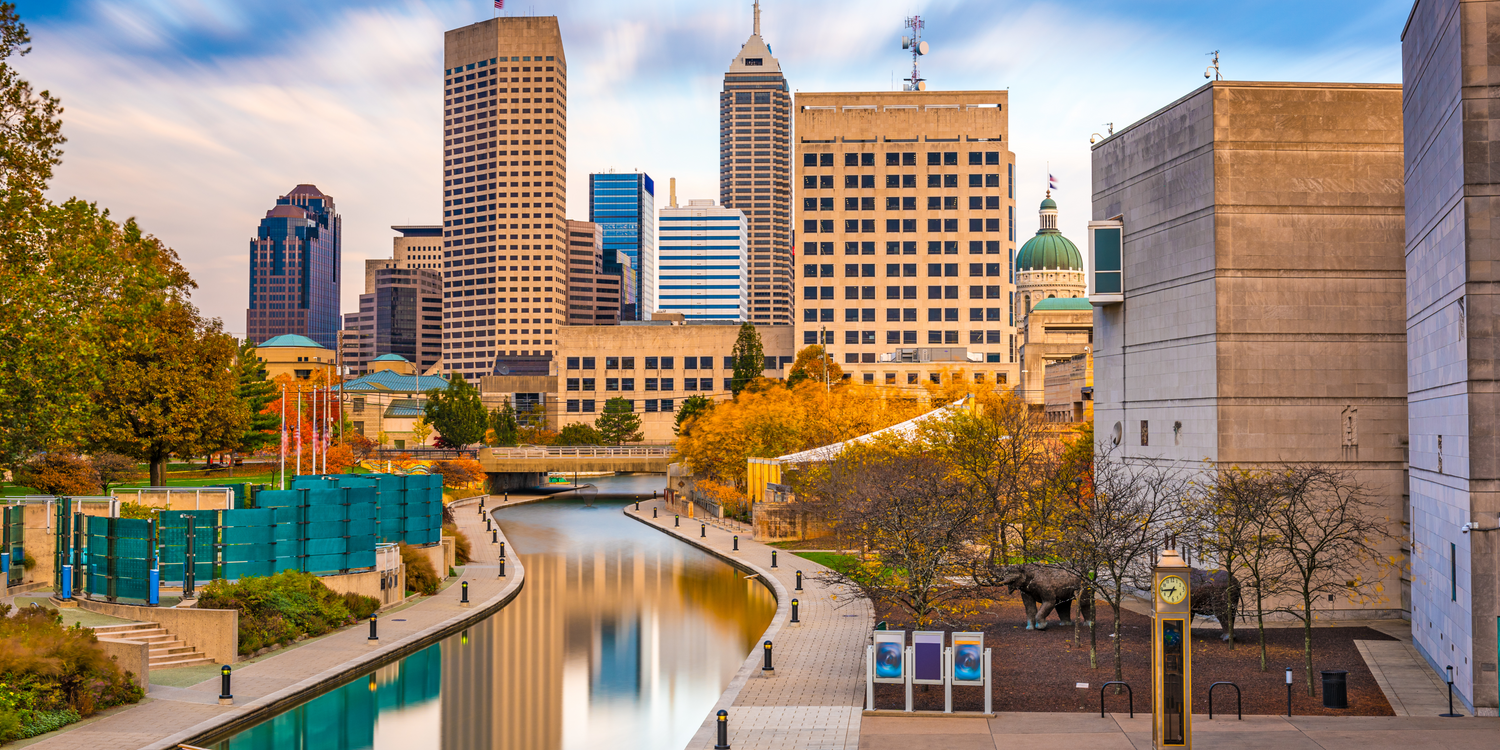
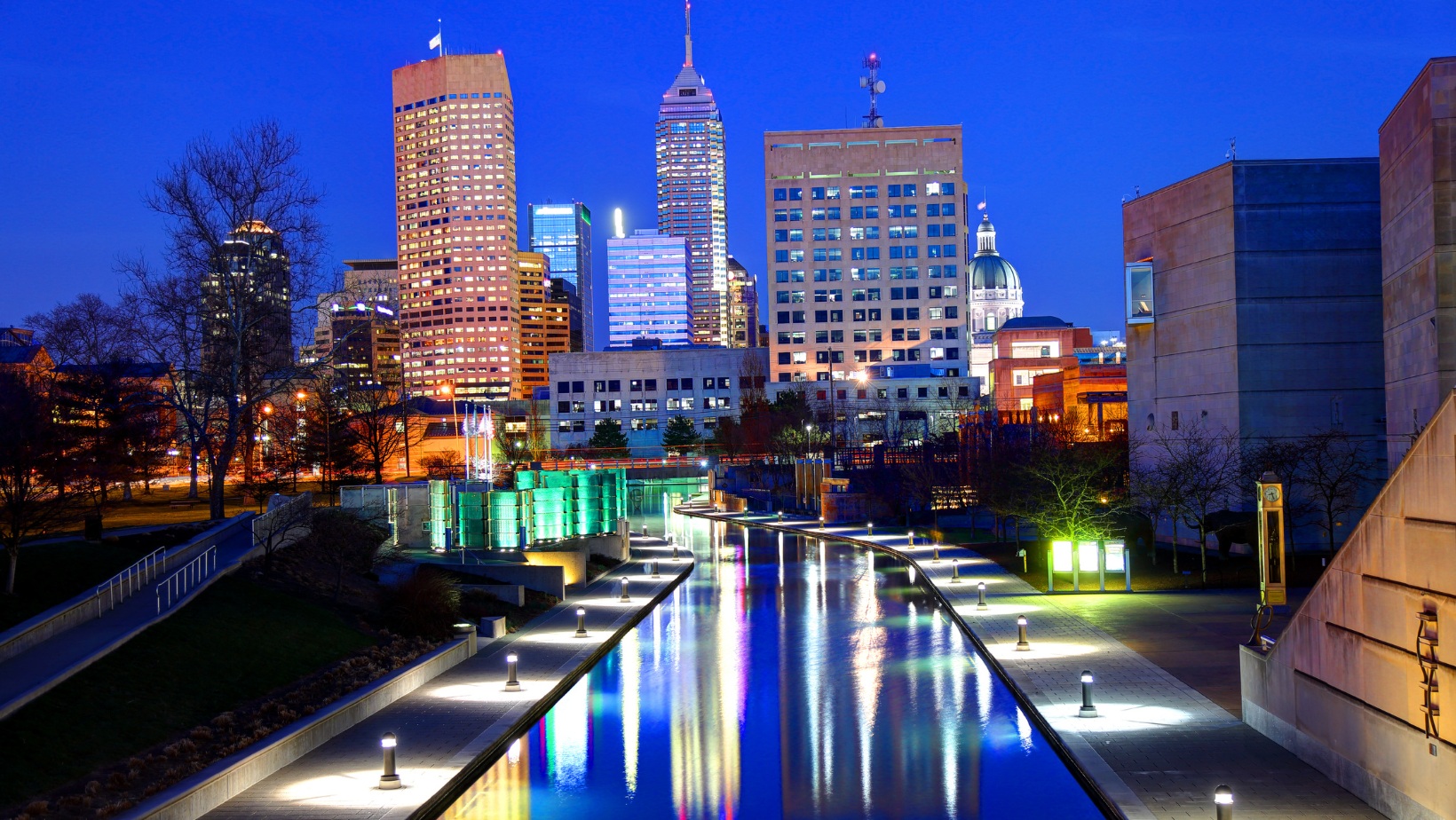
    Indy's Canal during the early morning.

    The difference between the two, today, is that Indianapolis is larger by more than 300,000. It’s the 16th largest city in the country, wedged between Charlotte (15th) and San Francisco (17th). It’s also the third largest in the region behind Chicago (‘natch) and Columbus, OH. Baltimore’s population ranks thirtieth, sandwiched by Memphis (29) and Milwaukee (31).  

    Like my former town of Los Angeles, cars assisted in building Indy. According to the Indiana’s Greenfield Daily Reporter, there were 172 manufacturers of cars or car parts in Indiana, including Stutz and Studebaker in the 1900s. Today, all of them are gone and the state is home to three Asian motor companies, including Honda, Toyota, Subaru and arguably, U.K.-based Rolls Royce, which works on U.S. defense-related production. 

    According to Autos Drive America, Asian automotive production has outproduced U.S. automakers, driving much of the Midwest economy. These manufacturers employ 17,544 Hoosiers, produce 75 percent of total U.S. auto production, and contribute $19 billion to the state’s GSP. Indeed, manufacturing dances away with the show. Kokomo, an hour north of Indy — think driving the 101 from Hollywood to the 210 and getting off in Pasadena without traffic (I know it would never happen, but it does here) — announced in September 2023 a joint venture between The Netherlands-based Stellantis and South Korean Samsung SDI will build a new EV battery plant, creating 1400 new jobs. The city’s population in 2022 was 59,604 and will continue to grow.

    After that information was released, another announcement was that six Korean restaurants will open in the area. Sokuri, serving Japanese and Korean food, opened in January and Sute, a fine-dining Korean barbecue eatery, plans to open in the coming weeks. Indy has 13 Southeast Asian places serving everything from hot pots to Asian-Latin fusion tacos. With the number of South Korean nationalists moving to Kokomo, the companies felt it would be wise to create a welcoming international atmosphere. 

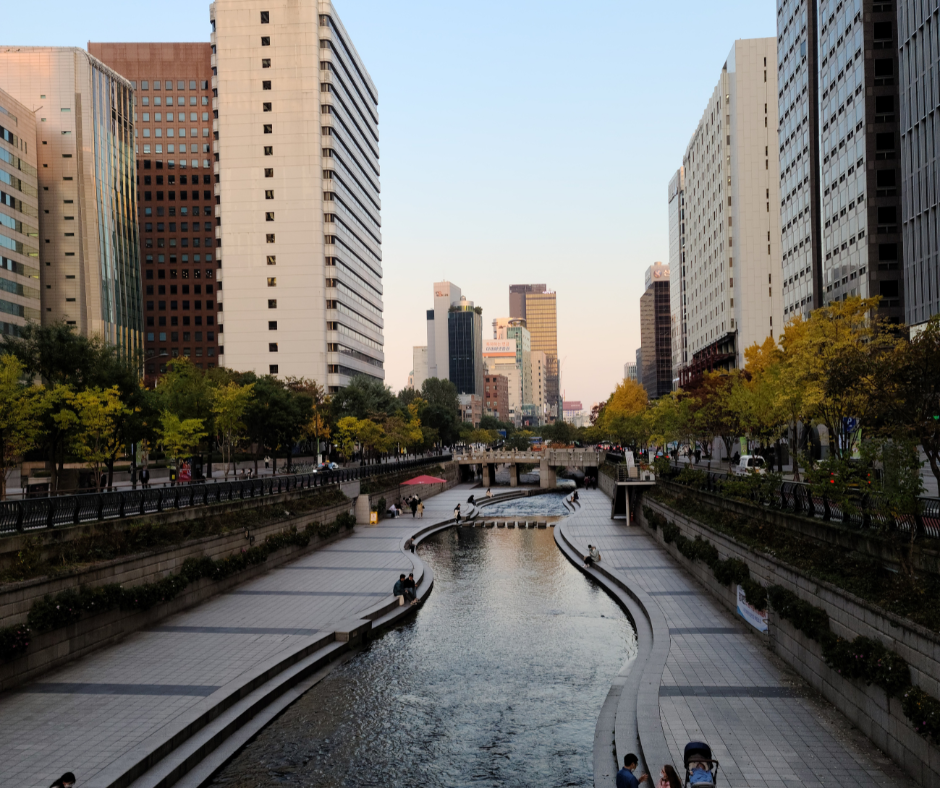
    The  11 kilometer Cheonggyecheon Stream in the heart of Seoul

    This Asian wave brings to mind the Christian Burmese who fled Myanmar, relocating for religious persecution from the Buddhist junta.  Many fled seeking religious asylum, found it in Indiana: Greenwood, a community south of Indy, and Fort Wayne, the state’s second-largest city. The Hoosier State could be called Little Burma because it has the largest population of Burmese in the United States.  If you ever dined on lahpet thoke (green tea leaf salad), a textural, umami delight, you will wonder how you ever ate an iceberg wedge with bottled Russian dressing.

    One can argue that America’s heartland belongs to other countries. I see that differently; I know fewer people fly over our amber waves of grain as we become more about growing an economy that allows everyone to live where they please. We aren’t relegated to one coast or bi-coastal anymore. That’s so 20th century. Now, we are, as the tourism bureau for Illinois says, “The middle of everything.”

    What do I think about it? I always ask, will the traditional foods of the Amish, Dutch and Germans who populated the state be mingled with kimchee and bulgogi? Think of a deep-fried Korean pork tenderloin slathered in a sauce of gochujang, a fermented red chili paste and maple syrup, served on gyeran-ppang, a bread crossed with a pancake and dinner roll or using Indiana pork to make jeyuk bokkeum, pork marinated in gochujang, with Hoosier grown potatoes such as Purple Chiefs or Yukon Golds. 

    I’ve always wanted to live in this country where the comingling of cultures is celebrated and brought together for growth and opportunity. Half a decade later, I’m seeing it come to fruition.

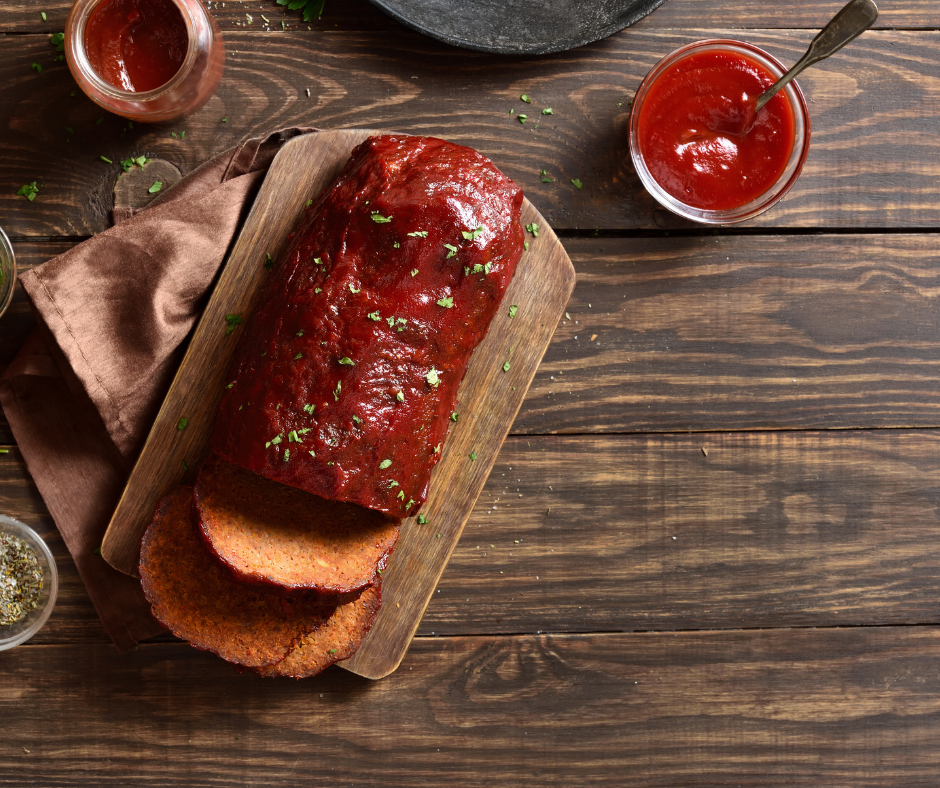
    Korean-Inspired BBQ Meatloaf

    Ingredients:

    For the Meatloaf:

    • 1 lb ground beef
    • 1/2 lb ground pork
    • 1/2 cup panko breadcrumbs
    • 1/4 cup milk
    • One egg, beaten
    • Two cloves garlic, minced
    • One tablespoon ginger, grated
    • Two tablespoons gochujang (Korean red chili paste)
    • Two tablespoons soy sauce (or tamari for gluten-free)
    • One tablespoon of sesame oil
    • 1/4 cup green onions, chopped
    • 1/4 cup carrot, finely grated
    • 1/4 cup onion, finely chopped
    • One teaspoon of sesame seeds
    • One tablespoon gochugaru (Korean red pepper flakes) – optional, for extra heat

    For the Glaze:

    • 1/4 cup ketchup
    • Two tablespoons gochujang
    • One tablespoon brown sugar
    • One teaspoon rice vinegar

    Instructions:

    Preheat your oven to 350°F (175°C). Grease a loaf pan with butter of spay oil or line it with parchment paper. The latter assists in removing the loaf from the pan.

    In a large bowl, mix the panko breadcrumbs and milk, allowing the breadcrumbs to absorb the milk. Add the ground beef, pork, egg, garlic, ginger, gochujang, soy sauce, sesame oil, green onions, grated carrot, chopped onion, sesame seeds, and gochugaru (if used). Mix until all ingredients are well integrated.

    Transfer the mixture to loaf pan, pressing it down to form an even loaf. Or, do what I do, and fashion a free form loaf so much easier.

    Mix the ketchup, gochujang, brown sugar, and rice vinegar in a small bowl. Spread half of the glaze over the meatloaf.

    Bake the meatloaf in the oven for 45-50 minutes. Fifteen minutes before it’s done, remove the meatloaf and spread the remaining glaze on top. Return it to the oven to finish cooking.

    When your remove the meatloaf from the oven, let it rest for about 10 minutes and then slice.. If you feel inspired by Korea, serve bap (rice) or the Pennsylvania Dutch, opt for buttered gluten-free egg noodles or mashed potatoes.

    Go Eat.

  • 2023 Gratitude, A Love Letter from Indy

    2023 Gratitude, A Love Letter from Indy

    Someone asked me if I liked living in Indianapolis. I won’t lie, I do. It’s an easy place to live. The cost of living is low. And, I genuinely love the Midwestern sky even when it’s a wintry gray; though, as I type this, instead of being a cold industrial hue, it’s the color of a vast, majestic ocean, even if the temperature hovers at fifty degrees. Plus, I’m a sucker for quick trip destinations and veering towards the offramp for quick drive-throughs. The small towns of Indiana offer studies of architectural nostalgia and dining, such as covered bridges, Underground Railroad sites, great barbecue ribs, and, strangely enough, pizza. 

    That same person said, “…but you don’t love it.” And I won’t lie again, I don’t. I didn’t love living in California, with complications of wealth, fame, traffic and general mass population malaise. It’s a nice place, but for me, been there, done that. The only place I’ve ever loved living in is New York City. That’s a story for a different time. 

    However, the Midwest, four years and a pandemic later, gives me a chance to take a leap of faith, but I’m doing it in gratitude as I write this by concentrating on writing, mostly around food and design. That alone makes me grateful for living here. In the marketing world, I’ve walked red carpets with clients and sailed the seven seas – actually, six – and met bold-faced names that now, when I mention their names some folks would go,” Who?” It isn’t essential in the scheme of things. Finding food, how we eat, what we eat, and don’t and just eating or even the act of not is important. 

    As an aging gay man of color, – it’s challenging to find that bit of thankfulness sometimes in Indiana or anywhere. Being half-Filipino and Caucasian, I’m mistaken for being Latino, even by Hispanics. Then there is the terrible feeling of coming out every single day. Explaining, “No, my partner is a man.” Followed by the looks. However, the other day, I had a Caucasian woman of a certain age get testy with me, saying, “You’re a man. You can’t multitask.” That cracked me up and horrified me at the same time. All of a sudden, in her comment, I was straight and, apparently, a stand-in for anything male. A little sad, but I guess, to her, I was part of the patriarch at that moment. 

    Of course, being over fifty – the horrors – it isn’t easy to make younger generations realize why it is vital that generations of us and I still stand, work, and have dreams. 

    But I’m aware there are many like me, middle-aged, still finding our way. I only have to look at actors Ke Huy Quan, Michelle Yeoh, Samuel L. Jackson, KFC’s founder Harland Sanders, and Tim and Nina Zagat for inspiration who harbored hopes in directives, as in cities and towns across the globe. That’s the good thing. We have second – and third-endless chances of living into our middle age and remaking ourselves. Isn’t that glorious? 

    That makes me appreciate the Hoosier State more. I’ve been given something new to accomplish instead of holding on. 

    Favorite Things This Year: 

    Book: Minda Honey’s debut memoir, The Heartbreak Years. Charming, funny and at times, disturbing story of a young woman finding her way in Southern California. 

    Song: MMM by Romanian musician, Minelli. Simple ditty about a relationship gone awry and moving past it but it’s the intonation and musicality of Minelli that makes it fun: You know you did me wrong, Mmmm. It hit YouTube in 2022 but it’s an earworm that keeps giving me bops. 

    Streaming: Netflix’s Glamorous with the influencer Miss Benny and Kim Cattrall. While the writing isn’t stellar, the cast is and sometimes that’s worth the price of admission. Besides, it takes place in New York City, provides fluff, good-looking folks and an amusing storyline with the lead a non-binary, non-Caucasian person.  

    Life: Nick, my partner of a decade and our two dogs, Rufus, our French bulldog puppy and Jorge/ George.

    Lastly, Indianapolis has become an unrecognized melting pot. On any given day, the streets and malls feature a large swath of various ethnicities and non-gender conforming identities. In turn, all this mixing of ingredients creates a new fusion of delectable deliciousness. 

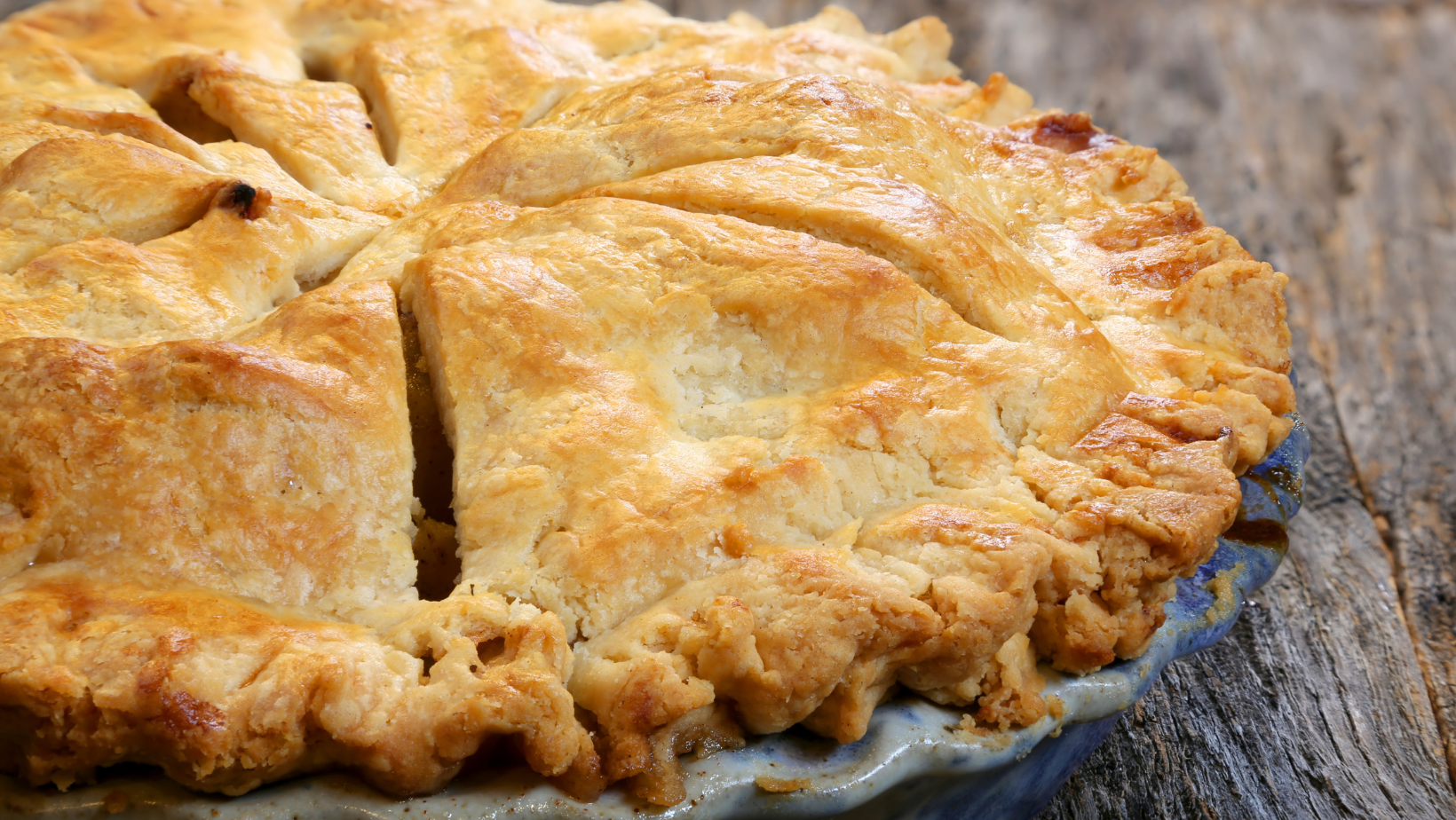
     Recipe for Gluten-Free Asian Pear and Apple Pie

    How to make the crust: 

    1 cup of GF flour blend like King Arthur’s Measure for Measure or Cup4Cup

    1/2 teaspoon, salt

    1/2 teaspoon, sugar

    Two tablespoon butter

    Two tablespoon oil

    1/2 teaspoon, vinegar

    Use four to six tablespoons of cold water so that the mix creates a ball of dough. Roll into a globe and place the dough in the center of two pieces of waxed or parchment paper or plastic wrap. Roll out so that it forms a circle.

    Peel off the top layer of waxed or parchment paper. Spray a pie pan with non-stick spray. Invert the pan upside down on top of the dough, centering it as much as possible. Place your hand under the waxed paper, flipping the whole thing over, and press gently into the pie pan.

    Filling:

    Two to three cups of ripe Asian pears, cored and sliced

    Two to three cups of apples, your choice

    3/4 cup sugar

    One tablespoon, cornstarch 

    One teaspoon, ground cinnamon

    1/8 teaspoon, ground nutmeg

    1/8 teaspoon of five-spice powder

    1/4 teaspoon, salt

    One tablespoon of lemon juice

    Directions:

    Preheat your oven to 425 degrees.  Place one pie crust on a greased 9-inch glass pie plate. Press firmly against the side and bottom.

    In a large bowl, gently mix all the filling ingredients and spoon into your crust-lined pie plate. Top with a second pie crust. Pinch the top and bottom pie crust at the edges to seal and cut 4 – 5 slits in the top crust for venting.

    Bake for 40 to 45 minutes or until the crust is golden brown. Cover your edges after about 15 minutes of baking to prevent excessive browning.

    Cool on a cooling rack for at least an hour before serving.

  • i8tonite: Filipino Food in Indy? Yes! And Noodles, too!

    i8tonite: Filipino Food in Indy? Yes! And Noodles, too!

    INDY’S STAR CHEF CARLOS SALAZAR CONTINUES TO

    COOK OUTSIDE THE MIDWEST COMFORT ZONE

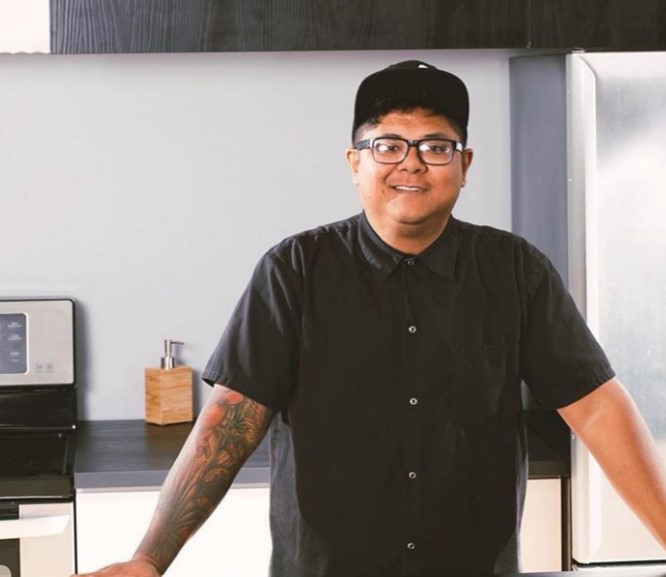
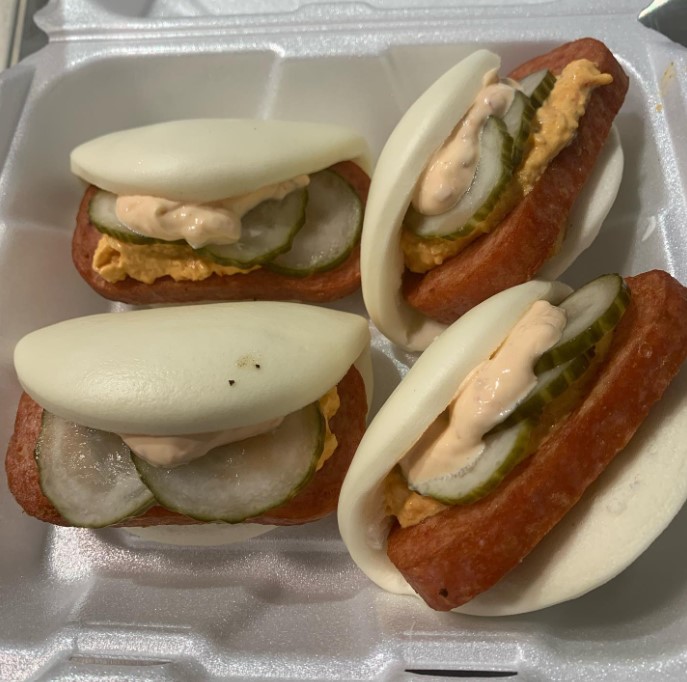
    When Chef Carlos Salazar opened in 2016 his Fletcher Place restaurant, Rook, he quickly emerged as one of Indianapolis’s cooking icons, changing the dining scene locally and regionally. He captivated area eaters with his Asian and Latin fusion approach to food, displaying a creative passion using ingredients from local farms while pushing the boundaries of flavor to Midwest palates. Items such as bulgogi lamb meatloaf bao bun with kimchee cucumbers, sweet and sour fried ribs with napa cabbage slaw or “kimcheese” jalapeno poppers regularly graced his menu. In a brilliant brunch dish, he took the stalwart favorite of biscuits and gravy using koji cream and pickled onions, creating a world where a Japanese farm existed in the gentile South. Even though the eatery became a pandemic casualty like many, Salazar continues to profoundly impact the city and the regional dining scene today.

    Born in the Philippines but raised in Indianapolis by his father, Salazar’s journey in the kitchen began when he started cooking for his neighbors as a kid. He said, “I would whip up oven-roasted salmon and pesto for my friends and me to eat.” After a brief and unhappy tenure in accounting, his then-best friend and now wife encouraged him to try something different. He enrolled in an Indy-based culinary school, the Chef’s Academy, under the tutelage of Tony Hanslit, one of the region’s premier and award-winning cooks. 

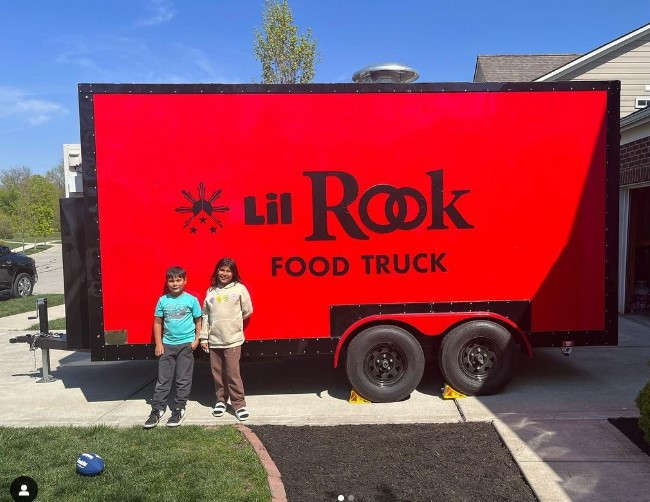
    After graduation, Salazar plied his trade at Oakley’s Bistro, the much-lauded American bistro, before opening his debut restaurant, Rook. It quickly became a celebrated spot with Salazar’s love of combining flavors. As previously noted, his first experience has become much celebrated ghost, but luckily for us, Salazar did not. He continues to produce tasty experiences in the heartland, such as his Lil Dumplings at the Garage, consulting with West Fork Distillery, and his recently launched Lil Rook food truck.

    In a city known more for sports food and venues serving hot dogs and tater-tots than far-flung Asian and Latin ingredients such as huitlacoche, bao buns, or epazote, Salazar, became known as a tastemaker of worldly treats in a landscape of fast-casual chains. The state’s ethnic demographics are changing, notably, under the influence of growing industries such as technology, medicine, and education, Salazar’s international tastes bring a bit of home away from home for the new global residents of Indy. 

     What do you like about living in the Midwest? My favorite thing about the Midwest is the simplicity and the quietness. I love cities like Chicago. It’s the best city in the country, but I can’t see myself living in a place that’s so crowded. Indianapolis is just perfect. It’s chill. 

    If you want to go crazy, you can do that in Indy or drive three hours and live that lifestyle. 

    What are your favorite foods to eat? I moved (to Indy) from the Philippines when I was eight. We were eating Spam, Vienna sausages, cheeseburgers and pizza. My dad worked 24/7. He worked the morning, afternoon, night, and graveyard shifts. We were either getting fast food or making our own. But, if I had to pick a meal that resembles a great Midwest dinner, it would be meatloaf. I love a good old meatloaf with ketchup on top.  

    Where’s your favorite place in Indianapolis to go grocery shopping? It’sn’t our favorite, but the most convenient is Kroger. It’s five minutes from my house, and they have everything we need. If I’m going for my Asian ingredients, I go to Viet Hua Food Market in Castleton.

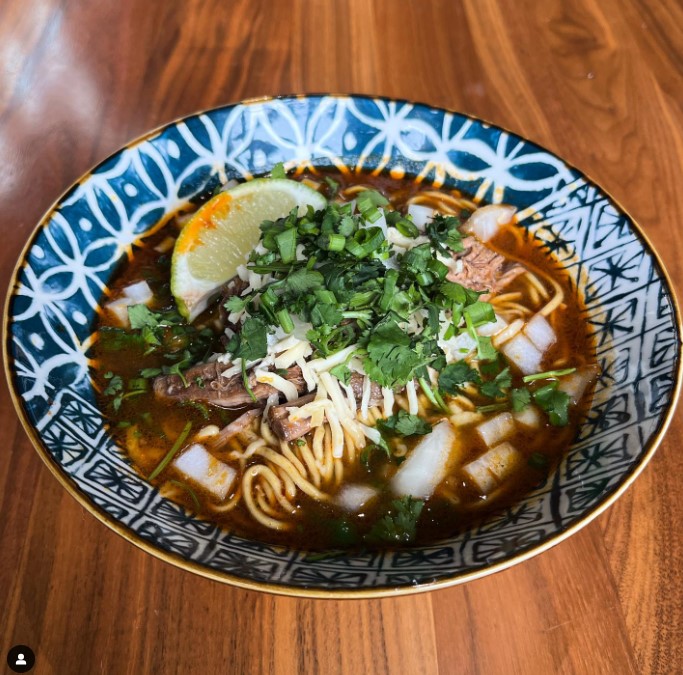
    A little Latin. A little Asian. Ramen and birria

    A little Latin. A Little Asian. Ramen and birria.

    What would you like me to ask you? What have you never been asked? No one has ever asked me that. (Laughs.) If it has to do with cooking, I would ask, “Why did I create Rook with the cuisine that it had?” That is the question. I felt that I perfected French cuisine when cooking for Oakley’s Bistro, probably about six years ago. I wanted to be challenged. I wanted to do something that I had never done. I didn’t know **** about the Philippines or the food. I knew about being around my family in Fishers. 

    When I got the opportunity to open Rook, I wanted to do Asian cuisine, heavy on the Filipino. I wanted one month to serve Chinese and the next Japanese, and then Vietnamese the next. I wanted to cook something different and to challenge myself. All I knew was French and cooking is learning. You need to learn every day. You have to be better than you were the day before. I didn’t want to just create a menu and make it. 

    I wanted to research and test something a couple of times. Fail. Figure out what I need to do to make it better. 

    What did you want to serve at Rook that you didn’t serve? People eat that food in Asia–China, Japan, and the Philippines – repeatedly. I wanted to introduce that experience to Indiana, that cuisine and culture. At Rook, we made our own soy sauce and fermented vegetables. We tried to do everything from scratch. I think that was the biggest thing. We wanted to learn. 

    I told my guys I hired I want you to be better tomorrow than you are today. If you could make 50 dumplings today, I want you to come back tomorrow and make 51. 

    What brought you here to the United States? My Dad. He left the Philippines when I was just born. His life could have been better there. He was always getting into trouble. His oldest brother, who was caring for us in the Philippines, was very wealthy. He told my dad, “Hey, you have kids. You need to make a life for them.” My dad left and moved to the U.S. in the mid-eighties. When I turned eight, my dad did all the paperwork to bring my sisters and me to the U.S. for a better life. When my dad first moved to Indiana, he worked various jobs, including the graveyard shift, making prosthetic legs. At Steak & Shake in Carmel. Currently, he works at a nursing home. 

    Where is your mom? She followed us five years later, in 1997. 

    Did you find it difficult to become a chef in the Midwest? No, I don’t think so. I guess I got lucky, too. The food (in Indiana) is uncomplicated, so it’s easy to stick out if you do something different. About fifteen years ago, there were only franchises and steakhouses. It made it a little easier for me to become a chef with something different. 

    Tell me about your food truck, Little Rook. I’m missing Rook. I don’t know if I am ready to open Rook 2.0, but I keep thinking about steam buns (Laughs). That’s what’s in my head right now. Those gears are turning, but I wanted to start with a food truck. 

    You grew up eating burgers and hot dogs like I did, but who did most of the cooking? My Dad. He was the inspiration without knowing it. My dad cooked at home. I sat there and watched. And then, we would do sleepovers with friends, but we didn’t eat doughnuts or pizza. I cooked them food like roasted salmon with asparagus and a little bit of pesto sauce. It was something like that instead of ordering food. It was me cooking. I didn’t even think of becoming a chef. Never even thought of it. 

    You made salmon for your friends? I started cooking for my friends in my freshman high school year. I would make roast salmon with the skin, make a little pesto, you know—things like that. Make pad Thai. I never said I was going to become a chef because I love cooking. I felt like making food was me and this is who I am. I never thought of being a chef until my wife–my best friend ‌at that time – told me to go to culinary school. 

    You can stay up to date on Chef Carlos Salazar with his food truck and noodle shop via social media. All photos courtesy of Chef Carlos Salazar and his Instagram accounts.

    ## i8tonite ## 

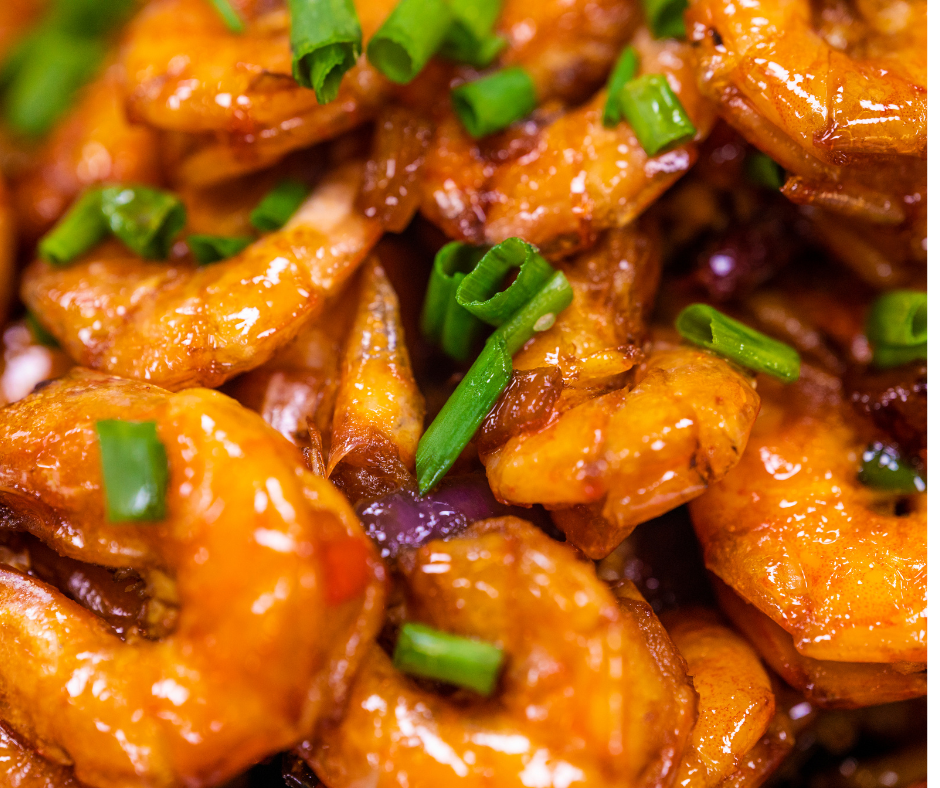
    Chef Carlos Salazar’s Assam (Tamarind) Peel & Eat Shrimp 

    What You Will Need: 

    • One pound large shrimp, preferably with shells and heads on
    • 1/4 cup tamarind paste or pulp (available at Asian markets) 
    • Two tablespoons brown sugar
    • Two cloves of garlic, finely chopped
    • 1-inch piece of fresh ginger, grated
    • 1 – 2 jalapenos, thinly sliced (adjust to your spice preference)
    • Salt to taste
    • Fresh cilantro leaves for garnish
    • Lime wedges for serving

    How to Make: 

    If using frozen shrimp, thaw them completely in the refrigerator. Then, rinse the shrimp under cold water and pat them dry with paper towels.

    To make the Assam Sauce:

    Combine the tamarind paste or pulp with brown sugar in a large bowl. If using tamarind pulp, soak it in warm water for a few minutes to soften it, then strain out the seeds and fibers before mixing with sugar. Add minced garlic, grated ginger, and sliced jalapenos to the tamarind mixture. Always adjust the chilies to your desired level of heat. Stir well to combine, and taste to adjust sweetness and spiciness. Add a pinch of salt if needed.

    Marinate the Shrimp:

    Into the large bowl, place the cleaned and dried shrimp. Toss to coat them evenly. Allow the shrimp to marinate for 15-30 minutes at room temperature.

    Cook the Shrimp:

    Heat a skillet or pan over medium-high heat. Add the marinated shrimp along with the tamarind sauce to the hot pan. Sauté the shrimp on each side for 2-3 minutes until they turn pink and opaque. The sauce will thicken and coat the shrimp as they cook. Transfer the Tamarind Peel and Eat shrimp to a serving platter, pouring any remaining sauce over them. Garnish with fresh coriander or parsley – some folks don’t like coriander – and serve with lime wedges, adding a bright citrus edge. 

    We may make a commission on items sold through our website.

  • I8tonite: Media Maven Jennifer Magley & Her Grandmother’s Delicious Rolls

    I8tonite: Media Maven Jennifer Magley & Her Grandmother’s Delicious Rolls

    When I first met Jennifer Magley at an event, she offered huge smiles, genuine warmth, displayed a brilliant fashion sense all while listening to an old fart (me) prattle on about nonsense. That very morning, her company downsized leaving her without work. To her credit, she showed grit and resilience by coming out to make new acquaintances instead of staying cooped up, feeling sorry for herself, which is what I would have done. 

    Born in Kansas, Magley attended the University of Florida and was a scholarship athlete at IMG Academy under the direct tutelage of renowned tennis coach Nick Bollettieri. While in college, Magley became the number one ranked NCAA Division, Singles player in the country, a four-time All-American, and the Arthur Ashe Jr. Sports Scholar recipient. As a member of TEAM USA, Magley represented the United States in over 14 countries. After graduation, she competed professionally on the WTA Tour before being named Associate Head Coach at Wichita State University. With many accolades and recognition, she became the nation’s youngest NCAA Division head coach at Florida Gulf Coast University. 

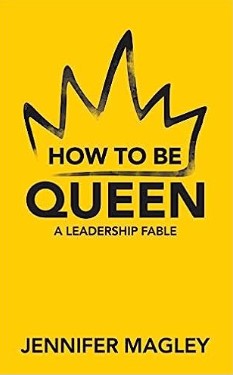
    She has written two books, with her debut novel Division I, released in 2014, spotlighting issues that affect female collegiate athletes and, in 2021, How to Be Queen-A Leadership Fable, about the power of imperfect leadership. 

    Today, with national media coverage, from USA Today, CNN, ESPN, Foundr Magazine, and US News & World Report, she is a successful Keynote Speaker and High-Performance Coach, having spent over a decade as a recruiter and helping successful people become their best. Additionally, she started Magley Mass Media, where she promotes women, including her mother, Evelyn Magley, the first Black woman to head a men’s professional basketball league. Her father, a former pro player with the Cleveland Cavaliers, Dave Magley, was the former commissioner of the National Basketball League of Canada and now is the president and chief operating officer for the North American Basketball League. 

    Between her sold-out luncheons, writing, speaking, and being just a media superstar, Magley graced us with answers to i8tonite questions and a time-honored yeast rolls recipe.

    Why did you start Magley Mass Media? 

    In March, my full-time role as a technical recruiter laid me off and launched Magley Mass Media. I just looked at my phone and it says I started doing my thing on April 18th full time.

    What gives you the greatest joy in working in this space? 

    For most people, the reality is that no one knows your name; I help change that through 90-day Media Mastermind Groups. My greatest joy is seeing the folks I partner with land more media, connections, and onstage opportunities. People need to know you exist and that you have expertise.

    What is your favorite thing to do around your company? 

    Finding new ways to surprise and promote the people I work with. I deeply believe that over-performing is such a gift. It’s a joy to be able to see my clients light up.

    Could you tell us about your favorite inspirations? 

    There have been a lot of people who have sacrificed in my bloodline for me to be where I am today. I have descended from slaves and slave owners, immigrants, and orphans. That’s positive motivation. On the flip side, there are a handful of men that have taunted me with their money and arrogance. Hard to say which inspires me more.

    What are your favorite things about the Midwest? 

    The people. Indiana has been rated by the IEDC as one of the best places in the country to begin a business. That proves to be true. I was born in Kansas, so that’s why I probably say the people. Secondly, cost of living.

    What is your favorite regional city and why? 

    This is unexpected but Cincinnati, that counts right? They have done so much to develop their downtown, especially Over the Rhine, with restaurants and shops. They have a bit more elevation than Indianapolis and it really is such a lovely place, and the food is fantastic.

    Where is your favorite place to eat and why? 

    VIDA. (It’s a) Cunningham property, however it is a chef’s restaurant, so it is not a chain. This is where we go for special occasions because of their four-course dinner. Chef’s kiss. I’ve had literally everything on the menu and their consistency is unmatched for fine dining in Indy.

    What do you have in the fridge currently?

    Oatmilk. Organic Eggs. Champagne. Organic Greens. I want to be bourgeois.

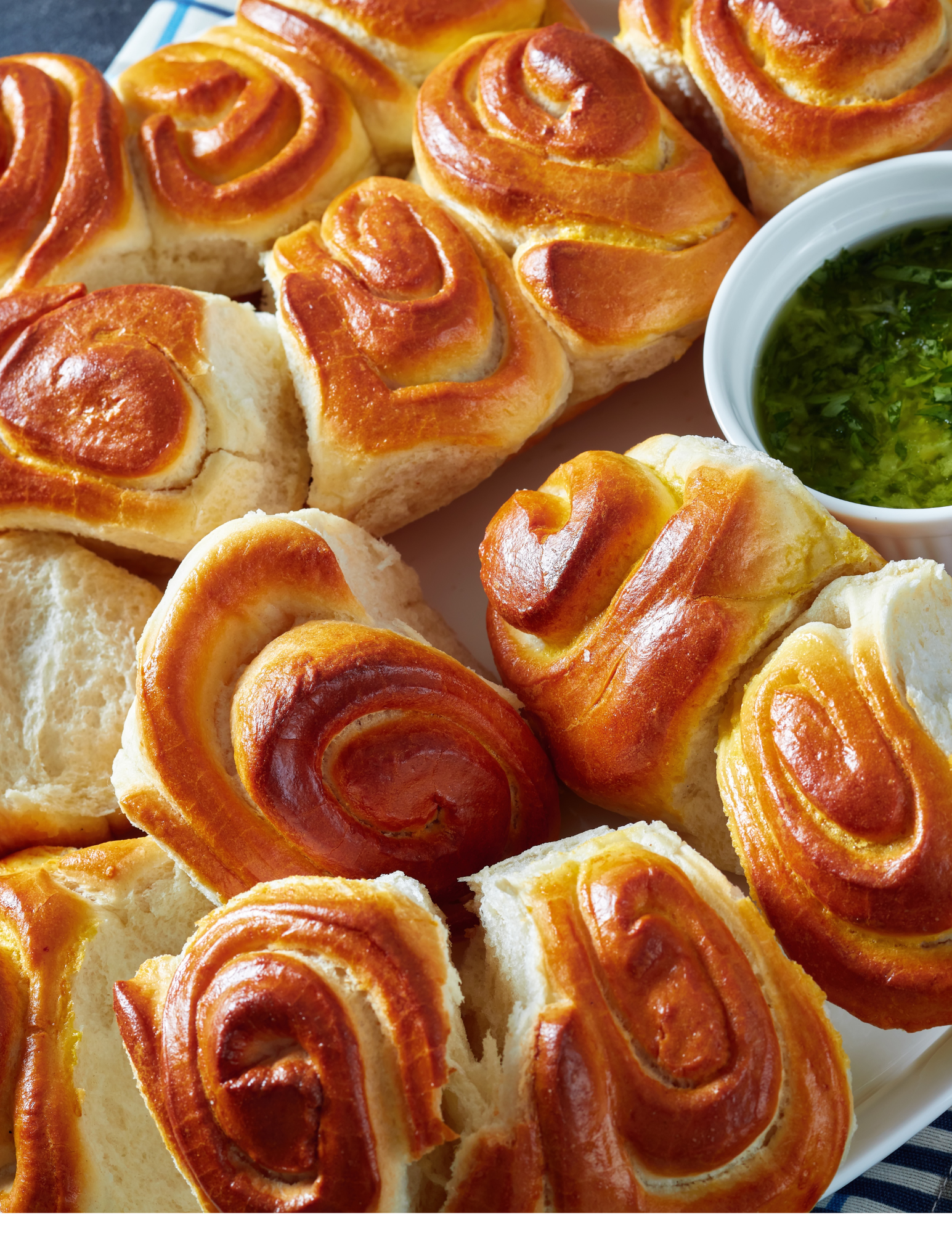
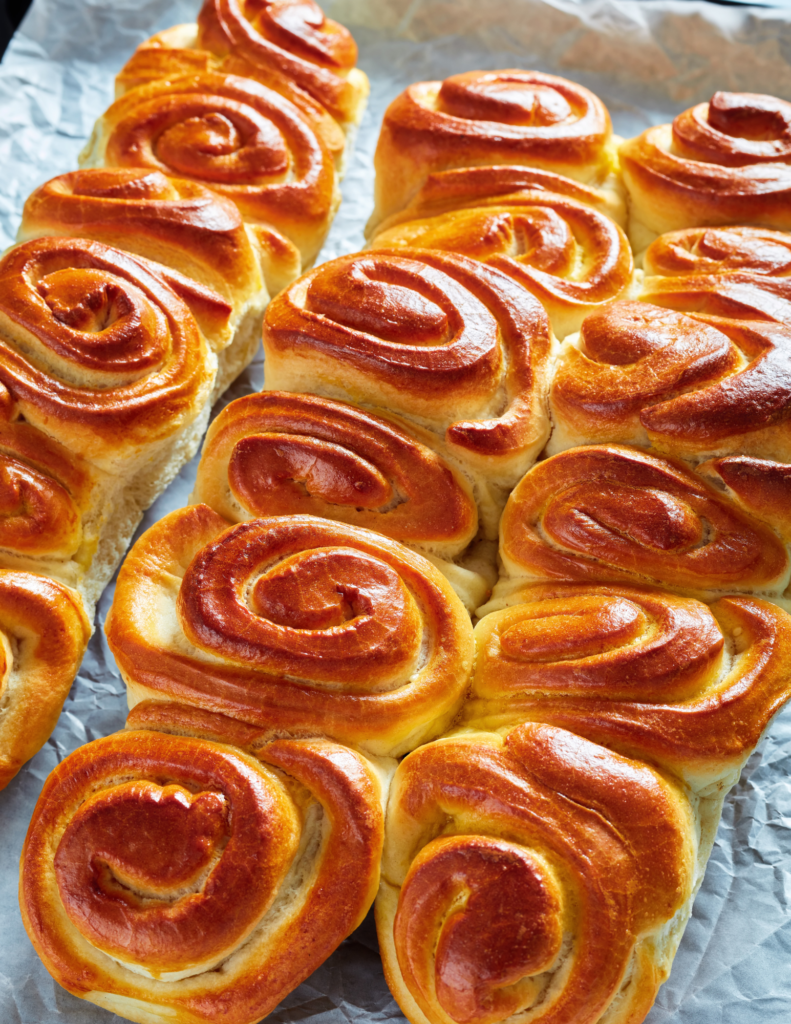
    Jennifer Magley’s Grandma’s Yeast Rolls 

    Ingredients

    4 – 5 cups all-purpose flour

    2 cups hot water

    ⅔ cup sugar

    ½ cup of liquid Crisco or any liquid cooking oil

    3 eggs

    2 packages yeast, Rapid rise or day (3 if you are in a hurry)

    Cupcake pans, greased and floured

    To Make: 

    Pre-heat oven to 375° to 400°depending upon oven. Mix hot water, oil, sugar and eggs. Stir until sugar is dissolved. If you use rapid rise yeast, sprinkle in liquid, then let it dissolve waiting a few minutes. Stir. Add about two cups of flour and stir adding more flour on the right consistency for kneading. You may put a kneading board on the counter-top. 

    Knead very little, just enough to roll out and cut. If you don’t have a biscuit cutter, use a cup to cut out two circles and a half. Fold the circles in half and add the half-circle into the greased and floured cupcake pans. Pinch the edges together. Brush with melted butter and let rise until they look right for baking. (Forty-five minutes to an hour). 

    “This makes for the rolls to be very lovely in shape and fashioned to pull apart.”.

    Jennifer Magley

    Bake for 10 minutes or until brown, brush with butter again when removed from oven. 

    Cinnamon Rolls: Simply roll out as you do for rolls. Brush with butter. 

    Mix brown sugar, white sugar, cinnamon, raisins and nuts. Roll up the dough into a log. Let rise.

    I8tonite

    We may make a small commission on the links.

  • I8tonite Learns from IG Entrepreneur Abby Breece

    I8tonite Learns from IG Entrepreneur Abby Breece

    Thrifting, Parenthood and the Joys of Living in Indy; Plus, a Spicy & Sweet Hand Tart Recipe

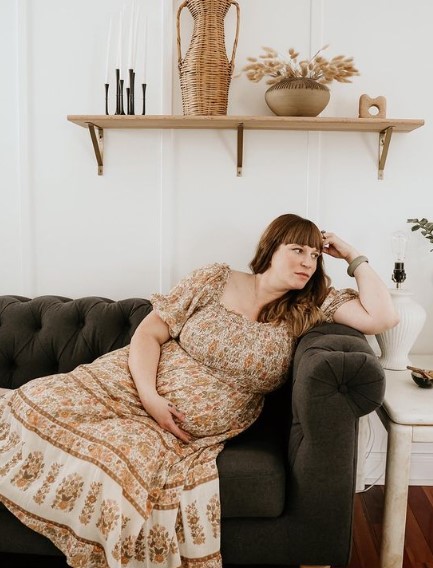
    Breece, at home, with a few of her finds.

    I first met Abby Breece, 36, and her husband, Eric, as neighbors when Nick and I moved to Indianapolis. The mid-thirties duo allowed us to glom onto them since this was my first time living anywhere in the Midwest, and they knew a Midwestern newbie when they saw one. Together, we wandered around Massachusetts Avenue in Indy, bar-hopping before their baby was born. They met our respective families, we met theirs, and we joined their “Covid-19 circle” during the early days of the pandemic. We even went to Chicago together, eating in some stellar places while touring the city. 

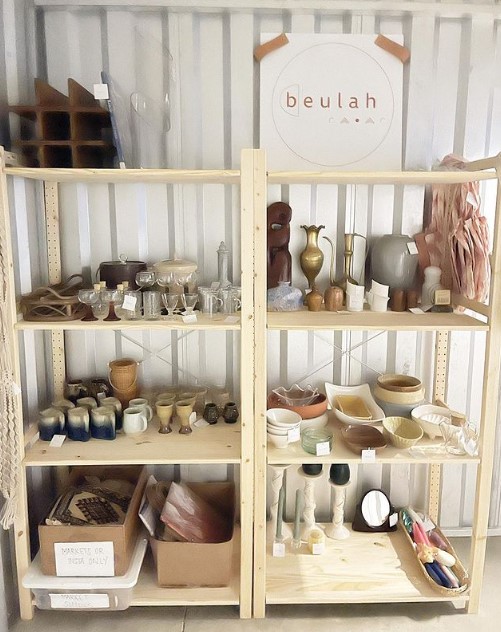
    A native Hoosier, Abby, maintains a thriving practice as a licensed marriage and family therapist. On the side, she created an online vintage Instagram shop called Beulah, named after one of Eric neighbor’s growing up in Traverse City. As she says on her Instagram store, “(Eric) remembers Beulah’s home filled with rattan, wicker and other furniture from the sixties and seventies. After we got married nine years ago, he saw me follow suit, bringing home thrifted furniture from the same era and affectionately (or not, I’m not really sure referring to (my purchases) as “more Beulah.”  

    An empathic healer during the day, and in her free time, using Beulah Vintage as a creative outlet. Her company of four years sells on a single social platform, and the business thrives. Active 2: She sourced and curated items for her store over the past year, opened a small kiosk in the Lux & Ivy Shop located in the hipster area of Broad Ripple, appeared on a TV segment in the area, and occasionally sells in local outdoor markets.

    Items at her mini Beulah in Broad Ripple at Lux & Ivy.

    Somewhere through all of this, she gives back to the community by volunteering for the Friends of Martin Luther King Jr. Park, a neighborhood volunteer initiative that helps to beautify the city’s neglected memorial green space. 

    And then she bakes. Delicious cookies. Holiday pavlova. Banana bread. 

    We inserted ourselves into Abby’s busy life to learn more about this new mom, her life and where she finds inspiration with i8tonight Questions.

    I8tonite: Tell us about yourself. Where were you born, and what does a typical day look like? I was born in Indianapolis. My mom was an elementary education teacher, and my dad was in shipping logistics.

    A typical day includes recent motherhood stuff. That means a lot of feedings every few hours and dog walking. Still, when I’m not doing that, I’m sourcing online or in person for stuff for Beulah or doing inventory.

    I’m also a licensed marriage and family therapist in private practice. And I’ve done that since officially 2016.

     Why did you start Beulah?

    I didn’t start it intentionally, but it came out of the joy of liking to source and thrift vintage and, honestly, inexpensive items while I was in college and as I grew into my career. And so that became a hobby for me, and I wanted to share it with others.

    Instagram was a big platform that I could use. I started doing it on there, and it’s taken a lot of different shapes, sizes and evolutions over the years, but that’s where it began. I’ve wanted to keep it unencumbered without a third party. That’s been how I’ve done it, but I don’t say we’ll always be like that. It’s just like that right now.

    What gives you the greatest joy with Beulah?

    It is the sourcing. Going out and thrifting without an agenda, especially when traveling. Not looking for something specific, but finding that one-of-a-kind thing. It feels freeing. 

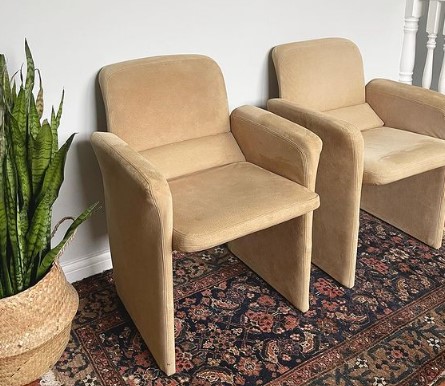
    Sculptural Dining Chairs for sale on Beulah.

    What is your favorite period in interior design? 

    Eighties post-modern. I really like things like Formica or lacquered finishes when used tastefully. Things like faux marble, for instance. I have a console table right now that’s faux marble. It’s Formica, but there’s something about it – that I don’t know – I like the texture. Sometimes the versatility that certain textures are easier to care for, clean and maintain than marble. Sometimes I like the utilitarian surfaces of 80s post-modernism. They’re easier to keep clean, even fake brass. If not done right, they can look really gaudy, but I think tastefully done, it can be like a chef’s kiss.

    Tell us about your favorite inspirations and who inspires you. 

    When I talked about different textures, it’s a bit of following the muse and not trying to be too specific. I try to be very open-minded to find my inspiration. I won’t find something if I’m looking too hard for something. I could miss out on something else that could give me inspiration. It is about timing and not having the blinders on too much. So usually, that takes the form of different textures that I like. 

     I’m really into tessellated stone, suede, or leather, which could be a specific color I’m feeling right now. I honor that, follow those whims, and trust that people will follow. 

    For people who inspire me, my friend Gretchen with Mama Ochre. Her compass is very much like her heart. She trusts her own taste and style and, always shows up for her work and won’t do it if it’s not genuine or authentic to her. And so I’ve always really liked that about her and her business; it doesn’t feel fabricated or fast fashion. It’s sincere and vulnerable. You can always see her when you see her work, so I’ve wanted to emulate something similar with Beulah and myself.

    What are your favorite things about living In Indy?

    I was thinking about this yesterday. I love the urban culture in Indy. It’s very walkable and still a small town, meaning you can access most things without having to be on a waitlist for months for new restaurants or stuff like that. Many people are really approachable and friendly and want to be engaged. It’s that Midwest nice. And for me, there’s definitely a familiarity since this has been the one place I have lived and done life, so there’s a comfort here.

    What is your favorite city and why?

    I really like Golden, Colorado. The backdrop is beautiful with mountains. It’s a quaint small town with delicious restaurants and bars but lovely scenery with rivers. It’s outside Denver, so it’s less noisy but still within the metropolis. Some good food and shops.

    You and your husband are new parents. What is your favorite place to walk or stroll in Indiana with the baby?

    The Monon Trail has always been my favorite. There are many restaurants and shops accessible from it, and you feel unencumbered by traffic. That’s the main reason I like it because you don’t have to stop at every street for a traffic light; there might be a crosswalk or two. And it’s surrounded by nature and a lot of trees. It feels like you’re in your own little world. When Eric goes to the office, I take Huck and Rooney in the stroller for a walk. I stop at Breadworks or someplace place afterward for iced tea. Or a coffee shop I last visited a while ago and get something on the way home. It makes me happy and gets me out of the house. A new and little tradition.

    What do you have in the fridge currently?

    I have a giant pitcher of iced coffee. A lot of things to make meal prep easier. Our grab-and-go stash of hard-boiled eggs and pickled bologna. (I want to be clear. That is not for me because it’s disgusting. My mid-northern Michigan husband loves the stuff.) And cookie dough. Always cookie dough.

    Adapted by Abby Breece

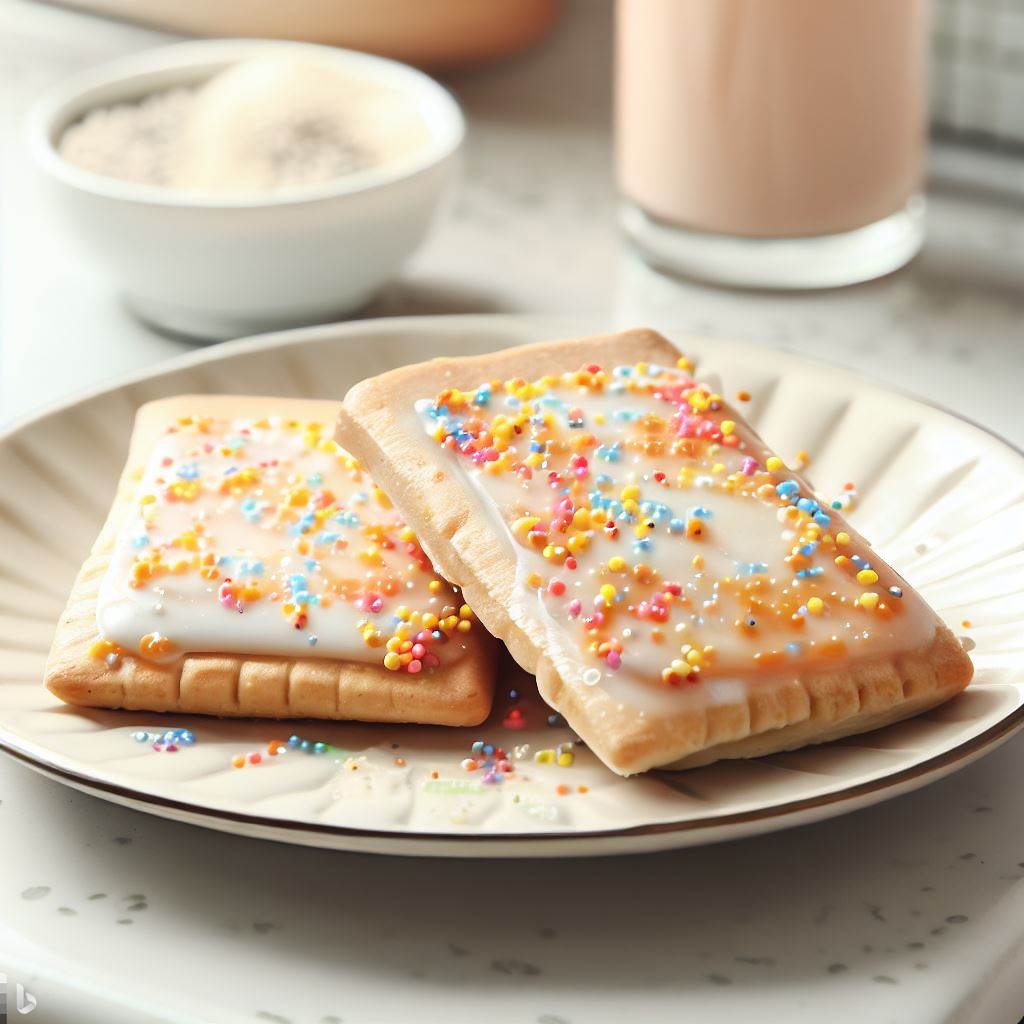
    Spicy Apricot Pop Tarts.

    How to Make this Puppy! 

    1 stick butter, softened

    1/4 cup sugar

    1/4 cup almond paste

    2 large eggs

    1 tsp lemon juice

    1/4 tsp almond extract

    1/2 tsp vanilla extract

    1/4 tsp salt

    1/2 cups flour

    1 lb. pre-made pie dough

    1/4 cup apricot jam

    1 1/2 cup powdered sugar

    TOPPING

    A dash of red pepper flakes

    About 2 tbsps. milk

    Sprinkles

    Preheat oven to 400, then line a baking sheet with parchment. Put it to the side until ready to use. 

    In a large bowl or bowl of a stand mixer, to make part of the filling, beat together the butter, sugar, and almond paste. add 1 egg (reserving the other for an egg wash), followed by the lemon juice and extracts. Once that has been mixed, add to it the salt, flour, and red pepper flakes until just combined. Place to the side. 

    Roll out your dough to a pie crust thickness. Using a sharp paring knife and ruler, cut out eight 2-inch by 3-inch squares of pie dough. Place onto the baking sheet about an inch and a half apart.  In the center, dollop a teaspoon of apricot jam and spread. Do the same with the almond batter. 

    Roll up the remaining pie dough, and cut out eight more rectangles that are a 1/4-inch longer on all sides, so that they fit over the filling. Place that layer of pie dough over the filling and crimp the edges with a fork to seal the edges. If not done, well filling will bubble out. With the remaining egg and a thimble of water to brush the edges of the tarts. This will provide a nice golden crust. Gently poke the tops with a fork twice and bake for 10-15 minutes until ever so browned. While it cools, in another bowl, stir together the powdered sugar and milk to create the glaze. If it is too thick, add more milk. Two thin? Add sugar, to achieve your desired consistency. Spread over the top and add a sprinkling of sprinkles! 

    I8tonite. 

    Disclosure: We may make a commission on links. We need to make money in some way.