

Author: Brian Garrido

  • i8tonite: with South Beach’s Meat Market Chef Sean Brasel and his Asian BBQ Lamb Ribs

    i8tonite: with South Beach’s Meat Market Chef Sean Brasel and his Asian BBQ Lamb Ribs

    i8tonite: with Meat Market's Chef Sean Brasel and his Asian BBQ Lamb RibsThere is something about South Beach Meat Market’s Chef Sean Brasel which reminds one of a Western movie actor.  His laconic descriptions about living in Colorado, tinged with the Midwest accent, bring to mind Clint Eastwood or John Wayne, a man of few words who allows his actions to speak, rather than blathering like a salesman (or a publicist). It’s the economy in his tone that displays his attention to detail. As a restaurant guest, you can envision him at his stainless steel eight-burner stove, seasoning his steaks according to the cut, a cowboy lassoing a cow before heading to the bull.

    i8tonite: with Meat Market's Chef Sean Brasel and his Asian BBQ Lamb Ribs
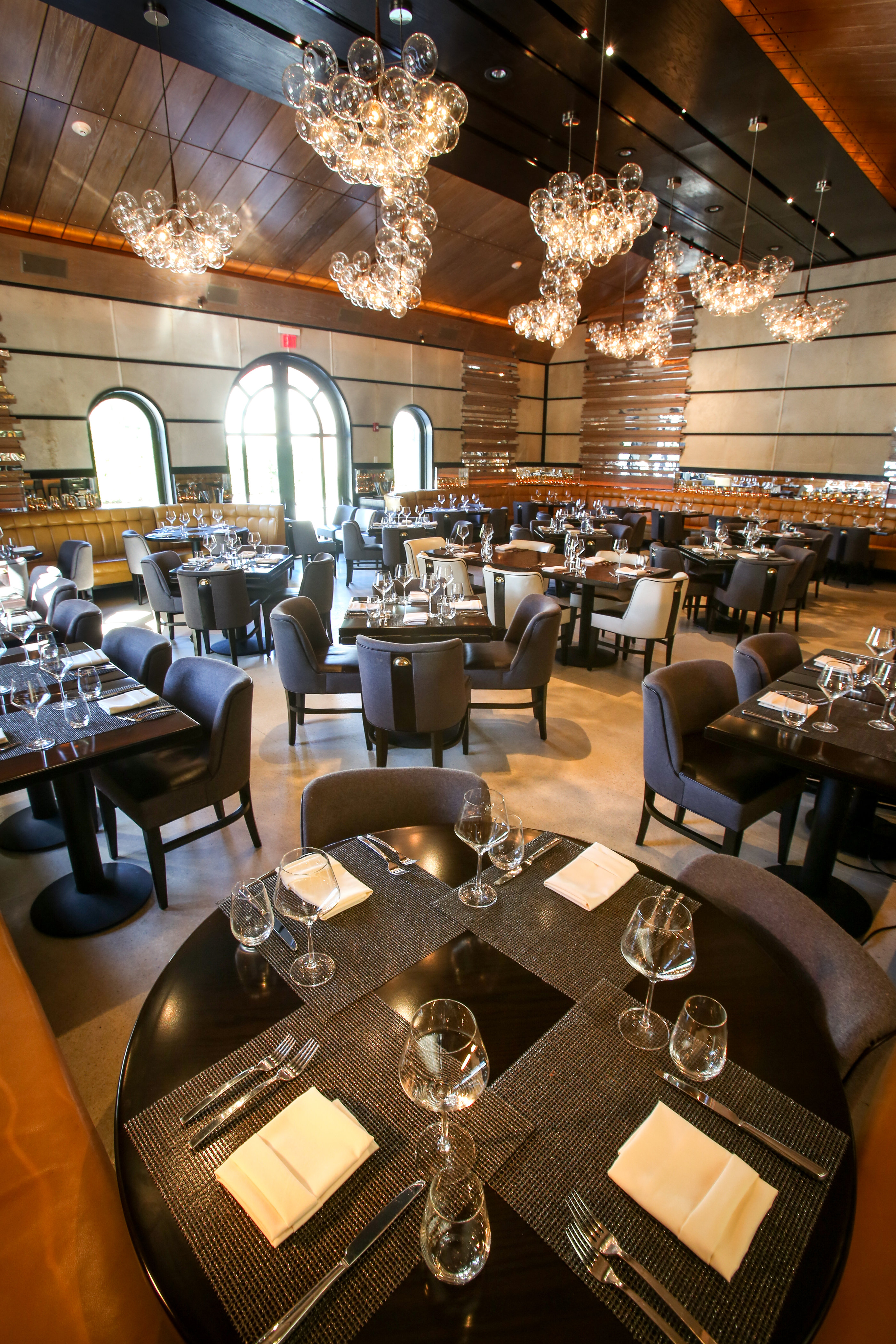
    Miami Beach Dining Room, Meat Market

    Sixteen years ago – on April 1, to be exact – Brasel moved to South Beach from Colorado, where his parents still live. He and his business partner, David Tornek, created Touch, a high-end concept restaurant complete with entertainment and glorious food. Brasel says, “It was perfect for the time. Food meeting nightclub. We – my business partner and I — needed to re-focus, and the question became ‘what do I want to eat?’” Hence, he created the aptly named Meat Market with three locations: South Beach, Puerto Rico, and Palm Beach. (Although, Brasel mentions another is on the way to Tampa.)

    i8tonite: with Meat Market's Chef Sean Brasel and his Asian BBQ Lamb Ribs
    Mixed Grill featuring Steamed Crab Legs, Prime Deckel, and Petit Filet

    It’s a luxury steakhouse, but the appeal lies not in just serving steak but the three-tiered menu as well as a special daily cut. There is a Meat Market’s Signature: New York, Rib Eye, Filet, and the sirloin which Brasel calls pichana, referring to the cut and its Brazilian name. (It differs from an American sirloin because the fat cap is left on, giving the beef more flavor.  Smart.) His House Creations allows Chef Brasel to produce inventive marinades and sauces with the meat, including a steak sampler. (When did you go to a steakhouse and get a sampler plate with wagyu, a filet, and a NY strip? Seriously? When?) The last of the trio is the Reserved Cuts, which feature big and rich portions of Niman Ranch Prime Short Rib or thirty ounces of an Australian Tomahawk Ribeye. There are other goodies on the menu, but Brasel built a steak house, so you eat steak. Clearly, you aren’t a vegan.

     Chef Questionnaire, with a nod to Proust:  

    i8tonite: with Meat Market's Chef Sean Brasel and his Asian BBQ Lamb Ribs
    Meat Market. photo credit Ben Rusnak

    How long have you been cooking?  I have been cooking since I was 15, so a long time!

    What is your favorite food to cook? That all depends on the location of what and where I am cooking. If I am at work, I enjoy working on future dishes and playing with different concepts and ingredients.

    If I’m spending a beautiful Sunday afternoon with friends cooking on a grill, then I will probably start planning five days before, marinating meats, sous vide, etc.

    I also crave those smoky flavors that only a grill can give. I even go so far in my grill dreaming to pair different items with the type of grill I get to use; whether it’s a charcoal, wood or even a gas grill. Each one has its own characteristics that lend itself to specific flavor profiles.

    And lastly if I am at home, I like making pasta. I don’t get much of an opportunity to cook it at the restaurant, so I take advantage on those rare days off. I also like to eat vegetarian-ish at home – making gnocchi the classic way right on the counter with no electric equipment, like they did in Italy years ago. For that same reason, I don’t own an electric mixer.

    What do you always have in your fridge at home? Almond Milk, cold brew, fresh blueberries, Sriracha, and of course, lots of red wine.

     i8tonite: with Meat Market's Chef Sean Brasel and his Asian BBQ Lamb Ribs
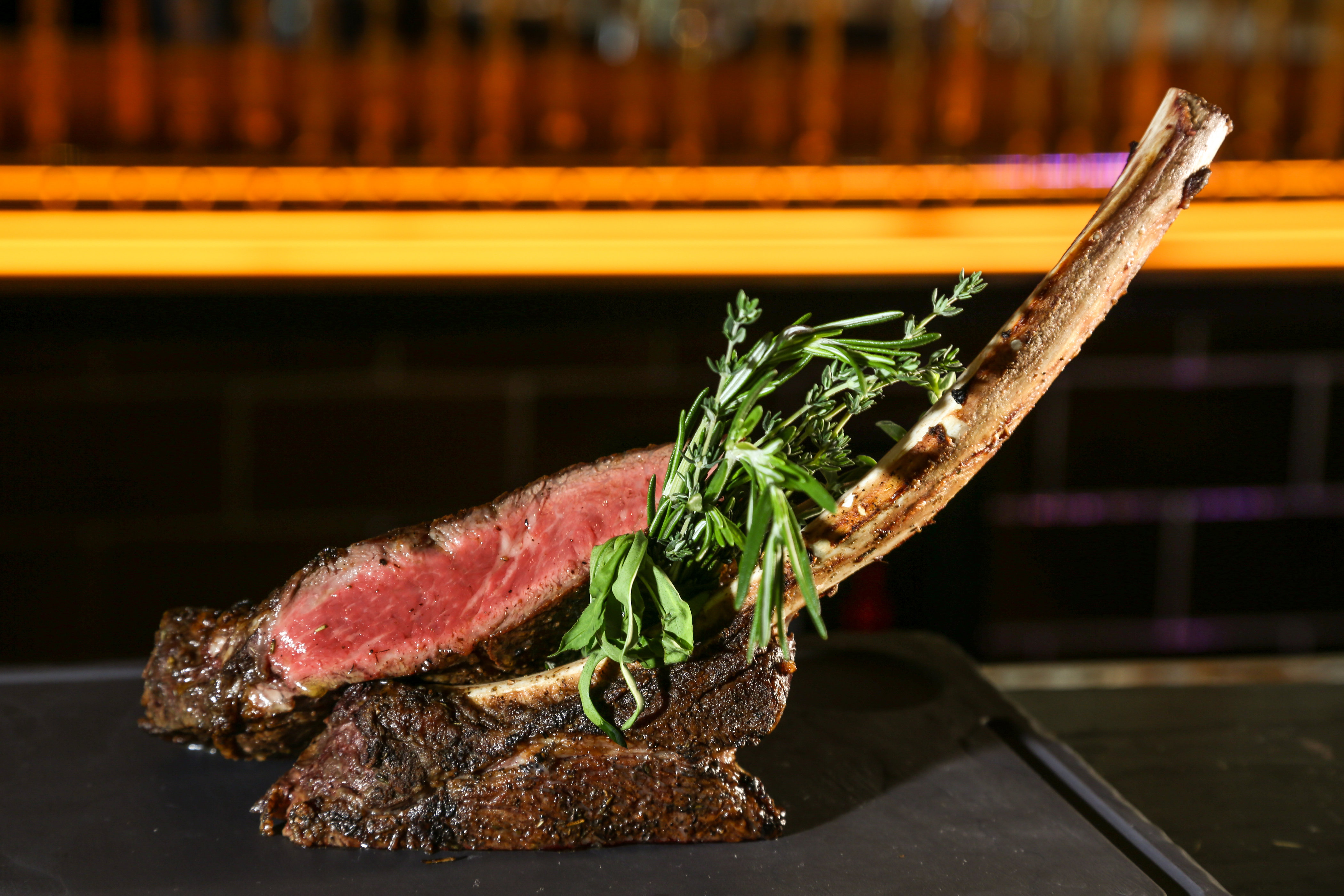
    Meat Market: Tomahawk, photo credit Ben Rusnak

    What do you cook at home? See above

    What marked characteristic do you love in a customer? The characteristics I love in customers are people that are not close-minded and are willing to be exposed to new carnivorous cuts. We have a lot of customers who specifically want the petit filet. Nothing against it, but that’s the vanilla ice cream of meat. I love it when a customer says, “Send me a cut I have never tried before,” and we can introduce them to something new. We have buffalo, wagyu and dry-aged Prime Certified Angus – all of which have more flavor than a normal filet, in my opinion.

    What marked characteristic do you find unappealing in a customer? When you have customers who come into the restaurant and are already in a bad mood – it’s an uphill battle from the start. They come in already with a negative attitude and it’s hard to change that around. We can bend over backwards and offer them anything, but they won’t let us make them happy because they came in with that mindset.

     i8tonite: with Meat Market's Chef Sean Brasel and his Asian BBQ Lamb Ribs
    Meat Market: Meat Sampler, photo credit Ben Rusnak

    Tupperware, Rubbermaid, or Pyrex? Can I choose Cambro? That’s what we use in the kitchen. But at home, I love Pyrex because it doesn’t hold any flavors.

    Beer, wine, or cocktail? Anyone who knows me knows that I have a passion for red wine, whether it’s cooking with it, drinking it, or pairing it.

    Your favorite cookbook author? I can’t say a certain cookbook author, but I can say that I collect books. I really enjoy reading all the chefs’ little stories about how a dish inspired them or the childhood memories they speak of in a recipe. Having said that, my favorite read still has to be Kitchen Confidential by Anthony Bourdain. Although it is not a cookbook, it is just so well-written and his perception and his ability to transcribe that into words had me laughing hysterically. He is an amazing author.

    Your favorite kitchen tool? I use the micro plane tool religiously. From truffle to macadamia nuts to orange and lemon zest, it is the ideal tool to put that “je ne sais quoi” into your dish.

    Your favorite ingredient? I know it sounds cliché but truffle oil. It has such an indescribable quality, giving dishes a light umami twist. Sometimes I’ll put it in some dishes and most people can’t even catch it. It just adds that little twist of complexity.

     i8tonite: with Meat Market's Chef Sean Brasel and his Asian BBQ Lamb Ribs
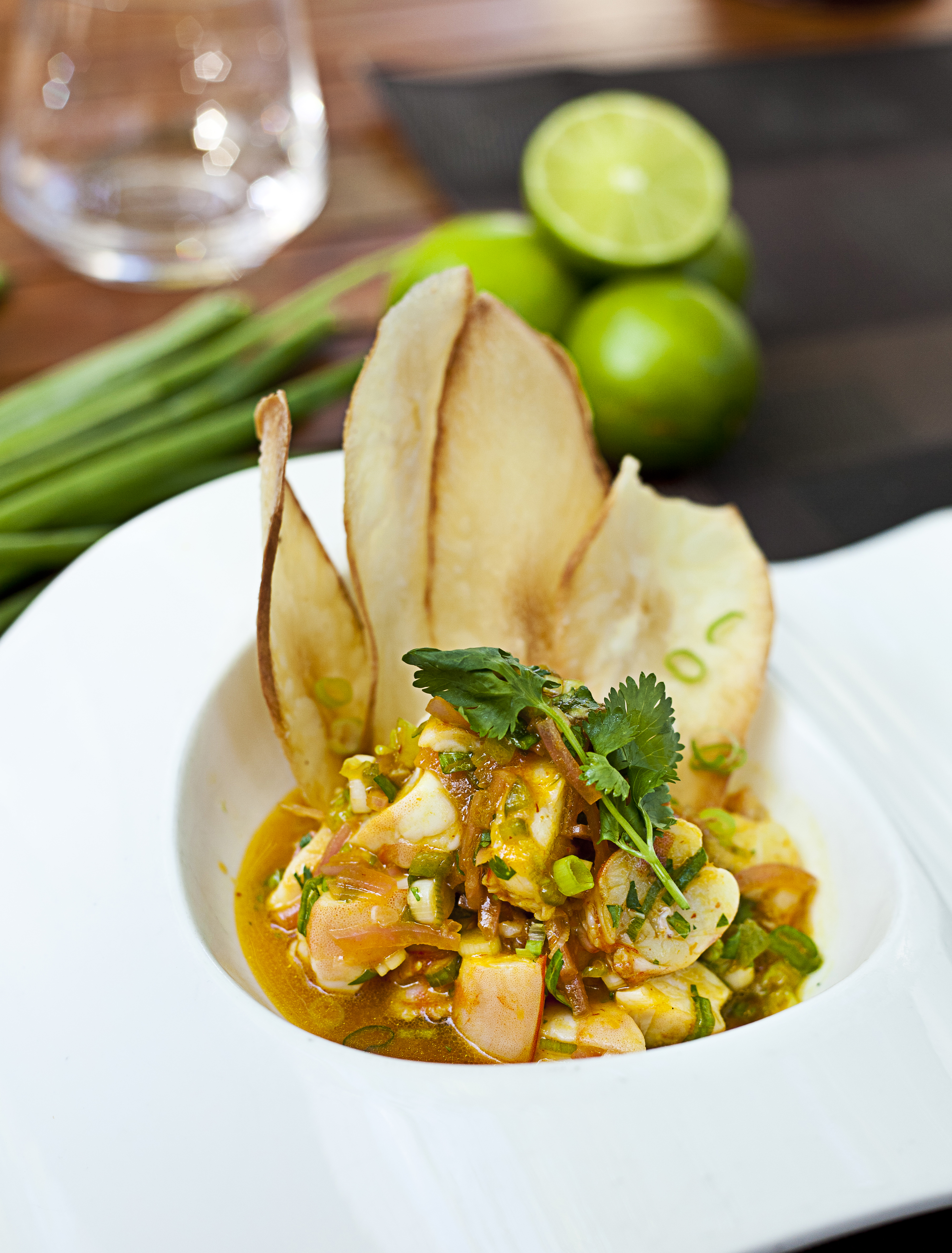
    Shrimp Ceviche

    Your least favorite ingredient? Chicken. Ironically enough, I like to eat it but I feel like when I spend time cooking it, no matter what you dream up in the kitchen, at the end of the day, it’s still just chicken. I’ve done some special chicken dishes at Meat Market – with poulet rouge or corn-fed baby chicken – but it seems like customers are very hard to please when it comes to chicken. I think just plain old fried chicken done right is the best.

    Least favorite thing to do in a kitchen? This is a tricky answer because I like cooking and cleaning. I love creating and I crave the adrenaline rush from working the line even when it’s hot and slammed. I guess I have to say I don’t like having to tell the cooks the same thing all the time. As chefs, we all get tired of saying the same sh*# all the time. It can ruin my night if I keep telling them the same instructions I told them last night and last week. I guess that’s why chefs throw pot and plates! (Smiles).

    Favorite types of cuisine to cook? Living in Miami where it is such a melting pot of cultures, I really can’t limit myself to one type of cuisine. If I had to choose, I would say American with roots stemming from Latin America and the BBQ flavors of the Deep South. At Meat Market, I try to incorporate a lot of these different flavors and techniques into the menu.

     i8tonite: with Meat Market's Chef Sean Brasel and his Asian BBQ Lamb Ribs
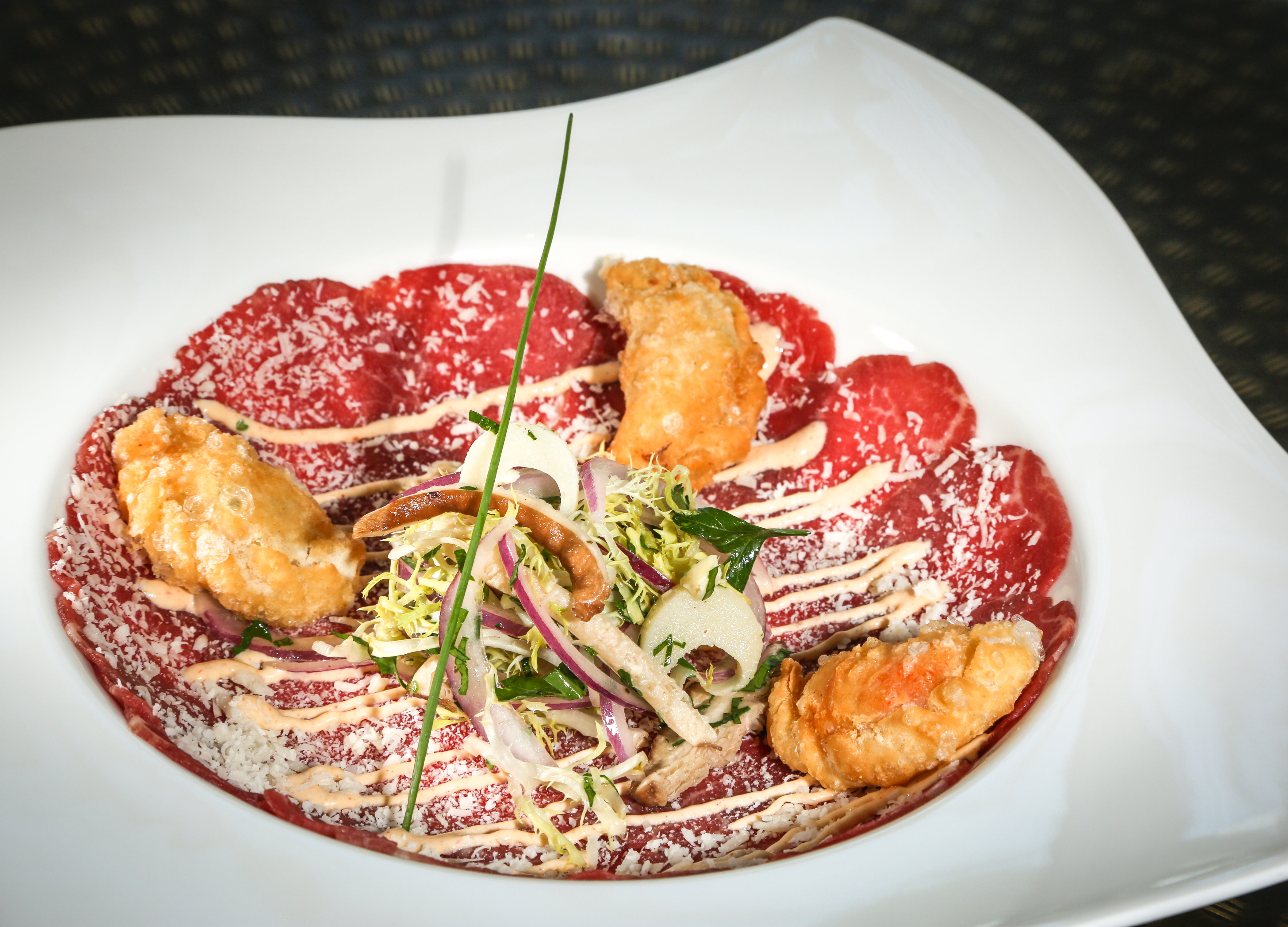
    Meat Market: Wagyu Carpaccio, photo credit Ben Rusnak

    Beef, chicken, pork or tofu? Beef without a hesitation. Most people just think beef and steak, but beef is one of the most versatile ingredients in the kitchen. From charcuterie to marmalades to brines, cures, smokes, and of course, braises and roasts – there is a lot of creativity to be had with beef.

    Favorite vegetable? I feel bad limiting myself to just one, but I have to say I had a deep admiration for pumpkin. There is so much you can do with it. I puree it, fluid-gel it, ferment it, pickle it, or just plain roast it. I can use it in so many different ways that it’s become a staple in my kitchen.

    Chef you most admire? I have to say Chef Grant Achatz. I had the opportunity to visit Chicago and experience his 22-course menu at Alinea four years ago. His thought process is beyond imagination, and recently I went to his Alinea pop-up in Miami, and again, it was such an unbelievable experience. Who can imagine ever making a helium balloon out of green apple? He is the modern day Beethoven of food – beyond words.

    Recipe:  ASIAN BBQ LAMB RIBS

     i8tonite: with Meat Market's Chef Sean Brasel and his Asian BBQ Lamb Ribs
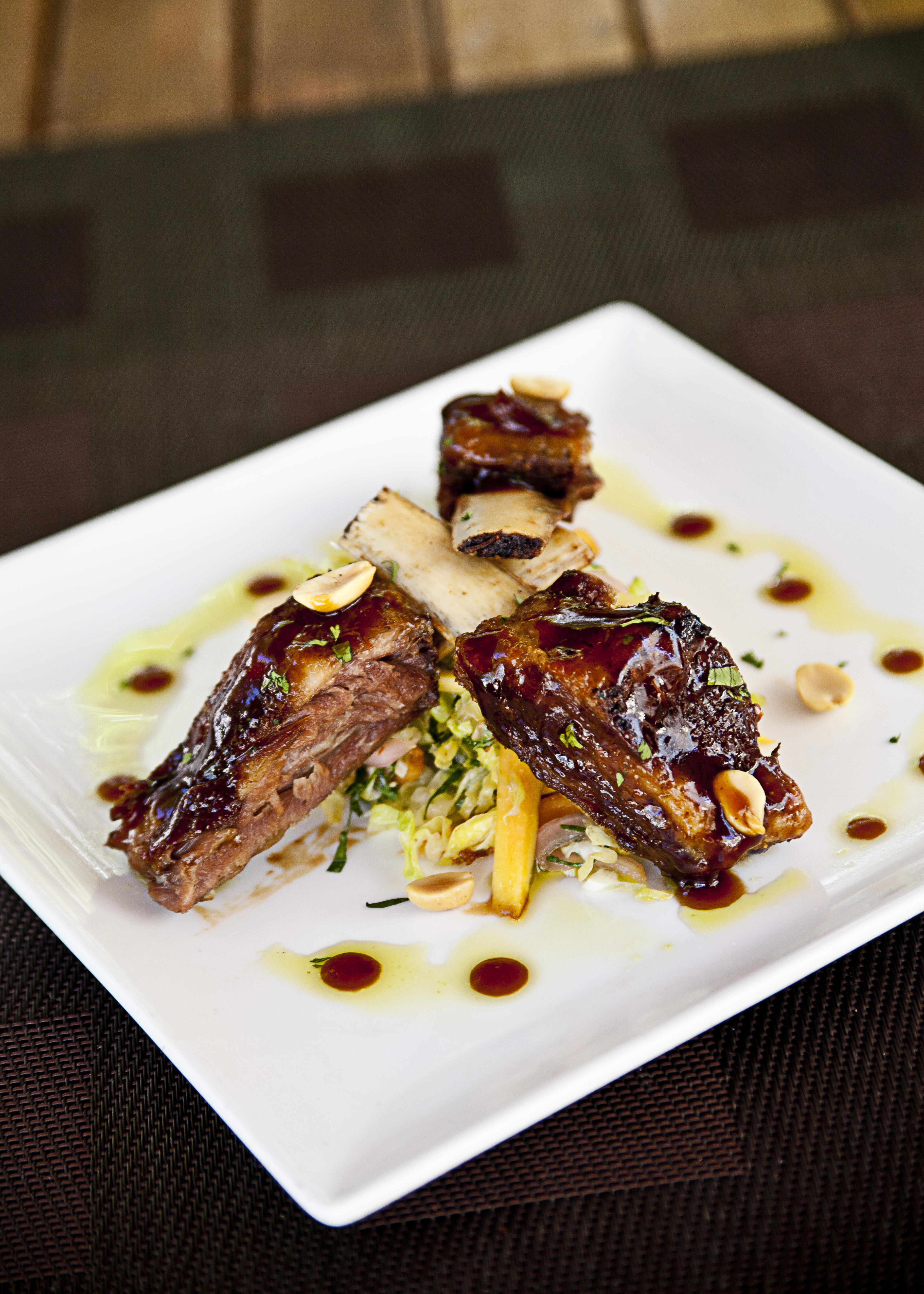
    Asian BBQ Lamb Ribs

    Executive Chef Sean BraselServes 6
    Lamb Rib Seasoning

    • 6 lbs. Lamb ribs
    • ¾ cup kosher salt
    • ¼ cup smoked paprika
    • ¼ cup crushed red pepper flakes
    • ½ cup Herbs De Provence
    • ½ cup El Toro Chili Powder
    • ½ cup granulated garlic
    • ¼ cup ground chile mix (ancho, chipotle)

    METHOD:  Using the seasoning, coat the lamb ribs and place in a pan for 4-6 hours in fridge.  Then, add a small amount of water to the pan, cover with foil and let cook at 275° for 3-4 hours depending on the thickness of the ribs.  Take ribs out of the pan and place on a sheet tray to cool.  Once the ribs are cold, section them into individual chops.

    Lamb Rib Sauce

    • 16 fluid ounces hoisin sauce
    • ½ cup rice wine vinegar
    • ¼ cup mirin
    • 1/3 cup sweet chili sauce
    • 1 oz. siracha

    METHOD:  Place all ingredients into a blender and mix well.

    Pickled Papaya

    • 10 Papaya (not ripe), julienned
    • 6 cups rice wine vinegar
    • 3¾ cups sugar
    • 4 oz. lemon grass
    • 1 Tbsp. salt
    • 1 star anise

    METHOD:  Bring all the ingredients, EXCEPT the papaya, to boil.  Let the liquid cool and then pour over the julienned papaya.  Cover and refrigerate.

    Pickled Red Onion

    • 8 red onions, julienned
    • 6 cups red wine vinegar
    • 1½ lbs. sugar
    • 1 Tbsp. chili flakes
    • 4 oz. sriracha

    METHOD:  Julienne onions and put to the side.  Put other ingredients in a pot and bring to a boil.  Pour liquid over the onions and let rest.

    SLAW

    • ¼ cup of Napa cabbage, sliced
    • 1 oz. pickled red onion
    • 1 oz. pickled papaya
    • 2Tbsps. scallions, sliced
    • 1Tbsp. olive oil

    METHOD:  Toss all the ingredients together until mixed.

    TO FINISH/PLATE:  Place lamb ribs, a few at one time, into a hot fryer and cook until crispy.  Toss them in BBQ sauce and place them on a handful of the slaw; garnished with some chopped peanuts.

    The end. Go eat. 


  • i8tonite: Chef’s Questionnaire with Top Chef Ron Duprat and Haitian Seabass with Ti Malice

    i8tonite: Chef’s Questionnaire with Top Chef Ron Duprat and Haitian Seabass with Ti Malice

    Note from Jessie & Brian: We are traveling throughout this vast country of ours.  When these moments occur we like to do a little backstroke into our archives showcasing some of the chefs from the past. Chef Ron Duprat is awesome! If you missed him the first time, here he is again…all smiling and happy!


    Haitian-born and raised Ron Duprat always knew that he was going to be a chef. Growing up, he would watch his grandmother in the southern coastal arrondissement of Mare Rouge cook up delicious Caribbean stews with French techniques while using indigenous Haitian ingredients such as scotch bonnet peppers, djon-djon (black trumpet mushrooms) and salted fish.

    After becoming educated and acquiring in-depth culinary skills at the famed La Varenne Ecole de Cuisine in Paris and the Culinary Institute of America, Duprat has gone on to work in some of the world’s most legendary spots and fed the celebrated including President Barack Obama and First Lady Michelle Obama and entertainers such as Jay-Z, Beyoncé, Usher and many more.

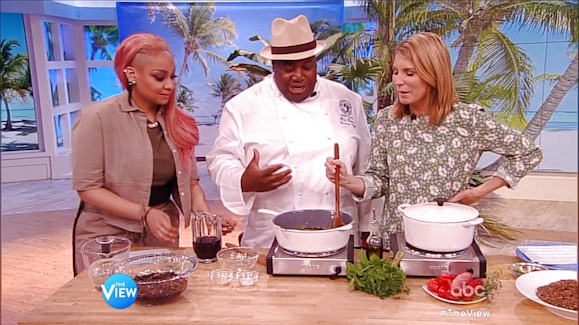
    In early 2015, Duprat became a contestant on Season 6 of Bravo’s “Top Chef”. Since then he has been traveling the world showcasing his culinary skills in cooking demonstrations, working as a celebrity chef at numerous restaurants, resorts the-view_video_1964511_579x325_1434135354288and companies.  This also included a guest spot on ABC’s “The View”. He’s currently an advisor for the international food company Rastelli Direct and working as consulting Executive Chef at the Sugar Bay Resort and Spa in St. Thomas in the U.S. Virgin Islands.

    To add to his growing accolades, Duprat has also been named as “culinary ambassador” by former Secretary of State Hillary Rodham Clinton. The Huffington Post named him as one of the “10 Black Chefs That Are Changing the Food World as We Know It” and The Root, a website on African-American politics and culture included Duprat along with Marcus Samuelsson, G. Garvin, B. Smith and Tre Wilcox in a story called “How 12 Black Chefs Cooked Their Way to the Top of the World”. He is currently working on a new cookbook although you can still find his premiere publication “My Journey of Cooking” on Amazon and bookstores everywhere.

    How long have you been cooking?  Ever since I could tie my shoes.

    What is your favorite food to cook? Coq Au Vin. Bouillabaisse.  Cassoulet. Goat Stew. Braised Short Ribs.

    What do you always have in your fridge at home?  Mustard. Oils.  Cheeses. Left-over Haitian foods.

    100630fe-duprat2_t607-e1360170246202

    What do you cook at home? I don’t cook much (at home) but if am entertaining it’s all about traditional Caribbean food with a French influences. I have lots of recipes coming from my new cookbook.

    What marked characteristic do you love in a customer? A customer who enjoyed and appreciated the meal and the effort that’s gone into it. Then, graciously says, “Thank you.

    What marked characteristic do you find unappealing in a customer?  A’’ know-it-all’’ trying to impress a date.

    Tupperware, Rubbermaid, or Pyrex? Rubbermaid.

    Beer, wine or cocktail? Wine.

    Your favorite cookbook author?  Joel Robuchon.

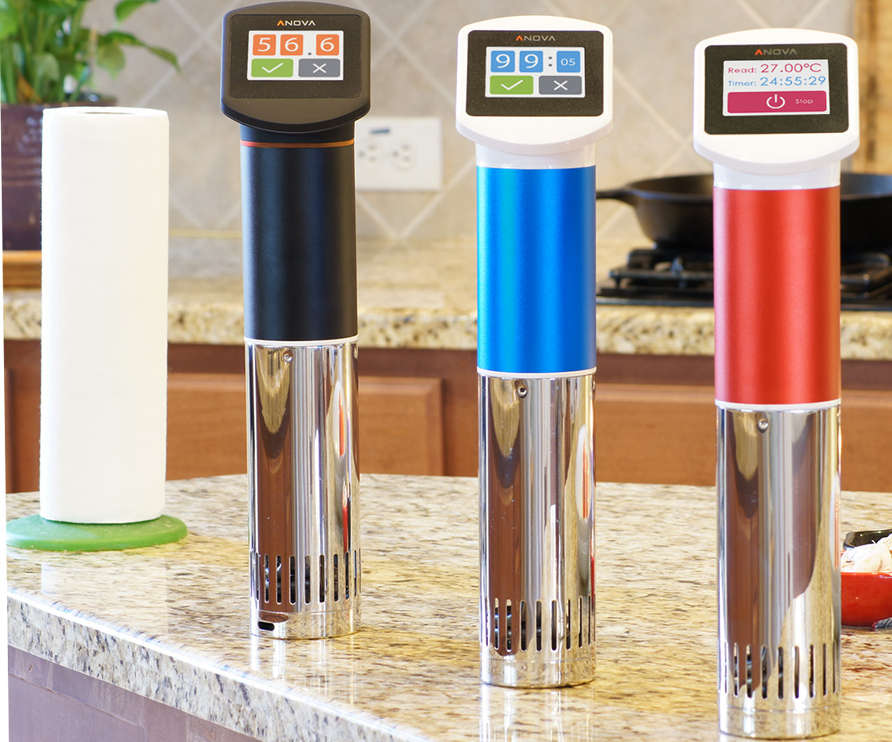
    Your favorite kitchen tool? A circulator.

    Your favorite ingredient? Amagansett Sea Salt.

    Your least favorite ingredient? Artificial food coloring.

    Least favorite thing to do in a kitchen? Shuck oyster and clams.

    Favorite types of cuisine to cook? French. Hands down.

    Beef, chicken, pork or tofu? Pork. (Everything) tastes better with pork.

    Favorite vegetable? Onion.

    Chef you most admire? Kevin A. Relf. Jaime Jerezano. Jeffrey Wiess. Nick Wallace.

    Food you like the most to eat? Ethnic food.

    Food you dislike the most? Food with GMO.

    How many tattoos? And if so, how many are of food? None. Zero. Not my thing.

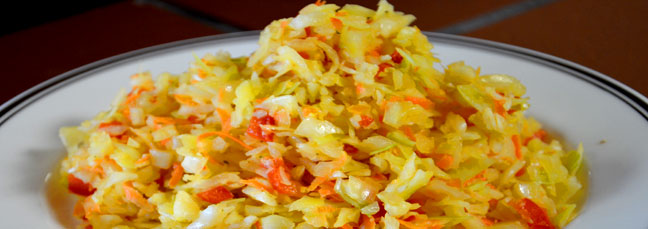
    Sautéed Seabass with TiMalice Sauce and Djon Djon Rice and Haitian Cabbage slaw

    Pikliz

    Pikliz (Haitian Cabbage slaw) (Serves 4)

    • ¼ green cabbage, cored and very thinly sliced
    • ¼ red cabbage, cored and very thinly sliced
    • 3  carrots, shredded
    • ¼ large onion, thinly sliced
    • 1 small shallot, thinly sliced
    • 1 to 2 large habanero or other chili peppers, cored, seeded, and finely chopped
    • Juice of 1 lime
    • 3 cups white wine vinegar
    • 4 cloves garlic, chopped
    • 1 teaspoon adobo seasoning
    • Salt and pepper, to taste
    1. In a large bowl, combine the green and red cabbages, carrots, onion, shallot, chilies, lime juice, vinegar, garlic, adobo, salt, and pepper. Toss well to mix.
    2. Cover and refrigerate for at least 24 hours or for up to 1 week. The slaw will keep in the refrigerator for about 1 month.

    Seabass with Sauce Ti-Malice

    Ingredients for Sauce Ti-Malice and Seabass:

    • 1 to 2 tablespoons olive oil
    • 1 onion, chopped
    • 1 garlic clove, crushed and minced
    • 2 shallots, finely chopped
    • ¼ green bell pepper, sliced thin
    • ¼ red bell pepper, sliced thin (optional)
    • 2 tablespoons tomato paste
    • ½ teaspoon salt, or to taste
    • ¼ teaspoon black pepper
    • Juice of ½ lime (about 1 tablespoon)
    • 2 tsp of finely chopped hot peppers
    • 4 fillets of seabass or branzino, tilapia or flounder
    1. In a saucepan, heat oil on medium heat. Add onion, garlic, and shallots and cook and stir for 2 minutes.
    2. Add peppers, tomato paste, salt, black pepper, pikliz vinegar, and lime juice then cook and stir for 3 minutes.
    3. Add 2 cups water and bring to a boil.
    4. Cook for 15 minutes on low-medium heat.
    5. Let cool. 
    6. Heat up a saute pan that will comfortably hold all the fish. Season liberally with salt and pepper and saute in olive oil for 5 to 8 minutes on each side. Be careful not to overcook.  To serve, place fish on plate, and add sauce Ti-Malice

     Du Riz Djon Djon (Rice) Servings: 4

    • 2 tablespoons Oil
    • 1 small onion; chopped
    • 2 garlic cloves; crushed
    • ¼ cup dry Haitian mushroom (black trumpet mushrooms)
    • 16 oz Canned pigeon peas 
    • 1 cup rice
    • 2 cup hot Water
    • 1 sprig thyme
    • Salt and pepper to taste

    1. Soak dried mushroom in hot water for 10-15 minutes, drain and reserve water; toss out mushrooms.

    2. Heat the oil in a saucepan and add the onion; simmer for 5 minutes. Add the garlic and cook 1 minute. Add the peas, and rice; and sauté for 1 minute. Add the water, salt and pepper to taste; bring to a boil then reduce heat simmer, covered, for 15 minutes until rice is cooked.

    The End. Go Eat. 
  • i8tonite: A Cheat Sheet To Eating in Santa Barbara, California

    i8tonite: A Cheat Sheet To Eating in Santa Barbara, California

    i8tonite: A Cheat Sheet To Eating in Santa Barbara, CaliforniaThe city of Santa Barbara has been called The American Riviera. Matter of fact, as a travel destination, it’s been trademarked as The American Riviera under that name, bringing connotations of luxury and prestige. Beyond that branding, the area is home to truly great farming, including wine growing regions. There is also damn mighty fine eating if you get beyond the idea of high-end dining and leave that to the bigger urban centers. It’s not that the chefs aren’t capable and many of the small city’s dining rooms are decorated beautifully, but it’s why bother bringing a jacket or heels to a low-key area? After all, this is a coastal community and a college town, where flip-flops and shorts are de riguer.

    i8tonite: A Cheat Sheet To Eating in Santa Barbara, California
    Photo Credit: Terry Straehley

    Interestingly, Santa Barbara provides a sublime campus for higher learning, as this is where – as noted – several colleges are based, including the University of California, Santa Barbara (UCSB), Antioch University, and Brooks College of Photography. Located along the Pacific Coast, about an hour and a half north of Los Angeles, Santa Barbara’s geography provides temperate weather, golden sand beaches, and incredible bike paths, supposedly evocative of the Mediterranean.

    However, if cultural pursuits are really your interest, there is the Santa Barbara Museum of Art. Furthermore, Mission Santa Barbara (named the Queen of the Missions), is one of the twenty-one Franciscan missions in the state of California. Well documented in the eighteenth century history books, the traveling and gospel spreading monks dedicated to transiting the indigenous peoples into Christians did so via sub-standard means and torture.

    Even with all the college aged individuals, there is relatively very little nightlife and the streets roll-up early. But the beauty of Santa Barbara lies not in its evening but in the early part of the day, when people – visitors and natives alike – take up more physical pursuits, such as kayaking, beach volleyball, and fishing.

    Breakfast: Tupelo Junction Cafe

    i8tonite: A Cheat Sheet To Eating in Santa Barbara, California

    When Tupelo Junction first opened, it was cozy with no more than a dozen tables packed onto a small side street. The walls were covered in burlap cloth and white washed with touches of red gingham, giving the impression that Tom Sawyer and his girlfriend Becky were manning the cook’s station. Maybe about a decade ago, the restaurant moved to State Street, closer to the action. The charming atmosphere was lost, but thankfully not the creative spin on Southern dishes. You can eat buttermilk pancakes slathered in creamy pan gravy or apple beignets.

    • Our Suggestion:  Dungeness Crab with Potato Hash, Avocado Salsa, Poached Eggs, and Beurre Blanc. This restaurant is a touch of France, big scoops of the America’s South, and the California coast.
    • Price: $18.00. (It has big pieces of crab throughout and worth every penny.)
    • Hours: Breakfast is served daily from 8:00am to 3:00pm.
    • Website: www.tupelojunction.com
    • Address: 1218 State Street, Santa Barbara, CA  93101
    • Phone: (805) 899 – 3100

    Lunch:  Brophy Bros.

    i8tonite: A Cheat Sheet To Eating in Santa Barbara, California

    This is a wharf restaurant that is worth just driving ninety minutes along the Pacific Coast Highway to dine for lunch.  It’s truly a quintessential Santa Barbara dining experience, overlooking the fishermen’s boats as they bring in their day’s catch. If you decide to have dinner here, the second floor outlook is one of the most beautiful places in California to watch the setting sun. It’s a busy restaurant and can have a very long wait.

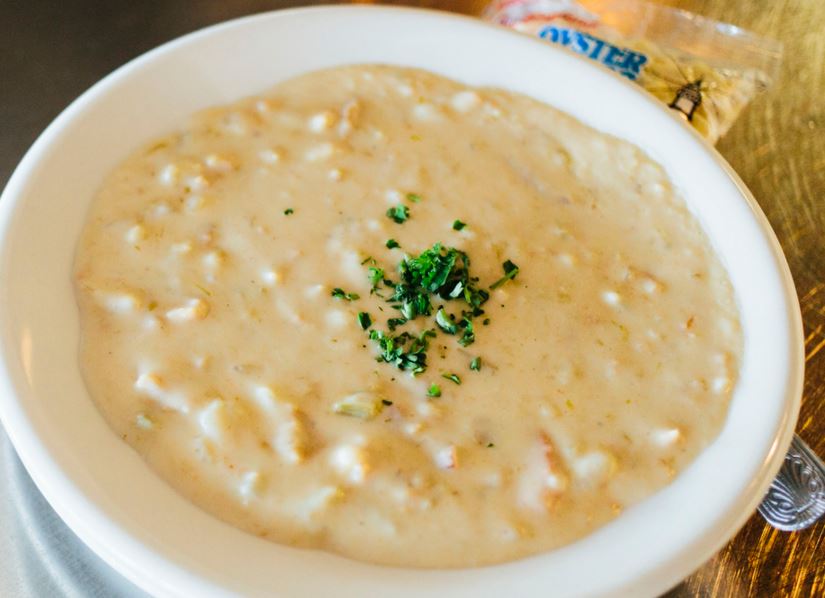
    • Our Suggestion: New England Clam Chowder. Living on the West Coast, where food is mostly about becoming a rabbit – chewing a lot of veggies, no carbs and dairy – this is one of the most deliciously, decadent soups imaginable. It’s very East Coast made, with lots of clams, potatoes, and cream. The only thing missing is the Maine mist and chill. If you do take an afternoon drive to Santa Barbara, come here and have this as a cup with a salad for lunch, with a glass of white wine, and your life will be as perfect as fairy tale.
    • Price: $5.00 for a cup; $7.50 for a bowl.
    • Hours: Open daily from 11:00am – 10:00pm. They do not take reservations. First come, first serve basis.
    • Website: www.brophybros.com
    • Address:  119 Harbor Way (Harborside), Santa Barbara, CA           93109
    • Phone: (805) 966 – 4418

    Cocktails: Canary Hotel’s Finch & Fork

    i8tonite: A Cheat Sheet To Eating in Santa Barbara, California

    Smack dab in the middle of the town of Santa Barbara is the Canary Hotel. White-washed on the outside with a distinct Mediterranean/ Mexican/Spanish feel, complete with clay tiles, red-roof, decorative irons and wood, it can be a little precious. But it’s a great place to stop for a mid-day cocktail or an afternoon repast as you meander through the State Street shops. New American cuisine with freshly bought bounty is served at the bar daily and in the main dining room.

    • Our Suggestion: This is one of California’s great wine countries. You need to sample the wine while here.
    • Price: Varies depending on the winery.
    • Hours: Open daily at 2:30 pm – 11:30 pm.
    • Website: www.finchandforkrestaurant.com
    • Address: 31 West Carillo Street, Santa Barbara, CA 93101
    • Phone: (805) 879 – 9100.

    Dinner: The Wine Cask

    i8tonite: A Cheat Sheet To Eating in Santa Barbara, California

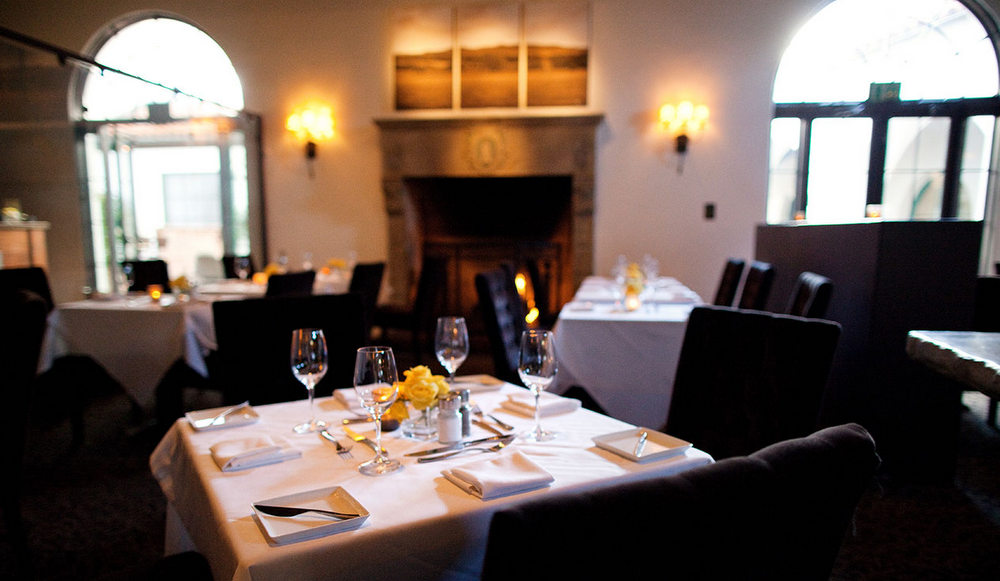
    Created in 1981, The Wine Cask is Santa Barbara’s landmark restaurant bringing the area’s food and wine to the forefront of dining scene throughout California. Farm to table long before the term was coined, the owner, Doug Margeruem, has long been resolute in showcasing the Santa Barbara County’s rich agriculture, most notably it’s wine growers. If ever there was a quintessential dining place — a must place to dine in Santa Barbara — The Wine Cask is the place. It’s like going to Beverly Hills and never eating at Spago, or dining in New York and never eating at Gotham Bar and Grill. There are some restaurants that you have to eat at if you are in the area. The dining room, with its painted beam ceilings and massive fireplace to keep out the sea chill even in the heat of the summer, is one of the California Coasts most stately and stunning.i8tonite: A Cheat Sheet To Eating in Santa Barbara, California

    • Our Suggestion: The food is delicious and the produce is brought in daily from nearby farmers markets and vendors. Probably the closest you will get to the farm without actually picking it yourself.
    • Prices: Varies but American Wine Country cooking at it’s finest.
    • Hours: Nightly from 5:30 pm. Closed Sundays – Mondays.
    • Website: www.winecask.com
    • Address: 813 Anacapa Street, Santa Barbara, CA                                91301
    • Phone: (805) 966 – 9463

    Place to Stay: Simpson House Inn

    i8tonite: A Cheat Sheet To Eating in Santa Barbara, California

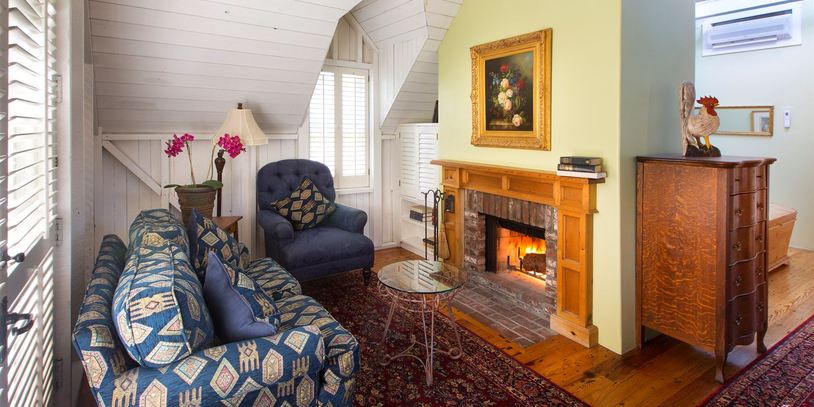
    Out of all the hotels in Santa Barbara, this is the one beyond reproach. It’s a small bed and breakfast, with 13 rooms, and no two rooms are the same. Therefore, each time you stay, the experience is different. And unlike the other hotels, which are managed or owned by big corporations, wealthy developers, or billionaires, this is luxury hospitality at its finest. Built by the Davies family, Simpson House Inn became an award-winning bed and breakfast, the only one to be named a “five diamond” by AAA and by Andrew Harper’s Hideaway. Like all b and b’s, breakfast is served daily – but it’s completely vegetarian. If it was never mentioned, a guest would never notice. Also, there is a two-hour afternoon wine tasting with a bevy of tasty snacks before dinner. For this intrepid traveler, I find this to one of my favorite hotels in the world.

    i8tonite: A Cheat Sheet To Eating in Santa Barbara, California


    Website: www.simpsonhouseinn.com

    Prices: Ranges according to accommodation and season. Prices can start over $250.00, but it’s worth every penny.

    Pin for later:

    i8tonite: A Cheat Sheet To Eating in Santa Barbara, California


    The end. Go eat. 


  • i8tonite: Chef’s Questionnaire with Clifton Inn’s Yannick Fayolle and his Curry Sauce

    i8tonite: Chef’s Questionnaire with Clifton Inn’s Yannick Fayolle and his Curry Sauce

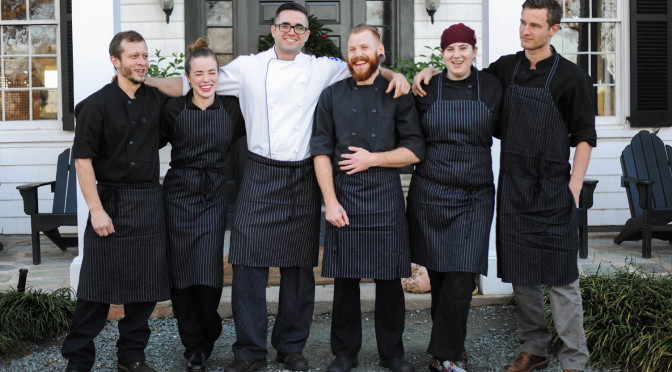
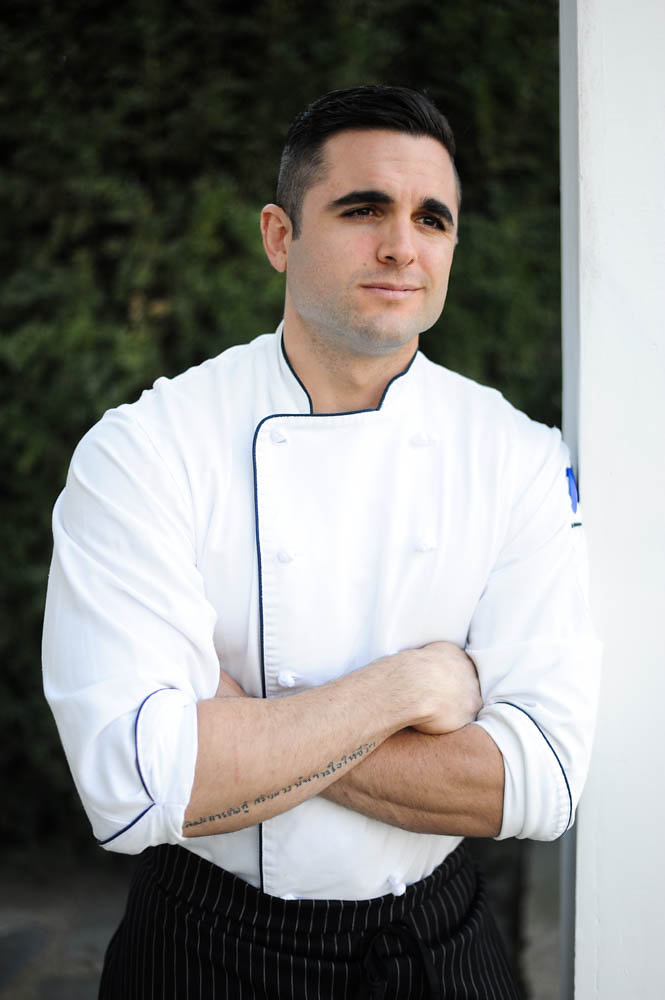
    i8tonite: Chef's Questionnaire with Clifton Inn's Yannick Faynoull and his Curry SauceMauritius-born Chef Yannick Fayolle is an ambitious, young and undiscovered culinary talent – until now. At the age of 27, he’s had a successful restaurant in his island country before moving to Charlottesville, Virginia, where he has been working as the Executive Chef at Clifton Inn, a high-end hotel and restaurant, for a little less than a year. He says about living in the historic colonial town, “I love it here. It’s a different level of produce, which is very high in quality. There are these great historical buildings, and interesting stuff about the United States.”

    i8tonite: Chef's Questionnaire with Clifton Inn's Yannick Faynoull and his Curry Sauce

    The Switzerland-trained chef calls his style of cooking French and Asian with touches of African (“Because I don’t believe in one style of cooking”), and it’s all related to growing up in the island nation of Mauritius. Colonized by the French and Dutch in the 15th and 16th centuries, with India and Asia’s trade route along the African coasts, Mauritius is a melting pot of international flavors. Fayolle  brings to the Clifton Inn not only intense cookery skill, but also this worldly abundance and familiarity with spices and herbs rarely seen in the States, and directly related to his birthplace. For example, on a recent tasting menu with a seasonal vegetable salad, he added black cocoa soil – a sophisticated European trend creating ingredients to look like “soil” or “dirt” – imitation edible dirt as a stage for sprouts. The cocoa is a nod to Africa’s east coast and its fertile ground, while the the simulated “soil”  displays European training. It’s these unique touches that showcase Fayolle  as an epicurean talent on the horizon. Most of our chefs are still playing with barbeque sauces and figuring out uses for white pepper.

    i8tonite: Chef's Questionnaire with Clifton Inn's Yannick Faynoull and his Curry SauceMr. Fayolle  is a bit of an anomaly in the world of cuisine. He’s not a big drinker, and in his spare time, he’s a competitive bodybuilder. While the rest of us are engaging in some of his tasty dishes, he’s pounding out reps and getting ready for the next contest by fortifying himself with protein shakes. Regardless of his outside aspirations, it’s his capacity for cooking that will win over new fans.

    In many ways, Mr. Fayolle  may represent the new breed of chef – Instagram-ready, conscientious about his own looks and physique, while implementing higher standards of cooking with lower fat and calories. Either way, Clifton Inn and Charlottesville is very lucky to have him.

    Interior 5 Wine Cellar

    Chef’s Questionnaire (with a nod to Proust):

    Yannick 1How long have you been cooking? 12 Years

    What is your favorite food to cook? I come from an island, so seafood is my best food to cook. It reminds me of home, and products from the sea are always healthy and tasty.

    What do you always have in your fridge at home? Pre-prepped meals; I am a bodybuilding physique competitor and cook pre-portioned meals twice a week, so I have stacks of deli containers in my fridge.

    What do you cook at home? My pre-portioned meals and I always make myself different kinds of smoothies.

    What marked characteristic do you love in customers? The smile on their faces when they leave the restaurant.

    i8tonite: Chef's Questionnaire with Clifton Inn's Yannick Faynoull and his Curry SauceWhat marked characteristic do you find unappealing in a customer? People who are unadventurous and unwilling to try modern cooking styles.

    Tupperware, Rubbermaid, or Pyrex? Rubbermaid.

    Beer, wine or cocktail? I don’t drink much but love to find new beers and wines to match my food.


    i8tonite: Chef's Questionnaire with Clifton Inn's Yannick Faynoull and his Curry Sauce

    Your favorite cookbook author? Thierry Marx “BON!”

    Your favorite kitchen tool? The Pacojet.

    Your favorite ingredient? Dedication and …. Garlic.

    Your least favorite ingredient? Grapefruit.

    Least favorite thing to do in a kitchen? Shuck oysters.

    Favorite types of cuisine to cook? Asian, French, Southern – finding ways to meld them together.

    Beef, chicken, pork or tofu? Pork.

    Favorite vegetable? White asparagus. It is a very delicate vegetable.

    i8tonite: Chef's Questionnaire with Clifton Inn's Yannick Faynoull and his Curry SauceChef you most admire? Gordon Ramsey. He’s done it all!!!

    Food you like the most to eat? Sushi and curries.

    Food you dislike the most? Anything bland.

    How many tattoos? And if so, how many are of food? Three. One on my forearm is Thai. It’s a saying on philosophy of art and perfection. Food is art.

    Recipe: Yannick Fayolle’s Curry  Sauce

    Curry Sauce

    • 10 hydroponic tomatoes
    • 1/2 butternut squash, peeled and diced
    • 4 garlic cloves
    • 20g ginger
    • 3 medium red onions
    • 5g cinnamon stick
    • 1 star anise
    • 5g chopped fresh thyme
    • 2g clove powder
    • 10 coriander seeds
    • 4 Tblsp curry powder
    • 1 Tblsp turmeric powder
    • 100g unsalted butter
    • 2 cups chicken or vegetable stock
    • Chopped fresh cilantro to garnish
    • Salt  to season

    Blanch the tomatoes and turn into a concasse. Dice red onions and start searing at medium heat until translucent. Add chopped garlic and ginger with the coriander, the cinnamon and the star anise. Sear for 3 mins still at medium heat.

    Add the butternut squash and sweat another 2 mins. Add diced tomatoes. Leave to caramelize. Then add the clove, the curry powder, and the turmeric. Add the butter. Leave on medium heat for 5 mins until the natural water from the tomatoes evaporates by half the volume.

    Add vegetable or chicken stock and leave on low heat for an hour.

    Blend and strain through a fine strainer.

    The end. Go eat. 

  • i8tonite: A Cheat Sheet to Eating at Women-owned Restaurants in Los Angeles

    i8tonite: A Cheat Sheet to Eating at Women-owned Restaurants in Los Angeles

    Women work hard, and that includes being a mother, an actress, or a chef. Therefore, regardless of gender, women should be paid equally, and that’s this year’s International Women’s Day theme: Parity.  It’s the reason we decided to highlight women-owned places – more specifically female chefs of Los Angeles –  for our bi-monthly edition of Food Destinations. Tuesday, March 8 is International Women’s Day.

    In the City of Angels, not only are there delicious places to eat, but there are many women creating delicious dining experiences, whether as an owner or as an owner-chef. If you want to choose an eating theme, why not an interesting food tour of women-owned restaurants?

    Margarita Manzke, Republique. From i8tonite: A Cheat Sheet to Eating at Women-owned Restaurants in Los Angeles
    Margarita and Walter Manzke

    Breakfast: Margarita Manzke, Republique:

    Start your day at Republique with one of the pastry creations by Philippines Islands-born Margarita Manzke, co-owner of the famed space with her husband Walter. While Mr. Manzke is noted for his French-inspired culinary prowess in the evening, the mornings belong to “Madge.” Her pastries are clouds of flour and butter in the former of buttery croissants, brioches, scones, muffins, and breads. Go ahead and eat her Brioche French Toast, dipped in the egg and served up with fresh fruit. The idea of never eating carbs won’t enter your mind again. Or even better, for something just a little lighter to get the energy going with a cup of the couple’s hand-selected coffee, have a few slices of Ms. Manzke’s daily selection, fresh from the oven, daily served with housemade butter, jam, or honey. Everyday it’s something different – rye, whole cracked wheat, 7-grain, raisin, pumpernickel, sourdough ($4).

    Republique

    • 624 South La Brea Avenue
    • Los Angeles, CA  90036
    • (310) 362 – 6115
    • www.republicquela.com
    • Breakfast 8:00 am – 3:00 pm
    • Coffee and pastries until 4:00pm


    Alisa Reynolds, My Two Cents. From i8tonite: A Cheat Sheet to Eating at Women-owned Restaurants in Los Angeles
    Chef Alisa Reynolds

    Lunch:  Alisa Reynolds, My Two Cents

    In a residential part of Los Angeles, far from the maddening crowd, Chef Alisa Reynolds crafted a small eatery, with a dedicated following – including Beyoncé – cooking healthy soul food cooking, definitely words you don’t hear together. With six tables on the sidewalk and about as many on the inside, Reynolds has become known for her gluten-free quinoa macaroni and cheese, Creole Shrimp and Corn Grits, and BBQ Fried Chicken. Her recipes are still rich in flavor and family tradition, but have lower calories and a higher nutrition value than what she grew up eating. Yes, you can have your mac and cheese, but with a dose of healthy grains as well. What a concept.

    My Two Cents

    • 5583 West Pico Boulevard
    • Los Angeles, CA  90016
    • (323) 938 – 1012
    • www.mytwocentsla.com
    • Closed on Mondays
    • Tuesday – Thursday 12:00 pm – 9:00 pm
    • Friday – Saturday 12:00 pm – 10:00 pm
    • Sundays: Brunch only  11: 00 am – 4:00pm


    Restauranteur Amy Fraser and Pastry Chef Maria Swan: ICDC. From i8tonite: A Cheat Sheet to Eating at Women-owned Restaurants in Los AngelesSnack: Restauranteur Amy Fraser and Pastry Chef Maria Swan: ICDC

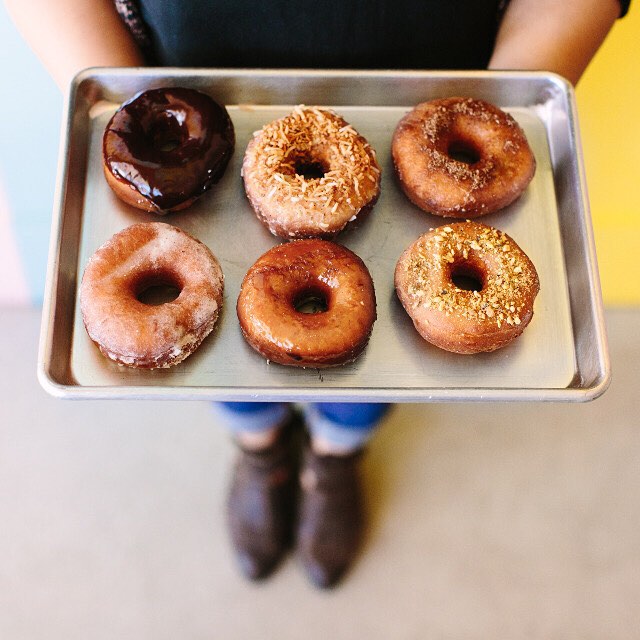
    Last year, co-owners Amy Fraser and Pastry Chef Maria Swan created a loving ode to ice cream, donuts, and coffee (ICDC), right next door to BLD (Neal Fraser’s eatery — Amy’s husband’s place — with breakfast, lunch and dinner). Out of the gate, the freshly churned cream made into adult type flavors such as the Guiness with Bourbon Fudge Ripple, and the Grapefruit Campari, or the Salt and Pepper Donut, or Beer Nuts and Pretzels have become an immediate hit — sort of like a Stars Wars sequel. Everything is handcrafted and single-batched, so once a flavor is out – it’s out for the rest of the day (or even the week). Therefore, you keep coming back hoping to catch that favorite flavor – but never quite making it, so it’s discover another taste – which keeps you coming back for that, and before you know it – you are in a 12-step group saying, “Hi, my name is (your name here) and I’m an ICDC addict.”

    ICDC LA

    • 7454 1/2 Beverly Blvd, Los Angeles, CA 90036
    • (323) 746-3346
    • http://icdc.la/
    • Monday-Friday, 11am-10pm
    • Saturday and Sunday, 11am-11pm


     Susan Feniger: Mud Hen Tavern & Border Grill. From i8tonite: A Cheat Sheet to Eating at Women-owned Restaurants in Los Angeles
    Chef Susan Feniger

    Dinner:  Susan Feniger:  Mud Hen Tavern & Border Grill

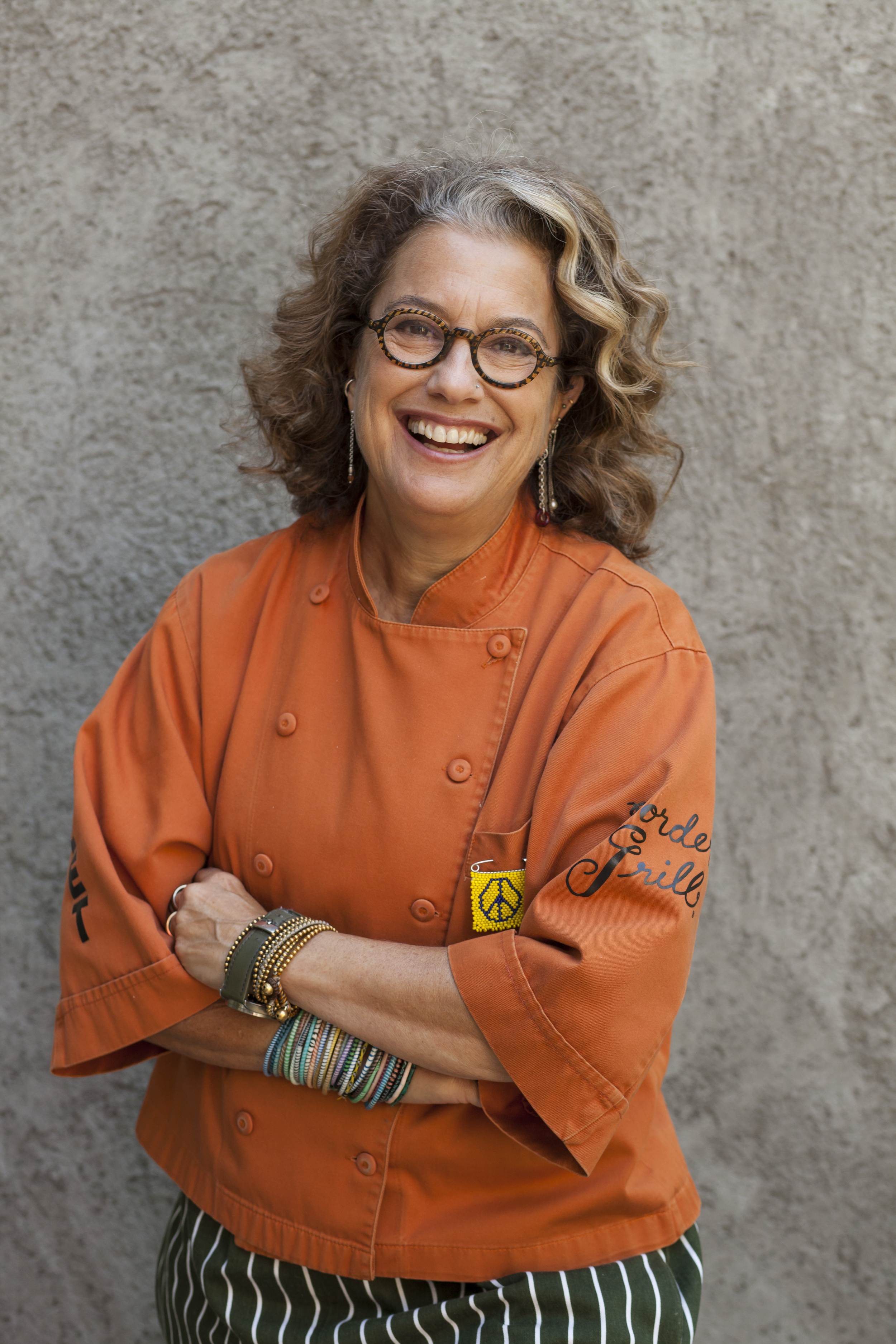
    Long before the Food Network was stuck on Guy Fieri road trips and Bobby Flay contests, Susan Feniger and Mary Sue Milliken were broadcast to millions of homes. Then, the gourmet duo known as Two Hot Tamales showcased mostly Mexican but Latin flavored cuisine in an epicurean setting at Border Grill. Prior to that – in the long forgotten eighties — the cooking partners had another nationally-recognized establishment named City, changing Los Angeles’ culinary landscape much like Spago’s Wolfgang Puck. Milliken and Feniger still operate Border Grill together in Santa Monica – but Feniger wanted to explore other tasty riches and opened the much-lauded Street in Hollywood – showcasing global cuisine. After a couple of years, Feniger morphed Street into Mud Hen Tavern – a cozy neighborhood eatery and bar. Whether you are eating at Mud Hen Tavern or the legendary Border Grill, the food you are tasting isn’t just by a female chef but by an historical figure in the culinary realm. Delicious food, farm-to-table, nose-to-tail — Susan Feniger has been there, done that, and thankfully is still cooking some yummy eats.

    Mud Hen Tavern

    • 742 No. Highland Avenue
    • LA, CA 90038
    • (323) 203 – 0500
    • www.mudhentavern.com
    • Sunday – Tuesday 5:00 – 10:00pm
    • Wednesday – Sunday 5:00 pm – midnight

    Santa Monica Border Grill

    • 1445 4th Street
    • Santa Monica, CA  90401
    • http://www.bordergrill.com/
    • Sunday – Thursday 4:00 – 10:00pm
    • Friday – Saturday  4:00 – 11:00pm

    The end. Go eat. 


  • i8tonite: with America’s First Culinary Couple, Bruce Weinstein and Mark Scarbrough

    i8tonite: with America’s First Culinary Couple, Bruce Weinstein and Mark Scarbrough

    NOTE:  This is an original post we wrote in October 2015.  We like to pull a Saturday Night Live, and occasionally have rebroadcasts. Heh.

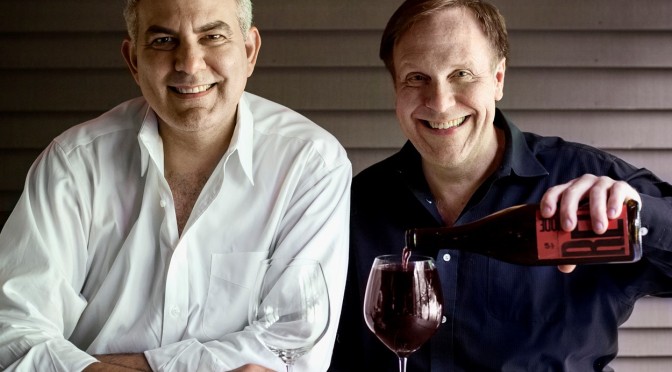
    Bruce Weinstein and Mark Scarbrough are America’s first culinary couple sort of like Julia Child and Jacques Pepin except, they are married, like Lucy and Desi. As a business partnership, they have written 26 cookbooks and ghost-written six more for star vanity projects. Ham: An Obsession with the Hindquarter (2010) and Vegetarian Dinner Parties (2014) were nominated for the coveted James Beard Award for “Best Cookbook”. As a couple, they have been together for 19 years – meeting in an AOL chatroom while living in New York City. Even then, they were ahead of their time.

    There isn’t a comparative food coupling in the culinary world like Bruce and Mark.  Certainly, not cooking in a restaurant, on a Food Network or Cooking Channel show. Or for that matter on PBS or Logo. Instead of going through today’s star-making channels – YouTube and reality television – the pair did it the old-fashioned way. Hard work.

    You might say, “What about so-and-so?” They started on reality television running around the world.

    “What about the Food Network’s blah?” They stick to one food type.

    “What about…?” Nay. She was a well-known actress before she met her husband.

    Bruce and Mark are a team, having written and eaten their way to a successful career and a country Connecticut home. They finish each other’s sentences in the adoring, long-time love affair way and they laugh at each other’s jokes.  If Woody Allen were casting for a movie during his Annie Hall days, Bruce and Mark would embody the  perfect museum-going Manhattan pair. Smart. Literate. Witty.

    The type-A personality couple spends almost 24 hours together but maintain separate endeavors to keep the relationship strong. Weinstein, the cook of the couple, knits runway-ready sweaters (of course, he does) and has written a book about it (of course, he has). Scarbrough, the writer and academic, teaches Chaucer (of course, he does) and has just created an iTunes podcast for the couple (of course, he has). Supposedly, they do play a mean game of bridge as partners in their off-time from the stove and computer.

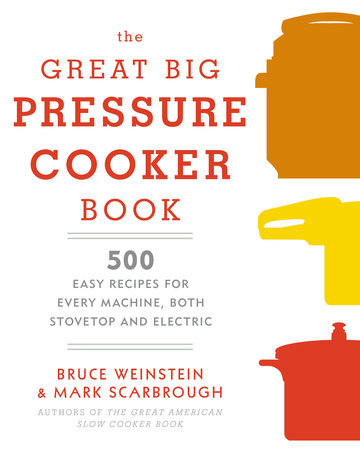
    Somewhere – amongst over two dozen cookbooks written –the prolific twosome has time to appear on QVC hawking mass cookbooks about pressure cookers to mid-Western cooking hobbyists. There’s also the column contribution to Weight Watcher’s online  and they can be viewed on Craftsy.com espousing on – what else? – cooking.

    Pressure Cooker
    Photo by Eric Medsker

    Like fellow comedic pairings before them, such as Gracie Allen and George Burns,  making the audience laugh is much a part of who they are as what they do when whipping up garlicky mash potatoes. It’s a blend of entertainment and cooking.

    To the outsider looking in,  their relationship seems to embody a lot of laughter….and eating. And drinking…. with lots of laughing. For Bruce and Mark, it all appears to be about having fun and enjoying life. After all is said and done, the inspiring pair is enjoying it all except they would like to have a little bubbly with all that love.

    Food People Questionnaire:

    What is your favorite food to cook at home?

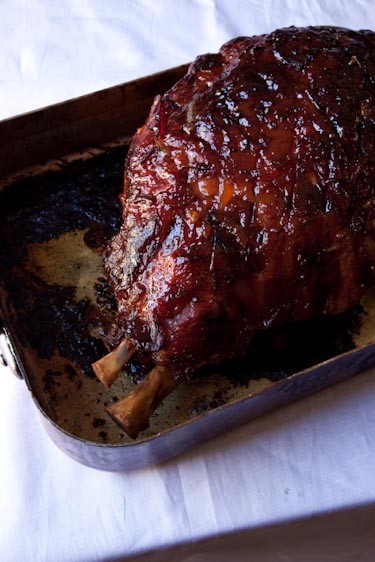
    Ham_ An Obesession with The Hindquarter
    Ham: An Obsession with the Hindquarters. Photo by Marcus Nilsson

    Bruce: Oxtails, beef tongue, or veal cheeks—tough choice.

    Mark: As you can see, there’s no need for me to cook at home. I write the books. I get fed. It’s a great trade-off.

    What do you always have in your fridge at home?

    Bruce: See the above answer.

    Mark: Skim milk—because I think it actually makes the best foam for my morning four-shot latte.

    What marked characteristic do you love in a person with whom you are sharing a meal?

    Bruce: A nice shirt—I’m going to be looking at it all night.

    Mark: Well, maybe not, Bruce! I really like good conversation skills. Give-and-take. Back-and-forth. First time someone says, “Another thing about me is . . .” I’m out of there.

    What marked characteristic do you find unappealing in a person with whom you are sharing a meal?

    Bruce: Slurping solid food.

    Mark: Texting. Please. Stop.

    Beer, wine or cocktail?

    Bruce: Cocktail to start, wine with, beer after.

    Mark: Wine. I hear they’re making it in other colors besides red these days. Wouldn’t know.

    Your favorite cookbook author?

    Bruce: Fuchsia Dunlop. My Sichuan master.

    Mark: Abby Dodge. It’s right every time.

    Your favorite kitchen tool?

    Hands by Martinak15Bruce: My hands.

    Mark: His cleaned and dried hands.

    Favorite types of cuisine to cook?

    Bruce: Anything east of India. Crazy about Sichuan these days. Want to come over for a ten-course tasting dinner?

    Mark: Worcestershire sauce. Seriously. I make the best.

    Beef, chicken, pork or tofu?

    Bruce: If only tofu had bones.

    Mark: Well, lately, salmon fillets. Cilantro, mint, sliced fresh jalapeños, olive oil, crunchy salt. Trust me.

    Favorite vegetable?

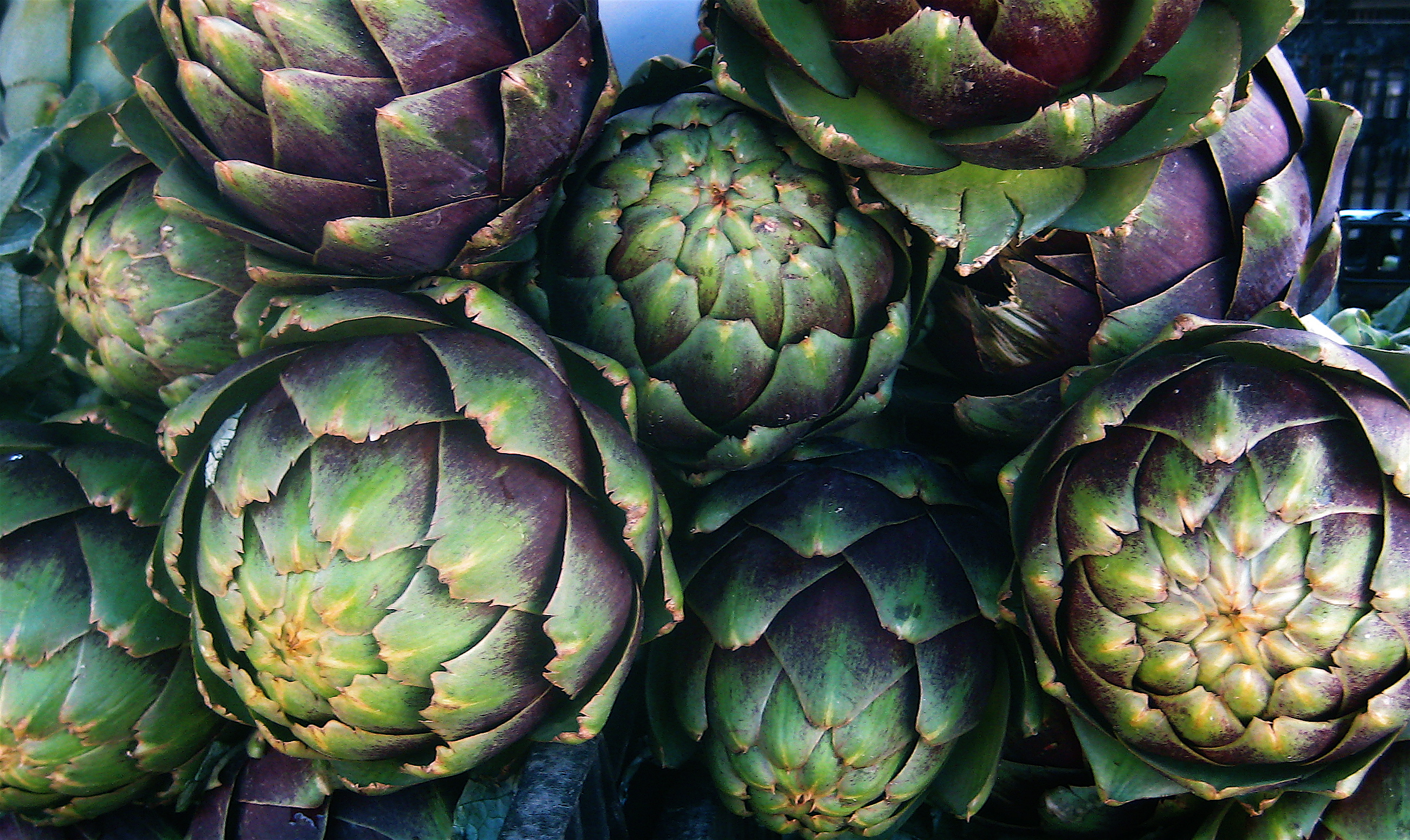
    ArtichokesBruce: Artichokes, preferably trimmed and cleaned by someone else

    Mark: Winter squashes as so much. I had a roasted Blue Hubbard the other night that was orgasmic.

    Chef you most admire?

    Bruce: Tony Wu. Ever see this guy hand-pull noodles? Check out his youtube videos.

    Mark: Right now, Daniel Eddy at Rebelle in New York City. Kick. Ass. Food.

    Food you like the most to eat?

    Bruce: Grilled burger any day of the week.

    ƒEpoisses
    Photo by Edsel Little.

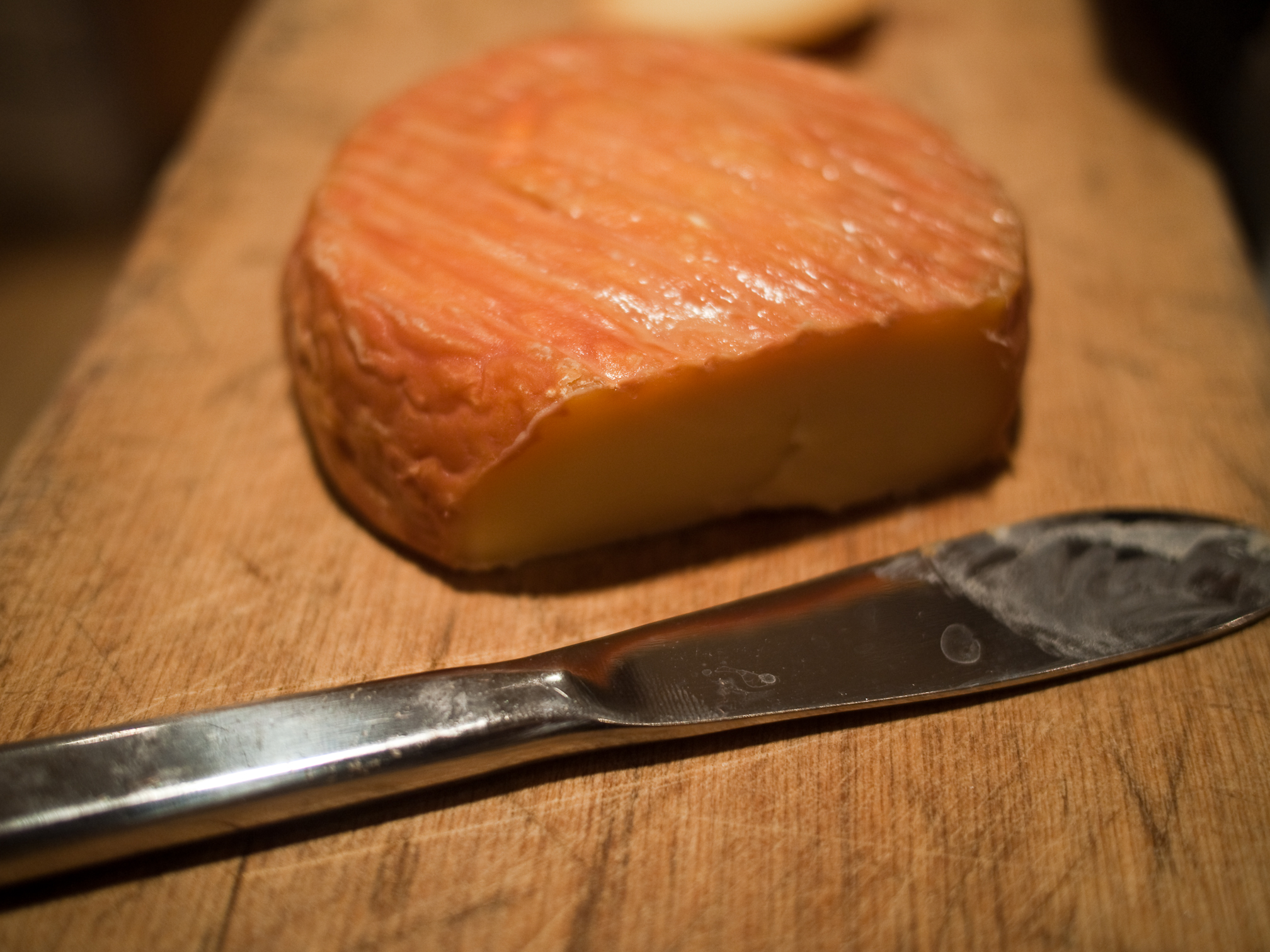
    Mark: I have a healthy appetite. Enough said. But my choice indulgence is Époisses de Bourgogne.

    Food you dislike the most?

    Bruce: Root beer. I have to wipe it off my tongue with a rag.

    Mark: Jell-O. Period. Also, panna cotta, its evil twin.

    What is your favorite non-food thing to do?

    Bruce: Play Chopin preludes.

    Mark: Read lyric poetry. I have a podcast on it. Check it out: Lyric Life on iTunes.

    Who do you most admire in food?

    Bruce: Bill Niman. He changed the way we think about food in this country.

    Mark: My agent. Twenty-seven cookbooks sold for us ain’t too bad.

    Where is your favorite place to eat?

    Bruce: Siena. No questions.

    Mark: Joucas, France. (There’s only one restaurant. See below.)

    What is your favorite restaurant?

    Beach Point Coast, Prince Edward Island
    Beach Point Coast, Prince Edward Island

    Bruce: Richard’s Fresh Seafood on Covehead Wharf in the national park on Prince Edward Island, Canada

    Mark: The restaurant at Le Mas des Herbes Blanches in Joucas, France. Go in the summer when the lavender fields are in bloom against the red cliffs of Roussillon down in the valley.

    Do you have any tattoos? And if so, how many are of food?

    Bruce: Some things you have to leave to the imagination.

    Mark: No. And I still have things you can imagine.

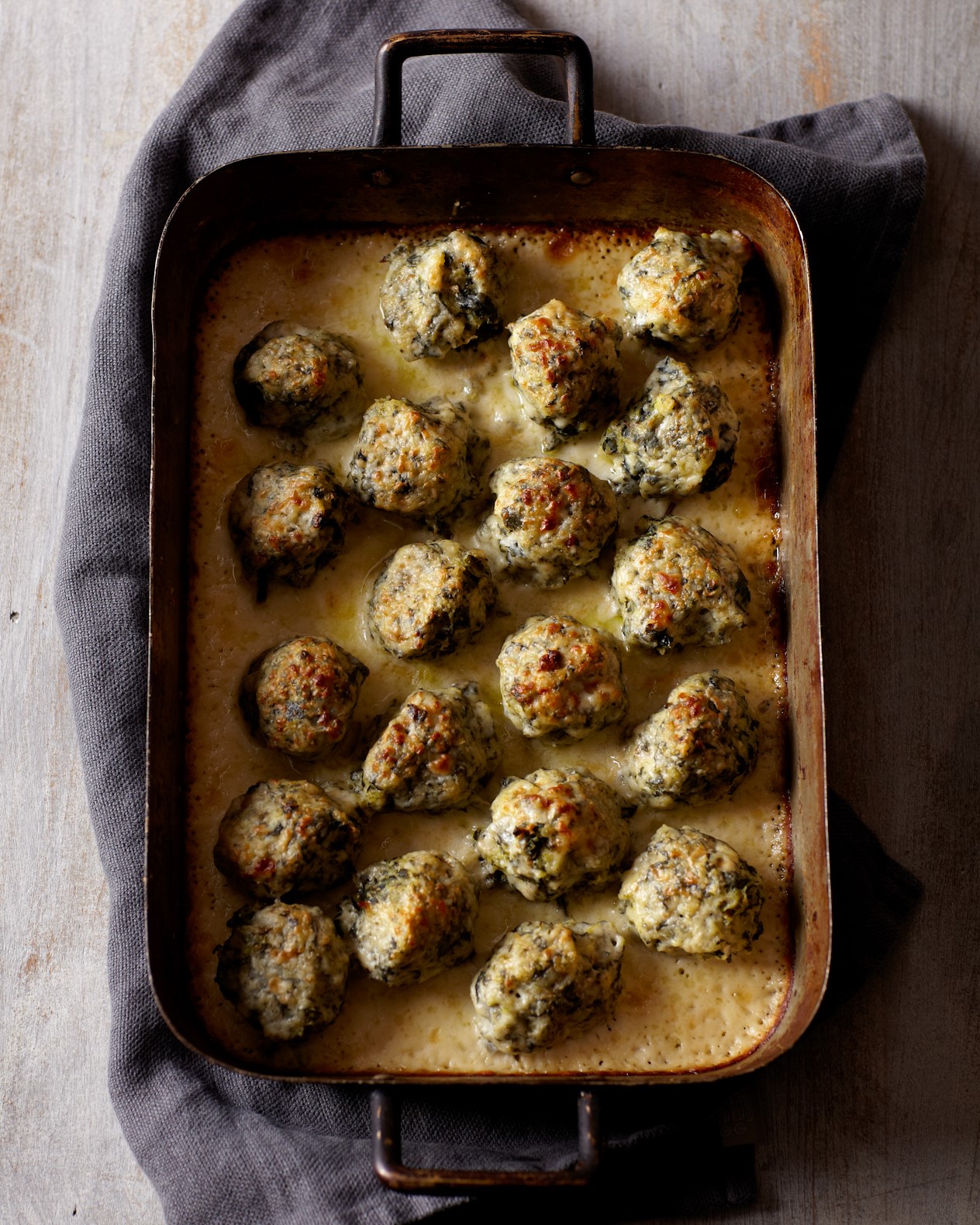
    Ricotta/Spinach Dumplings, Parmesan Cream Sauce (6 servings)

    Vegetable Dinner Parties
    Photo by Eric Medsker

    From Bruce and Mark:  Winter weekends are made for dinner parties. As the sun sets early and the darkness creeps over our yard, we banish the cold by lighting the candles and serving hearty, warming fare like this casserole. The tender, spiced, even lemony dumplings are baked in a simple cream sauce that emphasizes their luxurious texture while softening some of their sweetness. It’s best minutes out of the oven, so plan your timing carefully.

    • One 10-ounce box frozen chopped spinach, thawed
    • 8 ounces regular or part-skim ricotta
    • 4 ounces Pecorino Romano, finely grated (about 1 cup)
    • 3 large egg yolks, at room temperature
    • 3/4 cup semolina flour, plus additional for rolling the dumplings
    • 1 tablespoon minced chives
    • 1 tablespoon minced dill fronds
    • 1/2 teaspoon finely grated lemon zest
    • 1 teaspoon freshly ground black pepper, divided
    • 1/2 teaspoon salt
    • 1/4 teaspoon grated nutmeg
    • 1 tablespoon unsalted butter
    • 1 tablespoon all-purpose flour
    • 1 cup whole or 2% milk
    • 2 tablespoons dry white wine, such as a California Chardonnay
    • 2 ounces Parmigiano-Reggiano, finely grated (about 1/4 cup)
    1. Squeeze the thawed spinach by the handful over the sink to remove excess moisture, then crumble it into a large bowl.
    2. Stir in the ricotta, pecorino, egg yolks, semolina, chives, dill, zest, 1/2 teaspoon pepper, the salt, and nutmeg to form a wet but coherent dough. Cover and refrigerate for 2 hours.
    3. Spread more semolina flour on a large plate. Use damp, clean hands to form the dough into 24 balls, each about the size of a golf ball, rolling them one by one in the semolina to coat thoroughly before setting them on a large lipped baking sheet.
    4. Bring a large pot of water to a boil over high heat. Working in batches, add 5 or 6 dumplings and boil for 10 minutes. Use a slotted spoon to scoop them out, drain them, and transfer to a 9 x 13-inch baking dish. Repeat with the remaining dumplings.
    5. Position the rack in the center of the oven and heat the oven to 375°F.
    6. Make the sauce by melting the butter in a large skillet over medium heat. Whisk in the flour until a creamy paste. Slowly whisk in the milk in a steady, fine stream until the paste has dissolved. Whisk in the wine and continue whisking over the heat until thickened and bubbling, 3 to 4 minutes. Whisk in the Parmigiano-Reggiano, then pour this sauce over the dumplings in the baking dish. Sprinkle the remaining 1/2 teaspoon pepper over the casserole.
    7. Bake until lightly browned and bubbling, about 20 minutes. Cool for 5 to 10 minutes before serving.

    Ahead: Complete the recipe through step 6 up to 2 hours in advance; store, lightly covered, at room temperature.

    Garnish: Although we’re not a fan of side dishes at dinner parties, this casserole could use a little contrast. Spoon the baked dumplings and sauce onto plates, accompanied by grilled asparagus spears, drizzled with a flavorful but light vinaigrette.

    Note: Make sure the lemon zest is in fine bits. If you don’t use a small-bored microplane to grate the zest, mince it on a cutting board to make sure no one ends up with a big thread in a single dumpling.

    The End. Go Eat. 
    (Correction: Bruce Weinstein and Mark Scarbrough’s monthly column was incorrectly attributed to Fine Cooking Magazine. It is Weight Watcher’s Online.)


  • i8tonite with Mona Dolgov: A Perspective on the Food Experience…Why I Do What I Do

    i8tonite with Mona Dolgov: A Perspective on the Food Experience…Why I Do What I Do

    This is part of our on-going series on Food Musings. Today, we share the words and thoughts of Mona Dolgov, co-author of The Perfect Portion Cookbook.

    Mona Dolgov: A Perspective on the Food Experience…Why I Do What I Do

    I have always been fascinated with our relationship with food. It fuels our bodies, heals our ailments, gratifies our accomplishments, expresses our culture and identity, and graces our happiest celebrations. It can also be the culprit for risk and disease, even a crutch to combat sadness. Despite this, the pure chemistry and sensory experience in the kitchen, of cooking a meal from sight and aroma, to taste and the “natural” (vs. chemical) reaction satisfies both my creative spirit and my scientific curiosity.

    As a nutritionist, business marketer, product and recipe developer for the past 30 years, I’ve pondered the complexity of the food and how consumers value it.

    America’s dramatic decline in healthy eating is striking. The increase of dual working households and overscheduling of children, and technology has altered the traditional sit down meal and led to minimal time for “real home cooking”. The microwave oven, a welcomed kitchen technology, in addition to the myriad of prepared food items has led to the decline of quality food and the uptick of quick and easy prepared meals. Mealtime has become a function to feed a belly fast to get to the next task, rather than focus on the soul-satisfying home-cooked food.

    The result? Weight gain, obesity, and all the bad stuff that comes with it—increased incidence of diabetes, heart disease, and based on medical research, certain forms of cancer. On an emotional level, it has led to diminished self-image, emotional stress, and depression. All of this drives me to provide consumers with knowledge, advice, healthy recipes and kitchen products that encourage a return to the kitchen to eat “real” food. I’ve chosen to work with product goods companies, home appliance companies, and supermarket chains that similarly embrace these goals.

    Some phenomenal thought leaders have recognized these issues: the rise of healthcare costs (due to the increase of obesity, Type II diabetes and heart disease), the recognition of the “paragraph ingredient lines” filled with unpronounceable additives, and the unacceptable better-for-you quality of the food served at schools today for our children. Over the past 5-10 years, there has been resurgence toward eating healthier. Incorporating fresh fruits and vegetables, “perimeter supermarket shopping,” and product development in the appliance and food industry that has led to slow cookers, blenders for nutrient juicing, and cleaner and healthier ingredient in products, such as Greek yogurt, snack bars, plus lower sugar and sodium options, in boxed foods, like pasta, cookies, and soups. Consumers are beginning to seek this new lifestyle, and the tables have started to turn.

    An issue still remains. The baby boomer generation is reluctant to cook and their lack of participation in the kitchen influences their children. Parents have worked like crazy, had families, and relied on the microwave and other pre-made offerings to get food on the table. Cooking has become a “holiday hobby”, or a goal if I had the time (and wasn’t using that time for something else I preferred to do).

    The weekday home-cooked family dinner is a real challenge. Who doesn’t want to serve dinner around the table to family and friends? To overcome, consumers have increased buying delicious prepared foods, take-out, and frozen meals instead of toil over a hot stove and fail. Everyone eats at a different time, and most of the meals are eaten on the go or standing up! Moreover, kids are not taught the basics of cooking. I am one of the rare mothers who taught my children to cook. Their friends are amazed that they can prepare a meal from “scratch”.

    For the past ten years, it has been my goal to make the entire food experience from purchase to the table, better for consumers by making it less intimidating, engaging and easier. I like making it fun — creating game changing products or sharing healthy tricks that ease the intimidation and open the door to blissful food experiences. Such was my involvement with launching the one-pot slow cookers and cooking systems, easy one-press blenders and food processors to make smoothie making and vegetable chopping a breeze. Plus, I’ve worked with great teams to create and design cookbooks for countertop appliance manufacturers and retailers, developing entertaining, easy- to-make recipes that provide 5-star cooking results. By having this lofty goal, my other intention is to help reduce obesity in this country. Knowledge is power—if I could, in some way, be an ally to provide actionable advice to better eating habits, then my personal passion has been fulfilled.

    The Perfect Portion Cookbook is my personal and most exciting project to date. Co-written with Anson Williams of Happy Days TV fame and Bob Warden, this two-year project combines all of my scientific background, product development, marketing, consumer insights, and nutritional and culinary expertise. Anson’s idea to create recipes and snacks that use a 100-calorie system spoke to me. It is a simple way to help consumers eat responsibly and visualize how much to eat (100-calories at a time!) with simple and delicious comfort food favorites. Yes, you CAN have great tasting food that IS better for you! The biggest challenge was improving recipes to make them satisfying, delicious, and the caloric value divisible exactly by 100. We wanted readers to be mindful of their everyday food choices through 100-calorie portions.

    My favorite part of the book was sharing nutritional and culinary tricks that are simple and clever. Our 100-calorie French toast, made with “better butter batter” (can you say that 5x fast) uses a little butter and honey in the batter. It replaces the butter cooked in the pan and can save hundreds of calories, without compromising on taste. The creamy mac and cheese recipe serves up a filling portion at 300 calories and has a punch of flavor using extra sharp cheddar and Parmesan cheese. Or how about using simple cupcake pans for making individual 100-calorie cheesecakes? I hope that these cooking tips are passed through the generations to become easy go-to habits for a healthier life.

    I dream of many goals: the return to the kitchen as a ‘family central’, inspiring future cooks, and once again sitting around the table talking about our day. Small steps to create eating patterns through healthier meals and scaling recipes to 100-calorie portions is the future to getting consumers back on track and will help to contribute to slashing diabetes, heart disease and lowering obesity. Yes, we can do it!
    Mona Dolgev: A Perspective on the Food Experience…Why I Do What I DoA nutritionist by training from Cornell University, with 25 years of acquired marketing acumen, Mona Dolgov has created her sweet spot. She has led and contributed to over 20 launch campaigns, created over 75 products in her career, and owns 3 product patents (NINJA®, Jarden®, and The First Years®). She has led the development of over 20 cookbooks for Jarden® (Crock-Pot® Slow Cooker), Ahold® (Taste of Giant®), and for Euro-Pro® (NINJA®). She is known for defining innovative trends, creating engaging consumer stories and WOWs, and creating innovative consumer uses and recipes that are on-trend.

    Mona has also led and created scripts, recipes, and tips with a variety of celebrity chefs and food bloggers, dietitians, in addition to co-producing the development for You-Tube recipe videos.

  • i8tonite with Phoenix’s Barrio Café Chef Silvana Salcido Esparza & Chiles en Nogada Recipe

    i8tonite with Phoenix’s Barrio Café Chef Silvana Salcido Esparza & Chiles en Nogada Recipe

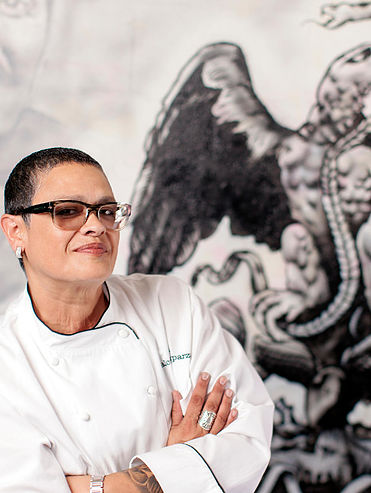
    i8tonite with Phoenix’s Barrio Cafe Chef Silvana Salcida Esparza & Chiles en Nogada RecipeThere is no doubting Chef Silvana Salcido Esparza’s immense impact in the Phoenix restaurant world. Ask any chef currently with a restaurant in the Valley of the Sun about Esparza, and they will respond, “Oh, she’s the best. She’s tough, but she is one of the best.”

    A second generation Mexican American, Esparza was born as a hija de las panaderias (baker’s daughter) in Merced County, California, America’s Salad Bowl. In her early teens, she already started using her entrepreneurial skill set and cooking acumen to fashion her first carnecaria, serving up grilled meats next to her parent’s bakery. She worked a variety of well-paying jobs as a broker, Aramark and executive chef at a variety of Arizona hotels before opening Barrio Café.

    i8tonite with Phoenix’s Barrio Cafe Chef Silvana Salcida Esparza & Chiles en Nogada Recipe

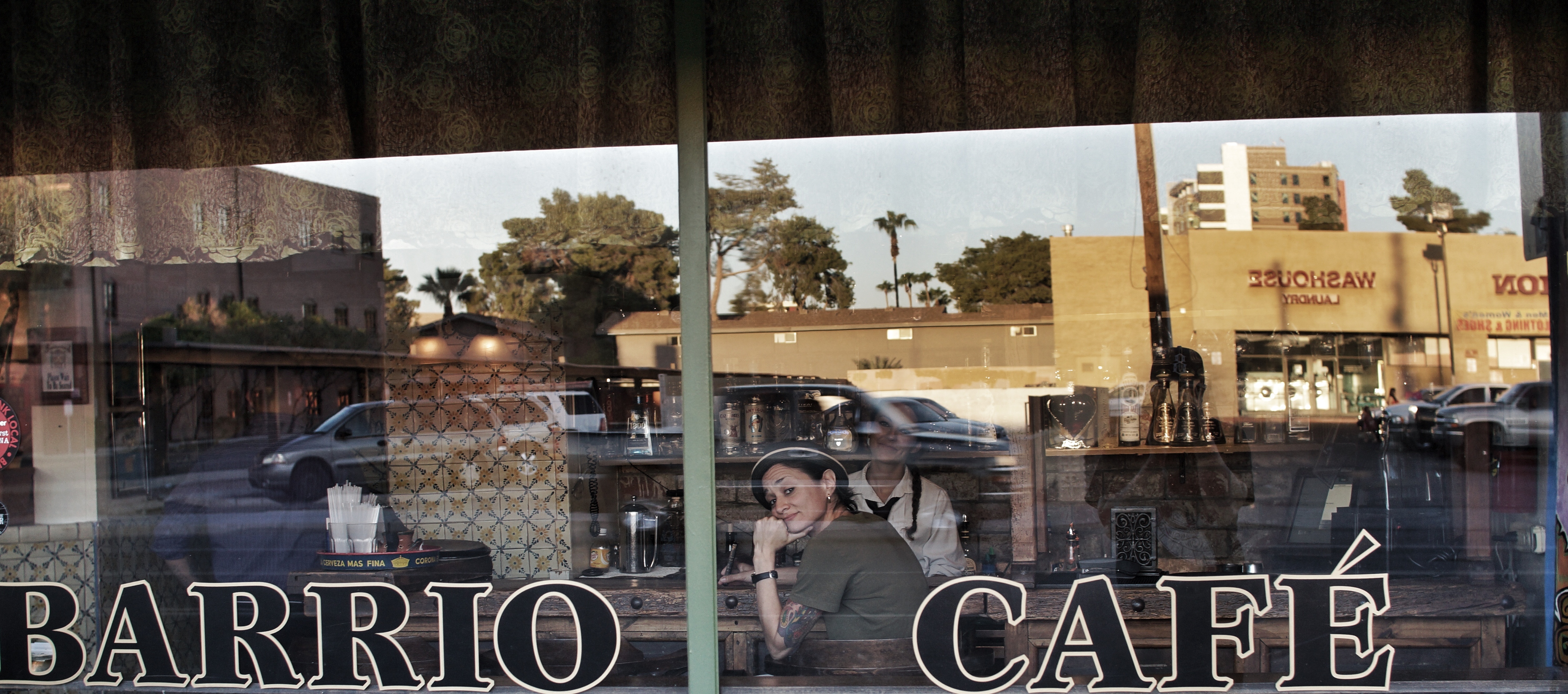
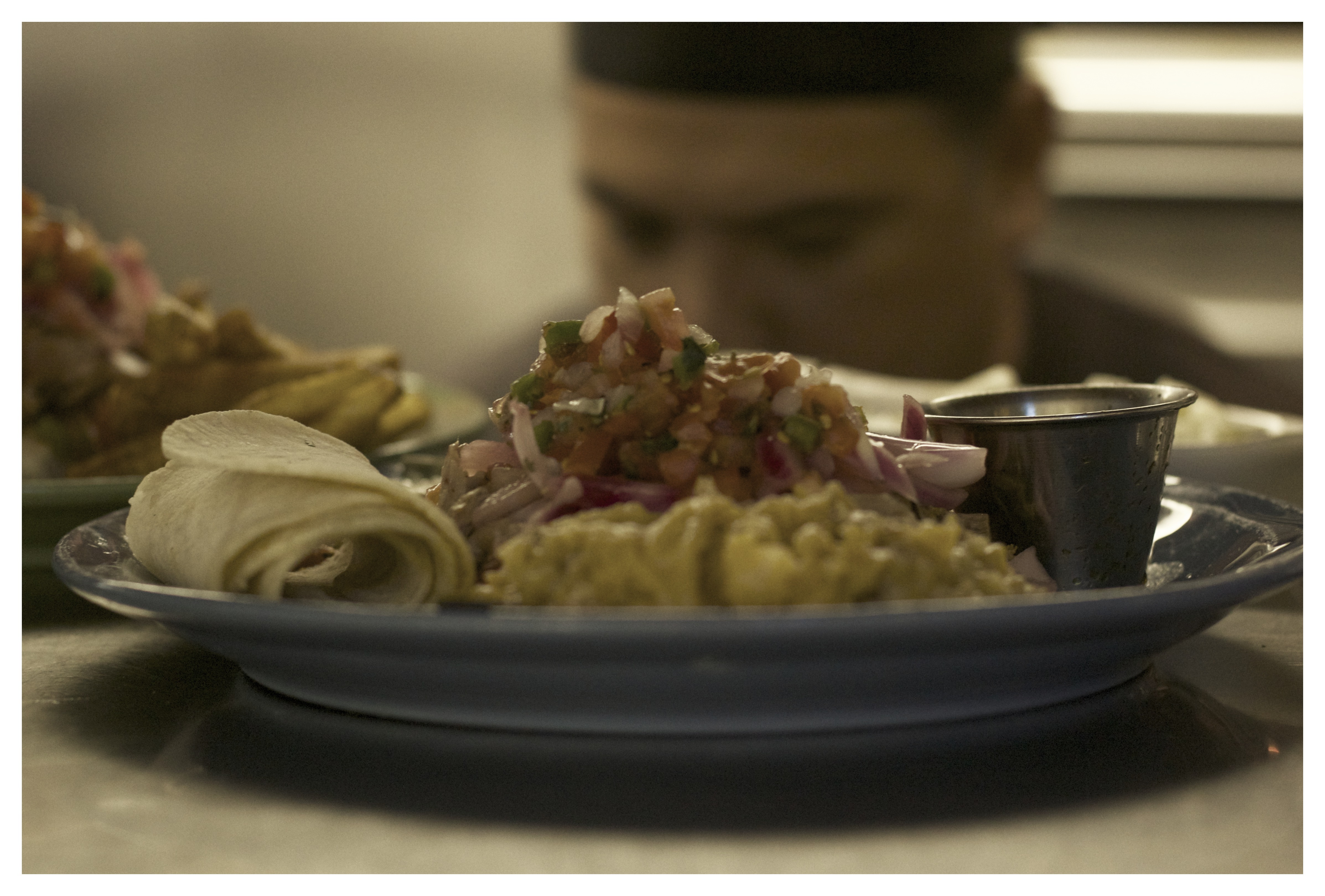
    Currently, she has four restaurants and another one on the way, Barrio Café Gran Reserve, opening in downtown Phoenix, on Grand Avenue, a hipster spot. Esparza came to Valley of the Sun prominence in 2002 with Barrio Café, serving central Mexican food with European influences, tableside guacamole, and real south of the border sauces. Her dishes include 12 Hour Roasted Pork and Posole Verde. In The Yard, a large complex housing four restaurants, Esparza created Barrio Urbano, a hipper, millennial friendly experience, which also serves breakfast, and two in the Sky Harbor International Airport. Esparza is undeterred in her quest for making the best Mexican that she can make, as she says, “I will not resort to using yellow cheese.”

    Ezparza is an outspoken, leading advocate on immigration and LGBTQ causes. To showcase the creativity the Mexican American population has brought to Arizona, she, along with other community leaders generated a non-profit organization called Calle 16, dedicated to showcasing various arts, food, and other Mexican exports to the Valley of The Sun.

    i8tonite with Phoenix’s Barrio Cafe Chef Silvana Salcida Esparza & Chiles en Nogada Recipe

    Chef’s Questionnaire (with a nod to Proust):

    How long have you been cooking? Since I was six years old.

    What is your favorite food to cook? Italian

    What do you always have in your fridge at home? Condiments, demi-glaze, anchovies

    What do you cook at home? Barbeque.

    What marked characteristic do you love in a customer? I love when they are enthusiastic.

    What marked characteristic do you find unappealing in a customer? When they lack enthusiasm. I don’t want them to be dead fish.

    Tupperware, Rubbermaid, or Pyrex? Tupperware.

    i8tonite with Phoenix’s Barrio Cafe Chef Silvana Salcida Esparza & Chiles en Nogada RecipeBeer, wine, or cocktail? Cocktail.

    Your favorite cookbook author? Patricia Quintana

    Your favorite kitchen tool? Molacajete

    Your favorite ingredient? Chile

    Your least favorite ingredient? Lavender

    Least favorite thing to do in a kitchen? If I have to…wash dishes.

    Favorite types of cuisine to cook? Italian

    Beef, chicken, pork or tofu? Pork

    Favorite vegetable? Chayote

    Chef you most admire? Patricia Quintana

    Food you like the most to eat? Italian, barbeque.

    Food you dislike the most? Fried chimichanga. Fake Mexican. Yellow cheese.

    How many tattoos? And if so, how many are of food? Too many.

    i8tonite with Phoenix’s Barrio Cafe Chef Silvana Salcida Esparza & Chiles en Nogada Recipe

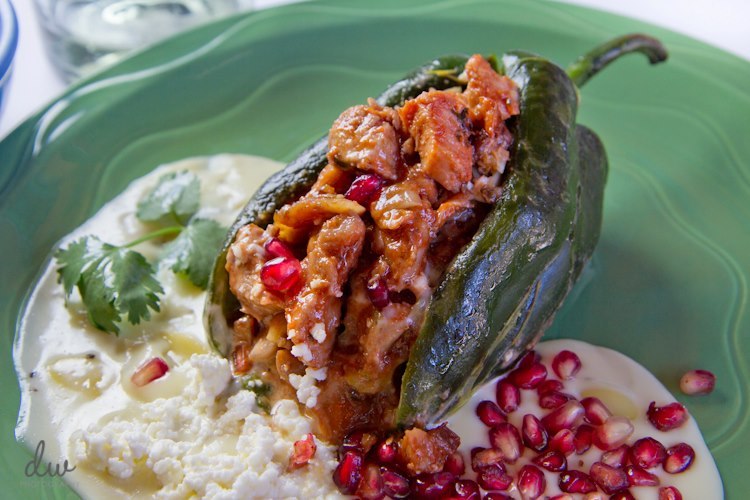
    Recipe: Chiles en Nogada

    i8tonite with Phoenix’s Barrio Cafe Chef Silvana Salcida Esparza & Chiles en Nogada Recipe
    Chiles en Nogada Recipe

    Ingredients
    Chiles:
    1 tablespoon canola oil
    2 boneless skinless chicken breasts, diced small
    2 teaspoons diced onion
    1 teaspoon diced apple
    1 teaspoon diced dried apricot
    1 teaspoon diced pear
    1 teaspoon raisins
    1 clove garlic, minced
    2 teaspoons tomato paste
    1 cup red wine, preferably Cabernet
    Kosher salt and black pepper
    4 poblano peppers, roasted and peeled

    Nogada Sauce:
    1 tablespoon canola oil
    1 shallot, minced
    1 clove garlic, minced
    1 cup white wine, preferably Chardonnay
    2 cups heavy cream
    Kosher salt and black pepper
    1/4 cup almonds, roughly chopped
    Fresh cilantro leaves, for serving
    Pomegranate seeds, for serving

    Directions
    For the chiles: Heat a large skillet over high heat. Add the canola oil when hot. Add the chicken and saute until the chicken starts to turn white, 7 to 8 minutes. Add the onions and continue to saute until the onions are translucent, 3 to 4 minutes. Add the apple, apricot, pear, raisins and garlic and saute until they begin to soften, about 1 minute. Add the tomato paste and stir so the paste coats all of the ingredients. Add the red wine and cook until the chicken is tender, about 5 minutes. Season with salt and pepper and let cool slightly. Remove the seeds from the peppers by making one long slice down the sides, stuff them with the chicken-fruit mixture and keep warm until ready to serve.

    For the nogada sauce: Heat the oil in a saute pan over medium-high heat, add the shallots and saute until translucent, about 3 minutes. Add the garlic and continue to saute until the garlic has turned a light caramel color, about 1 minute. Add the white wine and reduce until almost gone, 3 to 4 minutes. Add the cream and simmer until reduced by half, 5 to 7 minutes. Season with salt and pepper and finish with the almonds.

    For serving: Place each stuffed pepper on a plate and spoon some of the nogada sauce over top. Garnish with the cilantro and pomegranate seeds.

    Note: This recipe was originally published by Chef Silvana Salcida Esparza at http://www.foodnetwork.com/recipes/chiles-en-nogada.html

    Pin for later:

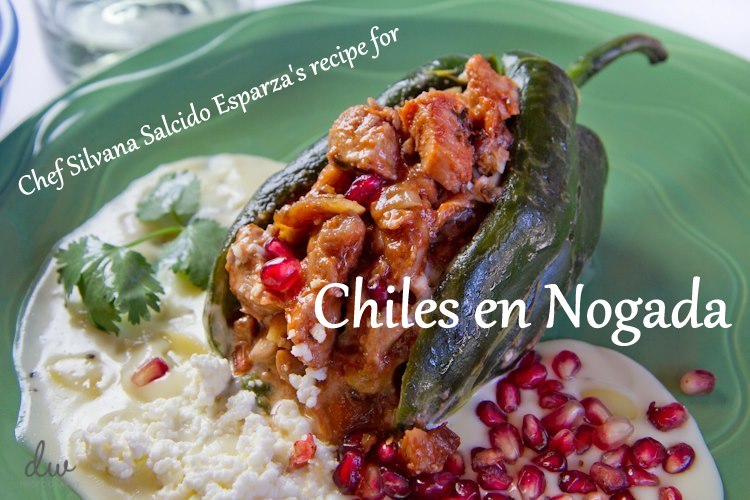
    Chef Silvana Salcido Esparza's recipe for Chiles en Nogada

    – The End. Go Eat. –
  • i8tonite with Food Person Bob Warden: QVC Pioneer and Cooking Legend

    i8tonite with Food Person Bob Warden: QVC Pioneer and Cooking Legend

    i8tonite with Bob Warden: QVC Pioneer and Cooking LegendThere is no arguing that Bob Warden is one of leading figures in today’s food world. His presence on QVC shopping network has pushed several billion dollars in sales, ranging from small kitchen appliances such as a pressure cooker, the Ninja bullet, and countless cookbooks. Furthermore, he is a pioneer in television shopping – selling the FoodSaver Vacuum Sealing Systems in 1986 ushered in the first kitchen product infomercial.

    Born in the Midwest, Warden studied to be an accountant. However, with the adage of being in the “right place at the right time,” opportunities began opening up in the food world, taking him to Alaska, San Francisco, and Salt Lake City. Now, residing in New England and Pennsylvania, the seventy-one year seems to have no bounds and endless energy, starting a new project, The Perfect Portion Cookbook with actor and food entrepreneur Anson Williams and nutritionist and co-author, Mona Dolgov.

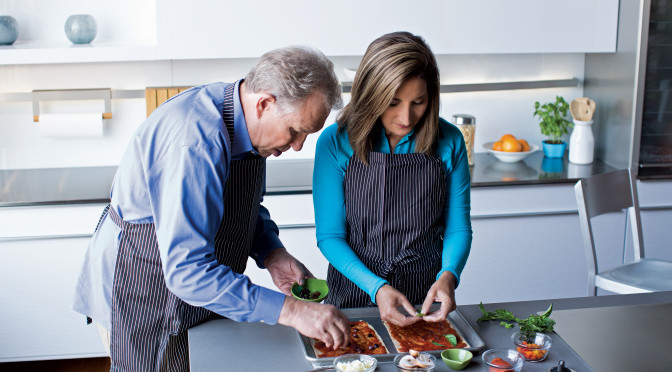
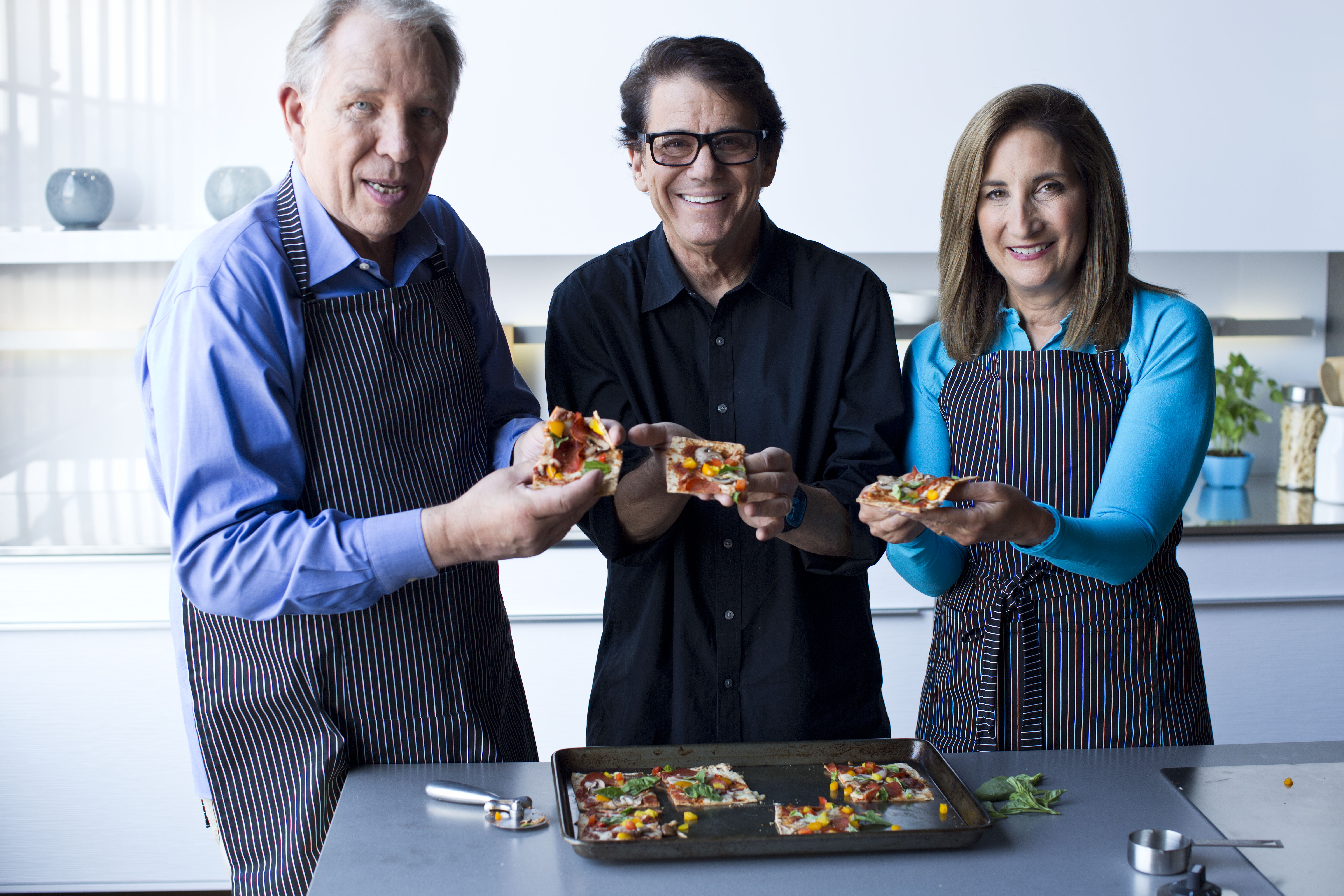
    Flatbread Pizza for Perfect Portions Cookbook 2015 . From i8tonite with Bob Warden: QVC Pioneer and Cooking Legend
    Flatbread Pizza for Perfect Portions Cookbook 2015

    Warden has collaborated with a variety of kitchen companies, bringing over 1,000 products to the consumer. From 1998 to 2014, Warden was instrumental in developing QVC’s private label Cook’s Essentials® and Technique® cookware and small electric appliance lines. During that span, Warden personally appeared as a celebrated QVC on-air chef for more than 5,000 live presentations.

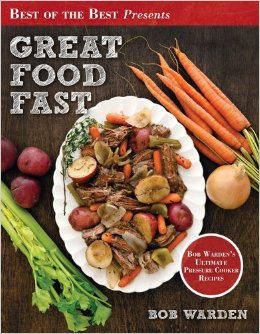
    Great Food Fast. i8tonite with Bob Warden: QVC Pioneer and Cooking LegendWarden and his team have authored, developed, printed, and published over 30 cookbooks, totaling over 3 million books sold. By doing so, he has become the recognized international expert in creating cookbooks specifically designed to support specialty housewares products, such as pressure cookers, Ninja blenders, slow cookers, steam ovens, etc. It’s quite an accomplishment, as he may be better known than Elvis, Madonna, and The Beatles.

    i8tonite with Bob Warden: QVC Pioneer and Cooking Legend
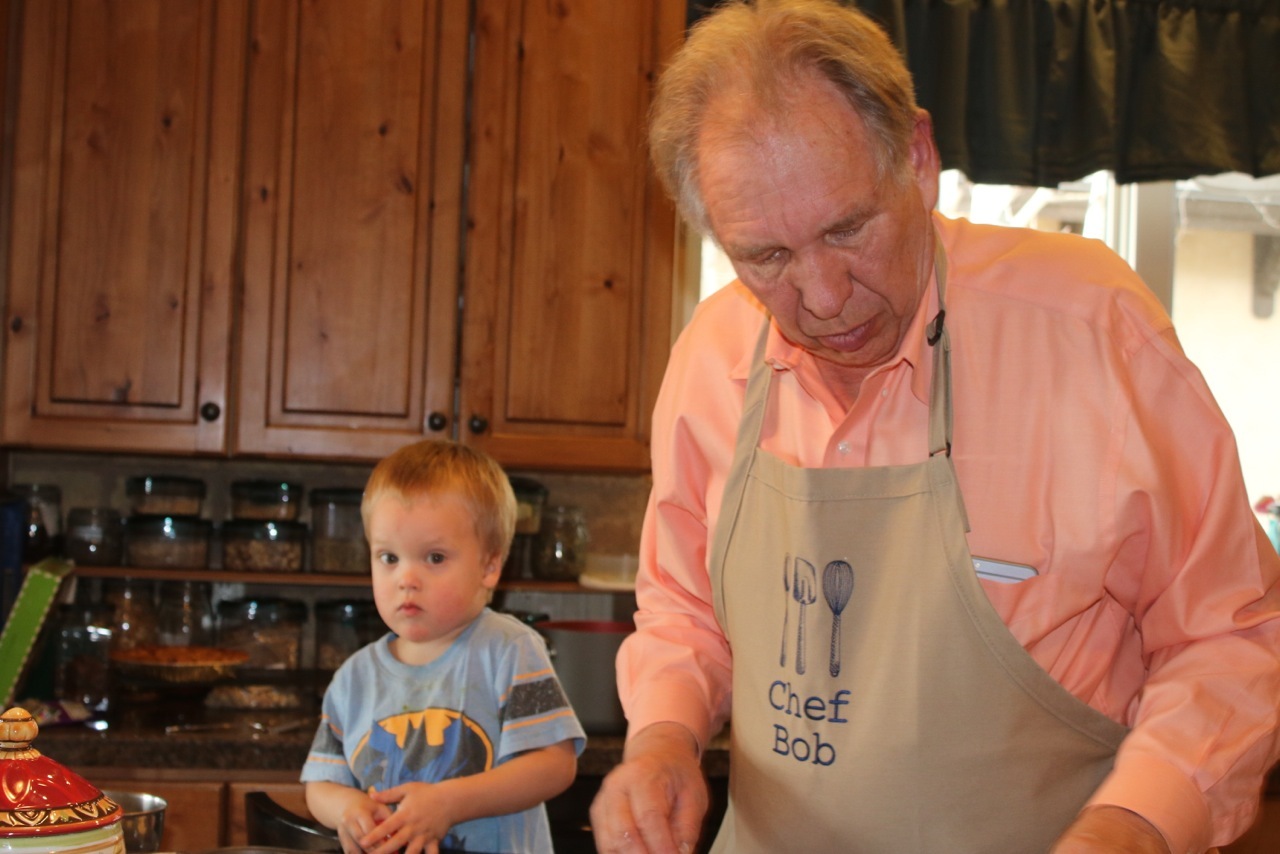
    Grandpa Bob needs help

    Asked what his greatest accomplishments are, he replies, “My six children and fourteen grandchildren, but I’m almost proud on a professional level about bringing breakthrough kitchen concepts to the consumer.”

    Food People Questions (with a nod to Proust):

    Baby Back Ribs. i8tonite with Bob Warden: QVC Pioneer and Cooking Legend

    What is your favorite food to cook at home?
    My over-researched and over-tested Short Rib recipe served over Risotto

    What do you always have in your fridge at home?
    Fresh Berries, raspberries, blueberries, blackberries, and strawberries

    What marked characteristic do you love in a person with whom you are sharing a meal?
    Intelligent, witty conversationalist!

    What marked characteristic do you find unappealing in a person with whom you are sharing a meal?
    Rudeness, especially talking on the phone, texting or reading email

    i8tonite with Bob Warden: QVC Pioneer and Cooking Legend
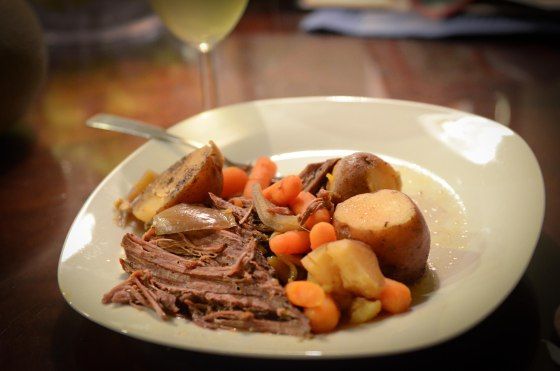
    Bob Warden’s perfected potroast

    Beer, wine, or cocktail?
    Yes, Yes, and Yes. If only one, a really good red or white table wine to fit the occasion.

    Your favorite cookbook author?
    Americas’s Test Kitchen – I use their work as my reality check.

    Your favorite kitchen tool?
    My Sarah Weiner chef’s knife, because I am a snob when it comes to knives.

    Favorite types of cuisine to cook?
    Discovery food, trying new ethnic combinations in old comfort food recipes

    Beef, chicken, pork, or tofu?
    Pork! I was raised on a pork farm and know how to pig out!

    Favorite vegetable?
    Eggplant, because it is so versatile

    Chef you most admire?
    So many for different reasons. If I could pick one to be my private teaching chef, it would be Eric Rupert.

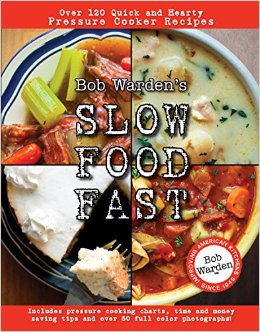
    Slow Food Fast. From i8tonite with Bob Warden: QVC Pioneer and Cooking Legend

    Food you like the most to eat?
    Flat Bread Pizza, because you can put and endless array of tasty food on a pizza, and always have crunch.

    Food you dislike the most?
    To look at: Overcooked Asparagus. I never eat it!

    What is your favorite non-food thing to do?
    Play Tennis so I can eat more food!

    Who do you most admire in food?
    Anthony Bourdain, because he is brave enough to try the food that I am not brave enough to try.

    Where is your favorite place to eat?
    My local Pub, its like being wrapped in a comfortable warm sweater of food and people I know.

    What is your favorite restaurant?
    Le Bernardin because there is no better combination of food, service, ambience, and grandeur in America.

    Do you have any tattoos? And if so, how many are of food?
    No, but if I were to get one, I would wear a radish in the right place.

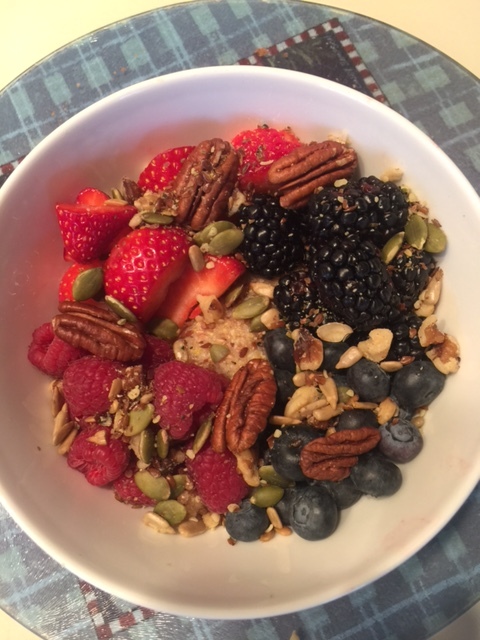
    Recipe: Berry Good and Nutty Whole Grain Cereal Breakfast . From i8tonite with Bob Warden: QVC Pioneer and Cooking Legend
    Recipe: Berry Good and Nutty Whole Grain Cereal Breakfast


    Recipe: Berry Good and Nutty Whole Grain Cereal Breakfast

    1/3 cup Bob’s Red Mill 10 grain cereal mix
    1 cup water
    7 walnut halves
    5 pecan halves
    1 pinch pumpkin seeds
    1 pinch flax seed
    1 cup of berries I like four at once: raspberries , blueberries, blackberries and strawberries
    1 tablespoon demerara or brown sugar

    Bring water to boil in a small saucepan.
    Add cereal mix and stir, reduce heat, and cook for 5 minutes.
    Add all remaining ingredients to a cereal bowl, spoon cereal over the top, and stir together.
    Eat, feeling good about yourself, because you have all the darn grains, fruit, seeds, nuts, and fiber out of the way for the day.

    The End. Go Eat. 

  • i8tonite: with Palm Springs’ Workshop Chef Michael Beckman

    i8tonite: with Palm Springs’ Workshop Chef Michael Beckman

    i8tonite: with Palm Springs' Workshop Chef Michael Beckman
    Chef Michael Beckman: Photo by Van Roo

    Palm Springs is known as a resort town – an enclave for second homes, secret hotel pools, and cocktails. The cocktail culture is the town’s prevailing modus operandi. With a population of a little over 50,000, it’s never really been considered a food haven. Ask a few of the locals who live in the desert year round, and the answer is their private chef does the cooking. Or, they recommend one or two restaurants which are more about an elongated drink menu rather than a superbly pan-roasted fish or braised greens from the surrounding Coachella Valley farmers. There are a few notable exceptions to this observation.  The first that comes to mind is the four-year-old Workshop, owned and cheffed by Michael Beckman, which can be the honest answer to the question: “Where to eat in Palm Springs?”

    i8tonite: with Palm Springs' Workshop Chef Michael Beckman
    Workshop: Photo by Michael Horton

    There are two reasons for this. The first is that Mr. Beckman is a classically French-trained chef with stints apprenticing, cooking, and learning in European kitchens, including Burgundy’s three Michelin-starred Lameloise and working under noted German chef Thomas Kellerman at the Ritz-Carlton, Berlin. Beckman maybe the only independent chef in the Southern California desert communities to claim to work in a Michelin-starred dining room.

    i8tonite: with Palm Springs' Workshop Chef Michael BeckmanSecondly, he’s smart enough to promote his restaurant outside the Palm Springs area, getting the first and the last reservations from area visitors. It’s been a very smart business move to market his talents to the gourmand set, rather than wait for visiting travel media shuffling through for an annual Palm Springs pilgrimage. Instead of getting the backend of travel pieces, Beckman put forth the effort and it’s paid off with stories in Sunset Magazine, Bon Appetit, Eater, and Wall Street Journal. But the question remained: how could someone with Beckman’s background become part of Palm Springs? Truthfully, he stated he was a private chef working with a client based in Rancho Mirage. He grew to love the area’s farmers markets and vendors, as well as the community’s natural beauty, so he stayed, opening Workshop and having a family.

    Interestingly, Beckman – though successful — is so dedicated to his

    i8tonite: with Palm Springs' Workshop Chef Michael Beckman
    Workshop: Photo by Michael Horton

    craft that he recently completed a several month staaj (cooking apprenticeship) with celebrated New York City’s chefs Dan Barber, Blue Hill Farms and Daniel Hume, Nomad (also of the Michelin-starred Eleven Park Madison). Beckman, as a chef, wants to continue to creatively evolve.

    i8tonite: with Palm Springs' Workshop Chef Michael BeckmanBeckman will have another feather to add to his list of accomplishments – Truss + Twine, a bar serving handcrafted cocktails and small bites; a chef will work in tandem with the bartenders behind the bar in a dedicated cooking area. Palm Spring’s newest watering hole is slated to open fall 2016. Lastly, he also partnered to oversee the food and beverage program for an unnamed independent 44-room hotel concept that that will have a restaurant and rooftop pool area. The hotel’s construction will start at the end of 2016.

    Beckman will soon be hailed as Palm Springs’ Emperor to All Things Culinary. Rightly so.

    Chef’s Questionnaire (with a nod to Proust):

    How long have you been cooking? 16 years.

    Chicken Diavolo. From i8tonite: with Palm Springs' Workshop Chef Michael Beckman
    Chicken Diavolo: Photo by Van Roo.

    What is your favorite food to cook? Braises are most satisfying for me with deep flavors that develop, and the cozy aromas and feel of a braised dish is somehow emotional for me.

    What do you always have in your fridge at home? Quesadilla mise en place.  Eggs for omelettes.  A perfectly made omelette is one of my favorite challenges to see a chef’s skill set.

    i8tonite: with Palm Springs' Workshop Chef Michael Beckman
    Lentil salad

    What do you cook at home? I love my Weber grill for smoking and grilling fish and meats.  I also get nostalgic for the Lebanese food I cooked as a private chef in Beverly Hills and love those flavors.  Super healthy and super flavorful.

    What marked characteristic do you love in a customer? Someone who puts us in the drivers seat and trusts us.


    What marked characteristic do you find unappealing in a

    Workshop Burger and Fries. i8tonite: with Palm Springs' Workshop Chef Michael Beckman
    Workshop Burger and Fries: Photo by Michael Horta

    customer? People who lie at the host stand about their reservation.  People who don’t even read the menu and want to order something they can get anywhere.

    Tupperware, Rubbermaid, or Pyrex? None of the above. Deli cups.

    Beer, wine or cocktail? Yes, please.

    Your favorite cookbook author? Dan Barber for “The Third Plate

    Your favorite kitchen tool? My Chef de Cuisine Max.

    i8tonite: with Palm Springs' Workshop Chef Michael BeckmanYour favorite ingredient? Eggs.

    Your least favorite ingredient? Balsamic reduction.

    Least favorite thing to do in a kitchen? Cleaning the fryer.

    Favorite types of cuisine to cook? Mediterranean basin.

    Beef, chicken, pork or tofu? Beef.

    Favorite vegetable? Right now I’m digging parsnips.

    Chef you most admire? I like Paul Kahan’s rustic straight-forward style and also how prolific he is with his projects.

    The food you like the most to eat? Oysters

    i8tonite: with Palm Springs' Workshop Chef Michael Beckman
    Outside Workshop: Photo by David A. Lee.

    The food you dislike the most? Shitty banquet food.

    How many tattoos? And if so, how many are of food? None yet.  Never could figure out the first one…we’ll see.


    Recipe: Beet Braised Lentils

    Here’s a recipe from Feasting at Home, inspired by Chef Beckman’s dish at Workshop. She notes, “This recipe was inspired by a dish we had at a restaurant in Palm Springs, called Workshop. They topped their Beet braised lentils with a warm, crispy breaded goat cheese “cake”. It was divine. The chef, Michael Beckman, adds browned butter to the finished lentils, which brought it over the top.”

    Beet braised lentils, inspired by Chef Beckman, Workshop.
    Beet braised lentils, inspired by Chef Beckman, Workshop. Photo & Recipe: Feasting at Home

    Beet infused lentils are a healthy side dish, with chicken or fish, or serve it on its own, as a vegetarian meal in a bowl with crumbled goat cheese.

    Ingredients
    3 T olive oil
    1 C diced red onion ( ½ a red onion)
    1 C diced carrot
    ½ C diced celery
    1 Cup peeled and diced beet (one large beet, plus 2 more for juicing)
    4 cloves roughly chopped garlic
    1 T fresh Thyme leaves
    1 Bay leaf
    1 1/2 C black caviar, beluga, or Puy lentils ( soaked overnight if possible)
    4 C chicken or vegetable stock
    ½ tsp salt
    salt and pepper to taste
    splash balsamic vinegar
    1 Cup fresh beet juice (either purchase from a juice bar, or juice 2 extra large beets)
    2- 3 T browned butter (optional but delicious)
    crumbled goat cheese (optional)

    Directions
    In a large heavy bottom pot or dutch oven, heat olive oil over medium high heat. Add onion, carrot, beets and celery, and saute for 5 minutes, until slightly softened. Turn heat to medium, add garlic, lentils and herbs and sauté for 2 more minutes.
    Add stock and salt. Bring to a boil. Once boiling, cover with lid, and turn heat to low, maintaining a gentle simmer. Simmer for 30 minutes.
    After 30 minutes, add the beet juice, taste for salt, add more if necessary, and continue simmering on low for 10-15 more minutes or until tender. If you feel there is too much liquid for your liking, keep the lid off, and increase the heat, letting it reduce. (I like the braise slightly juicy, personally, so I just replace the lid.)

    Stir in a generous splash of balsamic vinegar and browned butter (optional) but the brown butter is divine.

    Serve in a bowl with crumbled goat cheese, or as a base for fish or chicken.

    Read about this recipe – and see more gorgeous photos – here.


    The end. Go eat.