
Small shrimp mixed with crema, chiltepin and a side of chips
Shrimp from the Gulf of California is some of the best in the world. Sweet, clean, and deeply tied to the Sonoran Desert. The Gulf helps create the Sonoran Desert’s five seasons, including the brief season when monsoon rains move into the arid landscape and everything responds by getting a little greener. It’s that connection between the sea and the desert that makes Sonoran and borderlands food so distinctive.
Thus, when Nick mentioned we were traveling to Phoenix from the Old Pueblo, for a family gathering of Midwest transplants featuring his cousins and a former childhood next-door neighbor from Wisconsin, I wanted to bring to the potluck something that felt inclusive of our new home. Knowing that the Gulf and the desert are like Lake Michigan is to the Midwest, I wanted to craft a shrimp dip with ingredients used in the borderlands that felt right and, of course, important.
Image of the Baja (Stock)
Using small frozen shrimp, chiltepín pepper, crema, lime and hints of the deep south, dill, instead of cilantro (because not everyone loves cilantro) seemed simple, spoonable onto a chip and delicious. While the main ingredient focused on the small shrimp, the Mexican crema added creaminess, the lime provided citrus notes, a dash of agave to temper the acidity, and the chiltepín added a burst of borderlands warmth.
What’s interesting about Sonoran food, and about the Indigenous nations who have cooked here for centuries, is how much power there is in these foods. Chiltepín isn’t just a pepper; it’s considered the mother of all peppers. But not for its heat, but because botany experts believe it’s the original wild chile. An indigenous ingredient that still grows wild along ravines and canyons, underneath shade, shielding it from the brutal desert elements. It shows up in cooking every day, bringing the desert, the border, and the table. It doesn’t ask to be explained. It simply shows up as a reminder of what came before and is generous to those who pay attention.
Now that the holidays are over, I can really lean into the regions where there are fewer excessive dishes and more food that makes sense where I am.
Saguaro Cactus in the Rincon Valley
I’m especially grateful right now to explore food and ingredients that began in North America but not as something chic, but as food history. Ingredients that are shaped by desert climates, with Indigenous knowledge and surviving milleniums. In the borderlands, ingredients move across borders, kitchens, and of course, across generations. No matter how much we try to maintain a foodways map, it does work that way.
So I wanted something familiar enough for guests from the Midwest, but shaped by the desert and the borderlands.
Shrimp Salad with Chiltepín, Crema, and Lime Serves 4–6 as a small plate or appetizer
Ingredients
1 pound small shrimp, peeled and deveined (frozen is fine), cooked and chilled
1–2 teaspoons fresh lime juice, plus lime zest if desired
1-2 teaspoons, chopped dill or cilantro. Nick doesn’t like the latter, so you improvise.
One stalk of celery, cut in half lengthways, and then diced. Add two if you want more crunch.
½–1 teaspoon crushed chiltepín pepper, to taste
Salt to taste
Optional: 1–2 teaspoons olive oil
½ teaspoon ground coriander
Preparation If using frozen shrimp, thaw completely according to directions. Drain well. Spread the shrimp in a single layer on paper towels and pat dry thoroughly. For best texture, refrigerate uncovered for 20–30 minutes to remove any excess moisture.
Transfer the shrimp to a bowl and season lightly with salt and the crushed chiltepín. Toss gently and let sit for about 5 minutes. If any moisture releases, blot again with another paper towel.
In another small bowl, whisk the crema until emuslified. Add lime zest.
Add the crema to the shrimp along with the lime juice, starting with 1 teaspoon. Save the remainder of the lime for an accompanying margarita. Just sayin’.
Toss gently to coat. Add olive oil, if using, for a silkier texture. Taste and adjust seasoning with more lime, salt, or chiltepín as needed.
Serve immediately, or chill briefly and toss again just before serving.
Note: Water may still accumulate while chilling. Use a slotted spoon or don’t mind that it’s not dry.
Interior of Wildflower, Sam Fox’s first restaurantSmoked salmon and potato pancake
How a Newcomer to the Southwest Dips His Toes into the Holiday Festive Glaze.
When Nick and I picked Tucson as (hopefully) our final move and — yes, our last destination — I knew I didn’t have a clear picture of Tucson’s Indigenous ingredients or the region’s complex food history, even after living on both U.S. coasts and in seven cities. Tucson, also known as the Old Pueblo, is full of gastronomical history, indeed the country’s oldest, going back nearly four centuries. In comparison, I’ve spent years writing about ingredients, cooking techniques, and chefs in their kitchens, and I’ve felt confident in my descriptions and use of both gluten-free and non-gluten-free ingredients. Living in the Sonoran Desert is making me realize my usual approach doesn’t apply here.
This Tucson gluten-free almond cake came out of that intention — something simple, something I could bake without fuss, but still tasting like the Sonoran Desert brushing up against my kitchen. Hibiscus for tang and color, citrus for brightness, almonds for body. It’s the kind of dessert that lets the region show up without trying too hard.
Tucson isn’t a “farm-to-table” town in the way the Midwest is. It’s much older than that. What you see in markets and farmers’ markets traces back to Indigenous farming methods that have been here long before the United States existed. Tepary beans. Mesquite. Chiltepin. The three sisters — corn, squash and beans. Sonoran white wheat. These are foods created by people who figured out how to thrive in arid conditions, stark heat and scarcity, including long periods of drought. Yet, they managed to build a culinary region with depth.
I’ve certainly not used many of the new ingredients I’m surrounded by, such as the beans or nopales. Instead of asking myself, “What’s seasonal?” I’m now asking no one but me, “What survived here, continues to grow and why?” It creates a different way of viewing local Ingredients. And, these, of course, carry stories as well as the people who cultivate them, too.
I’ve also been reading how longtime Tucson restaurants have done this work. Wildflower, native Tucsonan and restaurant impresario Sam Fox’s first restaurant, manages to highlight the region without leaning on trends. No doubt you know his Culinary Dropout or Flower Child, and the selling of his empire to the Cheesecake Factory netted him $800 million. It opened more than two decades ago and still draws a regular clientele because it balances a sense of place with a contemporary atmosphere: no adobe wall or cactus but a well-lit, sexy space. The menu changes enough to keep new and old customers happy, but you’ll always find something tied to the desert, such as mesquite, squash, cinnamon and Oaxaca cheese.
So, I’m trying to cook with the foods that matter to my new home. I’m buying mesquite flour. I’m reading up on tepary beans. I’m reaching for chiltepin instead of the usual red pepper flakes. And I’m letting Tucson teach me to look at food from a different, more inclusive perspective.
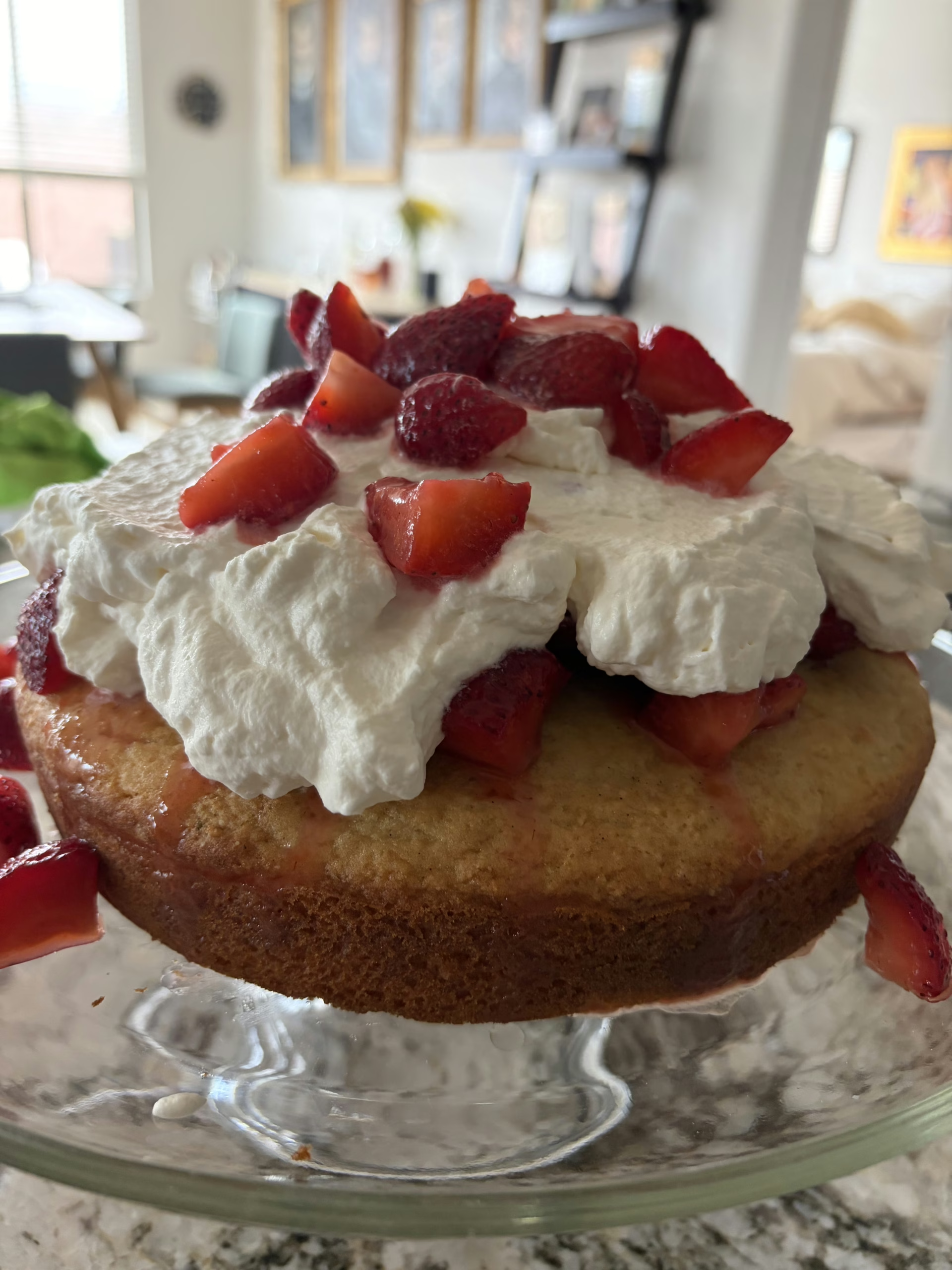
This week’s recipe is an almond cake with cinnamon, covered in a “pretty in pink” hibiscus glaze, which isn’t ancient or Indigenous. But it uses items such as almond flour (while wild desert almonds can be made into a flour—this Bob’s Red Mill almond flour), hibiscus, an edible flower found throughout the Southwest, and cinnamon, brought to the region in the 16th century by the Spanish. It tastes sweet and right while showcasing the beauty of where I’m living now. It’s easy, with hints of sweet floral notes and pantry ingredients I have on hand – except the hibiscus syrup. (You can find that online or at specialty stores like AJ Fine Foods. It’s where I purchased mine.) And sometimes it’s enough to acknowledge the food where you moved, combined with familiar elements that you know.
Importantly, it’s festive enough for the holidays.
Almond Cake with Cinnamon and Hibiscus Glaze
Serves 8
Ingredients
1 ½ cups almond flour
½ cup white rice flour
1 teaspoon baking powder
¼ teaspoon baking soda
½ teaspoon kosher salt
1 teaspoon ground cinnamon
2 large eggs, room temperature
⅓ cup neutral oil (avocado, canola, grapeseed)
½ cup sugar
1 teaspoon vanilla extract
½ cup milk or a milk alternative
Hibiscus Glaze
• ½ cup powdered sugar • 2 to 3 tablespoons hibiscus syrup (adjust to taste and thickness) • A gentle squeeze of fresh orange juice for brightness (Optional)
Directions
Preheat oven to 350°F. Grease an 8-inch round cake pan and line the bottom with parchment.
Whisk the dry ingredients together in a medium bowl: almond flour, rice flour, baking powder, baking soda, salt, and cinnamon.
In a separate bowl, whisk the eggs, oil, sugar, vanilla, and milk until smooth.
Combine the wet and dry ingredients. Mix until just blended. The batter will be slightly thick.
Pour into your prepared pan and smooth the top.
Bake for 22 to 28 minutes, or until the center is set and a toothpick comes out clean.
Cool completely before glazing.
Make the glaze: whisk the powdered sugar with hibiscus syrup until it reaches a pourable consistency. Add lime juice if using.
Drizzle glaze over the cooled cake. Let it sit for at least 15 minutes before slicing.
LEFTOVERS
Local: Tucson Tucson’s KGUN reports that the MSA Annex at Tucson’s Mercado District continues to grow, adding two new food spots to its westside lineup. BŌS Burger opened with Japanese-leaning Wagyu smash burgers and katsu-style sandwiches, while Hidden Hearth Bakery started serving whole-grain, fresh-milled breads in late November.
Regional: Arizona and the Southwest According to The Glendale Star, A 16-year-old was hospitalized after visiting the fair on Oct. 26. She and several others say the illness began after petting pigs at the fair’s zoo.
National: The USDA Economic Research Service says food prices in the United States will continue to rise in 2026. The agency’s latest Food Price Outlook projects an increase over all food categories of about 2.7 percent next year, with grocery costs climbing roughly 1.2 percent and restaurant prices up an estimated 3.3 percent. The forecast states that uncertainty remains high, driven by tariffs and climate-related disruptions.
A move from Indianapolis to Tucson reshapes our holiday season and inspires a Sonoran sweet potato and green chile gratin.
We thought we had two more years in Indianapolis. Two more winters of fall-back clock changes, farmers’ market routines, and knowing exactly where to find good greens or a reliable gluten-free loaf for the poultry stuffing. But as we know, life doesn’t exist for our specific timelines. Instead of a nice, slow transition, we decided to pack up boxes, say as many goodbyes as our last month in Indy would allow and drive southwest toward Tucson. The move to the Old Pueblo felt like stepping back into a familiar space – Nick and I had lived in Phoenix for a year and, of course, Palm Springs, which has a similar weather pattern: warm, arid and dry, with occasional heavy rain. Tucson, though, feels safer than both. More diverse and friendly, perhaps it’s due to the Indigenous and Mexican cultures, which lean heavily into their foodways.
Thanksgiving is next week, and we are still getting into our familiar patterns. Back in the Midwest, the holiday always had a specific blueprint, as it had over the last 12 years of our relationship. Nick makes the turkey, and I would cook everything else, including the cheesecake. It’s usually the two of us and occasionally someone else. Last year, we had Tanya, a longtime New York City friend who moved up from Nashville. This year, we will have some of Nick’s cousins who live in Phoenix, Bill and Anne and possibly the new neighbors – Collen and Greg – our Lucy and Ricky, to our Fred and Ethel.
Moving sooner than expected shifted everything. We’re still figuring out which grocery stores offer the best deals – especially in this challenging economy – where to walk Betsy and Rufus, and how to create a neighborhood in our builder community.
This Tucson Thanksgiving wasn’t the one we planned at the beginning of 2025 – we also didn’t plan on losing George – but we have Betsy for Rufus.
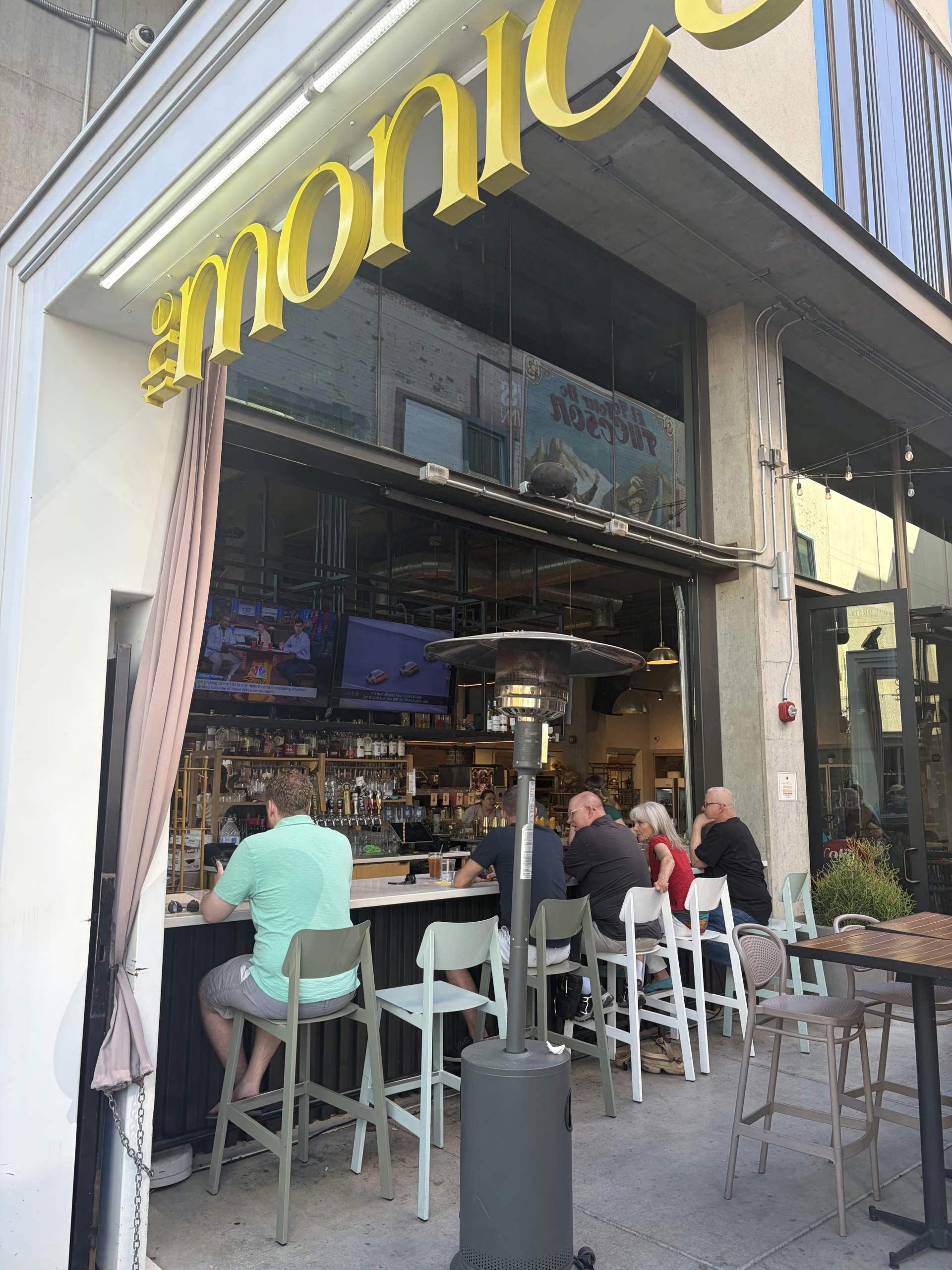
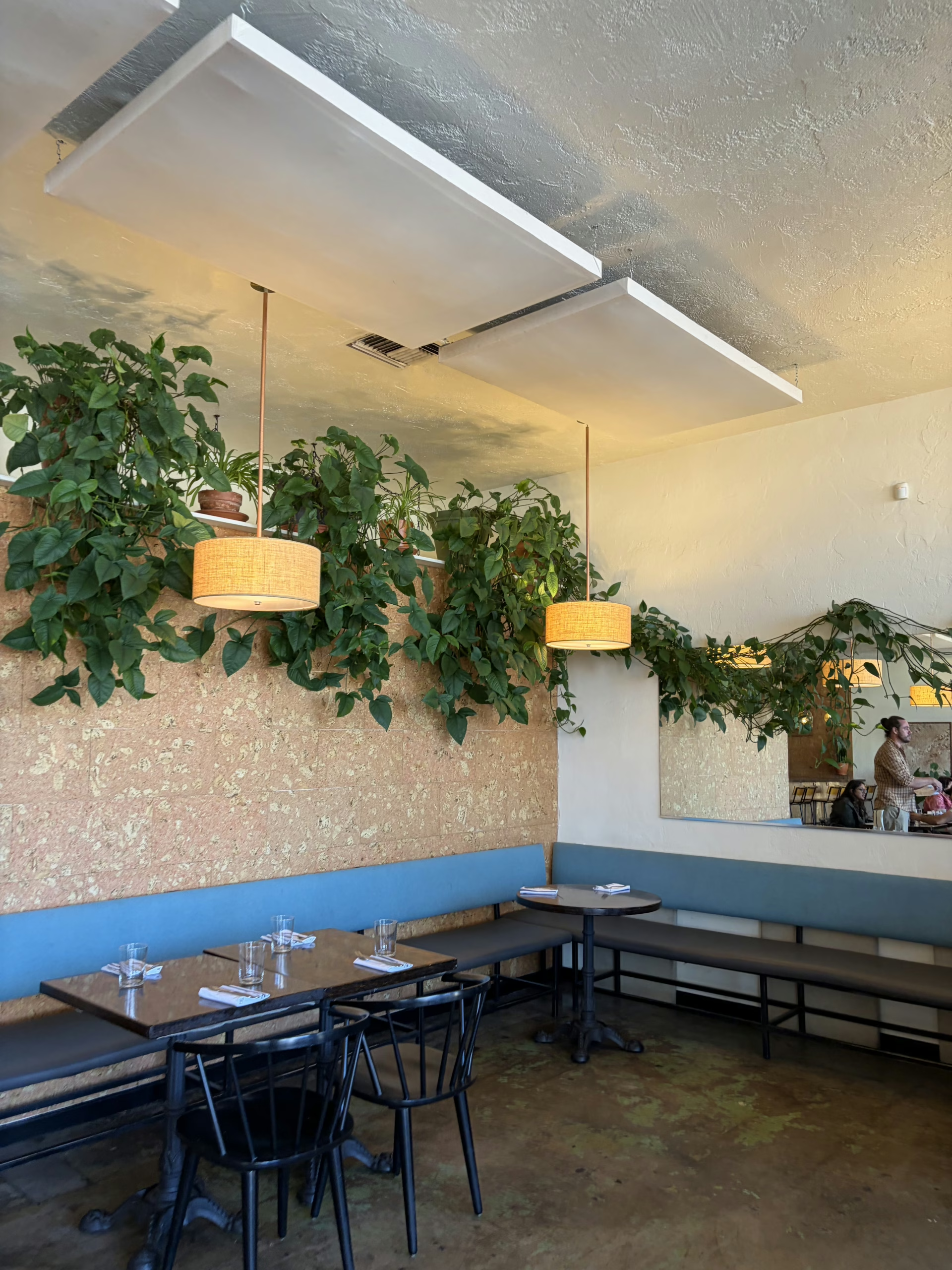
If you are looking for a change of scenery other than your kitchen stove, bring friends and family to the newly opened Redbird at Sam Hughes. It offers something for everyone and a great local back story. Located in the historic, former Rincon Market building, the restaurant opened in September and appeals to everyone with seemingly little effort, but most likely requires more than most. The former grocery outlet, which had been part of the area for almost a century, has been divided into two spaces, and Redbird Scratch Kitchen + Bar “flits” right into it, meaning it’s the kind of restaurant that feels cared for because the people running it care.
Pretty much everything is made from scratch: sauces, dressings, and marinades. The only exceptions are the gluten-free hamburger buns and waffle fries, which are bought from a wholesaler. Think of Redbird as a place to hang out, watching sports in a creative atmosphere with someone else doing all the cooking, such as tacos, wings and burgers. They also have a house-made black bean burger for the vegetarians in the group. Another great touch: they offer a hot towel to clean off their hands at the end of the meal. The first time I saw this was at a high-end resort in Bali. I asked Sergio Pinon, one of the owners and general managers, about this amenity. He basically said they saw it at a luxury property and wanted it at Redbird.
It offers coziness and the aromas of the Sonoran Desert as soon as you walk in, but the neighborly atmosphere of a “Cheers” bar. Sometimes it’s enough to sit in a place that welcomes you without hesitation, especially when you’re still figuring out what it means to belong in a new city.
I
Sonoran Chile and Sweet Potato Gratin
This is a dish that bridges both worlds. It nods to the Midwest—where casseroles anchor every gathering—but pulls its warmth from Tucson. Roasted Hatch or Anaheim chiles replace the traditional green bean casserole’s heaviness, and sweet potatoes stand in for richer autumn sides. It’s comforting, regional, and quietly celebratory.
Ingredients
• 2 large sweet potatoes, peeled and thinly sliced • 2 Hatch or Anaheim chiles, roasted, peeled, seeded, and chopped • 1 small yellow onion, thinly sliced • 2 cloves garlic, minced • 1 cup heavy cream • 1 cup whole milk • 1 teaspoon smoked paprika • 1 teaspoon ground cumin • ½ teaspoon Mexican oregano • Salt and pepper to taste • 1½ cups grated asadero Oaxaca or Chihuahua. If you can’t find these cheeses, substitute Monterey Jack or a mild white cheddar • Olive oil for sautéing
Instructions
Heat the oven to 375 degrees. Butter a medium baking dish (about 9 x 9).
In a skillet, heat up the of olive oil. Sauté the onions until soft and lightly browned. Add in the garlic and cook for another minute.
Stir in the chopped roasted chiles, then season with smoked paprika, cumin, Mexican oregano, salt, and pepper. Remove from heat.
In a small saucepan, warm the cream and milk together until just steaming. Don’t boil.
Layer half the sweet potatoes into the baking dish. Scatter half of the chile-onion mixture over the top. Add a handful of the cheese.
Repeat with the remaining sweet potatoes, chile mixture, and cheese.
Pour the warmed cream and milk mixture over the potatoes.
Cover with foil. Bake for 30 minutes. Remove the foil and then bake another 20–25 minutes or until the top has turned a lovely brown, bubbly and the potatoes are tender.
Let it rest for 10 minutes to allow the layers to settle.
When you pack up your life and start over somewhere new, you think about the job, the weather, the cost of living, and finding a community. When Nick and I moved to Tucson, a city framed by the Sonoran Desert and celebrated for its food culture, I didn’t expect to miss my grocery store so much.
After six years in Indianapolis, I knew where to buy the best gluten-free baked goods (Gluten Free Creations), which great butcher (Moody’s) to buy meat, and which farmers market stand (Warfield Cottage) sold the best greens. Moving to Tucson meant trading the Midwest’s cornfields for the desert’s cactus, and where much of the food is born of Mexican and Indigenous ingredients, even an easy meal of rice and beans felt like an introduction to another language.
There is no doubt that moving from one state to another changes the way you eat. In Indiana, I cooked broths and experimented with braising, especially during the fall, winter and early spring, eating warm, stewy dishes. Here, I think more about citrus, chilies, and beans. Dinners are full of flavors that make up the region: mesquite, nopales, prickly pear, and the “three sisters” comprised of corn, beans, and squash. Now our pantry will be stocked with dried chiles and freshly made corn tortillas, replacing the hoarded Red Gold pasta sauce of my Hoosier days.
The relocation isn’t only about ingredients; it’s about discovering a community. For Nick and me, it’s how we find and make friends. In our first week in our new home, we joined our next-door neighbors, Greg and Colleen, at La Frida’s Mexican Grill, a charming, well-designed spot located on East 22nd Street with a painterly mural honoring the late artist. The meal started with a basket of chips and — surprise — jalapeño crema (instead of salsa) for dipping, touched with habanero. Zesty, rich, and impossible to stop eating. Alongside it came an additional four sauces to try: salsa verde, black refried beans, a smoky coloradito, and a deep, chocolatey mole. The chef, originally from Hermosillo, cooks with an appreciation for her birthplace and presents dishes in a hearty, picturesque manner: deep browns, rich greens, and sauces with royal crimson overtone. We had a variety of dishes, but the quesabirra, historically from Tijuana and developed by the region’s taqueros, had that buttery crunch with tender meat, salty creaminess from the cheese and that rich flavor from the consommé for dipping. The corn ribs, quartered and eaten off the cob, smeared with cotija, were a reminder of how delicious street food can be. We arrived at 4:00 p.m. and by the time we left two hours later, it felt like the whole of Tucson was waiting for a table.
In every move I’ve made — Los Angeles, San Francisco, Irvine, Palm Springs, New York City, Indianapolis, now Tucson — I’ve learned that the fastest way to feel at home is through its restaurants and markets. Each city teaches you its flavors, and Tucson shows the earthiness of Sonoran wheat tortillas, the char on a roasted green pepper, and the comfort of beans simmering away on the stove. These are image postcards tattooed into my memory banks that will last longer than any logo t-shirt ever will. Indeed, Tucson’s UNESCO City of Gastronomy status only reinforces the idea that what we eat tells the story of who and where we are.
In the freezer, there’s still a loaf of gluten-free bread from Native Bread Company in Indianapolis. I slice and toast it on mornings when I miss the Midwest. It’s that heady scent of bread, with a smear of local prickly pear jam bridging my recent past to today in a way no moving truck can.
What we eat when we move isn’t just about adapting to a new market or menu. It’s about creating continuity. The table’s location may change, but the act of sitting down, of being fed and feeding others, remains constant.
But in a short time, here in the Old Pueblo, I’ve found that the desert’s vastness, beauty and indigenous ingredients are finding a way into my kitchen. As I’ve said before, moving isn’t about leaving something behind. It’s about eating and discovering what’s next.
Recipe: Prickly Pear and Lime Agua Fresca
Makes 2 quarts
• 2 cups prickly pear puree (fresh or bottled)
• Juice from 3 limes
• 4 cups cold water
• 2 tablespoons agave syrup (more to taste)
• Dash of sea salt
Whisk or blend all ingredients until smooth. Taste and adjust the sweetness. Chill for at least 30 minutes. Serve over ice with a sprig of mint or a lime slice. While this is a simple beverage, it tastes like the Sonoran Desert, which I think of as being bright, sweet, and restorative. If you’re feeling festive, add a touch of rum, tequila, or vodka.
A year of eating throughout Indiana and what it taught me about community.
I often think about the delicious six years I’ve spent exploring Indiana food. My path crossed many food folks and chefs, including Rachel Firestone and Samir Mohammed at 9th Street Bistro, as well as Zoe Taylor and Josh Kline at Borage. I ran into Shadow Lounge’s Chef Tia Wilson at one of the local markets one day and, the next, watched Jonathan Brooks man the line at Beholder. One of my favorite stories was seeing Burgeezy’s Kadeesha and Antonine Wiggins grow their dream business. Of course, there is pizza and Diavola may serve the best Neopolitan pie in all of Indy, in my humble opinion.
Some editors took notice, giving me a platform to write about food: Culinary Crossroads’ Jolene Katzenberger, former Edible Indy owner Jennifer Rubinstein, current publisher Adam Grubb and, of course, Indianapolis Monthly’s Eve Batey and Andrea Ratcliffe. Through them, I found a voice focused on Midwestern cuisine, especially as it relates to identity and immigration. But it also showed me something more profound: that food entrepreneurs create a sense of community wherever they are.
While I genuinely love fine-dining, destination experiences, it’s the local neighborhood spots that bring people together—whether over coffee, drinks, or dinner—that make communities thrive. Gather 22, for instance, with its hammocks and generous outdoor space, does that beautifully, along with its tasty bites. What Adam Reinstrom and Pablo Gonzalez have created — part restaurant and adult playground — is nothing short of remarkable.
This is only a partial list of what I ate this year. I’m eternally grateful to Culinary Crossroads’ Larry Dickerson for allowing me to travel all over Indiana during the course of my three years writing for them. After visiting nearly 100 towns and hamlets throughout the state, I’ve come to understand how both historians and restaurateurs have shaped the Midwest’s culinary history and, importantly, how interconnected the region truly is.
It’s not that my time in Indiana has come to an end. I’m working on a cookbook project that is part Midwestern history and part chef-driven stories from across the region, which I hope to see published next year. I also like to think that I’m evolving, which is vital to my well-being.
While some people go to concerts, shop, watch IMAX, or attend large-scale sporting events, spending their hard-earned wages – and yes, any work today is hard-earned – I head to a locally owned restaurant or a farmers’ market. By doing so, my partner and I give back to the communities we live in. That’s important to the region’s economic health and vitality.
Last word: Writing about food, I can’t be tone-deaf to how nearly 40 million people will suffer without SNAP benefits. My childhood was marked by food insecurity and hunger. My mother raised me alone, stretching a meager salary that never went far enough. She tried really hard, but there were days when the sharp pain in my stomach could only be eased by water. Despite paying taxes on her modest income, she could never get ahead. It was systemic gender bias at work: no matter how hard she pushed, the system pushed back harder. I’m seeing this play out again; it’s always the hard workers who only want to raise families who suffer at the hands of the big corporate powers.
Chefs Erin Kem and Logan McMahan reimagined the venerable Tony and Rosa Hanslits’ Nicole-Taylor Pasta and Market, which had been an emporium focused on Italy, into a mostly vegetarian cafe and retail experience. What they do with simple ingredients is on full display with a roasted kombucha squash, caramelized and seasoned with restraint, which showed me how Indiana produce can shine when treated with respect.
1134 East 54th Street, Studio C, Indianapolis, IN 46220
In Oldenburg, a small-town gripping tightly to its German Catholic heritage, Wagner’s has been feeding generations with its four-ingredient, family-style fried chicken. Crisp skin, juicy meat, and it makes it a southern Indiana tradition worth the drive. The James Beard Foundation even awarded it for Classic American. It’s one of those honors that tries to extend an olive branch to communities often dismissed in the cosmopolitan food world. Regardless, the eatery and the hamlet have a history and a sense of place, with church spires casting shadows over two-hundred-year-old cobblestone streets, and the highly seasoned chicken is pretty good.
Chefs Zoe Taylor and Josh Kline created an homage to Midwestern food at their restaurant, cafe and market. They elevated their dream business to something beyond nostalgia, transforming it into a refined yet rustic experience that stays true to their regional roots. Sometimes, in their deft hands, childhood treats become both nostalgic and refined. At the bakery, the gluten-free Pop-Tarts — technically made by their pastry chef Rachel de Masi — change with the seasons and serve as proof that playful baking can be serious food. I’ve often written about the duo and profiled them for Edible Indy, my last story for that publication.
I was on one of my small-town Culinary Crossroads travel excursions and decided to swing by Smokey’s Concession Stand. It was early on Friday, and a crowd was already seated at the bar. While some people say not to ask the server—or, in this case, the bartender—what’s good, I often do. A restaurant worker will honestly tell me what they prefer — and I, being a former dishwasher and waitperson who believes in excellent customer service, will point you in the right direction. The bartender recommended the smoked Reuben, which featured house-smoked corned beef that raised the bar. The smoke clung to each slice, balanced by tangy kraut and melted Swiss. It reminded me how a sandwich can be just as transportive as a tasting menu.
Kokomo may be best known for auto manufacturing, but tucked into one of its Korean restaurants, I found japchae that took me to another continent. Sweet potato noodles, sesame oil, and vegetables created a plate that was comforting and unexpected in central Indiana. It’s hard to find great Asian food in this part of the country, but this was one of the best noodle dishes without having to fly to Seoul. It was also part of a destination piece I wrote for Indianapolis Monthly.
Inside the Alexander Hotel, Nesso delivers an upscale Italian coastal dining experience under the direction of recently appointed Chef Zach Szabo. He’s a transplant from D.C, and brings “glam Italian” to the Midwest, meaning rustic yet refined. An example was a special item: Hokkaido scallop crudo, bright, clean, delicate, citrusy and with a hint of heat. It was a dish that felt worldly without crossing the Atlantic. It was mastery of crudo, with thin rounds of the mollusk in a sauce meant for slurping.
South Bend is emerging as its own dining scene, and Roselilly, with its chef-owner Eamonn McParland, is at its center. The AAA four-diamond dining experience is one of two in town, which is also home to the University of Notre Dame. He created a tasting menu, and his sweet pea agnolotti, part of the experience, captured the freshness of spring in tender pasta pockets that were both delicate and celebratory.
701 South Main Street, South Bend, IN 46601
(574) 347-4560
Fried Pork Tenderloin at The Tin Plate, Elwood
Fried pork tenderloin at the Tin plate
The breaded tenderloin has long been considered Indiana’s official sandwich. And, truthfully, like many people, I love breaded, fried meats (chicken-fried steak, chicken tenders, fish and chips anyone?), but it’s not that unique. However, the version at The Tin Plate in Elwood — while not unique — made me a convert. The pork is pounded thin but not too thin, and then fried to a golden brown, retaining juiciness rather than a dry puck, which can happen without brining. Like a soft-brimmed hat, it flopped over the sides of the bun. It was a taste of pure Midwest and Hoosier comfort. I also loved the fact that Elwood is home to Red Gold Tomatoes. While the canning company is not related to the German-inspired pork tenderloin, add some sauce and fresh mozzarella and you have pork cutlet parmigiana.
Noblesville’s 9th Street Bistro is intimate in size but ambitious in flavor. Husband-and-wife team Samir Mohammed and Rachel Firestone created a well-thought-out small-town bistro in the heart of Noblesville, half a block from the town square. It’s one of the places you would find in a European hamlet, owned and operated by the same family for decades, sewn into the community fabric. The pork and foie gras meatloaf is an indulgent, warm dish —essentially a country pâté heated rather than served cold—that marries Midwestern comfort with French luxury. It is proof that, even in a small town, with this duo at the helm, grand tastes can fly without pretension.
If a corn cake and crab dip chatted in the kitchen, they would say, “Gurl, this is real food for the Fourth of July.
We know our founding fathers did not eat hot dogs, hamburgers, and apple pie after signing one of the world’s most important political documents. Most likely, their plates were heaped with pancakes made of cornmeal served with roasted meats and seafood gathered from nearby waterways.
It makes sense that corn, cultivated by Indigenous peoples for thousands of years, was the staple of early cuisine. Indeed, cakes made from ground maize, such as hoecakes or johnnycakes, were easy to make and eat, piping hot out of a wood-burning fireplace. Coupled with the abundance of seafood along the Eastern Seaboard, tables featured paired combinations like crab, oysters, and fish, to accompany the cornmeal staples.
Indigenous Ingredients Were Already Here
However, these flavors didn’t originate from European settlers; they were already grown and eaten by the existing populations of Indigenous people. New foods were introduced to the settlers including corn, squash, beans, and natural salts harvested from brine springs and coastal waters. These weren’t just ingredients, they were intertwined to the land, ceremony, and survival of the tribal nations.
Enslaved Africans brought frying, stewing, and seasoning traditions that became the foundation of Southern and coastal cooking. Caribbean immigrants layered in citrus, chili, and preservation techniques that show up in seafood, spice blends, and pickled vegetables.
Who Gets Credit for “American” Food?
For too long, the narrative of “American food” has centered on Germanic and Eastern European traditions, sausages, stews, pies, because these communities, though once immigrants, came to hold power in cultural storytelling. Meanwhile, Indigenous, African, and Caribbean contributions were often erased, commercialized, or absorbed without credit.
Thus, I decided to create a bit-sized corn cake appetizer dolloped with hot crab dip ontop. It’s inspired by the foods served during those first July celebrations in 1776. American cuisine has always been a blend of indigenous crops, African techniques, Caribbean flavors, and immigrant ingenuity.
This 4th of July, Celebrate Interdependence.
This Fourth of July, I’m celebrating not just independence, but interdependence. The shared hands, cultures, and histories that shaped what we eat today.
Mini Corn Cakes with Crab Salad (Gluten Free)
I created this recipe from many sources as a showcase of early American roots: Indigenous, African and early settlers.
Makes about 12–16 mini corn cakes
For the Corn Cakes:
1 cup stone-ground cornmeal (medium grind works best)
½ tsp baking powder
½ tsp kosher salt
1 cup buttermilk (or ¾ cup milk + 1 Tbsp vinegar, rested 5 minutes)
1 large egg
2 Tbsp melted butter or neutral oil ½ cup corn kernels (fresh, frozen, or canned—optional)
oil for frying
If the batter seems too thin, let it sit for 5–10 minutes so the cornmeal can absorb more of the liquid. For a thicker batter, add 1 Tbsp finely ground cornmeal or masa harina.
For the Hot Crab Dip:
8 oz lump crab meat, drained and checked for shells
2 Tbsp mayonnaise
1 Tbsp sour cream or plain Greek yogurt
1 tsp Dijon mustard
1 tsp lemon juice (plus more to taste)
1 tsp chopped chives or green onion
Pinch of Old Bay or cayenne (optional)
Salt and pepper to taste
Instructions:
Corn Cakes:
in a medium sized bowl, mix cornmeal, baking powder, and salt.
In another bowl, whisk buttermilk, egg, and melted butter. Add the wet ingredients to the dry and stir just until combined. Fold in corn kernels, if using. Let it sit for a few minutes to thicken.
Heat a skillet or griddle over medium with a light layer of oil.
Drop batter by heaping tablespoonfuls to form small cakes (~2 inches). Cook 2–3 minutes per side until golden and crisp on the edges. Transfer to a wire rack or paper towel.
Crab Salad:
Preheat the oven to 350 degrees. While that reaches temperature, Gently mix mayo, sour cream, mustard, lemon, chives, and spices in a bowl and place into a baking dish
Fold in crab meat, being careful not to break it up too much. Taste and adjust seasoning.
Bake for 15 – 20 minutes until heated through.
Serving:
Top each corn cake with a spoonful of crab dip. Garnish with a sprinkling of fresh, chopped herbs (such as dill or chives) or a sprinkle of smoked paprika or lemon zest, if you’re feeling fancy.
Miller, Adrian. Soul Food: The Surprising Story of an American Cuisine, One Plate at a Time – Explores the role of African American culinary traditions in shaping Southern and early American cuisine.
Library of Congress – Food at Mount Vernon and American Memory collections: Primary source material on colonial food habits, including George Washington’s preference for hoecakes.
Southern Foodways Alliance – Oral histories and essays on cornmeal, seafood traditions, and foodways rooted in African, Indigenous, and Southern cultures.
P.S. Photo was AI-generated. I made the crab dip for a party and planned to create the corn cakes. But, life got in the way.
When I think of my father, the only good thoughts appear around food. It’s often how we remember people, how we ate with them at a dinner table or cooked beside them. It’s not how we wish they were, but as they were. In a time when immigration has yet again become so politicized and misunderstood, I think about my father, whose name was Primo. He was a complicated man, an immigrant, an enlisted Navy veteran of 40-plus years and a man I never truly knew. I knew that he walked to school on pristine beaches and white sand. His parents — my grandparents — were killed by U.S World War II pilots, flushing out enemies that hid in the dense jungles of the archipelago. Casualties of friendly bombings, if you will. He, along with three siblings, was adopted by family members. Tropical Cindafella — only hard work, cleaning the relative’s home for his keep, but grieving his childhood and loss. He was never quite taught how to be a father because he didn’t have one, nor were those around him capable. They, too, were mourning the deaths of their children and others. War, ultimately, guarantees that generations will suffer.
Because of his loss, what I received from him wasn’t warmth or fatherly advice, barely even love — although, my stepmother might argue that. However, when I lived with him briefly in my teen years, I was given his childhood memories of growing up and eating in the Philippines.
My father’s family and me.
But Primo enlisted in the U.S. Navy and served a country that didn’t always see him. He stood watch on ships, served abroad, and carried that discipline into every corner of his life. It wasn’t gentle. But it was service and took him away from what he knew. You might even say joining the armed forces gave him a father. He learned about combat and racial discrimination. He learned infidelity and deceptiveness — to lie when he was caught. He did that quite often.
But he loved seafood.
If it came from the ocean, it was on his plate. Prawns, squid, bangus, and crab legs soaked in garlic butter and eaten with his hands. He would suck loudly suck the juice out of the shrimp’s head. “Mmmm, that’s good,” he would say to us around the table: my half-siblings, his second wife, her mother and me.
The sea reminded him of something he had left behind: it was full of free and accessible food. It was easy for him to catch fish with a handmade net and cook the nightly meal he had to make as an indentured child servant. When my stepmother or her mother didn’t cook adobo or pancit, he would make a bowl of halabos na hipon—Filipino-style buttered shrimp and rice—always rice.
When I cook this dish today, I can focus on his trials as an immigrant and his service in the Navy. Not as a father or someone I knew well, but as a figure in my history, a uniformed man who battled on iron ships and his demons. While I toss the garlic and shrimp, with splashes of carbonated lemon soda, and simmer to a tasty syrup, I imagine his life’s grueling and uphill battle. I never fully understood him dismissing me as his son until I wound up on his doorstep, thinking he could save me.
Today, we wrestle, yet again, needlessly, around immigration. As if that’s the problem. My father wasn’t perfect, but his journey — from the Philippines to military service in the U.S. — helped build this country. It’s easy to forget how many of our most valued dishes — tacos, pizza, hamburgers, French fries, dumplings — were brought here in the bags and bellies of people like him. Immigrants have never taken anything from the United States and this country, they bring flavor, resilience, and stories.
This isn’t a tribute to Primo on Father’s Day. Although he was my blood, he was many things: a loving father to his other kids, a daughter and a son, a veteran, a man who loved seafood and a proud settler to the United States. He loved this country as so many immigrants do.
Garlic Butter Shrimp (Halabos na Hipon)
Serves 2–3
Ingredients:
1 lb head-on shrimp, shell on (I used shelled shrimp. Since I live in Indiana, it’s hard to find whole shrimp).
2 tablespoons unsalted butter
1 tablespoon neutral oil (canola or vegetable)
6 cloves garlic, finely chopped
1/4 cup Sprite or 7-Up
1 tablespoon fish sauce (optional, or substitute with a pinch of salt or a splash of soy sauce)
Freshly ground black pepper
Cut lemon for serving
Steamed white rice
Directions:
In a large skillet, heat the butter and oil over medium heat. Add the garlic and sauté until golden and fragrant, about 1–2 minutes.
Add the shrimp and toss to coat in the garlic butter.
Pour in the soda and fish sauce (if using). Let it bubble and reduce slightly, then cook the shrimp until pink and curled—3 to 5 minutes.
Season with black pepper. Serve hot with calamansi or lemon wedges and plenty of steamed rice to soak up the sauce.
June is Pride Month in the United States. Indianapolis celebrates with a parade and all-day events on June 14 and 15. But being LGBTQ isn’t something we clock in and out of on the weekends: We were born this way (thank you, Gaga). We didn’t choose it. Thus, we shouldn’t
choose between authenticity and acceptance when eating or meeting up. We want spaces that are more than just inclusive for business optics. Establishments need to be genuine in their support of who we are.
For most of us, it often means seeking out LGBTQIA-owned restaurants, bars and coffee shops, where identity isn’t a marketing strategy. It’s brewed, baked and blended into the DNA. Since moving from Los Angeles to Indy five years ago, I’ve visited queer-owned restaurants, bakeries, and coffee shops across the state, from Fort Wayne to Evansville. These businesses don’t just serve the LGBTQ community; they employ locals and uplift their neighborhoods.
While we celebrate Pride this month, we also look toward Chicago, where the Oscars of the food world, the James Beard Awards, will be handed out June 16. It’s especially significant, considering James Beard himself was a gay man long before it was safe or celebrated to be out in public.
Today, the James Beard Foundation carries on his culinary legacy, honoring all chefs and restaurateurs, regardless of gender or identity expression, who feed us with creative and inspirational flavors.
“Food is our common ground, a universal experience, “ – James Beard
The couple, Adam Reinstrom and Pablo Gonzalez, opened Gather 22 in 2023. Named after its location on 22nd Street and as a place to convene, it showcases deliciousness from pizzas, sandwiches and cocktails. Like its owners, a mix of ethnicities and experiences from the West Coast to the Midwest, it is a place to meet up, have inspiring conversations and celebrate differences while eating and drinking well.
22 East 22nd Street, Indianapolis (Central) (317) 258-2222: IG, FB
In the small town of New Harmony, just outside of Evansville, Alex Gale and his baristas produce house-roasted beans and specialty coffees. What began as weekend meditation excursions for Gale to the new age-centered village along the Wabash River led Gale to discover and purchase Black Lodge Coffee Roasters. Since buying the shop in 2019, it’s become known for its bourbon-barrel coffee, eccentric events (sound baths, art exhibitions), and community outreach.
610 Church Street, New Harmony, (812) 682-2449 IG, FB
Lady Tron’s, a sci-fi homage serving delicious handcrafted soup and sandwiches, sits where Indiana meets the shores of the Ohio River. Owned by Alexa and Summer Seig, the duo serves a crowd of regulars from a vintage mobile diner outfitted in memorabilia from Star Wars to Elf and Star Trek. It’s an incongruous, madcap but tasty experience in a historic town that also served as part of the Underground Railroad.
The Huntingtonburg Grind, Huntingtonburg (Southern Indiana)
Smithsonian Magazine named Huntingtonburg one of the best small towns in the United States in 2024, but partners in life and business Chad Brian and Mike Voegerl, the latter growing up there, knew that already. Thus, they purchased the coffee shop on charming 4th Street, a four-block stretch of restored Queen Anne and Victorian architecture.
410 E. 4th Street, Huntingtonburg, (812) 684-8079 FB
Opened in 2008, this sushi-slash-Italian-slash-Chinese eatery is a delicious haven for downtown Indianapolis residents. With a full bar, it’s a well-designed gathering space for the LGBTQIA community and their friends. If the ramen noodles or street tacos don’t fit your Midwest tastebuds, they also serve a burger with fries. The owner, Bill Pritt, purchased Metro last year, an LGBTQ bar on Mass Avenue and plans to open Harrison’s on Delaware Street in an abandoned bank building this summer.
Various gluten-free pastries at the Amp Farmers Market by Lydia Bootz Armstong
Exploring Non-Vegan, Gluten Free Bakeries in Indianapolis
People make much of eating gluten-free, calling it a lifestyle choice or making those who adhere to the diet change as if it isn’t a necessity. If you feel better, no matter how deep the condition goes, eating wheat-free can feel like a relief from getting rid of what ails you. Everyone — hopefully — can eat almond, tapioca, rice, potato, corn, sorghum or buckwheat flour, but not everyone can eat wheat.
For us – my partner, who has celiac, and I — we adhere to a GF diet because there is no choice. Eating alternative flour is the only way to go. However, we still want and crave butter and sugar, whether brown or the bad-for-you white. As such, I’m always looking for baked sweets that deliver with richness and decadence. The great thing about cooking with other types of flour is they add another layer of taste and deliciousness to an otherwise standard chocolate chip cookie or apple fritter.
I took it upon myself to showcase gluten-free bakeries in Indianapolis and those that create good old pastries made with alternative flour and lots of butter and sugar. I selected these specific bakers because they have a storefront, except for one.
These Indianapolis-based gluten-free bakeries prove that living without gluten doesn’t mean sacrificing anything. In truth, those who don’t know the difference could never tell if it was from wheat or cassava, and that’s a good thing. From the inclusivity of No Label at The Table to the luxurious The Cake Bake Shop, these bakers prove that gluten-free allows everyone to eat cake.
Aspasia Bakery
Baked goods at Zionsville-based Aspacia Bakery
Located on the border of Zionsville in a newly developed strip mall resides Aspasia Bakery, which opened in 2022. It’s a treasure trove for those seeking gluten-free baked goods made with butter and sugar and those seeking dairy and nut-free goods. Named after an ancient female Greek philosopher, owners Eva and Jeff Tomlinson built a charming restaurant that features breakfast through light supper items. For freshly made dinner rolls, brownies, or a scone, alt flour Aspacia offers a full array of goods. Like the Green Mermaid, it also has a drive-through for coffee and lattes. Special orders and shipping are available, too.
Various pastries and goods at No Label at The Table, Carmel
Plopped in the Carmel Arts District, No Label at The Table marries a gluten-free mission with a staff of individuals on the autism spectrum. That’s right; this bakery, created by Shelly Henley, which announced its opening in 2017, was for her son Jacob, who is on the autism spectrum. It began as an opportunity for him to become a chef and have a purpose. Still, it’s all about the delicious goods made in this no-frills space. Customers will find roasted garlic boules, doughnuts, cornbread sausage stuffing, hash brown casseroles and desserts, such as take-and-bake pies, cookies and cupcakes. Be aware that it’s dairy-free, too—lots of sugar, but no butter.
Since 2016, Native Bread has specialized in small-batch baking, creating loaves and pastries with impeccable texture and taste. From classic sourdough to focaccia and olive – and, importantly, burger buns (Do you know the difficulty in finding great GF buns?) – each product loaf is crafted using carefully selected ingredients. Made in the carry out on kitchen, the aroma of freshly baked bread hits individuals divinely.
Head south to Franklin for 1823 Bakehouse, where everything on the menu is 100% gluten-free. Known for seasonal goods, the bakery makes everything from scratch using butter and sugar unless noted otherwise. Mornings can begin with their buttery biscuit egg sandwich or banana bread. We were finally able to eat a Hoosier sugar cream bite. Instead of a pie, it’s about a two-chomp sweet experience. They even have biscuits and gravy, chicken pot pie and a French Toast bake pan to-go. While they serve coffee, 1823 Bakehouse has a large selection of loose-leaf teas.
Gluten Free Chocolate Popcorn Cake at The Cake Bake Shop in Broad Ripple
Gwendolyn Rodgers’s The Cake Bake Shop is a Disney-fied bakery. Pink frills and swans, latticework and curlicues create a childlike atmosphere. While not exclusively gluten-free, the bakery offers plenty of options for those avoiding gluten. When we first moved to the area, I ordered a carrot cake for Nick’s birthday. It was an expensive endeavor, but the confection was undoubtedly one of the most beautiful presentations we’ve ever had—and delicious creamed butter and sugar.
Their gluten-free chocolate cake is decadent, while their jewel-toned French macarons and brownies are perfect for any occasion.
Address: 6515 Carrollton Ave, Indianapolis, IN 46220
Lydia Bootz Armstrong of Gluten Free Creations has made my birthday cakes for the last four years. Even though she doesn’t have a shop, she makes everything with butter and sugar unless noted. In LA, where we are from, there are only a few vegan and gluten-free bakeries. It was either or. That may have changed five years later, but we wanted, in our new residence, cookies that would have made our grandmas proud. We wanted our treats to be flavorful and fat but made with alternative flour. Lydia, a home baker, does that with aplomb. Cinnamon rolls topped with sweet icing, freshly baked croissants and an array of cupcakes are just the beginning. Whether you’re ordering a custom cake for a special occasion or grabbing a treat to-go, Gluten Free Creations combines comfort and quality in every item they offer.
Four lovely baked Brazilian cheese rolls at Fernando’s
How Hoosier chefs made the potato, chicken liver, octopus, beef, pimento cheese and gluten-free bread the talk of my table
Nick and I have savored many of the diverse flavors of Indianapolis restaurants since our move to the city five years ago. I’ve had the opportunity to explore Indiana’s culinary landscape extensively, covering destinations for Culinary Crossroads for a year and a half. From the southernmost Evansville to Elkhart, in the north, a 10-minute drive to the Michigan border and other places, I’ve sampled a range of dishes, becoming well-versed in “Hoosier” food. Living here has expanded my tastebuds and evolved my understanding of the Midwest’s culture and people.
Exploring Indiana’s Diverse Culinary Landscape
I recently attended a conference where the speaker said, “Hoosiers either leave and never come back, or they never leave, traveling only 20 minutes outside their neighborhood.” It’s an exaggeration, clearly, but it’s not far from the truth. I’ve met many natives who may have been to Paris but not to the neighboring region. (Carmel to Fishers doesn’t count.) I can’t tell you how many times I’ve asked if native Hoosiers have been to Terre Haute, which recently elected its first Democratic mayor, Brandon Sukbhan, in a dozen years. The answer is “not since grade school” or “never.”
They should. It’s a diverse hamlet and indicates the changing demographics of Indiana. Sakbun, a former Army captain with model looks, a mega-watt smile, and Elvis Presley hair, is the son of a Cambodian father and a Jamaican mother; we ate at an Indian buffet near city hall, talking about his then-wife and soon-to-be first child.
The town, home to Clabber Girl Baking Powder, sold at Traders Joe’s throughout the land, is a swim to Illinois, just across the Wabash River. To get there from Indianapolis, though, a drive past small historic towns like Greencastle and Brazil, flush with red barns and still-working siloes, shows today’s farming. Tractors and bales dot the landscape.
Indiana’s Changing Food Scene: The Influence of New Demographics
I’m bringing this up because in a small town like Terre Haute, with a population of just under 60,0000 – my former Los Angeles block had more people – it’s important to note that the 21st-century demographics are changing how the middle of the country eats. It’s a story that doesn’t get told as the media chase stories about the modifying electorate. All we need to do is find out what people eat and where. Think about it: A mayor born of two immigrants leads a predominantly Caucasian city in the middle of the Midwest while eating Punjabi food.
How did I select my favorite? It was memorable—nothing more, nothing less. Nick and I talk about it or think about returning. After dining at Michelin-starred and James Beard Foundation-nominated experiences, or those I discovered across six continents and nearly 250 cities, I believe I am good at eating.
James Bear-nominated Chef Sean Richardson (Great Lakes Region) opened Rune Restaurant in Fort Wayne in March 2024. It’s a garden-to-table experience with twists and turns on different foods. Richardson makes an appetizer, fried chicken toast, and a large helping of house-made chicken pate smeared over Pullman bread. He gently fries the bread – as you would the Cantonese shrimp toast – and then flips it with a flour coating over the spreadable liver. Once cooked and warmed through, a slice of heirloom tomato, a drizzled white aioli and crunchy leftover bits. Mine featured a bit of nori, herbs and peanuts, and he was recreating the traditional dim sum in a Midwest way, using a loaf native to the region and lots of livers. While served on a plate, he repurposed an old menu that couldn’t be used again to keep the appetizer from careening off the plate instead of using a napkin. Just a touch of “greening.”
2725 Broadway, Fort Wayne, IN 46807, (260) 278-0674
Josh Kline’s rösti covered by an egg, bacon and sumac cream sauce
During an interview with Chef Josh Kline, owner of Borage, and his wife, Zoe Taylor, he said, “I love potatoes.” I do, too! However, he loves them so much that he came up with a new version I’ve never had. The everyday eater might think of them as hash browns. Still, rösti, a traditional Swiss dish, is anything but browned and grated fried spuds. Kline’s version makes the tuber a confit – soaked in oil for 24 hours before baking it. It may sound oily, but the resulting dish melts in your mouth with a crackling. Typically made for breakfast, his dish is an upscale version and, frankly, a meal unto itself. At brunch, he will top it with various proteins, from fish to an egg or two.
1609 N Lynhurst Dr, Indianapolis, IN 46224, (317) 734-3958, borageeats.com
Pão De Queji, Fernando’s Mexican & Brazilian Restaurant, Indianapolis
Four lovely baked Brazilian cheese rolls at Fernando’s
A long time ago, in a galaxy far, far away…meaning Los Angeles on La Cienega Blvd, I had dinner at a Brazilian chain restaurant more than two decades ago. I ate tough cubes of beef, which, moments before being on my plate, had been flaming on a skewer passed around by an oddly dressed man, and the pão de queji set before me was a baseball, dense and leaden. That memory fired up when Nick and I dined at the year-old Fernando’s in Broad Ripple. Unlike then, we ate alfresco, removed from the street on the separate patio and dined on a mix of Mexican and Brazilian cuisines. Notably, they serve the tapioca-based pao de quiet, slightly chewy and savory pillow puff of chewy with nutty flavors of aged hard Italian cheese. I could eat these daily for the rest of my life, but only if I eat them here.
834 East 64th Street, Indianapolis, IN (317) 377-4779,
Commission Row’s Octopus Terrine with micro herbs and jalapenos.
Nick and I attended a press dinner for Commission Row, the breathtaking restaurant opened by Cunningham Restaurant Group and designed by Ration Architects. It sits on the eastern edge of Bicentennial Unity Plaza, on the Delaware Street side, with views of the public basketball court or ice rick, depending on the time of year. By the third dining experience, the impeccable server recommended the octopus terrine. A thinly sliced rectangle with rings of several cephalopods compacted is set before me. It’s a visually stunning dish of texture, spice and brine, with the pickled jalapenos giving a welcome dash of heat. Sublime eating.
Tacos are always the first thing people think of when they eat South of the Border food. That’s what I planned on eating when I walked into this Latina-owned restaurant in Frankfort, which, according to the 2020 U.S. Census, has a population of more than 16,000 and is one of Indiana’s farming communities tucked between cornfields and soybeans. After seeing a plate of empanadas pass by, I couldn’t resist the corn masa pockets stuffed with juicy braised chicken. My tastebuds reveled in the smokey achiote, garlic and onions permeating the filling. The tender golden crescent moon crust held a light sweetness and sturdiness to hold the meat without being tough or overly chewy. Three large hand-stuffed yeasty envelopes of poultry were more than sufficient, although I could have made it a meal with rice and beans that would have filled me into the next day.
408 N. Columbia Street, Franklin, (765) 601-4060, Facebook
I wrote a story about Indiana barbeque that was never published. In it, I argued that Indiana makes one of the great regional barbecues. Still, it never received the attention that others, partially because of the racism during the 1920s in the state—another story for another time. However, Mike and CJ McFarland smoke their meats in three different smokers outside a legion hall. Briskets, pulled pork, chicken are cured with locally sourced woods and seasoning, without sugar–brown or molasses in the open air, instead of indoors. Eaters get a wonderfully fruity yet succulent piece of meat from pitmaster McFarland’s patience over the embers. McFarland’s roots and cooking hailed from Owensboro considered the birthplace of American barbecue or, at least, pit-cooked mutton. Still, with beef and pork, he crafts his smoked meats, which are all Hoosier. They have two locations, but I visited them on South German Road.
To provide the best experiences, we use technologies like cookies to store and/or access device information. Consenting to these technologies will allow us to process data such as browsing behavior or unique IDs on this site. Not consenting or withdrawing consent, may adversely affect certain features and functions.
Functional
Always active
The technical storage or access is strictly necessary for the legitimate purpose of enabling the use of a specific service explicitly requested by the subscriber or user, or for the sole purpose of carrying out the transmission of a communication over an electronic communications network.
Preferences
The technical storage or access is necessary for the legitimate purpose of storing preferences that are not requested by the subscriber or user.
Statistics
The technical storage or access that is used exclusively for statistical purposes.The technical storage or access that is used exclusively for anonymous statistical purposes. Without a subpoena, voluntary compliance on the part of your Internet Service Provider, or additional records from a third party, information stored or retrieved for this purpose alone cannot usually be used to identify you.
Marketing
The technical storage or access is required to create user profiles to send advertising, or to track the user on a website or across several websites for similar marketing purposes.