Category: California

  • i8tonite: with Chef Tyler Gugliotta, Baran’s 2239 in Hermosa Beach & Jerk Pork Recipe

    i8tonite: with Chef Tyler Gugliotta, Baran’s 2239 in Hermosa Beach & Jerk Pork Recipe

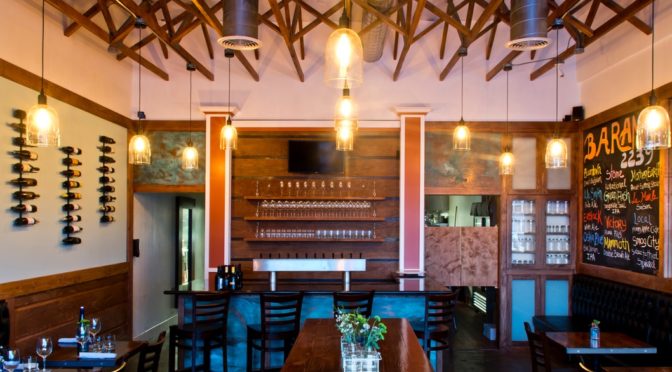
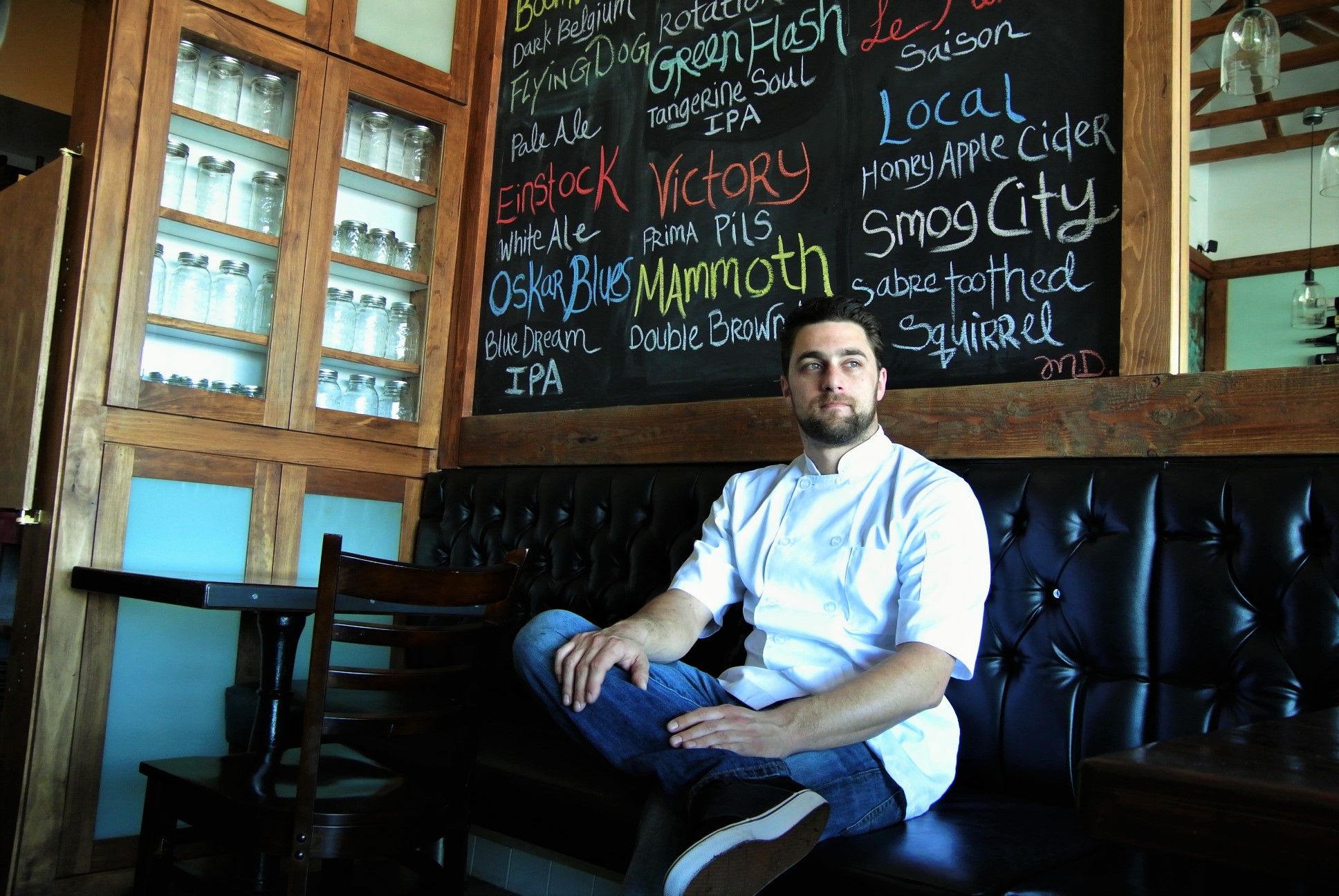
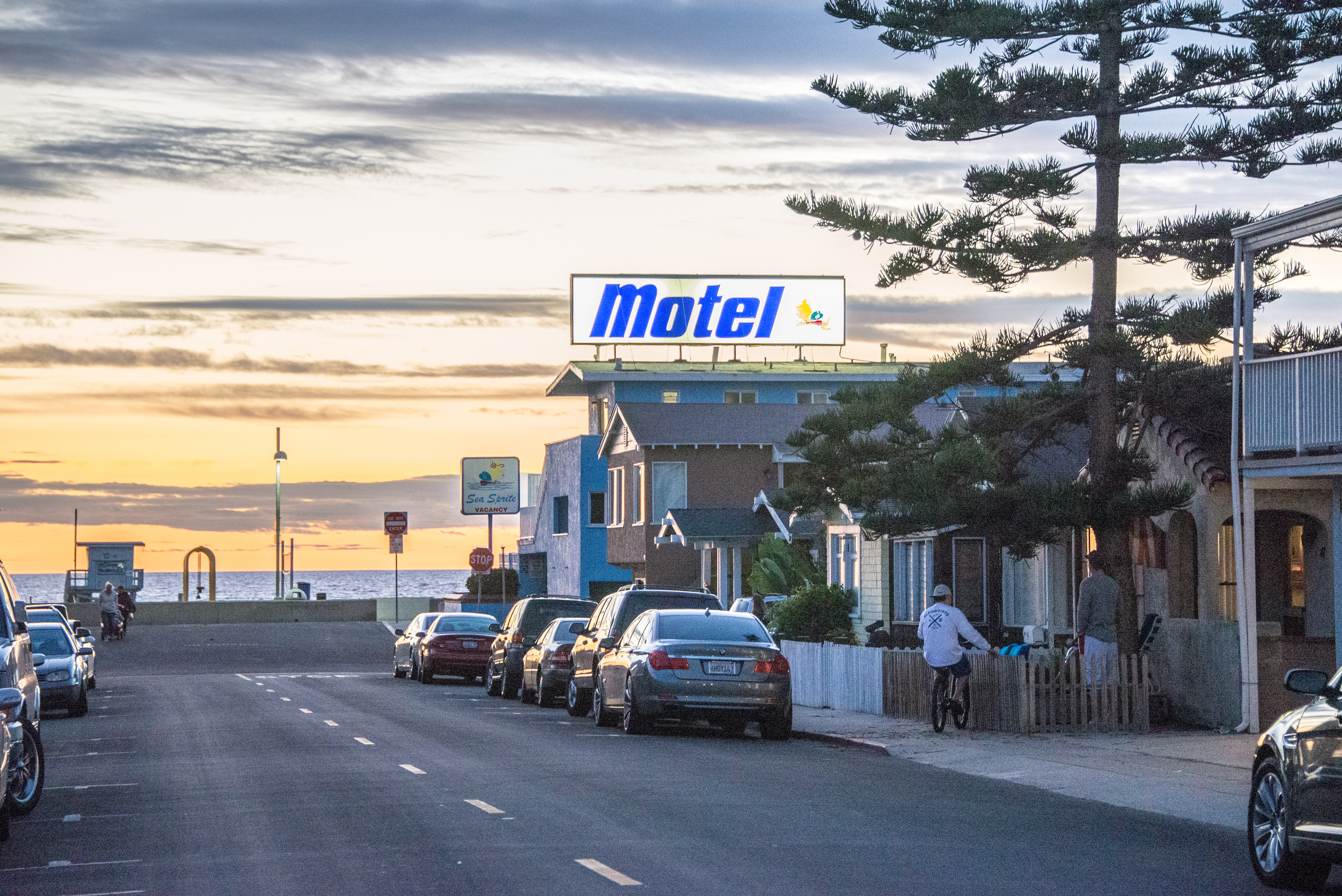
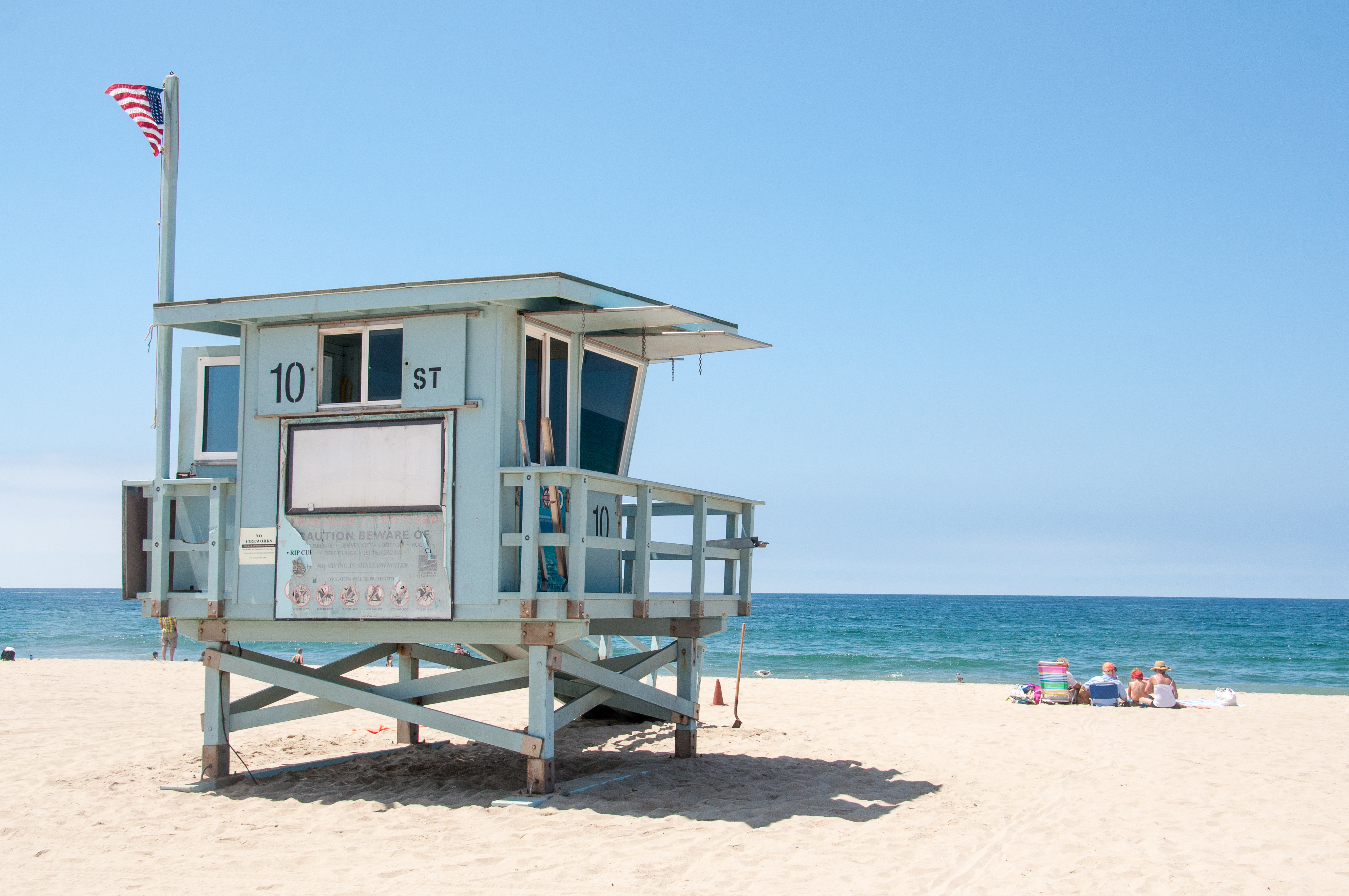
    i8tonite: with Chef Tyler Gugliotta, Baran's 2239 in Hermosa Beach & Jerk PorkThe petite picturesque coastal town of Hermosa Beach, along with its sister sandlots, Manhattan and Redondo, has never been known as a culinary hub. Typical Southern California seaside fare of good burgers, sustainable salads and grilled meats paired with frothy beers and California wines is de rigueur.   Yet, epicures who love the waves between their toes and food prepared with culinary prowess can now have both at the few weeks old Baran’s 2239 and their chef Tyler Gugliotta, using South of the Border and Asian influences.
    i8tonite: with Chef Tyler Gugliotta, Baran's 2239 in Hermosa Beach & Jerk Pork Recipe. Photo Kent Kanouse
    Photo Kent Kanouse

    Generally speaking, food made by a cook of some repute can be had at any of the Golden State’s seaside hotels, which dot the Pacific Coast Highway. Luxury resorts such as Monterey’s Post Ranch Inn, Aubergine in Carmel-By-The-Sea, or The Resort at Pelican Hill’s Andrea in Newport Beach come to mind, yet it’s difficult to find independent dining. With Gugliotta, his ambition is to change that direction – and with his background, he just might. His father, a chef who cooks at Shugrue’s in Lake Havasu, Arizona – and his aunt and uncle own noted Weiser Farms, one of California’s best producers of root vegetables – so food is in his blood.

    Interestingly, Gugliotta’s first love and his college major was English Literature. He was planning to become a professor but when he got on the kitchen line, all bets were off. On why he changed career directions, “Honestly, it was the creative aspect. As a young cook, I wanted to be mixing my own flavors, putting together my tastes.”
    i8tonite: with Chef Tyler Gugliotta, Baran's 2239 in Hermosa Beach & Jerk Pork Recipe. Photo by Robin Kanouse
    Photo by Robin Kanouse

    His menus are fairly sophisticated for a sleepy seashore town – and, rightly, are a perfect stage for his family’s farms vegetable fortune. There is the nod to Gugliotta’s Italian roots with spigarello (broccoli leaves) with cauliflower, cannellini beans, and garlic scapes; plus, the bounty of California’s seasonality with white asparagus, chanterelle, and truffles. Then on the meat side a pork char sui with a crispy coleslaw or housemade chorizo verde.

    More importantly, the thirty-one year old is excited to be elevating the food scene in his hometown, presenting exciting California cuisine with inspirations from his travels to Mexico, the Pan-Pacific, and Europe. And, the Hermosa Beach gourmands, flip-flops and board shorts, are happy to have him.

    Chef Questionnaire (with a nod to Proust); 
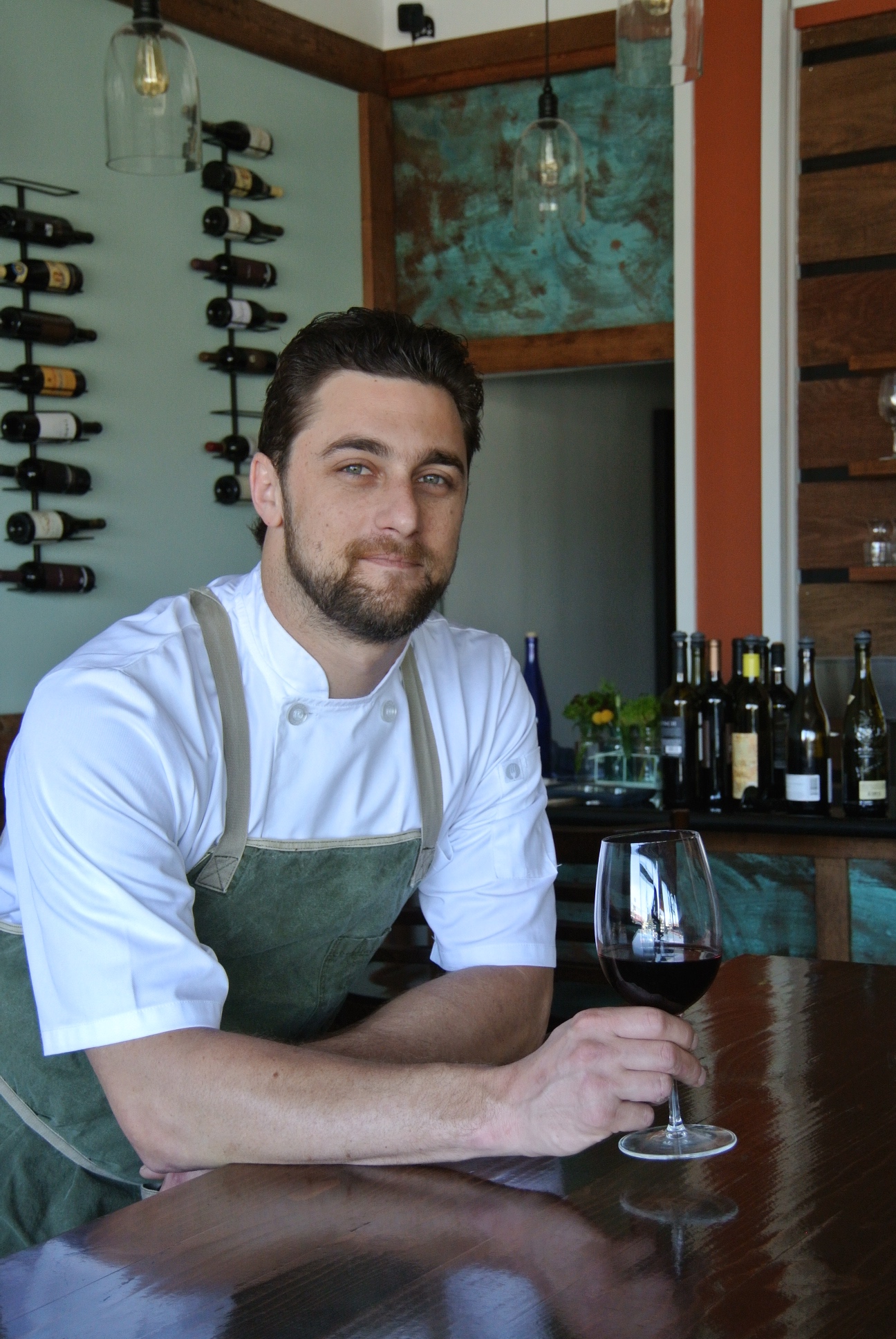
    i8tonite: with Chef Tyler Gugliotta, Baran's 2239 in Hermosa Beach & Jerk Pork Recipe
    Photo by Monica Simpson

    How long have you been cooking? Cooking since 8 years old, but professionally for 10 years.

    What is your favorite food to cook? Anything with chilies.

    What do you always have in your fridge at home? Cheese.

    What do you cook at home? I like to grill.

    What marked characteristic do you love in a customer ?Adventurous.

    What marked characteristic do you find unappealing in a customer? No shows.
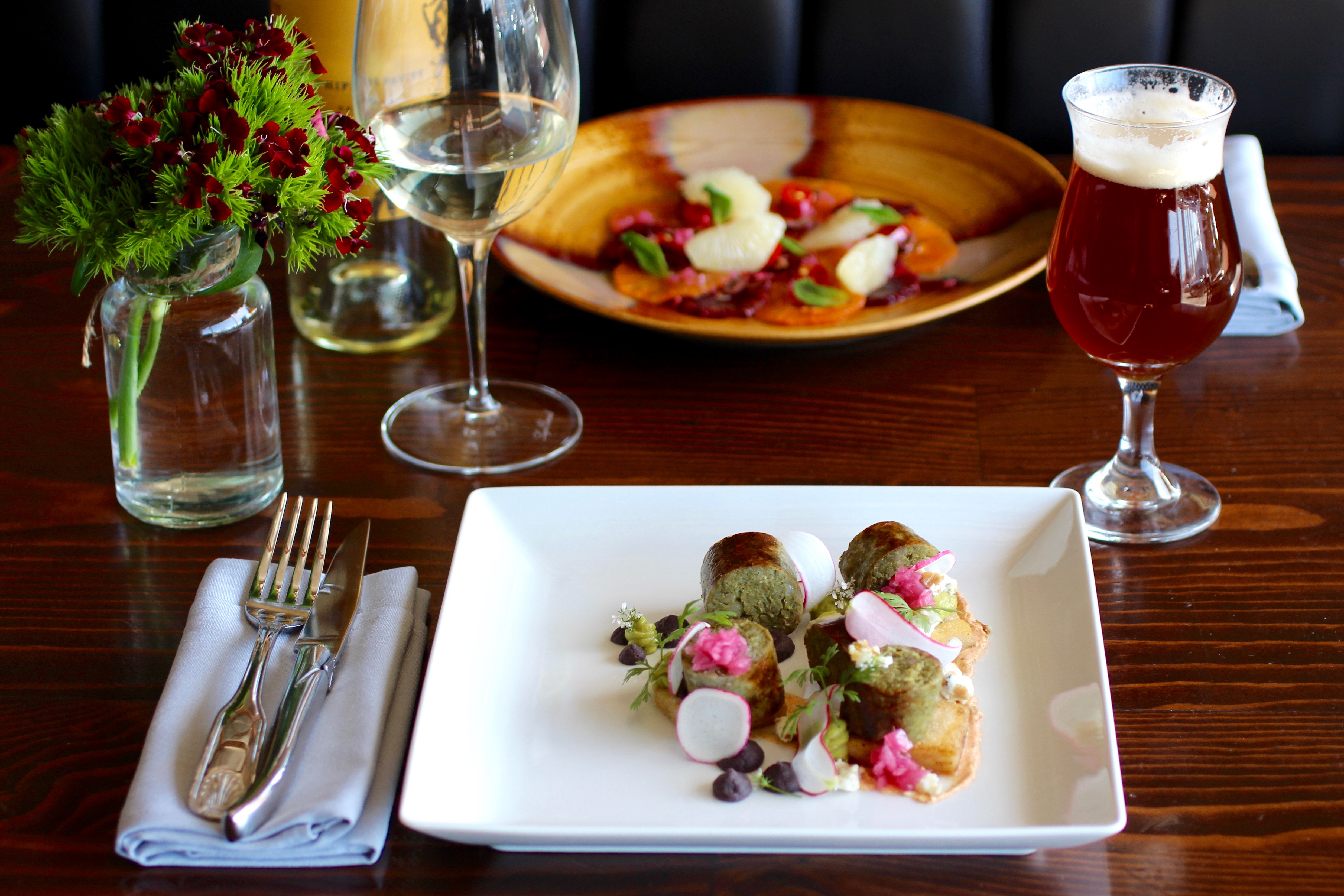
    i8tonite: with Chef Tyler Gugliotta, Baran's 2239 in Hermosa Beach & Jerk Pork RecipeTupperware, Rubbermaid, or Pyrex? Deli cups.

    Beer, wine, or cocktail? Beer when I’m thirsty, wine with food, cocktails on my day off.

    Your favorite cookbook author? Escoffier.

    Your favorite kitchen tool? My hands.

    Your favorite ingredient? Cilantro.

    Your least favorite ingredient? Not big on tripe. Hate canned vegetables.
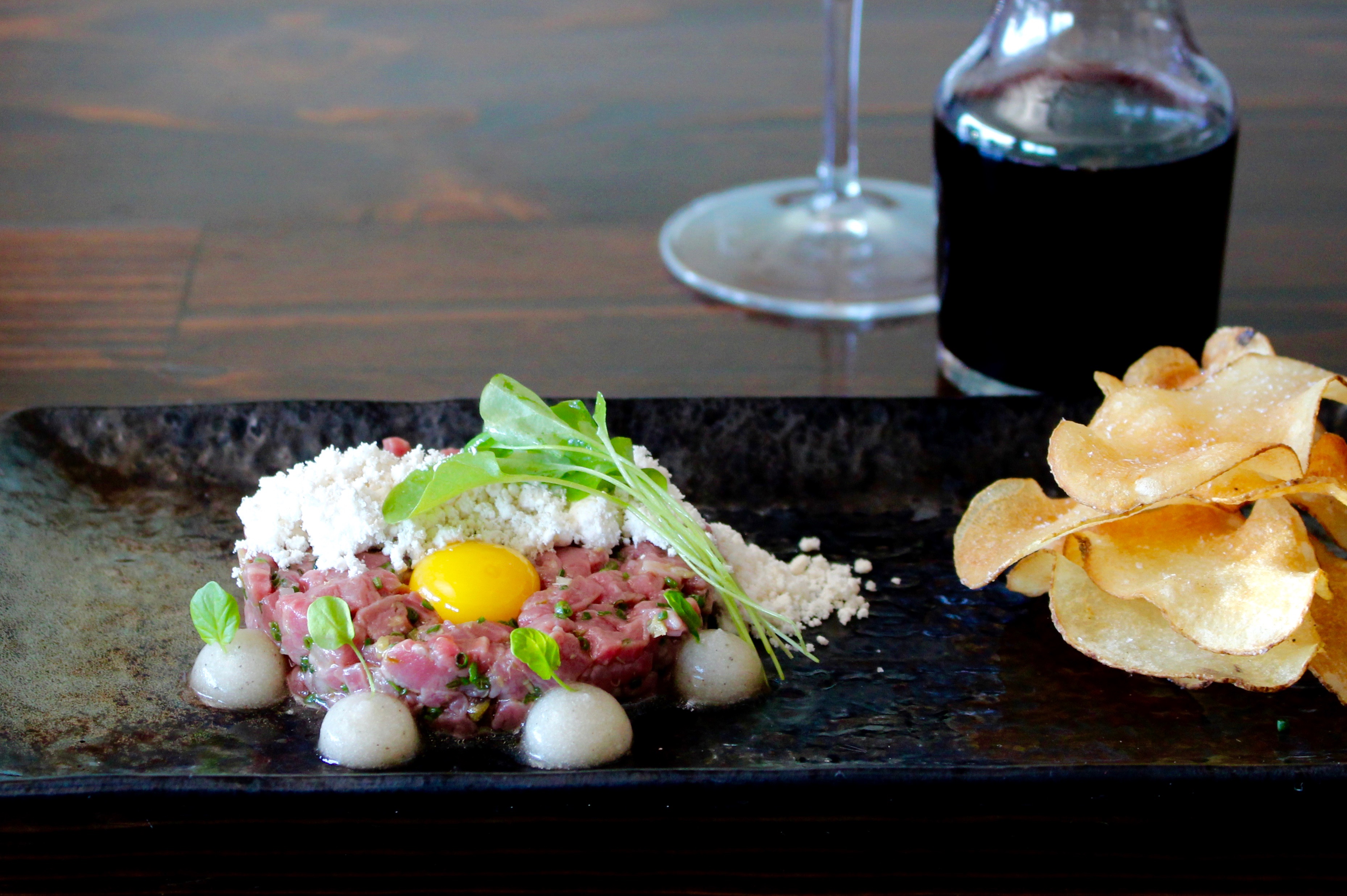
    i8tonite: with Chef Tyler Gugliotta, Baran's 2239 in Hermosa Beach & Jerk Pork RecipeLeast favorite thing to do in a kitchen? Dishes.

    Favorite types of cuisine to cook? Mexican/ Italian/Southeast Asian.

    Beef, chicken, pork, or tofu? All but tofu.

    Favorite vegetable? Chilies.

    Chef you most admire? My Dad.

    Food you like the most to eat? Tacos/sandwiches.

    Food you dislike the most? Fake meat products.

    How many tattoos? And if so, how many are of food? One tattoo which is of food.

    Recipe: Jerk pork Tenderloin – Chef Tyler Gugliotta

    • 2 cups chopped green onions
    • 1/2 cup chopped onion
    • ½ cup chopped cilantro
    • 4 tablespoons apple cider vinegar
    • 4 tablespoons lime juice
    • 2 tablespoon soy sauce
    • 1 tablespoon vegetable oil
    • 2 teaspoons kosher salt
    • 2 teaspoons fresh thyme
    • 2 teaspoons brown sugar
    • 2 teaspoons chopped peeled fresh ginger
    • 1 teaspoon ground allspice
    • 1/4 teaspoon ground nutmeg
    • 1/4 teaspoon black pepper
    • 1/8 teaspoon ground cinnamon
    • 4 garlic cloves, minced
    • 4 habanero peppers, seed for less spice (i leave them in)
    • 1 (1 1/2-pound) pork tenderloin

    Blend or food process all ingredients, and pour into a ziploc bag with the pork. Marinade for at least three hours, but the day before works best. Grill until caramelized, about 4-6 mins a side and the internal temp is 140.


    –       The End. Go Eat. –


  • i8tonite: with San Francisco Chef Kathy Fang, Fang Restaurant and Pesto Udon Noodles

    i8tonite: with San Francisco Chef Kathy Fang, Fang Restaurant and Pesto Udon Noodles

    i8tonite: with San Francisco Chef Kathy Fang, Fang Restaurant and Pesto Udon Noodles Chef Kathy Fang is the daughter of one of San Francisco’s legendary chefs, Peter Fang of the House of Nanking. To the uninitiated, those who have never eaten Chinese food in Shanghai or one of the major Asian-American urban hubs such as Los Angeles, New York, Seattle, and Vancouver have probably eaten the domestic version normally laden with excess soy sauce, oils and fried. Shanghai food mixes a variety of regional Chinese cooking, primarily because the twenty-four million inhabitants  come seeking work in the big city. Street carts characterize the cuisine – eat and run – such as steamed buns, scallion pancakes, and a variety of rice balls. Each morsel can produce bold, complex flavors if placed in the correct hands – such as Chef Fang. Even today, more than twenty-five years later, queues are outside the first Chinatown located restaurant with far-flung travelers, guidebooks in hand, ready to dine on Fang’s Shanghainese-type eats.

    i8tonite: with San Francisco Chef Kathy Fang, Fang Restaurant and Pesto Udon NoodlesAlong comes his daughter, Kathy Fang, who is every bit her father’s progeny but personifies the new generation of chefs, realizing that there is more than just the kitchen to cooking. After working in the corporate scene, the younger Fang decided to follow in the family’s footsteps, learning about European cooking techniques at a premier local culinary school. Together, in 2008, the father and daughter team opened Fang Restaurant, an elegant establishment focusing on the Chinese regional foods, but with a more refined, gastronomic approach.

    “I’m very blessed to be around my dad and parents,” states Ms. Fang about working with her parents and father. “My dad can be very stubborn but we work together many hours of the day. Ultimately, we have a very loving relationship inside and outside the kitchen.”

    Last year, Ms. Fang, was a winner on Food Network’s Chopped, the broadcast cooking competition show which places four chefs against each other with the hopes of winning ten thousand dollars. Ms. Fang, a petite and attractive woman, beat three burly Caucasian men. She says of winning, “Now, we get customers, mostly female, who come into Fang. They say, ‘I was rooting for you all the way against those guys. It was great to see a woman win.’ “

    i8tonite: with San Francisco Chef Kathy Fang, Fang Restaurant and Pesto Udon Noodles Ms. Fang’s future is bright as she continues to cook with her father at their eponymously named gourmet hall. Outside the kitchen, though, she is branding herself as a culinary leader with My Fangalicious, her website and family recipes. Her hopes are to become the next Martha Stewart with a “branded wok” and other gastronomic items like her Caucasian predecessors. As her clientele has attested, it’s good to see diversity in the food mix, so all people can be included in the conversation.

    Chef Questionnaire (with a nod to Proust)

     How long have you been cooking? Since I was 6 years old

    What is your favorite food to cook? Pasta

    i8tonite: with San Francisco Chef Kathy Fang, Fang Restaurant and Pesto Udon NoodlesWhat do you always have in your fridge at home? Eggs, hot sauce.

    What do you cook at home? Asian and Italian food

    What marked characteristic do you love in a customer? I’m lucky in that a lot of our customers come in to Fang knowing to trust the chef. I love customers who come in with an open mind to try new things to eat.

    What marked characteristic do you find unappealing in a customer? Customers who finish their meal and then tell you afterwards they didn’t like it. If you don’t like it, mention something right away. I feel like any restaurant would apologize and offer to make something different for you. Just be up front in the beginning, and we would be more than happy to make any changes for you.

    Tupperware, Rubbermaid, or Pyrex? Pyrex

    Beer, wine, or cocktail? Wine to wind down at home or when having dinner. Cocktails for a night out, a gin martini to be exact.

    Your favorite cookbook author? David Chang. I love how he weaves his own story into the growth of all his restaurants. You learn about him, his restaurants, and his recipes all in one book.

    i8tonite: with San Francisco Chef Kathy Fang, Fang Restaurant and Pesto Udon Noodles
    Sesame Chicken

    Your favorite kitchen tool? This may seem weird but my electric kettle at home. I’m obsessed with it mostly because it heats up to boil so fast. I boil water for tea, water for boiling pasta, water for blanching. I also heat up soups using the kettle because it’s so fast. I just let it go, brush my teeth, work on my computer and then it shuts off after it boils. I also boil eggs in there in the morning.  For the cost and how often I use it and in so many different ways, it’s really one of the best little kitchen tools I have.

    Your favorite ingredient? Soy sauce (I grew up eating this and I can’t imagine my cuisine without it)

    i8tonite: with San Francisco Chef Kathy Fang, Fang Restaurant and Pesto Udon Noodles
    Fang, lower dining room

    Your least favorite ingredient? Lemon pepper. I always think it has this weird fake element to it. And I never understood why you wouldn’t just use fresh lemon or citrus and freshly cracked pepper.

    Least favorite thing to do in a kitchen? Dishes

    Favorite types of cuisine to cook? Italian, Chinese, and Japanese

    Beef, chicken, pork, or tofu? Pork

    Favorite vegetable? I know it’s an overused vegetable and it seems like it’s that overly popular girl at school that everyone seems to talk about, but KALE is truly one of my favorite vegetables. For one, I’m a health nut, so any vegetable that I find healthy, I like. But aside from that, I find kale super versatile. I buy in big amounts because I can go through it all week. I can bake kale until it’s crisp like chips, I can sautée with eggs in the morning for breakfast. Kale works well in soups and stews. It also makes great salads if done right.  And finally toss it in smoothies to get extra vitamins and fiber. There are just so many ways to eat kale!

    i8tonite: with San Francisco Chef Kathy Fang, Fang Restaurant and Pesto Udon NoodlesChef you most admire? Grant Achatz, Dominique Crenn, and Thomas Keller.

    Food you like the most to eat? Sushi

    Food you dislike the most? Natto

    How many tattoos? And if so, how many are of food? None.


    Recipe: Pesto Udon Noodle Salad

    i8tonite: with San Francisco Chef Kathy Fang, Fang Restaurant and Pesto Udon NoodlesServes 2.

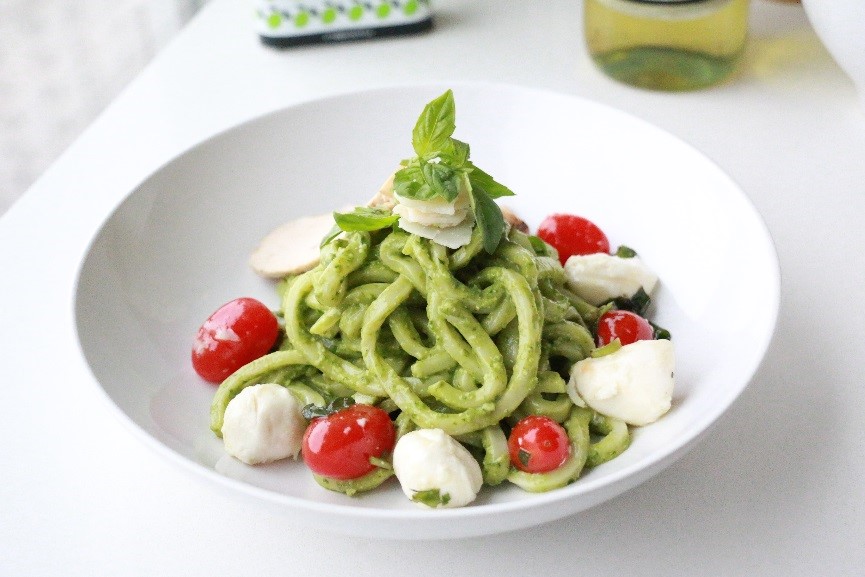
    Make fresh pesto by blending fresh Italian basil, 2 garlic cloves, 3 tablespoon grated parmigiano reggiano, 2 tablespoons pine nuts, 4 tablespoon high quality evoo, and salt. Taste and set aside. Bring a pot of water to boil (or use electric kettle) and pour the hot water over packaged udon noodles. Separate the noodles and let sit for 1 minute and stir.  Remove from water and run under cold water.  Set aside.  Dress the udon with freshly made pesto and plate. Slice some grilled chicken breast or roasted chicken and top the udon with it. Mozzarella balls and cherry/grape tomatoes are a great addition to this dish, as is a generous sprinkle of parmigiano reggiano.

    • The End. Go Eat. –
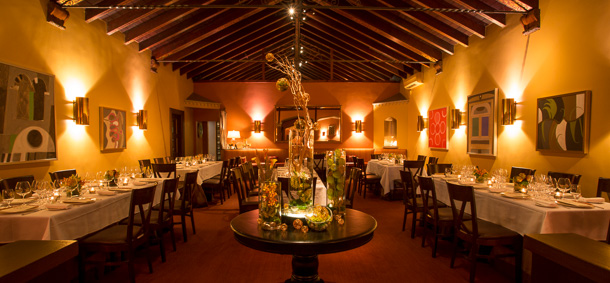
     

  • i8tonite: A Cheat Sheet To Eating in Santa Barbara, California

    i8tonite: A Cheat Sheet To Eating in Santa Barbara, California

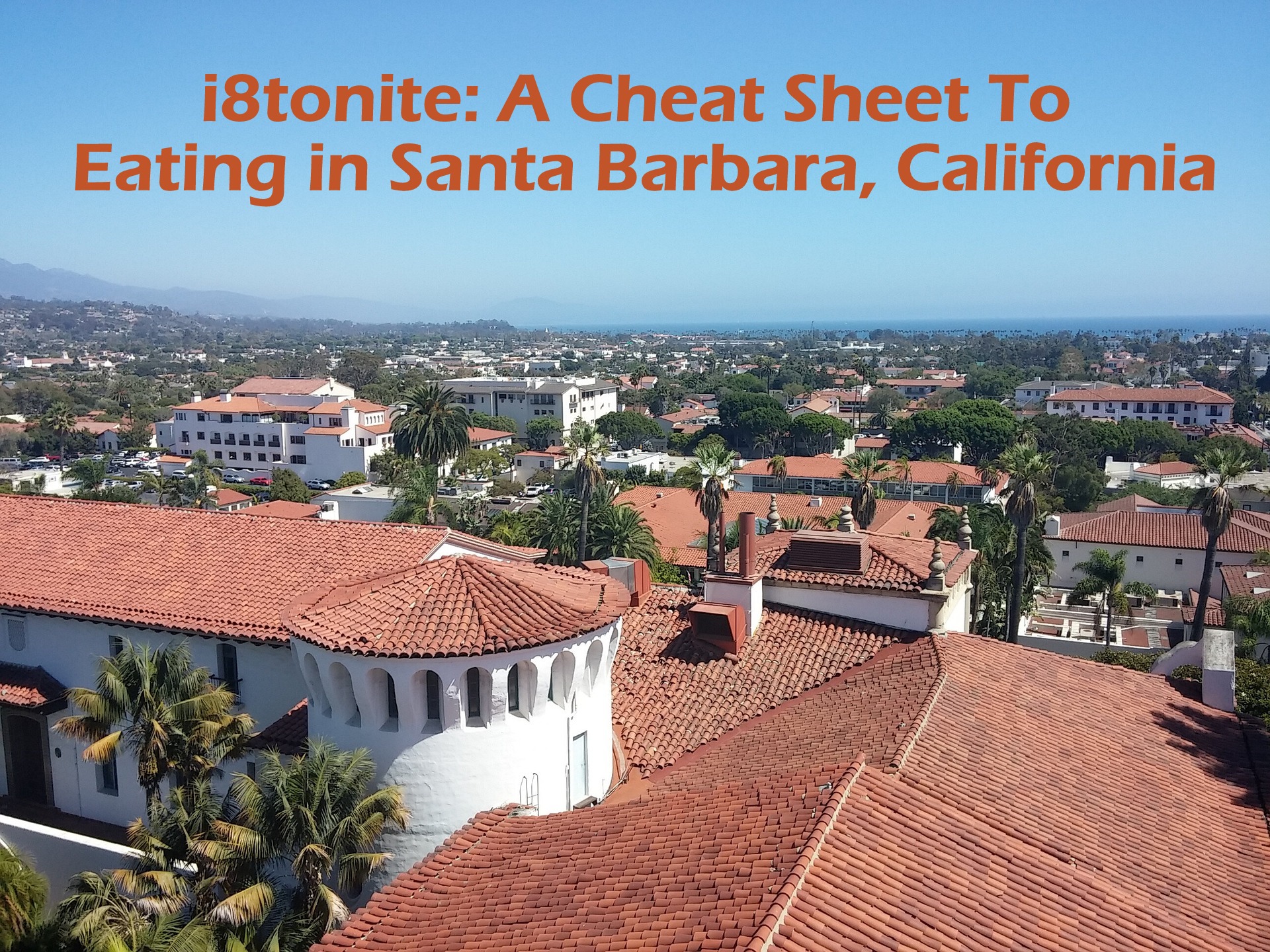
    i8tonite: A Cheat Sheet To Eating in Santa Barbara, CaliforniaThe city of Santa Barbara has been called The American Riviera. Matter of fact, as a travel destination, it’s been trademarked as The American Riviera under that name, bringing connotations of luxury and prestige. Beyond that branding, the area is home to truly great farming, including wine growing regions. There is also damn mighty fine eating if you get beyond the idea of high-end dining and leave that to the bigger urban centers. It’s not that the chefs aren’t capable and many of the small city’s dining rooms are decorated beautifully, but it’s why bother bringing a jacket or heels to a low-key area? After all, this is a coastal community and a college town, where flip-flops and shorts are de riguer.

    i8tonite: A Cheat Sheet To Eating in Santa Barbara, California
    Photo Credit: Terry Straehley

    Interestingly, Santa Barbara provides a sublime campus for higher learning, as this is where – as noted – several colleges are based, including the University of California, Santa Barbara (UCSB), Antioch University, and Brooks College of Photography. Located along the Pacific Coast, about an hour and a half north of Los Angeles, Santa Barbara’s geography provides temperate weather, golden sand beaches, and incredible bike paths, supposedly evocative of the Mediterranean.
    However, if cultural pursuits are really your interest, there is the Santa Barbara Museum of Art. Furthermore, Mission Santa Barbara (named the Queen of the Missions), is one of the twenty-one Franciscan missions in the state of California. Well documented in the eighteenth century history books, the traveling and gospel spreading monks dedicated to transiting the indigenous peoples into Christians did so via sub-standard means and torture.

    Even with all the college aged individuals, there is relatively very little nightlife and the streets roll-up early. But the beauty of Santa Barbara lies not in its evening but in the early part of the day, when people – visitors and natives alike – take up more physical pursuits, such as kayaking, beach volleyball, and fishing.

    Breakfast: Tupelo Junction Cafe

    i8tonite: A Cheat Sheet To Eating in Santa Barbara, California

    When Tupelo Junction first opened, it was cozy with no more than a dozen tables packed onto a small side street. The walls were covered in burlap cloth and white washed with touches of red gingham, giving the impression that Tom Sawyer and his girlfriend Becky were manning the cook’s station. Maybe about a decade ago, the restaurant moved to State Street, closer to the action. The charming atmosphere was lost, but thankfully not the creative spin on Southern dishes. You can eat buttermilk pancakes slathered in creamy pan gravy or apple beignets.

    • Our Suggestion:  Dungeness Crab with Potato Hash, Avocado Salsa, Poached Eggs, and Beurre Blanc. This restaurant is a touch of France, big scoops of the America’s South, and the California coast.
    • Price: $18.00. (It has big pieces of crab throughout and worth every penny.)
    • Hours: Breakfast is served daily from 8:00am to 3:00pm.
    • Website: www.tupelojunction.com
    • Address: 1218 State Street, Santa Barbara, CA  93101
    • Phone: (805) 899 – 3100

    Lunch:  Brophy Bros.

    i8tonite: A Cheat Sheet To Eating in Santa Barbara, California

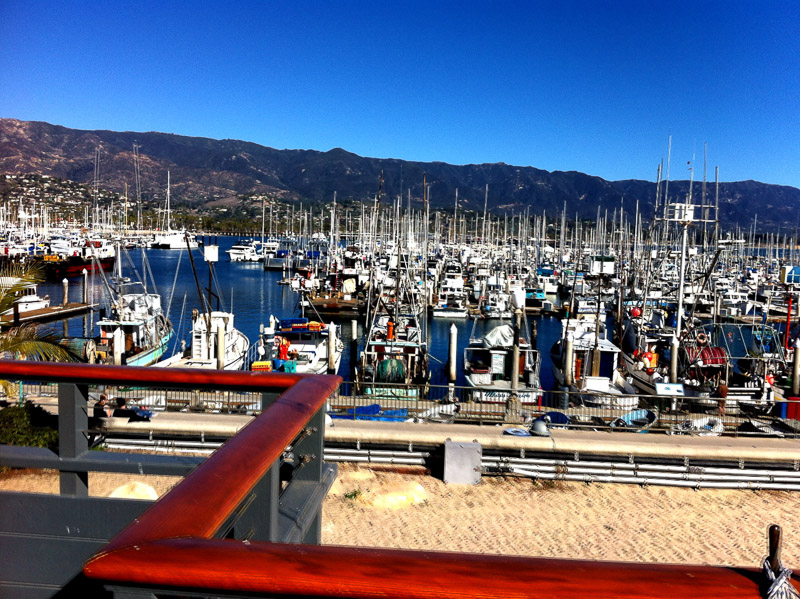
    This is a wharf restaurant that is worth just driving ninety minutes along the Pacific Coast Highway to dine for lunch.  It’s truly a quintessential Santa Barbara dining experience, overlooking the fishermen’s boats as they bring in their day’s catch. If you decide to have dinner here, the second floor outlook is one of the most beautiful places in California to watch the setting sun. It’s a busy restaurant and can have a very long wait.

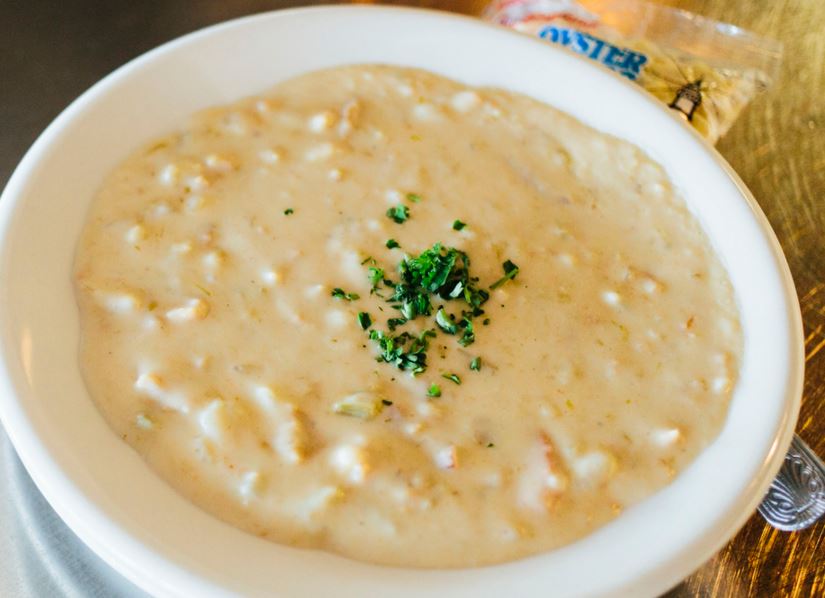
    • Our Suggestion: New England Clam Chowder. Living on the West Coast, where food is mostly about becoming a rabbit – chewing a lot of veggies, no carbs and dairy – this is one of the most deliciously, decadent soups imaginable. It’s very East Coast made, with lots of clams, potatoes, and cream. The only thing missing is the Maine mist and chill. If you do take an afternoon drive to Santa Barbara, come here and have this as a cup with a salad for lunch, with a glass of white wine, and your life will be as perfect as fairy tale.
    • Price: $5.00 for a cup; $7.50 for a bowl.
    • Hours: Open daily from 11:00am – 10:00pm. They do not take reservations. First come, first serve basis.
    • Website: www.brophybros.com
    • Address:  119 Harbor Way (Harborside), Santa Barbara, CA           93109
    • Phone: (805) 966 – 4418

    Cocktails: Canary Hotel’s Finch & Fork

    i8tonite: A Cheat Sheet To Eating in Santa Barbara, California

    Smack dab in the middle of the town of Santa Barbara is the Canary Hotel. White-washed on the outside with a distinct Mediterranean/ Mexican/Spanish feel, complete with clay tiles, red-roof, decorative irons and wood, it can be a little precious. But it’s a great place to stop for a mid-day cocktail or an afternoon repast as you meander through the State Street shops. New American cuisine with freshly bought bounty is served at the bar daily and in the main dining room.

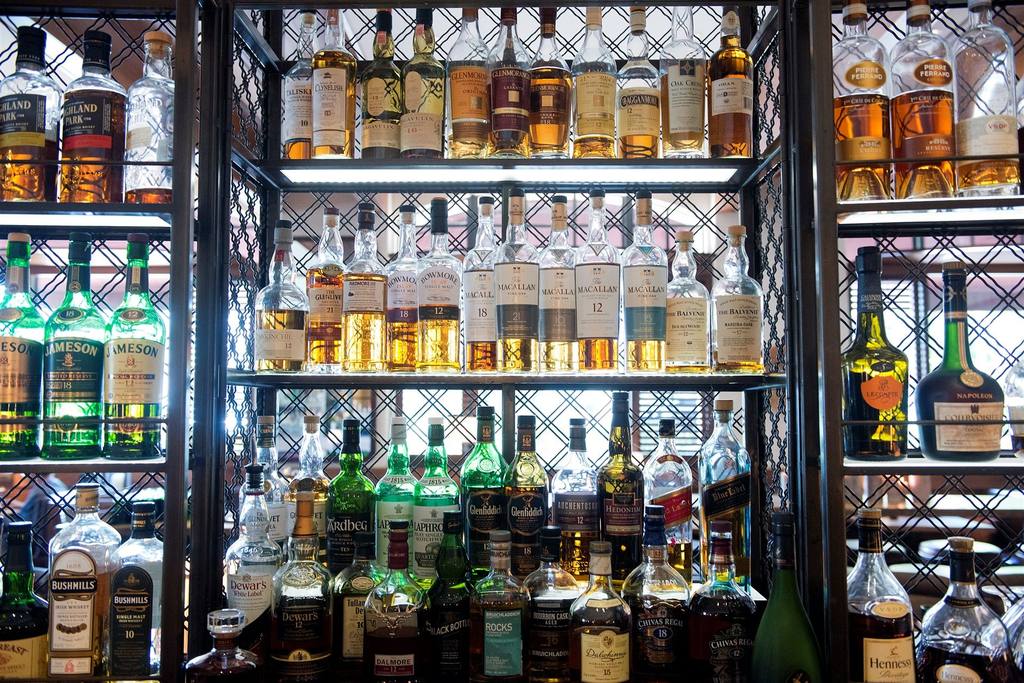
    • Our Suggestion: This is one of California’s great wine countries. You need to sample the wine while here.
    • Price: Varies depending on the winery.
    • Hours: Open daily at 2:30 pm – 11:30 pm.
    • Website: www.finchandforkrestaurant.com
    • Address: 31 West Carillo Street, Santa Barbara, CA 93101
    • Phone: (805) 879 – 9100.

    Dinner: The Wine Cask

    i8tonite: A Cheat Sheet To Eating in Santa Barbara, California

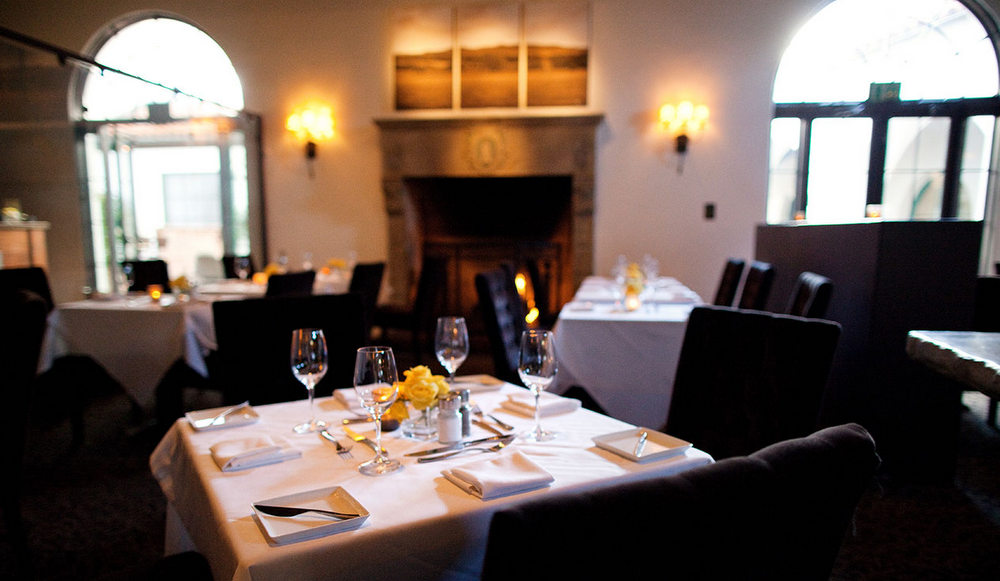
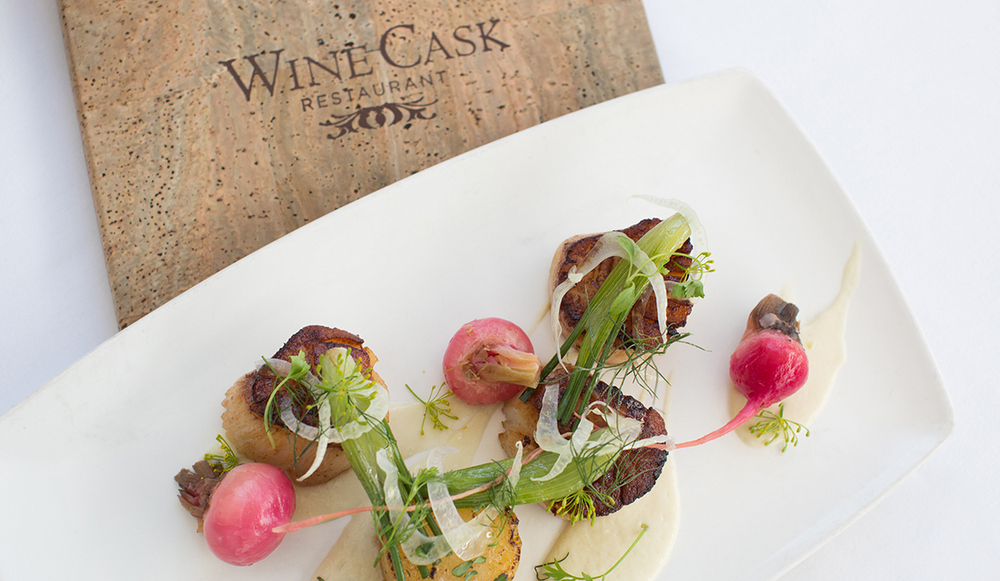
    Created in 1981, The Wine Cask is Santa Barbara’s landmark restaurant bringing the area’s food and wine to the forefront of dining scene throughout California. Farm to table long before the term was coined, the owner, Doug Margeruem, has long been resolute in showcasing the Santa Barbara County’s rich agriculture, most notably it’s wine growers. If ever there was a quintessential dining place — a must place to dine in Santa Barbara — The Wine Cask is the place. It’s like going to Beverly Hills and never eating at Spago, or dining in New York and never eating at Gotham Bar and Grill. There are some restaurants that you have to eat at if you are in the area. The dining room, with its painted beam ceilings and massive fireplace to keep out the sea chill even in the heat of the summer, is one of the California Coasts most stately and stunning.i8tonite: A Cheat Sheet To Eating in Santa Barbara, California

    • Our Suggestion: The food is delicious and the produce is brought in daily from nearby farmers markets and vendors. Probably the closest you will get to the farm without actually picking it yourself.
    • Prices: Varies but American Wine Country cooking at it’s finest.
    • Hours: Nightly from 5:30 pm. Closed Sundays – Mondays.
    • Website: www.winecask.com
    • Address: 813 Anacapa Street, Santa Barbara, CA                                91301
    • Phone: (805) 966 – 9463

    Place to Stay: Simpson House Inn

    i8tonite: A Cheat Sheet To Eating in Santa Barbara, California

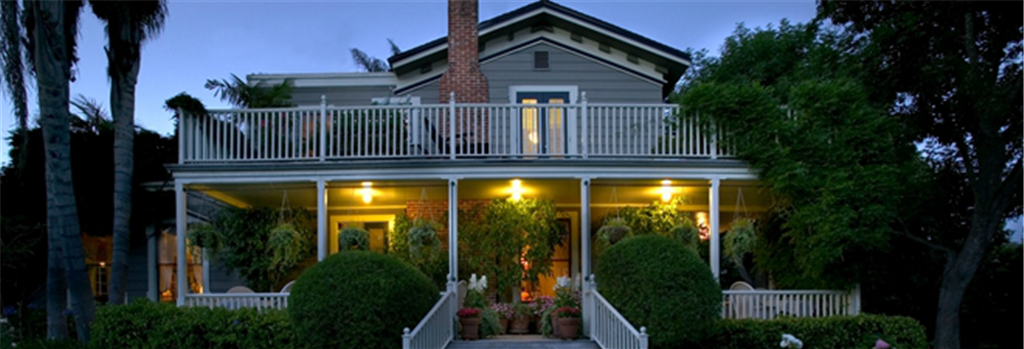
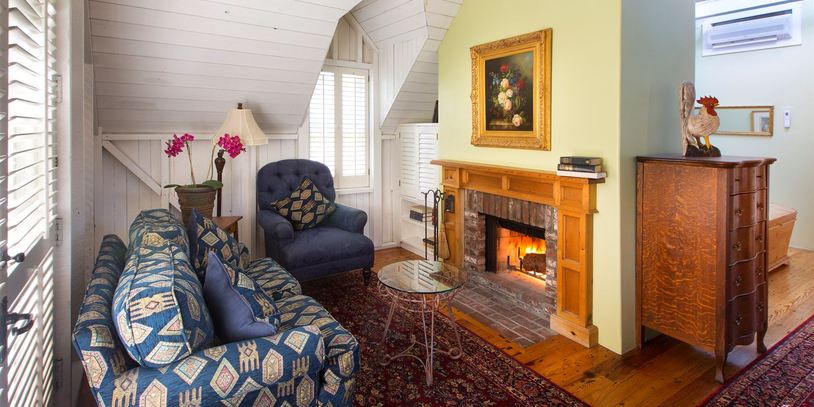
    Out of all the hotels in Santa Barbara, this is the one beyond reproach. It’s a small bed and breakfast, with 13 rooms, and no two rooms are the same. Therefore, each time you stay, the experience is different. And unlike the other hotels, which are managed or owned by big corporations, wealthy developers, or billionaires, this is luxury hospitality at its finest. Built by the Davies family, Simpson House Inn became an award-winning bed and breakfast, the only one to be named a “five diamond” by AAA and by Andrew Harper’s Hideaway. Like all b and b’s, breakfast is served daily – but it’s completely vegetarian. If it was never mentioned, a guest would never notice. Also, there is a two-hour afternoon wine tasting with a bevy of tasty snacks before dinner. For this intrepid traveler, I find this to one of my favorite hotels in the world.

    i8tonite: A Cheat Sheet To Eating in Santa Barbara, California


    Website: www.simpsonhouseinn.com

    Prices: Ranges according to accommodation and season. Prices can start over $250.00, but it’s worth every penny.

    Pin for later:

    i8tonite: A Cheat Sheet To Eating in Santa Barbara, California


    The end. Go eat. 


  • i8tonite: Two-Michelin Starred Chef Suzette Gresham from San Francisco’s Famed Acquerello

    i8tonite: Two-Michelin Starred Chef Suzette Gresham from San Francisco’s Famed Acquerello

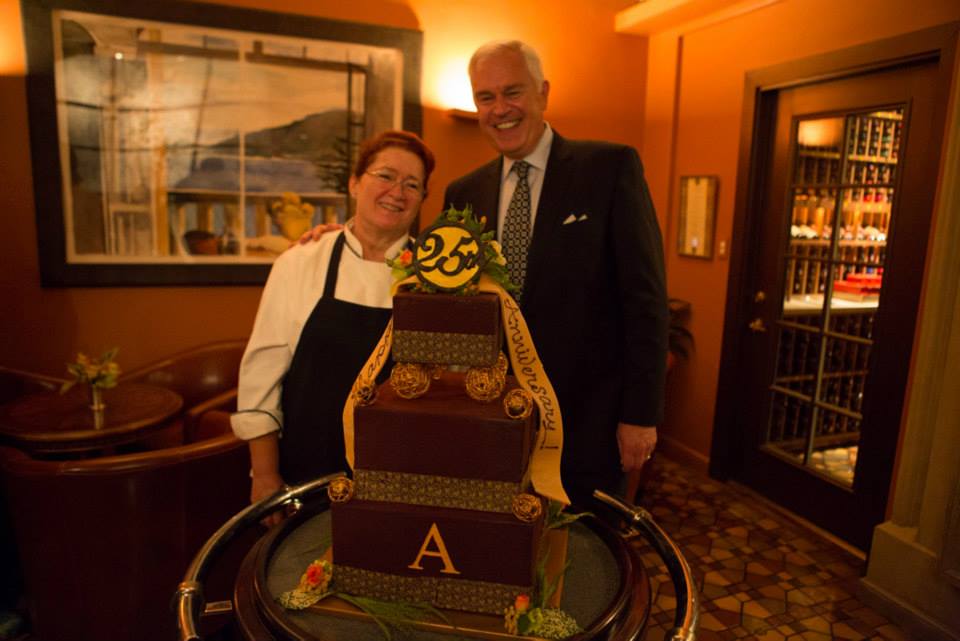
    i8tonite: Two-Michelin Starred Chef Suzette Gresham from San Francisco's Famed Acquerello“When opportunity knocks on your door, you have two choices (and) if I had waited until I felt ready, I would’ve missed what has turned out to be the greatest opportunity of my life,” says Chef Suzette Gresham, referring to Acquerello, the almost 27-year old Italian restaurant she co-owns with Giancarlo Paterlini. A friend had tipped off Gresham that there was an opening for an executive chef under the management of Paterlini. At the time, as a young chef, Gresham didn’t feel qualified, but decided that failure was nothing more than not meeting someone else’s expectations. She applied for the job – and the rest, as they say, is culinary history.

    i8tonite: Two-Michelin Starred Chef Suzette Gresham from San Francisco's Famed AcquerelloSince the opening of Acquerello in San Francisco’s posh Nob Hill neighborhood, the recognition and accolades just keep coming. Acquerello received its first Michelin star in the introductory 2007 Bay Area guide. In 2014, Gresham received the second star, making her the third woman in the United States and the second in San Francisco to receive this prestigious honor.  Chef Gresham is also only one of two women to receive the American Culinary Federation’s “Antonin Careme Award” – the other was Julia Child.

    Chef Gresham remains true to her belief that you must understand the very basics of cooking before you can become a great chef.  She takes an innovative approach to Italian cuisine at Acquerello, allowing her curiosity, creativity, and passion for all things Italian to manifest in an innovative manner. However, she remains true to the heart of Italian cuisine: clean fresh ingredients, sourced locally, prepared lovingly and with attention.

    i8tonite: Two-Michelin Starred Chef Suzette Gresham from San Francisco's Famed AcquerelloWhile Gresham believes in flavor above all, she prides herself on the definability of her food. “If you close your eyes and put the fork in your mouth, you should still be able to tell what you’re eating,” she comments. In the end, there are no tricks to the cuisine at Acquerello, no attempt to dazzle beyond the inherent capability of the plate’s ingredients.

    Over the course of her thirty-five year career, and beyond the laurels, Chef Gresham’s approachable manner has allowed her to mentor over sixty interns and apprentices at Acquerello. It’s her belief that she has had more than her share of the “good stuff” in life. In giving back, Gresham shares her knowledge and commitment to turning out the very best in every person who works in her kitchen. In an industry dominated by men, Chef Suzette Gresham has become one of the most influential chefs in the world.

    Chef’s Questionnaire (with a nod to Proust):

    i8tonite: Two-Michelin Starred Chef Suzette Gresham from San Francisco's Famed Acquerello

    How long have you been cooking? Chronologically: For two-thirds of my life.

    What is your favorite food to cook?  At home: Soup. Japanese Chiriashi. Hainan chicken. Duck Larb. Or, whatever my daughters request.

    What do you always have in your fridge at home? I am a condiment whore. I can cook in almost any cuisine at a moment’s notice based on what I have on hand. I am never without a variety of imported butter, mustards, multicultural pickled items, truffle oil, and oodles of hot sauces.

    What do you cook at home? From one end of the spectrum to the other: Seafood sashimi and crudos to long-cooking braised items like pig’s feet with cannellini beans.

    i8tonite: Two-Michelin Starred Chef Suzette Gresham from San Francisco's Famed Acquerello
    Chef Suzette Gresham and co-owner Giancarlo Paterlini

    What marked characteristic do you love in a customer? Curiosity.

    What marked characteristic do you find unappealing in a customer?  Closed mindedness.

    Tupperware, Rubbermaid, or Pyrex? All three: Clear plastic containers with matching lids, Vintage Pyrex, heat resistant Rubbermaid spatulas.

    Beer, wine, or cocktail? All three: Chilled, fresh homemade beer, Italian Barolo wine, and a “Mountain Man” cocktail or other crafted drinks created by Christopher Longoria.

    Your favorite cookbook author? Seriously? There are cookbooks in every room of my house, including the bathroom.  I want to hear everyone’s voice.

    i8tonite: Two-Michelin Starred Chef Suzette Gresham from San Francisco's Famed Acquerello
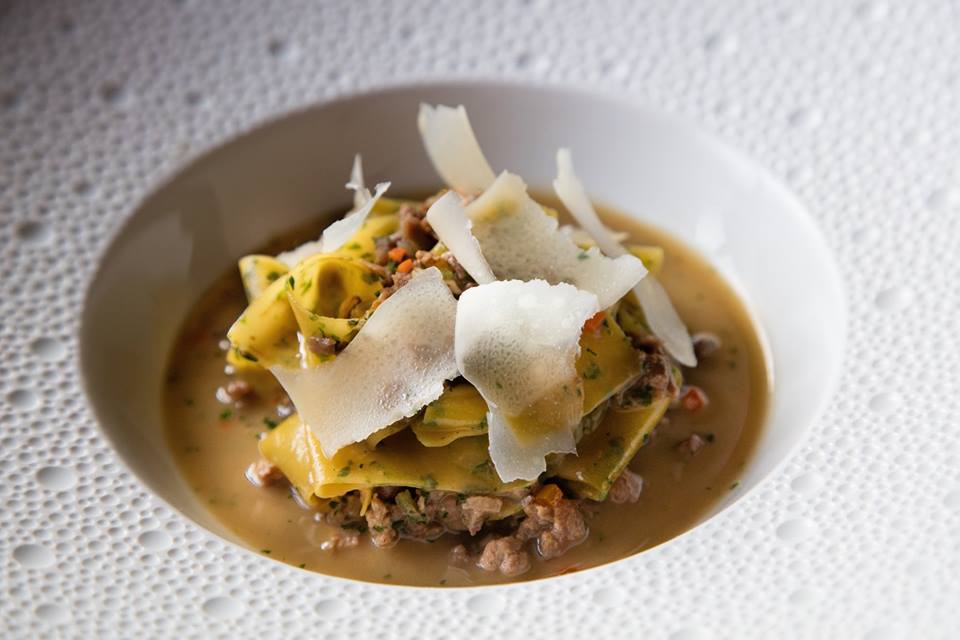
    Papparedelle with Duck Ragu

    Your favorite kitchen tool? At home: Super sharp, pointed scissors. At work: “tickets” which are micro tongs. (A gift from a past employee carried back from Spain.)

    Your favorite ingredient? Monocultivar Olive oil.

    Your least favorite ingredient? Lavender. Although I can cook with it.

    Least favorite thing to do in a kitchen? Stand around.

    Favorite types of cuisine to cook? Global.

    Beef, chicken, pork, or tofu?All three: Wagyu Beef seared, Chicken stock with Matzoh balls, Nonna’s skin-on pork roast, Tofu skins stuffed with mushrooms.

    i8tonite: Two-Michelin Starred Chef Suzette Gresham from San Francisco's Famed Acquerello
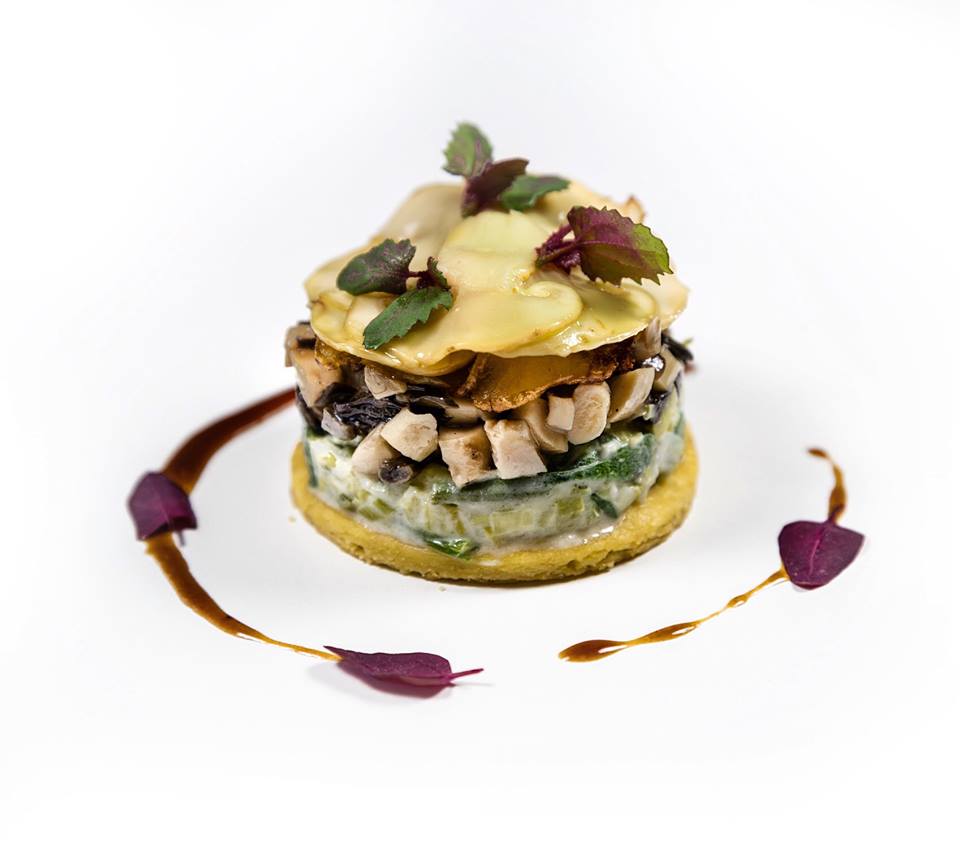
    Truffled Leek Torta with Seasonal Mushrooms, Sunchokes and Vegetable Glaze

    Favorite vegetable?Leafy greens: Swiss chard, rapini, spinach, and all bitter greens.

    Chef you most admire? Massimo Bottura: He has never relented in following his dreams. He is true to himself AND his food.

    Food you like the most to eat? Great naked salads of wild greens. Unusual sushi. Properly seared Foie gras. Big pearl Royal Osetra caviar.

    Food you dislike the most? Sea slugs.

    How many tattoos?  As a Chef and a woman… I always leave something to the imagination.

    And if so, how many are of food? Notice above. I listed “chef” first… you can decide.

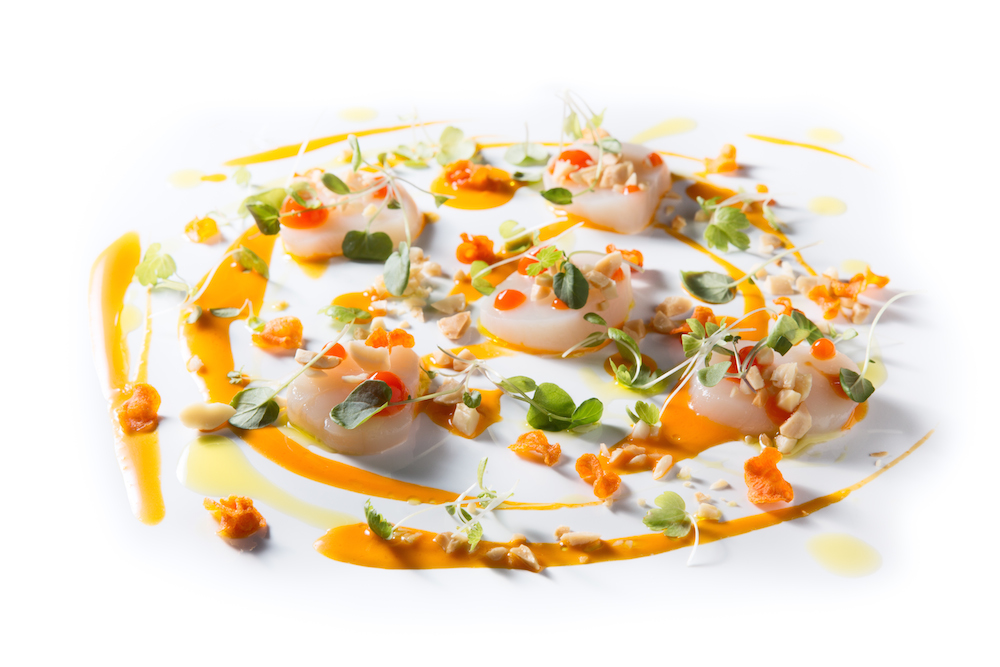
    Recipe: Acquerello’s Scallop Crudo with Carrot Vinaigrette

    i8tonite: Two-Michelin Starred Chef Suzette Gresham from San Francisco's Famed Acquerello
    Scallop Crudo with Carrot Viniagrette

    *Chef Suzette Gresham notes: The photo of the scallops is beautiful. It is meant to inspire and not restrict. It seemed to be one of the most do-able of our recipes and is open to interpretation. The Scallops create a clean canvas with which to pair your favorite flavors. The carrots are a surprising and colorful yet underrepresented vegetable in an elegant setting. It just shows that with a little mindfulness, what you can create. You don’t need to have exotic ingredients to create something delicious, as long as you are creative.

    The recipe can be adapted any way you like and you can use whatever tools you have. For example you can poach, sautee, or steam the scallops if you like. You can use beets instead of carrots. Or any veggie, Drizzle with olive oil. You don’t really need xatham gum. Make it your own. This recipe is just meant as a template.

    Recipe/Instructions

    Scallops:

    • Size 16/20’s scallops
    • Olive oil
    • Lemon zest
    • Salt

    Place scallops, olive oil, lemon zest, and salt in vac bag. Vacuum seal. Place vacuum-sealed scallops in a circulated water bath at 54C for 25mins.  After cooked, ice down until 33F. Slice scallops.

    Carrot Vinaigrette:

    • 2C fresh carrot juice
    • 1T Apple cider vinegar
    • .2% xathan gum
    • Salt to taste

    Blend carrot juice in vita-mix with apple cider vin. Add xathan gum. Season to taste.

    Red Pepper gel :

    • 6 Large bell peppers juiced
    • 2 tien tsin chilies
    • Chili Flakes
    • Gellan gum 1%
    • Xathan gum .02%
    • Salt to taste

    Bring bell pepper juice and tien tsin chilies to boil in small pot, turn off heat cover and steep for 10 mins. Strain out chilies with fine mesh strainer. Weigh reserved juice in grams. Add 1% gellan gum and bring to boil to activate. Cool until set in metal 3rd pan.

    Once set, blend gel in vita-mix with a small pinch of chili flakes. If need, add water to get desired consistency. Add Xanthan gum just to keep gel from weeping. Pass gel through fine mesh strainer to remove chili flake particles. Vac to 100% in Cryo-Vac machine in metal 6pan to remove suspended air and brighten color.

    Carrot ‘Flowers’:

    • Carrot tips, about 3″ in length.
    • Fry oil

    Slice carrot tips into rounds on mini mandolin, bring fry oil up to 250F add sliced carrots.

    Fry until carrots curl up. Drain carrot flowers off onto paper towels and place in dehydrator for 2 hours to crisp up.

    Garnish:

    Pulsed Marcona Almonds, High quality finishing oil to drizzle, Micro Greens/Herbs

    The End. Go Eat

  • i8tonite with Rancho Gordo Founder Steve Sando & Recipe for Posole Verde

    i8tonite with Rancho Gordo Founder Steve Sando & Recipe for Posole Verde

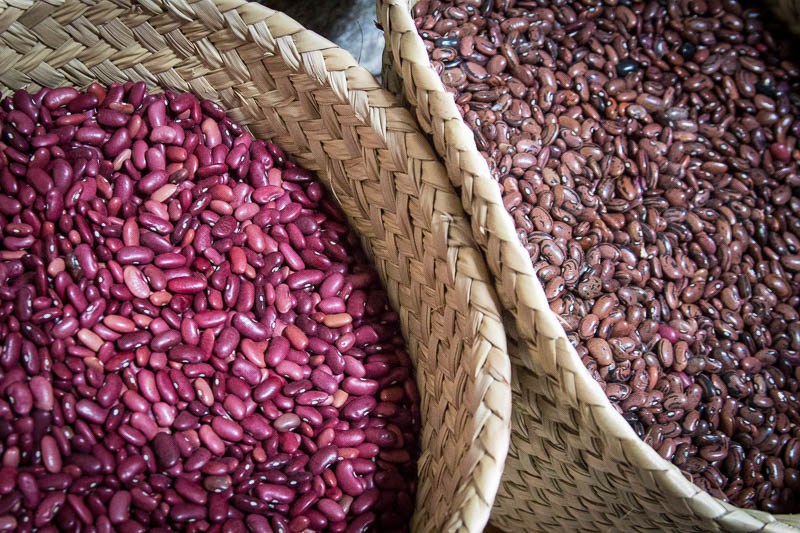
    i8tonite with Rancho Gordo Founder Steve Sando & Recipe for Posole VerdeRancho Gordo’s founder Steve Sando is the embodiment of an i8tonite food person. In under two decades, he has revitalized a New World food, something so grubby that it was taken for granted by most Americans – beans. Prior to Rancho Gordo’s revival of legume culture, beans were found on the lower level of supermarket shelves, holding back the dust bunnies. Thankfully, dried beans have a long shelf life – but like all things hidden in dark corners, and subjected to fluorescent lighting (besides the horrible music), commodity beans will eventually lose some flavor and become stale.

    i8tonite with Rancho Gordo Founder Steve Sando & Recipe for Posole Verde
    Beautiful heirloom beans from the Rancho Gordo-Xoxoc Project

    Rancho Gordo’s beans are heirloom varieties, meaning that the origin (seed) is largely unmodified by technology or genetic science. In essence, the varieties of beans Rancho Gordo grows are dictated by the adage “let nature takes its course.” To the eater, this means more flavor, essence, and character.

    Sando was based in Napa Valley, arguably one of the world’s best agriculture regions and home to The French Laundry. Subsequently, it was only a matter of time before his products made it onto North America’s most illustrious dining menu. “Thomas Keller gave us his blessing,” states Sando…and he’s been thriving with great beans and products since.

     i8tonite with Rancho Gordo Founder Steve Sando & Recipe for Posole Verde
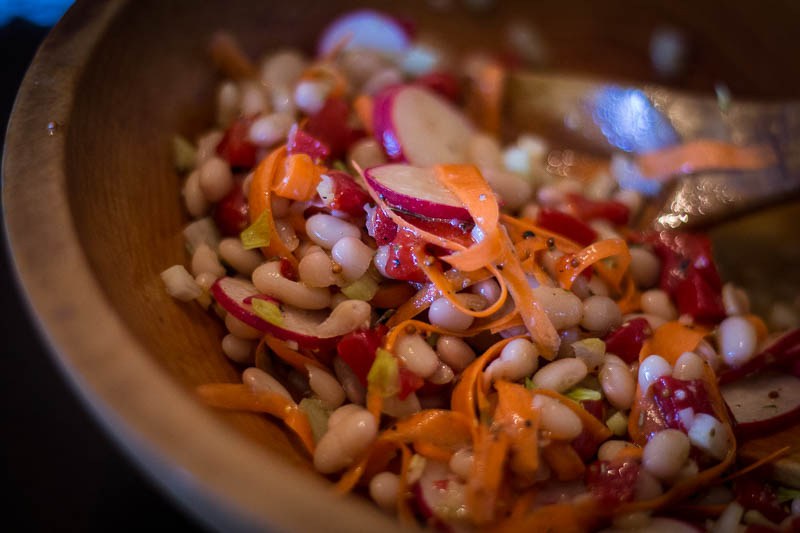
    Poached egg broth over a bed of Sta Maria Pinquitos

    Rancho Gordo produces almost 35 varieties of heirloom beans, using a selection of farmers from California, Oregon, and Washington – and they almost always sell out. His customers are mostly home-cooks, but there are quite a few chefs who use Rancho Gordo but don’t understand heirloom varietals. “Chefs are the worst,” Sando chuckles. “We sell heirloom beans, which means our farms produce a low yield. We run out of varieties, yet (chefs) expect them to always be available. It takes about six months to develop each crop. So when we are out, we have to reseed, replant, and re-harvest.” (Stock up, chefs!)

    Recently, Sando named one of his heirloom finds the Marcella, named after the famed Italian cookbook author Marcella Hazan. The story about their friendship and the eponymously named bean made it into the New York Times. “It killed us,” he says. “But in a good way.” His mail order business is robust, with sixty-five percent of his business coming from on-line but he also has two outlets: Napa, where Rancho Gordo is based, and in San Francisco’s legendary food emporium, the Ferry Building.

    At the end of the day, Sando, a farmer with all the accolades and outpouring of goodwill about his beans, is a normal food person like the rest of us. And he eats beans, every day.

    i8tonite with Rancho Gordo Founder Steve Sando & Recipe for Posole Verde

    Food People Questions (with a nod to Proust):

    What is your favorite food to cook at home?
    Obviously, it would be beans. But I poach a chicken every week and use the meat in other meals and the broth becomes soup. Then I tend to improvise with vegetables.

    What do you always have in your fridge at home?
    Chipotle en vinagre. It’s one of the best relishes I know. One day I’d love to make them commerically.

    What marked characteristic do you love in a person with whom you are sharing a meal?
    I love when they react to the food, the music, the table, the other people. It’s so easy to eat alone. I would hope they know how to express the joy of breaking bread with others.

    What marked characteristic do you find unappealing in a person with whom you are sharing a meal?
    My first reaction would be to say someone who talks with their mouth full, but really, I can forgive that if they’re enthusiastic. I think people who drone on and are not aware of the rhythm of the conversation. I sometimes am guilty and stop myself if I’m hearing my own voice too much.

    Beer, wine, or cocktail?
    I love a single cocktail before dinner. A nice round, ready as your guests come in the door, is welcome. But put it away and switch to wine ASAP. My crowd tends to be wine and beer people and they don’t remember how to pace themselves with cocktails. You want your guests loose, not sloppy.
    Beer or wine with dinner, depending on what is served.

    Your favorite cookbook author?
    I can read Diana Kennedy’s books like novels. But I have to add Paula Wolfert, Georgeanne Brennan, and Marcella Hazan. All strong women from an era when cookbooks weren’t just extended magazine articles.

     i8tonite with Rancho Gordo Founder Steve Sando & Recipe for Posole VerdeYour favorite kitchen tool?
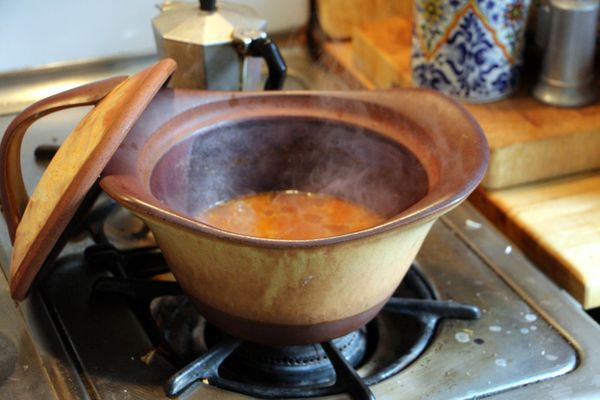
    I have a huge collection of clay pots. I don’t think I could single one out.


    Favorite types of cuisine to cook?
    Mexican is my obsession. The more I go, I realize am strictly a tourist with this cuisine. We haven’t even scratched the surface.

    Beef, chicken, pork, or tofu?
    Pork. Then Chicken.

    Favorite vegetable?
    Beans would be too obvious, so i’ll say nopales. I love harvesting green cactus paddles and eating them as a vegetable. I understand they’re healthy, too, but that doesn’t interest me much.

    Chef you most admire?
    I think Frances Mallmann. He seems to understand that you are cooking to enjoy it with friends and good wine, not just cooking to cook or be clever. I’m also loving Sean Brock these days. He’s so clearly passionate about ingredients and I think he’s presenting southern food in a really appealing way. I’ve never met either of them but I’d like to.

    i8tonite with Rancho Gordo Founder Steve Sando & Recipe for Posole Verde

    Food you like the most to eat?
    I think our local crab. It’s a workout and there’s a pay off.

    Food you dislike the most?
    I wish there were one. I love it all, to different degrees. And if I say I hate rutabagas (which is close to true), I’ll still keep an open mind and I bet there’s a chef who could turn me around.

    What is your favorite non-food thing to do?
    Road trips in rural Mexico.

    i8tonite with Rancho Gordo Founder Steve Sando & Recipe for Posole Verde

    Who do you most admire in food?
    I think the indigenous women who I’ve met in Mexico. They’re the real thing. They have no concept of food trends and just make delicious food.

    Where is your favorite place to eat?
    I think a beach with cold beers and a bucket of perfectly steamed shrimp.

    What is your favorite restaurant?
    I don’t really have one, but if pushed, I’d say Contrmar in Mexico City.

    Do you have any tattoos? And if so, how many are of food?
    Nope! One aspect of me is still virginal.

    Recipe: Posole Verde

    i8tonite with Rancho Gordo Founder Steve Sando & Recipe for Posole Verde

    Serves 6

    • 1/4 pound Rancho Gordo White Posole (prepared hominy)
    • 1 1/2 onions, white or red, peeled and halved
    • Salt
    • 4 garlic cloves, peeled
    • 15 to 20 tomatillos, paper skins removed
    • 2 poblano chiles
    • 1 serrano chile
    • 2 tablespoons extra virgin olive oil
    • 1 cup coarsely chopped cilantro
    • 2 teaspoons Rancho Gordo Mexican Oregano
    • 1 1/2 quarts vegetable or chicken broth
    • Freshly ground black pepper

    1. Soak posole overnight in water to cover generously. Drain.

    2. Place it in a saucepan with fresh water to cover generously.

    3. Add 1/2 onion, bring to a simmer, cover partially and cook at a gentle simmer until the corn kernels are tender, 2 to 3 hours; many will split open. Season with salt and cool in the liquid.

    4. On a hot, dry griddle or skillet, roast the remaining halved onions, garlic, tomatillos and chiles, turning occasionally, until they are charred and slightly softened, 15 to 20 minutes. Work in batches if necessary.

    5. Put the roasted poblano chiles in a paper bag to steam until cool.

    6. Transfer the other vegetables to a bowl and let cool, collecting their juices.

    7. Skin the poblanos, discarding seeds and stems. Discard the serrano chile stem but don’t skin or seed.

    8. Put all the roasted vegetables in a blender, in batches if necessary, and puree until smooth.

    9. Heat the oil in a large stockpot over moderate heat.

    10. Add the vegetable puree and adjust heat to maintain a simmer. Cook, stirring occasionally, for 10 minutes to blend the flavors.

    11. In the blender, puree the cilantro, oregano and 1 cup of the broth. Add to the vegetable mixture along with 4 cups additional broth.

    12. Drain the posole and add it to the pot. Season with salt and pepper and return to a simmer. Thin with additional broth if necessary. Serve in warm bowls.


    The End. Go Eat. 

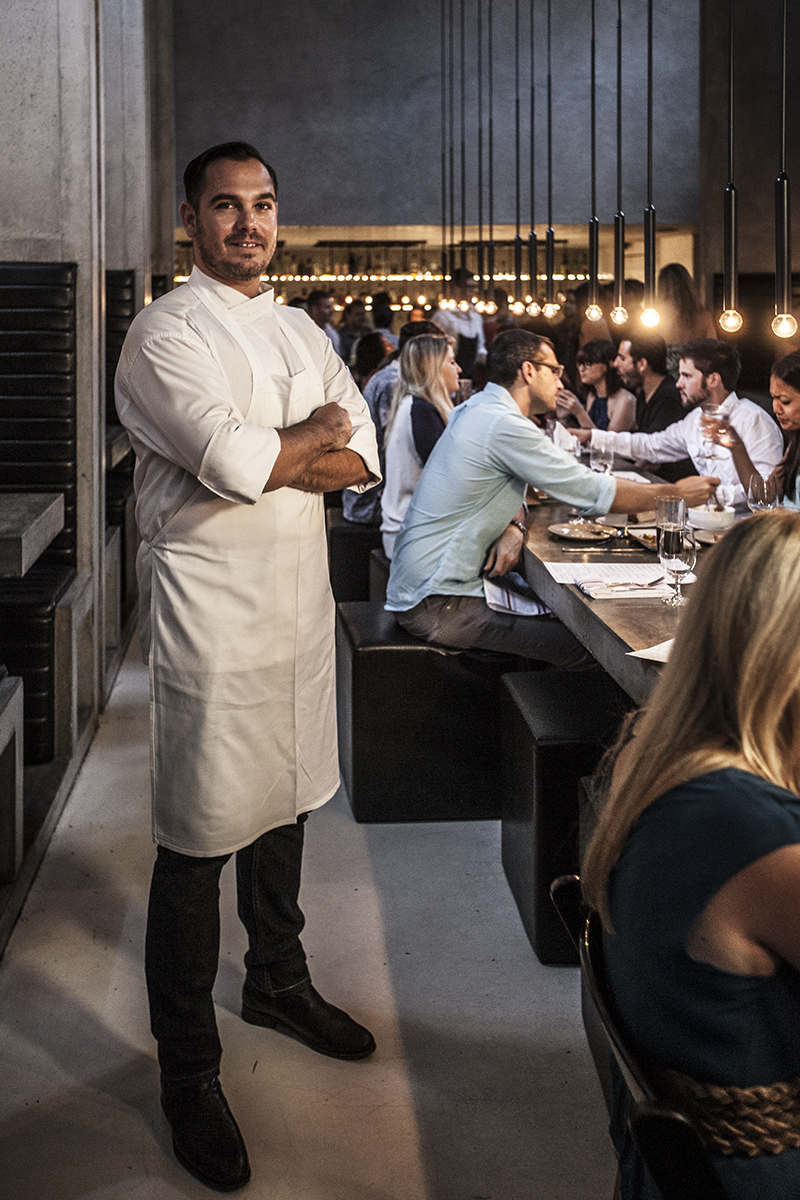
  • i8tonite: with Palm Springs’ Workshop Chef Michael Beckman

    i8tonite: with Palm Springs’ Workshop Chef Michael Beckman

    i8tonite: with Palm Springs' Workshop Chef Michael Beckman
    Chef Michael Beckman: Photo by Van Roo

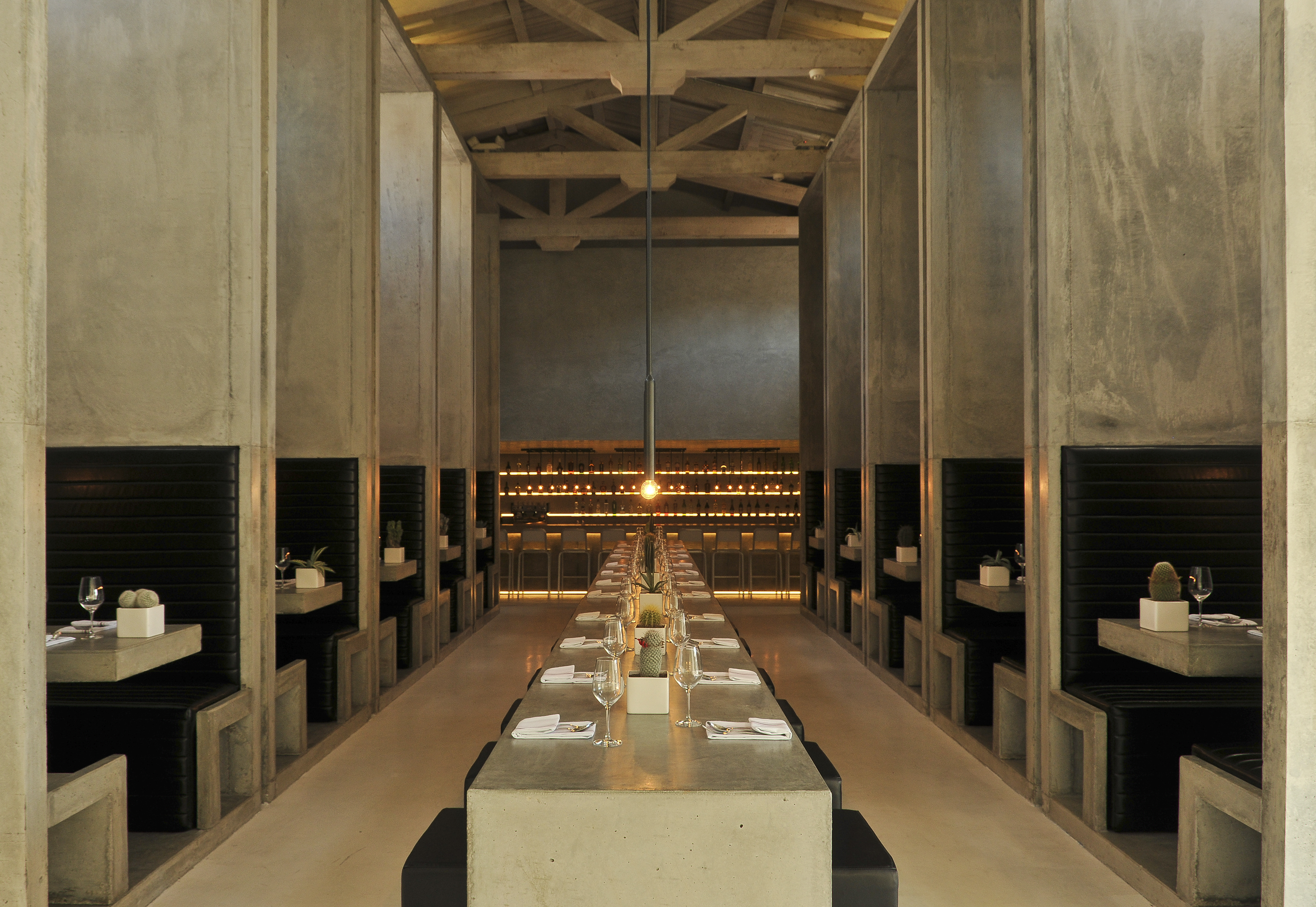
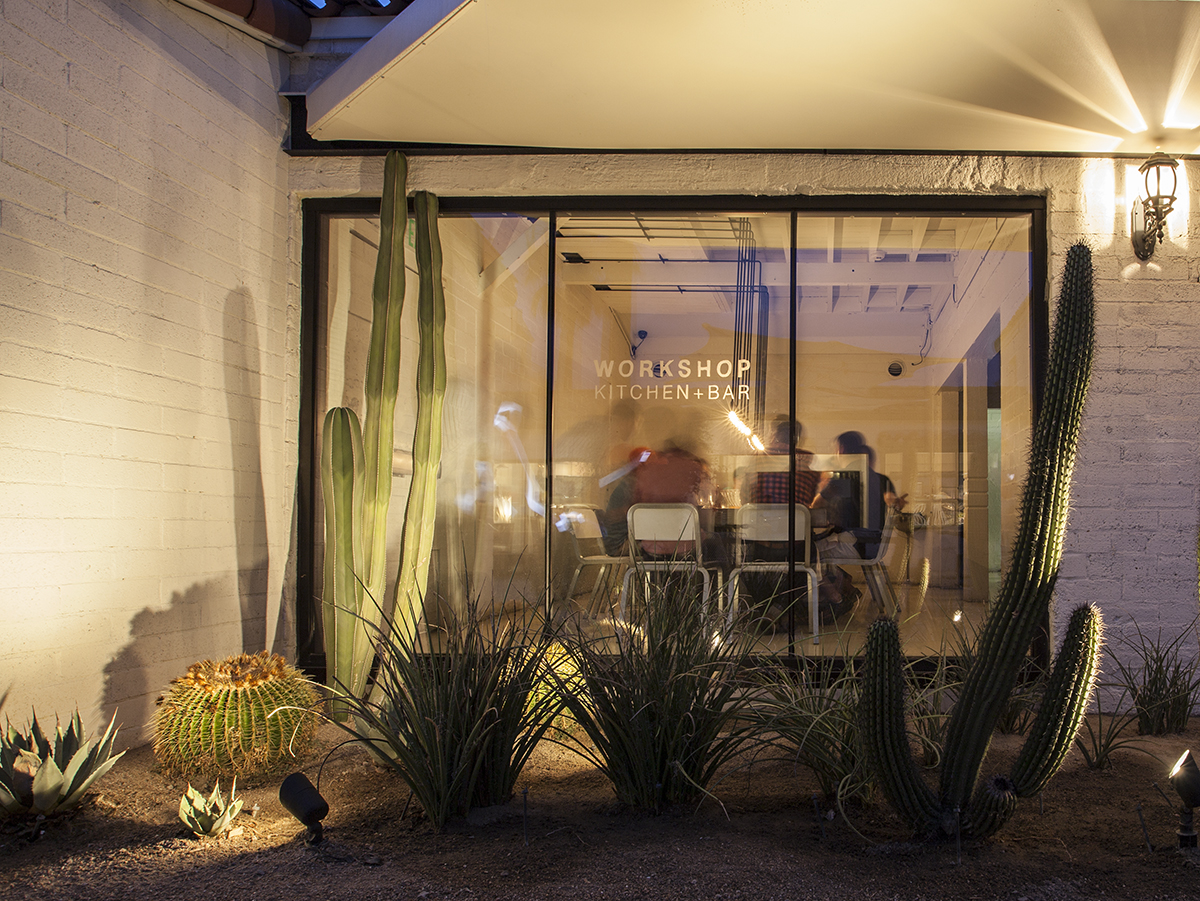
    Palm Springs is known as a resort town – an enclave for second homes, secret hotel pools, and cocktails. The cocktail culture is the town’s prevailing modus operandi. With a population of a little over 50,000, it’s never really been considered a food haven. Ask a few of the locals who live in the desert year round, and the answer is their private chef does the cooking. Or, they recommend one or two restaurants which are more about an elongated drink menu rather than a superbly pan-roasted fish or braised greens from the surrounding Coachella Valley farmers. There are a few notable exceptions to this observation.  The first that comes to mind is the four-year-old Workshop, owned and cheffed by Michael Beckman, which can be the honest answer to the question: “Where to eat in Palm Springs?”

    i8tonite: with Palm Springs' Workshop Chef Michael Beckman
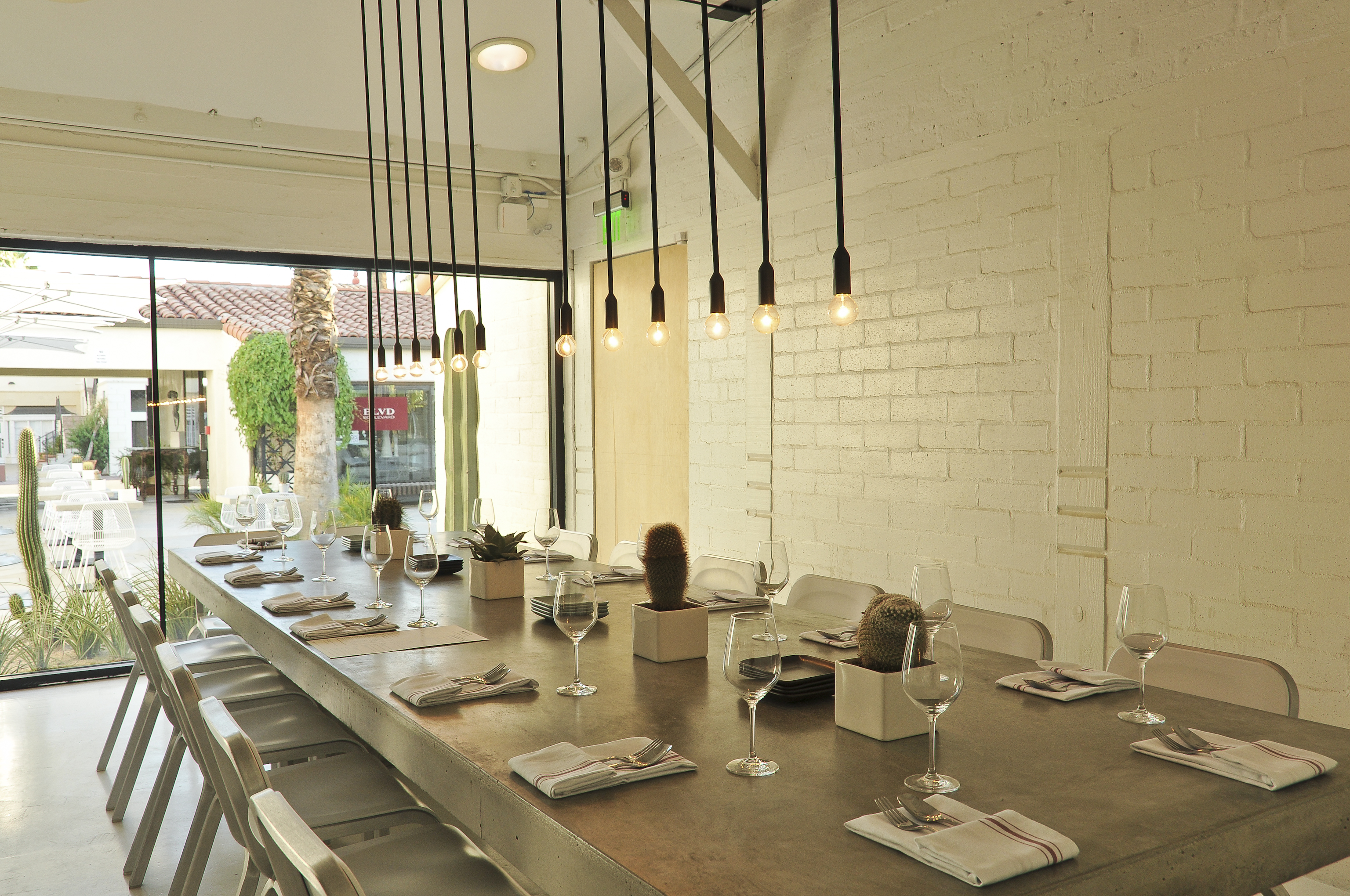
    Workshop: Photo by Michael Horton

    There are two reasons for this. The first is that Mr. Beckman is a classically French-trained chef with stints apprenticing, cooking, and learning in European kitchens, including Burgundy’s three Michelin-starred Lameloise and working under noted German chef Thomas Kellerman at the Ritz-Carlton, Berlin. Beckman maybe the only independent chef in the Southern California desert communities to claim to work in a Michelin-starred dining room.

    i8tonite: with Palm Springs' Workshop Chef Michael BeckmanSecondly, he’s smart enough to promote his restaurant outside the Palm Springs area, getting the first and the last reservations from area visitors. It’s been a very smart business move to market his talents to the gourmand set, rather than wait for visiting travel media shuffling through for an annual Palm Springs pilgrimage. Instead of getting the backend of travel pieces, Beckman put forth the effort and it’s paid off with stories in Sunset Magazine, Bon Appetit, Eater, and Wall Street Journal. But the question remained: how could someone with Beckman’s background become part of Palm Springs? Truthfully, he stated he was a private chef working with a client based in Rancho Mirage. He grew to love the area’s farmers markets and vendors, as well as the community’s natural beauty, so he stayed, opening Workshop and having a family.

    Interestingly, Beckman – though successful — is so dedicated to his

    i8tonite: with Palm Springs' Workshop Chef Michael Beckman
    Workshop: Photo by Michael Horton

    craft that he recently completed a several month staaj (cooking apprenticeship) with celebrated New York City’s chefs Dan Barber, Blue Hill Farms and Daniel Hume, Nomad (also of the Michelin-starred Eleven Park Madison). Beckman, as a chef, wants to continue to creatively evolve.

    i8tonite: with Palm Springs' Workshop Chef Michael BeckmanBeckman will have another feather to add to his list of accomplishments – Truss + Twine, a bar serving handcrafted cocktails and small bites; a chef will work in tandem with the bartenders behind the bar in a dedicated cooking area. Palm Spring’s newest watering hole is slated to open fall 2016. Lastly, he also partnered to oversee the food and beverage program for an unnamed independent 44-room hotel concept that that will have a restaurant and rooftop pool area. The hotel’s construction will start at the end of 2016.

    Beckman will soon be hailed as Palm Springs’ Emperor to All Things Culinary. Rightly so.

    Chef’s Questionnaire (with a nod to Proust):

    How long have you been cooking? 16 years.

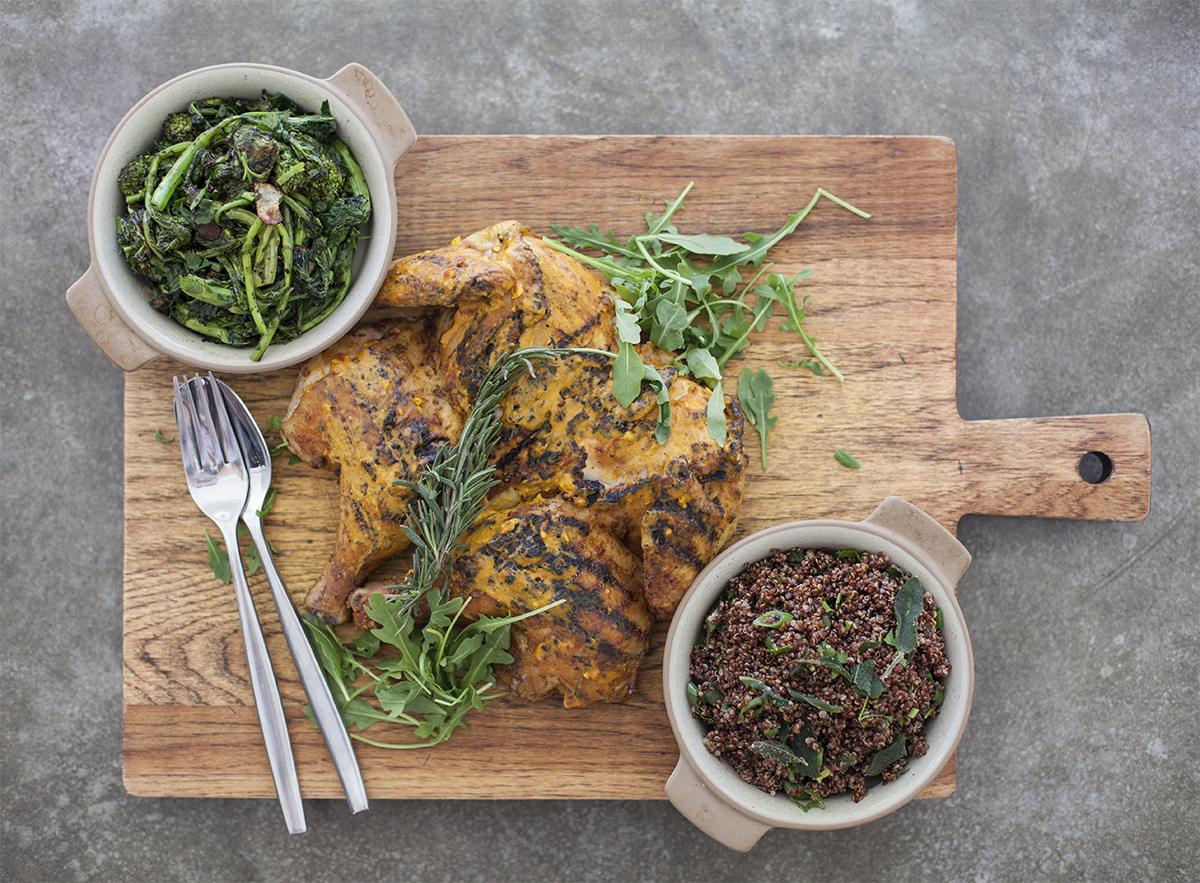
    Chicken Diavolo. From i8tonite: with Palm Springs' Workshop Chef Michael Beckman
    Chicken Diavolo: Photo by Van Roo.

    What is your favorite food to cook? Braises are most satisfying for me with deep flavors that develop, and the cozy aromas and feel of a braised dish is somehow emotional for me.

    What do you always have in your fridge at home? Quesadilla mise en place.  Eggs for omelettes.  A perfectly made omelette is one of my favorite challenges to see a chef’s skill set.

    i8tonite: with Palm Springs' Workshop Chef Michael Beckman
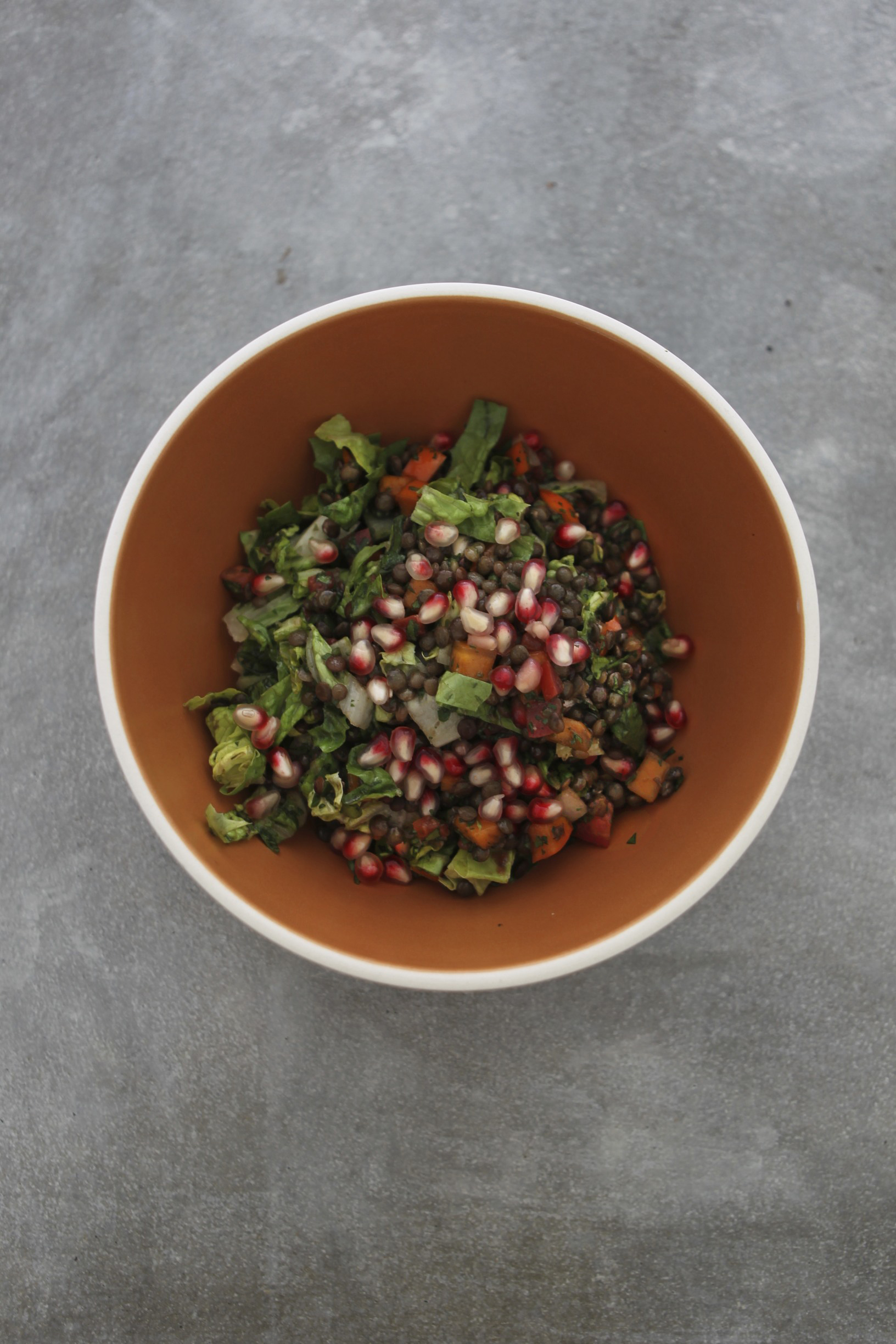
    Lentil salad

    What do you cook at home? I love my Weber grill for smoking and grilling fish and meats.  I also get nostalgic for the Lebanese food I cooked as a private chef in Beverly Hills and love those flavors.  Super healthy and super flavorful.

    What marked characteristic do you love in a customer? Someone who puts us in the drivers seat and trusts us.


    What marked characteristic do you find unappealing in a

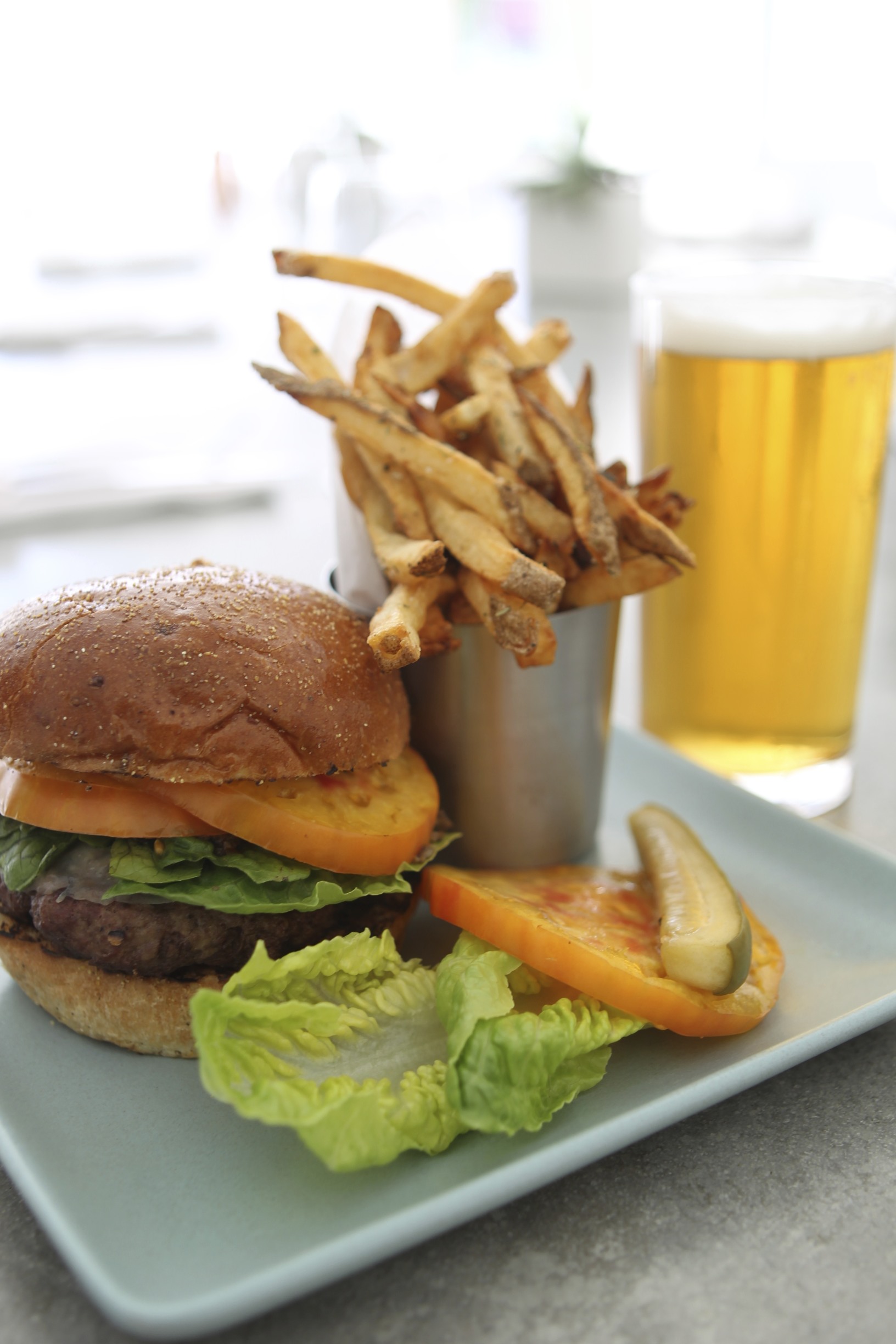
    Workshop Burger and Fries. i8tonite: with Palm Springs' Workshop Chef Michael Beckman
    Workshop Burger and Fries: Photo by Michael Horta

    customer? People who lie at the host stand about their reservation.  People who don’t even read the menu and want to order something they can get anywhere.

    Tupperware, Rubbermaid, or Pyrex? None of the above. Deli cups.

    Beer, wine or cocktail? Yes, please.

    Your favorite cookbook author? Dan Barber for “The Third Plate

    Your favorite kitchen tool? My Chef de Cuisine Max.

    i8tonite: with Palm Springs' Workshop Chef Michael BeckmanYour favorite ingredient? Eggs.

    Your least favorite ingredient? Balsamic reduction.

    Least favorite thing to do in a kitchen? Cleaning the fryer.

    Favorite types of cuisine to cook? Mediterranean basin.

    Beef, chicken, pork or tofu? Beef.

    Favorite vegetable? Right now I’m digging parsnips.

    Chef you most admire? I like Paul Kahan’s rustic straight-forward style and also how prolific he is with his projects.

    The food you like the most to eat? Oysters

    i8tonite: with Palm Springs' Workshop Chef Michael Beckman
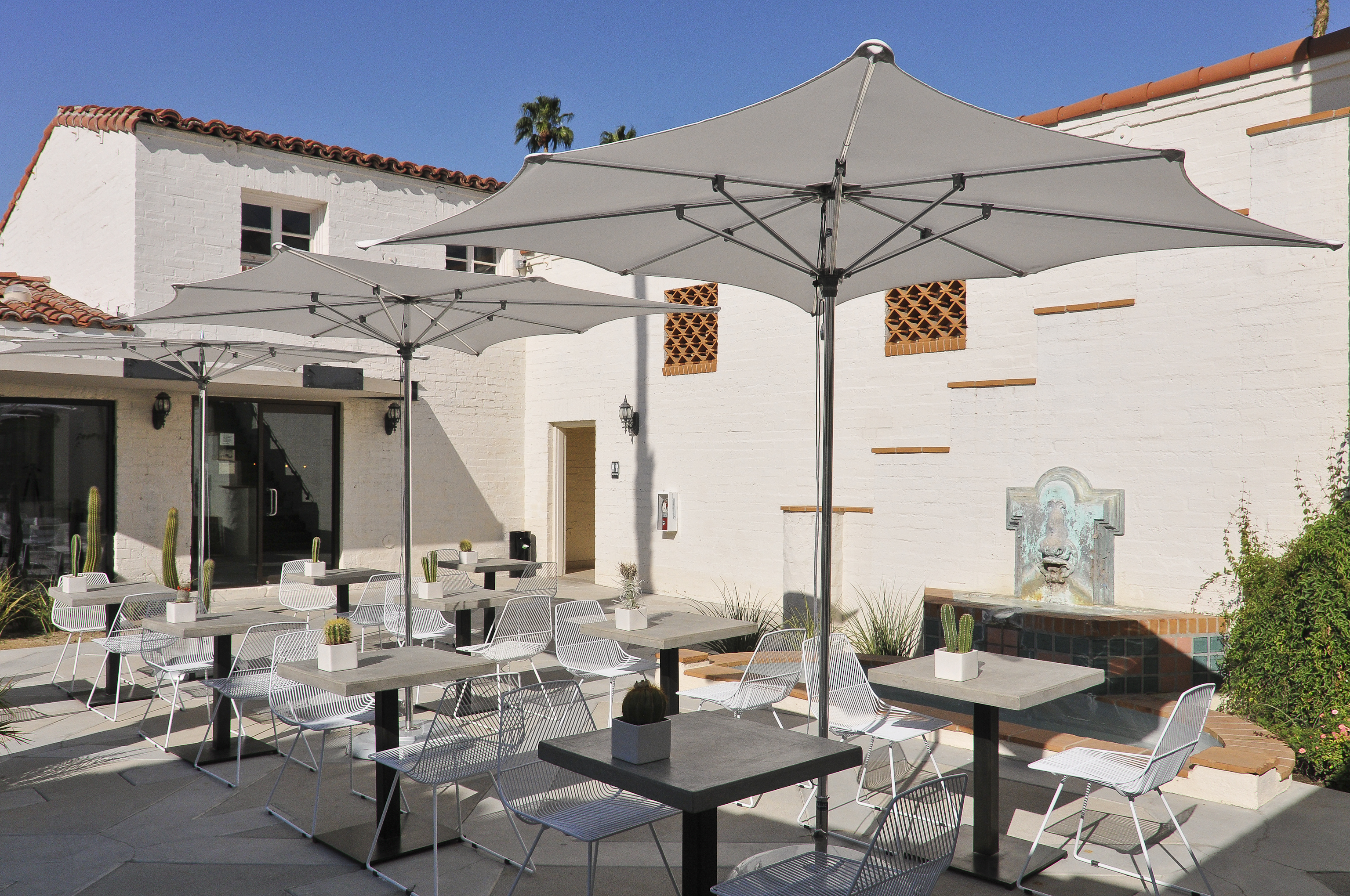
    Outside Workshop: Photo by David A. Lee.

    The food you dislike the most? Shitty banquet food.

    How many tattoos? And if so, how many are of food? None yet.  Never could figure out the first one…we’ll see.


    Recipe: Beet Braised Lentils

    Here’s a recipe from Feasting at Home, inspired by Chef Beckman’s dish at Workshop. She notes, “This recipe was inspired by a dish we had at a restaurant in Palm Springs, called Workshop. They topped their Beet braised lentils with a warm, crispy breaded goat cheese “cake”. It was divine. The chef, Michael Beckman, adds browned butter to the finished lentils, which brought it over the top.”

    Beet braised lentils, inspired by Chef Beckman, Workshop.
    Beet braised lentils, inspired by Chef Beckman, Workshop. Photo & Recipe: Feasting at Home

    Beet infused lentils are a healthy side dish, with chicken or fish, or serve it on its own, as a vegetarian meal in a bowl with crumbled goat cheese.

    Ingredients
    3 T olive oil
    1 C diced red onion ( ½ a red onion)
    1 C diced carrot
    ½ C diced celery
    1 Cup peeled and diced beet (one large beet, plus 2 more for juicing)
    4 cloves roughly chopped garlic
    1 T fresh Thyme leaves
    1 Bay leaf
    1 1/2 C black caviar, beluga, or Puy lentils ( soaked overnight if possible)
    4 C chicken or vegetable stock
    ½ tsp salt
    salt and pepper to taste
    splash balsamic vinegar
    1 Cup fresh beet juice (either purchase from a juice bar, or juice 2 extra large beets)
    2- 3 T browned butter (optional but delicious)
    crumbled goat cheese (optional)

    Directions
    In a large heavy bottom pot or dutch oven, heat olive oil over medium high heat. Add onion, carrot, beets and celery, and saute for 5 minutes, until slightly softened. Turn heat to medium, add garlic, lentils and herbs and sauté for 2 more minutes.

    Add stock and salt. Bring to a boil. Once boiling, cover with lid, and turn heat to low, maintaining a gentle simmer. Simmer for 30 minutes.

    After 30 minutes, add the beet juice, taste for salt, add more if necessary, and continue simmering on low for 10-15 more minutes or until tender. If you feel there is too much liquid for your liking, keep the lid off, and increase the heat, letting it reduce. (I like the braise slightly juicy, personally, so I just replace the lid.)

    Stir in a generous splash of balsamic vinegar and browned butter (optional) but the brown butter is divine.

    Serve in a bowl with crumbled goat cheese, or as a base for fish or chicken.

    Read about this recipe – and see more gorgeous photos – here.


    The end. Go eat. 


  • i8tonite: Los Angeles’ Franco on Melrose, Chef Franco de Dominicis

    IMG_1422Along a strip of Melrose Avenue, just past La Brea is Franco on Melrose. It’s location is in the City of Angel’s culinary corridor featuring a few of the most lauded epicurean stops in the city including Providence, Mozza, Mud Hen Tavern and Trois Mec. To the south, one can wander to Republique or Odys + Penelope.  It’s a hidden gem of an Italian eatery although a favorite among the celebrity set. However, the trattoria has been under the radar since its inception over four years ago. Why? Partially, says chef and owner Franco de Dominicis, “I didn’t have a beer and wine license. It was BYOB but now I do and things have changed.”

    Originally born in Venezuela to Italian parents, de Dominicis was then raised in Paestum, Italy about a hundred miles south of Naples, renowned for its Greek and Roman archeological sites. The 2600-year-old settlement has also been known as the second largest agricultural center in Italy, the first being in Umbria. De Dominicis had an excellent childhood and gained a love of cookery via his family. He had formal culinary training at a Naples based school which supplied him with European apprenticeships. Now, in the States, the food he makes is indicative of his European and Italian roots, staying true to his youth.
    IMG_3359Proudly, de Dominicis makes all of his own pasta, ravioli, and lasagna. Many of the recipes are adapted recipes from his mother and childhood. He also sources as much as he can from the farmers markets throughout Los Angeles. It’s a true Los Angeles-based trattoria serving up Neapolitan fare without having to travel to Italy.

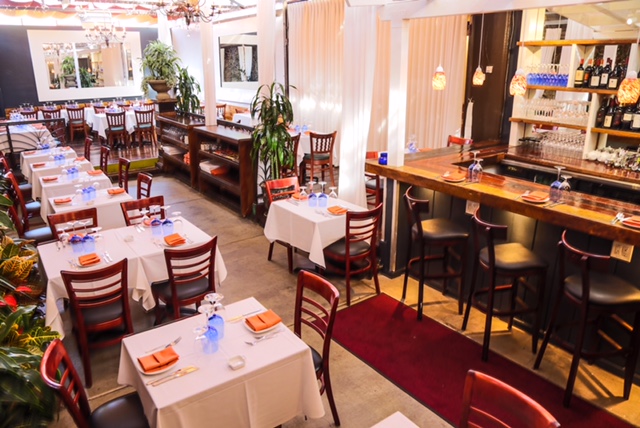
    Franco on Melrose is a lovely place with a sidewalk awning extending out to the valet. Its roof is canopied and during the summer is open to the stars. The best thing about the new Italian-centric wine menu which was personally selected by de Dominicis it’s priced so reasonably you can imbibe with that second bottle while looking at the stars.

    Chef Questionnaire: 

    IMG_1877How long have you been cooking? Since I was 13.

    What is your favorite food to cook? Meat and fish and pasta.

    What do you always have in your fridge at home? Milk, juices, herbs, prosciutto, burrata, eggs.

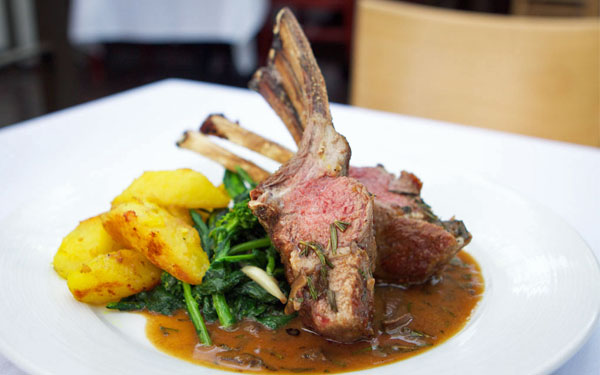
    What do you cook at home? Sometimes I get together with friends and I love to do brunch with roasted beef tenderloin and rack of lamb.

    What marked characteristic do you love in a customer? An open mind to try different things.

    What marked characteristic do you find unappealing in a customer? Unwilling to expand their palate.

    IMG_1242Tupperware, Rubbermaid, or Pyrex? Rubbermaid.

    Beer, wine or cocktail? Definitely wine. A full body red and champagne.

    Your favorite cookbook author? Julia Child.

    Your favorite kitchen tool? Hand mixer

    Your favorite ingredient? Extra virgin olive oil.

    Your least favorite ingredient? Okra.

    Least favorite thing to do in a kitchen? Stirring for hours.

    FullSizeRender (3)Favorite types of cuisine to cook? Italian, French, Caribbean,

    Beef, chicken, pork or tofu? Beef.

    Favorite vegetable? Haricot vert and brussels sprouts.

    Chef you most admire? Gordon Ramsey.

    Food you like the most to eat? Breakfast items.

    Food you dislike the most? Russian.

    How many tattoos? And if so, how many are of food? None.

    Franco on Melrose’s Roasted Chicken and Pears

    • 3-4 lbs. chicken, whole roasting
    • 3 Anjou pears (Peeled and cut into quarters)
    • 3 shallots (Cut into quarters)
    • 2 carrots
    • 2 celery stalk
    • 2 cups white wine
    • 1 tablespoon of fresh thyme
    • ½ a tablespoon of freshly cut sage. Or thereabouts.
    • Salt and pepper

    To Make: Pre heat oven a 400 degree. Take the chicken and stuff it with the whole pears, some thyme, some sage, and 1 shallots cut into quarters. Tie the legs back with twine. Place the chicken in a roasting pan, with all the carrots and celery, cut into  pieces, add the rest of the shallots cut in ¼ as well, disperse the herbs around, poor the wine and salt and pepper to taste. Cover the chicken with aluminum foil and place in the oven for about 45 minutes. Uncover the chicken and let it finish cooking, for another 15 to 20 minutes, until a nice golden brown and juices run clear.

    The End. Go Eat.

  • I8tonite with San Francisco’s Anzu Chef Michael Raub on Asian Fusion Cuisine & Citrus Glazed Mahi Mahi Recipe

    I8tonite with San Francisco’s Anzu Chef Michael Raub on Asian Fusion Cuisine & Citrus Glazed Mahi Mahi Recipe

    Anzu’s Chef Michael Raub‘s story is one that seems to exemplify the phrase, “Life is what happens when you’re making plans.”

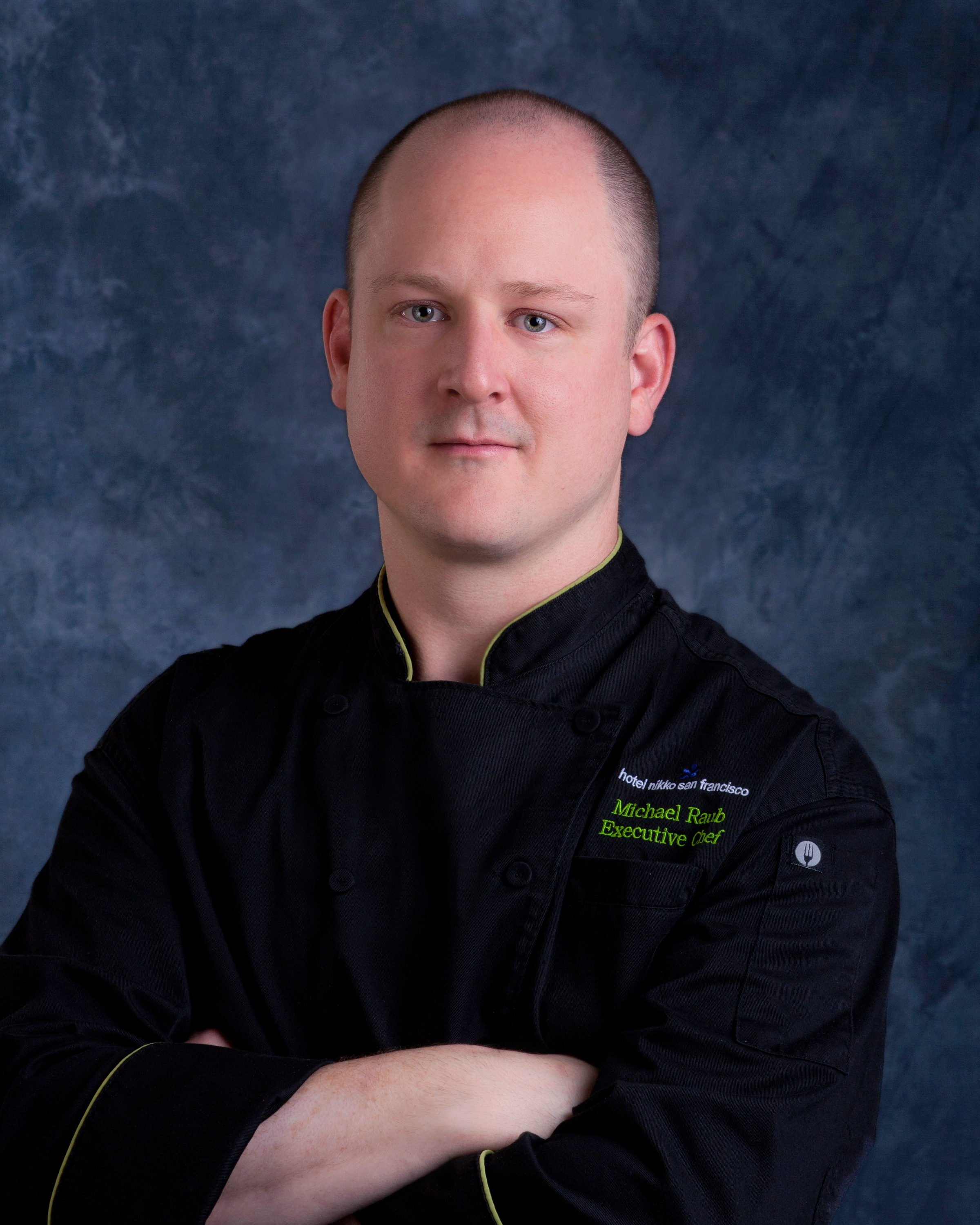
    San Francisco’s Anzu Chef Michael Raub on Asian Fusion Cuisine & Citrus Glazed Mahi Mahi RecipeFrom Texas barbecue to the French Laundry to Asian-Fusion cuisine, Michael Raub, Executive Chef at the Hotel Nikko San Francisco, didn’t plan a career in the restaurant business.

    Though cooking was a big part of his youth (with not one, but two grandmothers in the kitchen at every family gathering), his coursework was in marketing while at university in Houston, Texas. After college, he went to Colorado to pursue an internship in the hospitality industry. It was there that fate (or life) took over, and Michael’s career in the restaurant business really began.

    After a brief return to Texas, he pursued the best of the best: The Thomas Keller Restaurant Group. His ambition and initiative served him well, and he was soon on his way to Napa Valley, California, where he interned at Bouchon, quickly moving on to a full time position as Garde Manager. In 2010, he was promoted to Sous Chef. Michael stayed with the Keller Group for four years, also working at Ad Hoc and the French Laundry, a Michelin three star restaurant.

    In 2012, Michael accepted a position as Executive Sous Chef at Ame Restaurant in the St. Regis Hotel, San Francisco, where he worked with Hiro Sone, winner of the James Beard Foundation’s Best Chefs of California award.

    Michael credits both of his grandmothers with instilling in him an appreciation of good food and fresh ingredients, his first employers with his work ethic, and his determination with a bit of luck, for the opportunity to work alongside some of the best chefs in the business.

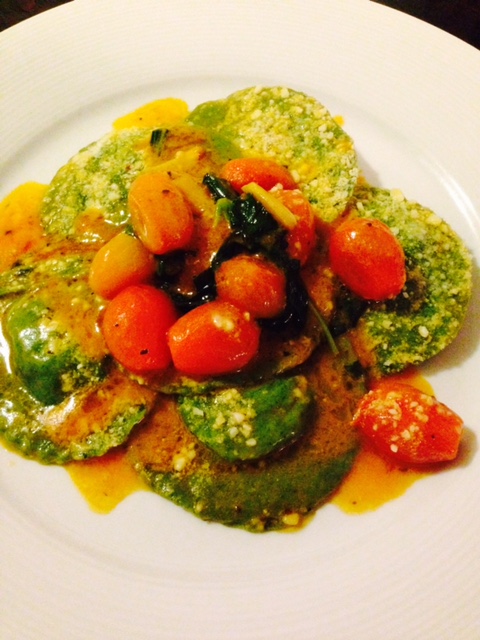
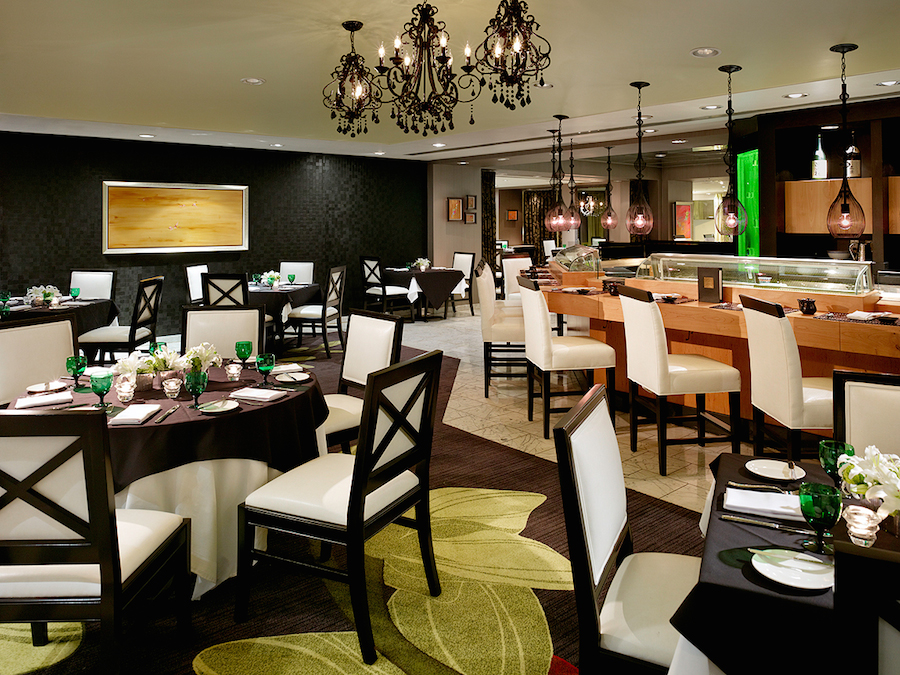
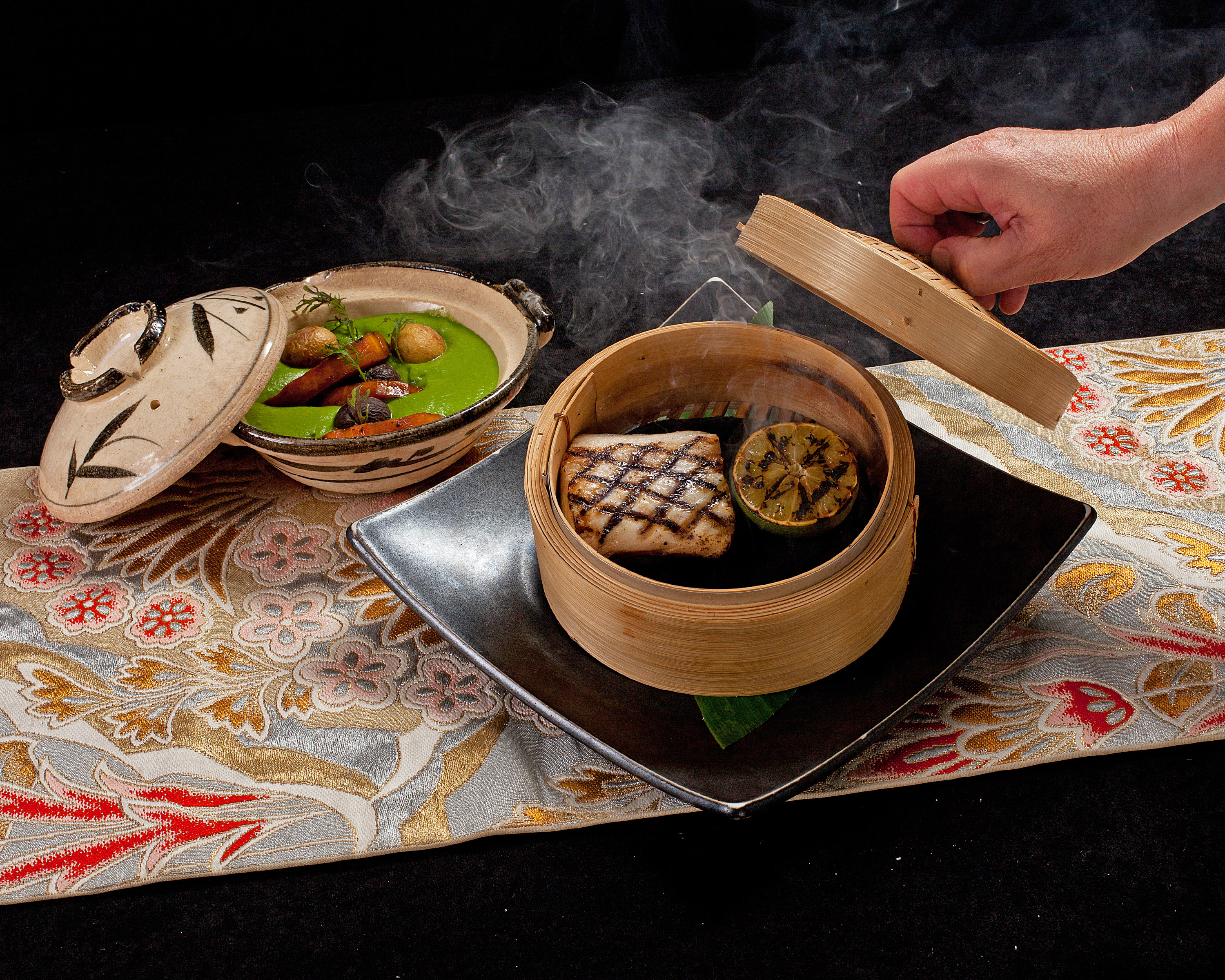
    ANZU restaurant, Hotel Nikko, San FranciscoAnzu is the perfect venue, allowing him to create dishes like Sichuan Peppered Filet Mignon and Citrus Glazed Mahi Mahi (recipe below). The menu incorporates his love of high quality meats and fresh local sustainable seafood. It seems that life was just waiting to bring Michael’s particular blend of experience and skill to Anzu at the Nikko.

    Chef’s Questionnaire (with a nod to Proust):

    How long have you been cooking?
    16 Years

    What is your favorite food to cook?
    I love cooking with fresh seafood. It is very delicate and takes constant attention.

    What do you always have in your fridge at home?
    Kimchi

    ANZU restaurant, Hotel Nikko, San FranciscoWhat do you cook at home?
    I love the experience of smoking fish and meat all day to make delicious Barbeque. A great way to spend a day off!

    What marked characteristic do you love in a customer?
    I haven’t served a customer in a very long time. What I find appealing about one of our guests is a sense of adventure.

    What marked characteristic do you find unappealing in a customer?
    Rudeness

    Tupperware, Rubbermaid, or Pyrex?
    Pyrex, but prefer a good old fashioned mason jar.

    Beer, wine, or cocktail?
    Wine

    Your favorite cookbook author?
    Right now, I can’t put Dominique Crenn’s new book down

    Your favorite kitchen tool?
    My hands

    Your favorite ingredient?
    The lettuces and herbs we are getting from Ecopia Farms right now!

    Your least favorite ingredient?
    Lavender

    Least favorite thing to do in a kitchen?
    Leave for the day

    ANZU restaurant, Hotel Nikko, San FranciscoFavorite types of cuisine to cook?
    French, Japanese, Italian, and Korean

    Beef, chicken, pork or tofu?
    Chicken

    Favorite vegetable?
    Whatever is at the peak of the season

    Chef you most admire?
    Laurent Gras

    Food you like the most to eat?
    Grilled Fish

    Food you dislike the most?
    Hard Boiled Eggs

    How many tattoos? And if so, how many are of food?
    0

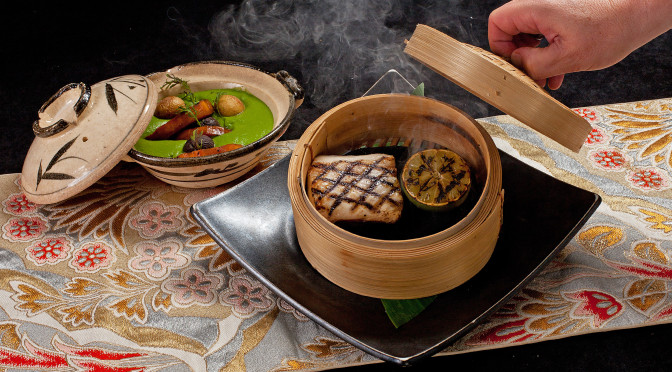
    Citrus Glazed Mahi Mahi Recipe from at Anzu Restaurant, Hotel Nikko, San Francisco
    Citrus Glazed Mahi Mahi

    Recipe: Citrus Grilled Mahi Mahi with Thai Green Curry
    Serves 4

    Ingredients:

    Curry

    • 1 T Olive Oil
    • 3 T Green Curry Paste
    • 1 Shallot (Minced)
    • 1 Inch Peeled Ginger (Minced)
    • 2 Cloves Garlic (Minced)
    • .5 Each Lemon Grass (Chopped)
    • 1 C Coconut Milk
    • 1 C Dashi
    • 5 Each Kaffir Lime Leaves
    • 1 T Fish Sauce
    • 1 T Brown Sugar
    • 2 Bunches Thai Basil
    • 1 C Baby Spinach

    Citrus Cure

    • 2 T Kosher Salt
    • 1 T Sugar
    • 1 Lime (Zested)
    • 1 Lemon (Zested)
    • 1 Orange (Zested)
    • 1 t Cracked Coriander
    • 4 each 5 Ounce Mahi Mahi Portions
    • 1 Large Butternut Squash
    • 12 Mixed Marble Potatoes
    • 4 C Baby Spinach
    • 1 Clove Garlic (Minced)
    • .5 Lime

    For the curry, heat the oil in a medium heavy bottom pot on high heat until slightly smoking.
    Add the shallot, garlic, ginger, and lemongrass and brown for about two minutes.
    Add the curry paste and kaffir limes and continue cooking another minute. Add the coconut milk and dashi and bring to a simmer.
    Add the sugar and fish sauce and cook for thirty minutes.
    Season to taste and let cool to room temperature.
    Remove the kaffir lime leaves and place the curry in a blender with the spinach and basil.
    Puree until completely smooth and pass through a fine mesh strainer.

    For the citrus cure, combine all the ingredients in a small mixing bowl and reserve.

    Cut the butternut squash in half lengthwise and remove the seeds and flesh. Peel the outer layer and cut into one inch pieces and roast in the oven at 400 degrees.
    Season with salt and pepper and keep warm.

    Season the mahi with the citrus cure and grill until medium to medium well. The internal temperature should be 150 degrees F.
    Take the half of lime and place on the grill, flesh side down, until a dark caramel crust forms.
    We like to finish our mahi in the oven on a smoking plank of cherry wood.
    Take a large sauté pan and heat up a small amount of olive oil and place the garlic in the pan and sweat for thirty seconds.
    Place the spinach in the pan and cook until just wilted.

    Blanch the mixed marble potatoes in boiling salted water until just tender. Heat the curry and add the squash and potatoes.
    Ladle the curry in four separate bowls and top with the wilted spinach.
    Serve the fish on the side on the wood planks, so you can add the fish as you eat the curry.

    The End. Go Eat.


    All photos courtesy and copyright Anzu at the Hotel Nikko, San Francisco

  • i8tonite: My Most Memorable Eats of 2015 & Moving to the Southwest

    i8tonite: My Most Memorable Eats of 2015 & Moving to the Southwest

    Grand Canyon_A. DuarteAt the beginning of 2015, if anyone predicted that I would be living  at year’s end in Phoenix — or starting my food blog for that matter, I would have howled with laughter. Me? In Phoenix? The American Southwest? Writing? Besides, press releases and commenting on Facebook? Yet, I am listening to my fountain cascade into the plunge pool and writing this lengthy post. I open the front door daily to walk the dogs and am awestruck with a view of Pietesawa Peak, crowned by blue skies and cottony clouds. Holly, our eleven-year-old Pitbull waddles past the security guard gate and the golf green, trying to keep up with J.J., our seven-year-old French bulldog, who likes to chase after rabbits. The bunnies hop around on our neighbor’s sixteenth golf hole, the nearby Frank Lloyd Wright-designed Arizona Biltmore – a mere five-minute walk to luxury pools and spas.  I look at all this splendor with gratitude. It’s also coming from a person who – 25 years ago — thought he could never leave  Manhattan, then the center of my Universe.

    Kevin Dooley 2
    Photo by Kevin Dooley

    As I grow older, and I’m grateful I am,  the center of my Universe has expanded. Eventually, the Northeastern winters drove me to Los Angeles for 16 years, with 3 years in San Francisco for good behavior. Spiritually, I never felt either city was home though. They both seemed to be stopping points. I never really wanted meant to stay as long as I did. However, where do you go after Los Angeles, New York, and San Francisco? These are our national hubs of entertainment, technology and finance. International culture is unsurpassed in these meccas.  You are supposed to want to be there. Did I think Miami? Paris?  Back to New York? Phoenix wasn’t even a thought.

    Photo by Kevin Dooley
    Photo by Kevin Dooley

    After much discussion, Nick took the offered Phoenix position and we came out to look for a house. Instantly, we fell in love with the desert landscape, rich culture, sheer vastness and low-cost of living. Phoenix, in my eyes, is North America’s hidden gem, but it’s hard to hide the 6th largest city in the United States. However, it feels protected. Off the beaten path, waiting to be discovered. Tourists may come and visit one of Arizona’s 300 resorts but until you become a resident, hike the trails, meet the people, work and become a Phoenician do you understand the city’s natural splendor and sophistication.

    I reckon The Valley of the Sun is physically the most attractive place I’ve ever lived. Red mountains are dissected by roads and Camelback, the dromedary rock formation casts its legendary shadow over the valley. It’s peaceful sentinel-like presence feels protective, calming and inspiring.

    As we enter into the remaining days of 2015, and for the coming year, I urge you to allow change to happen. Step out of your comfort zone. The things you would say no to trying…try.  Explore new possibilities and never say, “Never.” I’m so glad I did.

    Photo by Alan Stark
    Photo by Alan Stark

    Before I begin my 2015’s five – whoops, six most memorable food experiences, I need to let you dear reader know I still talk about these eats. That’s why I choose them. Some are new, some are not.  I would go back to eat them time and again. Additionally, I paid for each one of these meals. Nothing was given gratis or comped, so I have nothing to gain from telling you about them.

    Let’s start:

    Photo Courtesy of Carson Kitchen
    Photo Courtesy of Carson Kitchen

    Carson Kitchen, Las Vegas, Nevada: Chicken Fried Skins, served with Smoked Honey Dipping Sauce ($9). The late Chef Kerry Simon, who died early this year with complications related to Mulitple Sclerosis, was a master of New American cooking. He imbued his dishes with a sense of humor and surprise.  This dish is indicative of that experience. Who is going to order only chicken skins with a side of smoked honey? Well, I did. Three orders of the crunchy, salty, deliciously deep-fried morsels with the side of lightly smoked sweetness. I would never make this at home. Let’s definitely score points for that understanding.

    Courtesy of Factory Kitchen
    Courtesy of Factory Kitchen

    Factory Kitchen, Downtown Los Angeles, California: Handkerchief Pasta with Almond Basil Pesto ($19). I was living in San Francisco when I ate at Farina which is where I first had Chef Angelo Auriana’s superb pasta. I was in the middle of a fight with an ex. I try not to remember him. However, the sheet-like folds of pasta expertly painted with a light basil pesto, I remember. It wasn’t until I went to Factory Kitchen did it come back hauntingly. This time, I was celebrating one of my best friends birthdays (Shelley Levitt) in Los Angeles. We ordered the Ligurian-style noodle with green sauce. One bite, I knew I had eaten it once before. It’s so good that even years later I remembered it, except with this experience, the atmosphere was much more light-hearted and loving to enjoy it.

    Photo Courtesy of Tropicale
    Photo Courtesy of Tropicale

    The Tropicale Restaurant & Bar, Palm Springs, California: Brown Sugar-Brined, Double Cut Kurobata Pork Chop ($28). A little over a year ago, I discovered my longtime friend Chef Scooter Kanfer had encamped to this boisterous watering hole in the resort town of Palm Springs. About 10 years ago, she was the chef/owner of a stunning little place in LA’s Larchmont area called The House. Here, she received national accolades with her inventive takes on homespun items like macaroni and cheese and my favorite milk and cookies which is milk served in a whiskey shot glass accompanied by shortbread animal cookies. Now, she is under less pressure as the Chef de Cuisine of Tropicale but her food is still the best. I choose the Kurobata Pork Chop because she recommends it to me every time I see her. The only other place I ate this type of big, flavorful battering ram was at Cindy Pawlcyn’s Napa Valley-based Mustards Grill. I wasn’t in Napa this year but this may be the best pork chop in a restaurant ever.

    Courtesy of Hollywood Pies
    Courtesy of Hollywood Pies

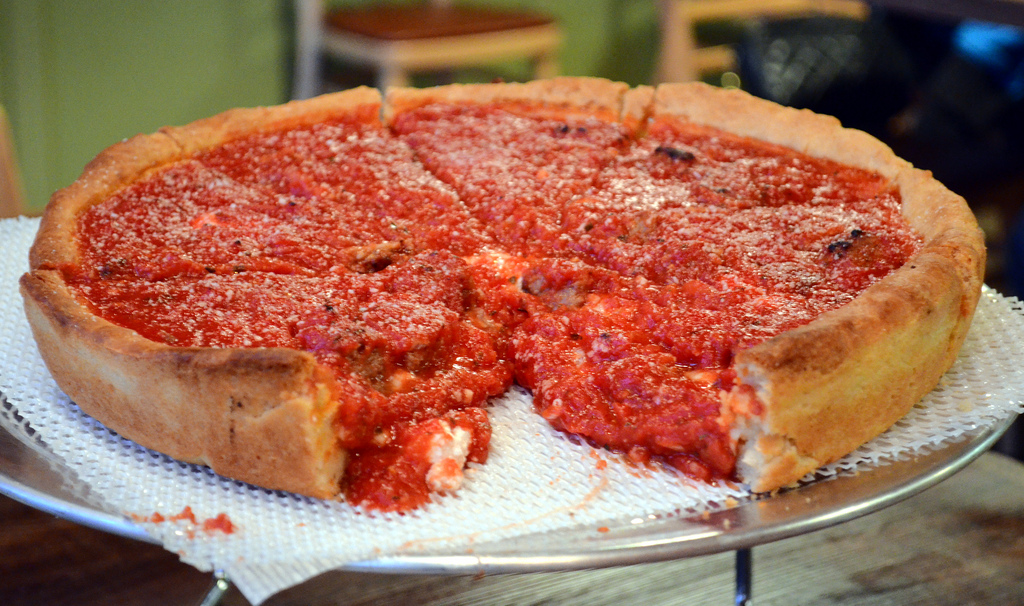
    Hollywood Pies, Los Angeles, California: The Hollywood Pie ($27). I was never a lover of deep dish Chicago style pies. I didn’t get it. And then, I ate from this blink-and-you-miss-it spot. Jesus made this pizza for me. Seriously, that’s one of the names of the pie-makers. Everything from the crust to the cheese, the pizza sauce, homemade meatballs is made in-house. Unfortunately, getting a pizza isn’t always easy. They take forever to make (up to an hour). Sometimes, they don’t even pick up the phone to order one. This deep dish thickly crusted – like a casserole – is from heaven. Chewy, hint of heat in the sauce, pull until it snaps mozzarella…..trust me, Jesus made it.

    Courtesy of ICDC
    Courtesy of ICDC

    ICDC, Los Angeles, California: Salt & Pepper Caramel Doughnut/ Buttermilk Brown Butter ($2.50). ICDC, which stands for ice cream, donuts, and coffee, is a dream child of Amy Knoll Fraser and Pastry Chef Maria Swan. I don’t know Maria. I would love to know Maria. I would love Maria to make me  a donut every day for the rest of my life. The Salt & Pepper Caramel along with the Buttermilk Brown Butter are heavenly puffs of circled dough with a little richness (butter or caramel) and a surprise (salt & pepper and not just butter but browned butter). If you have never had a seasoned donut or a browned butter donut – it’s wrong. Just wrong. It’s like being a virgin and everyone around you talking about sex.

    Courtesy of Breakfast Club
    Courtesy of Breakfast Club

    The Breakfast Club, Scottsdale, Arizona: Huevos con Masa ($9). On our first trip to Phoenix, we got hungry as people do at the beginning of the day. We had appointments to look at houses and needed to fortify ourselves.  We went to dine at place at 8 am. Twenty-minute wait. We left. Found another highly recommended eatery with a wait-time of twenty-minutes. Nick and I are starving, and it’s 9 am. On the third try, we arrive at Breakfast Club. They have a wait time too. We sit at the bar to avoid the wait time. It’s packed.  Maybe 9:15 am on a Wednesday morning. I order the Huevos con Masa, a creative southwestern version of eggs benedict. Instead of hollandaise sauce, a pork green chile is served with poached eggs and chipotle cornbread. Eating it, I thought it was worth waiting for the discovery. The chile, a little heavier than I normally would eat for breakfast, is rich but compliments the poached eggs runny yolks. The cornbread has just enough heat and is incredibly moist, with flecks of chipotle. The Valley of the Sun breakfast experience also prompted me to write a story on the area’s breakfasts.  (Note: If you like blonde, athletic women serving your food in skin-tight, black fitness wear, this is the place for you. Do not come if you want to see a brunette or red-head. Hell, I don’t think there was a curl in the place, either. Just sayin’.)

    Places and dishes of note: Nobuo at Teeter House, Pork Belly  Buns (Phoenix, Arizona); The Original Breakfast House, Cinnamon Rolls (Phoenix, Arizona); Revolutionario, Falafel Tacos  (Los Angeles, CA); Khin Khao, Khao Mun Gai (San Francisco, CA); Pizzeria Bianco, Margherita Pizza (Phoenix, Arizona).

    The End. Happy 2016.

  • I8tonite: A Cheat Sheet to Dining in Napa’s St. Helena

    I8tonite: A Cheat Sheet to Dining in Napa’s St. Helena

    St. Helena is a petite and idyllic winemaking town in the heart of Napa Valley. Out of all the towns in the county of Napa, this is my undoubtedly my favorite. During the spring, the grape vines are incredibly bright green with mustard flowers popping up between rows. In the summer, that bright sun showcases the verdant green of the valley. And then in the fall, watching leaves and trees turn shades of orange is magnificent. The town is essentially one street from Yountville to Calistoga and passes through St. Helena. It has exemplary shopping, a great place to stroll, extraordinary wine drinking and some of the best eating in the world…in a town of only 5,000. What more could you ask for in a shire?

    Meadowood. From I8tonite: A Cheat Sheet to Dining in Napa's St. Helena

    Breakfast: The Grill at Meadowood Napa Valley.  Napa can be an expensive place to eat but you can enjoy some of the tonier aspects of it without breaking the bank. Instead of going to the three Michelin-starred The Restaurant at Meadowood, head to their smaller and extraordinarily good The Grill. At breakfast sit outside overlooking the verdant 8-hole golf course. Excellent place for business breakfasts or quiet repasts.

    My suggestion: Corned Beef Hash. Simply a divine morning dish of protein and carbs before you head out for your morning wine tasting. Roughly chopped corn beef with delicious cubed bites of Yukon Gold potatoes and onions cooked together. This is a dish for dinner as well…if only it was served at that time. Eat it with poached eggs letting the runny yolks coat the succulent pieces of beef. One of the most perfect dishes to eat before sweating out the delicious Cabernets from the night before and replenishing with new ones.

    Price: $20

    Hours: 7:00am – 11:30am

    Address: 900 Meadowood Lane, St. Helena, CA 94574

    Website: www.meadowood.com

    Gott's Roadside. From I8tonite: A Cheat Sheet to Dining in Napa's St. Helena

    Lunch:  Gott’s Roadside. Long before the Shake Shacks, Umami Burgers and The Counter there was this charming roadside stand that served up delicious burgers, fries and other edibles in the heat of the Napa sun plus they served wines by the glass. It was a great place just to grab a bite after walking up and down Highway 29 tasting wines. Of course, Gott’s also has craft beers too. That’s what made it so fun and inventive at was dining al fresco with a glass of wine and a burger! There are two other joints in the Bay Area – including the San Francisco’s Ferry Building — but this is the one that started it all….and my favorite location.

    My suggestion: Patty Melt. Yeah, I know. I’m a guy. I like my burger slapped between gooey Swiss cheese, oozing out sautéed onions, a zesty mustard and buttery rye toast. And for my wine choice…Jelly Jar rosé. Or any rosé. Light, fruity and pairs well with burgers and sautéed onions. Hell, anything pairs well with burgers and sautéed onions. Anything pairs well with rosé. It’s a winner.

    Price: $9.99 without wine. Wine prices vary.

    Hours: 10:00am – close

    Address: 933 Main Street, St. Helena, CA, 94574

    Phone Number: (707) 963 – 3486

    Website: www.gotts.com

    Woodhouse Chocolates. From I8tonite: A Cheat Sheet to Dining in Napa's St. Helena

    Snack Time: Woodhouse Chocolates. The quintessential small town candy shop as only Napa Valley can do it. Stunningly handcrafted chocolates in unusual molds. Tracy Anderson, along with her husband, John, collects chocolate molds from around the world. At various times, visitors to the candy shop can view, in their specially refrigerated window, whole chess sets, shoes and Santa’s workshop…created in chocolate. It’s pretty awesome.

    My suggestion: Buy chocolates per piece. You can pick and choose. Lovely varieties of ganache without being cloyingly sweet.  Remember it’s a snack…you could buy a whole box but you don’t want to ruin your dinner. Or you could ruin your dinner….

    Price: $2.50 per piece

    Hours: Sunday – Thursday, 11:00am – 6:00pm. Friday and Saturday, 11:00am – 6:30pm

    Address: 1367 Main Street, St. Helena, CA. 94574

    Phone Number: (800) 966 – 3460

    Website: www.woodhousechocolate.com


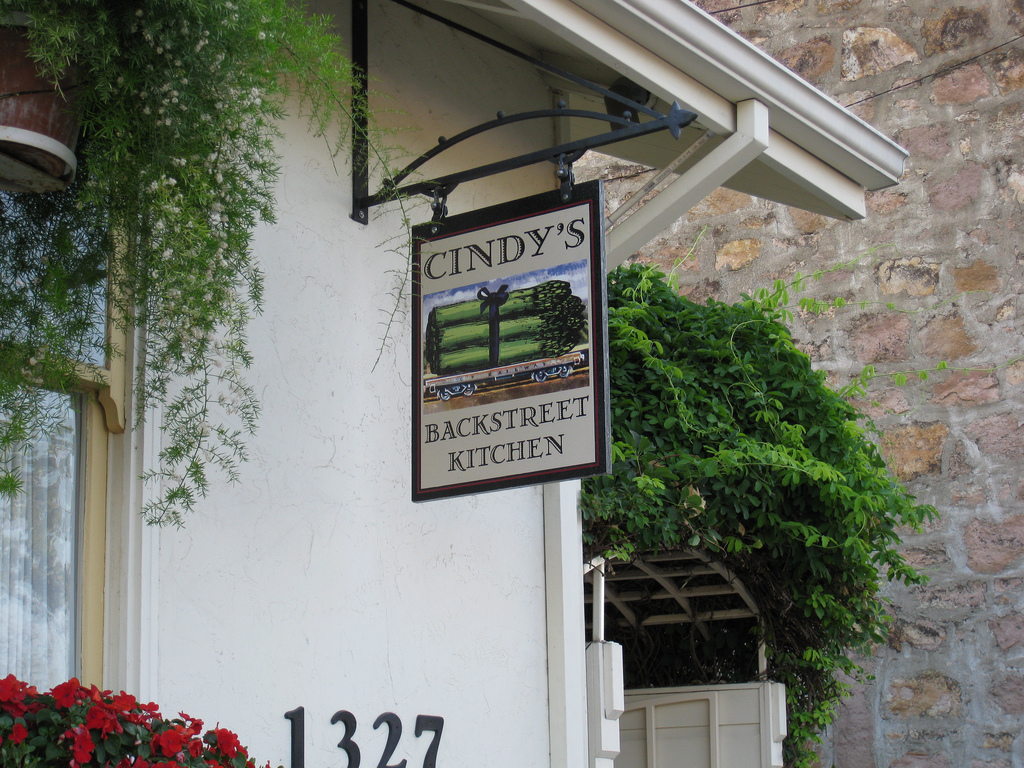
    Cindy's Backstreet Kitchen. From I8tonite: A Cheat Sheet to Dining in Napa's St. Helena

    Dinner: Cindy Pawlcyn’s Backstreet Kitchen & Bar. One of the reasons I love this place so much — along with Cooks St. Helena (not mentioned), Meadowood, Gotts, Woodhouse — is that it’s steeped in the history of Napa Valley winemaking. After all, not one of these establishments would be here if it weren’t for the area making great wines. Chef Cindy Pawlcyn was at the forefront of food and wine pairing in American Wine country. Beginning with Mustards Grill (Yountville), Pawlcyn’s second restaurant was Backstreet. Like its predecessor, it’s about good cooking with large portions and unpretentiousness. St. Helena has a lot of preciousness in its air, most likely because the earth was good to these grape-growers making them wealthy farmers, but the food, at Cindy’s Backstreet never became too rarefied – no foie gras or pates — it’s hearty deliciousness in a homey atmosphere where you savor your food and sip exquisite wines….while in your jeans.

    My suggestion: This is a tough one but I will go with the Wild Mushroom Pie. It’s a unique dish using the best of area agriculture. It’s not light…but it’s pretty stellar.

    Price: $22.95

    Hours: 11:30am – 9:30pm

    Address: 1327 Railroad Avenue, St. Helena, CA 94574

    Phone: (707) 963 – 1200

    Website: http://cindysbackstreetkitchen.com/


    Pin for later:

    i8tonite: A Cheat Sheet to Dining in Napa's St. Helena

    The End. Go Eat. 

    In Memory of Carrol Gettko: You truly were one of my great friends. I know you always wanted to live in Napa and watch the grapes grow even though you didn’t drink. I miss you a lot. Here’s to having a great spaghetti dinner again one day.